
华锡有色

Search documents
有色金属行业周报:小金属双周报:稀土板块进入击球区,继续看多锡钨锑钼-20260201
SINOLINK SECURITIES· 2026-02-01 10:02
Investment Rating - The report indicates a positive outlook for the small metals sector, with expectations of price increases and performance improvements in the coming months [58]. Core Insights - The small metals index rose by 7.49% during the reporting period, outperforming the Shanghai Composite Index by 8.03% [12]. - The report highlights significant price movements in various metals, with rare earth elements showing strong price increases, particularly praseodymium and neodymium oxide, which rose by 11.03% to 748,700 CNY/ton [2][13]. - The report emphasizes the ongoing supply-side reforms and the increasing demand for rare earths, particularly in the context of global inventory replenishment needs [15][17]. Summary by Sections Stock Market and Commodity Price Performance - The small metals index closed at 38,048.84 points, reflecting a 7.49% increase, which is 2.11 percentage points lower than the non-ferrous metals index [12]. - Key commodity prices showed varied trends, with praseodymium oxide increasing by 11.03%, dysprosium oxide decreasing by 10.74%, and tungsten concentrate rising by 19.24% [13]. Main Product Fundamentals and Views Rare Earths - The price of praseodymium and neodymium oxide reached 748,700 CNY/ton, driven by supply-side reforms and increased processing fees [2][15]. - The report suggests that the rare earth sector will continue to see valuation and performance improvements, with 2026 being a critical year for resolving competitive issues within the industry [17]. Tin - Tin ingot prices increased by 2.17% to 423,600 CNY/ton, with expectations of continued upward trends due to supply constraints from Indonesia and Myanmar [3][24]. - The demand for tin is anticipated to benefit from the recovery in semiconductors and automotive electronics [24]. Tungsten - Tungsten concentrate prices rose by 19.24% to 600,700 CNY/ton, supported by increased strategic reserves in the U.S. and domestic demand [3][33]. - The report highlights the potential for sustained price increases due to military and civilian demand [33]. Antimony - Antimony ingot prices increased by 1.26% to 164,100 CNY/ton, with expectations of price recovery driven by export improvements [4][40]. - The report notes a significant drop in antimony exports, indicating potential for future price increases as demand stabilizes [40]. Molybdenum - Molybdenum concentrate prices remained stable at 4,010 CNY/ton, with molybdenum iron prices rising by 0.79% to 256,000 CNY/ton [5][43]. - The report suggests that low inventory levels and increased defense spending may support future price increases [43].



广西关键金属研究院成立
Guang Xi Ri Bao· 2026-02-01 02:46
广西关键金属研究院董事长胡明振向记者介绍,未来,研究院将聚焦"深部矿产智能探采、绿色低 碳选冶、高纯材料制备、高端材料与器件、资源循环利用"五大核心方向,依托广西关键金属实验室, 协同广西稀土材料技术创新中心、广西有色金属新材料检测中心等高能级创新平台,为广西关键金属产 业高质量发展提供系统性科技支撑与专业化解决方案。 当天,自治区科技厅、广西关键金属研究院与中南大学举办了"汇智创新·赋能发展——广西关键金 属产业科技项目对接会"。近日,由该研究院邀请中南大学、广西大学、桂林理工大学等单位科研人员 一同参与的关键金属企业技术需求调研组也正在开展调研,研究院就此开启实体化运行。(李新雄 龚 文颖 李璇茬) 1月31日,广西关键金属研究院启动座谈会在南宁召开,宣告广西关键金属研究院有限责任公司 (以下简称广西关键金属研究院)正式成立。 广西是我国有色金属之乡,在国家36种战略性矿产中有资源储量的达30种,是世界罕见的锡锑铟多 金属共生富集区,也是我国保护最好、开发最晚的稀土资源富集区。2025年以来,我区高起点、高标准 系统谋划有色金属、关键金属产业高质量发展,制定出台《广西关键金属产业创新发展"十五五"规 划》 ...
【视线】“百年工运的浩荡场景扑面而来”
Xin Lang Cai Jing· 2026-01-31 20:31
(来源:工人日报) "从早期东吴丝织厂的手工匠人,到如今恒力、盛虹等企业里攻克'卡脖子'技术的技能人才,这种精益 求精的创造精神一脉相承。这本书里的技能传承故事,为我们培养新时代产业工人提供了鲜活范 本。"王发华说。 从更宏观的城市发展角度来看,"从传统手工业者到现代产业工人,从乡镇企业崛起至世界级产业集群 形成,产业工人的命运与城市发展同频共振,这本书正是这种深度交融的生动注脚。"王发华认为,书 中呈现的"敢为、敢闯、敢干、敢首创"的奋斗精神,正是当下城市建设所需,也为城市高质量发展带来 启示。 近日,由苏州市总工会编辑出版的《苏州产业工人史》亮相苏州市两会"赠书角",代表委员们读书学习 的身影络绎不绝。代表委员们纷纷表示,这本系统梳理苏州产业工人百年发展轨迹的著作里,流淌着产 业工人的奋斗故事与城市记忆,不仅带来诸多思考和启示,也为大家履职尽责、共谋城市发展带来源源 不竭的动力。 2025年是中华全国总工会成立100周年。献礼百年工运,苏州市总工会牵头编撰出版了《苏州产业工人 史》。该书是苏州首部以"人"与"城"交融视角书写的苏州产业工人史诗。该书突破传统工运史与工会史 的书写框架,以时间为轴分为六章,从 ...
突发,黄金股大面积跌停!“我男朋友昨天不听我劝,非要买10克,结果今天...”
Sou Hu Cai Jing· 2026-01-31 01:55
Core Viewpoint - The market for gold and silver has experienced significant declines, with spot gold dropping over 4% and spot silver falling more than 5%, indicating a bearish trend in precious metals [1][4]. Group 1: Market Performance - Spot gold is reported at $5,139.38 per ounce after a daily decline of over 4% [4]. - Spot silver is currently priced at $108.90 per ounce, reflecting a drop of more than 5% [4]. - The A-share market opened lower, with all three major indices declining by over 1%, led by the gold and base metals sectors [4]. Group 2: Stock Performance - Several gold and silver-related stocks have hit the daily limit down, including companies like 盛达资源 (Shengda Resources) and 中金黄金 (Zhongjin Gold), which both saw a 10% drop [4][5]. - Specific stock performances include: - 晓程科技 (Xiaocheng Technology) down 19.92% with a trading volume of 2.289 billion [5]. - 贵研铂业 (Guiyan Platinum) down 10.01% with a trading volume of 1.031 billion [5]. - 山东黄金 (Shandong Gold) down 10% with a trading volume of 3.775 billion [6]. Group 3: Risk Announcements - Multiple companies, including 白银有色 (Baiyin Yese) and 招金黄金 (Zhaojin Gold), issued risk warnings due to the volatility in precious metals prices [6][9]. - The domestic prices of gold jewelry have also seen a decline, with major brands like 周生生 (Chow Sang Sang) and 周大福 (Chow Tai Fook) adjusting their prices [6].



史诗级暴跌!白银一度重挫18%
证券时报· 2026-01-30 13:07
Core Viewpoint - The precious metals market experienced a significant downturn on January 30, with silver and other metals facing historic declines after a period of rapid price increases [1][5]. Price Movements - International spot silver prices plummeted by over 18%, dropping below $100 per ounce and reaching a low of nearly $95 per ounce, after having peaked above $120 per ounce in the previous trading session [2][6]. - Other precious metals also saw sharp declines, with London gold prices falling over 8%, dipping below $5,000 per ounce from a high of nearly $5,600 per ounce [8]. - Platinum and palladium futures on NYMEX dropped by over 18% and nearly 15%, respectively, while domestic futures for platinum and palladium also fell by more than 11% [10]. Market Context - The recent sharp adjustments in precious metal prices followed a period of aggressive price increases, with silver and gold prices rising nearly 70% and about 30%, respectively, since the end of 2025 [11]. - The market's reaction was influenced by expectations of a hawkish stance from potential candidates for the Federal Reserve chair, particularly following the nomination of Kevin Walsh by President Trump [11]. Investment Risk Warnings - Several banks, including Industrial and Commercial Bank of China and Bank of China, issued warnings regarding the risks associated with precious metal investments, urging clients to manage risks and avoid speculative trading [3][17]. - The volatility in precious metals has also impacted the stock market, with a significant drop in precious metal-related stocks on the A-share market, where 13 out of 17 stocks in the Wind precious metals index hit the daily limit down [15].

刚刚,急速跳水!
Zhong Guo Ji Jin Bao· 2026-01-30 03:46
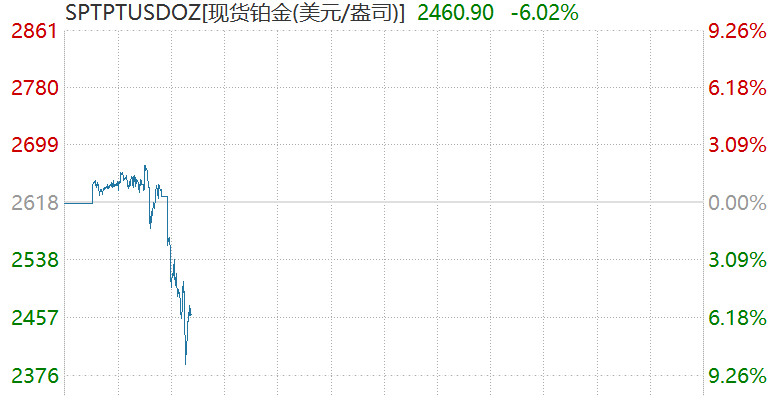
【导读】贵金属现货、期货合约集体大跳水 刚刚,贵金属集体崩了! 1月30日,现货黄金盘中急速跳水,最低跌至5111.96美元/盎司,跌幅近5%。 现货白银同步大跌,最低价跌至107.947美元/盎司,跌幅近7%。 | 名称 | 现价 | 淵鉄 | 涨跌幅 | | --- | --- | --- | --- | | 沪银2602 | 29345 | -1535 | -4.97% | | 沪银2603 | 29400 | -1392 | -4.52% | | 沪银2604 | 28801 | -934 | -3.14% | | 治−第2605 | 28523 | -856 | -2.91% | | 沖縄2606 | 28243 | -1071 | -3.65% | | 名称 | 现价 | 涨跌 | 涨跌幅 | | 辑2606 | 640.00 | | -74.85 -10.47% | | 辑2608 | 640.05 | | -73.90 -10.35% | | 铂2610 | | 633.00 - -82.65 -11.55% | | | 铂2612 | | 640.00 - -78.85 -10.97% | ...
纺织业多元革新促节能降碳
Jing Ji Ri Bao· 2026-01-29 22:11
中央经济工作会议明确提出"坚持'双碳'引领,推动全面绿色转型",将重点行业节能降碳改造推向纵 深。 "这为纺织行业高质量发展指明了方向。"中国纺织工业联合会副会长、社会责任办公室主任阎岩接受本 报记者专访时表示,纺织行业绿色转型目前已形成"头部引领、分层追赶"的良性格局,从理念倡导进入 规模化实践阶段,正通过技术革新、价值链协同与产业生态支撑的多元发力,释放高质量发展新动能。 技术引领效应持续显现 在工业和信息化部近期公布的"2025年度重点行业能效'领跑者'企业名单"中,江苏恒科新材料有限公司 成功入选,成为聚酯涤纶细分行业全国唯一的"领跑者"企业。 "作为恒力集团全资子公司,恒科新材已构建全流程中水回用系统,废水回用率超90%,年节约水资源 250万吨以上。"恒科新材副总经理陆佳颖介绍,在能源结构优化方面,建成总容量106.5兆瓦的光伏发 电项目及60兆瓦/120兆瓦时储能系统,打造"光储充"一体化模式,热媒炉全面采用生物质颗粒燃料,可 再生能源利用占比超40%。同时,回收利用聚酯工艺塔塔顶蒸汽及空压机余热,用于制冷与物料加热。 近3年,共完成79项节能技改项目,创造效益超7000万元。 "恒力是纺织行业 ...
二月策略及十大金股:实物资产与中国资产
SINOLINK SECURITIES· 2026-01-29 14:16
Group 1: Strategy Overview - The report emphasizes the resilience of the A-share market amidst multiple overseas risks and signals of regulatory easing in China, suggesting that the relationship between market performance and regulatory changes warrants further consideration [5][12] - It highlights the significant outperformance of the A-share market compared to other major indices, particularly the CSI 300, which has faced substantial redemption pressure [5][12] - The report suggests that investors should not overly worry about the CSI 300's performance, as it has already aligned with regulatory easing requirements, reducing the necessity for further pressure [5][12] Group 2: Economic Insights - China's exports continued to show strong performance in December, driven by overseas investment during a global easing cycle, positively impacting sectors like electrical and mechanical equipment [6][13] - Domestic consumption is recovering, with a rebound in per capita consumer spending in the fourth quarter, aligning with the report's annual strategy predictions [6][13] - The report notes that recent government policies aimed at boosting domestic demand and stabilizing real estate are expected to support synchronized recovery in both domestic and external demand [6][13] Group 3: Asset Allocation and Investment Recommendations - The report identifies a dual focus for 2026 on physical assets and Chinese assets, with thematic investments being essential [7][16] - Recommended sectors include physical assets such as copper, aluminum, tin, gold, lithium, and oil, alongside Chinese equipment export chains like electrical grid equipment and renewable energy [7][16] - The report also highlights sectors benefiting from capital market expansion and improving long-term asset returns, such as non-bank financials and consumer sectors like aviation and duty-free retail [7][16] Group 4: Company-Specific Insights - **Yunnan Aluminum Co. (000807.SZ)**: The report recommends a long-term investment due to favorable conditions for aluminum exports and a strong balance sheet, with potential for increased dividends [18] - **Hua Aluminum (600301.SH)**: The company is seen as a strong growth candidate due to rising tin and antimony prices and its position as a key beneficiary of metal consolidation in Guangxi [19] - **Yingliu Co. (603308.SH)**: The report anticipates a surge in global gas turbine demand, positioning the company to increase its market share in turbine blades [20] - **Shangfeng Cement (000672.SZ)**: The company is recognized for its strong cash flow from cement operations and potential for significant dividends [21] - **Pop Mart (9992.HK)**: The company is expected to maintain rapid growth in the entertainment market through IP incubation and diverse monetization strategies [22] - **China Duty Free Group (601888.SH)**: The company is projected to strengthen its market position in the duty-free sector, benefiting from increased inbound tourism and overseas expansion [24] - **China Southern Airlines (1055.HK)**: The airline is expected to benefit from improved industry supply-demand dynamics and a large fleet size [25] - **Li Auto (2015.HK)**: The company is focusing on advancements in AI and smart driving technology, with expectations for increased vehicle sales [26] - **Lante Optics (688127.SH)**: The company is positioned to benefit from strong demand in automotive and smart imaging sectors [27] - **InnoCare Pharma (9606.HK)**: The company is advancing in the ADC field with a robust pipeline and partnerships, with several products nearing clinical registration [29]




如何看待王者归来的有色?
雪球· 2026-01-29 08:19
Core Viewpoint - The article discusses the ongoing bull market in the non-ferrous metals sector, driven by monetary easing expectations and supply-demand tightness, highlighting significant investment opportunities in this space [3][5][8]. Group 1: Reasons for Price Increases - The non-ferrous metals sector has seen substantial price increases, with gold prices rising by 64% over the past year, indicating a strategic shift towards physical assets as the U.S. dollar weakens [5][6]. - Industrial metals like copper and tin have also surged, with copper prices increasing by 44% and tin by 43%, primarily due to declining inventories and rising demand from sectors like renewable energy and AI [6][8]. - The combination of anticipated monetary easing and tight supply-demand dynamics is expected to drive further price increases in commodities and stocks [8]. Group 2: Four Underlying Logics - The weakening U.S. dollar is expected to make metals more expensive, as the market anticipates further interest rate cuts from the Federal Reserve [10][11]. - Supply constraints are significant, with global mining companies underinvesting in new projects, leading to longer lead times for new production [12][14]. - The demand from AI and renewable energy sectors is replacing traditional demand from real estate, creating a new engine for metal consumption [15][16]. - Geopolitical tensions, particularly between the U.S. and China, are elevating the strategic importance of key minerals, leading to increased trade barriers and price volatility [19][21]. Group 3: Key Investment Directions - Gold and silver are seen as anchors of value, with silver expected to benefit from both industrial demand and price corrections [22]. - Copper, aluminum, and tin are highlighted as essential industrial metals, with companies like Zijin Mining and China Aluminum positioned favorably due to supply-demand dynamics [23][24]. - Rare earths and minor metals are viewed as strategic assets, with companies like Northern Rare Earth and Guangsheng Nonferrous benefiting from supply chain advantages [25]. - Lithium is identified as a cyclical opportunity, with prices rebounding significantly, and companies like Ganfeng Lithium positioned to capitalize on this trend [25].

风浪中的-硬资产-地缘催化下的能化资产再定价与油运合规牛
2026-01-29 02:43
Summary of Conference Call Records Industry Overview - The conference call discusses the impact of geopolitical events on the oil and chemical industries, particularly focusing on the effects of supply constraints from Venezuela, Russia, and Iran on China's refining sector and chemical asset pricing [1][2][4]. Key Points and Arguments Geopolitical Impact on Oil Supply - Geopolitical events have led to limited oil supplies from Venezuela, Russia, and Iran, which poses risks of rising costs and declining profits for Chinese independent refineries (地炼) [1][2]. - The takeover of Venezuelan oil by the U.S. is expected to redirect supplies away from East Asia, significantly affecting local refineries [2]. - U.S. sanctions have reduced Russian oil exports by approximately 50%, increasing transportation risks and tightening supply [2][4]. - Iran's oil supply is also under pressure due to intensified U.S. sanctions and domestic unrest, which may further limit future supply [2][4]. Impact on Chinese Refining Sector - Short-term effects include rising costs for Chinese independent refineries, with costs potentially increasing by over $10 per barrel, leading to significant profit declines or even losses for smaller refineries [4]. - In contrast, major state-owned enterprises like Sinopec and CNOOC, as well as private companies with stable resources, are expected to benefit from these supply constraints [2][4]. Chemical Industry Trends - The Chinese chemical industry is experiencing a tightening capacity cycle due to dual carbon policies, which is expected to lead to a revaluation of chemical assets over the next five years [1][5]. - By 2025, the export growth rate of Chinese chemical products is projected to increase significantly, with many products having over 20% exposure to overseas markets, helping to mitigate domestic real estate drag [5]. Asset Repricing and Beneficiaries - Strong capital and technology-intensive companies in the chemical sector, such as Wanhua Chemical, Hengli Petrochemical, and Rongsheng Petrochemical, are positioned to benefit from the upcoming asset repricing [6][7]. - The scarcity of chemical products is anticipated to drive asset revaluation, allowing these companies to gain pricing power by controlling supply and capitalizing on demand growth [6]. Global Oil Transportation Challenges - The global oil transportation system faces comprehensive sanctions challenges, affecting exporters, receiving ports, and shadow fleets [8]. - The shadow fleet has seen a significant increase, reflecting changes in U.S. policy towards Iranian oil, with a notable rise in operational challenges for these vessels [11][12]. Supply Chain Implications - India is reducing its imports of Russian oil from 1.7 million barrels per day to 1.3 million barrels due to U.S. pressure, which mirrors challenges faced by Chinese buyers [9]. - The potential loss of Venezuelan, Iranian, and Russian oil supplies could severely disrupt the overall supply chain, increasing international oil price risks [9]. Canadian Oil Exports - Canada exports approximately 4 million barrels of heavy oil to the U.S. daily, and the situation in Venezuela may pressure Canada to lower prices to meet demand, potentially shifting more oil to the East Hemisphere [10]. Market Dynamics and Pricing - The pricing of cyclical stocks should focus on value recovery rather than short-term price fluctuations, emphasizing the importance of performance realization and valuation centrality [15]. Additional Important Insights - The shadow fleet's growth has tripled over the past two decades, indicating a significant shift in the operational landscape for oil transportation [11]. - The global daily oil production is around 100 million barrels, with maritime transport accounting for 45 million barrels; the loss of Iranian exports could greatly impact this market [12]. - China's refining capacity is expected to increase by 1.5 million barrels per day in 2026, with a total refining capacity projected to reach 18 million barrels per day [13]. This summary encapsulates the critical insights from the conference call, highlighting the interplay between geopolitical events and market dynamics in the oil and chemical sectors.