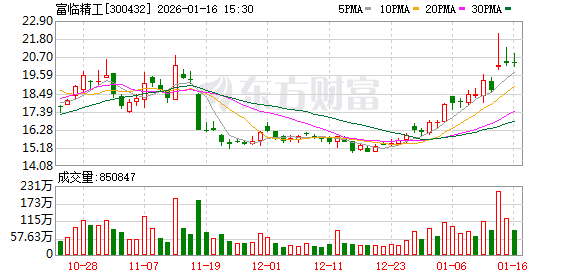
富临精工

Search documents
碳酸锂急涨急跌,上游扩产为何热度不减?每经记者实地调研:成本“护城河”下满产有信心,普遍预期2026年产销趋于平衡
Mei Ri Jing Ji Xin Wen· 2026-01-18 13:43
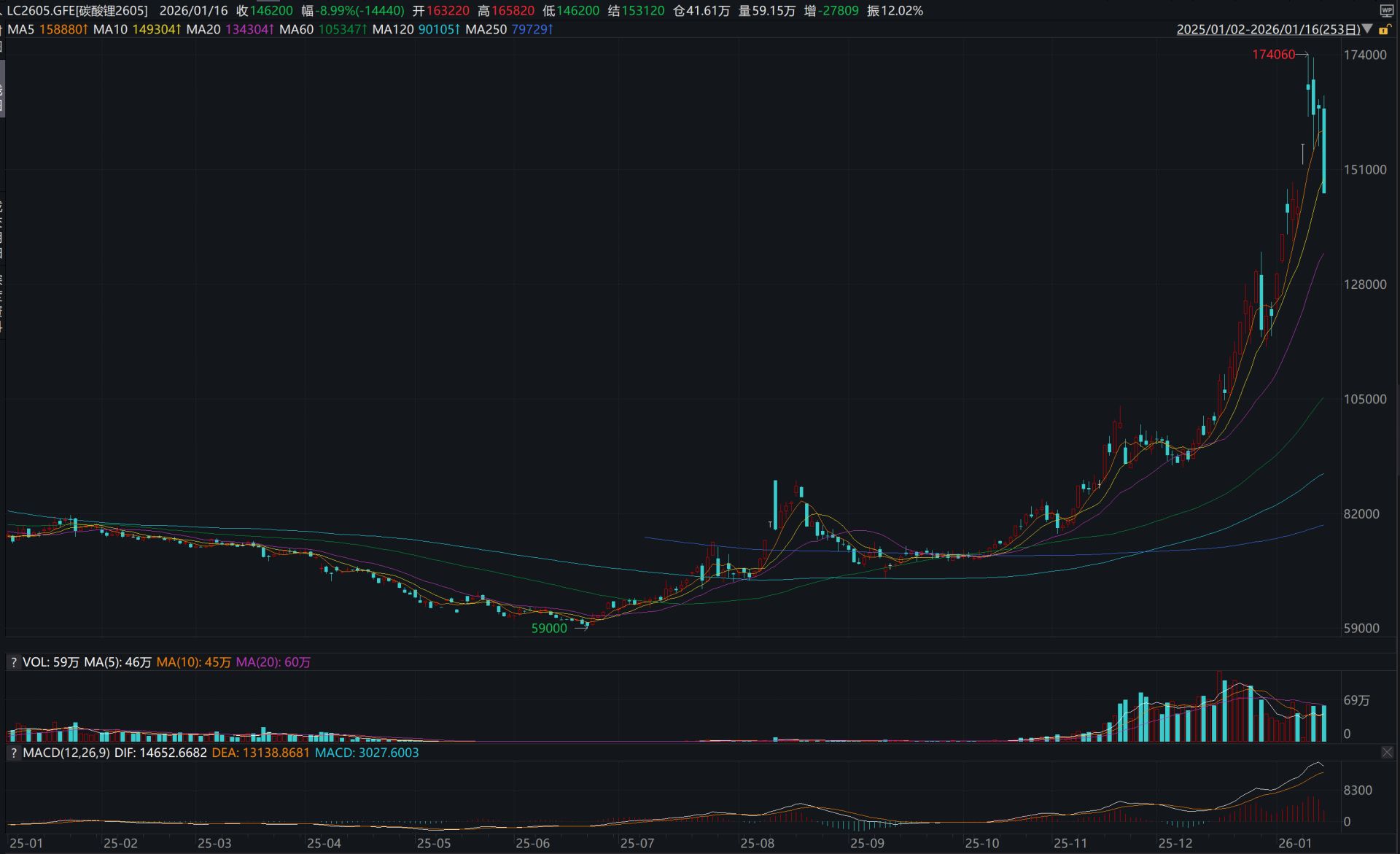
Market Trends - The lithium carbonate futures contract LC2605 experienced significant volatility, with a peak price of 174,100 yuan/ton on January 13, 2026, followed by a sharp decline to 146,200 yuan/ton on January 16, marking a drop of 8.99% and over 16% from its peak [1][5][10] - The price fluctuations are attributed to a lack of solid driving factors for the recent price increase, leading to a sensitive investor sentiment [5][10] Production Capacity and Investment - Multiple lithium battery companies are expanding production, with over 282 publicly announced investment projects in the lithium battery supply chain for 2025, totaling over 820 billion yuan, a year-on-year increase of over 74% [2][10] - The De'A Lithium New Materials Industrial Park in Sichuan is home to several projects, including a 200,000-ton lithium salt project by Guocheng Lithium Industry, which is expected to become the largest lithium salt production base in China [5][7] Competitive Landscape - The industry is facing increasing competition, with significant production capacity being developed in the De'A Lithium New Materials Industrial Park, including 20,000 tons from Guocheng Lithium Industry and 3,000 tons from Sichuan Energy Investment De'A Lithium Industry [10] - Companies are focusing on building cost advantages through unique resource utilization strategies, such as the circular economy model employed by Chuanfa Longmang, which significantly reduces production costs [8][10] Future Demand and Market Outlook - The demand for lithium carbonate is expected to stabilize by 2026, with companies anticipating a balance between production and sales [10] - The recent decline in retail sales of new energy vehicles, down 38% year-on-year in early January 2026, has contributed to the downward pressure on lithium carbonate prices [10][11] - Companies are looking towards the energy storage sector as a potential growth area, with predictions of a 30% increase in demand for battery-grade lithium carbonate in 2026 [11]


电新周报:太空应用强化美国光伏自主可控诉求,海风与电网设备迎重大催化 1 / 15-20260118
SINOLINK SECURITIES· 2026-01-18 13:05
Investment Rating - The report maintains a positive outlook on the "space photovoltaic" sector, indicating it as a key investment theme for 2026, driven by strong demand and geopolitical narratives [7][8]. Core Insights - The space photovoltaic industry is experiencing significant advancements, primarily among companies already established in the sector, highlighting the high barriers to entry [7][8]. - The Chinese photovoltaic supply chain is expected to accelerate the growth of the space photovoltaic market, benefiting from the U.S. demand for "self-sufficiency" in solar products [7][8]. - The wind power and grid equipment sectors have also received substantial positive catalysts, with notable developments in offshore wind projects and significant investments planned by the State Grid [7][8]. Summary by Relevant Sections Space Photovoltaics - Recent developments in the space photovoltaic sector include strategic partnerships and investments by companies like JunDa and Dongfang Risen, focusing on advanced technologies such as perovskite and HJT cells [8][9]. - The U.S. is facing a critical need for domestic solar supply chains due to trade barriers, which presents a significant opportunity for Chinese companies to capitalize on this demand [11][12]. Wind Power - The UK government has signed contracts for 8.4GW of offshore wind projects, exceeding market expectations, which strengthens the outlook for domestic supply chain exports [13][14]. - The auction results indicate a favorable pricing environment for developers, enhancing the profitability of future projects [14]. Grid Equipment - The State Grid's investment plan of 4 trillion yuan for the 14th Five-Year Plan represents a 40% increase from the previous plan, establishing a strong foundation for long-term growth in the grid sector [3][15]. - The aging infrastructure in North America is driving demand for new transformers and grid solutions, creating opportunities for companies like Siyuan Electric and Jinpan Technology [17][19]. Lithium Batteries - New regulations on battery recycling are set to take effect in April 2026, emphasizing the importance of a comprehensive management system for used batteries [22][23]. - Companies like Fulin Precision are expanding their production capabilities in lithium iron phosphate batteries, indicating a positive trend in the lithium battery market [25][26]. Hydrogen and Fuel Cells - The hydrogen industry is poised for growth, with significant policy support and increasing sales of hydrogen vehicles expected in the coming years [4][5].




汽车零部件、机器人主线周报:周五交易热度触底反弹,富临精工拟引进宁德31.75亿元战略投资-20260118
Soochow Securities· 2026-01-18 11:54
Investment Rating - The industry investment rating is "Overweight," indicating an expected outperformance of the industry index relative to the benchmark by more than 5% over the next six months [49]. Core Insights - The automotive parts sector has shown a weekly increase of 1.65%, ranking second among the SW automotive sector, with a year-to-date increase of 5.07% [2][10]. - The robotics sector has also performed well, with a weekly increase of 1.81% and a year-to-date increase of 5.62%, outperforming the automotive parts sector by 0.16% [2][22]. - Key developments include 富临精工 planning to issue 3.175 billion yuan in stock to 宁德时代, which will become a significant shareholder [2][33]. - Investment recommendations include focusing on product-oriented companies and those entering high-value segments to enhance average selling prices (ASP) in the automotive parts sector, and identifying certainty opportunities in the robotics sector [2][44]. Summary by Sections Automotive Parts Sector Weekly Review - The automotive parts sector has shown a strong performance with a 1.65% increase this week and a 5.07% increase year-to-date, ranking second in the SW automotive sector [2][10]. - The sector's PE (TTM) is at 84.66% historical percentile, and PB (LF) is at 79.21% historical percentile, indicating a favorable valuation [20]. Robotics Sector Weekly Review - The robotics index increased by 1.81% this week and 5.62% year-to-date, with a notable outperformance against the automotive parts sector [2][22]. - The latest PE (TTM) for the robotics sector is at 92.18% historical percentile, and PB (LF) is at 93.83% historical percentile, suggesting strong valuation metrics [32]. Key Company Tracking - Notable weekly performance includes 新泉股份 (+16.24%), 恒帅股份 (+11.36%), and 岱美股份 (+8.76%) [2][37]. - Significant corporate actions include 双环传动's capital increase of 100 million yuan to its subsidiary and 福达股份's completion of a convertible bond issuance of 470 million yuan [2][42]. Investment Recommendations - For the automotive parts sector, recommended stocks based on EPS include 福耀玻璃, 星宇股份, and 敏实集团, while PE recommendations include 拓普集团 and 银轮股份 [2][44].


碳酸锂最高涨至17.4万元;多种锂电原料取消出口退税;宁德时代落子沙特;LG新能源Q4亏损;珠海赛纬IPO终止;欣旺达回应电池争议
起点锂电· 2026-01-18 11:25
Group 1 - CATL opened its largest comprehensive service experience center in the Middle East, "Ningjia Service," in Saudi Arabia, covering an area of approximately 7,000 square meters and providing various after-sales services for passenger cars, commercial vehicles, and energy storage systems [3] - LG Energy Solution reported an operating loss of 122 billion KRW (approximately 83.8 million USD) in Q4 due to weak demand from electric vehicle manufacturers, despite a revenue increase of 4.8% to 6.14 trillion KRW [4] - Ganfeng Lithium's second-phase project for lithium-ion batteries has been approved for construction, with a total investment of 316 million RMB and an annual production capacity of 200 million batteries [6] Group 2 - A new 51GWh battery production line project has commenced in Xinyang, with a total investment of 12.725 billion RMB, focusing on advanced lithium-ion battery production [7] - Shenzhen Yuanxin Energy Technology Co., Ltd. submitted an IPO application to the Hong Kong Stock Exchange, aiming to develop sustainable energy solutions and reliable energy storage products [8] - A 2GWh high-performance lithium battery project has been signed in Hubei, with a total investment of 1 billion RMB, expected to generate over 1 billion RMB in annual output value by 2031 [9] Group 3 - Huizhou's Tianli Lithium Energy announced a planned maintenance shutdown of its lithium iron phosphate production line, expected to reduce output by 1,500 to 2,000 tons, which may support price increases in the market [22] - The Ministry of Industry and Information Technology and other departments released new regulations for the recycling of used power batteries, effective from April 1, 2026, focusing on comprehensive management throughout the battery lifecycle [33] - The price of battery-grade lithium carbonate reached a new high of 157,250 RMB per ton, with a significant increase in both futures and spot prices [16][17]

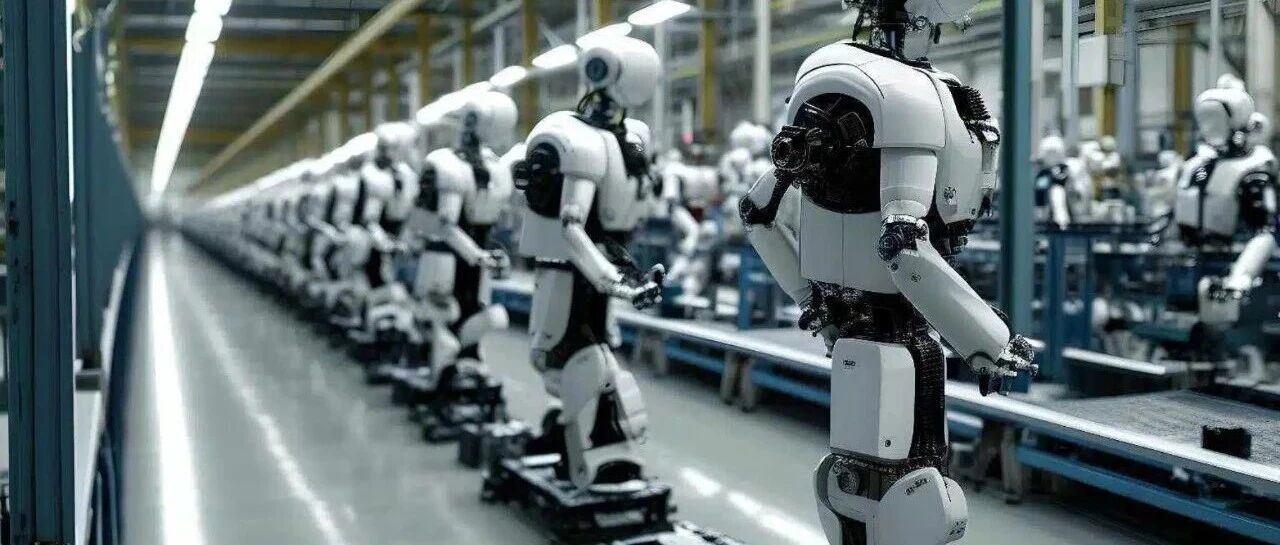
人形机器人的淘汰赛:“一些公司已经不行了”
Di Yi Cai Jing Zi Xun· 2026-01-18 09:51
Core Insights - The humanoid robot industry in China is expected to undergo significant consolidation by 2026, with many companies likely to be eliminated due to a lack of commercialization capabilities and financing [2][8][9] - The current bottleneck for humanoid robots is the "brain" technology, which needs to advance before the industry can experience a breakthrough similar to the "electric vehicle moment" [2][12][14] Group 1: Industry Overview - There are over 100 humanoid robot companies in China, with significant differentiation emerging after three years of development [2][4] - The investment enthusiasm in the robotics sector has been high, with 190 financing events totaling 27 billion RMB in 2025 [4] - The customer base for humanoid robots is shifting from academic institutions to industrial enterprises, indicating a growing acceptance and market expansion [5][12] Group 2: Market Dynamics - By 2025, the global shipment of humanoid robots is projected to reach approximately 13,000 units, with a conservative estimate of 30,000 units by 2026 [11] - The market for humanoid robots could potentially reach between 1.4 trillion to 1.7 trillion USD by 2050, but the industry is still in its early stages [12] - The competition among humanoid robot companies is likened to the "battle of the hundred groups" in the food delivery market, with only a few companies expected to survive [8] Group 3: Company Performance - The first-tier companies, such as Ubiquity Robotics, have received significant orders and are preparing for IPOs, while second-tier companies face more challenges [7][9] - First-tier companies have accumulated orders close to 1 billion, while second-tier companies have orders in the low hundreds of millions [7] - Companies that have not secured commercial orders or have faced financing difficulties are at risk of failing [9] Group 4: Technological Challenges - The development of humanoid robots is hindered by the lack of high-quality data and suitable AI models for their "brains" [13] - Current humanoid robot companies primarily rely on existing models that are not specifically designed for their needs, limiting their development capabilities [13] - The expectation is that the breakthrough in humanoid robot technology will not occur within the next five years, as the "electric vehicle moment" is still distant [14]

人形机器人的淘汰赛:“一些公司已经不行了”
第一财经· 2026-01-18 09:44
Core Viewpoint - The humanoid robot industry in China is experiencing significant differentiation, with leading companies accumulating more financing and commercial orders, while those lacking commercialization capabilities face potential elimination [3][5][7]. Group 1: Industry Overview - As of now, there are over 100 humanoid robot companies in China, with the market seeing a surge in investment and financing events, totaling 27 billion RMB in 2025 [5]. - The customer base for humanoid robots is shifting from academic institutions to industrial enterprises, indicating a growing acceptance and demand for these robots in practical applications [6][7]. Group 2: Market Dynamics - The first-tier humanoid robot companies, such as Yushun and Zhiyuan, are distinguished by their significant order volumes, with some nearing unicorn status, while second-tier companies face challenges in securing financing and commercial orders [7][9]. - The competition among humanoid robot companies is likened to the "battle of a hundred groups" in the food delivery market, suggesting that many companies may not survive due to high investment requirements and technological barriers [8]. Group 3: Technological Challenges - The primary bottleneck for humanoid robots is the development of their "brain," which is crucial for their functionality and intelligence [12][14]. - Current humanoid robots rely on general AI models that are not specifically designed for their needs, limiting their development potential [13]. Group 4: Future Projections - UBS estimates that global humanoid robot shipments will reach approximately 30,000 units in 2026, with a more conservative outlook compared to other institutions [11]. - The potential market for humanoid robots could reach between 1.4 trillion to 1.7 trillion USD by 2050, encompassing various components and services [11].
电力设备与新能源行业1月第2周周报:固态电池迈向工程化验证关键期-20260118
Bank of China Securities· 2026-01-18 08:17
Investment Rating - The report maintains an "Outperform" rating for the power equipment and new energy industry [1] Core Insights - The global sales of new energy vehicles are expected to grow rapidly in 2026, driving demand for batteries and materials [1] - The solid-state battery technology is entering a critical phase of engineering validation, with a focus on related materials and equipment companies [1] - The photovoltaic sector is expected to benefit from regulatory oversight on polysilicon prices, which may enhance profitability in downstream battery components [1] - The demand for wind power is projected to continue growing, with government initiatives supporting significant new projects [1] - The energy storage sector remains highly prosperous, with recommendations to focus on energy cell and large-scale storage integration manufacturers [1] - Hydrogen energy is anticipated to open new demand avenues, particularly in green hydrogen applications [1] Industry Dynamics - The power equipment and new energy sector saw a 0.79% increase this week, outperforming the Shanghai Composite Index [10] - The automotive industry anticipates 16.49 million new energy vehicle sales in 2025, a 28.2% year-on-year increase, with projections of 19 million units in 2026 [23] - The domestic power battery cumulative installation is expected to reach 769.7 GWh by 2025, reflecting a 40.4% year-on-year growth [23] - The second-generation high-power components from Longi Green Energy have entered the delivery phase, achieving a peak power of 680W and a conversion efficiency of 25.2% [23] Company Updates - Tianji Co. expects a net profit of 70 million to 105 million yuan in 2025, marking a turnaround [25] - Siyuan Electric anticipates a net profit of 3.163 billion yuan in 2025, a 54.35% increase year-on-year [25] - TCL Zhonghuan forecasts a net loss of 8.2 to 9.6 billion yuan in 2025 and plans to invest in new energy to accelerate its integration strategy [25] - Rongbai Technology signed a procurement agreement with CATL for lithium iron phosphate cathode materials, with a total sales amount exceeding 120 billion yuan [25]
具身智能行业研究:逐际动力发布COSA系统,自变量机器人完成10亿融资
SINOLINK SECURITIES· 2026-01-18 07:35
Investment Rating - The report indicates a positive investment outlook for the humanoid robotics sector, highlighting 2026 as a pivotal year for the commercialization of humanoid robots [4]. Core Insights - The robotics industry is experiencing accelerated growth, with significant advancements in embodied intelligence models and partnerships aimed at enhancing logistics and operational efficiency [2][3][4]. - Key players like Qianxun Intelligent and Zhujidi Dynamics are making strides in developing advanced robotic systems, with Qianxun's Spirit v1.5 model achieving top rankings in evaluations and Zhujidi's LimX COSA system integrating high-level cognition with full-body control [2][28]. - The report emphasizes the importance of capital investment in driving technological innovation and market expansion within the robotics sector, as evidenced by substantial funding rounds for companies like Zivariable Robotics and Skild AI [3][31][17]. Summary by Sections 1. Robotics - The robotics sector is witnessing a surge in activity, with a focus on commercializing embodied intelligence and enhancing operational capabilities across various industries [9][10]. - Significant partnerships, such as the collaboration between Xingdong Jiyuan and SF Technology, aim to advance logistics automation through intelligent robotic solutions [3][36]. 1.1 Industry Dynamics - Recent policy shifts are steering the industry towards commercialization, with initiatives like Zhejiang's new industrialization plan emphasizing the development of humanoid robots and their core components [10][11]. - The report notes a growing trend of companies establishing strategic collaborations to enhance their technological capabilities and market reach [37]. 1.2 Main Body - Qianxun Intelligent's Spirit v1.5 model has achieved a breakthrough in performance, becoming the first model to exceed a 50% success rate in evaluations, and is now open-sourced for community development [26]. - Zhujidi Dynamics has launched the LimX COSA system, which merges cognitive functions with physical control, enabling robots to perform complex tasks autonomously [28]. - Zivariable Robotics has secured 1 billion yuan in funding to enhance its general-purpose robotic models and expand its operational capabilities in high-value scenarios [31]. 1.3 Core Components - The report highlights ongoing investments in core components and technologies essential for the robotics industry, including advancements in sensors and control systems [36]. - Companies like Shafler and Jiangsu Huaxuan are forming strategic partnerships to innovate in humanoid robot components, indicating a robust ecosystem for technological development [37].

人形机器人的2026:落地和出清会同时到来 | 海斌访谈
Di Yi Cai Jing· 2026-01-18 06:40
Core Insights - The main bottleneck for humanoid robots is their "brain," and breakthroughs in this area are necessary for the industry to reach its "electric vehicle moment" [1][10] - By 2026, it is anticipated that some humanoid robot companies will be eliminated due to a lack of commercialization capabilities and financing [1][5] Industry Overview - China currently has over 100 humanoid robot companies, with significant differentiation emerging among them over the past three years [1][3] - The market for humanoid robots has been buoyed by the enthusiasm for multimodal large model technologies, with a total of 190 financing events and a scale of 27 billion RMB in 2025 [3] - The customer base for humanoid robots is shifting from academic institutions to industrial enterprises, indicating a move from laboratory settings to practical applications [3][4] Market Dynamics - In 2025, the global shipment of humanoid robots is expected to reach approximately 13,000 units, with a conservative estimate of 30,000 units by 2026 [9][8] - The first-tier companies in the humanoid robot sector are seeing significant orders, with some nearing unicorn status, while second-tier companies face more challenges [5][6] - The competition landscape is compared to the "battle of the hundred groups" in the food delivery market, suggesting that only a few companies will survive in the humanoid robot sector [6] Technological Challenges - The development of humanoid robots is hindered by the immaturity of hardware components and the lack of suitable AI large models [10] - The "brain" of humanoid robots requires high-quality data for training, which is currently limited [10] - Companies are focusing on developing the "small brain" for motion control, as they lack the resources to develop large models independently [10] Future Projections - The humanoid robot market is expected to grow significantly, with potential market sizes reaching between 1.4 trillion to 1.7 trillion USD by 2050 [9] - The industry is still in its early stages, and a breakthrough in the "brain" technology is essential for the market to mature [10][11] - By 2035, global shipments of humanoid robots could reach 1 million units, primarily in industrial and service sectors, with challenges remaining for household applications [11]
富临精工:关于控股股东部分股权质押的公告
Zheng Quan Ri Bao· 2026-01-16 15:23
Group 1 - The core point of the article is that Fulin Precision Industry announced the pledge of shares by its controlling shareholder, Sichuan Fulin Industrial Group [2] - The number of shares pledged is 13,600,000, which represents 2.62% of the shares held by the controlling shareholder [2]