
迎驾贡酒

Search documents
茅台1935京东销售狂飙840%!吃喝板块猛攻,食品饮料ETF华宝(515710)大涨超1%!
Xin Lang Ji Jin· 2025-12-19 05:58
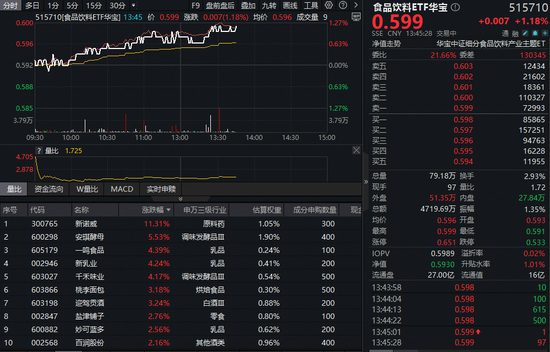
Core Viewpoint - The food and beverage sector is experiencing an upward trend, with the Huabao Food and Beverage ETF (515710) showing a price increase of 1.18% as of the latest report, driven by strong performances from consumer goods and certain liquor stocks [1][2]. Group 1: Market Performance - The Huabao Food and Beverage ETF (515710) opened with a price increase of 1.18%, reflecting a positive market sentiment in the food and beverage sector [1][2]. - Notable stock performances include Angel Yeast rising over 5%, and Yiming Foods, New Dairy, and Qianhe Flavor rising over 4% [1]. - Major liquor brands such as Guizhou Moutai, Shanxi Fenjiu, and Yanghe Co. also showed slight gains, contributing to the overall positive trend in the sector [1]. Group 2: Sales and Consumer Engagement - The "Moutai Sauce Aroma · Sauce Friends Enjoyment Week" event has generated significant consumer engagement, with online sales exceeding 145 million yuan and over 531 million exposures [2]. - Key products like Moutai 1935 and Moutai Prince saw remarkable year-on-year sales growth of 840%, 495%, and 415% respectively during the event [2][3]. Group 3: Valuation and Investment Opportunities - The food and beverage sector is currently at a historical low in terms of valuation, with the price-to-earnings ratio of the underlying index for the Huabao ETF at 20.25 times, indicating a favorable long-term investment opportunity [3]. - Analysts suggest that the current market conditions may present a good entry point for investors looking to position themselves in the food and beverage sector [3][4]. Group 4: Future Outlook - The white liquor sector is expected to stabilize as both valuation and inventory levels are low, with positive signals from supply and demand potentially catalyzing growth [4]. - The sector may see improvements in demand as policies aimed at expanding domestic consumption and encouraging spending are implemented [4][5]. - Leading companies in the sector are actively engaging in shareholder returns, enhancing the investment appeal of white liquor stocks [5].

迎驾贡酒涨2.08%,成交额9744.70万元,主力资金净流入634.49万元
Xin Lang Zheng Quan· 2025-12-19 03:05
Core Viewpoint - The stock of Yingjia Gongjiu has experienced a decline of 24.29% this year, with recent fluctuations indicating a slight recovery in the short term, while the company's financial performance shows a significant decrease in revenue and net profit compared to the previous year [1][2]. Group 1: Stock Performance - On December 19, Yingjia Gongjiu's stock rose by 2.08%, reaching 39.70 yuan per share, with a trading volume of 97.447 million yuan and a turnover rate of 0.31%, resulting in a total market capitalization of 31.76 billion yuan [1]. - The stock has seen a net inflow of main funds amounting to 6.3449 million yuan, with large orders contributing to a buy of 15.3847 million yuan and a sell of 14.2778 million yuan [1]. - Over the past five trading days, the stock has increased by 1.53%, but it has decreased by 4.64% over the last 20 days and 7.72% over the last 60 days [1]. Group 2: Financial Performance - As of September 30, Yingjia Gongjiu reported a revenue of 4.516 billion yuan for the first nine months of 2025, reflecting a year-on-year decrease of 18.09%, while the net profit attributable to shareholders was 1.511 billion yuan, down 24.67% year-on-year [2]. - The company has distributed a total of 7.28 billion yuan in dividends since its A-share listing, with 3.12 billion yuan distributed over the past three years [2]. Group 3: Shareholder Information - The number of shareholders for Yingjia Gongjiu decreased by 14.56% to 57,100 as of September 30, with an average of 14,015 shares held per shareholder, which is an increase of 17.05% [2]. - Among the top ten circulating shareholders, the China Securities White Wine Index A (161725) is the second-largest shareholder with 24.4568 million shares, an increase of 4.1366 million shares from the previous period [2].

食品饮料2026年度策略报告:食品饮料2026:大年起点,持旧迎新-20251219
Orient Securities· 2025-12-19 02:46
食品饮料行业 策略报告 看好(维持) 食品饮料2026:大年起点,持旧迎新 ——食品饮料2026年度策略报告 日期:2025年12月19日 姓 名 李耀 邮 箱 liyao@orientsec.com.cn 电 话 021-63325888 执业证书编号 S0860525100001 东方证券股份有限公司 食品饮料2026:大年起点,持"旧"迎"新" • 食品饮料2026:大年起点易涨难跌,核心矛盾在于业绩。我们认为,食品饮料2021-2024年主要在于通过业绩释放来去化估值泡沫,站 在2025年末,板块估值回到历史区间底部,但消费力低迷等因素导致板块处于业绩下修区间,板块核心矛盾回归分子端,也即是业绩。 • 分子端:从结构红利到总量修复,持"旧"迎"新"。我们认为,伴随经济结构转型及居民资产负债表修复,2026年有望成为需求侧的拐 点,在一定时间内,消费的"需求侧L型"与消费的"结构性"特征或将共存,新消费业绩景气延续,旧消费业绩出清;伴随时间展开,消 费有望呈现总量修复与结构性繁荣共存局面,传统消费与新消费均有望实现业绩上修,其中传统消费有望释放业绩弹性。 • 持"旧":需求探底、经营改善,传统消费将迎来 ...
73岁倪永培 “换储”:儿媳张丹丹接掌300亿迎驾贡酒,寒冬中百亿目标悬了?
3 6 Ke· 2025-12-18 11:10
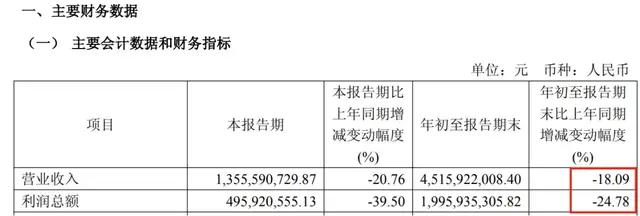
Core Viewpoint - Yingjia Gongjiu, one of the "Four Flowers of Huijiu," is facing a significant challenge regarding its future succession and management stability as it transitions from a "father-to-son" inheritance model to a "daughter-in-law taking over" scenario [2][4][16]. Management Transition - The 73-year-old controlling shareholder and chairman, Ni Yongpei, appointed his 43-year-old daughter-in-law, Zhang Dandan, as vice chairman after his son, Ni Qingshen, exited the core management team eight years ago, signaling a clear succession plan [2][6]. - Zhang Dandan's rise to a key position is seen as a necessary choice for family succession amid industry challenges, with the company currently valued at 31.5 billion yuan [2][4]. Financial Performance - Yingjia Gongjiu reported a revenue of approximately 1.36 billion yuan for the current reporting period, reflecting a year-on-year decline of 20.76%, and a total profit of about 496 million yuan, down 39.50% [3][10]. - For the first three quarters of 2025, the company’s revenue and net profit both fell by over 18%, making the ambitious 10 billion yuan sales target seem unattainable [3][10]. Challenges Ahead - The transition to Zhang Dandan as a leader comes with significant challenges, including the need for governance reform and business transformation in a declining industry [11][12]. - The current management structure, dominated by long-serving employees from before the 1997 restructuring, may lead to conservative decision-making, which could hinder adaptability to industry changes [7][11]. Strategic Focus - To overcome growth bottlenecks, Yingjia Gongjiu must focus on two main strategies: enhancing high-end product offerings and expanding into provincial markets while optimizing the dealer network [18]. - The company aims to deepen its high-end branding, particularly with its Dongcang series, to reduce reliance on mid-to-low-end products [18]. Market Position - Yingjia Gongjiu has reclaimed the second position in the Huijiu market with over 80% of its revenue coming from mid-to-high-end products, but faces intense competition and market pressures [8][12]. - The company lacks the brand strength of top competitors like Moutai and Wuliangye, which may lead to market share erosion if it cannot establish a core competitive advantage [15].
搜狐酒馆第47期|王健:直播电商步入全域融合新阶段,破局关键在爆品、IP与精细化运营
Sou Hu Cai Jing· 2025-12-18 07:12
Core Insights - The liquor live e-commerce industry has transitioned from an early stage of traffic dividends to a new phase centered on "omni-channel marketing" by 2025, requiring higher comprehensive operational capabilities from liquor companies [2][3] - The key to success in this competitive landscape lies in creating internet logic-compliant blockbuster products, building an IP matrix to reduce customer acquisition costs, and achieving refined operations [2][4] Industry Trends - The current trend in liquor live e-commerce is moving towards a comprehensive model that integrates public domain live streaming, private domain operations, influencer distribution, brand communication, and offline sales, forming a unified "brand-effect-sales" approach [3] - The industry is witnessing a shift from incremental competition to stock and even shrinkage competition, driven by changes in consumer demographics and consumption scenarios [10] Marketing Strategies - Successful liquor brands are focusing on creating high-appeal products tailored for online sales rather than simply transferring unsold offline products to the online space [4] - Brands are advised to leverage market trends, such as price fluctuations of high-end products like Moutai, to generate online traffic while maintaining a focus on long-term brand value and product scarcity [6][7] Operational Insights - Companies are encouraged to develop a "super IP matrix" to achieve low-cost and efficient brand communication and customer acquisition, utilizing key individuals within the organization as powerful communication carriers [9] - The operational efficiency in online sales is crucial, emphasizing the importance of data-driven and refined operational capabilities to engage consumers quickly [4][11] Consumer Engagement - Understanding consumer psychology is vital, especially during price fluctuations, where consumers may hesitate to purchase during price drops, necessitating a focus on long-term brand value rather than short-term price promotions [7] - The combination of precise content hooks and brand-aligned scenarios is essential for attracting traffic while preserving brand value [5] Future Outlook - The future competition in the liquor industry will hinge on talent that understands new internet technologies and marketing models, with traditional companies needing to adapt to the changing landscape [10] - The integration of brand promotion and sales conversion through data-driven strategies is feasible and represents a key direction for companies in the liquor live e-commerce space [12]


迎驾贡酒谁来接班?儿子离任后七旬董事长提拔儿媳
Tai Mei Ti A P P· 2025-12-17 01:14
Core Viewpoint - The leadership transition at Yingjia Gongjiu is underway as the founder's son steps down, and the daughter-in-law is promoted, raising questions about the company's future direction and performance amidst a challenging market environment [1][3]. Company Leadership Transition - Ni Yongpei, the 73-year-old chairman and founder of Yingjia Gongjiu, has not disclosed any retirement plans, leading to speculation about succession [2][3]. - Ni Qing Shen, the chairman's son, left the core management team in 2017 and has not held any executive positions since, prompting the promotion of his wife, Zhang Dandan, to a key leadership role [3][4]. - Zhang Dandan, now the vice chairman of Yingjia Gongjiu, has a significant stake in the company, holding 8.76% of shares, and has been involved in various managerial roles within the group [4]. Company Performance and Market Position - Yingjia Gongjiu has been recognized as the "second best" in Anhui's liquor industry, competing closely with other major brands like Gujing Gongjiu and Kuozi Jiao [2][5]. - The company has shifted its focus to mid-to-high-end products, with revenue from these segments reaching 5.713 billion yuan, accounting for over 80% of total revenue [5]. - Despite achieving a strong market position, Yingjia Gongjiu's revenue for the first three quarters of the year was 4.516 billion yuan, a decline of 18.09% year-on-year, with net profit dropping by 24.67% [5][6]. Competitive Landscape - The white liquor market is becoming increasingly competitive, with major brands like Moutai and Wuliangye penetrating the Anhui market, challenging Yingjia Gongjiu's traditional stronghold [6]. - The company's performance has been affected by intensified competition, with both in-province and out-of-province revenues declining significantly [6]. - Yingjia Gongjiu's stock price has also suffered, dropping 24.17% over the year, making it the worst performer among the "Four Flowers of Anhui" liquor companies [6]. Strategic Initiatives - To counteract declining sales, Yingjia Gongjiu has intensified its efforts in product distribution, focusing on the sales of bulk and unbranded liquor, which have shown better performance compared to lower-end packaged products [7]. - The company has set ambitious sales targets, aiming for 7.6 billion yuan in revenue by 2025, but faces challenges in achieving these goals amid a downturn in the white liquor market [6][7].
徽酒三巨头扎堆布局散酒生意 能否破解增长焦虑
Zhong Guo Jing Ying Bao· 2025-12-17 01:14
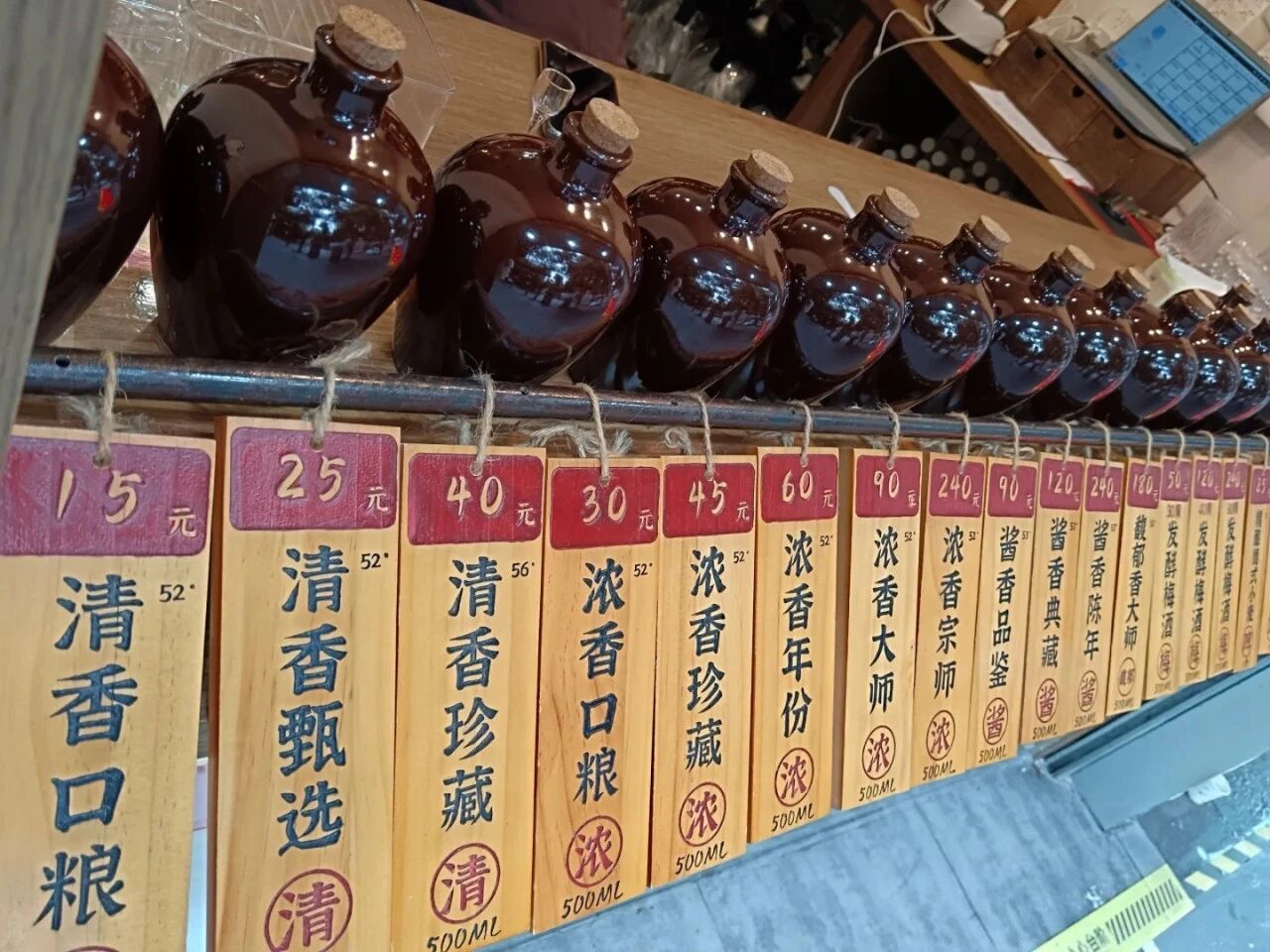
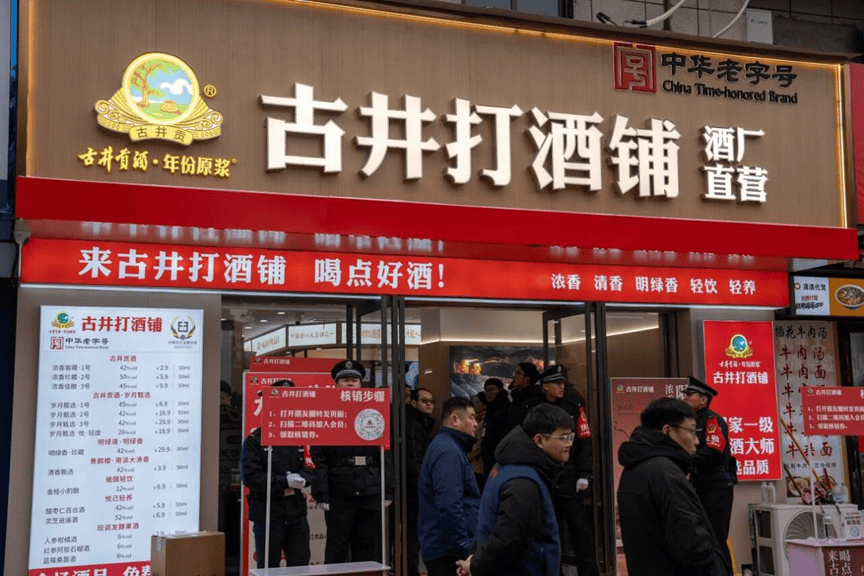
Core Viewpoint - The leading Anhui liquor companies are embracing the scattered liquor business amid a deep adjustment in the liquor industry, focusing on interactive and experiential marketing to address growth anxiety [2][8]. Group 1: Industry Trends - The liquor industry is shifting towards stock competition, with traditional deep distribution models losing effectiveness, leading to increased growth pressure on Anhui liquor companies [2][8]. - The scattered liquor market is projected to exceed 800 billion yuan in 2024 and 1 trillion yuan in 2025, with a compound annual growth rate of over 15% [5]. Group 2: Company Strategies - Gujing Gongjiu has opened its first direct "liquor shop" in Anhui, focusing on fresh sales and a variety of liquor types, including local specialties [3]. - Kuozi Jiu has launched its first "Kuozi Liquor Workshop," with plans for further expansion, while Yingjia Gongjiu has developed a dedicated scattered liquor division with multiple cooperation models [3][4]. - The product offerings from these companies include a wide range of prices, from 188 yuan per jin to as low as 20 yuan per jin, indicating a diverse product structure [3][4]. Group 3: Market Challenges - Major Anhui liquor companies have reported significant revenue declines in the first three quarters, with Gujing Gongjiu, Yingjia Gongjiu, and Kuozi Jiu experiencing year-on-year revenue drops of 13.87%, 18.09%, and 27.24%, respectively [7]. - The third quarter saw even steeper declines, with revenue falling by 51.65% for Gujing Gongjiu and 92.55% for Kuozi Jiu in net profit [7]. Group 4: Future Outlook - Industry experts suggest that the transition to scattered liquor sales is not a panacea but a necessary adaptation to leverage existing networks and brand recognition in a changing market [9]. - The success of scattered liquor business models may lead to the integration of digital tools and instant retail functions, enhancing the role of scattered liquor shops in the distribution strategy [9].


名酒降价VS白酒社区“散打”
Xin Lang Cai Jing· 2025-12-16 08:48
Core Insights - The high-end liquor market, particularly represented by Feitian Moutai, is experiencing a significant price drop, with prices falling below the official guidance price of 1499 yuan, indicating a collapse of the previously strong pricing system [1][4][17] - The low-end market for bulk liquor is emerging as a strong competitor, with companies increasingly establishing community liquor stores that promote a "pay by the cup" model, marking a significant shift in consumer behavior [1][9][22] Market Dynamics - Analysts suggest that the drastic differentiation across high, medium, and low-end markets is not merely a short-term price fluctuation but a necessary outcome of a deep correction in the liquor industry, with a shift in consumer logic from "brand premium worship" to "value for money" [3][16] - The power dynamics in distribution are shifting from producers to consumers, fundamentally reshaping the industry's value framework [3][16] Price Trends - As of December 12, 2025, the wholesale reference price for 500ml Feitian Moutai has dropped to 1485 yuan per bottle, marking a historical low and the first time it has fallen below the official guidance price [4][17] - The price decline is not isolated to Moutai; Wuliangye is also adjusting its pricing strategy, offering discounts to alleviate pressure on distributors [4][17] Inventory and Supply Issues - Data indicates that 60% of liquor companies are facing price inversion, particularly in the 800-1500 yuan price range, with an average inventory turnover period of 900 days, which has increased by 10% year-on-year [6][19] - The supply-side "pressure selling" growth model has exacerbated inventory issues, leading to a vicious cycle where distributors are forced to sell at lower prices to recover funds [8][21] Rise of Bulk Liquor - The bulk liquor market is rapidly growing, with a market size exceeding 800 billion yuan in 2024 and an annual growth rate of over 15%, projected to reach 1 trillion yuan by 2025 [9][22] - New bulk liquor stores are entering high-end communities and commercial areas, offering a modern and appealing shopping experience [9][22] Consumer Behavior Changes - The primary consumers of bulk liquor are younger individuals aged 25-35, who now prioritize personal enjoyment over social necessity, favoring a "small quantity, multiple purchases" approach [10][23] - The demand from lower-tier markets is significant, contributing approximately 60% of new growth, with consumers seeking high cost-performance products [10][23] Challenges in Bulk Liquor Market - Despite rapid expansion, the bulk liquor market faces food safety concerns, with reports of non-compliance in product quality and storage practices [11][24] - Increased competition is leading to homogenization in product offerings, with a lack of differentiation among new brands [13][26] Industry Transformation - The contrasting dynamics in the liquor industry reflect a deep struggle between consumption upgrades and industry transformation, as premium brands lose their financial allure and bulk liquor sheds its low-end image [13][26]

以“打酒”名义重启散酒,为什么徽酒跑得快
Sou Hu Cai Jing· 2025-12-16 04:44
Core Insights - The article discusses the emergence of a new retail model in the Chinese liquor market, particularly in Anhui, where companies are adopting a "front store, back workshop" approach to enhance consumer experience and drive sales [2][6]. Group 1: Market Dynamics - The Anhui liquor market is characterized by intense internal competition, with local brands dominating and making it difficult for external brands to establish a foothold [3]. - The traditional sales channels are facing pressure, prompting companies to explore new models like community liquor shops to tap into local markets and consumer preferences [4][11]. Group 2: Strategic Shifts - The shift towards liquor shops is a proactive response to multiple pressures, including high inventory levels and challenges in national expansion, leading companies to focus on local market penetration [4][6]. - Companies are leveraging their brand strength and modern operational methods to reform the fragmented liquor market, aiming to attract new consumers and enhance brand loyalty [10][12]. Group 3: Consumer Engagement - The new liquor shop model is designed to meet the evolving demands of younger consumers who seek value and personalized experiences, thus driving brand innovation [4][11]. - There are two main types of liquor shops emerging: manufacturer-operated shops that emphasize brand integrity and quality, and channel-driven shops that focus on flexible product offerings and community engagement [5][8]. Group 4: Future Outlook - The liquor market is undergoing a supply-side reform, transitioning from a low-end, fragmented structure to a more brand-oriented, experiential, and transparent model [12]. - The competition between manufacturer and channel-driven liquor shops may lead to a potential collaboration, reshaping the relationship between brands and consumers while promoting brand youthfulness and channel efficiency [12].
如何看2025年11月消费数据
2025-12-16 03:26
Summary of Key Points from Conference Call Records Industry Overview Retail Industry - In November 2025, the total retail sales of consumer goods grew at a rate of approximately 1%, indicating a slowdown in growth momentum. Restaurant revenue increased by 3.2% year-on-year but showed a month-on-month decline, reflecting weakened overall consumption market dynamics [1][3] - Online retail sales of physical goods accounted for 26% of total retail sales, but the growth rate has declined compared to previous periods. Offline retail, particularly convenience stores and supermarkets, remains relatively robust, while department stores and specialty shops show lower growth rates, indicating an imbalance in the development of online and offline retail formats [1][3] - Essential consumer goods like grain and oil maintain steady growth, while discretionary items such as cosmetics and gold jewelry perform well due to promotions and rising gold prices. However, home appliances are experiencing a year-on-year decline due to policy impacts and demand exhaustion, highlighting consumption differences across categories [1][3] Automotive Industry - The total retail sales of automobiles in November 2025 amounted to 445.4 billion yuan, down 8.3% year-on-year. Despite this, passenger car sales and export volumes continue to grow, with a penetration rate of new energy vehicles remaining high, indicating structural changes in the automotive market and potential for export growth [1][7] - The expected continuation of trade-in subsidies may release pent-up demand, with companies like Geely and Great Wall Motors being highlighted as potential investment opportunities. BYD is noted for its strong overseas market prospects, while XPeng Motors is recommended for its leading smart driving technology [1][7] Duty-Free Industry - The duty-free industry showed steady growth in the first ten months of 2025, with the fourth quarter benefiting from high-value items like gold jewelry and mobile phones. It is expected that Hainan's offshore duty-free sales will maintain positive growth at least until the third quarter of next year, reflecting the growth potential of duty-free consumption [1][6] - Companies to watch include China Duty Free Group, ShouLai JinJiang, Huazhu, and Atour, along with restaurant chains like Haidilao and Baosheng China, which are noted for their strong management capabilities and new brand incubation strategies [1][6] Food and Beverage Industry - The food and beverage sector experienced relatively flat demand in November 2025, with retail sales of tobacco and alcohol declining by 3.4% year-on-year. The overall demand is in a slow recovery phase, influenced by seasonal factors and the timing of the upcoming Spring Festival [1][11] Home Appliance Industry - The home appliance sector faced significant sales declines due to the impact of national subsidy policies, with retail sales down 19.4% year-on-year. However, there is an expectation that these policies may continue into next year, suggesting a focus on resilient demand in white goods and two-wheeler markets, as well as overseas market opportunities [1][2][14] Alcohol Industry - The liquor industry is currently in a phase of active destocking, with high-end brands like Moutai experiencing price corrections that support demand. The upcoming Spring Festival is expected to see marginal improvements in sales, with recommendations to gradually allocate investments in the liquor sector, particularly in high-end brands [1][12] Textile and Apparel Industry - In November 2025, online sales of clothing and textiles grew by 3.5% year-on-year, although there was a month-on-month decline. The overall performance is expected to improve in the fourth quarter, aiding inventory reduction and setting the stage for a favorable market in the following year [1][9] Investment Recommendations - Focus on companies with strong growth potential in the beauty and personal care sector, such as MaoGaoPing and Shangmei, and in the gold jewelry sector, prioritize firms with strong product design and foundational support [1][4] - In the automotive sector, consider companies like Geely and Great Wall Motors, as well as BYD for overseas expansion opportunities [1][7] - For the duty-free sector, keep an eye on leading companies like China Duty Free Group and ShouLai JinJiang, as well as promising restaurant chains [1][6]