宝马

Search documents
智能辅助驾驶竞速与暗战:自研派VS合作派,功能水平分化加剧
Bei Ke Cai Jing· 2025-05-22 10:37
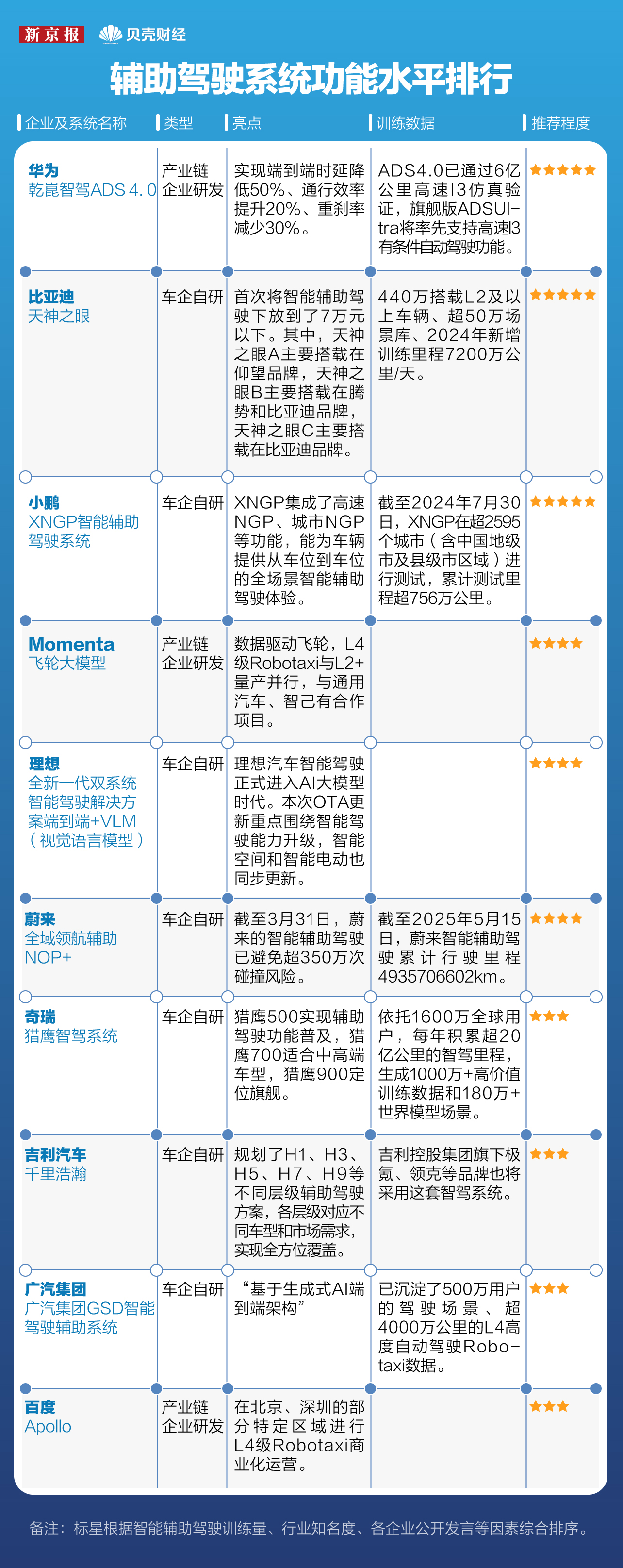
Core Insights - The article discusses the advancements and competitive landscape of the assisted driving industry, highlighting various companies' self-developed systems and strategies [1][4]. Group 1: Company Developments - Li Auto has launched its new generation dual-system intelligent driving solution, focusing on upgrading driving capabilities and synchronizing updates for smart electric vehicles [3]. - NIO's intelligent assisted driving system has reportedly avoided over 3.5 million collision risks, accumulating a total driving mileage of approximately 4.94 billion kilometers as of May 15, 2025 [3]. - Chery's Hawk 500 has achieved widespread adoption of assisted driving features, with the Hawk 700 targeting mid-to-high-end models and the Hawk 900 positioned as a flagship [3]. - GAC Group's GSD intelligent driving assistance system has accumulated 5 million user driving scenarios and over 40 million kilometers of high-level autonomous driving data [3]. Group 2: Industry Trends - BYD and XPeng are recognized as leaders in self-developed intelligent driving systems, with BYD's high-end system named "Tianshen Eye" [4]. - Bosch's China president has expressed skepticism about the self-development model, suggesting that mid-level intelligent driving should become standard and that costs could be better managed through supply chain partnerships [4]. - Huawei is positioned as a top player in the intelligent driving system market, with plans for 10 brands from 7 automakers to adopt its solutions, potentially exceeding 500,000 vehicles [4][5]. - Huawei's collaboration models include component supply, Huawei Inside (HI) partnerships, and deep cooperation with automakers, with the latter being the most integrated approach [5]. Group 3: Strategic Partnerships - SAIC Group has publicly stated its intention to maintain control over core technologies while also choosing to collaborate with Huawei [6]. - The partnerships with Huawei have led to increased sales for collaborating automakers, but questions remain about their ability to independently develop high-quality vehicles [6].



国际观察|关税冲击下德国经济面临增长停滞风险
Xin Hua She· 2025-05-22 09:56
德国经济专家委员会21日发布最新预测,将德国2025年经济增长预期下调至零。这一权威咨询机构的主 席莫妮卡·施尼策尔表示,美国贸易政策对德国经济形成显著冲击,其关税大幅上调且不可预测,已成 为拖累德国出口与投资的主要因素。 分析人士指出,美国滥施关税措施,破坏了以市场为导向的自由贸易规则。作为欧盟最大经济体,德国 首当其冲,面临出口订单锐减、支柱产业承压等多重挑战。 "很难预测未来业务发展" 德国联邦统计局数据显示,2024年德美双边贸易总额达2528亿欧元,其中德国对美出口1614亿欧元,美 国由此重返德国最大贸易伙伴地位。德美经济深度互嵌,尤其在汽车、机械、化工和医药等高附加值制 造业领域,美国为德国最大单一出口市场。 2023年与2024年,德国经济已连续两年负增长。欧盟、德国政府以及多家权威机构日前将2025年德国经 济增长预期下调至零。德国政府表示,美国关税政策是下调增长预期的主因之一。 德国经济学界普遍认为,美国关税政策将增加德国出口产品成本,进一步加剧企业面临的不确定性与运 营压力。在政策环境动荡背景下,企业可能推迟投资与招聘决策,抑制生产扩张。 慕尼黑经济研究所4月开展的一项调查显示,28.3 ...
欧盟、日本都准备对小包裹收税;一季度百度AI相关收入翻倍;香奈儿中国计划逆势开店丨百亿美元公司动向
晚点LatePost· 2025-05-22 05:45
Group 1: E-commerce and Taxation - The EU plans to eliminate the tax exemption for small packages valued under 150 euros, which accounted for approximately 4.6 billion packages last year, with over 90% originating from China [1] - Japan is also considering similar tax changes, potentially ending the exemption for imports valued under 10,000 yen by 2026 [1] - Cross-border e-commerce platforms like Shein and Temu are facing increased pressure as they seek growth outside the US market, which has already imposed taxes on packages valued under 800 USD [1] Group 2: Baidu's Financial Performance - Baidu's Q1 2025 core revenue reached 25.5 billion yuan, a 7% year-on-year increase, with net profit rising 48% to 7.63 billion yuan [2] - The company's cloud business grew by 42% year-on-year, and AI-related revenue saw over 100% growth due to the launch of a low-cost large model [2] - The autonomous vehicle service "Luobo Kuaipao" expanded to 15 cities globally, providing over 1.4 million rides in Q1, a 75% increase [2] Group 3: Great Wall Motors' Wei Brand - Great Wall Motors' Wei brand held an event emphasizing user-centric changes to enhance product strength and user experience [3] - The 2025 Wei brand Blue Mountain SUV was launched, priced between 299,800 and 326,800 yuan, maintaining the previous model's starting price [3] - The company aims to establish a stronger direct service system, expanding to 600 locations across over 200 cities this year [3] Group 4: New Blue Mountain SUV Features - The new Blue Mountain SUV features the latest Hi4 plug-in hybrid technology, with a total power output of 408 horsepower and a 0-100 km/h acceleration time of 4.9 seconds [4] - It offers two battery pack options with WLTC electric ranges of 185 km and 220 km, and a theoretical combined range of up to 1343 km [4] Group 5: Smart Features of the New Blue Mountain - The new Blue Mountain is equipped with the latest Coffee OS 3 and Qualcomm Snapdragon 8295 chip, supporting advanced driver assistance systems [5] - It includes over 30 sensors for full-scene navigation assistance, enhancing the driving experience [5] - Great Wall Motors announced a next-generation intelligent super platform compatible with various vehicle types and powertrains [5] Group 6: Chanel's Market Strategy - Chanel's revenue and operating profit fell by 4.3% and 30% respectively in 2024, marking the third consecutive year of profit decline [6] - The Asia-Pacific region saw the fastest revenue decline, with a 7.1% drop, particularly in mainland China [6] - Despite challenges, Chanel plans to open 15 flagship stores in China this year, focusing on second and third-tier cities [6] Group 7: Meitu's Investment from Alibaba - Meitu announced a $250 million investment from Alibaba in the form of convertible bonds, with a 1% annual interest rate [7] - This partnership will prioritize the promotion of Meitu's AI e-commerce tools within Alibaba's ecosystem [7] - Meitu commits to purchasing at least 560 million yuan in cloud services from Alibaba over the next three years [7] Group 8: Amer Sports' Performance - Amer Sports reported a 23% year-on-year revenue increase and a 196% rise in adjusted net profit in Q1, driven by strong performance across regions and product categories [8] - The company raised its full-year revenue growth guidance by 2 percentage points to 15%-17% [8] Group 9: Berkshire Hathaway's Exit from Kraft Heinz - Berkshire Hathaway's exit from the Kraft Heinz board suggests potential divestment of its 27.5% stake in the company [9] - Kraft Heinz is considering selling its meat brands amid a 4.7% decline in comparable revenue [9] - The company has lowered its full-year performance guidance due to macroeconomic challenges [9] Group 10: Google's AI Service Launch - Google introduced a new AI service, Google AI Ultra, priced at $249.99 per month, which includes 30TB of cloud storage and YouTube premium [10] - This service integrates advanced AI capabilities and is aimed at deep research applications [10] Group 11: Elon Musk's Plans for Tesla - Elon Musk confirmed he will continue as Tesla's CEO for the next five years unless unforeseen circumstances arise [11] - Tesla plans to expand its autonomous taxi service to Los Angeles and San Francisco following its initial launch in Austin [11] - Musk mentioned the potential for Starlink to become an independent publicly traded company [11] Group 12: XPeng's Financial Results - XPeng reported a Q1 gross margin of 15.6%, a year-on-year increase of 2.7 percentage points, despite a slight revenue decline [12] - The company delivered 94,008 vehicles in Q1, a 2500-unit increase from the previous quarter [12] - XPeng expects Q2 revenue between 17.5 billion and 18.7 billion yuan, representing a year-on-year growth of approximately 115.7% to 130.5% [12] Group 13: Li Auto's i8 Specifications - Li Auto's i8 SUV features two battery options with capacities of 90.1 kWh and 97.8 kWh, offering ranges of 670 km and 720 km respectively [13] - The vehicle supports fast charging capabilities, allowing for a 500 km range in just 10 minutes [13] Group 14: BYD Stock Performance - BYD's A and H shares both reached historical highs, with A shares hitting 404 yuan and H shares surpassing 460 HKD [14][15] - BYD's market capitalization reached 1.22 trillion yuan, with a year-to-date increase of approximately 40% [15] - The company is set to receive an estimated $2 billion in passive fund inflows following its inclusion in the Hang Seng Tech Index [15] Group 15: BMW's Stock Buyback Plan - BMW announced a stock buyback plan of up to 2 billion euros, marking its third major buyback in three years [16] - The plan includes repurchases of both common and preferred shares, with a maximum of 350 million euros allocated for preferred shares [16] Group 16: Alibaba's Entertainment Division Rebranding - Alibaba's entertainment division has been renamed to Whale Entertainment Group, with Alibaba Pictures rebranded as Damai Entertainment [17] - The rebranding aligns with Alibaba's strategy to refocus on its core mission of delivering happiness [17] - The division achieved positive adjusted EBITDA in Q1 2025, driven by a 12% revenue increase to 5.6 billion yuan [17]

和谐汽车(3836.HK):聚焦豪华汽车渗透率提升机会,积极拥抱电动化浪潮
Ge Long Hui· 2025-05-22 02:15
Core Viewpoint - The luxury car dealership industry has experienced significant growth over the past two years, driven by price increases and a strong performance in luxury vehicle sales, particularly amidst supply chain disruptions. The penetration rate of luxury cars in China still has substantial room for growth, and leading luxury car dealers are expected to maintain considerable growth moving forward [1][2]. Group 1: Market Opportunities - The luxury car penetration rate in China reached 16% in 2021, compared to approximately 27% in developed countries, indicating significant potential for growth [2]. - The compound annual growth rate (CAGR) for luxury car sales in China is projected to be 6% from 2021 to 2030, supported by a focus on vehicle replacement and upgrades [2]. - The company, Harmony Auto, is positioned as a leading luxury car dealer with a portfolio of 14 brands, including major luxury and super-luxury brands [1][2]. Group 2: Electric Vehicle Strategy - Harmony Auto has proactively engaged in the electric vehicle (EV) market, establishing partnerships with leading EV companies such as Tesla and NIO, and has received service authorizations from brands like Xpeng and Li Auto [3]. - The electric vehicle penetration among luxury brands in China remains low, with Porsche, Volvo, and BMW having electric vehicle ratios of 10.3%, 6.2%, and 6% respectively in 2021, but upcoming models are expected to focus on electric vehicles [3]. - Harmony Auto plans to expand its electric vehicle product line significantly, with BMW expected to offer 25 new energy models by 2023 and to fully utilize a new electric vehicle platform by 2025 [3]. Group 3: Performance and Market Confidence - Despite challenges from the pandemic and economic pressures, the demand for luxury cars remains stable and manageable, with notable growth in super-luxury brands like Ferrari and Rolls-Royce during the first half of the year [4][5]. - The company has initiated a share buyback plan of 200 million HKD, reflecting confidence in its long-term value and addressing current undervaluation [6].
奥迪的中产神车,跌到13万多了
创业邦· 2025-05-22 00:08
Core Viewpoint - The luxury car market is experiencing significant price reductions, particularly for traditional fuel vehicles, as brands struggle to maintain sales amidst the rise of electric vehicles and changing consumer preferences [3][7][17]. Group 1: Price Reductions and Market Dynamics - Luxury brands like Audi are offering steep discounts, with the Audi A3's price dropping to as low as 12.49 million yuan, reflecting a broader trend of price slashing in the luxury segment [6][12][13]. - The decline in sales is evident, with Audi's global sales projected at 1.6712 million units in 2024, down 11.8% year-on-year, and a notable drop in key markets such as China and Germany [17]. - The aggressive pricing strategy is seen as a desperate measure to boost sales figures, as traditional luxury brands face existential threats from the growing popularity of electric vehicles [17][31]. Group 2: Consumer Sentiment and Brand Perception - The drastic price cuts have led to dissatisfaction among existing luxury car owners, who feel devalued as their vehicles depreciate rapidly [15][18]. - The frequent price fluctuations risk damaging the brand image of luxury vehicles, potentially leading consumers to perceive these brands as lower-end [20][21]. - New generation consumers are increasingly prioritizing technology and smart features over traditional luxury attributes, further complicating the market landscape for established brands [25][26]. Group 3: Strategic Responses from Luxury Brands - Luxury brands are adopting various strategies to cope with market pressures, including partnerships with tech companies like Huawei to enhance their technological offerings [32][34]. - There is a push for deeper localization in production and technology to better align with consumer expectations in the Chinese market [34]. - Financial strength remains a significant advantage for traditional luxury brands, with BBA (BMW, Benz, Audi) planning to invest over 35 billion euros (approximately 270 billion yuan) globally in 2024 to support their transition [36][37].

光洋股份易主4个月拟收购银球科技 标的高转速轴承全球市占率约28%
Chang Jiang Shang Bao· 2025-05-21 23:45
Core Viewpoint - Guangyang Co., Ltd. is planning a significant asset restructuring by acquiring 100% equity of Ningbo Yinqiu Technology Co., Ltd. through a combination of issuing shares and cash payment, which is expected to enhance its operational performance and market position in the bearing industry [1][2][6]. Group 1: Company Background - Guangyang Co., Ltd. primarily engages in the manufacturing of various bearings, particularly in the automotive parts and electronic circuit sectors, and was listed on the A-share market in 2014 [1]. - The company has undergone multiple ownership changes, with the latest being controlled by Huangshan State-owned Assets Supervision and Administration Commission since January 2025 [1][4]. Group 2: Acquisition Details - The acquisition target, Ningbo Yinqiu Technology, established in 1995, is a precision bearing manufacturer with an annual production capacity of 1.1 billion sets of bearings [1][7]. - In 2024, Ningbo Yinqiu Technology is projected to achieve a revenue exceeding 650 million yuan, reflecting a 30% year-on-year growth, with a domestic market share of over 80% for high-speed bearings and approximately 28% globally [1][8]. Group 3: Financial Performance - Guangyang Co., Ltd. has shown signs of recovery in profitability, with net profits of 51 million yuan and 25 million yuan in 2024 and Q1 2025, respectively, marking increases of 143.62% and 6.67% year-on-year [5]. - The company experienced significant financial volatility from 2015 to 2018, primarily due to previous asset acquisitions that did not meet performance expectations, leading to substantial goodwill impairments [4]. Group 4: Market Position and Future Prospects - The acquisition is anticipated to transform Guangyang Co., Ltd.'s operational performance, allowing it to strengthen its market presence in the bearing sector and expand its customer base in both the home appliance and automotive industries [6][8]. - Guangyang Co., Ltd. is also investing in capacity expansion, with plans to enhance its production capabilities to meet the growing demand in the automotive sector, particularly for high-end brands [8].

“宁王”港股上市:从产能过剩到欧洲豪赌,4780亿市值的全球突围
Sou Hu Cai Jing· 2025-05-21 16:38
Group 1 - The core viewpoint of the article highlights the strategic anxieties behind CATL's record-breaking IPO of HKD 41 billion, including domestic growth slowdown, cash flow paradox, and valuation defense [1] - CATL's revenue is projected to decline by 9.7% year-on-year in 2024, with a market share drop from 48.2% to 43.1% and a capacity utilization rate of only 60% [1] - The company has a cash balance of CNY 321.3 billion but is urgently seeking financing due to over CNY 80 billion needed for projects in Hungary and Spain over the next three years [1] Group 2 - CATL's investment of CNY 55.5 billion in Hungary for a 100GWh capacity faces challenges, including high labor costs, strict environmental standards, and geopolitical risks [3] - The cost per GWh in Hungary is CNY 5.5 billion, which is 2.6 times higher than domestic costs, and the European labor cost is three times that of China [3] - If the Hungary project is delayed by six months, capitalized interest could increase by CNY 2.8 billion, consuming 5.5% of the 2024 net profit [3] Group 3 - The competitive landscape is shifting towards a confrontation between Chinese and South Korean battery giants, with CATL facing asymmetric competition [4] - LG Energy Solution plans to mass-produce high-nickel batteries by 2025, improving energy density by 15% [4] - CATL's overseas market share is projected at 26.4% in 2024, only slightly ahead of LG Energy Solution, which has a North American market share of 38% [4] Group 4 - CATL's strategic breakthrough relies on three key battles: technology positioning, innovative business models, and resource control [5] - The company aims to produce a solid-state battery with an energy density of 500Wh/kg by the end of 2025, which is 40% higher than LG's mainstream products [5] - CATL plans to replicate the "NIO BaaS" model in Europe, targeting a 30% customer binding rate through battery leasing services [5] Group 5 - Institutional investors in the Hong Kong market are forming two camps: bullish investors see CATL as a potential "global energy infrastructure operator," while bearish investors warn of liquidity risks similar to the Wuxi Suntech bankruptcy case [7] - On the first day of trading, BlackRock and Fidelity International purchased a total of HKD 18 billion, while Goldman Sachs indicated a short position of 23% [8] Group 6 - Three critical benchmarks must be met by 2026 for CATL's survival: the Hungarian project's first phase must be operational by Q2 2026, the solid-state battery yield must reach 85%, and overseas market share must be maintained above 25% [9] - If all three benchmarks are met, CATL's market value could reach HKD 2 trillion by 2026; failure to meet two could result in a drop to HKD 800 billion [9]
亿纬锂能20250521
2025-05-21 15:14
Key Points Summary of Yiwei Lithium Energy Conference Call Company Overview - Yiwei Lithium Energy focuses on consumer electronics and energy storage batteries, with a forward-looking layout in large cylindrical batteries [2][3] - The company expects significant long-term growth potential driven by clients like BMW, with projected net profits of 5.1 billion, 7.6 billion, and 9.5 billion yuan for 2025-2027 [2][3] Industry Dynamics - The penetration rate of new energy vehicles (NEVs) is expected to reach 90% by 2030, with the energy storage market expanding due to price parity in solar storage [2] - Emerging applications such as engineering machinery and humanoid intelligent devices are anticipated to become significant growth points, driving high demand for lithium batteries [2] Competitive Landscape - The lithium battery industry is experiencing a slowdown in marginal capacity expansion, with BOM costs bottoming out [2][7] - Leading companies are expected to escape vicious competition due to product cost-performance ratios and reputation [7][8] - Chinese manufacturers are gaining market share through lithium iron phosphate technology, which offers cost advantages and is becoming mainstream [2][9] Market Share and Growth Potential - Chinese manufacturers are expanding their market share in the global market by targeting high-end models and binding quality clients [9] - The energy storage battery market is rapidly replacing Japanese and Korean manufacturers, with their market share dropping below 10% by 2024 [10][12] Financial Performance and Projections - Yiwei Lithium Energy is expected to turn profitable in 2025, with a net profit margin increase of 3-5 percentage points in passenger vehicles, translating to a profit elasticity of around 1 billion yuan [4][16] - The company has diversified its export regions to mitigate risks, with less than 20% of overseas revenue coming from the U.S. [17] Product Development and Innovations - The large cylindrical battery product line is a key focus, with significant demand expected from BMW as they ramp up electric vehicle production [18][19] - The company has launched differentiated products in the energy storage sector, enhancing profitability through technological premiums [14] Strategic Partnerships and Collaborations - Yiwei Lithium Energy is deepening collaborations with major clients and entering the U.S. supply chain, which is expected to enhance its global market position [22] Long-term Outlook - The company is positioned for steady growth in both consumer and energy storage sectors, with expectations of net profits increasing from 5.1 billion to 9.5 billion yuan from 2025 to 2027 [23][24] - The overall market dynamics and Yiwei's strategic initiatives suggest a favorable long-term outlook, making it a compelling investment opportunity [24]

开源晨会-20250521
KAIYUAN SECURITIES· 2025-05-21 14:42
Group 1: Electric Power Equipment and New Energy - In Q1 2025, European BEV sales from companies like Renault, Volkswagen, and BMW saw significant growth, with Renault's BEV sales up by 88%, Volkswagen's by 113%, and BMW's by 64% [5][6] - Chinese automakers are increasing exports to Europe, with BYD's sales reaching 14,000 units, a 124% year-on-year increase, while MG's sales dropped by 47% [6] - European automakers are set to launch new electric vehicle models from 2025 to 2026, which is expected to solidify the trend towards electrification [7] - The pressure from carbon emission assessments is high, but the introduction of new models is anticipated to help exceed targets by 2027 [8] Group 2: Social Services - Recent research highlights hyaluronic acid (HA) as a key factor in the aging process, marking a shift towards systemic interventions in anti-aging strategies [10][11] - Huaxi Biological Technology has positioned itself at the forefront of ECM research, with two new anti-aging products recently approved, indicating a shift from local to systemic interventions in anti-aging [12][13] Group 3: Media - Bilibili reported a revenue of 7.003 billion yuan in Q1 2025, a 23.6% year-on-year increase, with a net profit of 362 million yuan, indicating a turnaround from losses [15][16] - The platform's DAU reached 107 million, a 4.5% increase year-on-year, with MAU hitting a record high of 368 million, suggesting strong user growth [17][19] - The company is expected to benefit from the growth in gaming, membership, advertising, and IP monetization, driving future revenue growth [15][19] Group 4: Pharmaceuticals - The company has increased its stake in AR882 to 100%, enhancing its market position for this gout treatment, which shows significant potential for growth [21][22] - AR882 has demonstrated superior efficacy and safety in clinical trials, positioning it as a best-in-class product in the market [22][23] - The company is increasing its R&D investment, with a pipeline of 15 innovative drugs showing promising early-stage results [23]


汽车奇葩设计开始“拨乱返正”
汽车商业评论· 2025-05-21 14:17
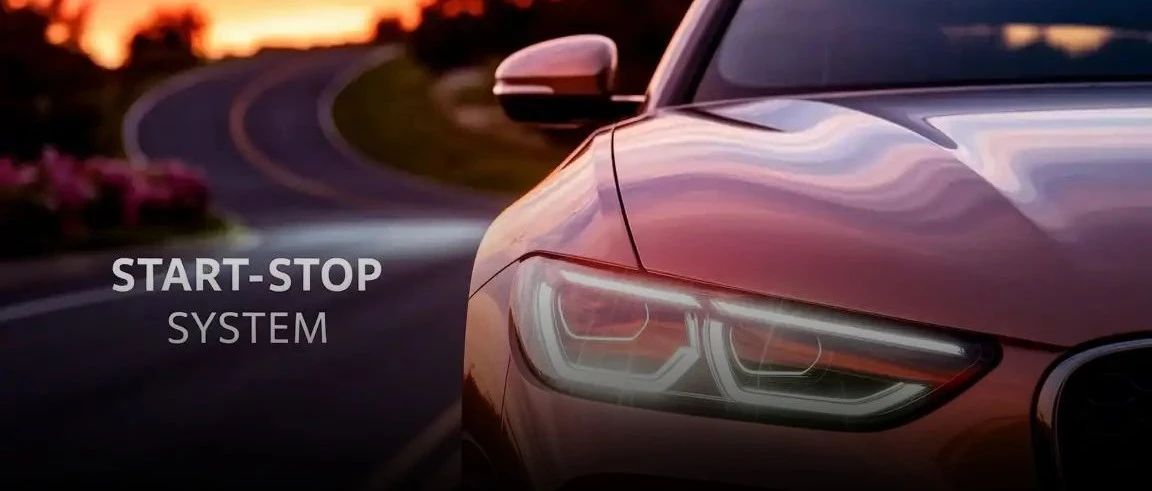
Core Viewpoint - The recent comments from EPA Administrator Lee Zeldin suggest that the automatic start-stop technology, commonly used in new vehicles, may be reevaluated or potentially phased out due to widespread dissatisfaction among drivers [4][10]. Group 1: Automatic Start-Stop Technology - Automatic start-stop technology has been around since the 1970s but gained popularity in the early 2000s, with about 65% of new cars sold in the U.S. currently equipped with this feature, up from approximately 60% in 2022 [5]. - The technology is designed to reduce CO2 emissions by approximately 2.2 grams per mile (about 5.2 liters per kilometer) and improve fuel economy by 4% to 5%, particularly in congested traffic [7]. - Despite its intended benefits, the technology has faced criticism for operational issues, including frequent failures that have led to recalls and investigations, as well as user dissatisfaction due to performance inconsistencies [9][10]. Group 2: Consumer Experience and Safety Concerns - Users often report negative experiences with the automatic start-stop system, including engine vibrations and noise during restarts, and issues with air conditioning performance during frequent engine shutdowns [9]. - The system's sensitivity can lead to safety concerns, such as the engine shutting off before the vehicle has come to a complete stop, which may pose risks during low-speed maneuvers [9]. - The EPA's potential reevaluation of the technology may lead manufacturers to reconsider its value, especially if customer satisfaction becomes a priority over marginal fuel savings [12]. Group 3: Shift in Automotive Design Trends - The article discusses a broader trend in automotive design, highlighting the shift towards touchscreens and hidden door handles, which have received mixed reviews from consumers regarding usability and safety [16][25]. - Touchscreens, while aesthetically pleasing, can distract drivers and complicate vehicle operation, leading to calls for a return to physical controls [16][20]. - Hidden door handles, while improving aerodynamics and design, raise safety concerns in emergency situations, prompting regulatory scrutiny and potential new standards in China [29][30].