吉利汽车

Search documents
乘用车2026 | 2025政策促需 2026高端发力+智能平权+出海提速
汽车琰究· 2026-01-13 00:05
Group 1 - The core viewpoint of the article emphasizes that the demand for automobiles is driven by the continuation of the trade-in policy, leading to an unexpected penetration of new energy vehicles (NEVs) and improved profitability through high-end products and overseas expansion [3][4][5][6][7][8] Group 2 - In 2025, the cumulative wholesale sales of passenger cars reached 24.119 million units, a year-on-year increase of 12.6%, with NEVs growing by 30.7% [3][8] - The penetration rate of NEVs in wholesale sales was 50.4%, up by 7.0 percentage points year-on-year, while the penetration rate for insurance reached 53.3%, an increase of 6.6 percentage points [3][46] - The share of domestic passenger cars in wholesale sales reached 69.3%, a year-on-year increase of 4.9 percentage points, with brands like Geely, Xiaomi, and Leap Motor showing significant growth [3][50] Group 3 - Looking ahead to 2026, the trade-in policy is expected to continue, supporting demand, with projected insurance sales of 22.32 million units, a decrease of 5.0% year-on-year, and wholesale sales of 30.10 million units, an increase of 1.0% [4][5] - The NEV insurance sales are expected to reach 13.8 million units, a year-on-year increase of 6.2%, while wholesale sales are projected to be 17.3 million units, up by 13.4% [4][15] Group 4 - The competitive landscape is shifting, with joint ventures declining and domestic brands accelerating their rise in the mid-to-high-end market [5][10] - In the 5-15 million price range, price-sensitive consumers are expected to drive competition, while brands like Geely, BYD, and Leap Motor are anticipated to gain higher sales growth due to their advantages in intelligence and cost-effectiveness [5][10] Group 5 - The article highlights the acceleration of intelligent driving technology, with major players like Huawei and BYD pushing for the democratization of advanced driving features [6][10] - The L3 commercial deployment is expected to gain momentum in 2026-2027, with various automakers launching new high-level driving systems and models [6][10] Group 6 - The export of passenger cars is projected to reach 6.64 million units in 2026, a year-on-year increase of 15.5%, driven by the technological advantages of domestic NEVs and the expansion of overseas manufacturing [7][11] - Companies like BYD and Geely are expected to increase their export efforts, with BYD establishing overseas factories and Geely accelerating NEV exports [7][11]





从规模冲刺到结构优化 车企2026年销量目标透露发展新逻辑
Zheng Quan Ri Bao· 2026-01-12 17:00
Core Viewpoint - The 2026 sales targets of various automotive companies reflect a divergence in strategy, with new energy vehicle companies focusing on aggressive growth while traditional automakers prioritize stability and gradual progress [1][3]. Group 1: New Energy Vehicle Companies - New energy vehicle companies, such as Leap Motor, NIO, and Xiaomi, have set ambitious sales targets for 2026, with Leap Motor aiming for 1 million units, representing a year-on-year growth of approximately 67.6% [2]. - NIO's sales target ranges from 456,400 to 489,000 units, indicating a year-on-year growth of about 40% to 50%, while Xiaomi targets 550,000 units, reflecting a growth of around 34% [2]. - The aggressive targets are driven by the need for scale and market share, with companies like Leap Motor focusing on overseas expansion and local production to support their goals [2]. Group 2: Traditional Automakers - Traditional automakers, including Geely, Chery, and Great Wall Motors, have set more conservative sales targets, with Geely aiming for 3.45 million units and Chery targeting 3.2 million units, which represents a year-on-year growth of about 14% [3]. - Great Wall Motors has a target of 1.8 million units, reflecting a year-on-year growth of approximately 36%, while Dongfeng Group aims for 3.25 million units [3]. - The conservative approach is influenced by market pressures, policy changes, and the need to balance profitability with product structure, as the domestic market shows signs of weakening [3][4]. Group 3: Strategic Focus - Chery Group emphasizes a multi-faceted strategy involving "new fuel, new energy, new overseas markets, new businesses, and new technologies" to achieve its sales targets [4]. - The focus on overseas expansion is critical for traditional automakers, as uncertainties in export growth, particularly for electric vehicles, are anticipated in 2026 [4]. - Overall, the differentiation in sales targets reflects the industry's competitive landscape, with new energy vehicle companies aiming for rapid scale while traditional automakers focus on maintaining profitability and structural resilience [4].



【整车主线周报】12月新能源批发符合预期,看好26年景气度向上
东吴汽车黄细里团队· 2026-01-12 15:53
Investment Highlights - The automotive industry is expected to see a recovery in passenger vehicle demand in Q1 2026 due to the implementation of subsidy policies, with a focus on high-end electric vehicles and resilient companies like Jianghuai Automobile, Geely, Great Wall, and others [3][8] - For heavy trucks, wholesale sales in 2025 are projected at 1.14 million units, a 26% year-on-year increase, with domestic sales expected to reach 800,000 units in 2026, reflecting a 3% growth [4][35] - The bus sector is anticipated to benefit from a new vehicle replacement policy in 2026, with expected sales of 40,000 units, a 5% increase year-on-year, driven by the need to replace aging buses [4][34] - The motorcycle market is projected to grow, with total industry sales expected to reach 19.38 million units in 2026, a 14% increase, and large-displacement motorcycles expected to see a 31% increase in sales [5][32] Passenger Vehicle Insights - The short-term outlook for the passenger vehicle sector is positive, with a recovery in demand expected in early 2026, supported by subsidy policies [3][8] - Key players in the domestic market include Jianghuai Automobile and high-end brands like Geely and Great Wall, while export strategies should focus on established companies like BYD and Changan [3][8] Heavy Truck Insights - In 2025, heavy truck wholesale sales are expected to reach 1.14 million units, with a significant increase in terminal sales and exports [4][35] - The market is expected to see a reduction in older trucks, with a projected elimination of 210,000 units by the end of 2025 [4][35] Bus Insights - The bus market is expected to see a slight increase in sales in 2026, with a focus on replacing older buses that have exceeded their replacement cycle [4][34] - The anticipated sales for 2025 are 38,000 units, with a 25% increase year-on-year, while 2026 is expected to see 40,000 units sold [4][34] Motorcycle Insights - The motorcycle industry is projected to grow significantly, with total sales expected to reach 19.38 million units in 2026, driven by both domestic and export markets [5][32] - Large-displacement motorcycles are expected to see a 31% increase in sales, with domestic sales projected at 430,000 units [5][32]

“翘尾效应”失灵! 去年12月乘用车零售量同比下降14%
Mei Ri Jing Ji Xin Wen· 2026-01-12 13:10
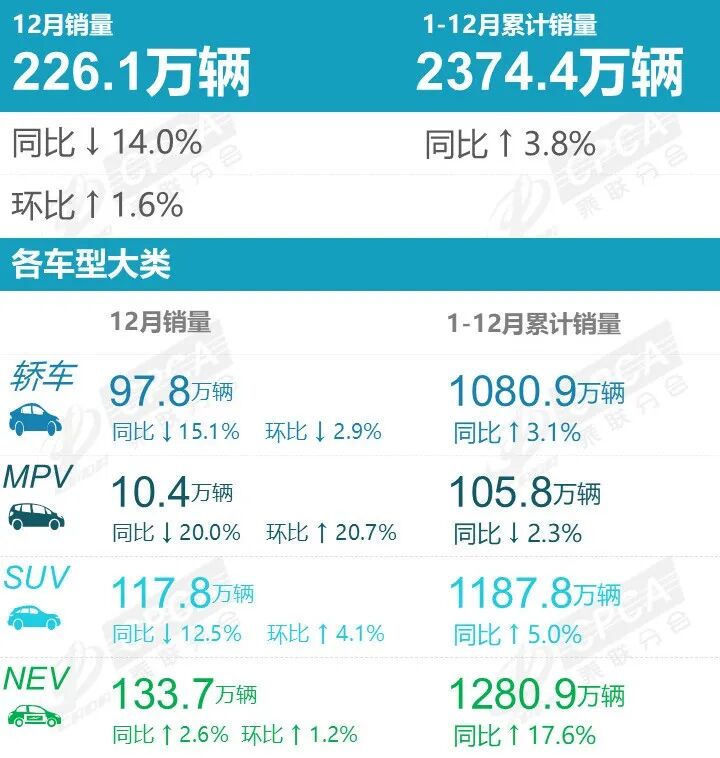
Group 1 - The domestic passenger car market experienced a retail volume of approximately 2.261 million units in December 2025, marking a 14% year-on-year decline, the first drop in December sales in four years [1] - The decline in December 2025 sales is attributed to policy adjustments regarding vehicle replacement and trade-in subsidies, leading to increased consumer hesitation [1] - The penetration rate of new energy vehicles (NEVs) reached 59.1% in December 2025, an increase of 9.6 percentage points compared to December 2024, indicating a significant growth trend [1][2] Group 2 - In December 2025, the penetration rates for NEVs were 80.9% for domestic brands, 39.1% for luxury brands, and 8.2% for mainstream joint venture brands, showing substantial growth of around 20 percentage points for both domestic and luxury brands compared to January 2025 [2] - The total retail sales of NEVs in 2025 reached 12.809 million units, a year-on-year increase of 17.6%, with an overall penetration rate of 53.3% [2] - NEV exports approached half of total passenger car exports, with 273,000 NEVs exported in December 2025, representing a 119.8% year-on-year increase [2][3] Group 3 - The overall domestic passenger car market for 2025 recorded a cumulative retail volume of approximately 23.744 million units, reflecting a 3.8% year-on-year growth, the lowest growth rate in the past three years [4] - The decline in sales during the fourth quarter of 2025 is attributed to the temporary delay in consumer purchases due to the phased reduction of trade-in and scrappage policies [4] - The 2026 market is expected to stabilize with early implementation of trade-in policies, potentially leading to a strong start in January 2026 [4][5] Group 4 - The 2026 market is anticipated to show a "U-shaped" trend with overall sales expected to remain flat compared to 2025, while exports are projected to maintain a growth rate of over 10% [5] - The market for high-end NEVs and fuel vehicles, particularly those priced above 200,000 yuan, is expected to perform well in 2026 [5] - Price competition will remain a critical factor in the automotive market in 2026, with cautious expectations for the growth of pure electric vehicle exports [5]
【环球财经】抑价提质 中国品牌改写埃及汽车市场格局
Xin Hua She· 2026-01-12 12:57
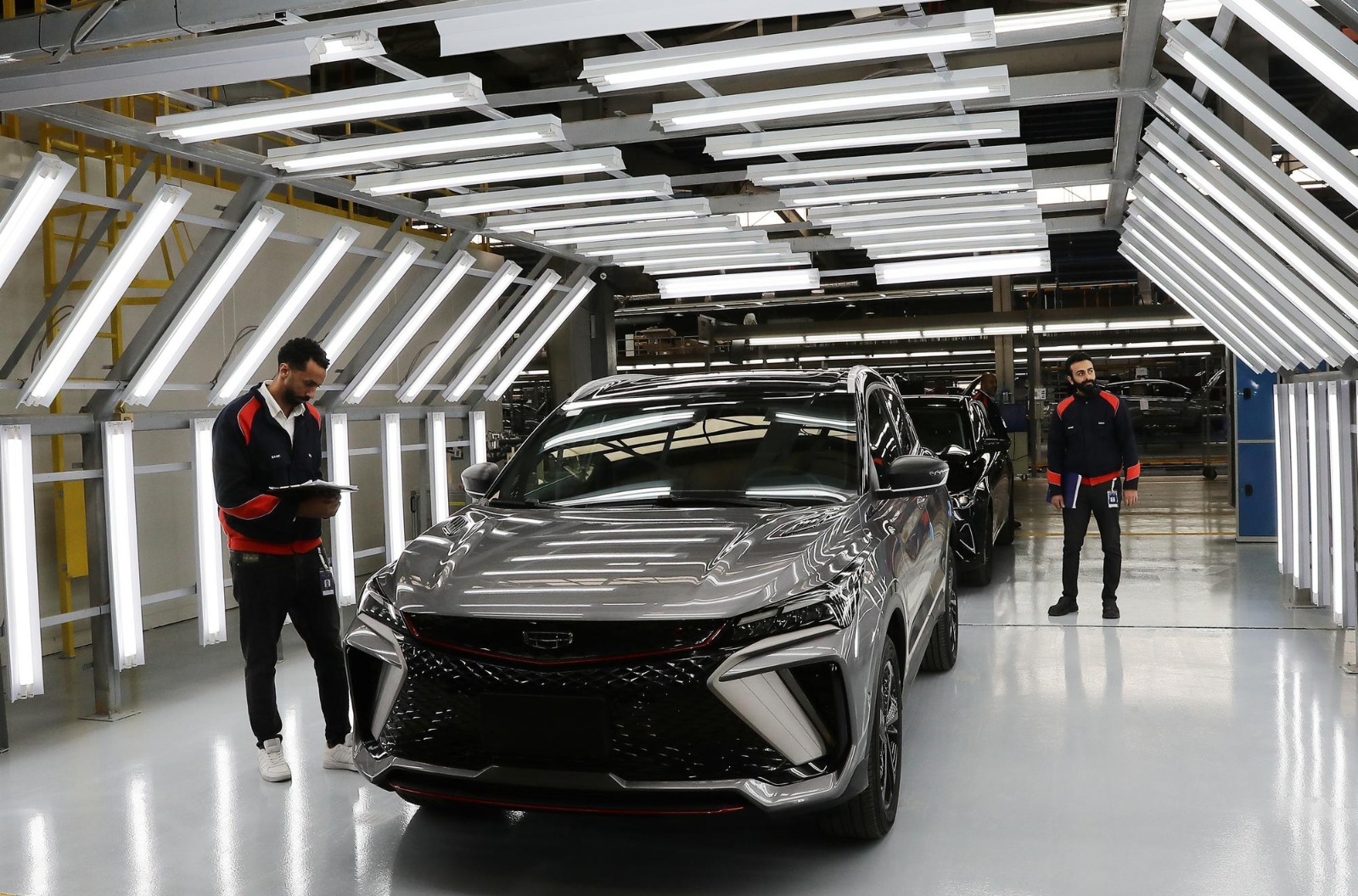
Core Insights - The Egyptian automotive market is experiencing significant changes, with improved supply and more affordable prices, allowing more families to purchase new cars. Chinese automotive brands are playing a crucial role in this positive shift [1][4]. Group 1: Market Dynamics - Since 2000, several Chinese automotive companies have achieved local production in Egypt. According to the Egyptian Automobile Dealers Association, sales of Chinese brand passenger cars are expected to reach 30,441 units in 2024, marking a year-on-year increase of 37.3% [2]. - The majority of the 18 new models launched by Chinese brands are priced below 1.5 million Egyptian pounds (approximately 230,000 RMB), which is within the acceptable price range for Egyptian consumers [3]. - The Egyptian automotive market is characterized by a large potential consumer base due to its population of over 100 million, with a high proportion of young people and a relatively low car ownership rate, indicating significant demand for first-time purchases and upgrades [3]. Group 2: Economic Factors - The Egyptian economy has faced foreign exchange shortages, leading to restrictions on car imports and resulting in high prices and limited supply. However, the market is now transitioning, with car prices gradually decreasing due to increased competition and local assembly [4]. - The strengthening of the Egyptian pound, increased local production, and reduced shipping costs are contributing factors to the declining car prices, which are expected to continue at least until 2026 [4]. - The number of foreign automotive manufacturers investing in Egypt is increasing, with at least five new assembly plants announced within seven months [4]. Group 3: Local Assembly and Tariffs - The local assembly of vehicles significantly reduces costs, as completely built units (CBU) face high tariffs ranging from 40% to 135%, while local assembly can lower tariffs to between 7% and 9% [7][8]. - The Egyptian government initiated a national automotive industry development plan in 2022, aiming to promote local assembly and enhance the automotive parts industry, ultimately establishing Egypt as a regional automotive production and export hub [9]. Group 4: Future Outlook - Chinese automotive brands are expected to thrive in the Egyptian market due to their competitive pricing and quality. There is a belief that more Chinese cars will become popular, especially those manufactured or assembled locally [11]. - Long-term success for Chinese automotive companies in Egypt will depend on investments in brand building, after-sales service, and customer-centric experiences [11].
【环球财经】抑价提质 中国品牌改写埃及汽车市场格局
Xin Hua She· 2026-01-12 12:53
Core Viewpoint - The Egyptian automotive market is experiencing significant changes, with improved supply and more affordable prices, largely due to the influence of Chinese automotive brands [1][6]. Group 1: Market Dynamics - The supply of vehicles in Egypt is increasing, leading to more reasonable pricing, making new cars accessible to ordinary families [1]. - In 2024, sales of Chinese brand vehicles in Egypt reached 30,441 units, marking a year-on-year increase of 37.3% [3]. - The introduction of 18 new models by various Chinese automakers in July 2025, primarily priced below 1.5 million EGP (approximately 230,000 RMB), caters to the Egyptian consumer market [3]. Group 2: Local Production and Economic Factors - The Egyptian automotive market is transitioning to a phase characterized by local manufacturing and healthy competition, which is beneficial for consumers and the economy [6][7]. - The local assembly of vehicles is increasing, with a reported 31.7% year-on-year growth in CKD (Completely Knocked Down) vehicles in 2024, while CBU (Completely Built Up) vehicles only grew by 5.2% [10]. - The Egyptian government has implemented a national automotive industry development plan to promote local assembly and reduce import tariffs, which can lower costs significantly [11]. Group 3: Future Outlook - The strengthening of the Egyptian pound, increased local production, and reduced shipping costs are contributing to a downward trend in car prices, expected to continue at least until 2026 [7]. - The potential for growth in the Egyptian automotive market is substantial, driven by a young population and low car ownership rates [4]. - Chinese automotive brands are encouraged to invest in brand building, after-sales service, and customer-centric experiences to achieve greater market penetration in Egypt [13].

盘点CES亮相的企业TOP 10:中国技术如何影响世界?
Xin Lang Cai Jing· 2026-01-12 12:30
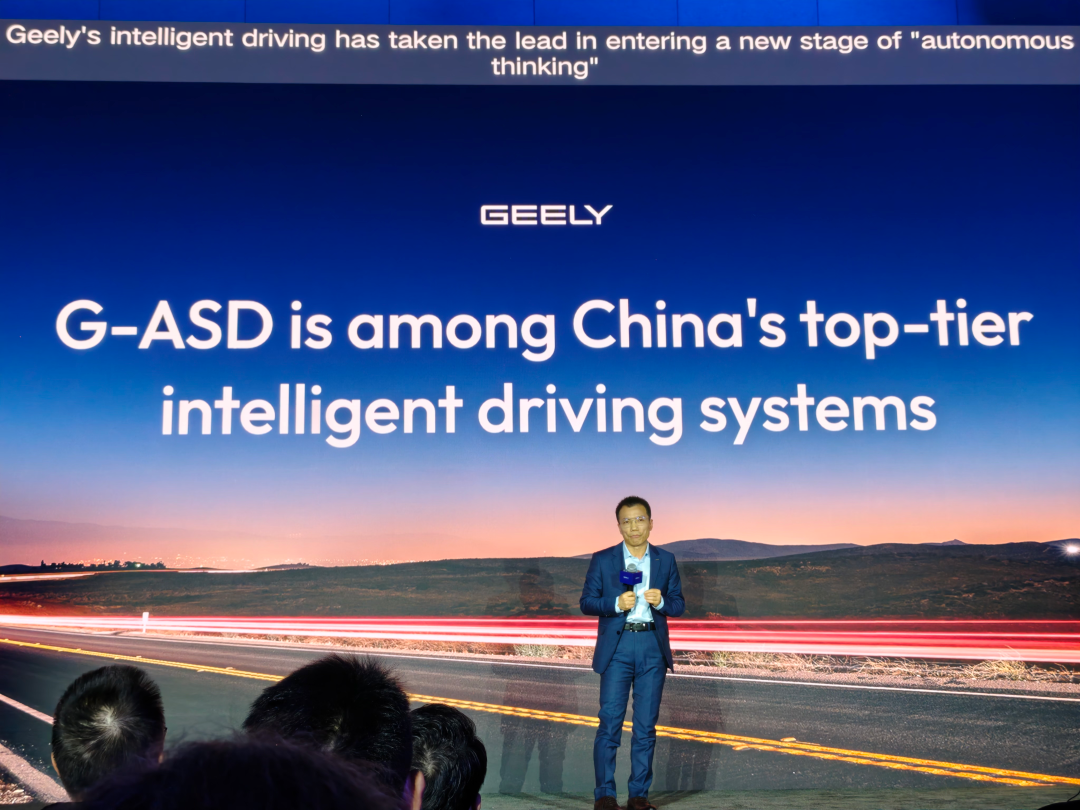
Group 1 - Chinese technology companies are redefining global consumer electronics trends through hard-core technology innovations showcased at CES [1][29] - The focus is on AI revolution, robotics, smart mobility, and IoT, highlighting the shift from low-cost manufacturing to technology-driven solutions [1][29] Group 2 - Geely Auto showcased a comprehensive technology solution for smart electric mobility, emphasizing its vertical integration capabilities in battery and electric drive technology [4][31] - The company aims to drive the global automotive industry's transition towards electrification and intelligence, enhancing its global competitiveness [4][31] Group 3 - Lenovo introduced the world's first AI PC series, featuring a dedicated neural network chip for localized large model operations and privacy-protecting AI applications [6][33] - The company is transitioning from a hardware manufacturer to an AI solution provider, integrating AI with personalized computing to lead the global PC industry into a new intelligent evolution [6][33] Group 4 - TCL demonstrated its leadership in display technology with the launch of quantum dot Mini-LED TVs and flexible OLED screens, integrating top-tier display technology with smart home solutions [11][38] - The company's strategy aims to create a comprehensive smart experience across various scenarios, redefining global consumer electronics visual standards [11][38] Group 5 - Tricky Technology unveiled its bionic quadruped robot Eame One, showcasing advanced AI environmental perception systems for complex tasks [14][41] - The introduction of the X40 series cleaning robots with robotic arm technology signifies rapid advancements in consumer robotics [14][41] Group 6 - Qianli presented an L4-level autonomous driving solution for urban environments, utilizing a self-developed multi-sensor fusion perception system for high-precision positioning [16][43] - The solution has been implemented in various global ports and mines, demonstrating the company's capability in commercializing autonomous driving [16][43] Group 7 - iFlytek showcased its AI translation device capable of real-time transcription in 83 languages, including dialects and ancient English [18][45] - The company is leveraging its voice interaction and multi-modal cognitive technology to break language and cultural barriers, positioning itself as a key player in global digital transformation [18][45] Group 8 - Tuya Smart displayed its IoT cloud platform connecting over 1 million device SKUs, promoting an open ecosystem for smart home solutions [21][48] - The introduction of an AIoT chip and support for the Matter protocol aims to facilitate rapid product intelligence for overseas brands [21][48] Group 9 - SenseTime highlighted its "SenseNova" large model system, showcasing AI applications in urban governance and smart city construction [24][51] - The integration of large models with robotics aims to enhance the application of computer vision technology in complex urban scenarios [24][51] Group 10 - Yushun Technology launched its new generation humanoid robot H1, achieving industry records in joint torque and dynamic walking speed [26][53] - The company is pioneering the commercialization of consumer-grade quadruped robots, marking a significant advancement in the robotics sector [26][53] Group 11 - Qingxian Smart Chair introduced an intelligent office chair with a multi-modal perception system for real-time health monitoring and AI-driven adjustments [28][55] - This innovation aims to transform traditional seating into a proactive health management tool, reflecting deep insights into future office environments [28][55]
连续9年登顶中国品牌燃油车销冠!吉利中国星重塑燃油车价值新标杆
Xin Lang Cai Jing· 2026-01-12 12:28
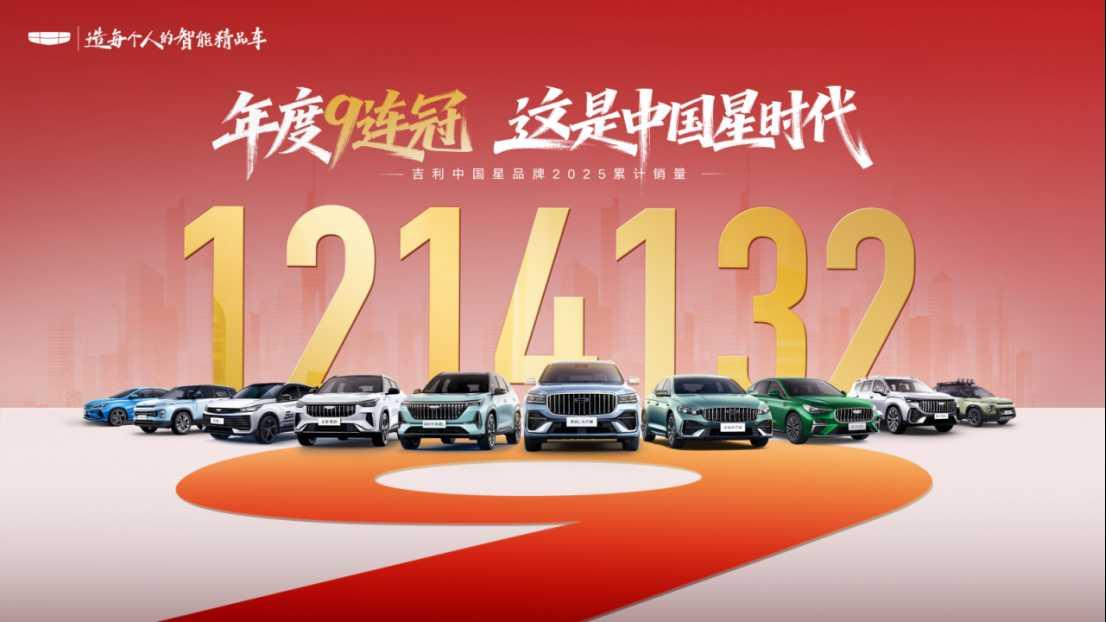
Core Insights - In 2025, Geely Auto achieved an annual total sales of over 3,024,567 vehicles, marking a 39% year-on-year increase and exceeding the adjusted target of 3 million vehicles [1][23]. - The Geely China Star matrix, consisting of popular models like Xingrui, Xingyue L, Boyue, Emgrand, and Bin Yue, sold a total of 1,214,132 units, securing the title of the best-selling Chinese brand fuel passenger car for nine consecutive years [1][23]. - Geely's strong performance in the fuel vehicle market sets a new benchmark for the development of Chinese brand fuel vehicles amidst the accelerating penetration of new energy vehicles [1][23]. Sales Performance - The high-end series of the Geely China Star sold over 420,000 units in 2025, becoming the core engine for the high-end fuel vehicle market [4][25]. - The flagship SUV, Xingyue L, was the best-selling fuel SUV of 2025, while the flagship sedan, Xingrui, led the A-class fuel sedan segment for Chinese brands [4][25]. - The Boyue model achieved annual sales of 300,000 units, driven by continuous product expansion and iteration [6][29]. Product Innovations - The Boyue underwent a dual-car renewal with the launch of the fourth-generation Boyue L and the new Boyue, enhancing its market value standards for family SUVs [8][28]. - The Emgrand sedan sold 180,000 units in 2025, becoming the first and only Chinese brand sedan to surpass cumulative global sales of 4.15 million units [10][30]. - The fifth-generation Emgrand, built on the new BMA Evo global modular architecture, underwent a comprehensive upgrade across five dimensions: aesthetics, comfort, safety, driving control, and intelligence [10][30]. Safety and Technology - Geely emphasizes safety as its top priority, with over 250 billion invested in R&D over the past 11 years and 1,562 safety patents, leading the industry [12][33]. - The global safety center was launched in 2025, achieving five Guinness World Records, and introduced the "Full Domain Safety 2.0" technology system to enhance safety standards [12][33]. - The Geely China Star models are designed with a focus on comprehensive safety, adhering to C-NCAP five-star standards and incorporating advanced safety features [14][36]. Intelligent Features - Geely's "Smart Geely 2025" strategy, initiated in 2021, aims to create a smart technology ecosystem through advanced computing and data capabilities [17][38]. - The introduction of the "Full Domain AI" technology system in 2025 positions Geely as the only automaker with a complete AI intelligent layout, enhancing both fuel and new energy vehicles [17][38]. - The new models feature the industry-leading "Qianli Haohang" advanced driving assistance system, providing a comprehensive perception capability [18][39]. Future Outlook - Geely aims to continue leveraging its core advantages in full-domain AI and safety to meet user demands and drive technological innovation [21][41]. - The company is committed to redefining the value standards of fuel vehicles through continuous technological iterations in safety, intelligence, energy efficiency, and comfort [21][41].
崔东树:锂电池出口退税对供需影响不大
Zhi Tong Cai Jing· 2026-01-12 12:17
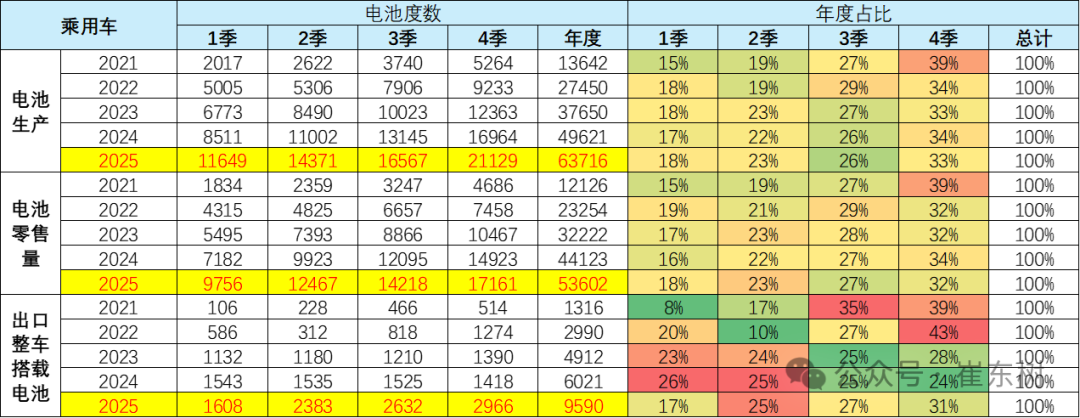
Core Viewpoint - The Ministry of Finance and the State Taxation Administration announced the cancellation of VAT export rebates for photovoltaic products, including lithium batteries, effective January 8, 2026. This move aims to align export prices with market supply and demand, reduce the phenomenon of "subsidizing overseas consumers," and address international concerns to ease trade frictions [1]. Group 1: Lithium Battery Demand Analysis - The overall demand for lithium batteries in passenger vehicles is projected to continue growing, although the expected explosive growth is not as pronounced. December saw a month-on-month decline of 5% in production, indicating lower-than-expected demand for lithium batteries [5][6]. - In December, the production of lithium batteries for new energy passenger vehicles reached 6,916 million degrees, a year-on-year increase of 20%, but a month-on-month decrease of 5%. The total for the year was 63,608 million degrees, reflecting a 29% increase [6]. - Retail demand for lithium batteries in new energy passenger vehicles showed significant weakness in December, with only 6,059 million degrees sold, indicating a slowdown in demand growth [9][10]. Group 2: Export Trends - The export of lithium batteries for new energy passenger vehicles has shown strong growth, primarily driven by BYD's contributions. However, the demand for batteries from independent suppliers remains limited [3][14]. - The export of lithium batteries is expected to face challenges, with a significant decline in exports to the U.S. projected for 2025, down 9.5 percentage points compared to 2024. The EU remains the primary market, accounting for about 40% of exports [20]. - In 2024, the export of lithium batteries is anticipated to be impacted by EU sanctions and tariffs, leading to a reduction in demand [14][20]. Group 3: Market Dynamics - The adjustment in export tax rebates is seen as a strategic move to stabilize the market and reduce speculation in lithium carbonate prices, particularly as the first quarter typically sees lower domestic demand for lithium batteries [1]. - The overall structure of lithium battery exports is shifting, with a notable decrease in exports to the U.S. and an increase in exports to the EU and Southeast Asia [20]. - The domestic demand for lithium batteries is expected to remain weak in the first quarter of 2026, with production adjustments likely necessary to align with fluctuating demand [3][18].
中国汽车流通协会:2025年12月国内狭义乘用车市场零售销量达226.1万辆 同比下降14.0%
Zhi Tong Cai Jing· 2026-01-12 12:11
Core Insights - The domestic narrow passenger car market in China saw a retail sales volume of 2.261 million units in December 2025, representing a year-on-year decline of 14.0% but a month-on-month increase of 1.6%. Cumulatively, the sales for the year reached 23.744 million units, marking a year-on-year growth of 3.8% [1]. Market Overview - December 2025 successfully achieved the growth expectations set for the "14th Five-Year Plan" in the automotive market. Despite a challenging environment with significant regulatory measures, the highlights were observed in the new energy vehicle (NEV) market and export market. The expiration of the tax exemption policy for NEVs at the end of December was expected to stimulate demand, although the depletion of subsidy funds across provinces limited the purchasing momentum [2]. Manufacturer Performance - December 2025 - BYD Auto led the sales with 414,784 units, experiencing a month-on-month decrease of 12.7% and a year-on-year decline of 18.6%, holding a market share of 14.9% [4]. - Geely Auto sold 236,817 units, down 23.7% month-on-month but up 12.7% year-on-year, with a market share of 8.5% [4]. - Chery Auto reported sales of 234,736 units, a month-on-month decrease of 10.6% and a year-on-year decline of 19.1%, capturing 8.4% of the market [4]. - Tesla China saw an increase in sales to 97,171 units, up 12.1% month-on-month and 3.6% year-on-year, with a market share of 3.5% [4]. Annual Manufacturer Performance - 2025 - For the entire year of 2025, BYD Auto sold 4.545 million units, a year-on-year increase of 6.9%, securing a market share of 15.4% [5]. - Geely Auto's sales reached 3.025 million units, reflecting a significant year-on-year growth of 39.0% and a market share of 10.2% [5]. - Chery Auto achieved sales of 2.698 million units, up 7.3% year-on-year, with a market share of 9.1% [5]. - Tesla China sold 851,732 units, down 7.1% year-on-year, holding a market share of 2.9% [5]. NEV Market Performance - December 2025 - In December 2025, BYD Auto led the NEV wholesale sales with 414,784 units, down 12.7% month-on-month and 18.6% year-on-year, capturing 26.5% of the market [8]. - Geely Auto followed with 154,264 units, a month-on-month decrease of 17.9% but a year-on-year increase of 38.7%, holding 9.9% market share [8]. - Tesla China sold 97,171 units, marking a month-on-month increase of 12.1% and a year-on-year increase of 3.6%, with a market share of 6.2% [8]. NEV Annual Performance - 2025 - For the year 2025, BYD Auto sold 4.545 million NEVs, a year-on-year increase of 6.9%, with a market share of 29.7% [9]. - Geely Auto's NEV sales reached 1.688 million units, reflecting a remarkable year-on-year growth of 90.0% and a market share of 11.0% [9]. - Changan Auto sold 937,460 NEVs, up 40.7% year-on-year, with a market share of 6.1% [9].