吉利汽车

Search documents
汽车及汽车零部件行业周报:2026年“两新”政策落地,有望带动需求稳步向上-20260111
SINOLINK SECURITIES· 2026-01-11 15:10
Group 1 - The investment rating for the automotive industry is positive, with expectations for steady demand growth driven by the implementation of the "Two New" policy in 2026 [1][12][14] - The core viewpoint emphasizes that the subsidy policy has shifted from fixed amounts to a percentage of the vehicle price, which is expected to benefit high-end vehicles while putting pressure on low-priced cars [1][14] - The report anticipates a marginal recovery in sales growth in Q1 2026, with an upward revision of the annual domestic sales growth forecast to -2% [1][14][16] Group 2 - The report highlights opportunities in themes such as smart technology and overseas expansion, with passenger car exports maintaining a growth rate of over 20% year-on-year [2][17] - Key companies to watch include BYD, Geely, and Li Auto in the automotive sector, and Horizon Robotics and Top Group in the smart technology and robotics sectors [2][22] - The report notes that the export volume of passenger cars is expected to maintain double-digit growth in 2026, driven by recovering demand in markets like Russia and the increasing penetration of fuel and new energy vehicles [2][17] Group 3 - The automotive market saw a wholesale sales volume of 1.457 million units in the last week of December 2025, with a year-on-year increase of 5%, while new energy vehicles accounted for 772,000 units, up 22% year-on-year [4][31] - In December 2025, the total wholesale sales volume was 2.759 million units, down 10% year-on-year, with new energy vehicles at 1.554 million units, showing a 3% increase [4][31] - The retail sales data for December 2025 indicated a total of 2.296 million units sold, down 13% year-on-year, while new energy vehicles saw a 7% increase in retail sales [4][31][46]



新能源汽车行业2026年度策略:供需格局有望重塑,固态电池加速落地
Bank of China Securities· 2026-01-11 14:27
Core Insights - The report predicts that global electric vehicle (EV) sales will maintain a high level of growth, potentially reaching a record high by 2026, driven by strong demand and the acceleration of solid-state battery technology commercialization [1][3] - The report maintains an "outperform" rating for the industry, highlighting the expected reshaping of the supply-demand landscape and the potential for profit growth across the supply chain [1] Industry Overview - The global EV market continues to expand, with a projected 2026 sales volume of approximately 26 million units, representing a year-on-year growth of about 15% [3][49] - In 2025, the global EV sales reached approximately 15.02 million units, reflecting a year-on-year increase of 27.2% [15][19] - The penetration rate of EVs in the Chinese market has surpassed 50%, with expectations for continued growth despite the upcoming reduction in purchase tax exemptions [32] Battery Technology - The report emphasizes the ongoing upward trend in the power battery sector, with a significant increase in installed capacity expected to continue into 2026 [51] - Solid-state battery technology is entering a critical phase of pilot testing and small-scale production, which is anticipated to drive technological upgrades across the industry [3][51] Supply Chain Dynamics - The materials segment is expected to experience a recovery in profitability, driven by a consensus against excessive competition and a significant increase in demand [3][51] - Key materials such as lithium hexafluorophosphate are experiencing supply-demand mismatches, leading to price recovery and improved profitability for leading companies in the sector [3][51] Investment Recommendations - The report suggests focusing on leading companies in segments with tightening supply-demand dynamics, such as lithium iron phosphate cathodes, separators, anodes, and copper foils [3] - Recommended companies include CATL, EVE Energy, and others that are positioned to benefit from stable supply and mature processes [3]


2026CES(国际消费类电子产品展览会)系列跟踪:AI+加速落地,物理AI+Rubin+机器人多项重要发布
Shenwan Hongyuan Securities· 2026-01-11 13:45
Investment Rating - The report maintains a positive outlook on the sectors of physical AI, overseas computing power, robotics, and intelligent connected vehicles [4][10]. Core Insights - The report highlights significant advancements in physical AI, including NVIDIA's comprehensive suite for physical AI, which encompasses models, frameworks, and infrastructure, marking a pivotal moment in AI development [4][10]. - The robotics sector is showcased as a competitive arena, with numerous Chinese companies demonstrating their technological capabilities at CES 2026, alongside international competitors like Boston Dynamics [4][10]. - The intelligent connected vehicle industry is undergoing a comprehensive upgrade, with companies like Geely enhancing their AI capabilities and setting ambitious sales targets for 2026 [4][10]. Summary by Sections 1. NVIDIA: Launch of Physical AI Suite and Rubin - NVIDIA introduced a comprehensive suite for physical AI, termed the "Cosmos" model, which integrates various data sources for training and application [10][11]. - The Rubin platform was unveiled, featuring a new memory storage system to address KV Cache expansion issues and doubling bandwidth capabilities [29][30]. 2. AMD: Need to Enhance Scale-up Capabilities - AMD showcased its MI455X Helios rack, which includes new GPU and CPU technologies aimed at competing with NVIDIA's offerings [61][66]. - The report notes that AMD's scale-up network capabilities are still in development, with future enhancements expected from partnerships with ecosystem players [64][66]. 3. Robotics: Global Competition and Technological Showcases - The report emphasizes the rapid development of the Chinese robotics industry, with numerous companies presenting their latest advancements at CES 2026 [67][68]. - Internationally, Boston Dynamics introduced the latest version of its Atlas robot, which is set for mass production and aims to integrate advanced AI capabilities [82][83]. 4. Intelligent Connected Vehicles: Comprehensive Upgrades - Geely is enhancing its AI-driven vehicle capabilities, aiming for significant sales growth and the introduction of advanced driving features by 2026 [91].

2026智驾芯片市场格局
傅里叶的猫· 2026-01-11 12:43
Core Viewpoint - The competition in the intelligent driving chip market has shifted from algorithm functionality to core hardware chips, with significant developments from domestic chip manufacturers like Horizon and Momenta [3]. Group 1: Domestic Intelligent Driving Chips - Horizon's J6P chip has completed hardware design and is in performance testing, with plans to achieve vehicle readiness by Q2 2026, targeting mid-to-high-end models [5]. - Horizon plans to reduce the price of the J6P chip by approximately 15% by 2026, with potential discounts of up to 20% for major clients like BYD, impacting the mid-to-high-end chip market [5]. - Momenta's BMC chip has entered the testing phase, focusing on cost advantages and targeting the market for vehicles priced below 200,000 yuan, with expected mass production in 2026 [6][7]. - Momenta anticipates a significant increase in output, projecting around 1 million units in 2026, driven by partnerships with SAIC, GAC, and Chery [7]. Group 2: Algorithm and Performance Comparison - In standard driving scenarios, both Momenta and Horizon perform similarly, but Momenta excels in complex scenarios, benefiting from its extensive urban experience [8]. - Momenta's software-driven hardware model allows for better adaptation to market needs, enhancing user experience and providing tailored tools for automakers [8]. Group 3: Self-Development vs. Collaboration - Different automakers are adopting varied strategies, with companies like NIO and Li Auto focusing on self-developed chips, while others like Chery and Geely are opting for a mixed approach [9][12]. - High-end models are more likely to utilize self-developed chips to enhance profit margins and adapt to specific driving algorithms, while mid-to-low-end models prioritize cost-effectiveness [13]. Group 4: Market Dynamics and Future Outlook - The market is expected to see a coexistence of self-developed chips and third-party suppliers, with domestic chip market share projected to reach around 10% by 2026 [15]. - NVIDIA is expected to maintain a significant market share in high-end models, while domestic suppliers like Horizon and Momenta are anticipated to capture substantial portions of the mid-to-low-end market [15]. - The price trends indicate that while low-end chips are stabilizing, high-end chips from NVIDIA may see price increases, while domestic chips like those from Momenta are expected to drop significantly [21]. Group 5: Challenges and Opportunities for Domestic Chips - Domestic chips still face challenges in performance and algorithm ecosystem compared to NVIDIA, with a technology gap of about 1-1.5 generations [17]. - The Robotaxi sector presents an opportunity for domestic chips, although current limitations in performance and ecosystem integration hinder broader adoption [18][19]. Group 6: Price Trends and Market Projections - The pricing landscape for intelligent driving chips varies significantly based on performance, with low-end chips around 1,000 yuan and high-end chips from NVIDIA priced between 8,000-9,000 yuan [21]. - The competitive landscape in 2026 will be crucial, with domestic chips pushing for wider adoption and price reductions, enhancing the overall driving experience for consumers [22].


港股公告掘金 | 先声药业拟分拆先声再明的H股在联交所主板独立上市
Zhi Tong Cai Jing· 2026-01-11 12:22
Major Events - CATL (03750) plans to issue an additional 34.8584 million shares [1] - MINIMAX-WP (00100) fully exercised its over-allotment option involving a total of 4.3796 million shares [1] - MIRXES-B (02629) established a strategic partnership with N Health, and its HELICORapid and FITRapid home testing kits received regulatory approval [1] - LFG Investment Holdings (03938) was acquired by Chen Shaoyang, who purchased approximately 61.43% of shares at a discount of about 59.46% through a cash offer, with resumption of trading on January 12 [1] - Xiansheng Pharmaceutical (02096) plans to spin off its H-shares for independent listing on the main board of the Hong Kong Stock Exchange [1] - OmniVision Technologies (00501) saw its public offering in Hong Kong oversubscribed by 9.28 times, with a share price of HKD 104.8 [1] - China Nonferrous Mining (01258) released its production guidance for 2026, expecting a total copper output of approximately 484,000 tons [1] - China Rare Earth Holdings (03788) reported a 53.1% increase in JORC ore reserves to 2.62 million ounces, with JORC gold resources rising to 5.54 million ounces [1] - Black Sesame Intelligence (02533) plans to issue a total of 30.1319 million subscription shares, raising approximately HKD 568 million [1] - Shanghai Pharmaceuticals (02607) received approval for the production of bromhexine oral solution [1] - Beijing Energy International (00686) signed an EPC contract for a 100 MW wind power project in Heilongjiang Province [1] - Standard Chartered Group (02888) plans to issue SGD 750 million fixed-rate reset perpetual subordinated convertible securities [1] Share Buybacks/Reductions - Geely Automobile (00175) repurchased 1.547 million shares for HKD 26.6229 million on January 9 [2] - Sunny Optical Technology (02382) repurchased 840,000 shares for HKD 53.9894 million on January 9 [2] - Xiaomi Group-W (01810) repurchased 4 million shares for HKD 151 million on January 9 [2] Operating Performance - China Jinmao (00817) achieved a cumulative contracted sales amount of RMB 113.5 billion for 2025, a year-on-year increase of 15.52% [2] - Jiumaojiu (09922) reported stable performance for its main brands in the fourth quarter [2] - CIFI Holdings Group (00884) recorded a cumulative contract sales amount of approximately RMB 16.1 billion for 2025 [2] - R&F Properties (02777) reported total sales revenue of approximately RMB 14.21 billion for 2025, a year-on-year increase of 26.54% [2] - Zhongliang Holdings (02772) reported a cumulative contract sales amount of approximately RMB 12.07 billion for 2025, a year-on-year decrease of 32.68% [2] - Shui On Land (00272) achieved a cumulative contract property sales amount of RMB 7.916 billion for 2025 [2] Additional Performance Metrics - Greenland Hong Kong (00337) reported contract sales of approximately RMB 7.214 billion for 2025, a year-on-year decrease of 21.66% [3] - Yuzhou Group (01628) achieved a cumulative sales amount of RMB 6.727 billion for 2025 [3] - New World Development (01030) reported contract sales of approximately RMB 1.354 billion in December [3] - China Shipbuilding Defense (00317) expects a year-on-year increase of 149.61% to 196.88% in net profit attributable to shareholders for 2025 [3] - Longyuan Power (00916) completed a cumulative power generation of 76.4694 million MWh for 2025, a year-on-year increase of 1.22% [3] - Sunny Optical Technology (02382) reported a December shipment of 95.592 million mobile phone lenses, a year-on-year decrease of 8.9% [3] - COFCO Joycome (01610) reported a December pig output of 567,000 heads, a month-on-month increase of 1.43% [3] - Dekang Agriculture (02419) sold 1.1097 million pigs in December, generating sales revenue of RMB 1.664 billion [3] - Hengding Industrial (01393) reported a coal output of 5.415 million tons for 2025, a year-on-year increase of 31% [3] - Orient Overseas International (00316) reported a 17.2% decrease in quarterly shipping revenue compared to the same period last year, with total cargo volume up 0.8% and carrying capacity up 4.5% [3]
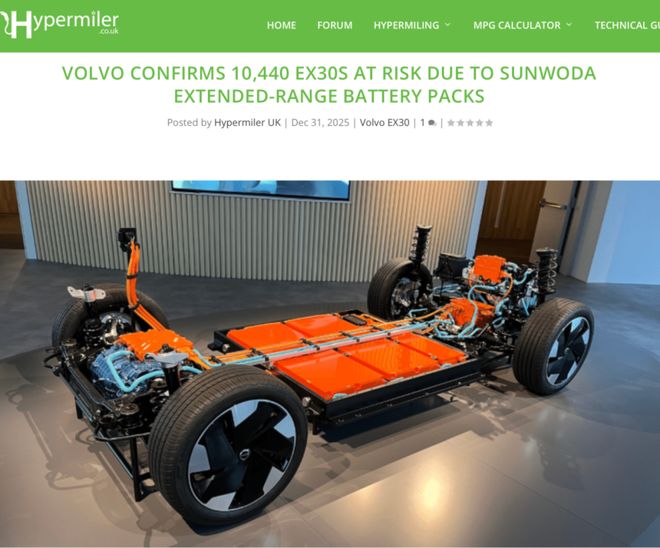
比23亿更严重:欣旺达或让数万海外车主陷入安全隐患
Tai Mei Ti A P P· 2026-01-11 12:03
Core Viewpoint - Volvo Cars, known for its commitment to safety, is facing unprecedented challenges in the electric vehicle era due to safety concerns related to its EX30 model's battery supplied by Sunwoda [1][4][11]. Group 1: Battery Safety Issues - A total of 10,440 EX30 vehicles in the UK are affected by potential safety issues related to high-voltage batteries from Sunwoda, marking a significant acknowledgment of the problem [12]. - Among 33,777 EX30 vehicles produced with Sunwoda batteries, approximately 0.02% have reported overheating issues [4]. - A fire incident involving an EX30 in Brazil raised alarms, leading Volvo to issue warnings to owners to limit charging to 70% to mitigate fire risks [7][11]. Group 2: Recall and Legal Actions - Volvo is preparing for a large-scale recall, with the South African National Consumer Commission already issuing a recall notice for 372 EX30 vehicles due to potential battery defects [7][14]. - Geely Holding, Volvo's parent company, has filed a lawsuit against Sunwoda for 2.314 billion RMB, citing quality issues with batteries supplied between June 2021 and December 2023 [14][17]. Group 3: Consumer Trust and Market Impact - The battery safety crisis has raised significant concerns among consumers, with many questioning the reliability of electric vehicle batteries and the overall quality control in the industry [23][29]. - Volvo's temporary measure of limiting charging to 70% has led to dissatisfaction among owners, as it significantly reduces the vehicle's usable range [12][13]. - The incident has broader implications for the electric vehicle industry, potentially leading to increased scrutiny and a shift towards prioritizing safety and quality over cost [29].

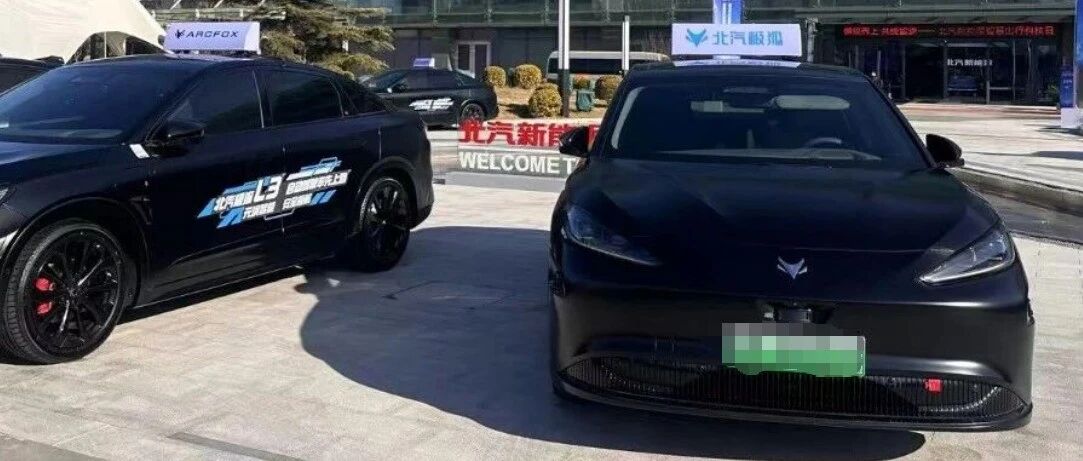
“终于上路了”!北汽、长安等车企竞逐L3
Xin Lang Cai Jing· 2026-01-11 11:44
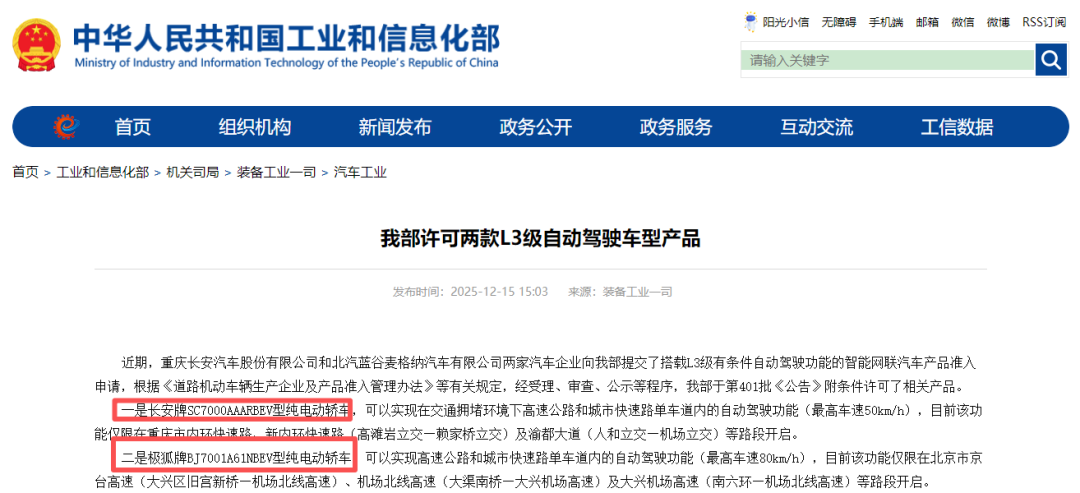
Core Insights - The approval of L3 conditional autonomous driving vehicles by the Ministry of Industry and Information Technology marks a significant step towards commercial application in China [4][18] - Companies like BAIC and Changan are leading the charge in the L3 autonomous driving sector, with their models set to begin trial operations [1][2] Group 1: L3 Autonomous Driving Approval - The first batch of L3 conditional autonomous driving vehicles approved includes the BAIC Arcfox Alpha S (L3 version) and Changan SC7000AAARBEV [1][2] - These vehicles are designed for specific urban and highway scenarios, with the Arcfox model capable of operating at speeds up to 80 km/h on designated routes in Beijing [2][3] - The approval process involves a phased approach, with commercial operations expected to gradually open to individual users by Q2 2026 [3][12] Group 2: Competitive Landscape - Multiple automakers, including BYD, NIO, and Geely, are vying for entry into the L3 autonomous driving market, with some obtaining local government permits for testing [2][14] - The distinction between permits from the Ministry of Industry and Information Technology and local governments lies in their nature; the former allows for commercial pilot projects, while the latter focuses on research and development [15][17] - Geely's Zeekr 9X has received a testing permit covering over 9,224 square kilometers in Hangzhou, indicating the scale of testing efforts [14] Group 3: Future Developments - The industry anticipates 2026 to be a pivotal year for the mass production of L3 autonomous driving technology, with potential breakthroughs in L4 technology as well [6][18] - BAIC is committed to expanding its lineup of vehicles equipped with L3 technology, indicating a long-term strategy in the autonomous driving space [18] - The partnership between BAIC and Pony.ai aims to develop a comprehensive operational model for Robotaxi services, showcasing the industry's focus on commercializing autonomous driving [19]

鸿蒙智行首款MPV定档,定位50万级豪华市场
第一财经· 2026-01-11 11:31
Core Viewpoint - The article discusses the launch of Huawei's first MPV, the Zhijie V9, which is set to enter the market in Spring 2026, highlighting its specifications, competitive positioning, and the growing potential of the new energy MPV market [3][4]. Group 1: Product Information - The Zhijie V9 has a length of over 5.3 meters and a wheelbase exceeding 3.2 meters, featuring a range-extended power system [3]. - It will be equipped with a 53 kWh battery and a 60-liter fuel tank, achieving a maximum CLTC comprehensive range of 1250 kilometers [3]. - The vehicle is positioned in the 500,000 RMB range as a mid-to-large luxury new energy MPV [3]. Group 2: Competitive Landscape - The new energy MPV segment is experiencing significant growth, with a year-on-year sales increase of 33% from January to October 2025, while traditional fuel MPVs saw a decline of 13.9% [4]. - The market is becoming increasingly competitive, with eight new MPV models launched in the first three quarters of 2025, covering price ranges from 100,000 to 500,000 RMB [4]. - In 2026, competition is expected to intensify with the introduction of several new models, including Leapmotor D99 and Geely Galaxy V900, alongside the Zhijie V9 [4].

“终于上路了”!车企竞逐L3
Zhong Guo Ji Jin Bao· 2026-01-11 11:19
Core Insights - The article discusses the approval of L3 conditional autonomous driving vehicles by the Ministry of Industry and Information Technology in China, highlighting the competitive landscape among various automotive companies to secure entry into this advanced driving technology market [2][11]. Group 1: Approval and Launch of L3 Vehicles - BAIC's Arcfox Alpha S (L3 version) has officially started trial operations for L3 conditional autonomous driving [2][6]. - The first batch of approved L3 vehicles includes the Arcfox BJ7001A61NBEV and Changan SC7000AAARBEV, which are set to operate in designated areas in Beijing and Chongqing [6][11]. - The L3 vehicles are designed for specific scenarios, such as urban congestion and highway driving, with a maximum speed of 80 km/h [7][8]. Group 2: Competitive Landscape - Multiple companies, including BYD, NIO, and Geely, are vying for L3 conditional autonomous driving permits, with some obtaining local government approvals for testing [5][9]. - The distinction between the approvals from the Ministry and local governments lies in their nature; the former allows for commercial trial operations, while the latter is focused on research and testing [10][12]. Group 3: Future Developments and Collaborations - The industry is moving towards mass production of L3 technology, with 2026 anticipated as a pivotal year for its commercial launch [13]. - BAIC is collaborating with Pony.ai to enhance its Robotaxi services, aiming to expand its autonomous driving capabilities across various urban and highway scenarios [14]. - The development of Robotaxi services is seen as a significant opportunity for commercializing autonomous driving technology [14].
“终于上路了”!车企竞逐L3
中国基金报· 2026-01-11 11:13
Core Viewpoint - The article discusses the recent approval of L3 level conditional autonomous driving vehicles by the Ministry of Industry and Information Technology in China, highlighting the competitive landscape among various automotive companies to secure entry into this advanced driving technology market [2][4][12]. Group 1: Approval and Launch of L3 Vehicles - BAIC and Changan have received approval for their L3 level conditional autonomous driving vehicles, marking a significant step in the commercialization of autonomous driving technology in China [4][12]. - The first batch of approved L3 vehicles includes the BAIC Arcfox Alpha S and Changan SC7000AAARBEV, which are set to operate in designated areas in Beijing and Chongqing [4][12]. - The BAIC Arcfox Alpha S can achieve autonomous driving at speeds up to 80 km/h on specific highways and urban expressways, with plans to gradually open access to individual users by Q2 2026 [12][13]. Group 2: Competitive Landscape and Testing - Multiple automotive companies, including BYD, NIO, and Geely, are competing for L3 level conditional autonomous driving licenses, with some obtaining local government permits for road testing [7][15]. - The distinction between the licenses issued by the Ministry of Industry and local governments is significant; the former allows for commercial pilot operations, while the latter is primarily for research and testing purposes [16]. - Geely's vehicles have received road testing permits in Hangzhou, covering an area of 9,224 square kilometers, which will help in accumulating real-world data for optimizing autonomous driving technologies [15][16]. Group 3: Future Developments and Collaborations - The approval of L3 vehicles is seen as a pivotal moment for the autonomous driving industry, with expectations that 2026 will mark the beginning of mass production for L3 technology [18]. - BAIC is planning to introduce more high-end models equipped with L3 technology and is focusing on the development of Robotaxi services as a key application for commercializing autonomous driving [18][19]. - A strategic partnership between BAIC and Pony.ai aims to promote the deployment of the Arcfox T5 Robotaxi, with plans to establish a comprehensive operational model and technical standards for global markets [19][21].