陕西煤业

Search documents
我国中东部地区煤炭产量衰减形势展望
Xinda Securities· 2025-07-22 13:31
Core Insights - The report highlights a significant decline in coal production in China's central and eastern regions, with projections indicating a potential exit of approximately 700 million tons of production by 2035, particularly in Shanxi province, which is expected to see the most pronounced decrease [3][4] - The shift in China's coal production focus from the central to the western regions is evident, with the share of production from the central and eastern regions (including Northeast) decreasing by 26% since 2004 [3] - The report emphasizes the limited economically extractable coal reserves in China, with confirmed and credible reserves totaling 2,185.7 billion tons as of the end of 2023, suggesting a potential extraction period of only about 30 years at the current production rate [3][12] Section Summaries 1. Limited Economically Extractable Coal Reserves - China's coal resources are abundant, but the economically extractable reserves are relatively scarce, with a significant portion of reserves located in the western regions [12][13] - The distribution of coal reserves is uneven, with the western regions holding approximately 66% of the total reserves, while the central and eastern regions account for only 28% and 6%, respectively [22][25] - The development of coal reserves in the central and eastern regions faces increasing challenges due to various factors, including deeper mining depths and ecological constraints [33] 2. Declining Coal Production in Central and Eastern Regions - The lifecycle of coal mines typically exhibits a pattern of initial ramp-up, stable production, and a sharp decline in later stages, with the central region's production expected to decrease significantly [2][4] - New coal mines are predominantly being established in the western regions, indicating limited potential for resource development in the central and eastern areas [4][5] - The report notes that the production capacity in key mining areas is rapidly depleting, with challenges in capacity succession becoming more pronounced [4][5] 3. Assessment of Decline Trends and Impacts - The central region, particularly Shanxi, is projected to see an accelerated decline in coal production, with an estimated exit of around 700 million tons by 2035 [4][5] - The report identifies that the consumption rate of coal resources in core mining areas is high, leading to challenges in maintaining production capacity [4][5] - The market for coal mining rights is becoming increasingly competitive, with state-owned enterprises facing structural disadvantages in resource acquisition [4][5] 4. Investment Recommendations - In light of the declining coal production trends in the central and eastern regions, the report suggests focusing on companies with long service life and abundant coal resources in these areas, such as Xinjie Energy and Huaibei Mining [4] - Companies with resources in the Jinshan-Mongolia region or those prioritizing resource acquisition in western Xinjiang are also recommended, including China Shenhua and Shaanxi Coal [4] - The report highlights the potential for asset injections from state-owned enterprises, suggesting that companies like Yanzhou Coal and China Shenhua may benefit from such developments [4]



煤炭股批量涨停,煤炭ETF涨8.25%,能源ETF广发、能源ETF涨超4%
Ge Long Hui· 2025-07-22 08:07
Core Viewpoint - The coal sector is experiencing significant growth, driven by rising coal prices and supportive government policies aimed at stabilizing key industries, including steel and energy [1][2][3] Market Performance - A-shares recorded a total trading volume of 1.93 trillion yuan, marking the highest level since March 6, with the Shanghai Composite Index rising by 0.62% to reach a new annual high [1] - The coal sector saw a strong afternoon rally, with several stocks hitting the daily limit, leading to an 8.25% increase in the coal ETF and over 4% gains in energy ETFs [1] Policy and Industry Dynamics - The Ministry of Industry and Information Technology announced a new round of growth stabilization plans for ten key industries, including steel and coal, to combat low-price competition and promote product quality [2] - The "anti-involution" policy aims to regulate low-price competition and facilitate the exit of outdated production capacity, which is expected to support coal prices [2] Supply and Demand Analysis - On the supply side, coal production has shown signs of reduction due to economic pressures, with national raw coal output recorded at 400 million tons in May and 420 million tons in June, projecting an annual total of approximately 4.8 billion tons [3] - Import levels have dropped significantly, with June coal imports reaching a three-year low, down 25.93% year-on-year, marking the fourth consecutive month of decline [3] - The demand side is expected to improve as electricity consumption increases, with a growth rate of 4.4% since May, and thermal power generation turning positive at 1.2% [2][3]

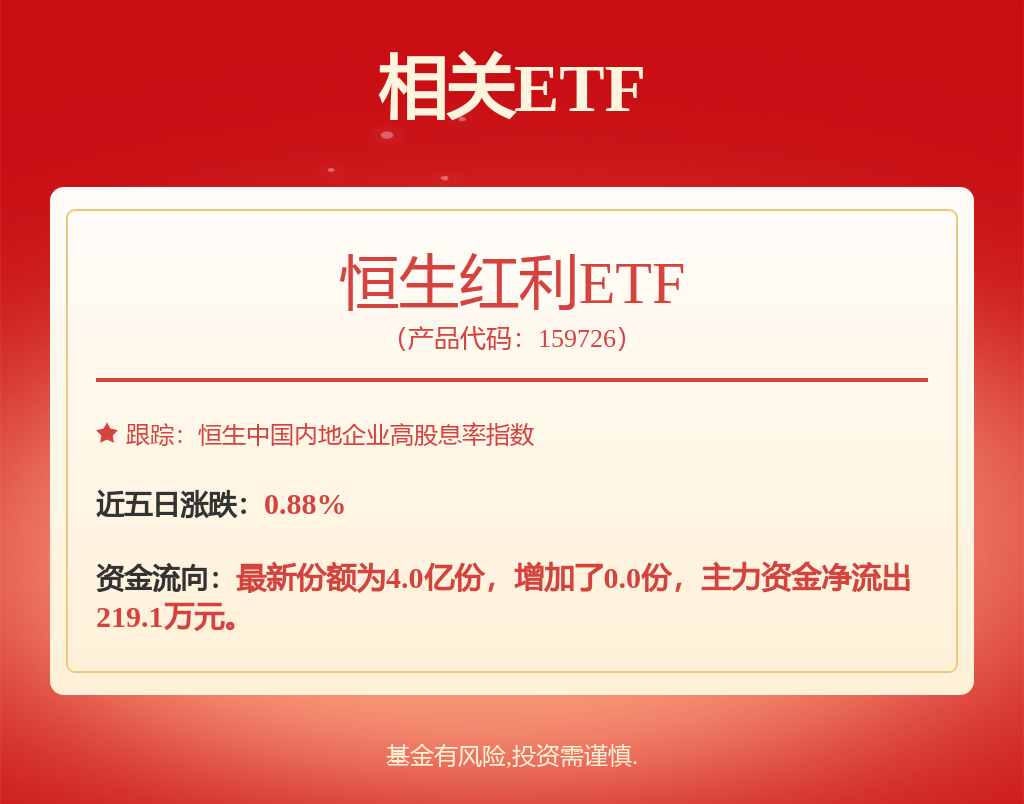
炸裂大消息!刚刚,直线涨停!
中国基金报· 2025-07-22 07:56
Core Viewpoint - The A-share market has shown strong performance recently, with significant gains in the coal sector following a favorable policy announcement aimed at stabilizing coal supply [2][3]. Group 1: Market Performance - On July 22, a favorable policy was announced, leading to a surge in the coal sector, with many stocks hitting the daily limit [3]. - The market experienced fluctuations but ultimately closed higher, with the Shanghai Composite Index rising by 0.62%, the Shenzhen Component by 0.84%, and the ChiNext by 0.61% [9]. - A total of 2,540 stocks rose, with 112 stocks hitting the daily limit, while 2,724 stocks declined [10][11]. Group 2: Policy Impact - The newly introduced "anti-involution" policy aims to regulate coal production, mandating that annual coal output does not exceed announced capacity and monthly output does not exceed 10% of the announced capacity [3]. - This policy is likened to previous supply-side reforms, which significantly influenced coal prices and market performance [7]. - Historical data shows that coal prices have dropped from a peak of 1,202 CNY/ton in 2021 to 658 CNY/ton, a decrease of 45.3% [7]. Group 3: Sector Analysis - Analysts from Zheshang Securities suggest that the "anti-involution" policy could reverse the coal industry's challenges, similar to past supply-side reforms that led to significant price recoveries [7]. - Long-term coal price improvements are anticipated if demand-side improvements follow, particularly with potential interest rate cuts and domestic stimulus [8]. - The demand for coking coal is expected to rise due to high steel mill profits, which are correlated with increased production and operational rates [8].





金十图示:2025年07月22日(周二)富时中国A50指数成分股今日收盘行情一览:银行、保险股多数收跌,煤炭、酿酒板块涨幅居前
news flash· 2025-07-22 07:09
Core Viewpoint - The FTSE China A50 Index showed mixed performance with banking and insurance stocks mostly declining, while coal and liquor sectors experienced gains [1][6]. Banking Sector - Major banks like China Everbright Bank saw a market value of 250.52 billion with a trading volume of 800 million, closing at 4.24, down by 0.03 (-0.70%) [3]. - China Pacific Insurance, China Ping An, and China Life Insurance had market values of 370.60 billion, 348.16 billion, and 1,032.52 billion respectively, with trading volumes of 1.76 billion, 3.93 billion, and 770 million, showing declines of 0.47 (-1.28%), 0.04 (-0.48%), and 0.49 (-0.86%) [3]. Insurance Sector - The insurance sector faced declines with major players like China Pacific Insurance and China Ping An reporting negative changes in stock prices [3]. Coal Sector - The coal industry saw positive performance with companies like Shaanxi Coal and China Shenhua Energy reporting gains of 1.71 (+4.53%) and 1.55 (+7.93%) respectively [3]. Liquor Sector - The liquor sector performed well, with Kweichow Moutai, Shanxi Fenjiu, and Wuliangye reporting market values of 1,840.30 billion, 232.75 billion, and 487.26 billion respectively, and gains of 2.97 (+2.42%), 21.98 (+1.52%), and 10.49 (+5.82%) [3]. Semiconductor Sector - The semiconductor industry showed mixed results with companies like Northern Huachuang and Cambrian Technologies reporting market values of 232.46 billion and 248.47 billion, with stock price changes of +2.09 (+0.65%) and -1.33 (-0.97%) respectively [3]. Oil Sector - The oil sector had positive movements with China Petroleum and China Petrochemical reporting market values of 1,649.02 billion and 731.11 billion, with stock price increases of 0.08 (+0.90%) and 0.11 (+1.86%) respectively [3]. Other Sectors - Various sectors including electric power, shipping, and consumer electronics showed diverse performance, with notable gains in companies like CATL and Industrial Fulian [4].

煤炭股走强,沪深300自由现金流ETF摩根(563900)跟踪指数上涨1.46%,盘中点位创年内新高
Xin Lang Cai Jing· 2025-07-22 06:37
Group 1 - The core viewpoint is that the A-share market is currently at a historically low valuation level, presenting strong allocation value [2] - The Hu-Shen 300 Free Cash Flow ETF Morgan (563900) has seen a continuous inflow of funds, totaling 289 million yuan over the past 12 days [1] - The Hu-Shen 300 Free Cash Flow Index reflects the performance of 50 listed companies with high free cash flow rates, indicating strong cash flow generation capabilities [2] Group 2 - China Shenhua's dividend rate for 2024 is projected to be 76.5%, continuing a trend of over 70% for four consecutive years, making it a representative of high dividend assets [2] - The coal industry is experiencing a tightening supply-demand relationship, supported by economic recovery and increased electricity demand, which is expected to bolster thermal coal prices [2] - The Hu-Shen 300 Free Cash Flow ETF Morgan has reached a new high in scale at 429 million yuan since its inception [1]
焦煤期货主力合约涨停,什么情况?山西焦煤、山煤国际等涨停,能源ETF(159930)爆量大涨超3%!“反内卷”加速,煤价已至右侧拐点?
Sou Hu Cai Jing· 2025-07-22 06:23
Group 1 - The core viewpoint of the news is the significant rise in coal futures, particularly coking coal and coke, driven by supply constraints and seasonal demand increases [1][6][8] - The energy ETF (159930) saw a strong surge, with a trading volume exceeding 1 billion yuan and an increase of over 4% at one point [1][3] - Major coal stocks, including Shanxi Coking Coal and Shaanxi Coal and Chemical Industry, reached their daily price limits, indicating strong market performance [3][4] Group 2 - The government announced a new round of growth stabilization plans for key industries, including steel and coal, aimed at optimizing supply and eliminating outdated production capacity [4] - Coal production rates have been affected by environmental inspections, leading to a decrease in operational coal mines, which has tightened supply [4][7] - The price of thermal coal has rebounded, with the Qinhuangdao Q5500 thermal coal price reaching 642 yuan per ton, a 5.4% increase from its lowest point earlier this year [5][6] Group 3 - The current market for thermal coal is characterized by high seasonal demand and tightening supply, with operational coal mines in Shanxi, Shaanxi, and Inner Mongolia at a low utilization rate of 81.1% [7][8] - The inventory of coal at ports has decreased by 18.7% compared to the highest levels earlier this year, indicating a tightening supply situation [7] - The demand for electricity has increased due to high temperatures, leading to a rise in coal consumption for power generation [7][8]


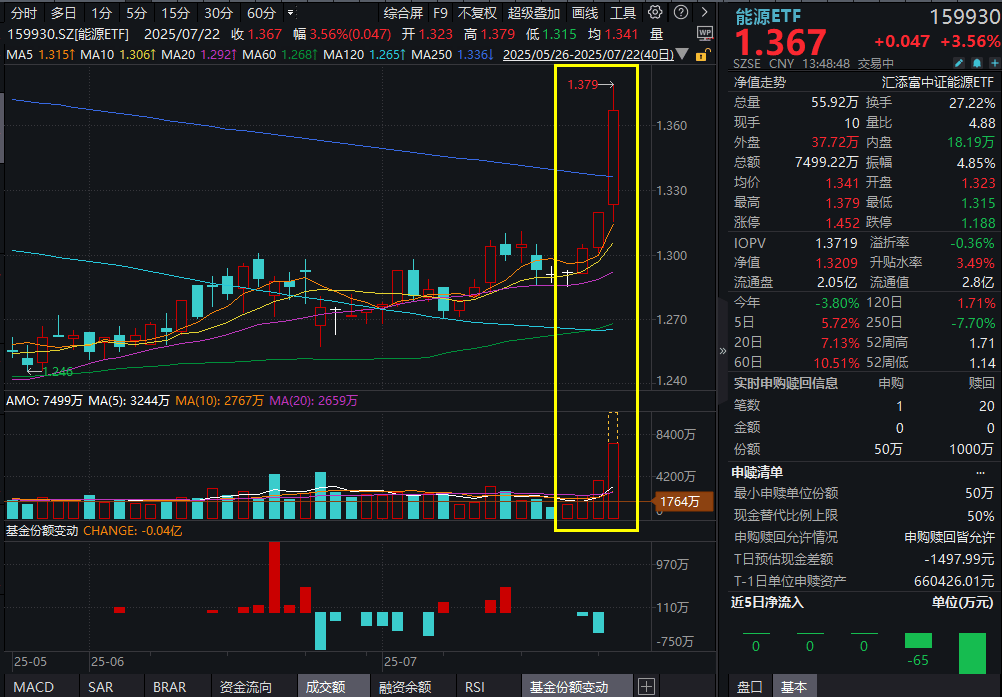
煤炭板块午后拉升,能源ETF广发(159945)盘中涨超4%,成分股山西焦煤、山煤国际等10cm涨停
Xin Lang Cai Jing· 2025-07-22 06:22
Group 1 - The China Securities Energy Index (000986) has seen a strong increase of 4.18%, with constituent stocks such as Shanxi Coking Coal (000983) and Shanxi Coal International (600546) hitting the 10% daily limit up [1] - The Energy ETF Guangfa (159945) has risen by 4.06%, marking its fourth consecutive increase [1] - Over the past five years, the net value of the Energy ETF Guangfa has increased by 87.57%, ranking 19th out of 996 index equity funds, placing it in the top 1.91% [1] Group 2 - As of June 30, 2025, the top ten weighted stocks in the China Securities Energy Index account for 67.97% of the index, including China Shenhua (601088) and China Petroleum (601857) [2] - The current thermal coal market is characterized by strong seasonal demand and a tightening supply structure, driven by high temperatures across the country, leading to a steady increase in prices [2] - The first round of price increases for coke has occurred, and coking coal prices are expected to continue rising due to slow recovery in coal mine production affected by heavy rainfall [2]


现金流ETF800(516460)涨超1.6%,动力煤进口连续第五个月同比下降
Xin Lang Cai Jing· 2025-07-22 06:13
Group 1 - The core viewpoint of the news highlights a strong performance of the CSI 800 Free Cash Flow Index, which rose by 1.93%, with notable increases in constituent stocks such as Conch Cement (up 8.18%) and LIZHU Group (up 7.62) [1] - The latest data from the General Administration of Customs indicates that China's imports of thermal coal (non-coking coal) in June 2025 reached 23.92 million tons, a year-on-year decrease of 31.11%, marking the fifth consecutive month of decline and the lowest level in 28 months [1] - The current thermal coal market is characterized by "strong seasonal demand and structural supply tightening," with prices expected to continue rising due to high temperatures during the summer peak [1] Group 2 - The CSI 800 Free Cash Flow Index selects 50 listed companies with high free cash flow rates from the CSI 800 Index sample, reflecting the overall performance of companies with strong cash flow generation capabilities [2] - As of June 30, 2025, the top ten weighted stocks in the CSI 800 Free Cash Flow Index include China National Offshore Oil Corporation, COSCO Shipping Holdings, Wuliangye Yibin, Gree Electric Appliances, and others, accounting for a total of 60.13% of the index [2]
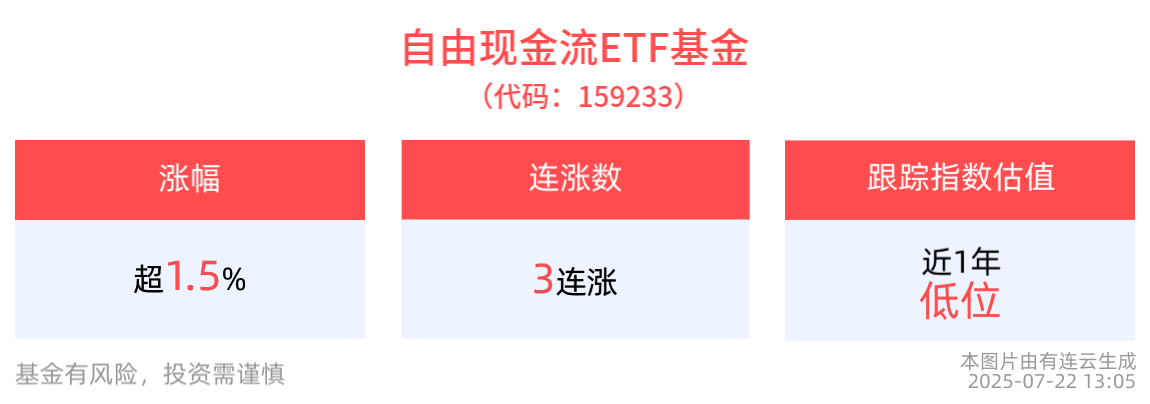
反内卷行情持续发酵,不含金融地产行业的自由现金流ETF(159233)机会凸显
Sou Hu Cai Jing· 2025-07-22 05:32
Group 1 - The core viewpoint is that the cash flow index and related ETF are showing strong performance, with significant increases in individual stocks and the ETF itself [1][3] - The cash flow ETF fund has seen a 1.84% increase over the past week, indicating positive momentum [1][3] - The fund's trading volume has been robust, with a turnover rate of 3.24% and a monthly average trading volume of 35.97 million yuan [3] Group 2 - The cash flow ETF fund has a monthly profit percentage of 100% since its inception, with a high probability of monthly profitability at 80.95% [3] - The maximum drawdown since the fund's inception is 2.14%, which is relatively low compared to its benchmark [3] - The fund's management fee is 0.50%, and the tracking error over the past month is 0.186% [3] Group 3 - The cash flow index tracks 100 companies with high cash flow rates, reflecting the overall performance of companies with strong cash flow generation capabilities [4] - The top ten weighted stocks in the cash flow index account for 57.48% of the index, including major companies like China National Offshore Oil Corporation and Gree Electric Appliances [4]
金十图示:2025年07月22日(周二)富时中国A50指数成分股午盘收盘行情一览:银行、保险股延续跌势,酿酒、食品饮料板块集体走高
news flash· 2025-07-22 03:38
Market Overview - The FTSE China A50 Index components showed a mixed performance with banking and insurance stocks continuing to decline, while the liquor and food & beverage sectors experienced gains [1][6]. Banking Sector - Major banks like China Everbright Bank reported a market capitalization of 249.93 billion with a trading volume of 446 million, showing a decline of 0.09 (-1.59%) [3]. - China Pacific Insurance, China Ping An, and China Life Insurance had market capitalizations of 436.27 billion, 347.77 billion, and 1,028.70 billion respectively, with trading volumes of 991 million, 2.11 billion, and 462 million, reflecting declines of 0.51 (-1.39%), 0.70 (-1.22%), and 0.07 (-0.83%) [3]. Insurance Sector - The insurance sector continued to face downward pressure, with significant declines in major companies [3]. Liquor Industry - The liquor sector saw positive movement, with Kweichow Moutai, Shanxi Fenjiu, and Wuliangye reporting market capitalizations of 1,820.06 billion, 225.24 billion, and 482.06 billion respectively, and trading volumes of 2.14 billion, 1.36 billion, and 1.15 billion, with increases of 4.34 (+2.41%), 1.63 (+1.33%), and 5.86 (+0.41%) [3]. Semiconductor Sector - The semiconductor industry showed varied performance, with Northern Huachuang, Cambricon Technologies, and Haiguang Information having market capitalizations of 229.98 billion, 248.67 billion, and 316.92 billion respectively, and trading volumes of 1.33 billion, 2.71 billion, and 1.24 billion, with changes of -1.34 (-0.42%), +12.40 (+2.13%), and -0.32 (-0.23%) [3]. Oil Industry - The oil sector, including companies like Sinopec and PetroChina, reported market capitalizations of 725.05 billion and 1,643.53 billion respectively, with trading volumes of 758 million and 563 million, showing slight increases [3]. Coal Industry - The coal sector, represented by companies like Shenhua Group and Shaanxi Coal and Chemical Industry, had market capitalizations of 750.04 billion and 189.83 billion respectively, with minimal changes in stock prices [3]. Automotive Sector - The automotive sector, led by BYD, reported a market capitalization of 1,849.01 billion with a trading volume of 3.54 billion, showing a slight increase of 2.39 (+0.72%) [3]. Other Sectors - Various other sectors such as chemicals, pharmaceuticals, and logistics showed mixed results, with some companies experiencing gains while others faced declines [4][6].