
陕西煤业

Search documents
“反内卷”下哪些煤炭公司弹性较大?
Changjiang Securities· 2025-07-20 23:30
Investment Rating - The report maintains a "Positive" investment rating for the coal industry [9]. Core Insights - The coal sector is currently characterized by low capacity utilization, high inventory levels, and poor profitability, indicating a significant oversupply situation. This suggests a higher likelihood of "anti-involution" measures being effective. Additionally, the coal sector is undervalued, with coking coal showing the highest valuation advantage, followed by thermal coal [2][7]. - Companies such as Pingmei Shenma, Panjiang, Shanmei International, Kailuan, Hengyuan Coal Power, and Gansu Energy show greater elasticity in their operations. However, when considering investment safety (debt ratios), Pingmei Shenma, Kailuan, Hengyuan Coal Power, and Jinkong Coal are more favorable [2][7]. Summary by Sections Market Performance - The coal index (Yangtze) fell by 0.69%, underperforming the CSI 300 index by 1.78 percentage points, ranking 27th out of 32 industries. The thermal coal market price as of July 18 was 642 CNY/ton, up by 10 CNY/ton week-on-week. The outlook suggests potential short-term price increases due to high temperature demand, although rising port inventories may limit sustained price growth [6][21][22]. Supply and Demand Analysis - As of July 17, the daily coal consumption across 25 provinces was 6.33 million tons, up 11.1% week-on-week. The total coal inventory was 123.41 million tons, down 0.8% from the previous week, with a usable days supply of 19.5 days, a decrease of 2.3 days [22][41]. Individual Company Analysis - The report highlights specific companies with significant operational elasticity: Pingmei Shenma, Jinkong Coal, and Shanmei International are noted as elastic stocks. For long-term stable profit leaders, China Coal Energy and China Shenhua are recommended, while for transformation and growth, Electric Power Investment and Xinji Energy are suggested [8][38]. Price Trends - The report indicates that the price of thermal coal is expected to remain supported in the short term due to tight supply conditions, while coking coal prices are also expected to maintain strength due to ongoing demand from steel production [22][49].


坚定看多煤炭:短期旺季煤价催化,中长期“反内卷”托底有望打开估值空间
Xinda Securities· 2025-07-20 12:27
Investment Rating - The investment rating for the coal mining industry is "Positive" [2] Core Viewpoints - The current phase is seen as the beginning of a new upward cycle for the coal economy, with a resonance between fundamentals and policies, making it an opportune time to invest in the coal sector [3][11] - Short-term coal prices are expected to rise due to seasonal demand, with a potential extension of this demand until late August or early September [3][11] - The supply-demand imbalance is characterized by a temporary excess in supply due to recent policies and increased imports, rather than an absolute overcapacity [3][11] - The "anti-involution" policy is expected to stabilize coal prices, which will positively impact downstream industries and help restore profitability in the coal sector [3][11] Summary by Sections Coal Price Trends - As of July 19, the market price for Qinhuangdao port thermal coal (Q5500) is 634 CNY/ton, up 10 CNY/ton week-on-week [3][33] - The price for coking coal at Jing Tang port is 1420 CNY/ton, an increase of 110 CNY/ton week-on-week [3][35] - International thermal coal prices have also seen fluctuations, with Newcastle coal at 66.5 USD/ton, up 1.0 USD/ton week-on-week [3][33] Supply and Demand Dynamics - The capacity utilization rate for thermal coal mines is 94.6%, an increase of 0.9 percentage points week-on-week [3][11] - Daily coal consumption in inland provinces has increased by 36,000 tons/day (+10.14%) and in coastal provinces by 27,100 tons/day (+12.62%) [3][11] - The chemical sector's coal consumption has decreased by 7,100 tons/day (-1.03%), while the steel industry's blast furnace operating rate has increased to 83.5% (+0.31 percentage points) [3][11] Long-term Outlook - The coal sector is expected to face supply constraints until the 14th Five-Year Plan, necessitating new capacity to meet long-term energy demands [12][13] - The coal industry is characterized by high performance, cash flow, and dividend yields, with a favorable long-term outlook [12][13] - The report emphasizes the importance of focusing on high-quality coal companies such as China Shenhua, Shaanxi Coal, and others for investment opportunities [12][13]




煤炭开采行业周报:三伏天来袭,煤价延续提升-20250720
Guohai Securities· 2025-07-20 12:26
Investment Rating - The report maintains a "Buy" rating for the coal mining industry [1] Core Viewpoints - The coal supply-demand relationship continues to optimize, with port inventories decreasing and coal prices rising. Port coal prices increased by 10 CNY/ton week-on-week, while pit coal prices saw significant increases of 30 CNY/ton, 22 CNY/ton, and 14 CNY/ton in Shanxi, Inner Mongolia, and Shaanxi respectively [4][13][69] - The report highlights the impact of high temperatures on electricity consumption, with the maximum national electricity load exceeding 1.5 billion kilowatts, which is an increase of 0.55 billion kilowatts compared to last year. This trend is expected to support further increases in coal prices [4][13][69] - The report emphasizes the importance of monitoring the recovery of coal production after the flood season and the ongoing demand from power plants due to rising temperatures [4][13][69] Summary by Sections 1. Thermal Coal - Port inventories continue to decrease, with a week-on-week increase in port coal prices [10][13] - The production capacity utilization rate in the Sanxi region increased by 0.49 percentage points, reaching 90.83% as of July 16 [20][69] - The average daily coal intake at ports increased by 21,600 tons week-on-week [13][69] 2. Coking Coal - The production capacity utilization rate for sample coal mines decreased by 0.18 percentage points due to production adjustments [5][36] - Coking coal prices at ports increased, with the price at Jing Tang Port rising by 90 CNY/ton week-on-week [37][69] - The inventory of coking coal production enterprises decreased by 255,600 tons week-on-week [44][69] 3. Coke - The report notes that coking enterprises are facing cost pressures due to rising coking coal prices, leading to a decrease in production rates [6][45] - The average profit per ton of coke has improved slightly, indicating a potential recovery in the sector [51][69] 4. Anthracite - The price of anthracite remained stable, with no significant changes reported [63][69] 5. Key Companies and Investment Logic - The report suggests focusing on companies with strong cash flow and high asset quality, such as China Shenhua, Shaanxi Coal, and Yanzhou Coal [7][8][69] - It highlights the investment value of coal companies as stable assets amid market fluctuations [7][69]
煤价全面走高,板块有望开启上攻
INDUSTRIAL SECURITIES· 2025-07-20 11:27
Investment Rating - The industry investment rating is "Recommended (Maintain)" [1] Core Viewpoints - The report indicates that the coal prices are expected to continue rising due to increased demand driven by high temperatures and a recovering supply from major production areas [2][59] - The report highlights that the focus should be on companies with stable performance and high return on equity (ROE), as well as those with attractive valuations and dividend yields [60] Summary by Sections 1. Weekly Data Tracking - Thermal coal prices have rebounded significantly, with Qinhuangdao thermal coal closing at 644 RMB/ton on July 18, an increase of 10 RMB/ton week-on-week [3][12] - Coking coal prices have also risen, with Shanxi coking coal reaching 1420 RMB/ton, up 110 RMB/ton week-on-week [4][32] 2. Supply and Demand Dynamics - The report notes that the supply of thermal coal is tightening, with June imports down 26% year-on-year [2][59] - Daily consumption of thermal coal has increased, with coastal provinces averaging 222.3 million tons per day, a week-on-week increase of 3.5 million tons [17][21] 3. Price Trends - The long-term contract price for thermal coal (Q5500) is reported at 666 RMB/ton, showing a month-on-month decrease of 0.4% and a year-on-year decrease of 4.9% [3][12] - The coking coal price index is at 1111 RMB/ton, with a week-on-week increase of 42 RMB/ton, while the cost index is at 1286 RMB/ton, indicating a gap of 175 RMB/ton [37][38] 4. Recommended Stocks - The report recommends a combination of companies including Shanxi Coal International, Huabei Mining, Pingmei Shenma, Shanxi Coking Coal, Yanzhou Coal, Shaanxi Coal, China Shenhua, and others for investment [2][60] 5. Market Performance - The coal sector has underperformed compared to the broader market, with specific stocks showing varied performance [54][60]


煤炭行业周报(7月第3周):中报利空出尽,基本面仍向上-20250720
ZHESHANG SECURITIES· 2025-07-20 06:05
Investment Rating - The industry rating is "Positive" [1] Core Viewpoints - The report indicates that the negative impact from the mid-year report has been fully absorbed, and the fundamentals of the coal industry remain upward [1] - The coal sector has underperformed the CSI 300 index, with a decline of 0.74% compared to a 1.09% increase in the index, resulting in a relative underperformance of 1.83 percentage points [2] - Key monitored enterprises reported an average daily coal sales volume of 7.31 million tons, which is a week-on-week increase of 2.8% and a year-on-year increase of 4.7% [2] - The report highlights a decrease in coal inventory by 4% week-on-week, while year-on-year inventory has increased by 19.8% [2] Summary by Sections Coal Market Performance - The coal sector saw 6 stocks rise and 31 stocks fall during the week, with ST Dazhou showing the highest increase of 4.89% [2] - The average daily sales of thermal coal increased by 3.2% week-on-week, while coking coal sales rose by 1.9% [2] Price Trends - As of July 18, 2025, the price index for thermal coal (Q5500K) in the Bohai Rim was 663 RMB/ton, reflecting a week-on-week increase of 0.15% [3] - The price of coking coal at Jing Tang Port was 1420 RMB/ton, with a week-on-week increase of 8.4% [4] Investment Recommendations - The report suggests that social inventory continues to decline, and current demand remains promising, with domestic power plants showing a significant increase in daily coal consumption [6] - The report recommends focusing on high-dividend thermal coal companies and coking coal companies that are experiencing turnaround potential, such as China Shenhua, Shaanxi Coal, and others [6]


长盛量化红利混合A:2025年第二季度利润2843.09万元 净值增长率3.27%
Sou Hu Cai Jing· 2025-07-19 16:42
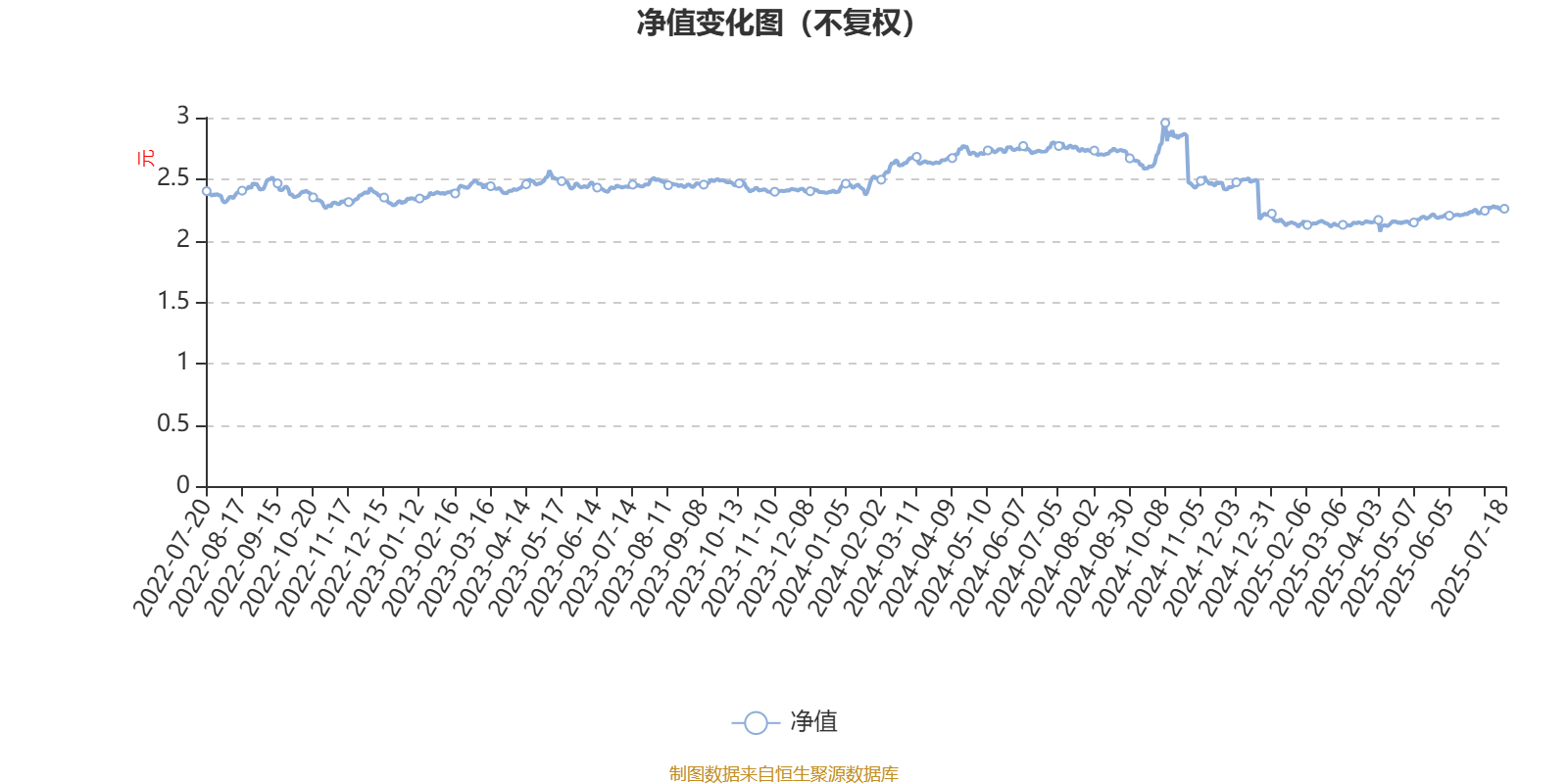
通过所选区间该基金净值增长率分位图,可以观察该基金与同类基金业绩比较情况。图为坐标原点到区间内某时点的净值增长率在同类基金中的分位数。 AI基金长盛量化红利混合A(080005)披露2025年二季报,第二季度基金利润2843.09万元,加权平均基金份额本期利润0.0715元。报告期内,基金净值增长 率为3.27%,截至二季度末,基金规模为8.49亿元。 该基金属于偏股混合型基金。截至7月18日,单位净值为2.259元。基金经理是王宁,目前管理2只基金近一年均为正收益。其中,截至7月18日,长盛量化红 利混合A近一年复权单位净值增长率最高,达6.47%;长盛成长价值混合A最低,为2.22%。 基金管理人在二季报中表示,长盛量化红利基金2025年第二季度单位净值基本保持在低波状态下的稳健回升状态,组合根据2024 年年度分红数据以及2025 年红利股息支付率变化以及盈利预期变化,积极调整组合,增配低估值和具有一定分红水平的公司,低配2025年预期业绩下降可能股息支付率下降的公司, 持续保持组合具有一定的弹性。 截至7月18日,长盛量化红利混合A近三个月复权单位净值增长率为4.76%,位于同类可比基金165/182 ...

利率窄幅震荡下信用利差小幅压缩
Xinda Securities· 2025-07-19 14:25
Report Industry Investment Rating No information regarding the industry investment rating is provided in the given content. Core Viewpoints of the Report - In the volatile market, credit bonds outperformed interest - rate bonds. Interest - rate bond yields slightly declined, while credit bond yields dropped more significantly. Credit spreads mostly decreased slightly, with the 3Y variety showing a relatively larger decline [2][5]. - Urban investment bond spreads generally compressed slightly. Spreads of external ratings AAA, AA +, and AA platforms decreased by 1BP respectively. Spreads also declined when classified by administrative levels [2][9][15]. - Most industrial bond spreads decreased. Central and state - owned enterprise real - estate bond spreads declined, mixed - ownership real - estate bond spreads decreased, and private - enterprise real - estate bond spreads increased. Spreads of coal, steel, and chemical bonds also decreased [2][18]. - The yields of secondary and perpetual bonds followed the decline of certificates of deposit, with the short - to - medium - term performing relatively strongly [2][21]. - The excess spreads of 5Y industrial bonds and 3Y urban investment bonds slightly decreased [2][24]. Summary by Directory 1. Credit Bonds Outperformed Interest - Rate Bonds in the Volatile Market - Interest - rate bond yields slightly declined. The yields of 1Y, 5Y, and 7Y China Development Bank bonds decreased by 2BP, 1BP, and 1BP respectively, while the 3Y and 10Y remained flat [2][5]. - Credit bond yields dropped more significantly. The yields of 1Y, 3Y, 5Y, 7Y, and 10Y credit bonds decreased to varying degrees [2][5]. - Credit spreads mostly decreased slightly, with the 3Y variety showing a relatively larger decline. Rating spreads and term spreads showed obvious differentiation [5]. 2. Urban Investment Bond Spreads Slightly Compressed - By external ratings, the spreads of AAA, AA +, and AA platforms decreased by 1BP respectively, with different changes in different regions [9]. - By administrative levels, the spreads of provincial, municipal, and district - level platforms decreased by 2BP, 1BP, and 1BP respectively, with different changes in different regions [15]. 3. Most Industrial Bond Spreads Decreased - Real - estate bonds: Central and state - owned enterprise real - estate bond spreads decreased by 2 - 4BP, mixed - ownership real - estate bond spreads decreased by 1BP, and private - enterprise real - estate bond spreads increased by 7BP [2][18]. - Other industrial bonds: The spreads of AAA, AA +, and AA coal bonds decreased by 2BP, 2BP, and 1BP respectively; the spreads of AAA and AA + steel bonds decreased by 2BP and 4BP respectively; and the spreads of all levels of chemical bonds decreased by 3BP [2][18]. 4. The Yields of Secondary and Perpetual Bonds Followed the Decline of Certificates of Deposit, with the Short - to - Medium - Term Performing Relatively Strongly - 1Y secondary and perpetual bonds: Yields decreased by 2 - 3BP, and spreads compressed by 1 - 2BP [21]. - 3Y secondary and perpetual bonds: The yields of secondary capital bonds decreased by 2BP, and spreads decreased by 2 - 3BP; the yields of perpetual bonds decreased by 3 - 4BP, and spreads decreased by 3 - 4BP [21]. - 5Y secondary and perpetual bonds: The yields of secondary capital bonds decreased by 1 - 2BP, and spreads compressed by 0 - 1BP; the yields of AA + and above perpetual bonds decreased by 1BP, and spreads increased by 1BP, while the yields of AA perpetual bonds decreased by 4BP, and spreads decreased by 2BP [21]. 5. The Excess Spreads of 5Y Industrial Bonds and 3Y Urban Investment Bonds Slightly Decreased - AAA 3Y industrial perpetual bond excess spreads remained at 3.82BP, at the 1.32% quantile since 2015; 5Y industrial perpetual bond excess spreads decreased by 0.86BP to 7.65BP, at the 4.18% quantile since 2015 [24]. - Urban investment AAA 3Y perpetual bond excess spreads decreased by 0.65BP to 3.75BP, at the 0.29% quantile; urban investment AAA 5Y perpetual bond excess spreads increased by 0.09BP to 10.21BP, at the 10.93% quantile [24]. 6. Credit Spread Database Compilation Instructions - Market - wide credit spreads, commercial bank secondary and perpetual spreads, and industrial/urban investment perpetual bond credit spreads are calculated based on ChinaBond medium - and short - term notes and ChinaBond perpetual bond data. Historical quantiles are since the beginning of 2015 [28]. - Industrial and urban investment bond credit spreads are compiled and statistically analyzed by Cinda Securities R & D Center, with historical quantiles since the beginning of 2015 [28]. - Specific calculation methods and sample selection criteria are provided, including how to calculate spreads, which samples to select, and which samples to exclude [31].



全国电力负荷屡创新高,旺季需求有望驱动煤价加速上涨
Minsheng Securities· 2025-07-19 11:26
Investment Rating - The report maintains a "Buy" rating for several companies in the coal sector, highlighting their stable performance and growth potential [3][12]. Core Insights - National electricity load has reached new highs, with peak season demand expected to drive coal prices upward. The report anticipates that by mid-August, prices may exceed 750 RMB/ton, with a price center around 700 RMB/ton for the second half of the year [2][7]. - Coal supply is decreasing significantly, with June 2025 coal imports down by 11.1% year-on-year, and domestic coal production showing mixed results. The overall capacity utilization rate in the coal mining sector has dropped to 69.3%, the lowest since Q1 2020 [2][21][38]. - The demand side shows a positive trend, with thermal power generation growth turning positive since late May, and electricity consumption reaching record levels due to rising temperatures [2][7][33]. Summary by Sections Investment Recommendations - Recommended stocks include: 1. Huayang Co., Ltd. for stable performance and year-on-year production growth 2. Jinko Coal Industry for high net cash growth potential 3. Industry leaders like Shaanxi Coal and China Shenhua for stable earnings 4. Shanmei International for recovery in production 5. Xinji Energy for coal-electricity integrated growth 6. CGN Mining for benefiting from nuclear power growth [3][12]. Market Performance - As of July 18, 2025, the coal sector has seen a weekly decline of 0.7%, underperforming compared to the broader market indices [13][15]. - Yunnan Coal Energy has shown the highest weekly increase at 4.11%, while Dayou Energy has experienced the largest decline at 10.33% [18][19]. Industry Dynamics - The report notes that coal prices are on an upward trend, with significant increases in both port and production prices. For instance, Qinhuangdao port's Q5500 coal price reached 634 RMB/ton, a weekly increase of 10 RMB/ton [8][10]. - The report highlights the structural tightness in coal supply, with power plants' coal inventories dropping below levels seen in 2023 and 2024 [2][7].


煤炭行业2025年中报业绩前瞻:二季度煤价筑底,看好下半年煤价回升带来煤企业绩修复
Shenwan Hongyuan Securities· 2025-07-19 11:06
Investment Rating - The coal industry is rated as "Overweight" indicating an expectation for the industry to outperform the overall market [3][29]. Core Views - The report anticipates a recovery in coal companies' performance in the second half of 2025, driven by a rebound in coal prices after a bottoming out in the second quarter [3]. - Domestic raw coal production increased by 5.4% year-on-year in the first half of 2025, while coal imports decreased by 11.1% [3][13]. - The average price of thermal coal and coking coal at ports fell significantly in the second quarter of 2025, with thermal coal prices dropping approximately 25.79% year-on-year [3][17]. Supply and Demand Analysis - Domestic raw coal production reached 2.405 billion tons in the first half of 2025, up from 2.266 billion tons in the same period of 2024, with notable increases in Shanxi (10.1%) and Xinjiang (12.4%) [8][9]. - Coal imports totaled 22.2 million tons in the first half of 2025, marking an 11.1% decline compared to the previous year, with negative growth observed since March 2025 [13][18]. - The average price of 5500 kcal thermal coal at ports was approximately 630 CNY/ton in Q2 2025, down from 850 CNY/ton in Q2 2024, reflecting a significant price drop [3][17]. Company Performance Forecast - Companies expected to exceed performance expectations include China Shenhua (EPS 1.24, YOY -16.62%), Electric Power Investment (EPS 1.36, YOY 3.49%), and Xinji Energy (EPS 0.38, YOY -15.78%) [3][20]. - Companies with performance in line with expectations include Shaanxi Coal (EPS 0.86, YOY -21.1%) and Yanzhou Coal (EPS 0.54, YOY -47.24%) [3][20]. - The only company expected to underperform is Shanxi Black Cat (EPS -0.25, YOY -14.61%) [3][20]. Investment Recommendations - The report recommends focusing on stable, high-dividend stocks such as China Shenhua, Shaanxi Coal, and China Coal Energy [3]. - It also suggests considering undervalued stocks with potential for growth, including Shanxi Coking Coal, Huabei Mining, Electric Power Investment, Yanzhou Coal, and Pingmei Shenma [3]. - Attention is drawn to Xinji Energy as a growth stock benefiting from coal-electricity integration [3].
电负荷再创新高叠加铁水超预期,煤价延续反弹
Huafu Securities· 2025-07-19 09:36
Investment Rating - The report maintains a "stronger than market" rating for the coal industry, indicating a positive outlook compared to the broader market [7]. Core Views - The coal price has shown a continuous rebound due to rising daily consumption and decreasing inventory as the peak season approaches [5]. - The global coal shipment volume to China reached 4.166 million tons, a weekly increase of 2.9 tons, but a year-on-year decrease of 19.7% [5]. - The report suggests increasing allocation to coal stocks that benefit from price elasticity, highlighting the significant dividend yield and value of core stocks in the long term [5]. Summary by Sections 1. Weekly Market Review - The coal index slightly decreased by 0.87%, underperforming the Shanghai and Shenzhen 300 index, which increased by 1.09% [16]. - Year-to-date, the coal index has dropped by 12.9%, while the broader index has risen by 3.14% [16]. - The current PE ratio for the coal sector is 12.6 times, ranking it among the lowest in the A-share market [17]. 2. Thermal Coal 2.1 Key Indicators Overview - As of July 18, the Qinhuangdao 5500K thermal coal price is 642 RMB/ton, a weekly increase of 1.6% [3][30]. - The average daily output of 462 sample mines is 5.697 million tons, a week-on-week increase of 0.97% [43]. - The operating rate of coal mines in Shanxi is 70.7%, with a slight increase from the previous week [41]. 2.2 Annual Long-term Contract Price - The long-term contract price for Qinhuangdao thermal coal (Q5500) is 666 RMB/ton, reflecting a month-on-month decrease of 0.4% [29]. 2.3 Spot Prices - The spot price for Qinhuangdao 5500K thermal coal increased by 10 RMB/ton week-on-week [30]. - The price for Shanxi weakly adhesive coal (5500K) rose by 24 RMB/ton, marking a 4.8% increase [33]. 2.4 Supply and Demand - The operating rate of coal mines in the Shanxi-Inner Mongolia-Shaanxi region is 81.1%, with a slight increase from the previous week [41]. - Daily consumption at six major power plants rose to 89.9 million tons, a week-on-week increase of 1.1% [47]. - The total inventory of thermal coal at 462 sample mines is 337.5 million tons, reflecting a year-on-year increase of 128.3% [63]. 3. Coking Coal 3.1 Key Indicators Overview - The price of main coking coal at Jingtang Port increased to 1440 RMB/ton, a weekly rise of 6.67% [81]. - The average daily output of coking coal from 523 sample mines is 77 million tons, with an operating rate of 86.1% [81]. 3.2 Spot Prices - The price of Shanxi coking coal rose to 1150 RMB/ton, marking a 9.5% increase week-on-week [82]. - The price of Henan coking coal remains stable at 1380 RMB/ton, with no change from the previous week [82].