
奔驰

Search documents
豪华车阵营加速洗牌 沃尔沃押注混动赛道突围
Zhong Guo Jing Ying Bao· 2025-05-14 08:32
Core Insights - The penetration rate of new energy vehicles (NEVs) in China's overall passenger car market reached 51.1% in March, an increase of 8.7 percentage points year-on-year, with luxury vehicles having a penetration rate of 35% [1] - Traditional luxury brands are facing challenges in the electric vehicle (EV) transition, primarily due to a lack of competitive products, despite still being favored by consumers [1][4] - The competition among luxury brands is intensifying, with significant price reductions observed, particularly for brands like Mercedes-Benz and BMW, which have seen discount rates approach 20% in recent years [1] Market Trends - In March, luxury car retail sales were 250,000 units, a year-on-year decline of 7% but a month-on-month increase of 68%, with a retail market share of 12.9%, down 3 percentage points year-on-year [3] - Domestic brands are rapidly capturing market share in the luxury segment, with their share increasing from 6.5% in 2022 to 21.0% in the first five months of 2024, driven by electric and intelligent vehicle offerings [4] Strategic Developments - Volvo is focusing on a dual approach of pure electric and hybrid models to create a comprehensive new energy product matrix, aiming to fill market gaps and target the luxury D-segment SUV market [5][8] - The new SMA (Scalable Modular Architecture) hybrid platform is designed to enhance Volvo's competitive edge, emphasizing scalability, intelligence, safety, and sustainability [7] - Volvo's XC70, built on the new SMA platform, is positioned to redefine the luxury D-segment SUV market, with expectations of becoming the "first luxury super hybrid vehicle" [8] Future Outlook - The luxury D-segment SUV market is projected to exceed 1.2 million units by 2025, while the overall luxury hybrid vehicle market is expected to be around 40,000 units in 2024, indicating significant growth potential [8] - Volvo aims to increase its market share in China, leveraging digitalization and intelligent enhancements to solidify its presence [9]
日本三大车商4月在华新车销量出炉:丰田销量增20.8%,本田暴跌40.8%【附新能源汽车行业市场分析】
Qian Zhan Wang· 2025-05-14 03:28
Group 1: Sales Performance of Japanese Automakers - In April, Toyota's new car sales in China increased by 20.8% year-on-year, reaching 142,800 units, marking three consecutive months of growth, driven by its focus on hybrid and electric vehicles [2] - In contrast, Honda's sales in China fell by 40.8% to 43,689 units, while Nissan's sales decreased by 15.7% to 46,295 units, with Honda experiencing a 15-month consecutive decline and Nissan a 13-month decline [2] - Nissan plans to cut 21,000 jobs, which is 15% of its total workforce, and will close three factories, acknowledging that management errors, particularly in electric vehicle strategy, contributed to its current challenges [2] Group 2: Global Electric Vehicle Market Trends - The global electric vehicle transition is an unstoppable trend, with traditional automakers in Europe, such as Volkswagen and Mercedes-Benz, accelerating their electrification efforts to secure a competitive position [3] - Tesla leads the U.S. market, driving technological advancements in electric vehicles and expanding its global presence, setting a benchmark for the industry [3] - In China, BYD is recognized as a leading electric vehicle manufacturer, with significant advancements in technology and product offerings [5] Group 3: Market Share and Industry Position - In 2022, China's market share of new energy vehicles reached 24.4%, the highest globally, followed by Europe at 17.3%, while India and Japan lag behind [7] - BYD's chairman emphasized that China's new energy vehicle sector is approximately 3 to 5 years ahead globally in terms of technology and product development, advocating for open innovation and international collaboration [9] - The challenges faced by Japanese automakers in the electrification transition serve as a warning for the global automotive industry, highlighting the need for timely strategic adjustments and increased investment in new energy and smart technologies [9]


浪人早报 | 京东美团饿了么等外卖平台被约谈、爱奇艺回应被通报违规收集信息、荣耀实行关键岗位重新竞聘上岗…
Xin Lang Ke Ji· 2025-05-14 02:20
Group 1 - The State Administration for Market Regulation has interviewed major food delivery platforms including JD, Meituan, and Ele.me regarding competition issues in the industry [2] - The platforms are required to comply with various laws such as the E-commerce Law, Anti-Unfair Competition Law, and Food Safety Law, and to enhance internal management and fair competition [2] - The aim is to create a healthy market environment that protects the rights of consumers, platform operators, and delivery riders [2] Group 2 - iQIYI responded to a report indicating that it and 64 other apps were found to be in violation of personal information collection regulations [3] - The version in question was developed by a partner and iQIYI is currently working with them to rectify the issues [3] Group 3 - Honor has confirmed the implementation of a "Eagle Plan" for internal competition for key positions, affecting 38 management roles in China, with 45% of these positions seeing changes [4] - The new AI division has been established, with AI-related R&D designated as a primary department [4] Group 4 - JD Group reported a net revenue of 301.08 billion RMB for Q1 2025, marking a 16% year-on-year increase, with a net profit of 12.8 billion RMB [5] - JD's CEO mentioned that the daily orders for JD's food delivery service are expected to exceed 20 million soon, marking a significant milestone for the business [5] Group 5 - CATL's IPO in Hong Kong has attracted 21 times oversubscription, raising at least 31.01 billion HKD, making it the largest IPO globally in 2025 [5] - The public offering portion received subscriptions totaling 51.7 billion HKD, approximately 48.07 billion RMB [5] Group 6 - Zeekr announced that it has not yet made a decision regarding Geely's proposal to acquire all outstanding shares of Zeekr, which Geely currently holds about 65.7% [5] Group 7 - A new security vulnerability affecting Intel's modern CPUs has been disclosed, impacting all processors from the ninth generation onward, allowing potential data theft from privileged memory areas [5] - Intel has stated that there are currently no known real-world exploits of this vulnerability [5] Group 8 - Mercedes-Benz is reportedly planning to reduce its number of dealerships in China by over 100, with most reductions expected to be completed by 2025 [6] - The decision is driven by the need to address price competition among dealers due to an oversupply of stores [6] Group 9 - The Ministry of Education has issued guidelines prohibiting students from copying AI-generated content for assignments or exams, aiming to regulate AI usage in education [8] Group 10 - The first batch of green electric vehicle owners in China has been established through a pilot program in Shenzhen, promoting the use of green electricity for charging [9]




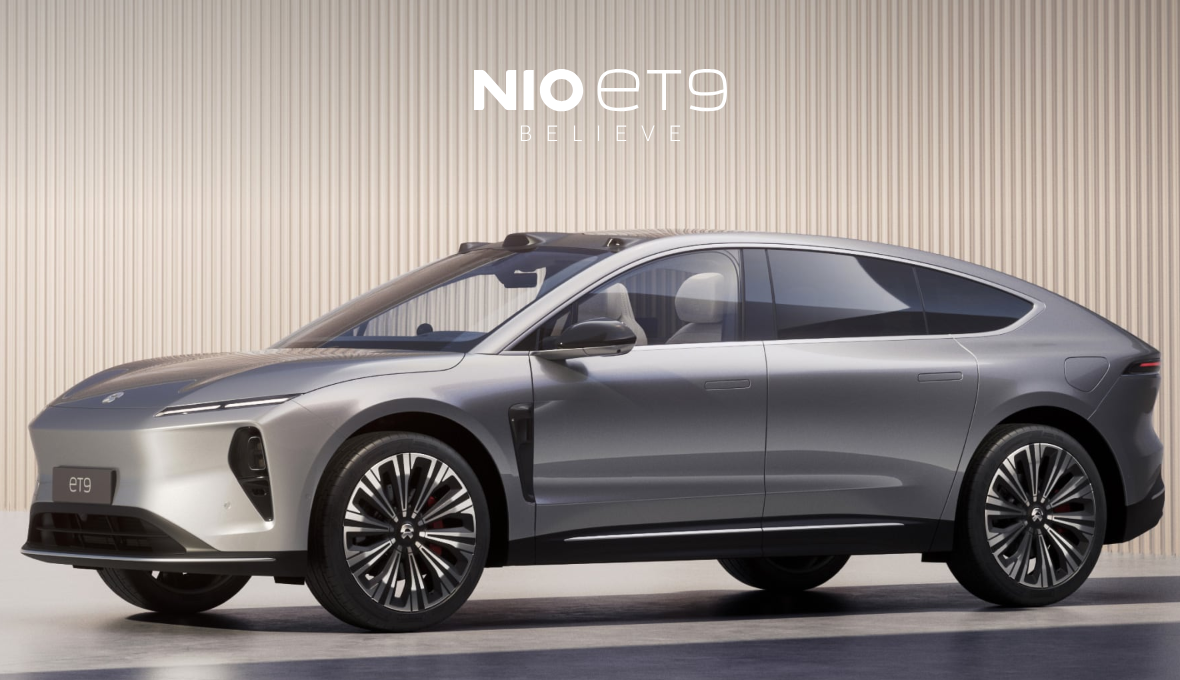
蔚来ET9于4月上险量达835辆,超同级宝马7系、奥迪A8L
Ju Chao Zi Xun· 2025-05-14 02:11
Core Insights - NIO's luxury sedan ET9 has surpassed traditional luxury brands in sales, with 835 units sold in April, compared to BMW 7 Series at 761 units and Audi A8L at 649 units, although it still trails behind Mercedes S-Class at 1,673 units [2] - The ET9 features NIO's self-developed 5nm smart driving chip "Shenji NX9031," which integrates over 50 billion transistors and matches the computing power of NVIDIA's Thor-X [2] - The ET9 is priced at 788,000 yuan, with a battery leasing option at 660,000 yuan, and a limited edition priced at 818,000 yuan [2] Technical Specifications - The ET9 utilizes a 900V architecture with a maximum voltage of 925V and a self-developed 1200V silicon carbide power module, featuring a front motor of 180kW and a rear motor of 340kW, achieving a total output of 520kW and a 0-100 km/h acceleration in 4.7 seconds [3] - With a 100kWh battery, the ET9 offers a CLTC range of 650 kilometers and an energy consumption of 16.2 kWh per 100 kilometers [3] - The vehicle's "Tianxing chassis" includes active air suspension and steer-by-wire technology, allowing for a maximum rear wheel steering angle of 8.3 degrees and a minimum turning diameter of 10.9 meters [3]

京沪两地汽车大卖场开门迎客,汽车新零售:向左走,向右走
Zhong Guo Qi Che Bao Wang· 2025-05-14 01:36
Core Insights - The concept of "new retail" in the automotive sector, initiated by Alibaba in 2016, has evolved significantly over the past seven years, with new retail stores opening in major cities like Shanghai and Beijing just before the "May Day" holiday [2][3][4] Group 1: Market Trends and Consumer Behavior - During the "May Day" holiday, over 80 cities in China hosted nearly 100 car exhibitions, with automotive sales increasing by 13.7% and 10.5% year-on-year according to the Ministry of Commerce [3] - The introduction of government subsidies, such as the 1.8 million yuan in consumer vouchers in Beijing, has stimulated car purchases, with over 60,000 applications for trade-in subsidies leading to 8.8 billion yuan in new car sales [3][4] - The new retail stores are attracting consumers with promotional offers and unique shopping experiences, indicating a shift in consumer focus from price to quality and service [4][10] Group 2: New Retail Store Innovations - The newly opened Gome Car Market's smart automotive experience center spans 45,000 square meters, featuring over 30 automotive brands, primarily focusing on new energy vehicles [3][6] - The store aims to provide a one-stop shopping experience, integrating various services such as dynamic vehicle displays, test drives, and charging facilities, enhancing consumer convenience [6][7] - Gome plans to expand this model nationwide, targeting the establishment of 50 smart experience centers over the next three years [7] Group 3: Industry Evolution and Future Outlook - The automotive new retail model has transitioned from unsuccessful e-commerce attempts to more integrated approaches, combining online and offline sales channels [9] - Experts suggest that the new retail model will increasingly dominate the market, emphasizing the importance of consumer experience and personalized services [9][11] - Traditional 4S dealerships are urged to adapt to the new retail landscape by enhancing digital capabilities and customer relationship management to remain competitive [10][11]


中国车企在欧洲逆势“狂飙”
第一财经· 2025-05-14 00:29
Core Viewpoint - Chinese automakers are leveraging plug-in hybrid electric vehicles (PHEVs) as a strategic response to the EU's high tariffs on pure electric vehicles, resulting in significant sales growth in the European market [1][2]. Group 1: Market Performance - In Q1 2025, Chinese car sales in Europe reached 148,000 units, a 78% year-on-year increase, with market share rising from 2.5% to 4.5% [1]. - Sales of plug-in hybrid models surged by 368%, becoming the main driver of this growth [1][2]. - BYD and Chery sold 3,269 and 757 plug-in hybrid vehicles in March 2025, respectively, marking a significant increase from nearly zero sales in July 2024 [2]. Group 2: Strategic Adjustments - Chinese automakers are adjusting their strategies in Europe by focusing on plug-in hybrid models, which are still subject to a 10% base tariff, unlike pure electric vehicles facing tariffs as high as 45.3% [2][4]. - BYD's plug-in hybrid vehicles accounted for 41% of its electric vehicle sales in the EU in March 2025, while SAIC's figure was as high as 49% [2]. - Chery's plug-in hybrid sales exceeded pure electric models, with 71% of its electric vehicle sales in the EU being plug-in hybrids [2]. Group 3: Competitive Landscape - The low base of plug-in hybrid sales in Europe and limited offerings from major European automakers (e.g., BMW, Mercedes) have created opportunities for Chinese brands to capture market share with high-cost performance products [3][4]. - BYD plans to launch two new plug-in hybrid models in Germany by 2025, aiming to meet diverse consumer needs [3]. Group 4: Future Outlook - Ongoing negotiations between China and the EU regarding electric vehicle tariffs may lead to a minimum price setting for Chinese electric vehicles, which could be more favorable for market competition than tariffs [5]. - The transition to pure electric vehicles is seen as the long-term trend in Europe, with plug-in hybrids serving as a transitional solution [5].

美媒:汽车新豪华体验——“移动录音棚”
Huan Qiu Shi Bao· 2025-05-13 22:44
Group 1 - The automotive industry is undergoing a "cabin acoustics revolution," focusing on enhancing sound quality in vehicles, driven by the rise of electric and autonomous vehicles [1][2] - Modern consumers prioritize high-quality audio experiences in cars, with over 90% of music subscription users considering high sound quality a necessity and willing to pay extra for it [2] - The evolution of in-car audio has a historical context, with significant milestones such as the introduction of AM radios in the 1930s and CD players in the 1980s, leading to the current demand for immersive audio experiences [1] Group 2 - Luxury car brands have increasingly partnered with top audio companies, and the aftermarket for high-end audio systems remains robust, often costing thousands of dollars [2] - The "Z Generation" expresses a strong desire for immersive music experiences in vehicles, rejecting subpar audio quality [2]
突破欧盟关税封锁,中国车企借道“插混”在欧逆势“狂飙”
Di Yi Cai Jing· 2025-05-13 13:42
Core Viewpoint - Chinese plug-in hybrid electric vehicles (PHEVs) are experiencing a significant surge in sales in the European market, with a year-on-year increase of 368%, as they navigate the challenges posed by EU tariffs on fully electric vehicles [1][2]. Group 1: Sales Performance - In Q1 2025, sales of Chinese cars in Europe reached 148,000 units, a 78% increase year-on-year, with market share rising from 2.5% to 4.5% [1]. - The sales of plug-in hybrid models are the main driver of this growth, with a staggering 368% increase compared to the previous year [1][2]. - BYD and Chery sold 3,269 and 757 plug-in hybrid vehicles in March 2023, respectively, marking a significant increase from nearly zero sales in July 2022 [2]. Group 2: Market Strategy - Chinese automakers are leveraging the 10% basic tariff on PHEVs as a strategic advantage to boost sales in Europe [2]. - The report indicates that PHEVs accounted for 41% of BYD's electric vehicle sales in the EU in March, while SAIC's share was as high as 49% [2]. - Chery's plug-in hybrid sales exceeded pure electric models, with PHEVs making up 71% of its electric vehicle sales in March [2]. Group 3: Competitive Landscape - The low baseline of PHEV sales in Europe and limited offerings from mainstream European automakers (like BMW and Mercedes) have created opportunities for Chinese brands to capture market share [3]. - BYD plans to launch two new PHEV models in Germany by 2025, aiming to meet diverse consumer needs [3]. - Chinese automakers are adjusting their strategies in response to EU tariffs, with companies like BYD and Chery expanding their PHEV product lines [3]. Group 4: Market Dynamics - The demand for hybrid models in Europe and the Middle East reflects the overall competitiveness of Chinese passenger vehicles [4]. - Ongoing negotiations between China and the EU regarding electric vehicle tariffs may lead to a minimum price setting for Chinese electric vehicles, which could impact competitiveness [4]. - The transition to pure electric vehicles is seen as the long-term trend in Europe, with PHEVs serving as a transitional solution [5].

关税战按下“暂停键”,中美汽车产业获得中场休息时间
3 6 Ke· 2025-05-13 01:33
Group 1 - The recent high-level economic and trade talks between China and the US in Geneva resulted in significant progress, with both sides expressing a constructive atmosphere and reaching important consensus [1][2] - A joint statement was released, indicating the cancellation of tariffs imposed after April 2, with a 90-day pause on 24% tariffs to allow for further negotiations [2][12] - The automotive industry is particularly affected by these developments, as high tariffs had previously led to a significant decline in sales for imported vehicles, such as Lincoln and BMW models, which saw prices soar due to tariffs [5][7] Group 2 - The pause in tariffs is expected to benefit automotive importers, allowing them to resume business operations that had been stalled due to high tariffs [5][11] - Some automotive parts suppliers, previously forced to relocate to Southeast Asia due to tariffs, are now reassessing their global strategies and receiving new orders from North America [7][9] - The collaboration between Ford and CATL for battery technology is set to be revitalized, with plans for a $3.5 billion battery factory in Michigan, which will create 1,700 jobs and support Ford's supply chain in the US [11][12] Group 3 - The current agreement is only a temporary pause, with ongoing negotiations required to ensure a lasting resolution, highlighting the unpredictable nature of US decision-making [12][14] - The complexity of the automotive industry means that both Chinese and American companies are deeply intertwined in the global supply chain, making them vulnerable to trade tensions [14][16]

奔驰确认,该公司将调把GLC SUV生产线迁移至美国阿拉巴马州。
news flash· 2025-05-12 17:41
Core Viewpoint - The company confirms the relocation of the GLC SUV production line to Alabama, USA [1] Group 1 - The decision to move the production line is part of the company's strategy to enhance manufacturing capabilities in North America [1] - This relocation is expected to create new job opportunities in the Alabama region [1] - The shift aligns with the company's broader goals of increasing local production and reducing supply chain risks [1]