陕西煤业

Search documents
国泰海通:煤炭行业当下处于基本面拐点 推荐中国神华(601088.SH)等
智通财经网· 2025-07-18 02:24
Group 1 - The core concept of the new "anti-involution" supply-side reform differs significantly from the 2016 supply-side reform, focusing on regulating low-price competition rather than eliminating backward production capacity [1] - The "anti-involution" strategy aims to stabilize the price bottom in the coal industry by reducing disorderly competition, which is expected to lead to a more pragmatic bottom in the current market [1][3] - The report recommends leading companies in the coal sector, including China Shenhua (601088.SH), Shaanxi Coal (601225.SH), China Coal Energy (601898.SH), and Jinkong Coal (601001.SH), as they are expected to benefit from the release of performance risks [1] Group 2 - The cement industry serves as a successful case of "anti-involution," where collaborative production cuts have led to a recovery in industry profitability, highlighting the challenges of implementing similar strategies in the coal sector [2] - The coal industry is currently at a fundamental turning point, with over 50% of coal enterprises reporting losses, particularly in coking coal, indicating a need for production cuts to stabilize prices [3] - The supply side has shown a significant decrease in production from April to May, with spontaneous production cuts occurring due to economic pressures, while demand has started to recover, suggesting a potential turning point for electricity consumption growth [3]




东兴证券晨报-20250717
Dongxing Securities· 2025-07-17 10:57
Core Insights - The report highlights the establishment of the international standard for supercapacitors in energy storage, proposed by China and supported by countries like Germany and Japan, which is expected to promote global standardization in this field [2] - The report discusses the Chinese government's initiatives to boost domestic consumption and optimize policies for replacing old consumer goods, aiming to enhance the internal circulation of the economy [2] - The report notes the historical peak in national electricity load, surpassing 1.5 billion kilowatts, indicating a strong demand for energy during the summer peak season [2] - The report mentions the ongoing efforts to regulate the competition in the new energy vehicle industry, emphasizing the need for rational competition and adherence to payment commitments by major companies [2] Company Insights - The report details the performance of Shaanxi Coal Industry Co., Ltd., which is the largest listed coal enterprise in Shaanxi, focusing on its coal mining, washing, transportation, and sales operations [15][16] - The company achieved a revenue of 184.145 billion yuan in 2024, a year-on-year increase of 7.77%, and a net profit of 22.36 billion yuan, reflecting stable performance despite declining coal prices [16] - The company has a significant coal resource base of 17.931 billion tons, with a mining life of over 70 years, primarily located in the Shaanxi region [17] - The report indicates that the company is implementing a "coal-electricity integration" strategy following its acquisition of Shaanxi Coal Power Group, which is expected to enhance profitability and stability [19][21] - The company has maintained a high cash dividend policy, with total cash dividends reaching 13.07 billion yuan in 2024, representing 58.45% of the net profit attributable to shareholders [20][21] Industry Insights - The report analyzes the domestic airline industry, noting a cautious increase in capacity during the low season, with a 1.1% year-on-year rise in domestic flight capacity in June [11] - The report highlights that the overall passenger load factor for listed airlines decreased by 0.4 percentage points month-on-month but increased by approximately 1.7 percentage points year-on-year [11] - The international airline capacity saw a year-on-year increase of about 17.4%, but the growth rate has slowed down, indicating a challenging demand environment [12] - The report suggests that the coal market may experience a rebound in prices due to seasonal demand and regulatory measures aimed at curbing low-price competition [20]
中证内地资源主题指数上涨0.29%,前十大权重包含中国海油等
Jin Rong Jie· 2025-07-17 10:42
Core Viewpoint - The China Securities Index for domestic resources has shown positive performance, with a recent increase in value and significant year-to-date growth, indicating a favorable market trend for resource-related stocks [1]. Group 1: Index Performance - The China Securities Index for domestic resources rose by 0.29% to 3511.13 points, with a trading volume of 35.435 billion yuan [1]. - Over the past month, the index has increased by 1.37%, by 5.59% over the last three months, and by 5.12% year-to-date [1]. Group 2: Index Composition - The top ten holdings in the China Securities Index for domestic resources are: Zijin Mining (15.56%), China Shenhua (6.62%), China Petroleum (5.46%), China Petrochemical (4.52%), Northern Rare Earth (4.1%), Shaanxi Coal and Chemical (3.98%), China National Offshore Oil (3.32%), Luoyang Molybdenum (3.07%), China Aluminum (3.06%), and Shandong Gold (2.99%) [1]. - The index is primarily composed of the materials sector (68.47%) and the energy sector (31.53%) [2]. Group 3: Market Structure - The Shanghai Stock Exchange accounts for 78.58% of the index's holdings, while the Shenzhen Stock Exchange represents 21.42% [1]. - The index samples are adjusted biannually, with changes implemented on the next trading day following the second Friday of June and December [2]. Group 4: Related Funds - Public funds tracking the domestic resources index include Minsheng Jianyin China Securities Domestic Resources C and Minsheng Jianyin China Securities Domestic Resources A [3].


煤炭月度供需数据点评:6月:“反内卷”改变政策方向,夏季煤价反弹-20250717
Shanxi Securities· 2025-07-17 06:41
Investment Rating - The coal industry is rated as "synchronous with the market" [1][4]. Core Insights - The coal supply has shown a marginal decrease in growth, with a total output of 2.405 billion tons from January to June 2025, reflecting a year-on-year increase of 5.4%, but the growth rate is slowing down. In June alone, the output was 421 million tons, up 3.0% year-on-year [4][6]. - Demand for coal is supported by manufacturing and infrastructure investments, with fixed asset investment growing by 2.8% year-on-year in the first half of 2025. Manufacturing investment increased by 7.5%, while real estate investment decreased by 11.2% [4][6]. - Coal imports have contracted significantly, with a total of 22.17 million tons imported from January to June 2025, down 11.1% year-on-year. In June, imports were 33.037 million tons, a decrease of 25.93% year-on-year [5][6]. - Coal prices are stabilizing after a decline, with signs of a rebound in June. The average price of Shanxi mixed 5500 thermal coal has decreased since the beginning of 2025 [5][6]. Summary by Sections Supply and Demand Analysis - The coal supply has been decreasing marginally, with a total output of 2.405 billion tons in the first half of 2025, and June's output was 421 million tons [4][6]. - Demand is primarily driven by non-electric sectors, with a notable increase in manufacturing and infrastructure investments [4][6]. Import and Price Trends - Coal imports have seen a significant reduction, with a total of 22.17 million tons imported in the first half of 2025, marking an 11.1% year-on-year decline [5][6]. - The coal prices are nearing the bottom, with a rebound observed in June, indicating a potential for future price stability [5][6]. Investment Recommendations - The report suggests focusing on companies in the coking coal sector such as Huai Bei Mining, Pingmei Shenma, and Shanxi Coking Coal, while for thermal coal, companies like Shanxi Coal International, Jinko Coal, and Yanzhou Coal Mining are highlighted [6].
“反内卷”发酵+用煤旺季,数据告诉你煤炭板块迎来“强支撑”
智通财经网· 2025-07-17 05:42
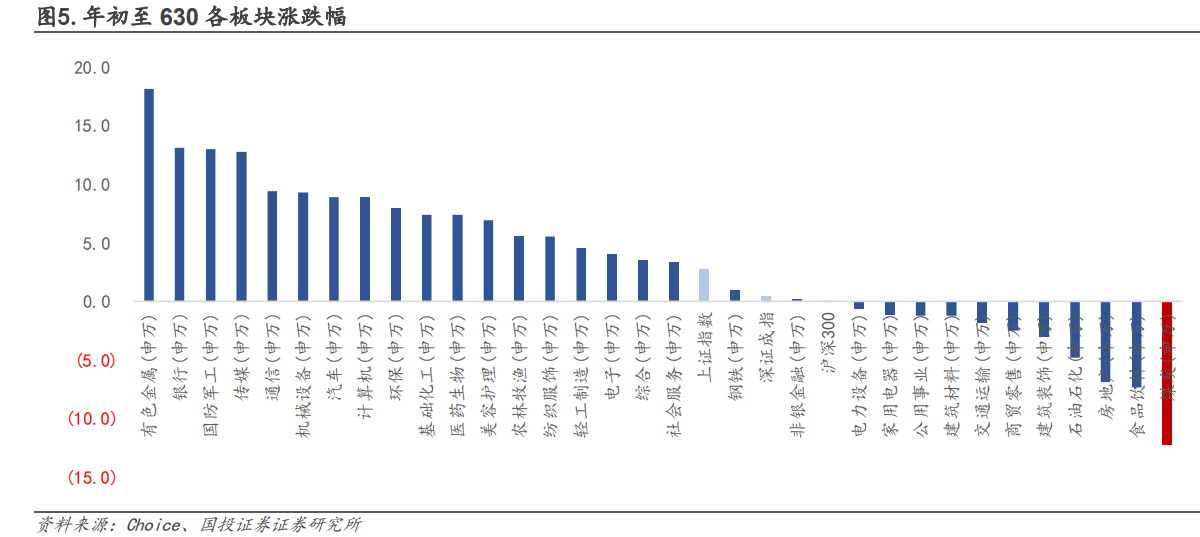
Core Viewpoint - The coal sector has experienced a significant rebound, driven by seasonal demand and the "anti-involution" policy aimed at stabilizing the market and promoting high-quality development [2][8]. Group 1: Market Performance - On July 14, the coal sector in the Hong Kong market rose by 3.79%, with China Shenhua H shares (01088) surging nearly 5% at one point, and related warrants increasing over 60% [1]. - The A shares of China Shenhua (601088.SH) also saw a rise of over 3%, while Zhengzhou Coal Electricity (600121.SH) hit the daily limit up during afternoon trading [1]. - As of June 30, the coal sector (Shenwan) had a decline of 12.29%, underperforming the CSI 300 index and ranking last among Shenwan industries [3]. Group 2: Supply and Demand Dynamics - The coal market is facing a supply-demand imbalance, with the China Coal Transportation and Marketing Association emphasizing the need for coal companies to understand market changes and adhere to long-term contracts [2]. - The average price of Qinhuangdao Q5500 thermal coal fell by 23% year-on-year, while the average price of coking coal at Jing Tang Port dropped by 39% [2]. - As of July 4, the average daily coal consumption of the six major power generation groups increased by 3.75% week-on-week, reaching an average of 84.27 million tons [7]. Group 3: Policy Impact - The "anti-involution" policy aims to reduce chaotic competition in the coal industry, with the government focusing on establishing rules to eliminate local protectionism and market segmentation [7][8]. - The recent meeting of the Central Financial Committee highlighted the need to address "involution-style" competition, which has further stimulated the coal sector's upward momentum [7][8]. Group 4: Investment Opportunities - Analysts suggest that the coal sector's rebound is supported by low valuations, high dividends, and potential transformation premiums, with a focus on companies like China Shenhua (01088, 601088.SH) and China Coal Energy (01898, 601898.SH) [9][10]. - The sector is expected to benefit from seasonal price increases due to rising demand amid supply constraints, with recommendations for stocks such as China Shenhua and Guanghui Energy [10]. - The coal industry is positioned at a triple support level of valuation, policy, and profit, making high-dividend leaders suitable for stable investment [11].

金十图示:2025年07月17日(周四)富时中国A50指数成分股午盘收盘行情一览:大盘震荡走势分化,消费电子、家电等板块飘红,医疗器械、化学制品等板块下跌
news flash· 2025-07-17 03:35
Market Overview - The FTSE China A50 Index showed a mixed performance with consumer electronics and home appliances sectors gaining, while medical devices and chemical products sectors declined [1] Company Performance - **Banking Sector**: - Everbright Bank had a market capitalization of 253.48 billion with a trading volume of 244 million, closing at 4.29, down 0.02 (-0.46%) [3] - **Insurance Sector**: - China Pacific Insurance, China Life Insurance, and Ping An Insurance had market capitalizations of 369.71 billion, 1,034.88 billion, and 363.17 billion respectively, with trading volumes of 198 million, 776 million, and 266 million [3] - **Beverage Sector**: - Kweichow Moutai, Shanxi Fenjiu, and Wuliangye had market capitalizations of 1,776.80 billion, 213.10 billion, and 486.87 billion respectively, with trading volumes of 2,131 million, 1,259 million, and 467 million [3] - **Semiconductor Sector**: - Northern Huachuang, Cambricon Technologies, and Hygon had market capitalizations of 229.29 billion, 241.84 billion, and 317.76 billion respectively, with trading volumes of 1,222 million, 3,092 million, and 1,298 million [3] - **Oil Sector**: - Sinopec, PetroChina, and Beijing-Shanghai High-Speed Railway had market capitalizations of 695.95 billion, 271.05 billion, and 1,636.21 billion respectively, with trading volumes of 302 million, 798 million, and 203 million [3] - **Coal Sector**: - China Shenhua and Shaanxi Coal and Chemical Industry had market capitalizations of 736.33 billion and 183.72 billion respectively, with trading volumes of 252 million and 404 million [3] - **Automobile Sector**: - BYD had a market capitalization of 1,799.89 billion with a trading volume of 3,258 million, closing at 37.06, up 3.85 (+1.19%) [3] - **Battery Sector**: - CATL had a market capitalization of 1,210.18 billion with a trading volume of 2,211 million, closing at 28.10, down 0.08 (-0.42%) [4] - **Consumer Electronics**: - Industrial Fulian and Luxshare Precision had market capitalizations of 535.01 billion and 280.22 billion respectively, with trading volumes of 1,897 million and 3,265 million [4] - **Home Appliances**: - Gree Electric and Haier Smart Home had market capitalizations of 267.41 billion and 243.02 billion respectively, with trading volumes of 631 million and 630 million [4] - **Pharmaceutical Sector**: - Hengrui Medicine had a market capitalization of 248.39 billion with a trading volume of 1,479 million, closing at 57.46, up 0.24 (+0.42%) [4] - **Chemical Sector**: - Wanhua Chemical had a market capitalization of 171.58 billion with a trading volume of 613 million, closing at 214.17, down 0.48 (-0.22%) [4]

陕西煤业(601225):西北煤炭明珠,聚焦构建“煤电一体化”发展格局
Dongxing Securities· 2025-07-17 02:23
Investment Rating - The report gives a "Strong Buy" rating for Shaanxi Coal Industry [2][69] Core Views - Shaanxi Coal Industry focuses on building a "coal-electricity integration" development model, enhancing operational stability and profitability through strategic acquisitions and investments [3][11][69] - The company has shown resilience in performance despite declining coal prices, with stable revenue and profit growth [27][28][69] - The upcoming summer coal demand and regulatory changes are expected to support a rebound in coal prices, positively impacting the company's performance [12][59] Summary by Sections Company Overview - Shaanxi Coal Industry is the only large-scale listed coal enterprise in Shaanxi, primarily engaged in coal mining, washing, transportation, and sales [3][24] - The company is backed by Shaanxi Coal Group, which holds 65.25% of its shares [3][24] Financial Performance - In 2024, the company achieved a revenue of CNY 1841.45 billion, a year-on-year increase of 7.77%, and a net profit of CNY 223.60 billion, up 5.28% [27][28] - In Q1 2025, despite a 0.71% decline in revenue to CNY 401.62 billion, net profit rose by 3.29% to CNY 48.05 billion [28][69] Resource and Production - The company has abundant coal resources, with a total resource volume of 17.931 billion tons and a mining life of over 70 years [4][38] - In 2024, coal production reached a historical high of 170.4846 million tons, a 4.13% increase year-on-year [43][44] Railway Infrastructure - The company has developed a self-operated railway network to support its coal business, enhancing logistics and market reach [5][52] - In 2023, railway transport volume was 167.1896 million tons, a 35.21% increase, while in 2024, it slightly decreased to 166.2825 million tons [5][52] Electricity Business - The acquisition of Shaanxi Coal Power in 2024 has enabled the company to implement a "coal-electricity integration" model, enhancing profitability [11][54] - In 2024, total electricity generation was 37.615 billion kWh, a 4.41% increase, with electricity revenue of CNY 16.176 billion [11][54] Investment and Dividends - The company plans to significantly increase capital expenditure in 2025 to CNY 135.59 billion, with a focus on electricity projects [61][69] - The company maintains a high dividend payout, with total cash dividends reaching CNY 13.070 billion in 2024, representing 58.45% of net profit [12][64]
赣能股份(000899) - 000899赣能股份投资者关系管理信息20250716
2025-07-16 11:54
Group 1: Coal Price and Supply - In Q2 2025, the company's coal price decreased compared to the same period last year due to a general decline in national coal prices [2] - The main coal suppliers are large state-owned enterprises, with the top three being Shanxi Coal, China Coal, and Guoneng Shenhua [2] - The company aims to optimize coal procurement strategies to reduce overall fuel costs [2] Group 2: Electricity Market and Pricing - The electricity spot market prices are influenced by supply-demand dynamics and generation costs [3] - The company is optimizing its trading strategies and pricing schemes in the electricity market to enhance efficiency [3] Group 3: Renewable Energy Projects - As of June 30, 2025, the company's photovoltaic projects have a total installed capacity of 644,100 kW, representing a year-on-year increase of 44.06% [4] - The company plans to focus on new energy sectors and technologies while ensuring energy supply security [4] Group 4: Power Supply and External Purchases - During the "14th Five-Year Plan" period, the proportion of renewable energy generation in Jiangxi Province is increasing, with a 3.5% growth in clean energy generation in Q1 2025 [5] - In 2024, the total external electricity purchase in Jiangxi Province was 22.767 billion kWh [5] Group 5: Project Profitability and Support - The Jiangxi Ganneng Shanggao 2×1,000 MW clean coal power project is expected to be operational in 2025, with profitability influenced by coal prices and electricity prices [5] - As of Q2 2025, the second largest shareholder, State Power Investment Corporation, holds a 33.22% stake in the company, providing support in governance and technology [6] Group 6: Capital Expenditure and Financing - In 2025, the company plans to rationally allocate capital expenditures based on operational needs, including investments in clean coal and new energy projects [7] - As of December 31, 2024, the company's debt-to-asset ratio was 65.96%, and future financing will be planned according to financial conditions [8] Group 7: Asset Management - The company has been managing the equity of Jiangxi Dongjin Power Co., Ltd. since January 2010, with operational stability in the managed assets [8]

周期论剑 确定性及弹性,逻辑再梳理
2025-07-16 06:13
Summary of Key Points from Conference Call Industry or Company Involved - The discussion primarily revolves around the Chinese stock market, economic policies, and various sectors including financial technology, real estate, and construction materials. Core Insights and Arguments 1. **Market Positioning and Investor Sentiment** The market has reached a critical point at 3400, leading to investor concerns about potential economic pressures and uncertainties in international relations [1][5][11] 2. **Economic Awareness Among Investors** Investors have a well-formed understanding of the economic landscape, having priced in both current and future pressures on the Chinese economy over the past three years [2][9] 3. **Government Policies and Market Stability** Recent government policies aimed at stabilizing the stock market and economy are seen as timely and effective, contrasting with previous delays in policy implementation [3][5][11] 4. **Risk Premium and Investment Choices** The decline in risk premiums and the drop in risk-free interest rates suggest that the stock market may offer better returns compared to other asset classes, making it an attractive option for investors [6][7][9] 5. **Investment Recommendations** The focus is on sectors such as financial technology and cyclical goods, particularly in materials like rare earths, chemicals, and real estate, which are expected to perform well due to supply constraints and increased domestic demand [10][11] 6. **Real Estate Market Dynamics** Concerns about the second-hand housing market are noted, with a significant increase in listings potentially leading to price declines; however, the overall market sentiment is not as pessimistic as in previous years [12][14] 7. **Construction Materials and Pricing Trends** The construction materials sector, particularly cement, is experiencing price adjustments, but overall prices remain higher than last year, indicating a potential for profitability despite recent fluctuations [18][20] 8. **Coal Industry Outlook** The coal industry is expected to enter an upward price trend starting in June, driven by decreasing inventory levels and increasing demand as temperatures rise [39][42] 9. **Steel Industry Performance** The steel sector is witnessing stable demand, with a shift from real estate-driven demand to manufacturing, indicating a structural change in consumption patterns [30][31] 10. **Electricity Generation and Renewable Energy** The electricity sector shows mixed performance, with traditional coal power expected to perform well, while renewable energy sources face competitive pressures in certain regions [56][59] Other Important but Potentially Overlooked Content 1. **Investor Behavior** Many investors are currently in a cautious state, reflecting on past experiences where policy responses were slow, but there is a growing optimism due to recent proactive measures [5][9] 2. **Long-term Economic Policies** The discussion highlights the importance of long-term economic policies and structural reforms in enhancing the investment climate in China, particularly in the stock market [8][9] 3. **Sector-Specific Recommendations** Specific companies and sectors are recommended based on their competitive advantages and market positioning, indicating a strategic approach to investment in the current economic climate [23][25][34] 4. **Market Sentiment and Future Expectations** The overall sentiment is cautiously optimistic, with expectations of improved performance in various sectors as economic conditions stabilize and government policies take effect [11][12][39]
等待新一轮政策信号前的结构性机会
2025-07-16 06:13
Summary of Conference Call Industry or Company Involved - The conference call primarily discusses the macroeconomic environment, policy signals, and various industry sectors including oil and gas, chemicals, construction materials, and transportation. Core Points and Arguments 1. **Policy Signals and Economic Outlook** - The discussion highlights the anticipation of new policy signals before identifying structural opportunities in the market. The recent easing of tariffs between the US and China is noted, although uncertainty remains regarding future negotiations [1][2][3]. 2. **Impact of Tariffs on Trade** - In April, the US collected approximately $1-2 billion in additional tariffs from China, which is insufficient to offset the fiscal risks posed by tax cuts. This indicates a potential expansion risk in the US fiscal situation [2]. 3. **Domestic Economic Conditions** - The domestic economy shows signs of slowing down, particularly in exports to the US, which have declined due to tariff tensions. There is a concern that the temporary boost in exports may not be sustainable [3][4]. 4. **Fiscal Policy and Debt Issuance** - The Chinese government has been proactive in fiscal policy, issuing a significant amount of debt to stimulate the economy. Approximately 2 trillion yuan of bonds were issued in the last quarter, with expectations for continued issuance [4][5][6]. 5. **Monetary Policy Outlook** - The potential for further monetary easing is discussed, especially as inflation indicators (CPI and PPI) are expected to decline. This could provide more room for liquidity support in the economy [7][8]. 6. **Oil and Gas Sector Analysis** - The oil and gas sector is experiencing a decline in capital expenditure, with a noted 18% drop in the previous year. Demand uncertainties, particularly due to US-China trade relations, are highlighted as a significant concern [10][11]. 7. **Construction Materials and Steel Industry** - The construction materials sector is entering a seasonal downturn, with prices under pressure. However, there are expectations for a rebound in demand as the market transitions from a slow to a peak season [24][26]. 8. **Transportation Sector Insights** - The shipping industry has seen a significant price increase, with container shipping rates doubling in the past month. However, a potential decline in demand is anticipated as the rush for shipping eases [31][32]. 9. **Investment Recommendations** - The call suggests focusing on companies with strong dividend yields and stable fundamentals, particularly in the construction materials and transportation sectors. Specific companies like China Shenhua and Shaanxi Coal are recommended for their strong dividend attributes [29][36]. Other Important but Possibly Overlooked Content 1. **Emerging Opportunities in New Materials** - Companies involved in domestic substitutes for new materials are highlighted as long-term investment opportunities [24]. 2. **Market Sentiment and Stock Performance** - The performance of small-cap stocks is noted, with fluctuations indicating a lack of strong market direction. However, some stocks have shown resilience and potential for recovery [24]. 3. **Global Economic Factors** - The call acknowledges ongoing global uncertainties, including geopolitical tensions and their potential impact on market dynamics, particularly in the commodities sector [19][20]. 4. **Sector-Specific Risks** - The chemical sector faces challenges due to demand uncertainties and potential overcapacity, which could hinder price recovery despite favorable cost conditions [11][12]. 5. **Future Monitoring of Policy Changes** - The need for ongoing observation of policy developments, particularly in fiscal and monetary areas, is emphasized as critical for future investment strategies [6][8].