三星

Search documents
三星今年将为8亿设备配备谷歌AI|直击CES
Xin Lang Ke Ji· 2026-01-05 20:28
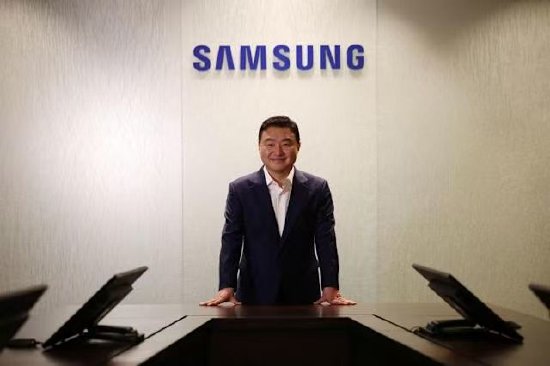
Group 1 - Samsung plans to double the number of mobile devices equipped with Google Gemini AI to 800 million by 2026, marking a significant transformation in its AI strategy named "AX" [2] - As of the end of 2025, Samsung has deployed Gemini-supported AI features on approximately 400 million devices, indicating a rapid expansion in AI integration across its product lines [2] - The integration of Gemini into the Galaxy ecosystem is expected to provide Samsung with a competitive edge in the AI user market, potentially making it one of the most widely experienced AI models on smartphones globally [2] Group 2 - Samsung's ambitious plans face challenges, including a global memory chip shortage that may lead to increased prices for smartphones and other electronic products in 2026 [3] - The company aims to reclaim its leadership position in the smartphone market from Apple while also competing in the television and home appliance sectors [3] - Despite these challenges, Samsung plans to invest 125 trillion Korean won over the next five years in technology and robotics development to close the gap in autonomous AI capabilities with industry leaders [3]

“斜杠企业”未必都是好企业
Xin Lang Cai Jing· 2026-01-05 16:39
Core Viewpoint - The concept of "slash enterprises," akin to "slash youth," reflects companies that operate across multiple unrelated fields, which may not guarantee long-term success due to the inherent complexities and differences in various industries [1][3] Group 1: Business Strategy - Companies often pursue a "slash" model to capture new growth opportunities and mitigate risks from intensified competition in single sectors, but this approach can lead to increased organizational and management costs [1][3] - Successful companies like Bosch, ASML, and Fanuc focus on core competencies, achieving excellence in their respective fields rather than diversifying into unrelated areas [2] Group 2: Industry Examples - Gree Electric, Fuyao Glass, and CATL exemplify firms that concentrate their resources on specific products, achieving global leadership in their niches through efficiency and technological advancement [2] - Apple, Boeing, and Airbus illustrate the importance of deep social division of labor, relying on specialized suppliers for components while focusing on design and assembly [2] Group 3: Modern Challenges - The attempt to cover the entire supply chain with a few "slash enterprises" reflects a flawed understanding of division of labor, particularly in fast-evolving sectors like AI and biotechnology [3] - The AI computing industry highlights the value of collaboration and specialization, where companies focus on their strengths and work together through standardized interfaces to enhance overall system efficiency [3] Group 4: Recommendations - Companies should return to a capability-driven approach, concentrating on core businesses to build sustainable competitive advantages, while industries should embrace openness and collaboration to foster resilience [3] - Encouraging the development of "hidden champions" and specialized enterprises can enhance overall competitiveness by forming a network based on comparative advantages [3]
未来芯片散热全景图
DT新材料· 2026-01-05 16:04
Core Viewpoint - The semiconductor industry is transitioning from FinFET to CFET technology by 2026, marking a shift in chip performance competition from mere size reduction to addressing physical limits and thermal management challenges [2][32]. Group 1: Macro Crisis - The long-term focus on increasing transistor density has led to significant thermal management issues, impacting CPU and GPU performance, power consumption, and energy efficiency [4][6]. - High temperatures can slow down critical signal propagation and cause permanent degradation of chip performance, leading to increased energy consumption for the same computational tasks [7][10]. Group 2: Path Exploration - Chip-level cooling technologies are essential for efficiently dissipating heat from high-density chips, with methods categorized into active and passive cooling systems [12][13]. - Advanced cooling architectures include remote, near-chip, and embedded on-chip cooling, each with varying effectiveness in heat transfer [13]. Group 3: Architectural Revolution - The transition to nanosheet and CFET architectures is expected to increase power density by 12%-15%, raising concerns about thermal runaway in densely packed data centers [34]. - Backside power delivery networks (BSPDN) are being developed to reduce resistance and improve voltage delivery, but they may introduce new thermal challenges due to thinner silicon substrates [35][40]. Group 4: Future Solutions - The industry is exploring various advanced materials and cooling techniques, including microchannel cooling, liquid cooling, and high-performance thermal management materials like diamond composites [20][59]. - Collaborative approaches, such as system and technology co-optimization (STCO), are necessary to address the complex thermal management challenges posed by next-generation chips [48][75].


最后48小时,特朗普终于下令批准,王毅通告全球,给中美交情定调
Sou Hu Cai Jing· 2026-01-05 16:02
Group 1 - The U.S. government has granted Samsung and SK Hynix a license to export semiconductor manufacturing equipment to China, signaling a new phase in U.S.-China relations amidst ongoing geopolitical tensions [1][3] - The approval is not a straightforward concession; it comes with strict conditions, including annual reviews and limitations on the technology that can be exported, particularly excluding advanced AI-related tools [5][9] - The U.S. aims to maintain control over the semiconductor supply chain while allowing South Korean companies to operate in China, which could intensify competition in the mature process technology market [11][13] Group 2 - The response from Chinese companies has been muted, as they are already advancing in the mature technology sector and are not reliant on U.S. approvals [17][26] - China's diplomatic stance remains cautious, emphasizing mutual respect and cooperation, while recognizing that U.S. actions are part of a broader strategy to manage competition [19][22] - The ongoing situation reflects a complex interplay of interests, with the U.S. seeking to stabilize its supply chain and support allies while China continues to build its capabilities independently [30][34]

腾讯研究院AI速递 20260106
腾讯研究院· 2026-01-05 16:01
Group 1: Notion 3.0 Update - Notion 3.0 introduces personalized agent customization, integrating the latest models GPT-5 and Claude Sonnet 4, expanding the MCP list to include applications like Lovable and Perplexity [1] - Users can now complete complex tasks such as database setup and automation using natural language, significantly lowering the usage barrier for previously deterred users [1] - The commercial subscription is priced at $24 per month or $20 per month when billed annually, with a 14-day trial period, targeting users needing personal finance and data management systems [1] Group 2: Kiwi-do Model Emergence - A mysterious model named Kiwi-do has emerged in the large model arena, claiming to be from Kimi, with training data up to January 2025 and passing the VPCT visual physical understanding test [2] - Speculations suggest Kiwi-do may be related to the K2-VL multimodal version mentioned in AMA activities or the new K2.1/K2.5 models expected to launch in Q1 of this year [2] - Kimi has completed a C-round financing of 3.5 billion yuan, with cash reserves reaching 10 billion yuan, potentially accelerating the training of the K3 model with aggressive GPU expansion [2] Group 3: WeChat AI Mini Program Growth Plan - WeChat mini programs have launched an "AI Applications and Online Tools Mini Program Growth Plan," providing comprehensive support including cloud development, AI computing power, data analysis, and commercial monetization throughout 2026 [3] - Developers can receive a free personal cloud development environment for six months, 100 million tokens for Tencent's mixed yuan 2.0, 10,000 image generation credits, and a one-year subscription to WeAnalysis Pro [3] - The platform will enable virtual payment and membership subscription capabilities across all terminals with limited-time discounted rates, with AI mini programs like "Guess Salt" and "Style Converter" already showing commercial potential [3] Group 4: Huawei's Open Source Model - Huawei has released the open-source multimodal model openPangu-VL-7B, utilizing Ascend's native architecture, achieving a first-word inference delay of only 160 milliseconds on a single Atlas 800T A2 card at 720P, enabling real-time inference at 5 FPS [4] - The model completed stable training on over 3 trillion tokens during the pre-training phase, using a high-performance visual encoder adapted for Ascend, improving throughput by 15% compared to the ViT-H series [4] - It excels in tasks such as general visual question answering, document chart understanding OCR, visual localization, and short video comprehension, using relative coordinates for positioning [4] Group 5: Samsung's AI Home Ecosystem - Samsung unveiled its AI home ecosystem at CES 2026, featuring a 130-inch Micro RGB TV equipped with Vision AI Companion (VAC) for recommending movies, recipes, and music, along with an AI football mode for realistic match experiences [5] - The AI refrigerator Family Hub, powered by Google Gemini 3, automatically tracks ingredient usage and recognizes specific sounds to provide personalized dietary reports, supporting seamless integration with connected kitchen appliances for automated cooking processes [6] - Samsung plans to increase the number of mobile devices equipped with Gemini AI features to 800 million by 2026, with a health companion function that aggregates data from connected devices to proactively alert users to abnormal health signs and share data via the Xealth platform [6] Group 6: ima's PPT Generation Feature - The ima 2.1.3 update introduces a PPT generation feature that automatically creates charts and highlights key points from user data, supporting various styles [7] - This feature is designed for academic reports, workplace summaries, and proposal promotions, addressing challenges of time constraints and content distillation, simplifying the process of creating year-end summaries and final reports [7] - The new version is now live, allowing users to update and experience the enhancements, as ima continues to iterate and upgrade its products in response to user needs [7] Group 7: Chinese Eyewear Brands at CES 2026 - At CES 2026, 16 out of 23 AI eyewear exhibitors are Chinese brands, including Alibaba, Thunderobot, and Rokid, with a focus on brand exposure and international expansion [8] - The budget for independent exhibition booths starts at 1 million yuan, with TCL having the largest exhibition area, slightly surpassing LG and Sony [8] - Various Chinese hardware brands, including humanoid robots and AI companion robots, are showcased, while the density of Chinese smartphone manufacturers is lower as they shift focus to the MWC exhibition [8] Group 8: ByteDance's SeedFold Model - ByteDance's Seed team has proposed the SeedFold molecular structure prediction model, achieving state-of-the-art results in the FoldBench benchmark, surpassing AlphaFold3 through width expansion and large-scale data distillation [9] - The efficient variant SeedFold-Linear employs a linear triangular attention mechanism, reducing computational complexity from cubic to quadratic, and constructs a large-scale distilled dataset containing 26.5 million samples, expanding experimental structural data by 147 times [9] - Experiments indicate that the folding model's capacity is primarily limited by the paired representation hidden dimension (128 dimensions), with SeedFold outperforming AlphaFold3 in antibody-antigen predictions and SeedFold-Linear excelling in protein-ligand predictions [9] Group 9: Midjourney Founder Insights - The founder of Midjourney, David, shared that he completed more programming projects during the Christmas holiday than in the past ten years combined, with notable comments from Elon Musk about entering a singularity [10] - Engineers from Anthropic noted that programming agents, particularly Claude Opus, can compress six years of work into a few months, with Google's chief engineer generating a distributed agent coordinator in a day that took a year to build [10] - LiveBench's latest evaluation ranks Claude 4.5 Opus at the top, with developer Boris Cherny sharing his setup that achieves 50-100 pull requests weekly [11]

科技专场 - 2026年度策略会
2026-01-05 15:43
Summary of Conference Call Records Industry Overview - The conference call primarily discusses the **electronic industry**, with a focus on **semiconductors**, **AI technology**, and **storage devices**. The performance of the **ChiNext** market, particularly in hard technology and AI-related sectors, has been notably strong this year, despite challenges such as trade tensions and price fluctuations in storage devices [1][2]. Key Insights and Arguments - **Market Performance**: The electronic sector has shown robust performance, with significant interest from institutional investors. The sector's growth is driven by advancements in AI, particularly in computing power and AI testing equipment [1][2]. - **Future Projections**: By 2026, substantial growth is expected in major segments such as **semiconductor storage**, **semiconductor testing equipment**, and **HVDC-related components**. The anticipated investment opportunities in these areas are promising [2][4]. - **Price Volatility and Risks**: The industry faces risks from price volatility, market conditions, and intensified competition, particularly due to ongoing US-China trade tensions [2][7]. - **AI Impact**: The demand for AI chips, GPUs, and CPUs is projected to surge, with the Chinese AI chip market expected to grow from over **140 billion yuan** in 2024 to **1.3 trillion yuan** by 2029, reflecting a compound annual growth rate of **53.7%** [5][6]. - **Storage Device Dynamics**: The storage device market, particularly **DRAM** and **NAND Flash**, is characterized by high concentration, with major players like Samsung and Micron dominating. The industry has experienced significant price fluctuations, with a notable recovery expected in 2025 [7][9][10]. - **Testing Equipment Demand**: The demand for semiconductor testing equipment is increasing, driven by the need for high-quality testing in advanced processes. The market for testing devices is expected to grow by **23%**, with domestic companies gaining market share due to localization efforts [14][15]. Additional Important Points - **Institutional Holdings**: Major companies in the electronic sector, such as **Maolai Optics**, **Nanji Technology**, and **Yuanjie Technology**, are heavily invested in semiconductor core components and are seen as leaders in their respective niches [4][12]. - **AI and Energy Transition**: The transition to AI-driven applications is also influencing the energy sector, particularly in data centers and power supply systems, indicating a broader trend of technological integration across industries [6][16]. - **Future Investment Strategies**: The call emphasizes the importance of identifying investment opportunities in sectors poised for growth, particularly those related to AI and semiconductor technologies, while being mindful of the associated risks [2][15]. This summary encapsulates the key points discussed in the conference call, highlighting the current state and future outlook of the electronic industry, particularly in relation to AI and semiconductor technologies.
豪鹏科技20260105
2026-01-05 15:42
Summary of Haopeng Technology Conference Call Company Overview - **Company**: Haopeng Technology - **Industry**: Consumer Battery Supplier - **Key Products**: Mobile phones, laptops, wearable devices, and emerging applications - **Market Position**: Second in wearable device batteries, expanding rapidly compared to competitors like ATL and Guanyu [2][6] Core Insights and Arguments - **Investment Logic**: The transformation of the business model is expected to lead to economies of scale and reduced expense ratios, particularly through increased capital expenditures from IPO and refinancing [2][4] - **Market Trends**: Despite a projected decline in the mobile phone and laptop markets in 2026, rising storage costs and battery material prices are anticipated to drive product prices up, suggesting a potential for increased revenue despite lower volumes [2][8] - **Profitability**: The company has achieved a rapid turnaround in net profit, particularly in the energy storage sector, with strong performance from overseas clients and high profit margins [2][9] - **AI Strategy**: The "All in AI" strategy initiated in early 2025 aims to collaborate with major brands like Meta, Amazon, and Google, with expectations for mass production of more projects in 2026 and 2027 [2][10] Financial Performance - **Revenue Projections**: Expected revenue from energy storage to exceed 600 million yuan in 2025, with significant contributions to profit [4][14] - **Cost Management**: The company has seen a decrease in sales expense ratios and improved net profit margins due to a shift from sales-driven to product-driven strategies [12][21] - **Material Costs**: Rising prices of lithium and cobalt are expected to positively impact financial performance, with a potential for further revenue growth if these trends continue [5][12][26] Future Development Outlook - **Expansion Plans**: The company plans to increase production capacity significantly to meet growing demand, particularly in the energy storage sector, with two new production lines expected to contribute an additional 800-1 billion yuan in revenue [14][20] - **Market Demand**: Anticipated strong demand in the energy storage market, driven by aging power grids and increasing electricity needs, with no signs of seasonal downturns [27][28] - **AI and Robotics**: The company is also focusing on AI-related products and robotics, with significant orders from major clients and expectations for continued growth in these sectors [16][38] Additional Important Insights - **Customer Base**: Major clients include DJI, with projected revenues from this partnership expected to exceed 1 billion yuan by 2026 [36] - **Export Strategy**: Strong performance in Southeast Asia, focusing on direct exports of battery cells, with plans to expand into system business later [29] - **Challenges**: The company faces challenges in price transmission for consumer batteries due to varying dependencies on cobalt and lithium, but is managing these through flexible pricing strategies [30][26] This summary encapsulates the key points discussed in the conference call, highlighting Haopeng Technology's strategic direction, financial performance, and market outlook.
如何看待Q1存储供需-涨价机遇
2026-01-05 15:42
Summary of Conference Call on Storage Industry Trends Industry Overview - The conference call focuses on the storage industry, particularly the impact of AI on storage demand and pricing trends for SSDs and HDDs [1][2][3]. Key Insights and Arguments - **AI-Driven Demand Surge**: The demand for storage is expected to explode due to AI applications, especially in large model inference, leading to a significant shift from HDD to SSD in server environments, where the current usage ratio is approximately 4:1 [1][2]. - **Memory Requirements for AI Models**: Large AI models, such as LLaMA 3, require substantial memory, with single-user requirements reaching up to 312GB for certain configurations, indicating a projected exponential growth in memory and storage needs by 2026 [2]. - **Inventory Replenishment**: Consumer electronics manufacturers are expected to increase inventory levels in Q1 2026, driven by a replenishment demand that could boost original manufacturers and module manufacturers [1][4]. - **Conservative Capacity Expansion**: Original manufacturers are adopting a cautious approach to capacity expansion, with DRAM and NAND expected to grow by only 10% and 15% respectively due to previous overexpansion leading to margin declines [1][4]. - **Price Increases**: Storage prices are anticipated to rise continuously in 2026, with DRAM prices expected to increase by 45%-70% and enterprise SSD prices by 30%-45%, with some negotiations indicating even higher increases [1][3][4]. - **Strong Q4 2025 Performance**: The storage industry saw a significant performance boost in Q4 2025, with Changxin reporting a net profit of 8.7 billion yuan, a stark contrast to a loss in Q3 2025, indicating a strong recovery [5]. - **Gradual Price Reflection in Earnings**: The effects of price increases are expected to gradually reflect in corporate earnings starting from November 2025, with a continuous upward trend throughout 2026 [6]. - **Supply Agreements**: Original manufacturers prefer to sign supply agreements with module manufacturers rather than domestic smartphone manufacturers, as module manufacturers have larger annual procurement volumes [7]. Additional Important Insights - **Niche Storage Market Outlook**: The niche storage market is viewed positively, with companies like Winbond and Macronix raising prices for NOR Flash, benefiting domestic leaders and indicating strong margins despite potential price stabilization [8]. - **Changxin's Development Prospects**: Changxin is expected to significantly increase capital expenditures over the next 3-5 years to meet domestic storage demands, especially as overseas suppliers focus on North American clients [9]. - **Company Recommendations**: Suggested companies to watch include Jiangbolong, Baiwei Storage, Demingli, Xiangtong Communication, and others in the module sector, as well as Zhaoyi Innovation and others in the niche storage sector [10].
A股晚间热点 | 高盛建议高配中国股票!未来两年A股每年将上涨15%至20%
智通财经网· 2026-01-05 15:22
1、习近平同韩国总统李在明举行会谈 重要程度:★★★★★ 1月5日下午,国家主席习近平在北京人民大会堂同来华进行国事访问的韩国总统李在明举行会谈。习近平 强调,中韩经济联系紧密,产业链供应链深度互嵌,合作互惠互利,要加强发展战略对接和政策协调,做 大共同利益蛋糕,在人工智能、绿色产业、银发经济等新兴领域打造更多合作成果。 2、外资机构唱多!高盛:建议高配中国股票 重要程度:★★★★ 1月5日,高盛发布题为《中国2026年展望:探索新动能》的报告。报告称,2026年建议高配中国股票。高 盛预计2026年和2027年中国股票将每年上涨15%至20%,企业盈利在2026年与2027年将分别增长14%和 12%,并有望叠加约10%的估值修复潜力。 盈利增长加速的驱动因素包括人工智能应用、"出海"趋势和"反内卷"政策。同时,高盛也提到,当前估值 相对国际可比市场存在折价,而中国资产对国际与本土投资者具备一定分散化价值,可能促进资金进一步 进入市场。 3、2026存储涨价第一枪!三星、海力士DRAM报价又涨70% 重要程度:★★★ 据韩国经济日报1月5日消息,三星与海力士已向服务器、PC及智能手机用DRAM客户提出涨价, ...

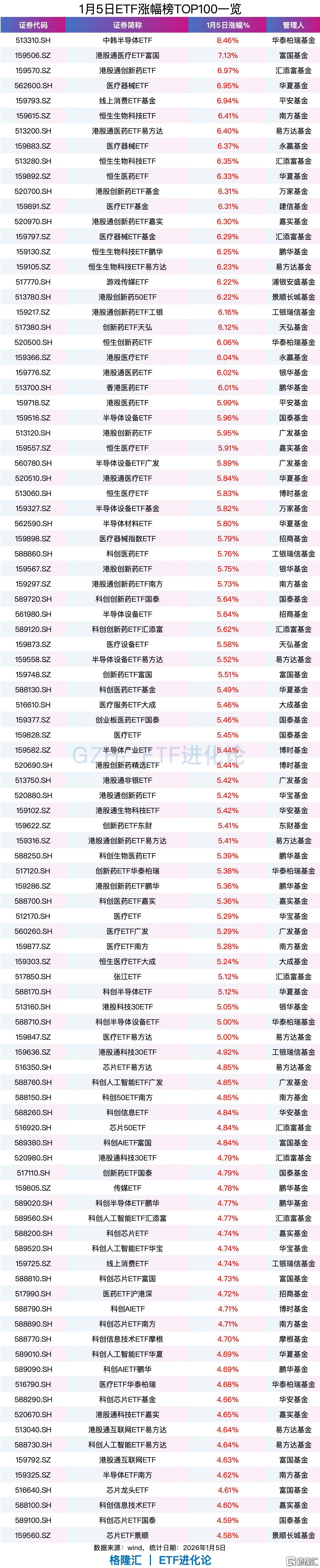
67只ETF涨超5%!2026年A股开门红
Ge Long Hui A P P· 2026-01-05 14:50
Group 1 - The A-share market has returned to the 4000-point level after 34 days, achieving a record 12 consecutive days of gains, the longest since 1993 [1] - Various sectors such as brain-computer interfaces, AI applications, commercial aerospace, memory chips, and innovative pharmaceuticals have seen significant stock price increases, with 67 ETFs rising over 5% [2] - The South Korea-China semiconductor ETF led the market with an 8.45% increase, while major companies like Samsung and SK Hynix are seeking to raise server memory chip prices by 70% [2] Group 2 - Goldman Sachs recommends overweighting Chinese stocks, projecting a 15% to 20% annual increase in the Chinese stock market for 2026 and 2027, supported by earnings growth and valuation re-rating [10] - The report highlights structural upward potential in Chinese exports and a rebound in investments due to policy support, with a focus on service consumption and increased vacation days [10] - According to招商证券, A-share market is expected to see a net inflow of 1.56 trillion yuan, providing liquidity support for a slow bull market [11] Group 3 - The report indicates that public funds are likely to continue their recovery trend, with insurance funds expected to increase their investment in the stock market due to policy encouragement [11] - Private equity funds are anticipated to attract high-net-worth individuals, contributing to significant incremental capital [11] - The current appreciation of the RMB may attract foreign capital inflows, although the absolute scale may not match other funding sources [11] Group 4 - The MACD golden cross signal has formed, indicating positive momentum for certain stocks [12]