宝马

Search documents
突破5100,黄金涨势还未到头!
Sou Hu Cai Jing· 2026-01-26 09:43
上周,现货黄金累计涨幅超过8%,势创2008年来最佳单周表现。今日亚市时段,现货黄金震荡上行,一度触及5109.77美元的新高,目前在5090美元附近 徘徊。 白银方面,伦敦现货白银报108.530美元,盘中一度触及109.453美元,创历史新高,2026年以来累计涨幅超50%。 美联储主席最大热门人选出现! 消息面上,美联储一匹"黑马"意外杀出。 据预测平台Polymarket的数据,截至1月24日,贝莱德高管里克·里德尔当选美联储主席的概率已飙升至54%,大幅高于前任美联储理事沃什、现任美联储 理事沃勒和白宫国家经济委员会主任哈西特,而在年初时其当选的概率仅有4%。 美国媒体称,里德尔能在提名人选中脱颖而出,核心在于其一系列改革美联储的构想与特朗普政府的诉求高度契合。里德尔公开呼吁美联储将基准利率下 调至3%左右,较当前至少需降息50个基点。他认为这一水平更接近当下的中性平衡点。 这意味着,他认为美联储应该通过进一步下调政策利率来做出应对。 此外,关税领域传出大消息。 据最新消息,印度和欧盟最早可能于本周二(1月27日)达成自由贸易协定。其中,印度拟大幅削减欧盟进口汽车关税,最高从110%降至40%。 路 ...


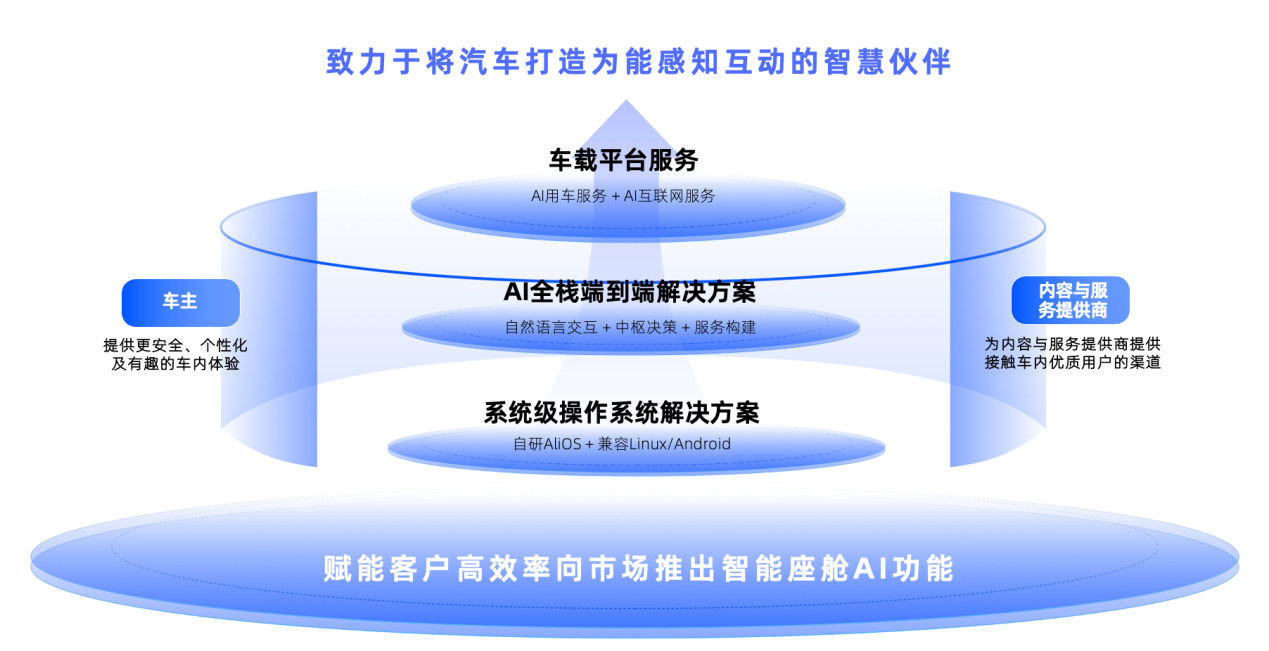
对话独角兽 | 斑马智行的生态构建答卷:横向开放与技术深耕
Di Yi Cai Jing· 2026-01-26 09:04
Core Insights - The core idea of smart cockpit design has shifted from "users finding functions" to "services finding users," indicating a proactive approach in user experience through AI technology [2] - Banma Zhixing has transitioned from an "operating system provider" to an "AI technology company for smart cockpits," emphasizing the importance of AI capabilities in the competitive landscape of smart cockpits [2] Group 1: Technological Advancements - Banma Zhixing's Auto Omni full-modal edge model marks a fundamental shift in technology, enabling full-modal interaction and scene understanding through optimized models on limited computing power [4] - The company is developing a new human-machine interaction paradigm called "No Touch, No APP," exemplified by its collaboration with BMW, which will feature AI Agent technology in new models starting in the second half of 2026 [4] Group 2: Strategic Partnerships and Market Positioning - Banma Zhixing follows a "layered decoupling" strategy for both domestic and international collaborations, adapting AI capabilities and ecosystem services to local market needs [5] - The company focuses on a "horizontal open cooperation" model, allowing it to concentrate on core technologies while partnering with various chip manufacturers and ecosystem partners, providing an alternative for automakers seeking advanced capabilities without full dependency on a single supplier [5][6] Group 3: Software Value Challenges - The industry faces a threefold dilemma regarding software value: high hardware costs with weak software service experiences, low user willingness to pay for software subscriptions, and a lack of clear software value assessment frameworks [8] - Banma Zhixing aims to address these challenges by enhancing hardware-software integration and exploring new business models, such as software subscriptions, while gradually changing perceptions about software pricing in the automotive sector [8][11] Group 4: Practical Solutions and Future Directions - The company has implemented strategies to achieve experience and cost leadership through deep hardware integration, such as the Auto Omni model, which has garnered significant attention from automakers [9] - Banma Zhixing has established a clear value assessment system for software, achieving over 1 billion yuan in pure software revenue, serving as a reference for commercialization in the industry [11] - The future of the automotive industry will hinge on technology, ecosystem, and collaborative efficiency, necessitating a macro perspective to foster shared technology and risk in the industry [12]
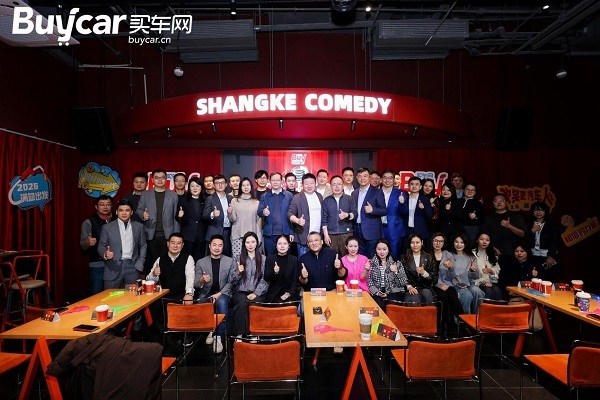
“汽车人 2026满血出发”,以情绪共鸣破局行业困境
Zhong Guo Jing Ji Wang· 2026-01-26 08:11
Core Insights - The event "China Automotive New Year Show" hosted by Buycar aimed to address industry anxieties through humor and shared experiences, highlighting the need for emotional resonance and collective strength in the automotive sector [1][3] Industry Overview - The Chinese automotive market is facing intense competition in 2025, with traditional price-cutting strategies losing effectiveness and a shift towards "value" becoming essential, marking 2025 as the "value year" for the industry [3] - Challenges such as growth difficulties, innovation hurdles, and profitability issues are expected to persist into 2026, emphasizing the need for a renewed focus on opportunities amidst adversity [3][8] Key Discussions - Industry leaders shared insights on the importance of long-term brand value over short-term marketing tactics, with a call for deeper engagement in automotive marketing [5] - Personal anecdotes from sales professionals highlighted the industry's challenges, including issues with electric vehicle range and budget constraints affecting public relations [5][6] - The need for the industry to return to producing reliable vehicles was emphasized, alongside the acknowledgment that companies capable of manufacturing quality cars will ultimately stand out [6][8] Awards and Recognition - The event featured an awards ceremony recognizing 41 categories across various segments, including new energy, luxury, and domestic brands, showcasing the innovative achievements and value breakthroughs in the Chinese automotive industry for 2025 [8][9]
多家车企推出7年车贷!我国新能源充电设施突破2000万!德国启动电动车购车补贴!银河V900、新款宝马i3上市!丨一周大事件
电动车公社· 2026-01-25 16:01
New Car Launches - Geely Galaxy V900 launched with a price range of 309,800 to 369,800 yuan, offering three models [1][3] - Leado L90 "Ma Dao Cheng Gong" version launched with a price range of 296,800 to 316,800 yuan, with rental options starting at 210,800 yuan [10][12] - New BMW i3 launched with a price range of 278,000 to 338,000 yuan, featuring significant configuration upgrades and a price reduction of 75,900 yuan [15][19] Company Dynamics - Renault Group aims for over 2.336 million vehicle sales in 2025, a year-on-year increase of 3.2% [26][27] - Toyota targets 1.7804 million vehicle sales in China for 2025, marking a 0.2% year-on-year growth, ending a four-year decline [30][31] - Hongqi has initiated vehicle testing for its solid-state battery technology, marking a significant step in battery innovation [34][35] Domestic News - China's electric vehicle charging infrastructure has surpassed 20 million units, with 4.717 million public and 15.375 million private charging facilities [55][57] International News - Germany has reintroduced electric vehicle purchase subsidies, ranging from 1,500 to 6,000 euros, applicable to both domestic and Chinese brands [58][60]


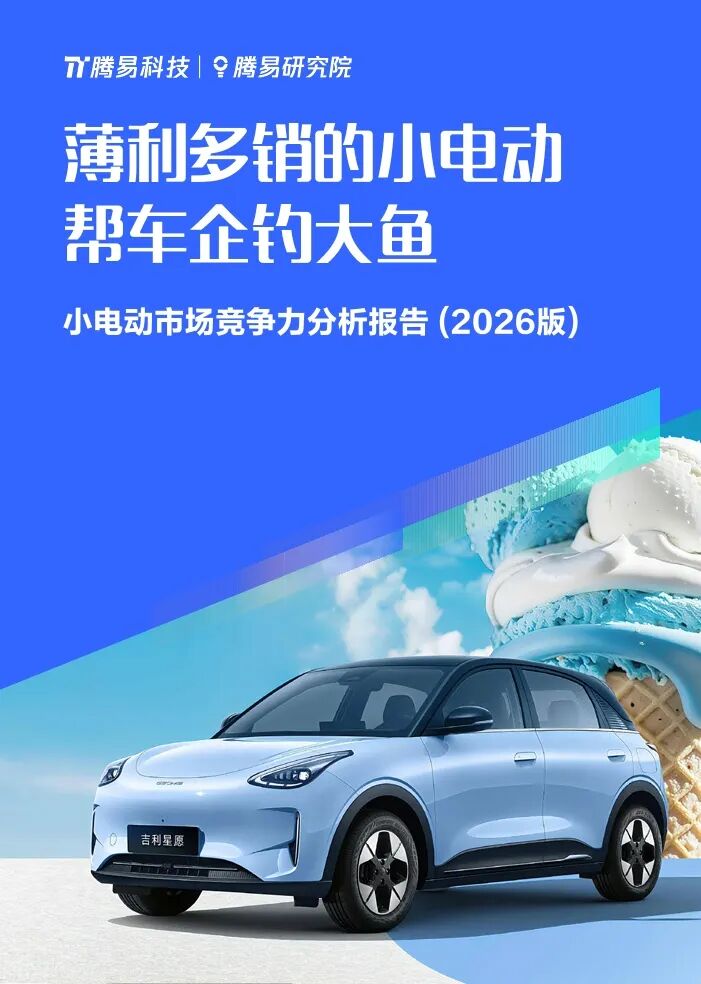
腾易:薄利多销的小电动帮车企钓大鱼:小电动市场竞争力分析报告(2026版)
Xin Lang Cai Jing· 2026-01-25 13:14
Core Insights - The core insight of the article is that the sales of small electric vehicles (EVs) in China have surged from less than 500,000 units in 2020 to over 3 million units by 2025, with Chinese brands being the primary beneficiaries, capturing nearly 96% of the market share in this segment [4][6][95]. Group 1: Market Growth - From 2020 to 2025, the sales of small electric vehicles in China increased more than sixfold, with their market share rising from less than 3% to over 14% of total passenger vehicle sales [6][95]. - The contribution of small electric vehicles to the overall market has been significant, accounting for over 10% of the market sales and helping to boost the market share of Chinese brands from over 30% to more than 60% [6][95]. Group 2: Brand Performance - Chinese brands have been the sole beneficiaries of the small electric vehicle boom, maintaining a sales ratio of over 90%, which is expected to approach 96% by 2025 [6][95]. - Notable Chinese brands such as Wuling and Geely have experienced a rebound in sales due to their small electric vehicle offerings, with Geely's sales projected to reach nearly 2 million units by 2025 [11][13]. Group 3: User Demographics and Preferences - By 2025, nearly 60% of small electric vehicle users will come from households that previously owned foreign brands, with over 80% of these users being female [25][33]. - The satisfaction and recommendation rates for small electric vehicles are higher than the overall market, indicating a positive shift in consumer perception towards Chinese brands [33][36]. Group 4: Competitive Landscape - As of January 2026, major foreign brands like Volkswagen and Toyota have struggled to respond effectively to the rise of Chinese small electric vehicles, lacking systematic strategies to counter this trend [12][103]. - The article suggests that if the sales of small electric vehicles continue to approach 5 million units and capture over 20% market share by 2030, foreign brands will face significant challenges [12][103]. Group 5: Strategic Implications - The rise of small electric vehicles has not only created new market opportunities for Chinese brands but has also disrupted the traditional user upgrade ecosystem established by foreign brands [55][62]. - The article emphasizes the importance of viewing small electric vehicles as a key component in building a user upgrade ecosystem rather than merely low-margin products [55][68].

从“多生孩子好打架”到“优生优育” 车企平台战略为何集体收缩?
经济观察报· 2026-01-25 04:58
Core Viewpoint - The automotive industry is shifting from a multi-platform strategy to a more integrated and compatible platform approach, reflecting the efficiency anxiety among companies in a competitive market [1][11]. Group 1: Platform Strategy Transition - Companies are moving from having multiple dedicated platforms for different vehicle types to developing universal platforms that can accommodate various vehicle categories and powertrains [2][4]. - Great Wall Motors has introduced a new platform called "Guiyuan," which can cover seven vehicle categories and five powertrain types, aiming to produce over 50 models based on this platform [2][4]. - International automakers like Volkswagen and BMW are also consolidating their platforms to enhance compatibility and efficiency [2][4]. Group 2: Reasons for Platform Strategy Shift - The shift is driven by a change in competitive focus from mechanical capabilities to intelligent features, where software and electronic architecture have become core elements [4][5]. - Companies are seeking to mitigate technological risks associated with betting solely on electric platforms, as the market now supports a coexistence of fuel, hybrid, and electric vehicles [5][6]. - The high hidden costs of developing and maintaining new platforms are pushing companies to adopt compatible platforms that can share components and reduce material costs significantly [6]. Group 3: Competitive Landscape and Future Trends - Despite the trend towards compatibility, some companies like Toyota and Hyundai continue to pursue multi-platform strategies, indicating a divergence in approaches based on company size and market needs [8][9]. - The future may see a reduction in the number of platforms to one or two super platforms, with a focus on standardized "skateboard" chassis that allow for flexible combinations of body styles and power sources [9][10]. - The competition will increasingly hinge on the sophistication of electronic architecture and software capabilities, rather than just platform diversity [10][11]. Group 4: Brand Structure Adjustments - The intensifying market competition is prompting companies to streamline their brand architectures, with several automakers integrating their brands into unified systems to enhance operational efficiency [10].
城市NOA“向下走”
Zhong Guo Jing Ying Bao· 2026-01-25 03:31
Core Insights - The implementation of a 128 TOPS chip for city NOA (Navigate On Autopilot) has been successfully launched, challenging the previous consensus that a minimum of 200 TOPS was required for such technology, indicating a shift towards mainstream adoption in the market [1] - A report by the China Automotive Industry Economic and Technological Research Institute forecasts that by November 2025, the cumulative sales of passenger cars equipped with city NOA will reach 3.129 million units, with a penetration rate of 15.1%, an increase of 5.6 percentage points from 2024 [1] - The trend shows that city NOA is moving from high-end vehicles to mainstream passenger cars, with over 68.9% of city NOA-equipped vehicles priced below 300,000 yuan [1] Market Penetration - In 2024, the penetration rate of NOA in the domestic automotive market is projected to be 7.3%, with city NOA at 1.52%, indicating a significant increase in adoption within a year [3] - By November 2025, 15 out of every 100 passenger vehicles are expected to be equipped with city NOA, marking a rapid scale-up in its market presence [3] Competitive Landscape - The focus of the industry has shifted from highway NOA to city NOA, with the latter being more complex to implement [4] - Over 78.3% of city NOA-equipped vehicles sold by November 2025 are expected to be self-developed by automakers, indicating a strong market position for companies that invest in in-house technology [4] Key Players - Notable brands in the self-developed city NOA segment include Tesla, NIO, Xpeng, Li Auto, and Xiaomi, each leveraging their unique technological capabilities to enhance their offerings [5] - Approximately 21.7% of city NOA-equipped vehicles are developed in collaboration with third-party suppliers, with traditional automotive brands making up 64.4% of these partnerships [5] Supplier Dynamics - The market for third-party city NOA suppliers is dominated by Momenta and Huawei, which together account for about 80% of the market share [6] - By November 2025, Momenta is expected to have a leading position with 414,400 units, while Huawei's HI model will account for approximately 19.76% of the third-party supplier market [6] Future Outlook - The upcoming mandatory national standard for intelligent connected vehicles is expected to set a clear safety baseline and further promote the marketization of related technologies [7] - The integration of end-to-end large models is seen as a key driver for the acceleration of city NOA, enhancing safety and user experience [8] - By 2030, city NOA is projected to become a mainstream feature in advanced driver assistance and autonomous driving systems, with significant market penetration expected in the 150,000 to 200,000 yuan price range [6][9]
CES 2026剧透“智能化革命”演进方向?吉利秀出多项黑科技
Zhong Guo Qing Nian Bao· 2026-01-24 07:43
Core Insights - The CES 2026 showcased the acceleration of the automotive industry's smart transformation, highlighting that artificial intelligence (AI) is becoming a core element in redefining automotive products rather than just an additional feature [2] Group 1: Company Developments - Geely announced the evolution of its AI technology system to version 2.0, integrating AI across various domains of vehicle development, and introduced the Eva super-human emotional intelligent system as the central smart hub for vehicles [2] - The company launched the Qianli Haohan G-ASD advanced driver assistance system, along with several new electric vehicle models, demonstrating its technological advancements at CES 2026 [2] - Geely's sales reached 3.02 million units in 2025, with nearly 1.69 million units being new energy vehicles, marking a 90% year-on-year increase [3] Group 2: Industry Trends - The automotive industry is expected to see AI applications accelerate into large-scale implementation across the entire value chain, including research and development, production, marketing, and services [4] - The year 2026 is anticipated to be a historic opportunity for Geely as it aims to become a global leader in smart vehicles, supported by national strategies and policies promoting AI integration in the automotive sector [4]
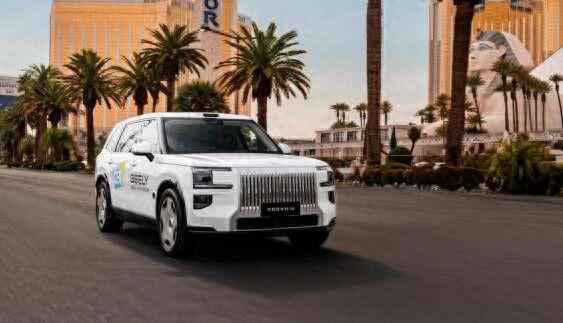
从“多生孩子好打架”到“优生优育”车企平台战略为何集体收缩?
Jing Ji Guan Cha Bao· 2026-01-24 04:27
Core Viewpoint - The automotive industry is shifting from multiple specialized platforms to versatile platforms that can accommodate various vehicle types and powertrains, reflecting a strategic response to market uncertainties and the need for efficiency [2][4][5]. Group 1: Platform Strategy Changes - Domestic automaker Great Wall Motors launched a new platform called "Guiyuan," which can cover seven vehicle categories and five powertrain types, aiming to produce over 50 models based on this platform [3]. - International automakers like Volkswagen and BMW are also consolidating their platforms, with Volkswagen planning to integrate multiple existing platforms into a single SSP platform [3][4]. - The transition from specialized platforms to compatible platforms signifies a return to survival efficiency, as companies focus on software and electronic architectures rather than just mechanical components [4][5]. Group 2: Market Dynamics and Risks - The automotive market is entering a "Warring States" era where fuel, hybrid, and electric vehicles coexist, making it risky for companies to invest heavily in single powertrain platforms [5]. - The shift to compatible platforms allows automakers to adapt to diverse regulatory environments and consumer demands with minimal costs, reducing the risk of misjudging technology trends [5][6]. - The increasing competition in the automotive market has made the hidden costs of developing new platforms significant, prompting companies to adopt compatible platforms that can share components and reduce material costs [6]. Group 3: Competitive Landscape - Despite the trend towards platform consolidation, some companies like Toyota and Hyundai continue to pursue multi-platform strategies to meet diverse market needs [7][8]. - Tesla exemplifies a single-platform approach, focusing on scale efficiency at the expense of some production flexibility [8]. - The choice between compatible and dedicated platforms depends on the company's market position and historical context, with larger automakers favoring compatibility while newer entrants may prefer dedicated platforms [8][9]. Group 4: Future Trends - Analysts predict that compatible platforms will become mainstream in the next 5 to 10 years, with the number of platforms reducing to one or two super platforms [9]. - Future platforms are expected to resemble standardized "skateboard chassis," allowing for flexible combinations of body styles and power sources, with competition shifting towards electronic architectures and software capabilities [9][10]. - The ongoing adjustments in brand architectures, such as mergers and consolidations among various brands under single corporate umbrellas, reflect the industry's response to competitive pressures and efficiency concerns [10].
中国货全球卖爆,狂收1.2万亿美元,外贸单抢买,凭啥这么硬气?
Sou Hu Cai Jing· 2026-01-23 14:01
Core Insights - China's total export value is expected to approach 27 trillion yuan by 2025, with a trade surplus exceeding 1.2 trillion USD, driven by new sectors like electric vehicles, photovoltaic panels, and lithium batteries, which have collectively reached an annual export value of nearly 1.3 trillion USD, growing at a rate of 27.1%, significantly outpacing overall export growth [1] Group 1: New Export Drivers - The export of electric vehicle batteries is characterized by superior durability, faster charging, and lower overall vehicle costs, with Chinese brands accounting for 20% of electric vehicle sales in Europe [1] - China dominates the global photovoltaic component market, producing 80% of the total, with advanced technologies like TOPCon and HJT batteries being essential for foreign solar power projects [3] - Over 70% of global lithium battery shipments come from China, with major companies like Tesla and BMW utilizing batteries from CATL [3] Group 2: Shipbuilding and Wind Power - China has captured over 70% of global orders for high-value ships such as LNG carriers and container ships, previously dominated by South Korea and Japan, due to faster production and reliable delivery at competitive prices [5] - Wind power equipment exports have surged by 50%, with comprehensive service offerings including installation and maintenance, particularly to regions like the Middle East and Africa [5] Group 3: Traditional Industries and Market Shifts - Traditional export sectors such as furniture, appliances, and clothing have seen significant declines, with year-on-year drops of 10%, 12%, and 18% respectively, as price competitiveness diminishes [5] - Steel exports have increased in volume, but total revenue has decreased due to lower prices, highlighting a shift in market dynamics where quantity is prioritized over price [5] Group 4: R&D and Supply Chain Stability - R&D investment in Chinese enterprises has risen by over 10%, with the country holding the highest number of patents globally, particularly in the renewable energy sector [7] - The stability of supply chains has become a competitive advantage, with foreign companies prioritizing timely delivery over cost, leading to increased preference for Chinese suppliers [7] Group 5: Innovation in Traditional Sectors - The home appliance industry is evolving towards smart and energy-efficient solutions, offering integrated systems that include solar panels and home energy storage for markets in Southeast Asia [9] - The current reshaping of foreign trade structures favors companies that possess technology, adaptability, and service capabilities, while those that remain stagnant risk being left behind [9]