
科伦博泰

Search documents
默沙东、GSK抢着买慢病新药,哪些公司还有BD机会?|焦点分析
3 6 Ke· 2025-07-30 09:05
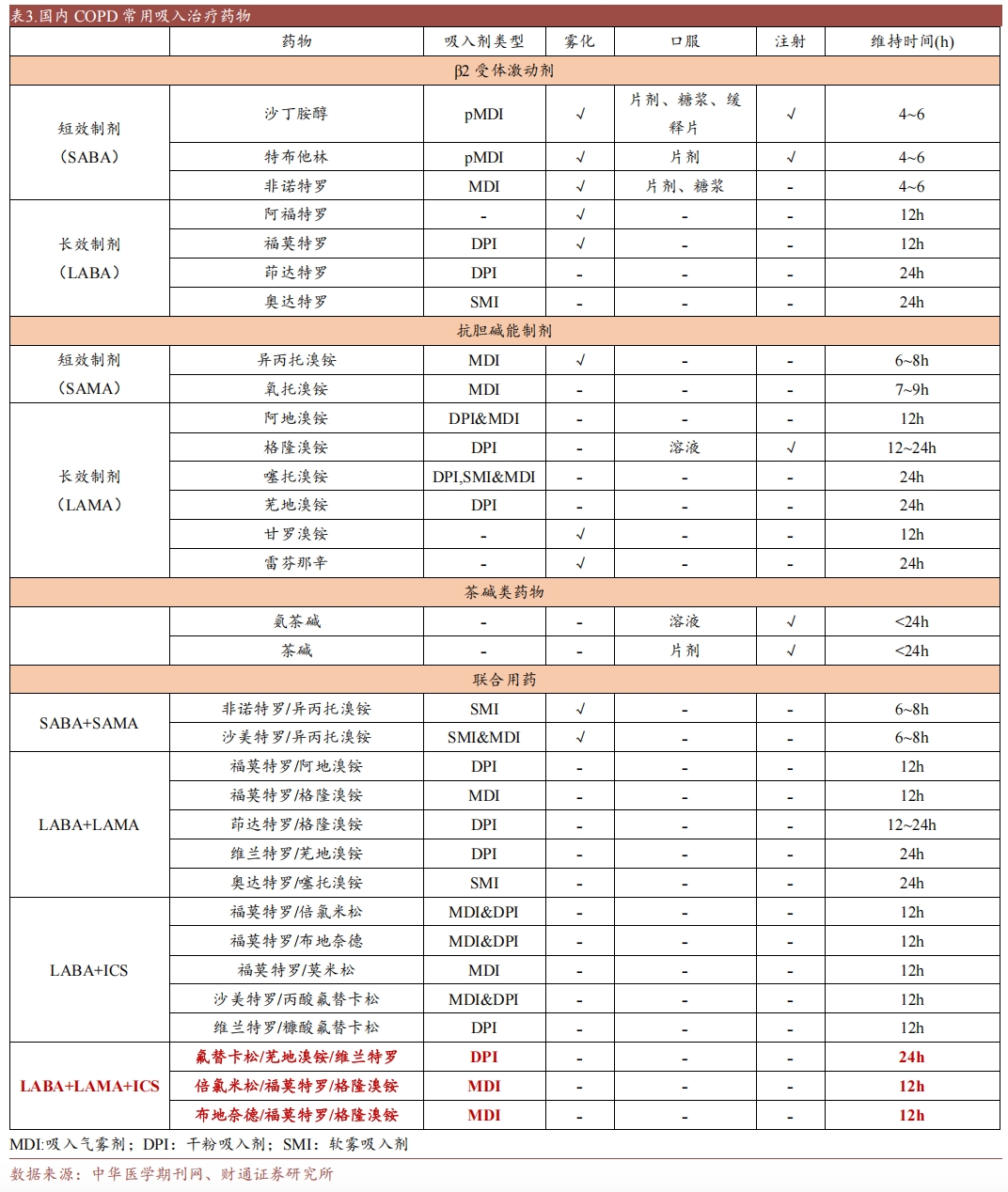
Core Viewpoint - The recent $5 billion upfront payment by GSK for the overseas rights of HRS-9821 and 11 innovative projects from Heng Rui Pharmaceutical highlights the growing interest and potential in the COPD treatment market, which has seen little innovation for over a decade [1][2]. Group 1: Market Dynamics - The global COPD market is projected to exceed $20 billion by 2024, with HRS-9821 being a significant new entrant after a long period without new mechanisms [1][5]. - The approval of Ensifentrine, a PDE3/4 inhibitor, has revitalized interest in COPD treatments, demonstrating a 36%-43% reduction in acute exacerbation rates [5][6]. - The transaction indicates a shift in focus for Chinese pharmaceutical companies towards common and chronic diseases, revealing untapped value in the respiratory drug market [2][3]. Group 2: Competitive Landscape - Major players in the COPD treatment market include AstraZeneca, GSK, and Boehringer Ingelheim, which have historically dominated with LABA, LAMA, and ICS therapies [3][5]. - The success of PDE3/4 inhibitors is expected to prompt other pharmaceutical companies to explore similar pathways, with companies like Zhengda Tianqing and Haisco making significant progress in their own PDE3/4 inhibitor developments [9][10]. - The market is witnessing a potential consolidation of opportunities, with Chinese companies likely to dominate the remaining PDE3/4 development space [7][9]. Group 3: Future Opportunities - The complexity of COPD's pathophysiology suggests that while PDE3/4 inhibitors are promising, they will not be the only future players, as biologics targeting different mechanisms are also emerging [10][11]. - New therapeutic approaches, including cell therapies and biologics targeting TSLP, are being explored, indicating a diversification in treatment options for COPD [12][14]. - The anticipated market for COPD treatments may evolve into a tiered selection model, where traditional therapies provide foundational care while innovative products address more challenging cases [14].



生物医药创新药动态更新:PD-(L)1+ADC:PD-(L)1 单抗+国产 TROP2、HER2 ADC 有望迭代肿瘤一线疗法,PD-L1 ADC 提供免疫耐药新选择
Shanxi Securities· 2025-07-28 05:11
Investment Rating - The report maintains an investment rating of "Leading the Market-B" for the biopharmaceutical industry [1][9]. Core Insights - PD-(L)1 monoclonal antibodies combined with ADCs are expected to become first-line standard therapies for various tumors, with PD-(L)1 monoclonal antibodies being foundational in tumor immunotherapy [3][4]. - The combination of PD-(L)1 monoclonal antibodies and ADCs shows promise in overcoming resistance and improving overall response rates (ORR) in clinical settings [3][4]. - Keytruda combined with Nectin-4 ADC Padcev has already received FDA approval for first-line treatment of la/mUC, indicating the potential for similar combinations in other cancers [3][4]. Summary by Sections Market Performance - The biopharmaceutical industry has shown significant market performance over the past year, with innovative drug developments leading the way [1]. Drug Evaluation - PD-(L)1 monoclonal antibodies are crucial in activating T cells for anti-tumor effects, and their combination with ADCs is expected to enhance ORR and provide new options for immune-resistant cases [3][4]. - Clinical trials indicate that PD-1/L1 monoclonal antibodies combined with TROP2 ADCs show superior progression-free survival (PFS) compared to traditional chemotherapy in non-small cell lung cancer (NSCLC) and triple-negative breast cancer (TNBC) [4][5]. Clinical Trial Results - In a clinical trial for first-line treatment of non-squamous, driver-gene-negative NSCLC, the combination of TROP2 ADC and PD-L1 monoclonal antibody showed an ORR of 59.3% and a median PFS of 15.0 months, outperforming chemotherapy [4]. - For TNBC, the combination of Keytruda and Trodelvy achieved a median PFS of 11.2 months, indicating a significant improvement over standard chemotherapy [4]. Future Outlook - The report highlights the potential of PD-1/L1 monoclonal antibodies combined with HER2 ADCs in treating HER2-positive gastric cancer, showing promising results in clinical trials [5]. - The PD-L1 ADC HLX43 demonstrated significant anti-tumor efficacy in late-stage NSCLC, with an ORR of 38.5% and a median PFS of 5.4 months [5].
信达生物、康方生物
2025-07-28 01:42
Summary of Conference Call Records Industry Overview - The Chinese innovative pharmaceutical industry is experiencing accelerated development, driven by internationalization, policy support, and technological breakthroughs [3][4] - The recognition of Chinese innovative drugs in international markets is increasing, with a notable rise in BD (business development) transactions and large upfront payments [1][3] Key Companies Innovent Biologics (信达生物) - Sales revenue from tumor products has rapidly increased, surpassing 8 billion RMB in 2024 and expected to reach 11 billion RMB in 2025 [1] - IBI363 shows significant efficacy in lung cancer and colorectal cancer, with a 12-month overall survival (OS) rate of 70.9% in lung cancer patients [7][8] - The company has a strong competitive advantage in the tumor field, with multiple potential products and a robust pipeline [9] - Non-tumor products like Masudutai and others are also entering the sales phase, with peak sales expected to exceed 8 billion RMB [10] Kangfang Biopharma (康方生物) - Revenue growth is projected to exceed 70% in 2025 and around 40% in 2026, driven by continuous product approvals and market expansion [1][13] - AK112, a core product targeting PD-1 and VEGF, shows rapid clinical advancement and high safety, particularly in squamous cell carcinoma [14][15] - The company is actively pursuing early treatment research for PD-1 resistant patients, differentiating itself from competitors [2][17] Technological Breakthroughs - Innovations in ADC (Antibody-Drug Conjugates), IO (Immuno-Oncology) bispecific antibodies, GLP-1, and T-cell engagers are leading industry advancements [1][3] - Kangfang's dual antibody technology platform has significantly improved R&D success rates, with rapid approval timelines for key products [13] Investment Insights - Recommended investment targets include companies like Heng Rui Medicine, BeiGene, and others in both A-share and H-share markets [5] - Key investment considerations include overseas sales potential and anticipated business development activities [4] Future Catalysts - For Innovent, upcoming catalysts include the initiation of clinical trials for various products and expected data readouts in 2026 [11] - Kangfang is expected to continue rapid progress in overseas clinical research and expand its market presence [18][24] Market Valuation - Kangfang's current reasonable market value is estimated at 200.098 billion RMB, with a target price of 222.93 RMB based on DCF model calculations [25]
科伦博泰20250720
2025-07-21 14:26
Summary of Key Points from the Conference Call Company Overview - **Company**: 科伦博泰 (Kalon Biotech) - **Industry**: Biopharmaceuticals, specifically focusing on Antibody-Drug Conjugates (ADCs) and small molecules Core Insights and Arguments - **Technology Platforms**: The company has developed approximately 20 drug candidates, including 11 ADCs, leveraging its ADC and small molecule technology platforms, highlighting its platform value through collaborations exceeding $10 billion with partners like Merck [2][3] - **Commercialization Progress**: The commercialization of SKB264 has accelerated, with approvals in China for second-line triple-negative breast cancer and third-line EGFR mutation lung cancer. The product is expected to generate revenues of CNY 1.78 billion, CNY 3.56 billion, and CNY 5.89 billion from 2025 to 2027 [2][4] - **Clinical Trials**: Merck has initiated 14 global registration clinical trials for SKB264, covering various tumor indications, which demonstrates the product's potential in the international market [6][10] Product Pipeline and Market Potential - **SKB264 Performance**: In clinical trials, SKB264 showed a median progression-free survival (PFS) of 6.7 months in triple-negative breast cancer and 11.1 months in hormone receptor-positive, HER2-negative breast cancer, indicating strong efficacy [12] - **HER2 ADC Product**: The HER2 ADC product, 博度曲妥珠单抗, is expected to be approved for third-line HER2-positive breast cancer, with an overall response rate (ORR) of 43.9% and a median PFS of 12.3 months, targeting a market of 8,201 patients who are resistant or price-sensitive [14] - **Other Pipeline Products**: The company is also developing a PDL1 monoclonal antibody for nasopharyngeal carcinoma and a RET inhibitor for later-line lung cancer, which has an ORR of 80%, showcasing competitive advantages [15] Management and Ownership Structure - **Management Team**: Led by founder Liu Gexin, with a team experienced in international pharmaceutical companies, including roles in quality management and clinical development [8] - **Ownership**: As of December 31, 2024, the controlling shareholder is 科伦药业 (Kalon Pharmaceutical) with a 54.28% stake, while Merck holds 10.23% [8] Collaborations and Strategic Partnerships - **Partnerships**: In addition to Merck, the company has expanded collaborations with other international firms, including Elifes and One World Bio, indicating a strategy to leverage its platform value [9] Market Valuation and Investment Potential - **Market Capitalization**: The estimated market capitalization of the company is approximately CNY 120 billion, primarily driven by SKB264 and other commercialized products, positioning it as a significant investment opportunity in the ADC sector [16]
把握业绩高增个股,长期关注“创新+复苏”
Xinda Securities· 2025-07-21 12:49
Investment Rating - The investment rating for the pharmaceutical and biotechnology industry is "Positive" [2] Core Insights - The pharmaceutical and biotechnology sector has shown a weekly return of 4.00%, outperforming the CSI 300 by 2.91%, ranking second among 31 primary sub-industry indices [3][8] - The report emphasizes the importance of innovation and recovery as key investment themes, highlighting the ongoing enthusiasm for innovative drugs driven by policy incentives and clinical data [10] - Notable mergers and acquisitions, such as China Biopharmaceutical's acquisition of Lixin Pharmaceutical for approximately $1 billion, are seen as significant milestones in the industry [9][10] Summary by Sections 1. Industry Overview - The pharmaceutical and biotechnology sector's monthly return was 9.44%, ranking fourth among 31 primary sub-industry indices, with the medical services sub-sector leading with a 15.72% increase [8][22] - The chemical pharmaceuticals sub-sector had the highest weekly return of 6.86% [32] 2. Market Performance and Valuation - The current PE (TTM) for the pharmaceutical and biotechnology industry is 30.03, which is below the historical average of 30.89 [14][17] - The industry has shown a 21.25% increase over the last six months, outperforming the CSI 300 by 14.79% [12][14] 3. Stock Performance - Top-performing stocks in the past week include Borui Pharmaceutical, Lisheng Pharmaceutical, and Nanxin Pharmaceutical, with increases of 42.35%, 41.68%, and 34.95% respectively [37] - In the Hong Kong market, stocks like Sanofi Biologics and Lepu Medical have also shown significant gains of 63.79% and 62.04% [41] 4. Industry and Company Dynamics - Recent policy developments include the Shanghai Municipal Drug Administration's action plan for regulating online drug sales from 2025 to 2027 [44] - The National Healthcare Security Administration has initiated the eleventh batch of centralized drug procurement, which will include 55 varieties [44]
第十一批国采目录发布,关注集采政策推进节奏
Ping An Securities· 2025-07-21 02:51
Investment Rating - The industry investment rating is "stronger than the market," indicating that the industry index is expected to outperform the market by more than 5% over the next six months [56]. Core Insights - The report highlights the rapid pace of the implementation of the 11th batch of national centralized procurement, with 55 varieties included, a decrease of 7 from the previous batch. The average price drop in past procurement batches ranged from 48% to 59% [4][10]. - The total sales scale of the 11th batch of procurement varieties in medical institutions is projected to exceed 49 billion yuan in 2024 [10]. - The report identifies key therapeutic areas for the 55 varieties, including blood and hematopoietic system drugs, digestive system and metabolic drugs, respiratory system drugs, and others, with varying numbers of products in each category [10][11]. Summary by Sections National Procurement Overview - The 11th batch of national centralized procurement includes 55 varieties, with a total of 515 varieties across all batches. The average price drop in previous batches was between 48% and 59% [4][6]. - The timeline from the release of procurement documents to the announcement of selected results is approximately 1-2 months, followed by 3-4 months for implementation [4][7]. Competitive Landscape - Among the 55 varieties, 37 have 10 or more qualifying companies, with 4 having 30 or more. The leading companies in terms of the number of approved varieties include Beite Pharmaceutical, Kelun Pharmaceutical, and Fosun Pharma [10][12]. Changes in Procurement Rules - The report outlines changes in procurement rules for the 11th batch, including reasons for exclusion of certain products, such as low annual procurement amounts and high clinical risks [16][19]. - The reporting method for medical institutions has shifted from generic names to specific brand names for reporting quantities [19]. Sales and Market Share - The report provides a detailed table of the expected sales and market share for various products in the 11th batch, highlighting significant sales figures for products like Dapagliflozin and Olaparib, with market shares reaching up to 100% for some products [24][26]. Investment Strategy - The report suggests focusing on innovative pharmaceutical companies with rich pipeline layouts, such as Heng Rui Medicine and BeiGene, as well as companies with significant single-product potential and leading technology platforms [30].
医药行业2025年中期投资策略:BD加速创新药重估,后续持续看好创新药及产业链、AI医疗、脑机接口等结构性机会
Southwest Securities· 2025-07-20 12:32
Core Viewpoints - The pharmaceutical and biotechnology sector is experiencing a turning point and structural market trends in the first half of 2025, with a focus on innovative drugs and their supply chain, AI healthcare, and brain-computer interfaces as structural opportunities [3][5] - The A-share pharmaceutical and biotechnology index has increased by 10.10% since the beginning of 2025, outperforming the CSI 300 index by 8.90 percentage points, ranking 4th in industry performance [3][22] - Among 480 listed pharmaceutical and biotechnology companies, 348 have seen their stock prices rise, accounting for 72.5%, with 17 stocks doubling in value [3][40] Investment Logic - The innovative drug sector is accelerating its value reconstruction through business development (BD) overseas, research and commercialization progress, and policy support. In the first half of 2025, over 50 BD transactions for innovative drugs occurred, totaling over $48 billion [5] - Significant clinical data releases and commercialization progress for major drug candidates are expected to drive stock price increases [5] - Policy initiatives, such as the March 2025 government work report emphasizing the support for innovative drugs and medical devices, are providing strong backing for the industry's long-term development [5] Market Performance - The pharmaceutical sector's valuation has seen a short-term recovery but remains at a long-term low, with a PE ratio of 29 times as of mid-2025, slightly above the 50th percentile of the past four years [3][43] - Public fund holdings in the pharmaceutical sector have increased, with the proportion of public funds in A+H shares rising to 9.05% in Q1 2025, a 0.37 percentage point increase [3][58] Sub-industry Performance - The best-performing sub-industries in the pharmaceutical sector include chemical preparations and other biological products, with increases of 25.8% and 24.0%, respectively [3][22] - The pharmaceutical industry is witnessing a structural market trend, with innovative drugs leading the charge, while traditional sectors like vaccines and traditional Chinese medicine have seen slight declines [3][29] Recommended Stocks - A robust portfolio is suggested, including companies such as Heng Rui Medicine, BeiGene, and United Imaging Healthcare, among others [10]


一款国产抗癌药,“少卖”570亿元
Chang Sha Wan Bao· 2025-07-17 16:31
Core Insights - The article discusses the phenomenon of "middlemen profiting" in the innovative drug industry, highlighted by the strategic collaboration between BMS and BNT, which involved a $9 billion deal for the drug BNT327, originally licensed from Chinese company Pumice Biotech [1][2] - The rapid increase in valuations and the perceived undervaluation of Chinese biotech firms are emphasized, with examples illustrating how companies like Pumice and Hengrui have faced challenges in capturing the full value of their innovations [1][2][3] Summary by Sections Strategic Collaborations - BMS and BNT's partnership to develop BNT327 is valued at $9 billion, with Pumice Biotech originally licensing the drug for $55 million [1] - Hengrui Pharmaceuticals licensed its asthma drug SHR-1905 to Aiolos Bio for $25 million upfront, which was later sold to GSK for $10 billion, showcasing the significant markup in valuations [2] Market Dynamics - The article highlights the immature valuation system for innovative drug companies in China and their limited international operational capabilities, leading to unfavorable deals [2][3] - The quality of clinical data and the lack of unique assets hinder Chinese companies' bargaining power in the global market [3] Evolution of BD Transactions - The evolution of business development (BD) transactions in China is outlined, with three phases: exploration (pre-2014), development (2015-2019), and explosion (2020-present) [4][5] - The surge in BD transactions is attributed to the establishment of numerous innovative drug companies post-2010 and regulatory changes that encouraged innovation [5][6] License-in and License-out Trends - License-in transactions dominated initially, allowing companies to mitigate risks and shorten development timelines, but led to inflated prices and market bubbles [6][7] - License-out transactions have recently surpassed License-in, indicating a shift in strategy as companies seek immediate cash flow amid financial pressures [8] New Business Models - The emergence of the NewCo model allows companies to retain longer-term control over their product pipelines while attracting investment, marking a shift from traditional licensing agreements [13][14] - The NewCo model has gained traction among various biotech firms, enabling them to better manage their assets and secure funding [13][15] Future Outlook - The article concludes that while "cheap sales" of assets may continue, Chinese biotech firms are increasingly integrating into the global ecosystem, necessitating a focus on maximizing value within the international value chain [15][16]

基金圈炸锅 从创新药到短剧、机器人 公募基金正上演疯狂赛道切换
Sou Hu Cai Jing· 2025-07-17 12:18
Group 1: Core Insights - Public funds are rapidly shifting investment strategies, focusing on sectors like innovative pharmaceuticals, short dramas, robotics, and controllable nuclear fusion, reflecting a proactive approach to structural market trends [1][7] - The Longcheng Pharmaceutical Industry Fund achieved a remarkable 102.52% increase in year-to-date performance, driven by strategic investments in leading innovative pharmaceutical companies [2][4] - The success of the fund is attributed to its combination strategy of investing in both Hong Kong and A-share markets, with significant contributions from partnerships like the $6 billion deal between Sanofi and 3SBio [2][5] Group 2: Sector-Specific Strategies - The Tongtai Industrial Upgrade Mixed Fund, previously on the brink of liquidation, successfully pivoted to a focus on robotics, resulting in a recovery of its scale from 80 million to 140 million yuan, with a net value increase of 42% [3][5] - The Yongying Fund's aggressive strategy includes launching funds focused on controllable nuclear fusion and deep-sea technology, with significant investments in companies like Guoguang Electric and Zhongke Haixun [5][6] - The deep-sea technology sector is projected to see investments exceeding 200 billion yuan by 2025, driven by national strategies and the potential for domestic replacements in materials and exploration technologies [5][8] Group 3: Industry Transformation - The public fund industry is undergoing a transformation from broad-based investment strategies to more targeted approaches, as evidenced by the shift in focus from renewable energy to AI-driven technologies [6] - Innovative fund products, particularly those with a three-year lock-up period, are becoming more prevalent, allowing for long-term strategic investments without short-term redemption pressures [6] - High volatility is becoming a norm in the market, with significant daily fluctuations in sectors like controllable nuclear fusion, yet fund managers remain committed to long-term technological breakthroughs [6][7]


华源晨会精粹20250714-20250714
Hua Yuan Zheng Quan· 2025-07-14 14:05
Fixed Income - Credit spreads are expected to have further compression potential, with most industries showing a slight decrease in credit spreads except for the AA agricultural sector which saw a minor increase of 3 basis points [2][6][8] - The yield on 3-5 year perpetual bonds may gradually approach the interest rates of major banks' 3-5 year fixed deposits, indicating that credit spreads may still have room for compression [2][8] Transportation - The State Post Bureau opposes "involution" competition in the express delivery industry, which may lead to high-quality development opportunities [10][11] - Major express companies like Zhongtong, Yuantong, Yunda, and Shentong have seen a decline in single ticket revenue year-on-year, with decreases of -7.8%, -6.4%, -10.1%, and -6.2% respectively in Q1 2025 [11] Media - The upcoming mid-year report disclosures may present trading opportunities, with high-frequency data expected to maintain an upward trend if no turning points are observed [28] - The gaming sector is highlighted, with major titles from companies like Tencent and Giant Network performing well in the market, indicating potential for value reassessment [30][34] North Exchange - The cultural and IP economy is thriving, with the market size of the national trend economy reaching 2.05 trillion yuan in 2023 and expected to exceed 3 trillion yuan by 2028 [23][24] - The Chinese trend toy market is projected to achieve a compound annual growth rate of 35.11% from 2020 to 2024, surpassing the global average [24] Pharmaceutical - The pharmaceutical index rose by 1.82%, with innovative drug companies showing strong performance, indicating a positive outlook for the sector [6][19] - Business development (BD) transactions are expected to become a regular source of income and profit for traditional pharmaceutical companies, enhancing their international revenue share [19] Overall Market Data - The Shanghai Composite Index closed at 3,519.65, reflecting a year-to-date increase of 7.88% [3] - The North Exchange consumption service sector saw a median stock price change of +1.29%, with 25 companies experiencing increases [25]