
奔驰

Search documents
加速推进本土化,成合资品牌发展新趋势
3 6 Ke· 2025-05-06 00:43
Core Viewpoint - The current situation of joint venture brands in the Chinese automotive market reflects a significant decline in market share, necessitating a strategic shift to regain consumer attention and adapt to evolving market demands [1][6][13]. Market Dynamics - Joint venture brands once dominated the market with a share exceeding 70%, but as of March 2025, their market share has plummeted to below 25% [1]. - New brands like Wenjie and Xiaomi have emerged as the new favorites among consumers, highlighting a shift in consumer preferences and shopping experiences [2][4]. Consumer Experience - The shopping and product experiences have evolved, with new brands offering advanced technology and innovative features that appeal to modern consumers, contrasting with the traditional offerings of joint venture brands [4][6]. - The perception of value has shifted, with consumers increasingly finding joint venture brands less appealing due to outdated features and pricing strategies [6]. Localization and Adaptation - Joint venture brands are now focusing on localized development to better meet the needs of Chinese consumers, as evidenced by new models specifically designed for the Chinese market [7][10]. - Collaborations with local tech companies, such as BMW's partnership with Huawei, are aimed at enhancing digital services and integrating local technology into their offerings [9][12]. Industry Transformation - The automotive industry in China is undergoing a transformation, with joint venture brands transitioning from leaders to followers in the face of rapid advancements in electric and smart vehicle technologies [13]. - The shift towards "China-specific" vehicles is seen as a positive development, as these models are increasingly favored by consumers and reflect the growing capabilities of Chinese automotive manufacturers [6][9].

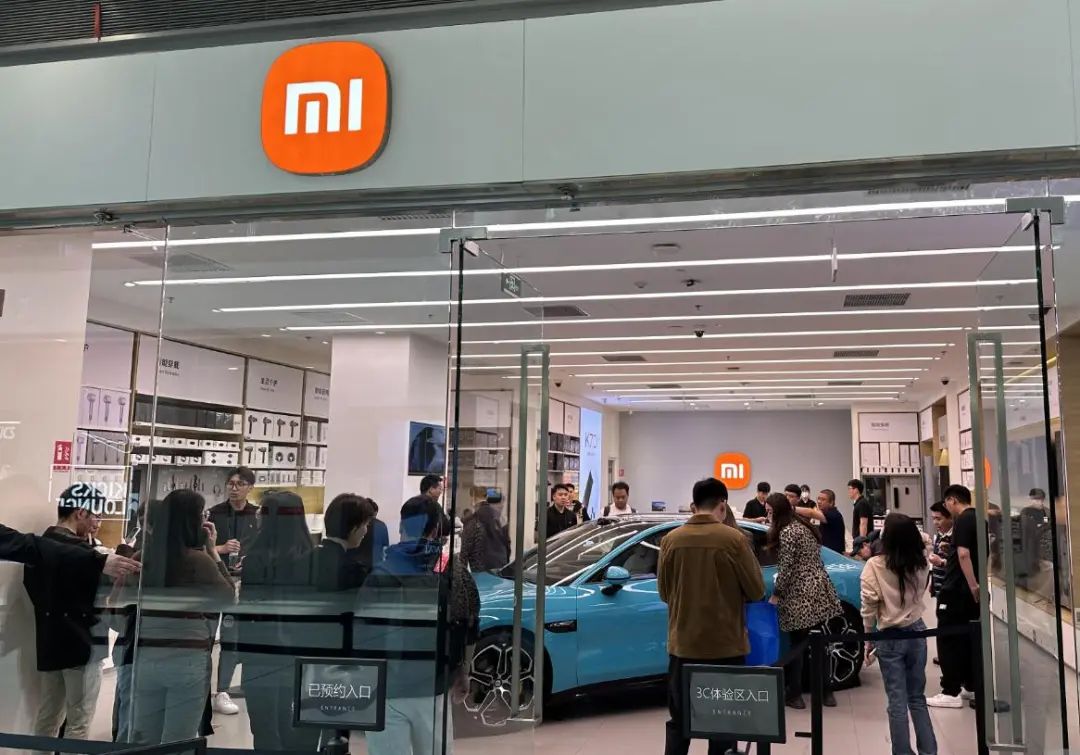
拓普集团系列四十五-财报点评:盈利短期承压,机器人业务打开全新增量空间【国信汽车】
车中旭霞· 2025-05-05 12:57
Core Viewpoint - Top Group (601689.SH) is experiencing a robust growth trajectory, with a focus on platform-based automotive components and a strategic shift towards robotics, which is expected to drive long-term performance despite short-term sales pressures from key customers [1][5][14]. Financial Performance - In 2024, Top Group achieved revenue of 26.6 billion yuan, a year-on-year increase of 35.0%, and a net profit attributable to shareholders of 3.0 billion yuan, up 38.9% year-on-year [2][7]. - For Q1 2025, the company reported revenue of 5.77 billion yuan, a slight increase of 1.4% year-on-year but a decrease of 20.4% quarter-on-quarter, with net profit of 570 million yuan, down 11.6% year-on-year and 26.2% quarter-on-quarter [2][7][14]. Cost and Margin Analysis - In Q1 2025, the sales, management, and R&D expense ratios were 1.2%, 3.3%, and 5.9%, respectively, showing a mixed trend with R&D expenses increasing due to ongoing investments in new products and technologies [4][14]. - The gross margin for Q1 2025 was 19.9%, reflecting a year-on-year decrease of 2.5 percentage points, attributed to changes in product mix and pricing fluctuations [4][14]. Strategic Initiatives - The company is deepening collaborations with major automotive clients such as Tesla, Geely, and Xiaomi, which is expected to provide stable growth momentum [6][14]. - Top Group is actively expanding its production capacity with ongoing projects in various locations, including Hangzhou and Mexico, to support its growth strategy [6][14]. R&D and Product Development - Top Group has a strong R&D capability, focusing on key products and core technologies, which enhances its efficiency in developing new products [11][12]. - The company is advancing in the robotics sector, with significant progress in actuator development and plans to expand into various robotic components, positioning itself as a platform supplier in this field [12][14].


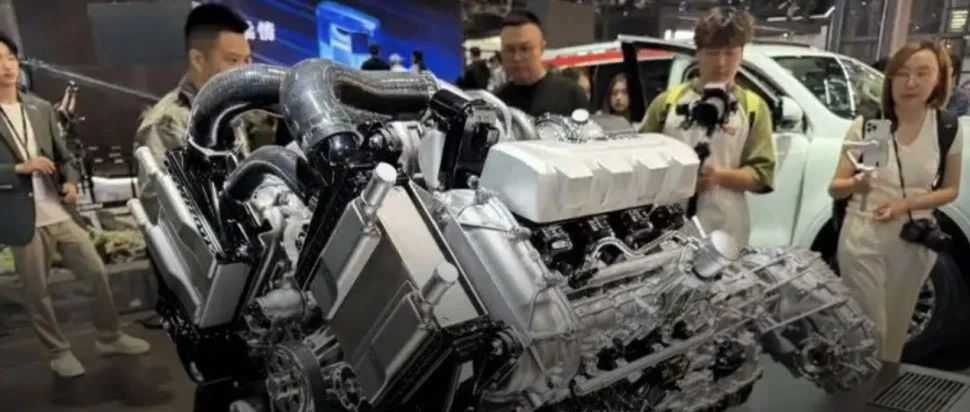
车展“反骨仔”:4.0T的大发动机,惊喜,不意外
汽车商业评论· 2025-05-05 12:57
Core Viewpoint - The automotive industry is witnessing a shift where internal combustion engines (ICE) are not being abandoned but are instead being integrated with electric powertrains, reflecting a dual approach to meet diverse consumer needs and environmental goals [5][7][21]. Group 1: Internal Combustion Engine Developments - The 2025 Shanghai Auto Show highlighted the 4.0T V8 twin-turbo engine from Great Wall Motors, symbolizing a significant advancement in China's internal combustion engine technology [2]. - The global automotive landscape is seeing a resurgence of interest in internal combustion engines, with companies like Toyota and Mazda announcing new multi-fuel compatible engines, indicating a shift back towards ICE technology [3][4]. - Great Wall Motors emphasizes a "pan-internal combustion engine strategy," advocating for a coexistence of ICE and electric systems to cater to local market demands [5][7]. Group 2: Market Trends and Consumer Preferences - Research indicates that 68% of luxury car consumers prefer to hear the roar of an engine, suggesting a sustained demand for internal combustion engines in high-end markets [7]. - In 2024, the global penetration rates for fuel, hybrid, and pure electric vehicles are projected to be 67%, 18%, and 15% respectively, highlighting the continued relevance of ICE in the automotive market [9]. - The sales of fuel vehicles have seen a resurgence, with a notable increase in market share attributed to price changes and new product offerings [15][16]. Group 3: Financial Performance and Strategic Directions - Great Wall Motors reported record revenue and net profit in 2024, with fuel-powered vehicles contributing significantly to its profitability, showcasing the financial viability of maintaining ICE alongside electric vehicles [9][10]. - Changan Automobile is also pursuing a multi-path power strategy, with a focus on hybrid and fuel-efficient technologies, indicating a broader industry trend towards diversified powertrains [12][15]. - The automotive industry is moving towards a diversified market with various powertrain options, including pure electric, plug-in hybrids, and internal combustion engines, which are expected to coexist for the foreseeable future [21].


「银河通用」创始人王鹤:人形机器人跳舞是预先编程,马拉松是遥控操作!
Robot猎场备忘录· 2025-05-05 07:19
Core Viewpoint - The speech by Wang He emphasizes that humanoid robots are transitioning from a "performance era" to a "productivity era," highlighting the need for improved coordination of vision, hands, and brain to enhance their capabilities in various industries [4][9][10]. Group 1: Industry Overview - The humanoid robot sector in China is led by companies like Beijing Galaxy General Robotics, which has raised over 1.2 billion yuan and is positioned in the top tier of the industry [2]. - The first humanoid robot from Galaxy General, Galbot G1, is set to be released on June 14, 2024, showcasing the company's commitment to advancing humanoid robotics [2]. Group 2: Technological Insights - Current humanoid robots can perform tasks like dancing and running, but these actions often rely on remote control and pre-programmed sequences, lacking true autonomous capabilities [4][7]. - Wang He identifies four key capabilities for humanoid robots to be truly functional: mobility, operational ability, semantic understanding, and value intelligence [5]. Group 3: Market Dynamics - The industry is experiencing a "performance showcase" cycle, where companies focus on impressive demonstrations rather than practical applications, leading to a disconnect between showcased abilities and real-world utility [9][10]. - Major companies like Boston Dynamics have pointed out that while industrial robots are mature and commercialized, humanoid robots are still seen as more of a spectacle than a productivity tool [9]. Group 4: Future Prospects - The transition to a productivity era for humanoid robots hinges on developing real-time visual input and closed-loop feedback systems, which are essential for enhancing their operational capabilities [9][10]. - Companies are exploring various applications, such as the collaboration between Galaxy General and Meituan to create a 24-hour unmanned pharmacy solution using Galbot [12]. Group 5: Challenges and Opportunities - Despite significant investment and interest in humanoid robotics, many startups are still in the early stages of development, focusing on educational and research applications rather than industrial use [11][18]. - The market is expected to see a surge in deliveries of humanoid robots by 2025, but the actual effectiveness of these products remains to be seen, raising questions about the sustainability of the market [18].
福达股份(603166):曲轴乘混动车型东风,人形机器人业务蓄势待发
Tianfeng Securities· 2025-05-04 11:38
Investment Rating - The report assigns a "Buy" rating for the company with a target price of 17.64 CNY, based on a 38X PE for 2025 [4][56]. Core Insights - The company is positioned as a leading domestic automotive crankshaft manufacturer, actively expanding into the new energy and humanoid robot sectors [12][2]. - The shift towards hybrid vehicles is reshaping the crankshaft market, creating significant growth opportunities for third-party crankshaft manufacturers like the company [2][31]. - The company has established a dedicated robotics division and is investing in humanoid robot components, leveraging its existing manufacturing capabilities [3][44]. Summary by Sections Company Overview - The company, founded in 1995 and listed in 2014, specializes in the research, production, and sales of automotive crankshafts, precision forgings, new energy electric drive gears, clutches, spiral bevel gears, and high-strength bolts [12][1]. - In 2022, the company expanded into the new energy gear sector and established a new energy electric drive technology company, which commenced production in 2023 [12][1]. Automotive Parts Business - The hybrid vehicle market is expected to significantly increase demand for crankshafts, as traditional automakers are reducing investments in engines, leading to a shift towards outsourcing [2][31]. - The company has established strong partnerships with leading automotive manufacturers, securing over 50% of the crankshaft supply for BYD's hybrid models [32][33]. Robotics Business - The company is developing its own humanoid robot components, including planetary gear reducers, and has formed a joint venture with Changban Technology to enhance its capabilities in this area [3][47]. - The investment in Changban Technology aims to leverage its precision screw and reducer technology, which is critical for humanoid robot joints [48][47]. Financial Projections - Revenue is projected to grow significantly, with estimates of 25.4 billion CNY in 2025, representing a year-over-year increase of 54% [4][52]. - The company anticipates achieving a net profit of 3.0 billion CNY in 2025, with a growth rate of 62% [4][52]. Valuation - The report compares the company to peers such as Shuanghuan Transmission and Haoneng Co., with an average valuation of 38X for 2025 [56][57].

“0首付、低利息”“一口价”“保价618”,多重补贴催生车市换车热潮丨五一促消费观察
Hua Xia Shi Bao· 2025-05-04 02:50
Core Insights - The domestic automotive market is experiencing a sales surge during the "May Day" holiday, driven by consumer stimulus policies and holiday economic activities [2][5] - Traditional fuel vehicles and new energy vehicles are both thriving, with dealerships employing strategies like price reductions and service upgrades to attract consumers [2][6] - Local car exhibitions have become key venues for stimulating regional consumption, showcasing over 50 automotive brands and various promotional strategies [3][4] Group 1: Market Dynamics - The automotive market is witnessing unprecedented vitality due to ongoing policy support and aggressive marketing from car manufacturers, particularly in lower-tier cities [5][6] - The "three重叠加" policy at local car exhibitions includes government subsidies, low-interest loans, and manufacturer discounts, significantly lowering vehicle prices [3][7] - The consumer experience at these exhibitions is becoming a crucial metric for assessing their value, with innovative features in vehicles reshaping consumer perceptions [4][6] Group 2: Promotional Strategies - Dealerships are implementing multi-faceted promotional strategies, including "in-store gifts," trade-in subsidies, and financial incentives to enhance customer engagement [6][7] - The luxury car market is also thriving, with significant discounts and tailored financing options for specific consumer groups, enhancing purchase accessibility [7][8] - New energy vehicle brands are intensifying promotional efforts, offering substantial cash discounts and innovative financing plans to attract buyers [8]

乐见安全成为车展热词
Jing Ji Ri Bao· 2025-05-02 22:10
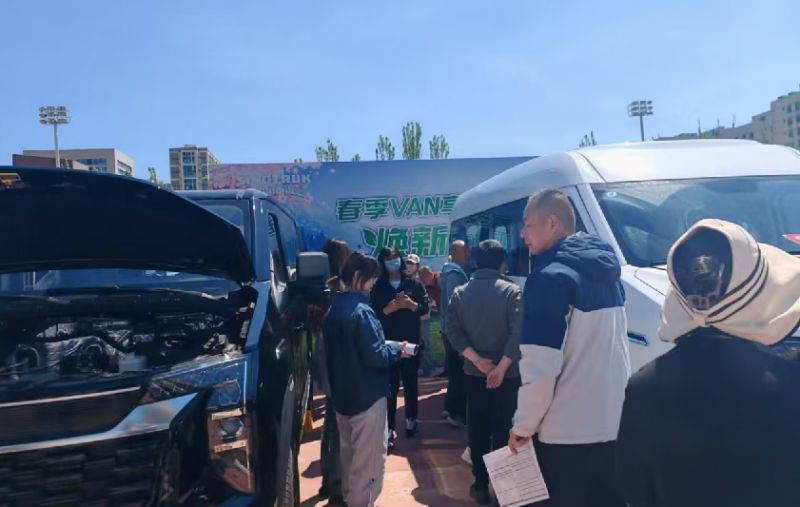
为期10天的第二十一届上海车展落下帷幕。在全球车展式微、汽车业饱受关税战冲击的背景下,上海车 展"百车首发、千车竞艳"的壮观景象,吸引众多知名展商和观众,受到中外舆论前所未有的关注,更凸 显了中国汽车市场的独特魅力和创新活力。 "我们始终坚信,没有安全的智能,就是'花架子'。"在发布"天元智能"技术品牌时,东风汽车集团有限 公司副总经理尤峥强调,东风始终坚守造车的本质,以领先技术定义智能化新高度,以全维安全标准为 美好生活保驾护航。 当车辆速度与马力不断提升,潜在风险也随之增加。"欲速则不达,或许有时候,我们不是最快落地的 企业,但必须保证正确性与安全性。我们会平衡速度与安全——新技术应用必须通过严苛验证,这也是 宝马百年造车哲学的根基。"宝马集团大中华区总裁兼首席执行官高翔称,宝马在智驾系统上始终坚持 最高安全标准的严苛测试,确保为客户提供最佳的安全性和品质,绝不在这些关键标准上妥协。 "安全"上热度,并非毫无征兆。此前,工信部要求车企充分开展组合驾驶辅助测试验证,明确系统功能 边界和安全响应措施,不得进行夸大和虚假宣传,严格履行告知义务,切实担负起生产一致性和质量安 全主体责任,提升智能网联汽车产品安全水 ...

这才是中美贸易战最大的转折点,中国没趴下!美国却失去主导地位
Sou Hu Cai Jing· 2025-05-02 19:26
Group 1 - The recent punitive tariffs imposed by the Trump administration on Chinese electric vehicles, batteries, photovoltaics, and semiconductors have reached a high of 245%, but their impact is limited compared to the initial tariffs introduced in 2018 [3][6] - The U.S. has lost its ability to control China's trajectory, as China has become less reliant on the U.S. market and is now focusing on "re-globalization" [3][6] - The tariffs, initially intended to disrupt supply chains and increase manufacturing costs, have turned into a political show for the U.S., resulting in limited effectiveness and self-harm [3][5] Group 2 - The U.S. has not successfully brought manufacturing jobs back to the Rust Belt states; instead, inflation has increased, consumer costs have risen, and corporate investments have slowed down [5][9] - Chinese companies have proactively diversified their markets, targeting Southeast Asia, Latin America, and Africa, with no U.S. presence among the top five export destinations for Chinese electric vehicles [5][10] - The U.S. strategy of "decoupling" has failed, as it underestimated China's resilience and overestimated the willingness of allies to comply with U.S. directives [6][12] Group 3 - The essence of the tariff war is a struggle for control and dominance, with the U.S. attempting to exclude China from its technology, trade, and financial systems [6][9] - As the U.S. attempts to decouple, China is enhancing its internal circulation and innovation, developing self-reliant technologies in semiconductors and batteries [7][9] - The U.S. has transitioned from being a "rule-maker" to a "rule-disruptor," undermining the global systems it once established, while China continues to expand its influence within these systems [15][16] Group 4 - The recent tariffs are more of a political signal than a strategic tool, indicating a loss of control by the U.S. over its policies and objectives [13][16] - The competition between the U.S. and China is evolving from a simple power struggle to a contest of institutional resilience, economic endurance, and industrial strategy [15][18] - The U.S. has reached a point where its actions no longer dictate China's future, and the transfer of dominance is occurring subtly through repeated tariff increases [18]
德系豪车求变:“必须研究中国的产品、技术和供应商”
第一财经· 2025-05-02 11:33
Core Insights - The article highlights the increasing urgency among German luxury car manufacturers to adapt to the rapidly evolving Chinese electric vehicle (EV) market, as traditional sales and profits have declined while new competitors gain traction [1][5][10] Group 1: Market Dynamics - The Chinese EV market has grown significantly, now accounting for a substantial share of the overall automotive market, prompting luxury brands to reassess their strategies [1][5] - German luxury carmakers, including Audi, BMW, and Mercedes-Benz, are intensifying their focus on the Chinese market, with executives making multiple visits to engage with local consumers and competitors [2][4] Group 2: Product Strategy - At the Shanghai Auto Show, luxury carmakers unveiled a strong lineup of products tailored for the Chinese market, showcasing advanced technologies and new models [2][5] - Audi has introduced a dual-brand strategy to cater to different consumer segments, while BMW is investing heavily in new platforms and technologies, emphasizing safety and overall optimization rather than just technical specifications [5][7][11] Group 3: Supply Chain and R&D - The article notes a shift in focus towards local Chinese suppliers, as their rapid response and customization capabilities are increasingly recognized as essential for success in the competitive market [9][10] - German automakers are establishing R&D centers in China to enhance local product adaptation and innovation, with a growing emphasis on integrating local technological advancements into their global strategies [11][10]
德系豪车求变:“必须研究中国的产品、技术和供应商”
Di Yi Cai Jing· 2025-05-02 07:42
Core Insights - The German luxury car manufacturers are increasingly focused on the Chinese market, recognizing its rapid growth and the need to adapt to local consumer demands [1][2][4] - The shift towards electric vehicles (EVs) is critical, as traditional sales and profits for brands like Audi, BMW, and Mercedes-Benz have declined, prompting a reevaluation of their strategies in China [1][3][4] Group 1: Market Dynamics - The Chinese electric vehicle market has grown significantly, with EVs now accounting for a substantial portion of total vehicle sales [1] - German luxury brands are facing pressure from new entrants in the market, which are capturing consumer interest with high-end products [1][3] - The competitive landscape is evolving, with traditional luxury brands needing to innovate rapidly to keep pace with local competitors [4][7] Group 2: Strategic Initiatives - German automakers are showcasing new models and technologies specifically designed for the Chinese market, indicating a shift in their product strategies [2][4] - Companies like BMW are investing heavily in new platforms and technologies, including the sixth generation of electric drive technology [4][8] - Audi has introduced a dual-brand strategy to better cater to different consumer segments in China, focusing on both traditional luxury and tech-savvy younger consumers [4][8] Group 3: Collaboration and Local Adaptation - There is a growing emphasis on partnerships with local suppliers and technology firms to enhance responsiveness and innovation [7][8] - German manufacturers are establishing R&D centers in China to localize product development and integrate cutting-edge technologies [8] - The approach to market entry and product development is shifting from a global standard to a more localized strategy, reflecting the unique demands of the Chinese market [7][8]