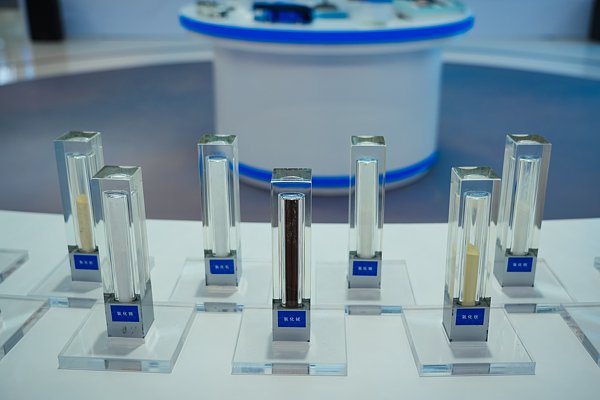
北方稀土

Search documents
国外比较乱套
Datayes· 2025-10-20 12:01
Economic Data Summary - In September, the GDP growth rate slowed to 4.8%, marking the lowest point in a year, while the cumulative GDP growth for the first three quarters reached 5.2% [3] - The industrial added value significantly exceeded expectations, growing by 6.5% year-on-year in September, supported by an increase in working days and strong export performance [4] - Fixed asset investment turned negative at -0.5% year-on-year for the first nine months, the first negative growth since mid-2020, with real estate investment in September dropping by 21.2%, a historical low [4] - Retail sales growth further slowed to 3.0%, the lowest since December last year, influenced by the timing of the Mid-Autumn Festival and a decrease in consumer spending [4] - Urban residents' disposable income grew by 4.5%, while spending increased by only 3.9%, indicating a savings rate of 38.3%, consistent with the past two years but higher than pre-pandemic levels [4] Market Trends - On October 20, A-shares saw collective gains, with the Shanghai Composite Index rising by 0.63%, Shenzhen Component by 0.98%, and ChiNext by 1.98% [8] - The coal and gas sectors experienced significant gains due to cold weather impacts, with coal prices rising, and expectations of supply tightening due to safety inspections [8] - The cultivated diamond sector saw a surge, with stocks like Huifeng Diamond hitting the daily limit [8] Company Performance - Keda Xunfei reported a net profit of 172 million yuan for Q3, a year-on-year increase of 202.40% [12] - Alloy Investment's Q3 net profit surged to 2.68 million yuan, up 4985.25% year-on-year [12] - China Shipbuilding's net profit for the first three quarters is expected to be between 4.08 billion and 4.68 billion yuan, reflecting a year-on-year increase of 106.93% to 137.36% [12] Industry Insights - The deep earth economy is gaining attention, focusing on the development of deep earth resources and related industries, as highlighted by the Ministry of Natural Resources [13] - Goldman Sachs noted China's strong influence over rare earths, suggesting that the country is unlikely to abandon proposed controls, which could lead to various market responses [7] Stock Market Dynamics - The net inflow of main funds reached 37.95 billion yuan, with the electronics sector seeing the largest inflow [17] - The top five sectors for net inflow included electronics, communication, machinery, power equipment, and coal [17] - Northbound trading totaled 234.73 billion yuan, with significant transactions in banks and rare earths [20]





有色金属再迎一系列政策利好,稀土疯狂涨价,大资金正涌入这些ETF!
Sou Hu Cai Jing· 2025-10-20 11:32
Core Viewpoint - The recent "anti-involution" policies in China aim to address chaotic pricing and unhealthy competition in various industries, promoting price stabilization and high-quality transformation [2][6]. Policy Developments - On July 1, the Central Financial Committee emphasized the need to regulate low-price competition and enhance product quality [4]. - The Ministry of Industry and Information Technology announced a new growth plan for ten key industries, including steel and non-ferrous metals, focusing on structural adjustments and eliminating outdated capacity [4]. - The National Development and Reform Commission (NDRC) held discussions to promote the rectification of "involution-style" competition and enhance supply chain cooperation [4]. - A draft amendment to the Price Law was released to improve standards for identifying low-price dumping and regulate market pricing [4]. - The NDRC published an announcement on September 28 to assess industry average costs and strengthen price regulation [4]. Industry Focus: Non-Ferrous Metals - The non-ferrous metals sector is a key area for the "anti-involution" policy, particularly addressing the issue of overcapacity [6][7]. - The "Non-Ferrous Metals Industry Growth Plan (2025-2026)" explicitly opposes "involution-style" competition in copper smelting and calls for rational project layouts [7]. - Key metals such as aluminum, copper, and lithium are central to the "anti-involution" efforts [8]. Investment Opportunities - The long-term value of non-ferrous metals is becoming more evident, with a focus on high-quality development rather than homogeneous competition [10]. - The global recognition of gold has increased, with prices surpassing $4,000 and a significant rise in global gold ETF holdings [8]. - China holds a dominant position in the rare earth market, with over 60% of global production, and recent export controls are expected to drive up prices [9]. ETF Investment Tools - For investors looking to participate in the non-ferrous metals sector, comprehensive ETFs covering aluminum, copper, lithium, and rare earths provide a convenient investment vehicle [11][12]. - The performance of these ETFs has been strong, with some increasing by over 70% since April [15][16]. - The valuation of the non-ferrous metals sector remains reasonable, with the China Non-Ferrous Metals Index PE at 26.4, indicating potential for valuation recovery [18][20]. Rare Earth Market Dynamics - Recent export controls by China on rare earths have created upward pressure on prices, with significant price increases reported by major companies [24]. - The U.S. government's actions to support domestic rare earth production have further opened price opportunities in the global market [24]. Conclusion - The "anti-involution" policies are reshaping the competitive landscape of the non-ferrous metals industry, steering it towards sustainable development and creating investment opportunities through ETFs [28].

有色金属再迎一系列政策利好,稀土疯狂涨价,大资金正涌入这些ETF!
市值风云· 2025-10-20 10:36
相关ETF今年以来的收益已经超过7成。 作者 | RAYYYY 编辑 | 小白 近期,我国在"反内卷"领域动作频频,而相关反内卷政策密集落地,推动相关产业链的价格筑底与高 质量转型,同时也旨在治理价格无序和恶性竞争的乱象。 | | | 近三月反内卷政策一览 | | --- | --- | --- | | 日期 | 会议/文件 | 重点内容 | | 7月1日 | 中央财经委第六次会议 | 依法依规治理企业低价无序竞争,引导企业提升产品品质,推动 | | | | 书欧性服益化坦燃 | | 7月1日 | 求是发表《深刻认识和综合 | 在实践中不断探索有效整治"内卷式"竞争的举措,努力创造公 | | | 整治"内卷式" 竞争 » | 平竞争的市场环境 | | 7月18日 | 工信部宣布十大重点行业稳 | 实施新一轮钢铁、有色金属等十大重点行业稳增长工作方案,推 | | | 增长工作方案 | 动車点行业看力调结构、优供给、淘汰落后产能 | | 7月23日 | 发改委主持召开企业座谈会 | 推动整治"内卷式"亮争、拓展产业链供应链合作、促进科技创 | | | | 新、完善公司治理和国际化经营服务 | | 7月24日 | ...

「数据看盘」银行ETF上周份额大增 机构、一线游资活跃度大幅下降
Sou Hu Cai Jing· 2025-10-20 10:28
Trading Volume Summary - The total trading volume for Shanghai Stock Connect reached 115.3 billion, while Shenzhen Stock Connect totaled 119.432 billion [1] - The top traded stocks in Shanghai included: - 688256 (Qiw) with 2.793 billion - 601138 (Industrial Fulian) with 1.812 billion - 601899 (Zijin Mining) with 1.711 billion [2] - The top traded stocks in Shenzhen included: - 300308 (Zhongji Xuchuang) with 4.252 billion - 300750 (Ningde Times) with 3.387 billion - 300502 (Xinyi Sheng) with 2.695 billion [2] Sector Performance - The sectors with the highest gains included cultivated diamonds, coal, and gas, while the sectors with the largest declines were non-ferrous metals [3] - The communication sector saw the highest net inflow of funds, while the non-ferrous metals sector experienced the largest net outflow [3] ETF Trading Activity - The top ten ETFs by trading volume included: - 513090 (Hong Kong Securities ETF) with 13.669 billion, down 20.16% from the previous trading day - 518880 (Gold ETF) with 11.239 billion, down 25.49% [4] - The ETFs with the highest increase in trading volume compared to the previous trading day included: - 513520 (Nikkei ETF) with 2.259 billion, up 365.26% [4] Institutional Activity - Notable institutional buying included: - 002173 (Innovation Medical) with a 10.02% increase, attracting 116 million from three institutions - 300179 (Sifangda) with a 19.98% increase, attracting 110 million from three institutions [7] - Significant selling activity was observed in: - 600988 (Chifeng Gold) with a 6.84% decrease, where three institutions sold 428 million [8] Quantitative Fund Activity - Quantitative funds showed low activity, with notable buying in: - 300179 (Sifangda) receiving 6.828 million from a quantitative seat [10] - Selling activity was also noted in: - 600988 (Chifeng Gold) with 4.28 billion sold by three institutions [8]
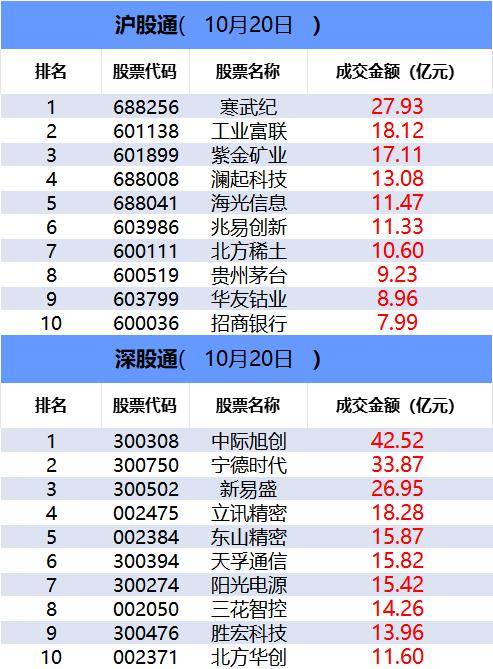
【20日资金路线图】两市主力资金净流出超80亿元 电力设备等行业实现净流入
证券时报· 2025-10-20 10:12
10月20日,A股市场整体上涨。 截至收盘,上证指数收报3863.89点,上涨0.63%;深证成指收报12813.21点,上涨0.98%;创业板指收报2993.45 点,上涨1.98%。两市合计成交17376.05亿元,较上一交易日减少2005.11亿元。 1. 两市主力资金净流出超80亿元 今日沪深两市主力资金开盘净流入51.9亿元,尾盘净流出12.11亿元,全天净流出84.46亿元。 3.电力设备等行业实现净流入 | 资金净流入居前的行业 | | | | --- | --- | --- | | 行业 涨跌幅 | 净流入资金 | 资金流入较多个股 | | | (亿元) | | | 电力设备 1. 84% | 35. 22 | 卧龙电驱 | | 4. 61% 煤炭 | 32. 31 | 永泰能源 | | 机械设备 1.92% | 23. 39 | 英维克 | | 交通运输 1. 44% | 20. 26 | 南方航空 | | 银行 0. 02% | 11. 87 | 农业银行 | | 资金净流出居前的行业 | | | | 行业 涨跌幅 | 净流入资金 | 资金流出较多个股 | | | (亿元) | | | 非 ...

解密主力资金出逃股 连续5日净流出744股


Zheng Quan Shi Bao Wang· 2025-10-20 09:13
| 证券代 | 证券简称 | 主力资金净流出 | 主力资金净流出金额 | 主力资金净流出比例 | 累计涨跌幅 | | --- | --- | --- | --- | --- | --- | | 码 | | 天数 | (亿元) | (%) | (%) | | 300059 | 东方财富 | 9 | 92.21 | 9.59 | -9.28 | | 600111 | 北方稀土 | 5 | 48.57 | 7.15 | -9.54 | | 688981 | 中芯国际 | 5 | 47.77 | 9.08 | -10.14 | | 002460 | 赣锋锂业 | 7 | 39.42 | 7.41 | -9.38 | | 601727 | 上海电气 | 7 | 36.69 | 7.73 | -11.75 | | 300803 | 指南针 | 9 | 35.02 | 7.45 | -14.69 | | 002602 | ST华通 | 11 | 33.16 | 9.88 | -21.17 | | 600010 | 包钢股份 | 5 | 25.56 | 6.31 | -4.66 | | 603799 | 华友钴业 | 5 | ...
金价跳水,是倒车接人吗?后市怎么看?中美贸易摩擦缓和+俄乌地缘局势进展,避险情绪减弱!
Xin Lang Ji Jin· 2025-10-20 06:53
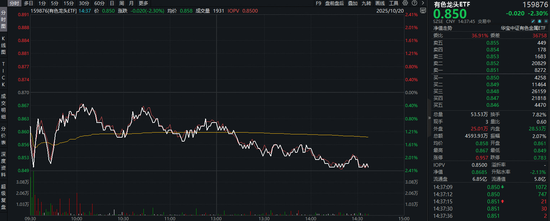
Core Viewpoint - The easing of US-China trade tensions and progress in the Russia-Ukraine situation have led to a decline in gold prices, which fell below $4,300 per ounce, impacting the A-share market and causing significant losses in gold stocks [1][3]. Group 1: Market Reactions - Gold stocks led the decline in the A-share market, with the ETF tracking leading non-ferrous metal companies dropping 2.3% [1]. - Major gold companies such as Western Gold and Chifeng Jilong Gold experienced declines exceeding 9% and 7%, respectively [1]. - Conversely, companies like Chuangjiang New Material and Yahua Group saw gains of over 6% and 1%, respectively [1]. Group 2: Economic Indicators - A video call between US and Chinese trade representatives on October 18 indicated a willingness to resume trade negotiations, contributing to the easing of market tensions [3]. - Ukrainian President Zelensky expressed readiness to participate in a meeting with US President Trump and Russian President Putin, signaling potential diplomatic progress [3]. Group 3: Gold Market Analysis - Despite the recent drop, Bank of America noted that gold assets still represent a low percentage of global investment portfolios, at 2.3% for institutions and 0.5% for private clients, indicating a lack of overcrowding in the market [3]. - The World Gold Council reported that retail gold investment accounts for less than 2% of global assets, and central bank gold reserves are below 30% of total foreign reserves, both far from historical highs [3]. Group 4: Non-Ferrous Metals Outlook - Analysts suggest focusing on the entire non-ferrous metals sector rather than solely on gold, as sectors like rare earths, lithium, and copper show promising growth potential [3][4]. - Rare earth companies are expected to report significant profit increases, with North Rare Earth projecting a net profit growth of 272.54%-287.34% for Q3 [3]. - In lithium, advancements in solid-state battery technology are anticipated to boost demand, with leading companies maintaining a self-sufficiency rate of over 50% in lithium salt production [4]. - Copper prices are expected to rise due to supply disruptions, particularly from the Grasberg mine in Indonesia, which is crucial for energy transition and new production capabilities [4]. Group 5: Investment Strategy - The non-ferrous metals sector is viewed as a key player in the current commodity bull market, driven by long-term capital expenditure cycles and increasing demand for strategic metal resources [4][6]. - The non-ferrous metal ETF (159876) offers a diversified investment approach, tracking an index with significant weightings in copper, gold, aluminum, rare earths, and lithium, thus reducing risk compared to investing in a single metal [6].
静待时机,机构称中长期逻辑仍在,有色ETF基金(159880)交投活跃
Sou Hu Cai Jing· 2025-10-20 06:46
Core Viewpoint - The news highlights fluctuations in the non-ferrous metal industry, driven by market sentiment and macroeconomic factors, with a focus on gold prices and industrial metal performance amid ongoing economic uncertainties [1][2]. Group 1: Market Performance - As of October 20, 2025, the non-ferrous metal industry index (399395) shows mixed performance among its constituent stocks, with notable gains from companies like Placo New Materials (300811) up 1.55% and Electric Power Investment Energy (002128) up 1.53% [1]. - The non-ferrous ETF fund (159880) is currently priced at 1.67 yuan [1]. Group 2: Economic Factors - Federal Reserve Chairman Jerome Powell indicated an increase in downside risks to the U.S. job market, suggesting that balance sheet reduction may conclude in the coming months [1]. - The ongoing crisis in the U.S. banking sector has heightened market risk aversion, contributing to a rise in gold prices, with Comex gold reaching $4,392 per ounce and Shanghai gold at 1,001 yuan per gram [1]. Group 3: Industry Outlook - According to Guotai Junan Securities, short-term gold prices may experience wide fluctuations due to market sentiment, with key factors including U.S. government shutdown developments and the banking crisis response [2]. - In the medium to long term, risks related to U.S. federal debt persist, and the dollar's status faces challenges, suggesting continued opportunities for gold performance amid global monetary system restructuring [2]. - Industrial metals are under pressure due to declining market risk appetite, but upcoming U.S.-China trade discussions and potential Fed rate cuts may improve macro sentiment and demand expectations [2]. - Despite insufficient demand during the industrial metal peak season, supply disruptions, particularly in mining, and historically low inventory levels provide strong support for industrial metal prices [2]. Group 4: Index Composition - As of September 30, 2025, the top ten weighted stocks in the non-ferrous metal industry index (399395) include Zijin Mining (601899), Northern Rare Earth (600111), and others, collectively accounting for 53.12% of the index [3].
每日市场观察-20251020
Caida Securities· 2025-10-20 05:07
Market Overview - On October 17, the market experienced a significant decline, with the Shanghai Composite Index dropping by 1.95%, the Shenzhen Component by 3.04%, and the ChiNext Index by 3.36%[2] - The market has been in a strong oscillation pattern since late August, with historical highs being reached, but recent adjustments show a potential confirmation of a downward trend[1] Capital Flow - On October 17, net outflows from the Shanghai Stock Exchange amounted to 36.25 billion yuan, while the Shenzhen Stock Exchange saw net outflows of 36.42 billion yuan[4] - The top three sectors for capital inflow were shipping ports, real estate development, and chemical pharmaceuticals, while the sectors with the highest outflows were communication equipment, semiconductors, and power grid equipment[4] Industry Insights - As of September 2025, China's shipbuilding industry maintained a global market share of 53.8% in completed shipbuilding, 67.3% in new orders, and 65.2% in hand-held orders, indicating a strong position in the global market[9] - The National Railway Bureau reported that fixed asset investment in railways reached 593.7 billion yuan in the first three quarters, reflecting a year-on-year growth of 5.8%[10] Economic Indicators - The State Taxation Administration reported that sales revenue for "specialized, refined, characteristic, and innovative" small giant enterprises grew by 8.2% year-on-year in the first three quarters, with high-tech manufacturing enterprises seeing an 11.8% increase[8] - The China Development Bank has issued over 780 billion yuan in loans to support the Belt and Road Initiative since the beginning of the 14th Five-Year Plan[6] Fund Performance - Private equity funds reported an average return of 25% in the first three quarters of 2025, with stock strategies leading at over 30%[13] - Public funds are actively positioning themselves in high-performing stocks as the A-share market enters the third-quarter earnings disclosure period[14]
“欧企只按季度计划,中国却着眼二十年规划,今天看到的就是这种战略的成果”
Guan Cha Zhe Wang· 2025-10-20 03:59
Core Insights - China's recent export restrictions on rare earths have caught Western countries off guard, prompting European companies to reflect on their strategic planning compared to China's long-term approach [1][3][5] - China controls approximately 69% of the global rare earth mining market and about 99% of the processing market, making foreign companies increasingly dependent on Chinese supplies [1][4] - The tightening of export controls has led to significant price increases, with some products experiencing price hikes of up to 200%, raising concerns about supply stability for German industries [3][4] Group 1: Market Dynamics - Rare earths are essential for the production of high-tech products such as smartphones, wind turbines, and electric vehicles [1][4] - Despite having around 470 rare earth deposits globally, Western countries remain heavily reliant on China due to its largest reserves and production capabilities [4][5] - The German economy is particularly affected, as the tightening of Chinese export controls has made it difficult for German companies to secure rare earth imports, leading to rising prices and potential production disruptions [1][3] Group 2: Strategic Implications - European companies are recognizing the need for long-term strategic planning similar to China's, as they have historically operated on shorter quarterly planning cycles [1][3] - The opportunity to find alternative suppliers or establish independent supply chains has largely been missed, leaving European industries vulnerable [3][4] - The U.S. has also been slow to respond to its dependence on Chinese rare earths, with past awareness of risks not translating into effective policy or investment in domestic production [5][6] Group 3: International Response - In light of China's export restrictions, Western officials, including those from the G7, are considering coordinated measures to address the impact on global supply chains [5][6] - China's government has stated that its export control measures are in line with international norms and aimed at maintaining global supply chain stability [6]