京东集团

Search documents
播客赛道风起云涌!“京东老板娘”进场
Shen Zhen Shang Bao· 2026-01-16 02:59
Group 1 - The podcast industry is experiencing significant growth, with platforms like Xiaoyuzhou and Xiaohongshu gaining traction and attracting large audiences, as evidenced by the rapid increase in followers and views for Zhang Zetian's podcast "Xiao Tian Zhang" [1][2] - The Chinese long audio market is projected to reach a scale of 287 billion yuan in 2024, with a year-on-year growth of 14.8%, and is expected to grow to 337 billion yuan in 2025 [2] - The number of Chinese podcast listeners is anticipated to reach 134 million in 2024, with projections of 179 million by 2027, indicating a robust upward trend in audience engagement [2] Group 2 - Despite the growing user base, the podcast industry faces commercialization challenges, with many creators struggling financially; only 20% of podcast creators are fully dedicated to their work due to income constraints [3] - The podcast sector lacks leading enterprises and mature business models, which are critical for its development; experts suggest that 2025 will be a pivotal year for commercialization as the user base has already formed [3] - Predictions for 2026 indicate a potential acceleration in podcast commercialization, with opportunities for better integration of the industry chain and the emergence of new business models, such as MCN agencies and premium content offerings [4]
港股开盘:恒指涨0.64%、科指涨0.94%,科网股及创新药概念股走高,有色金属板块活跃
Jin Rong Jie· 2026-01-16 01:32
1月16日,港股集体高开,其中恒生指数涨0.64%,报27094.85点,恒生科技指数涨0.94%,报5883.37 点,国企指数涨0.68%,报9330.22点,红筹指数涨0.08%,报4156.98点。 盘面上,大型科技股多数走高,阿里巴巴涨2%,腾讯控股涨0.8%,京东集团跌0.52%,小米集团涨 0.37%,美团涨1.09%,快手涨1.63%,哔哩哔哩涨1.02%;有色金属概念股普涨,万国黄金集团涨4%、 洛阳钼业涨2.68%、江西铜业股份涨2.17%;汽车股高开,比亚迪涨超1%;创新药概念多数上涨,巨子 生物涨超3%;中资券商股普涨,中州证券涨超2%。 企业新闻 中国南方航空股份(01055.HK):2025年12月,客运运力投入同比上升11.89%,旅客周转量同比上升 11.20%,客座率为84.05%,同比下降0.53个百分点。货运运力同比上升19.28%,同比上升10.86%。 中国中冶(01618.HK):2025年累计新签合同额人民币11,136.0亿元,同比降低10.8%。其中新签海外合同 额人民币948.8亿元,同比增长1.9%。 众安在线(06060.HK):2025年度原保险保费收 ...

专家共话2026财富管理新周期:结构重塑、科技赋能与生态共赢
Zhong Jin Zai Xian· 2026-01-16 01:15
Group 1: Core Insights - The annual conference hosted by JD Technology focused on the new economic cycle, financial landscape, and wealth management pathways in the context of the "14th Five-Year Plan" [1] - The wealth management industry is entering a high-quality development phase characterized by structural reshaping, professional refinement, and ecological co-creation [1] Group 2: Macro Trends and Technological Empowerment - The evolution of macro trends and technological waves is creating new development opportunities for the wealth management industry [2] - JD Technology emphasizes the importance of its ecosystem, with over 700 million annual active users, to provide rich scenarios and customer bases for wealth management [2] - AI technology, including the AI wealth manager "Jing Xiaobei," is being leveraged to reshape customer service models and enhance operational efficiency [2][3] Group 3: Industry Challenges and Strategic Directions - The direct financing market's importance is increasing, and the wealth management industry must adapt to the diversified asset allocation needs of residents [3] - The industry is facing challenges such as service gaps, insufficient buy-side advisory, and product homogeneity, necessitating a shift towards professional services and diversified product offerings [4] - The transition from asset management to wealth management requires a robust customer service system and technological support [5] Group 4: Asset Allocation and Ecological Co-Building - Investment experts highlighted three main asset allocation themes for the "14th Five-Year Plan" period: asset revaluation due to global monetary restructuring, long-term premiums in technology and high-end manufacturing, and the investment value of competitive Chinese multinational companies [6] - The gold market is evolving from a consumer product to a significant financial and strategic asset, emphasizing the need for a thoughtful investment approach [6] - In the field of pension finance, banks are encouraged to act as long-term planners and ecosystem integrators to meet diverse pension needs [6] Group 5: Future Outlook - By 2026, the wealth management industry will compete based on professional depth, ecological breadth, and technological speed, requiring higher standards for institutional capabilities and service models [7] - The industry must embrace a collaborative spirit and focus on asset exploration, customer service, and technology application to create a healthier and more prosperous wealth management future [7]
迅雷起诉前CEO陈磊:指控其隐秘掏空公司,追索资产2亿元;知名游戏公司发布反腐公告:3名员工涉嫌收受贿赂,已被拘留;京东成立文旅公司
雷峰网· 2026-01-16 00:36
Group 1 - Xunlei has filed a lawsuit against former CEO Chen Lei, accusing him of secretly siphoning off company funds, with the amount sought reaching 200 million yuan [4][5] - During Chen Lei's tenure, he allegedly established an external company to transfer assets and misappropriate company funds, totaling approximately 170 million yuan paid by a subsidiary [5] - The lawsuit comes after difficulties in internal anti-corruption efforts, particularly in gathering evidence against high-level management [4] Group 2 - Perfect World has announced a strict anti-corruption initiative, revealing that three employees have been detained for serious misconduct related to bribery [8][10] - The implicated employees were involved in key projects and are accused of inflating procurement prices and accepting bribes from suppliers [9][10] - The company emphasizes its commitment to legal accountability and cooperation with judicial investigations [10] Group 3 - JD.com has established a cultural tourism company, expanding its business model while emphasizing that all operations will revolve around supply chain efficiency [12] - The company aims to innovate within the tourism sector by leveraging its supply chain infrastructure and AI capabilities, rather than creating a generic OTA platform [12] - JD's strategy includes enhancing profitability for the tourism industry and tapping into the high spending potential of its JD PLUS members, which number 40 million [12] Group 4 - Ctrip is currently under investigation, with reports indicating that officials have begun interviewing employees and collecting devices for the inquiry [14] - The company has shown strong financial performance, with revenues of 47 billion yuan and a net profit of 29 billion yuan in the first three quarters of 2025, achieving a profit margin of 61.72% [14][15] - Ctrip's market position has improved significantly, ranking seventh among China's top internet companies, with a net profit of 19.9 billion yuan in Q3 2025 [14][15] Group 5 - The Step-Audio-R1.1 model from Jumpspace has topped the global rankings for native audio models, achieving a 96.4% accuracy rate [16][17] - This model is designed for real-time audio understanding and complex reasoning without additional latency, marking a significant advancement in voice technology [17] Group 6 - Gree Electric has announced a mid-year cash dividend of 5.585 billion yuan, representing a high payout ratio of approximately 38%-39% of its net profit for the first half of 2025 [32][33] - The company has maintained a consistent dividend policy over the past decade, reflecting its commitment to shareholder returns [33] Group 7 - SAIC Motor Corporation expects a net profit of 9 to 11 billion yuan for 2025, marking a substantial increase of 438% to 558% year-on-year [34] - The company reported a vehicle sales increase of 12.3% in 2025, with a record 1.643 million new energy vehicles sold, up 33.1% [34][35] Group 8 - Huawei's smartwatch market share has surpassed that of its smartphones, with over 30% of users being non-Huawei phone owners in China [36] - The company has seen a 42% year-on-year increase in smartwatch shipments, positioning it among the top five global smartwatch brands [36] Group 9 - Merge Labs, co-founded by Sam Altman, has raised $252 million for its brain-computer interface technology, aiming to connect humans and AI seamlessly [42][43] - The company plans to develop medical products initially, with a focus on enhancing human capabilities without invasive procedures [42][43]







回眸2025丨探寻中国市场的活力与秩序
Jing Ji Ri Bao· 2026-01-16 00:19
Group 1: Economic Overview - In the past year, China's economy faced challenges, with retail sales exceeding 45.6 trillion yuan, growing by 4.0%, indicating consumer spending remains a stabilizing force [1] - By the end of December, the number of business entities reached 195 million, with over 100 million tax-related entities, reflecting robust market vitality [1] Group 2: Platform Economy Regulation - The competition among major platforms like JD, Taobao, and Meituan in the food delivery sector involved nearly 100 billion yuan in investments, leading to improved service quality and better treatment for delivery riders [2][3] - Regulatory bodies played a crucial role in maintaining fair competition, shifting the focus from subsidy wars to enhancing service quality and ensuring food safety [2][3] Group 3: Addressing Deep-rooted Issues - Regulatory efforts in 2025 targeted the "algorithmic hegemony" and unreasonable rules imposed by platforms, leading to the cancellation of controversial refund policies and promoting fairer trading practices [3] - Major platforms committed to creating a win-win ecosystem for consumers, merchants, and delivery riders, with initiatives like eliminating penalties for late deliveries and increasing social security coverage for riders [3][4] Group 4: Combating "Involution" Competition - "Involution" competition emerged as a significant challenge in 2025, characterized by price wars that compromised product quality and safety, as seen in the drastic decline of profit margins for brands like Laiyifen [6][7] - The government emphasized the need to shift competition from price-cutting to value creation, with regulatory measures aimed at addressing unfair practices and enhancing product quality [6][7][8] Group 5: Food Safety and Standards - The "pre-made dish" controversy highlighted public concerns over food safety, prompting regulatory bodies to accelerate the establishment of national standards for the industry [10][11] - Regulatory measures included comprehensive food safety oversight and the introduction of transparency in food production processes to restore consumer trust [11][12] Group 6: Market Dynamics and Innovation - The regulatory framework aims to create a balanced market environment where quality and innovation are prioritized over low prices, allowing businesses to thrive without compromising standards [9][12] - The response from the industry includes innovative dining experiences and significant investments in product development, indicating a shift towards higher quality offerings [9][12]


美股三大指数小幅收涨,应用材料、阿斯麦涨超5%,中概指数跌0.6%
Ge Long Hui· 2026-01-16 00:03
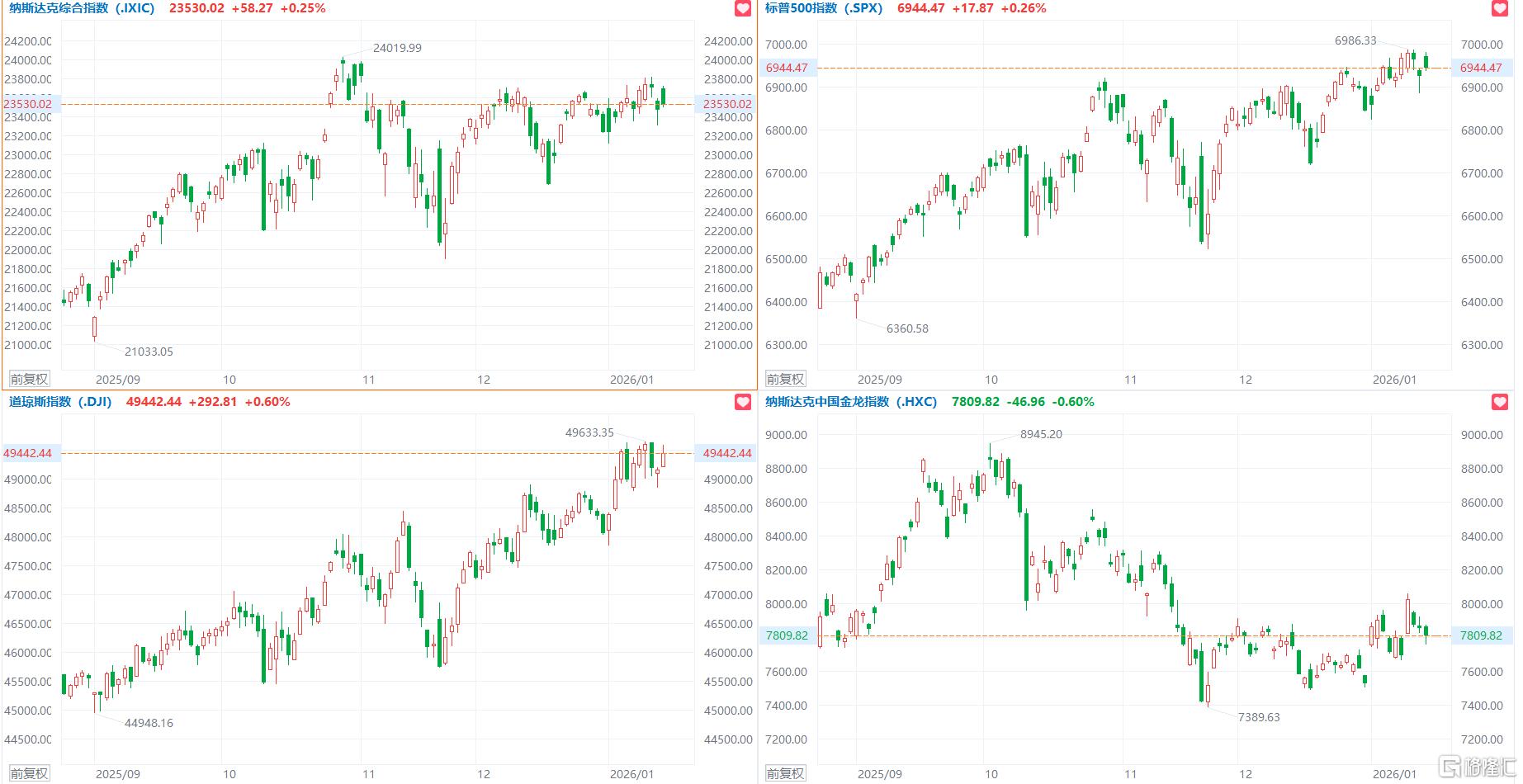
美股三大指数集体收涨,道指涨0.60%,标普500指数涨0.26%,纳指涨0.25%。芯片股在台积电亮眼财报推动下上涨,应用材料、阿斯麦涨超5%,台积电涨 超4%,英伟达涨超2%。银行股走强,贝莱德、摩根士丹利涨超5%,高盛、花旗涨超4%。 纳斯达克中国金龙指数收跌0.6%,热门中概股多数下跌,网易、携程、有道跌超2%,京东跌1.4%,百度跌0.7%,哔哩哔哩跌0.6%,阿里巴巴涨0.6%,理想 汽车、小鹏汽车、蔚来涨超1%。 ...

千问集齐阿里“全家桶”,AI巨头抢夺消费入口拼生态
Hua Xia Shi Bao· 2026-01-15 23:54
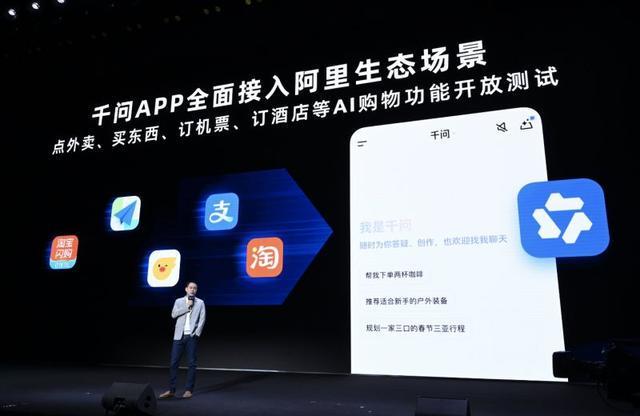
Core Insights - The article discusses the integration of AI into everyday tasks through Alibaba's Qianwen App, marking a significant shift in how consumers interact with technology and e-commerce [2][3]. Group 1: AI Integration and Functionality - Alibaba's Qianwen App has fully integrated with its ecosystem, allowing users to perform tasks such as ordering food, shopping, and booking flights, making it the first AI shopping assistant capable of handling complex real-life tasks [3][4]. - The app is set to launch over 400 AI functionalities, enhancing its capabilities as a comprehensive assistant for users [3]. - As of January 2023, Qianwen's monthly active users exceeded 100 million, indicating strong initial adoption despite competition from earlier AI assistants [3][5]. Group 2: Competitive Landscape - The competition among AI firms has shifted from problem-solving search functions to achieving commercial transactions, with a focus on creating seamless consumer experiences [5][6]. - Other tech giants, such as Walmart and Google, are also developing AI solutions that integrate shopping capabilities directly into chat interfaces, highlighting the race to establish new consumer entry points [7]. - The ability to complete transaction loops is becoming a critical factor in the competitive landscape, with companies needing to demonstrate their ecosystem capabilities [7][8]. Group 3: Future Outlook - The article suggests that AI will increasingly take over routine tasks in the digital world, with predictions that 60%-70% of conventional tasks will be executed by AI within the next two years [5]. - The integration of Qianwen into Alibaba's ecosystem is seen as a pivotal move towards a new era of e-commerce, characterized by reduced transaction friction and enhanced user engagement [6][8]. - Industry experts believe that the competition will not only focus on traffic and pricing but also on the AI-friendliness of product information and service delivery [7][8].
央行:降准降息还有一定空间;中国航天科技集团:2026年要全力突破重复使用火箭技术,大力发展商业航天等新产业——《投资早参》
Mei Ri Jing Ji Xin Wen· 2026-01-15 23:32
Important Market News - The People's Bank of China will introduce eight policy measures to support economic structural transformation, including a 0.25 percentage point reduction in various structural monetary policy tool rates and an increase in re-lending quotas for agriculture and small enterprises by 500 billion yuan [1] - U.S. stock indices closed higher, with the Dow Jones up 0.6%, S&P 500 up 0.26%, and Nasdaq up 0.25%. Notable gains were seen in TSMC and semiconductor stocks, while Chinese concept stocks mostly declined [1] Industry Insights - China Aerospace Science and Technology Corporation held a meeting to discuss its 2026 work plan, emphasizing the importance of advancing major aerospace projects and technology transformation to build a strong aerospace nation [3] - The satellite internet industry is expected to become a new sector in the space economy, with the satellite communication market projected to reach 200 to 400 billion yuan by 2030, growing at an annual compound rate of 10% to 28% [4] - The State Grid's investment plan for the 14th Five-Year Plan period is set at 4 trillion yuan, focusing on green transformation and the construction of a new power system, with a projected 30% increase in cross-regional transmission capacity [6] - Alibaba's strategy for its AI product "Qianwen" aims to enhance its capabilities in real-life scenarios, marking a shift in the AI industry from technical competition to practical application [6]

探寻中国市场的活力与秩序
Jing Ji Ri Bao· 2026-01-15 21:28
Economic Overview - In the past year, China's economy faced challenges, with total retail sales of consumer goods exceeding 45.6 trillion yuan, growing by 4.0%, indicating that consumption remains a stabilizing force for the economy [1] - By the end of December, the number of business entities in China reached 195 million, with over 100 million tax-related entities, reflecting sustained market vitality [1] Consumer Trends - Consumer activity is shifting from traditional shopping to experiential scenarios, such as enjoying hot pot while watching movies or visiting stores for service experiences, indicating a new market dynamic focused on quality and experience [1] - The pursuit of quality and experience has become a new driving force in the market, presenting challenges for regulators [1] Platform Economy Regulation - The competition among platforms like JD.com, Taobao, and Meituan in the food delivery sector has led to significant investments, with nearly 100 billion yuan spent in just six months, resulting in improved service quality and better treatment for delivery personnel [2][3] - Regulatory bodies have played a crucial role in maintaining fair competition, shifting the focus from subsidy wars to enhancing service quality and ensuring food safety [2][3] Addressing Deep-rooted Issues - Regulatory efforts in 2025 targeted the "algorithmic hegemony" and unreasonable rules imposed by platforms, leading to the cancellation of controversial refund policies and the establishment of fairer trading conditions [3] - Major platforms committed to creating a win-win ecosystem for consumers, merchants, and delivery personnel, with initiatives to eliminate penalties for late deliveries and improve social security coverage for riders [3][4] Market Corrections - In 2025, major food delivery platforms collectively reduced merchant commissions by 52 million yuan, addressing issues of excessive fees and fines, thereby sharing growth benefits more equitably among ecosystem participants [4] - Regulatory measures included the introduction of compliance management documents and guidelines to enhance the scientific and standardized operation of online markets [5] Combatting "Involution" Competition - "Involution" competition, characterized by price wars and product homogeneity, has been identified as a significant challenge, prompting regulatory focus on promoting high-value competition rather than low-level price cuts [6][7] - The government has initiated actions against substandard products and unfair practices, with a focus on maintaining market integrity and safety [6][7] Food Safety and Standards - The "pre-prepared food" controversy highlighted the need for unified national standards in the food industry, leading to accelerated efforts in standard formulation and enhanced food safety regulations [9][10] - Regulatory bodies are emphasizing comprehensive food safety oversight across the supply chain, addressing public concerns about food safety and ensuring transparency in food production [10][11] Conclusion - The collective efforts in 2025 aimed to create a fairer and more trustworthy market environment, allowing all value-creating entities and workers to thrive, ultimately leading to a balance between market vitality and order [12]
阿里抢攻AI入口之战
Bei Jing Shang Bao· 2026-01-15 16:32
Core Insights - Alibaba aims to take control of its destiny in the AI era by integrating its services into the Qianwen App, which now offers over 400 AI functionalities for tasks like ordering food and booking travel [1][2][10] - The Qianwen App is designed to streamline the user experience by allowing users to complete transactions without switching platforms, thus positioning itself as a new entry point for consumer engagement [1][2][4] Group 1: AI Integration and User Experience - The Qianwen App has integrated various Alibaba services, including Taobao and Alipay, enabling users to place orders and make payments seamlessly within the app [2][4] - Users can issue simple commands to the app, which can handle everything from product recommendations to order placements in under a minute [2][4] - The app's ability to provide tailored shopping suggestions based on user needs is a significant advancement in consumer decision-making [4][11] Group 2: Market Positioning and Competitive Landscape - The integration of AI into e-commerce is seen as a potential game-changer, with Alibaba positioning the Qianwen App as a central hub for consumer interactions [10][11] - The competition for AI-driven consumer engagement is intensifying, with Alibaba and other giants like JD.com and ByteDance exploring similar AI tools [10][13] - The success of the Qianwen App will depend on its ability to build user trust and adapt to consumer habits, which may take time [6][7] Group 3: Challenges and Future Outlook - Despite the technological advancements, there are challenges in user adoption, particularly as consumers are accustomed to traditional platforms for product research and purchases [6][7] - The AI's effectiveness in providing optimal recommendations without bias towards specific platforms remains a concern for consumer trust [7][8] - The long-term success of the Qianwen App will hinge on its ability to create a robust ecosystem that balances user privacy with data utilization [14][15]