
铠侠

Search documents
Counterpoint预警“缺芯危机”:AI还未吃饱,消费电子恐先跌倒
Zhi Tong Cai Jing· 2025-12-16 08:58
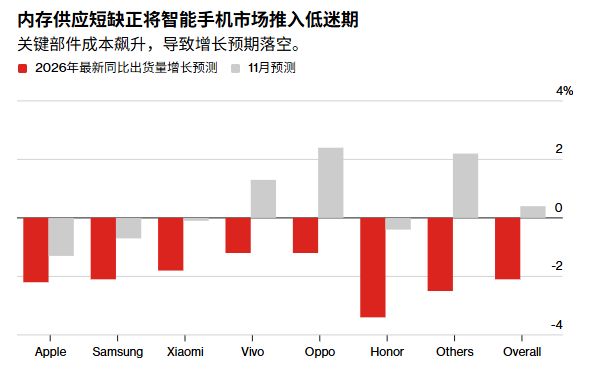
Group 1 - Global smartphone shipments are expected to decline by 2.1% next year due to memory chip shortages, reversing the anticipated 3.3% growth this year [1] - The average selling price of smartphones is projected to increase by 6.9% next year, influenced by a 10% to 25% rise in overall electronic component costs [1] - The shortage of DRAM chips, crucial for various electronic products, is exacerbated by semiconductor manufacturers prioritizing advanced memory chips for AI applications over basic products [1] Group 2 - Micron Technology plans to stop selling storage products to the PC/DIY market to focus on high-performance AI chip storage, indicating a shift in pricing power from PC/smartphone cycles to AI-driven data centers [3] - SK Hynix has reported that all storage chip orders for next year are sold out, with supply tightness expected to last until 2026, and some forecasts suggest shortages may continue until the end of 2027 [3][6] - Companies like Dell and HP have warned of potential memory chip shortages due to increased demand from AI infrastructure, impacting their pricing strategies [6] Group 3 - Analysts predict the most severe price increases will occur in mid-2026 when new production contracts take effect, with manufacturers facing cost hikes due to long-term agreements signed before the shortages [7] - Apple and Samsung are expected to manage the upcoming challenges better than other companies, particularly smaller Chinese OEMs that lack the flexibility to balance market share and profit margins [7] - Device manufacturers have limited effective strategies to cope with the memory crisis, as chipmakers are tightening supply to maximize profits, driven by AI data center demand [7][8] Group 4 - Companies may attempt to reduce memory specifications in lower-priced models, but this could harm competitiveness, while others might absorb costs temporarily before passing them on to consumers [8] - The smartphone industry faces a critical decision: significantly raise prices or accept compressed profit margins [8]

日本加速重振半导体产业体系
Ke Ji Ri Bao· 2025-12-15 03:21
Core Insights - Rapidus, a key player in Japan's semiconductor revival strategy, has recently welcomed new shareholders, including major companies and local banks, increasing the total number of shareholders to approximately 30. This move helps the company achieve its private funding target of 130 billion yen for the fiscal year 2025, laying the financial groundwork for mass production of 2-nanometer advanced process semiconductors in Chitose, Hokkaido [1][2] Group 1 - Rapidus was established in 2022 by leading Japanese companies such as Toyota, NTT, Sony Group, SoftBank, NEC, Denso, and Kioxia, aiming to rebuild domestic manufacturing capabilities in advanced processes [1] - The Japanese Ministry of Economy, Trade and Industry has positioned Rapidus as a national-level initiative, providing ongoing support through subsidies, capital injections, and institutional backing. Government support has reached nearly 3 trillion yen to date [1] - Japan is restructuring its semiconductor ecosystem from multiple angles, including the operational launch of TSMC's wafer plant in Kumamoto, attracting overseas advanced manufacturers through substantial subsidies, and maintaining international competitiveness in equipment and materials sectors [1] Group 2 - The financial system is integrated into the semiconductor industry revival framework, with several local banks participating in funding and financing arrangements for semiconductor projects, representing a new model of "linkage between industrial policy and financial policy" [2] - The recent funding round for Rapidus, involving over 20 new corporate investors, signifies a significant step in mobilizing private capital, indicating an unprecedented collaborative effort among the government, industry, and financial institutions focused on "economic security," "domestic advanced process production," and "supply chain resilience" [2]
【太平洋科技-每日观点&资讯】(2025-12-15)
远峰电子· 2025-12-14 12:06
Market Performance - The main board saw significant gains with notable stocks such as Copper Peak Electronics (+10.04%), Xilong Science (+10.00%), and Dongfang Communication (+9.98%) leading the charge [1] - The ChiNext board experienced a surge, highlighted by Guoci Materials (+20.02%) and LianTe Technology (+15.87%) [1] - The Sci-Tech Innovation board also performed well, with Jingfeng Mingyuan (+20.00%) and Yandong Micro (+16.84%) among the top gainers [1] - Active sub-industries included SW Electronic Chemicals III (+4.36%) and SW Semiconductor Equipment (+3.55%) [1] Domestic News - Taiwan's Industrial Technology Research Institute announced the development of the region's first full-color high-resolution Micro LED AI smart glasses, featuring a 0.49-inch display with 1920x1080 FULL HD resolution and over 3000 nits brightness [1] - Shanghai Jiao Tong University and Guoxing Aerospace signed an agreement to establish China's first space computing joint laboratory, focusing on autonomous space computing chip development and related technologies [1] - Goer Group and Haier Group signed a strategic cooperation agreement to collaborate on smart home, health, and digital economy sectors, leveraging Goer's expertise in precision components and smart manufacturing [1] - According to BCI's report, Huawei's smartphone market share is projected to reach 27.81% by the 48th week of 2025, significantly ahead of Apple's 17.12% [1] Company Announcements - Electric Science and Technology Network announced a significant decrease in expected daily related transactions for 2026, with actual transactions for 2025 being 283.25 million yuan compared to an expected 1.17385 billion yuan [3] - Chip Origin announced progress in acquiring Zhudian Semiconductor, with a capital increase of 350 million yuan for the acquisition [3] - Yunding Technology projected daily related transactions for 2026 to be approximately 1.355 billion yuan, with actual transactions expected to be around 1.484 billion yuan [3] - Aisino Security reported receiving a government subsidy of 1 million yuan, classified as a revenue-related government grant [3] International News - Dell plans to increase prices for its commercial product line by approximately 10%-30% starting December 17, depending on computer configuration [1] - STMicroelectronics secured a new credit line of 1 billion euros from the European Investment Bank, with 60% allocated for enhancing manufacturing capabilities [1] - SK Hynix ordered seven sets of thermal compression bonding machines from ASMPT for HBM4 production, a critical technology for ensuring product yield and performance [1] - Kioxia plans to start producing next-generation NAND flash memory chips in Iwate Prefecture in 2026, increasing storage capacity by 59% and data transfer speed by 33% [1]



中国存储,全球第二
半导体芯闻· 2025-12-12 10:24
如果您希望可以时常见面,欢迎标星收藏哦~ 在本文中,我们将探讨中国半导体存储器市场和中国半导体制造商的分析结果。 首先,我们将考察中国的半导体存储器市场。就2024年DRAM市场和NAND闪存市场的区域份额 (基于总部所在地)而言,预计中国将位居第二(美洲在这两个市场中均将位居第一)。 Yole Group 还分析了主要 DRAM 和 NAND 闪存供应商在中国市场的销售额占比(2024 年)。 三星电子、SK 海力士和美光科技在三大 DRAM 公司中,中国市场的销售额占比最高,其次是 SK 海力士,最后是美光。即使是占比最高的三星,其在中国市场的销售额也仅占 30% 左右,并 不算高。与此同时,中国DRAM公司将其所有 DRAM 产品都销往中国。 有趣的是,这六大公司合计占据了约25%的NAND闪存市场份额。中国闪存公司也将其所有NAND 闪存产品都销往中国。 Yole Group 估计,中国将占 DRAM 市场 26% 的份额(价值 250 亿美元),以及 NAND 闪存市 场 33% 的份额(价值 220 亿美元)。其中,NAND 闪存的份额最大。 如果简单地将DRAM和NAND闪存的总价值加起来,全球 ...

NAND,新“混”战
半导体行业观察· 2025-12-11 01:23
Core Viewpoint - The storage market is experiencing a rare price increase across all segments, driven by the growing demand for AI servers and high-density storage, leading to a tightening of upstream capacity and healthier inventory levels [2]. Group 1: Market Dynamics - NAND manufacturers' decisions on next-generation technology routes are becoming increasingly critical, as any lead or lag will directly impact cost and performance competition over the next two to three years [3]. - SK Hynix has made a disruptive decision to introduce hybrid bonding at the 300-layer NAND node, a technology previously expected to be implemented only after reaching 400 layers [5]. - The competitive landscape is intensifying, with Samsung Electronics pushing for 400+ layer V10 NAND and Kioxia applying hybrid bonding technology in its 218-layer BiCS 3D NAND, achieving a 59% increase in bit density and a 33% improvement in NAND interface speed [5][6]. Group 2: Technological Shifts - The necessity for hybrid bonding is increasing as NAND layer counts rise, with traditional single-chip manufacturing architectures facing systemic bottlenecks beyond 300 layers [8]. - Hybrid bonding allows for separate manufacturing of storage unit wafers and peripheral circuit wafers, significantly reducing the thermal burden on peripheral circuits and enabling independent advancements in both areas [8][10]. - Kioxia's CBA technology and Samsung's CoP architecture demonstrate the advantages of hybrid bonding, achieving higher I/O speeds and improved power efficiency [11][12]. Group 3: Competitive Strategies - Samsung's aggressive dual-track strategy aims to lead in both high-layer stacking and hybrid bonding technology, although it faces significant manufacturing challenges [15]. - Kioxia's more cautious approach focuses on gradual advancements and cost control through partnerships, with plans to produce over 1000-layer 3D NAND by 2031 [16]. - Yangtze Memory Technologies has leveraged its early adoption of hybrid bonding technology to expand capacity amid a market contraction, positioning itself favorably against competitors [17]. Group 4: Industry Trends - The surge in enterprise SSD demand, driven by AI model growth, is pushing NAND manufacturers to rapidly enhance capacity and technology to seize market opportunities [20]. - The traditional PUC architecture is reaching its limits, necessitating a shift to hybrid bonding as a required option rather than a choice [24]. - The upcoming years are critical for SK Hynix as it aims to convert existing production capacity to V9 while advancing V10 development, highlighting the urgency of technological upgrades [25]. Group 5: Future Outlook - The breakthrough of hybrid bonding technology instills confidence in NAND manufacturers to pursue ultra-high layer counts, with Samsung and Kioxia setting ambitious goals for 1000-layer NAND development [27]. - Achieving 1000-layer stacking will require overcoming significant engineering challenges, including deep aspect ratio etching and maintaining reliability while compressing thickness [28][29]. - The industry is exploring various paths for expansion, including logical, physical, and performance enhancements, indicating that future NAND development will focus on a comprehensive optimization of layers, architecture, materials, and processes [38].

半导体行业周报:摩尔线程在科创板上市,沐曦股份启动科创板申购-20251210
Huaxin Securities· 2025-12-10 15:08
Investment Rating - The report maintains a "Buy" rating for certain companies in the semiconductor industry, specifically for Tongfu Microelectronics and Haiguang Information, while others remain un-rated or have a "Hold" rating [7][15]. Core Insights - The report highlights the successful IPO of Moore Threads on the STAR Market, marking it as the largest IPO in 2024 and the fastest approval since 2022, with a focus on AI and computing acceleration products [3][13]. - Muxi Co., Ltd. has initiated its IPO process, aiming to become the second domestic GPU company listed on the A-share market, with a fundraising target of 3.904 billion yuan for high-performance GPU development [4][14]. - The semiconductor industry is experiencing a shift towards AI-driven applications, with significant growth in demand for NAND Flash and SSD products, particularly in enterprise settings [18][42]. Summary by Sections Market Performance - The electronic sector has shown strong performance over the past year, with a 53.6% increase compared to the previous year, outperforming the CSI 300 index [1][2]. Industry Dynamics - Micron Technology is exiting the consumer storage business to focus on AI storage chips, which may exacerbate supply shortages in the consumer electronics market [18]. - The NAND Flash market is expected to see price increases of 20-25% due to strong demand from AI applications and enterprise SSD orders [19][32]. - Major players like Samsung and SK Group have reported significant revenue growth in the SSD market, driven by strong demand from cloud service providers [42][43]. Key Companies and Earnings Forecast - Tongfu Microelectronics (002156.SZ) is projected to have an EPS of 0.72 in 2025 with a PE ratio of 52.26, rated as "Buy" [7][15]. - Haiguang Information (688041.SH) is also rated as "Buy," with an EPS forecast of 1.18 for 2025 [7][15]. - Kioxia (Kioxia) has seen a revenue increase of 33.1% in Q3 2025, benefiting from AI server demand [20][42].
国信证券:AI拉动需求增长 存储大周期方兴未艾
Zhi Tong Cai Jing· 2025-12-10 08:25
需求测算 AI训练、推理拉动存储需求增长。AI大模型推理拉动存储需求快速增长,根据该行测算结果,2026年 AI推理对DRAM、NAND需求分别为23.0EB、593.5EB,短期供不应求,存储价格有望持续提升,存储 大周期方兴未艾。 公司梳理 国信证券发布研报称,存储市场存在HDD、SSD、NAND、DRAM、HBM几大技术趋势,主要参与者 众多。AI大模型推理拉动存储需求快速增长,根据该行测算结果,2026年AI推理对DRAM、NAND需求 分别为23.0EB、593.5EB,短期供不应求,存储价格有望持续提升,存储大周期方兴未艾。 国信证券主要观点如下: 存储系统 系统构成与分类。1)系统构成:AI存储系统主要分为网络端存储和本地端存储,其中网络端存储主要存 放冷数据,主要由HDD和SSD存储;本地端存储主要存放热数据和温数据,主要由HBM、DRAM、本地 SSD存储。2)存储分类:存储主要可以分为"易失性"的Memory和"非易失性"的Storage,其中Memory主 要包括DRAM和HBM,优势为速度快;Storage主要包括SSD和HDD,优势为容量大、成本低。 市场与技术趋势 HDD、SSD、 ...
涨得比金条还快,内存条力压所有理财产品
Sou Hu Cai Jing· 2025-12-10 08:19
普通人也眼热。二手网站充斥着刚从笔记本电脑上拆下来的"热乎"内存条,虽然只有一条,但不甘心的卖家坚定不移地相信:自己正站在风口。 金钱来得太快就像龙卷风。据说,内存条的龙卷风,一刮就要刮到2027年。 然而,12月3日,全球第三大DRAM供应商美光宣布退出消费级存储业务。哪怕供应再紧张,价格再飙升,美光也不做了。到口的肥肉,美光为什么不吃? 这股龙卷风,到底有什么玄机? 2025年以来,内存价格在6月一小涨,10月一大涨,涨幅基本超过100%,年底的价格可能更加疯狂。 内存条成了"电子茅台",价格涨得比金条还快,力压世面所有理财产品。 64G的DDR5内存套装,价格超过4000元,比游戏主机PS5还贵出1000块。华强北商家已经不给内存条贴价格了,因为一天一个价,乃至上午一个价、下午一 个价。 威刚董事长公开表示,内存全部缺货,30多年没见过这场面,天天给客户道歉。小米董事长雷军在社交媒体上说"最近内存涨价太多",以解释红米手机"微 微降价"背后的诚意。 连存储巨头三星都起了内讧。12月2日,三星电子半导体部门拒绝跟移动体验事业部签署一年以上的长期合同,只答应"3个月一签"。即使后者的高层亲自下 场协商,最后 ...
美光退出,华为强势杀入
半导体芯闻· 2025-12-09 10:36
Group 1 - The global PC solid-state drive (SSD) market is undergoing significant changes, including price increases by major manufacturers and Micron Technology's decision to exit the consumer market, which will impact Chinese products focused on price and sales [1] - SSD supply is increasingly concentrated in enterprise applications, particularly for high-performance servers used in artificial intelligence, with major manufacturers planning to raise prices by 20% to 40% starting in Q4 due to rising NAND flash prices and weak demand [1] - Following Micron's exit from the consumer market in February, Korean PC manufacturers and consumers are seeking alternatives, with Chinese manufacturers considering entering the Korean market despite concerns over reliability [1] Group 2 - Huawei launched three products in Korea, including two models of the "Ikit Store Extreme 201" SSD and one "Ikit Store Shield 210" portable SSD, with the 1TB model achieving read speeds of 7.4GB/s and write speeds of 6.7GB/s [2] - The core component of Huawei's SSD is QLC NAND flash from Yangtze Memory Technologies Co. (YMTC), with a total write endurance (TBW) of 4000 TBW and a five-year warranty [2] - Despite launching its SSDs, Huawei has not gained significant market share in Korea due to consumer dissatisfaction with the speed and reliability of QLC NAND flash compared to TLC NAND flash products from established brands [2][3] Group 3 - The price difference between 1TB products using QLC NAND flash and those from well-known manufacturers using TLC NAND flash is only 10,000 to 20,000 KRW, making it difficult for Huawei to compete [3] - SSD prices in Korea are unlikely to decrease in the short term, with suppliers announcing price increases of at least 20% and up to 40% expected to last from late October to early December [3] - Micron's decision to stop producing and selling consumer-targeted "Crucial" SSDs and memory is anticipated to increase demand for alternative SSDs, potentially benefiting Chinese manufacturers despite ongoing reliability concerns among Korean consumers [3]
人工智能存储系列报告一:AI拉动需求增长,存储大周期方兴未艾
Guoxin Securities· 2025-12-09 07:48
Investment Rating - The report maintains an "Outperform" rating for the storage industry [2] Core Insights - The demand for storage is being driven by AI, with significant growth expected in the storage cycle due to AI training and inference needs [4] - The report highlights the dual oligopoly market structure in the HDD sector, primarily dominated by Seagate and Western Digital [59] - The global storage market is projected to experience a substantial increase in demand, particularly for DRAM and NAND, driven by AI applications [4] Summary by Sections 01 Storage Systems: Composition and Classification - AI storage systems are categorized into network storage (for cold data) and local storage (for hot and warm data) [4] - Storage can be divided into volatile memory (DRAM, HBM) and non-volatile storage (SSD, HDD) [4] 02 Market and Technology Trends: HDD, SSD, NAND, DRAM, HBM - HDD technology is advancing with HAMR (Heat-Assisted Magnetic Recording) to significantly increase single disk capacity [4] - SSDs are evolving with increasing NAND stacking layers and a shift from SLC to MLC and QLC architectures [4] - DRAM is seeing advancements with the development of DDR6, while HBM is primarily used in AI applications [4] 03 Demand Estimation: AI Training and Inference Driving Storage Demand Growth - AI inference is expected to create a demand for 23.0EB of DRAM and 593.5EB of NAND by 2026, indicating a short-term supply shortage and potential price increases [4] 04 Company Overview: Global Storage Companies' Business Focus - Samsung and SK Hynix are leading in DRAM, HBM, NAND, and SSD markets, while Micron, SanDisk, and Kioxia focus on NAND and SSD [4]

