
山姆会员店

Search documents
山姆已经搜不到好丽友派,消费者多大程度影响供应链?
Hu Xiu· 2025-07-16 03:40
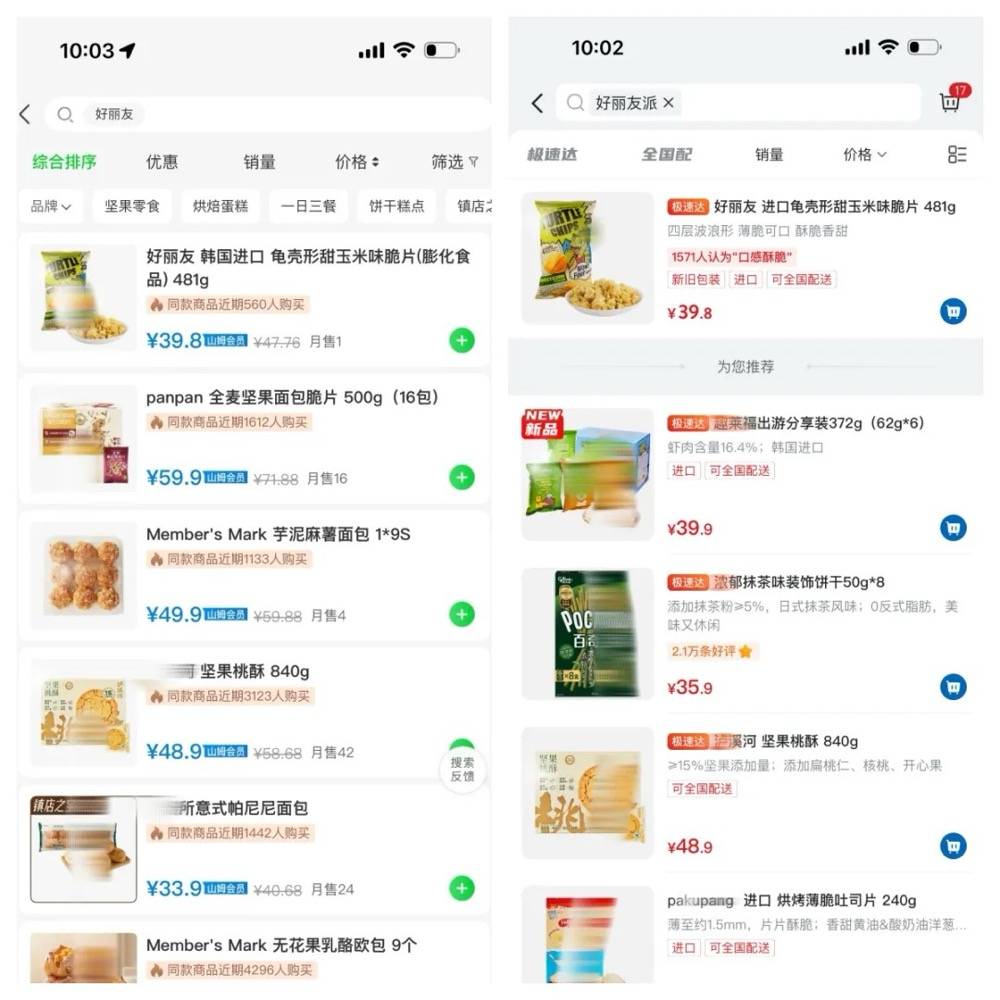
Core Viewpoint - Sam's Club faced backlash from loyal customers after introducing products from brands like Orion and Wei Long, leading to complaints and threats of non-renewal of memberships. The company has since taken action in response to the controversy [1][3]. Group 1: Consumer Sentiment - The introduction of Orion's products, which contain unhealthy ingredients, has raised concerns among consumers, particularly parents who are cautious about their children's diets [2]. - The dissatisfaction is not limited to one product; customers have also expressed frustration over the removal of other favored items and changes in brand names [6]. - Consumers expect Sam's Club to provide high-quality products, and the presence of easily accessible items has led to disappointment [7]. Group 2: Corporate Communication - The management structure of foreign companies often limits the ability of regional leaders to communicate effectively with consumers, which can lead to a disconnect between internal decisions and external perceptions [9][10]. - Unlike local CEOs who frequently engage with consumers on social media, Sam's Club primarily relies on customer service for communication, which may not adequately address consumer concerns [10]. Group 3: Impact on Supply Chain - The incident highlights the influence of consumer feedback on supply chain decisions, indicating that consumer voices can affect supplier relationships, albeit to a limited extent [11][14]. - Suppliers must not only satisfy procurement managers but also appeal to consumers to succeed in retail environments [15]. - The traditional B2B purchasing model is evolving, with end-users increasingly impacting procurement decisions, particularly in sectors like productivity tools [18].

早报 | 山姆下架好丽友;黄仁勋回应大热天穿皮夹克;官方通报杭州一学校多名学生流鼻血;特朗普称与印尼达成协议
虎嗅APP· 2025-07-16 00:05
Group 1: NVIDIA and GPU Market - NVIDIA has received approval from the U.S. government to resume sales of the H20 GPU in China and is launching a new fully compatible GPU for the Chinese market [2] - CEO Jensen Huang emphasized the importance of the Chinese market, describing it as large, vibrant, and innovative, and stated that U.S. companies must establish a presence there [2] Group 2: Mobile Power Industry - The Ministry of Industry and Information Technology in China is seeking public input on the development of mandatory national standards for mobile power supplies, including power banks [4] - The move aims to address safety concerns due to frequent accidents associated with mobile power devices, thereby reducing risks and eliminating low-quality products [4] Group 3: Meta and EU Regulations - Meta Platforms Inc. is facing renewed scrutiny from the EU regarding compliance with new digital regulations, following a previous fine of €200 million [15] - The EU has warned that if Meta does not adjust its services to meet regulatory requirements, it may face further penalties [15][16] Group 4: Apple and Foldable Technology - Apple has decided to abandon its self-developed foldable screen technology in favor of Samsung Display's "no crease" display solution, with plans to mass-produce its first foldable iPhone by the second half of 2026 [16] - The new hinge design aims to address the long-standing issue of screen creasing, with expected production volumes of 13 to 15 million units in 2026 [16] Group 5: Lululemon's Market Expansion - Lululemon has announced plans to enter the Indian market in partnership with Tata Group, launching both physical and online stores in the second half of next year [17] Group 6: Automotive Industry Developments - Geely Holding Group has signed a merger agreement with Zeekr Technology, which will lead to Zeekr's privatization and delisting from the New York Stock Exchange [18] - Reports indicate that WM Motor is planning to resume operations and aims for an IPO in 2027, following a restructuring plan approved by the court [19]



从冰杯到袋装冰,热经济升温“冰”生意
Chang Sha Wan Bao· 2025-07-15 18:59
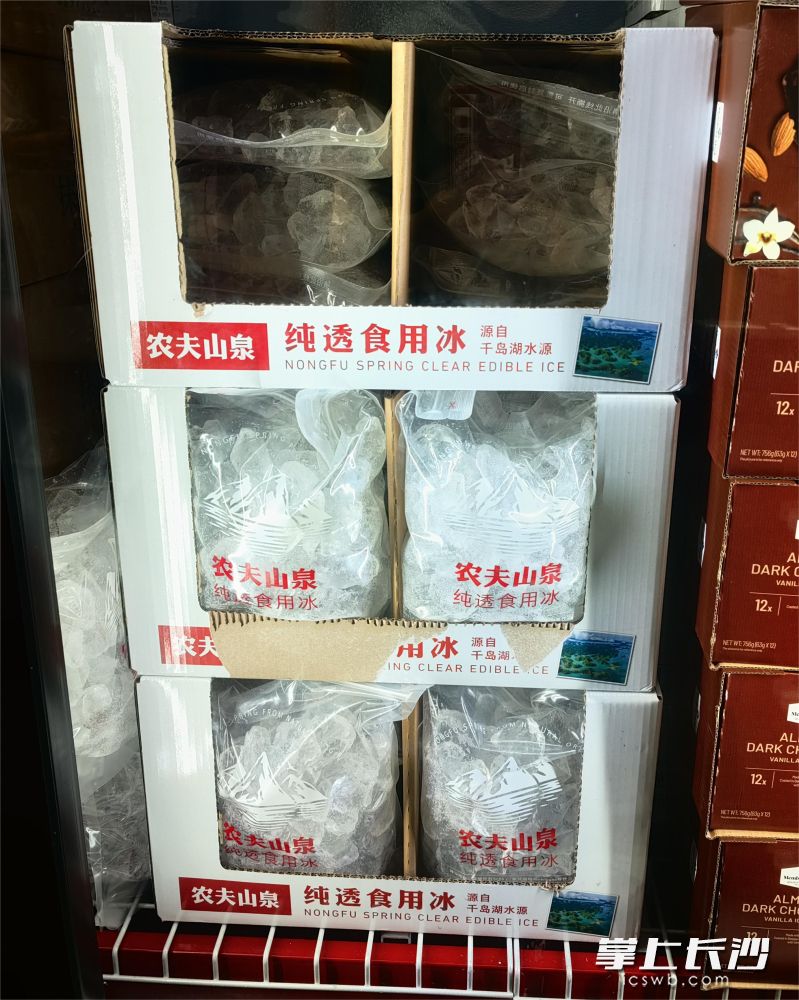
Core Insights - The introduction of "Nongfu Spring Pure Edible Ice" by Sam's Club has gained significant consumer attention, becoming a hot topic this summer [1][3] - The product, priced at 22.8 yuan for 2 kilograms, has sparked debate over its high cost compared to homemade ice, which can be produced at a much lower price [1][3] - The ice is marketed as a premium product, utilizing a slow freezing process that enhances its quality and reduces melting speed by 20% [3] Pricing Controversy - Consumers have expressed shock at the price of 22.8 yuan for 2 kilograms of ice, noting that homemade ice is significantly cheaper [1] - A local resident calculated that the cost of homemade ice is only 2 yuan per kilogram, highlighting a price difference of over four times [1] Market Demand Surge - The demand for ice products has increased with rising summer temperatures, prompting various retailers, including convenience stores, to enter the market [4][6] - Convenience stores like 7-Eleven have reported high sales of ice cups, with some selling up to 80 cups per day [4] Product Variety and Accessibility - Retailers are offering a range of ice products, including 160g ice cups priced between 3 to 6.8 yuan, catering to consumers' immediate needs [6] - Tea shops have also joined the trend, launching ice cups priced at 1 yuan, further diversifying the market [7] Consumer Behavior and Trends - The rise in popularity of ice products reflects changing consumer behaviors, particularly among younger generations who seek DIY experiences and value for money [8] - The "ice cup economy" is driven by innovative consumption scenarios and emotional value, appealing to young consumers' desire for social media recognition and cost-effective alternatives to expensive beverages [8]

写着写着就没了!好丽友等多个零食品牌突遭下架,从独有品牌到大众品牌:山姆的会员“特权”缩水了?
Mei Ri Jing Ji Xin Wen· 2025-07-15 14:31
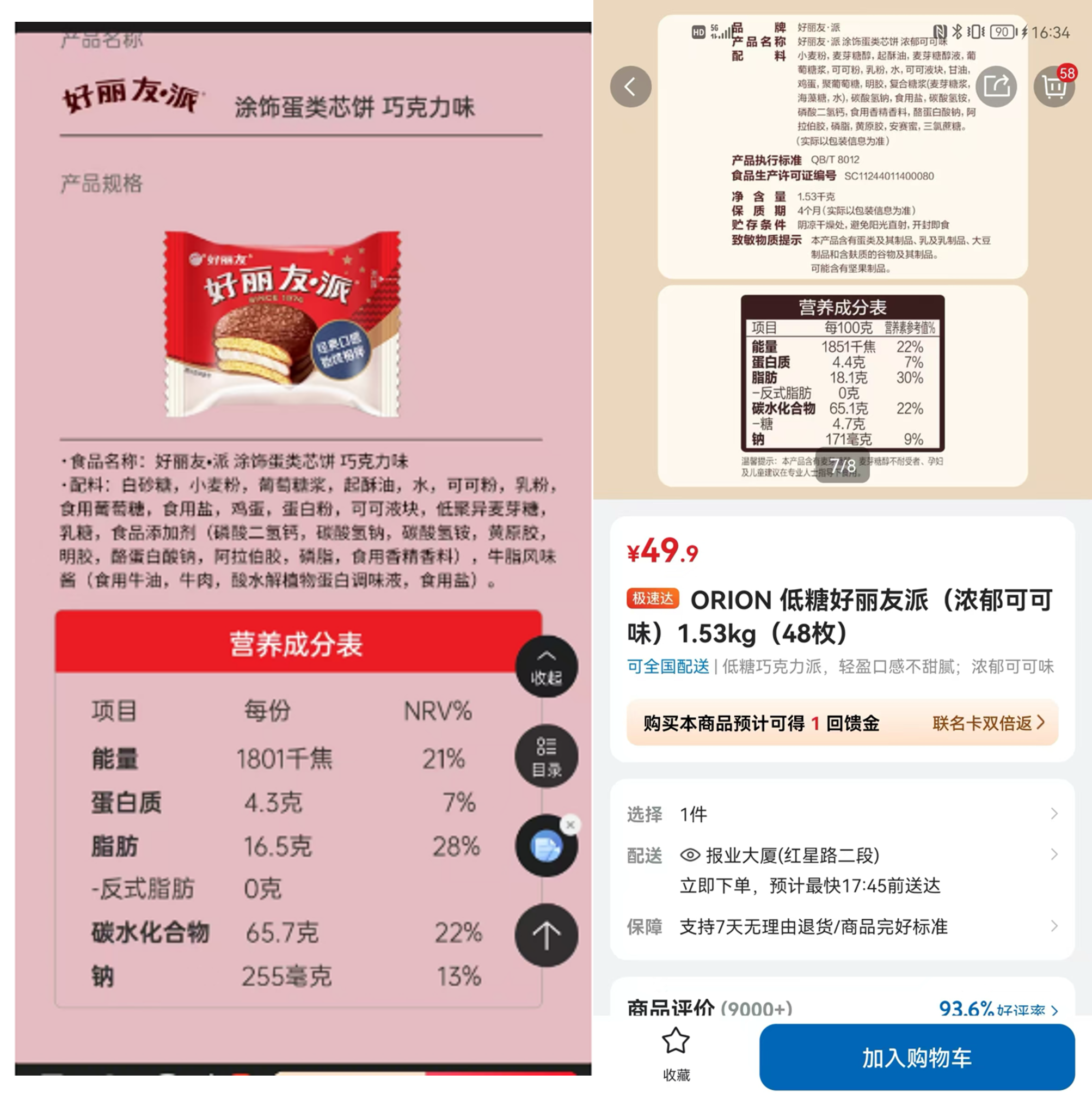
Core Viewpoint - Sam's Club is facing a trust crisis as it introduces common brands like Haoliyou and Weilong, which has led to dissatisfaction among members who expect premium products for their membership fees [1][4][12]. Group 1: Product Controversies - The introduction of "low-sugar" Haoliyou pie has sparked debate, with members questioning the need for such products that are readily available in regular supermarkets [4][12]. - The "special supply" version of Haoliyou pie claims to reduce sugar by 80% and increase cocoa content by 30%, but the differences from the classic version are not significant [4][8]. - The pie's ingredient list includes several artificial sweeteners, leading to consumer feedback that it remains too sweet despite the reduced sugar content [8][9]. Group 2: Brand Positioning and Changes - Brands like Weilong and Xu Fu Ji have altered their product presentations for Sam's Club, with unique packaging and formulations that differ from their standard offerings [12][23]. - The "panpan" branding for products from Panpan Food has been criticized for misleading consumers into thinking they are imported goods due to the upscale packaging [25][27]. - Sam's Club has been noted for its strategy of introducing popular brands with modified packaging, which may not always align with the premium image expected by its members [30][33]. Group 3: Sales and Market Strategy - As of April 2023, Sam's Club has 54 locations in China, with plans to exceed 60 by the end of the year, indicating a strong growth trajectory [33]. - Three stores have already surpassed annual sales of $500 million (approximately 3.67 billion RMB), with expectations for this number to increase significantly by 2025 [33].

山姆上新,会员吵翻了!
21世纪经济报道· 2025-07-14 15:48
Core Viewpoint - The introduction of a new low-sugar product by Sam's Club has raised concerns among members regarding the quality of product selection and potential homogenization of offerings [2][4][8]. Group 1: Product Launch and Consumer Reaction - Sam's Club launched a new low-sugar Haoliyou pie priced at 49.9 yuan for 48 pieces, claiming an 80% reduction in sugar and a 30% increase in cocoa content [2]. - Over 300 negative reviews were recorded, with consumers expressing that the product was "too sweet" and similar to existing market options [4]. - Some consumers indicated they were unwilling to renew their membership due to dissatisfaction with product offerings [5]. Group 2: Product Availability and Market Position - Popular items such as Sun Cake, low-sugar egg yolk pastry, and others with high repurchase rates have been quietly removed from shelves, leading to concerns about product homogenization [7]. - Customers voiced frustration over the availability of common products in a membership store, feeling that they were being treated as "chives" [8]. Group 3: Company Performance and Growth - In the first quarter, Sam's Club in China reported a membership revenue growth exceeding 40% [12]. - Walmart's overall performance in China was strong, with net sales reaching 6.7 billion USD, a 22.5% year-on-year increase, and comparable sales growing by 16.8% [13]. - The growth of Sam's Club and e-commerce contributed significantly to Walmart's success in the Chinese market, with membership fee revenue increasing by 35% during the Chinese New Year sales season [14].
胖东来宇宙
晚点LatePost· 2025-07-08 14:34
Core Viewpoint - The article discusses the unique business model and operational strategies of Pang Donglai, a supermarket chain in Xuchang, which has achieved a dominant market position through exceptional customer service, employee satisfaction, and community trust [3][4][18]. Group 1: Business Model and Market Position - Pang Donglai has only a few stores in Xuchang but captures a significant portion of local retail spending, with over 10% of the city's retail sales attributed to its six comprehensive malls and four community supermarkets [4]. - The supermarket's sales in 2024 are projected at 16.964 billion yuan, reflecting a 58.5% increase year-on-year, with an average revenue of 1.305 billion yuan per store [43]. - The company has established a monopoly-like trust within the community, with many locals considering it the best shopping destination despite its prices not being the lowest [4][18]. Group 2: Employee Management and Culture - Pang Donglai's founder, Yu Donglai, emphasizes a family-like management style, providing high salaries that are 2-3 times higher than local averages, which helps attract and retain talent [21][22]. - The company has a low employee turnover rate of 2.01% in 2024, significantly lower than the industry average, indicating high employee satisfaction [38]. - Employees are encouraged to contribute ideas for service improvements, and the company rewards innovative suggestions, fostering a culture of autonomy and engagement [24][25]. Group 3: Customer Experience and Service - Pang Donglai offers over 100 free services to customers, enhancing the shopping experience and building strong customer loyalty [16][18]. - The supermarket has a reputation for exceptional service, with anecdotes of employees going above and beyond to satisfy customers, such as replacing damaged products at home [17]. - The company aims to exceed customer expectations by continuously refining service standards and practices, striving for a service score of 120% [23][24]. Group 4: Community Engagement and Trust - The supermarket's long-standing presence and commitment to quality service have fostered deep trust within the local community, with residents expressing a desire for Pang Donglai to expand into other sectors like healthcare [18]. - The company's operational success is closely tied to its ability to create a positive reputation through word-of-mouth among local consumers [26]. - Pang Donglai's approach to business is characterized by a focus on community well-being and customer satisfaction, which has solidified its position as a local favorite [18][26].

“民营超市第一股”人人乐摘牌退市,昔日零售巨头落幕
Nan Fang Du Shi Bao· 2025-07-07 07:07
Core Viewpoint - The downfall of Renrenle (002336.SZ), once a leading retail chain in China, culminated in its delisting from the Shenzhen Stock Exchange after failing to meet financial standards and experiencing continuous losses [3][5]. Group 1: Financial Performance and Delisting - Renrenle's stock entered the delisting preparation period on June 13, 2023, and was officially delisted on July 4, 2023, marking the end of its 15-year journey in the A-share market [1]. - The immediate cause of delisting was the company's financial performance, with a reported net asset of -404 million yuan for 2024 and an audit report that expressed "inability to express an opinion" [3]. - From 2021 to 2024, Renrenle recorded negative net profits after excluding non-recurring losses for four consecutive years, leading to multiple delisting indicators being triggered [3][5]. Group 2: Historical Context and Challenges - Renrenle, once celebrated as the "first private supermarket stock," was listed in January 2010 with an initial price of 26.98 yuan, peaking at over 35 yuan on its first trading day, and achieving a market capitalization exceeding 13 billion yuan [4]. - The company faced significant challenges starting in 2012, with performance fluctuations and more years of losses than profits, exacerbated by the rise of e-commerce and increased competition [4]. - Despite attempts to transform its business model through high-end supermarkets and online expansion, these efforts failed to reverse the declining trend [4][6]. Group 3: Industry Implications and Future Outlook - Renrenle's delisting highlights the broader challenges faced by traditional retail, including rising operational costs and the impact of new retail formats [6]. - The traditional supermarket sector, characterized by low profit margins and reliance on supplier fees, is under pressure from emerging competitors like Hema and membership-based models [6][7]. - Industry experts suggest that the future of retail lies in companies that can innovate and adapt, moving away from large-scale operations to more agile and specialized business models [7].

食品饮料行业2025年中期策略报告:悦己需求焕新颜,传统消费激活力-20250627
Ping An Securities· 2025-06-27 13:11
Group 1 - The core viewpoint of the report emphasizes the transformation of consumer demand from "pleasing others" to "self-pleasing," indicating a structural change in consumption patterns that favors new consumption trends over traditional ones [4][9] - The report identifies three main lines of investment focus: new demand, new products, and new channels, suggesting that companies that can quickly adapt to these changes will outperform in the market [4][6] - The report highlights the government's ongoing efforts to stimulate consumption through various policies, which are expected to enhance consumer confidence and income, leading to a gradual recovery in the consumption market [7][8] Group 2 - New demand is characterized by a focus on cost-effectiveness, emotional value, and health consciousness among consumers, driven by generational differences in spending intentions [4][14][23] - The report notes that health-oriented products are gaining traction, with companies innovating in healthy snacks and beverages to meet rising consumer expectations for health benefits [28][36] - The emergence of new sales channels, such as bulk snack stores and membership-based supermarkets, is reshaping the retail landscape, allowing companies to better meet consumer demands for quality and convenience [57][63] Group 3 - The report discusses the rapid growth of the bulk snack store sector, which has become the leading channel for snack sales in China, reflecting a shift in consumer shopping habits [57][59] - Membership-based supermarkets are also highlighted as a growing trend, providing high-quality products at competitive prices, which appeals to consumers seeking value [63][66] - Traditional supermarkets are undergoing significant transformations to adapt to the competitive landscape, with successful case studies demonstrating substantial sales increases following strategic adjustments [69][70]
鏖战即时零售:为何巨头们纷纷涌入?
Hu Xiu· 2025-06-27 10:12
Core Viewpoint - The entry of Pinduoduo into the instant retail market signifies a strategic shift as it aims to compete with established players like Meituan, Alibaba, and JD.com in a rapidly growing sector [4][5][10]. Group 1: Pinduoduo's Entry into Instant Retail - Pinduoduo is testing self-built product warehouses in first-tier cities like Shanghai and plans to launch instant delivery services by August [3][4]. - The company has historically focused on community group buying but is now exploring instant retail, which is seen as a significant market opportunity [5][10]. - Pinduoduo's cautious approach involves pilot testing and partnerships with third-party logistics, avoiding large-scale investments initially [22][44]. Group 2: Market Dynamics and Competitors - The instant retail market in China is projected to reach 780 billion yuan in 2024, growing by 20% year-on-year, and is expected to exceed 2 trillion yuan by 2030 [13][14]. - Competitors like Meituan and Alibaba have already established strong positions in instant retail, with Meituan's flash purchase service achieving daily order volumes of 12 million [10][25]. - Alibaba has integrated its logistics through Ele.me and Taobao Flash Purchase, rapidly increasing its market presence [28][29]. Group 3: Strategic Implications for Pinduoduo - Pinduoduo's move into instant retail is both a defensive and offensive strategy to protect its market share in low-frequency consumption categories [17][19]. - The company aims to leverage its existing user base in lower-tier cities to replicate its previous success in community group buying [44]. - The competition in instant retail is intensifying, with a focus on supply chain efficiency and data capabilities becoming critical for success [46][48].




低价陷阱里的即时零售:越卷越亏,出路究竟在哪?
3 6 Ke· 2025-06-25 09:55
Core Insights - The instant retail sector is experiencing rapid growth, with major platforms like Meituan, Taobao, and JD showing significant increases in daily order volumes, indicating a competitive landscape [1][2][3] - However, the industry is facing challenges due to a price war, leading to unsustainable low-price strategies that threaten long-term profitability and brand integrity [2][3][4] Group 1: Industry Growth - Meituan's non-food instant retail surpassed 18 million daily orders in Q1 2025, with core categories like 3C appliances and daily necessities growing over 200% year-on-year [1] - Taobao's flash purchase service achieved over 60 million daily orders within two months, with a year-on-year retail order growth of 179% and a punctuality rate of 96% [1] - JD's food delivery service has exceeded 25 million daily orders since its launch on March 1, with over 120,000 full-time delivery personnel [1] Group 2: Price Competition Challenges - The industry is dominated by low-price strategies, forcing merchants to lower prices to attract price-sensitive consumers, which compresses profit margins [3][4] - Platforms encourage low-price promotions to enhance competitiveness, leading to a cycle of unhealthy competition that harms long-term sustainability [3][4] - Over-reliance on low prices results in reduced product quality and brand damage, as merchants may resort to inferior goods to cut costs [3][4] Group 3: Need for Differentiation - The current low-price competition model fails to meet the evolving demands of consumers who seek quality, service, and speed [5][6] - Platforms must shift focus from low prices to high-quality offerings and services to attract discerning customers, as exemplified by Sam's Club and Costco [7][8] - A strategy of customer segmentation targeting high-end clients with premium products and services can create a competitive edge [8][9] Group 4: Strategic Recommendations - Platforms should develop robust customer analysis systems to identify high-end consumer segments based on purchasing behavior and preferences [9] - Strengthening partnerships with suppliers to ensure high-quality product offerings is essential for long-term success [9] - Building a strong brand image through quality service and products will help attract and retain high-end customers, moving away from the low-price model [9]