腾讯

Search documents
招银国际每日投资策略-20250926
Zhao Yin Guo Ji· 2025-09-26 03:57
Market Overview - The global stock markets showed mixed performance, with the Hang Seng Index rising by 0.53% and the Hang Seng Technology Index increasing by 1.94%, reflecting a year-to-date gain of 42.77% [1][3] - The US stock markets experienced a decline, with the Dow Jones falling by 0.94% and the S&P 500 decreasing by 1.33%, while the Nasdaq dropped by 1.77% [1][3] Sector Performance - In the Hong Kong market, materials, information technology, and healthcare sectors led the gains, while consumer staples, real estate, and financial sectors lagged [3] - The A-share market saw gains in media, communication, and non-ferrous metals, while textiles, agriculture, and comprehensive sectors underperformed [3] Company Insights - Xiaomi Group launched its flagship Xiaomi 17 smartphone, priced at 4,499 RMB, which is competitive compared to the iPhone 17 priced at 5,999 RMB, highlighting Xiaomi's strategy to position itself against Apple [4] - The company aims to enhance its ecosystem with new IoT products and electric vehicle services, indicating a focus on high-end market segments [4] - Xiaomi's target price is set at 62.96 HKD, reflecting a 26.3 times expected P/E ratio for 2026, maintaining a "Buy" rating [5] Investment Recommendations - Geely Automobile is rated "Buy" with a target price of 25.00 HKD, indicating a potential upside of 37% [5] - Luckin Coffee is also rated "Buy" with a target price of 44.95 USD, suggesting a 19% upside [5] - Tencent and Alibaba are both rated "Buy," with target prices of 705.00 HKD and 158.80 USD respectively, indicating potential upsides of 9% and N/A [5]
权威发布·高质量完成“十四五”规划丨我国已建成广播电视和网络视听大国
Ren Min Ri Bao· 2025-09-26 02:57
Core Insights - The "14th Five-Year Plan" period has seen significant achievements in the development of broadcasting, television, and online audio-visual sectors in China, establishing the country as a major player in these industries [1] Group 1: Governance and User Experience - The State Administration of Radio and Television (SARFT) initiated a "dual governance" approach in August 2023 to enhance user experience and service levels [2] - Key initiatives include the deployment of millions of micro set-top boxes and integrated TVs, the promotion of a unified remote control for television, and the expansion of governance to various institutions such as hotels and hospitals [2] - The SARFT has addressed user concerns regarding automatic renewal of subscriptions by shifting to a model of voluntary renewal, and has implemented features to disable startup advertisements on smart TVs [2] Group 2: Content Creation and Quality - The broadcasting and online audio-visual sectors have experienced a flourishing of content creation during the "14th Five-Year Plan," with a focus on producing high-quality works that convey mainstream values and resonate emotionally with audiences [3] - Notable productions include commemorative works for the 80th anniversary of the victory in the War of Resistance Against Japan, as well as a variety of documentaries and animated series that reflect cultural heritage and contemporary themes [3] - The SARFT is committed to creating a conducive environment for high-quality content production, aligning with the directives from the 20th National Congress of the Communist Party of China [3][4] Group 3: Ultra-High Definition Development - The development of ultra-high definition (UHD) broadcasting has been prioritized, with new policies supporting its expansion [5] - By 2024, new UHD channels are being launched across various platforms, including 4K channels from multiple provincial broadcasters [5][6] - The total number of UHD set-top boxes has exceeded 280 million, and standards for mobile UHD displays are being established to enhance viewing experiences [6] Group 4: International Engagement and Cultural Exchange - The broadcasting and online audio-visual sectors are playing a crucial role in promoting cultural dialogue and international friendship, with significant growth in the export of audio-visual content [7] - The scale of exported broadcasting services has increased by over 40%, with Chinese content reaching over 200 countries and generating substantial overseas revenue [7] - Collaborative initiatives with various countries and regions are being strengthened, including media cooperation forums and cultural exchange programs [8]
中原证券晨会聚焦-20250926
Zhongyuan Securities· 2025-09-26 01:14
Core Insights - The report highlights a positive outlook for the semiconductor industry, with domestic companies showing strong performance in AI computing power and significant growth in revenue and profit [36][38]. - The automotive sector is experiencing a rebound, with notable increases in production and sales, particularly in the electric vehicle segment, supported by favorable policies [22][23]. - The report emphasizes the importance of the technology bond market in supporting innovation, particularly for private enterprises, which currently have low participation rates [10][12]. Domestic Market Performance - The A-share market showed slight fluctuations, with the Shanghai Composite Index closing at 3,853.30, down 0.01%, while the Shenzhen Component Index rose by 0.67% to 13,445.90 [3][4]. - The average P/E ratios for the Shanghai Composite and ChiNext are 15.72 and 50.19, respectively, indicating a suitable environment for medium to long-term investments [9][14]. Industry Analysis - The semiconductor industry reported a 23.84% increase in August, outperforming the Shanghai Composite Index, with integrated circuits rising by 31.47% [36]. - The automotive industry saw a production and sales increase of 8.66% and 10.15% respectively in August, with electric vehicle sales maintaining strong growth [22][23]. - The technology bond market has evolved since its inception in 2015, with state-owned enterprises dominating issuance, while private enterprises account for only 10% [11][12]. Investment Recommendations - The report suggests focusing on sectors with stable fundamentals and high dividend yields, such as engineering machinery and mining equipment [19][20]. - It recommends monitoring investment opportunities in the semiconductor and automotive sectors, particularly in AI computing and electric vehicles [14][36]. - The report advises investors to remain cautious and avoid blind chasing of high prices, while looking for structural optimization opportunities [9][14].

“易中天”被高估了?
Ge Long Hui· 2025-09-26 01:08
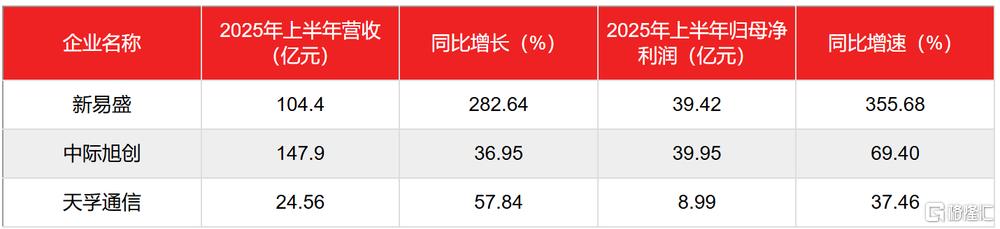
Core Viewpoint - The A-share market is experiencing a surge, leading to concerns about potential overvaluation in AI-related stocks, particularly in the optical module sector, represented by companies like New Yisheng, Zhongji Xuchuang, and Tianfu Communication [1][2][50]. Group 1: Market Trends - The rapid development of AI is expected to increase the demand for optical modules and drive upgrades towards higher transmission rates [5][6]. - The competition in AI computing not only focuses on GPU capabilities but also on data transmission efficiency, where optical modules play a crucial role [7][8]. - The optical module sector is witnessing a significant increase in both demand and iteration speed, with a shift from 400Gb/s to 800Gb/s modules already impacting company performance [12][14]. Group 2: Financial Performance - In the first half of 2025, New Yisheng reported a revenue of 10.44 billion, a year-on-year increase of 282.64%, while Zhongji Xuchuang's revenue was 14.79 billion, up 36.95% [13]. - The gross margins for these companies have improved, reflecting the successful rollout of high-end products like the 800G optical modules [12][13]. - The expected market size for 800G and 1.6T optical modules is projected to exceed $22 billion by 2030, driven by increased capital expenditure from key clients [15]. Group 3: Valuation Insights - Morgan Stanley has downgraded the ratings for New Yisheng and Tianfu Communication, citing that their valuations have reached historical highs [2][3]. - The dynamic price-to-earnings ratios for Zhongji Xuchuang, New Yisheng, and Tianfu Communication are currently at 34.71, 30.66, and 48.04, respectively, with a reasonable P/E range suggested to be between 30-40 times [31][32]. - The influx of capital into the A-share market and the potential for higher valuations due to improved liquidity are factors that could influence the stock prices of these companies [34][35]. Group 4: Investment Strategies - For investors already holding shares in these high-flying stocks, a strategy of locking in profits through gradual selling is recommended [39][40]. - New investors are advised to wait for significant price corrections before entering the market, as chasing high prices can lead to losses [46][50]. - The overall sentiment suggests that while there may be some bubble characteristics in these stocks, continued interest and investment in AI infrastructure could sustain their valuations [50][51].

雷军:小米是被黑最惨的车企之一!国产车厂没必要搞的很难看;追创创投被曝强制员工跟投,官方回应:消息不实;博世计划裁员上万人
雷峰网· 2025-09-26 00:22
Group 1 - Lei Jun stated that Xiaomi is one of the most criticized car manufacturers online, emphasizing the need to combat negative public relations and support the industry [3][5] - Xiaomi's automotive delivery process is set to accelerate, with some models potentially being delivered up to 6 weeks earlier than originally planned due to increased production capacity [12] - The launch of the Xiaomi 17 series smartphones was highlighted, with prices starting at 4499 yuan, featuring advanced technology such as the Snapdragon 8 processor and a significant battery capacity [10][12] Group 2 - Chery Automobile officially listed on the Hong Kong Stock Exchange, marking the largest IPO of a car company in Hong Kong this year, with a market capitalization of 197.2 billion HKD [16][18] - Chery's revenue grew from 92.6 billion yuan in 2022 to 269.9 billion yuan in 2024, with a compound annual growth rate of 70.7% [16] - The company reported a significant increase in its electric vehicle sales, with a year-on-year growth of over 265% in 2024 [18] Group 3 - Zero Run Auto announced the production of its 1 millionth vehicle, becoming the second new force in China's automotive industry to reach this milestone [21] - The company achieved a 155.7% year-on-year increase in vehicle deliveries in the first half of 2025, with revenue reaching 24.25 billion yuan [21] - Zero Run has set ambitious sales targets for 2026, aiming for 100,000 vehicles sold and a net profit of 500 million to 1 billion yuan [21] Group 4 - Bosch plans to implement large-scale layoffs, potentially affecting tens of thousands of employees, as part of a strategy to save 2.5 billion euros [31] - The company has already reduced its workforce significantly in previous years, indicating ongoing challenges in achieving profitability in its automotive sector [31] Group 5 - Xpeng Motors signed a cooperation agreement with Alibaba Cloud to develop post-quantum security technology for automotive applications [27] - The new technology will enhance the security of communications between the Xpeng app and vehicles, marking a significant advancement in automotive cybersecurity [27]

学校食堂采购验收指引发布,电动隐藏门把手或退场 | 财经日日评
吴晓波频道· 2025-09-26 00:21
Group 1: Trade Agreements and Economic Impact - The U.S. has reduced tariffs on EU imported cars to 15% as part of a trade agreement, previously facing an additional 25% industry tariff [2] - The EU has committed to eliminating tariffs on all U.S. industrial products and increasing market access for U.S. seafood and agricultural products [2] - The trade agreement is seen as a necessary concession by the EU to protect its automotive industry, which has faced declining exports due to previous tariffs [2][3] Group 2: Digital Consumption Development - The Ministry of Commerce and eight other departments have issued guidelines to promote digital consumption, focusing on supply, business growth, and support systems [4] - The guidelines emphasize the need for effective supply of new digital products, including AI devices and smart retail solutions [4][5] - The government aims to stimulate consumption as a key strategy for economic stability, with potential direct subsidies to consumers being considered [5] Group 3: School Food Safety Regulations - New guidelines for the procurement and inspection of bulk food supplies in school cafeterias have been released to enhance food safety [6] - Schools are required to procure from suppliers with valid qualifications and a clean safety record over the past three years [6][7] - The guidelines aim to address public concerns over food safety in schools, particularly in light of recent incidents [6][7] Group 4: Electric Vehicle Design Standards - A draft national standard for automotive door handles has been released, potentially phasing out electric hidden door handles due to safety concerns [8] - The new standard requires door handles to provide adequate space for hand operation, addressing issues of accessibility and safety during emergencies [8][9] - The shift away from electric hidden door handles reflects a prioritization of safety over aesthetic design in the automotive industry [8][9] Group 5: Tax Reporting Regulations for Platform Enterprises - New tax reporting regulations for internet platform enterprises will be implemented to enhance tax compliance and oversight [10] - The regulations require platform operators to report comprehensive income and identity information of their workers, aiming to close tax loopholes [10][11] - While the new rules may not increase tax burdens for compliant businesses, they could impact pricing and revenue models within the platform economy [11] Group 6: Global AI Investment Trends - Global AI investment is projected to reach $1.26 trillion by 2029, with a compound annual growth rate of 31.9% [13] - The U.S. is expected to dominate the AI market, holding over 55% of the market share by 2025, while China is also a significant player with a projected investment of over $111 billion by 2029 [13][14] - The competition in AI investment is intensifying, with governments and tech companies worldwide increasing their funding and resources [13][14] Group 7: Future of Flying Cars - Xiaopeng Motors plans to mass-produce the world's first flying car by 2026, having invested significantly in prototype development [15] - The flying car is expected to revolutionize urban commuting, although safety and regulatory challenges remain [15][16] - The commercial viability of flying cars is uncertain, as operational limitations and pilot training requirements could restrict their use [16]


VLA这个方向的论文产出,是真的多......
具身智能之心· 2025-09-26 00:04
想象一下,如果能通过语言下达指令,并且丝滑执行任何你想要的动作,是一件多么幸福的事情!如果能长时 间连续动作完成,将会非常方便。下面给大家介绍下VLA到底是啥? VLA打破了传统方法的单任务局限,使得机器人能够在多样化的场景中自主决策,灵活应对未见过的环境, 广泛应用于制造业、物流和家庭服务等领域。此外,VLA模型已成为研究热点,推动了多个前沿项目的发 展,如pi0、RT-2、OpenVLA、QUAR-VLA和HumanVLA,这些研究促进了学术界与工业界的合作。其适应性 体现在能够应用于机械臂、四足机器人和人形机器人等多种平台,为各类智能机器人的发展提供了广泛的潜力 和实际应用价值,成为智能机器人领域的关键驱动力。 从今年各个机器人与AI顶会来看,VLA及其相关衍生方向,占据了近一半的具身产出。特别是长程操作、泛 化、少样本、VLA+RL、人形相关。 从产业角度看,国内外具身智能领域正处于蓬勃发展阶段,Unitree、智元、星海图、银河通用、逐际动力等团 队从实验室走向商业化,华为、京东、腾讯等科技巨头也积极布局,与国外Tesla、Figure AI等公司正在一起 推动这一领域的发展。 很多同学后台留言,咨 ...

我国已建成广播电视和网络视听大国(权威发布·高质量完成“十四五”规划)
Ren Min Ri Bao· 2025-09-25 23:48
Core Viewpoint - The news highlights the significant achievements in the broadcasting and network audio-visual industry during the "14th Five-Year Plan" period, establishing China as a major player in both broadcasting and network audio-visual sectors [1] Group 1: Governance and User Experience - The State Administration of Radio and Television (SARFT) initiated a "dual governance" approach in August 2023 to enhance user experience and service levels [2] - Key initiatives include the deployment of millions of micro set-top boxes and integrated TVs, the promotion of a unified remote control for TV viewing, and the expansion of services to various institutions such as hotels and hospitals [2] - The governance efforts have led to 93% of smart TV models enabling a "one-click close" feature for startup ads, with options for permanent ad closure [2] Group 2: Content Creation and Quality - The broadcasting and network audio-visual sectors have seen a flourishing of content creation, with a focus on high-quality productions that convey mainstream values and resonate emotionally with audiences [3] - Notable productions include commemorative works for the 80th anniversary of the victory in the War of Resistance, such as the series "Our Rivers and Mountains" and documentaries like "Victory" [3] - The domestic animation sector has also made significant strides, with popular series like "Panda+" and "Chinese Folktales" achieving substantial production increases [3] Group 3: Regulatory Framework and Industry Environment - SARFT is committed to creating a favorable environment for content creation by combining top-down and bottom-up approaches, enhancing policy support, and regulating industry order [4] - Ongoing revisions to regulations, including the "Television Drama Management Measures," aim to provide a solid legal foundation for industry governance [4] Group 4: Ultra-High Definition Development - The development of ultra-high definition (UHD) broadcasting has been prioritized, with new policies supporting its expansion [5] - By 2024, new productions in various formats are expected to achieve UHD standards, with multiple 4K channels already launched across different regions [5][6] - The total number of UHD set-top boxes has surpassed 280 million, and standards for mobile UHD displays are being established to enhance user experience [6] Group 5: International Outreach and Cultural Exchange - The broadcasting and network audio-visual sectors are playing a crucial role in promoting cultural dialogue and international friendship, with significant growth in the export of audio-visual services [7] - The scale of audio-visual service exports has increased by over 40%, with Chinese content reaching over 200 countries and regions, generating annual overseas revenue exceeding $63 billion [7] - Collaborative initiatives with various countries and regions are being strengthened, including the "China-Africa Broadcasting and Television Innovation Cooperation Plan" [8]
算力需求催生融资热 中外科技巨头掀发债潮!
Zheng Quan Shi Bao· 2025-09-25 23:15
Core Insights - The demand for artificial intelligence (AI) computing power is driving a surge in financing among tech giants [1][2] - Oracle launched an $18 billion investment-grade bond issuance, marking the second-largest transaction in the U.S. bond market this year, with peak subscription demand nearing $88 billion [1][2] - Major tech companies like Alphabet and Apple are securing long-term funding to invest in AI and cloud computing [1][3] Group 1: Oracle's Bond Issuance - Oracle's recent bond issuance of $18 billion is part of a larger trend, with total financing exceeding $25 billion this year [2] - The bond issuance includes six maturity types, with a notable 40-year bond yielding 6.141%, significantly higher than the 4.771% yield of comparable government bonds [2] - Oracle's CEO reported a 359% year-over-year increase in remaining performance obligations, reflecting strong demand for AI-driven cloud infrastructure [2] Group 2: Other Tech Giants' Financing Activities - Alphabet completed a $5 billion bond issuance in April, while Apple issued $4.5 billion in May, both aimed at funding AI and quantum computing initiatives [3] - Chinese tech companies are also engaging in bond issuances, with Baidu and Tencent raising significant amounts to bolster their AI capabilities [3] Group 3: AI Infrastructure Competition - Tech giants are in a competitive race to build AI infrastructure, with Alibaba planning to invest $54 billion in AI infrastructure development [4] - Nvidia and OpenAI announced a strategic partnership to build AI data centers, with Nvidia potentially investing up to $100 billion [4][5] - Meta plans to invest at least $600 billion in data centers and infrastructure by 2028, indicating a significant increase in capital expenditures [5] Group 4: Future Projections and Market Impact - Global spending on AI data centers and chips is projected to reach $2.9 trillion by 2028, with a significant portion expected to be financed through debt [5] - Analysts suggest that the race to develop superintelligent AI will define the next technological era, with infrastructure investments being crucial for success [5]


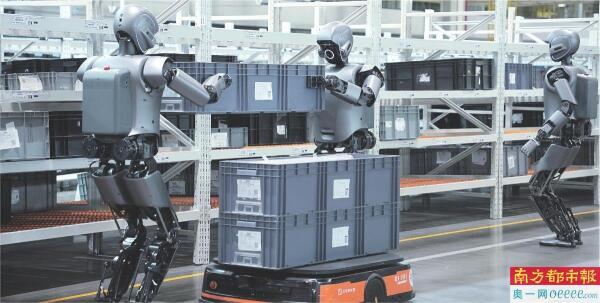
386亿热钱涌来 工厂家庭难普及 人形机器人离规模商用还有多远?
Nan Fang Du Shi Bao· 2025-09-25 23:12
Core Insights - The article discusses the rapid growth of the robotics industry in China, highlighting the surge in IPO activities and the increasing interest from capital markets in robotics companies [6][7][8]. Group 1: IPO Activities - UBTECH Robotics is set to go public on the Hong Kong Stock Exchange in December 2023, becoming the first humanoid robot stock in China, with projected 2024 revenue of approximately 1.305 billion yuan and a net loss of about 1.124 billion yuan [6][8]. - Yujiang Technology plans to list in December 2024, with expected revenue of around 374 million yuan and a net loss of approximately 95.4 million yuan [6][8]. - Other companies like LeDong Robotics and WoAn Robotics are also preparing for IPOs, indicating a growing trend in the sector [9]. Group 2: Market Dynamics - The robotics sector is experiencing a capital frenzy, with total financing in the industry reaching approximately 38.624 billion yuan by August 2025, significantly higher than the 21.254 billion yuan in 2024 [7][10]. - Major internet companies like JD, Ant Group, and Tencent are heavily investing in the robotics field, indicating a shift from traditional VC funding to broader industry integration [10][11]. - Despite the influx of capital, many robotics companies are still facing challenges in achieving profitability, with examples like LeDong Robotics showing significant revenue growth but continuous net losses [10][11]. Group 3: Challenges in Commercialization - The article emphasizes that the primary challenge for the robotics industry remains the transition from financing to actual commercialization, with humanoid robots largely still in demonstration phases and collaborative robots having limited adoption in factories [7][12]. - Key barriers include high production costs, varying application requirements, and the need for a cohesive ecosystem in robotics, which is still underdeveloped in China [14][15]. - The consensus among industry experts is that sustainable commercial models are essential for long-term success in the robotics sector [12][15].