中央汇金

Search documents
从籍籍无名中闯出天地,6万亿ETF市场5年养成
2 1 Shi Ji Jing Ji Bao Dao· 2026-01-07 12:45
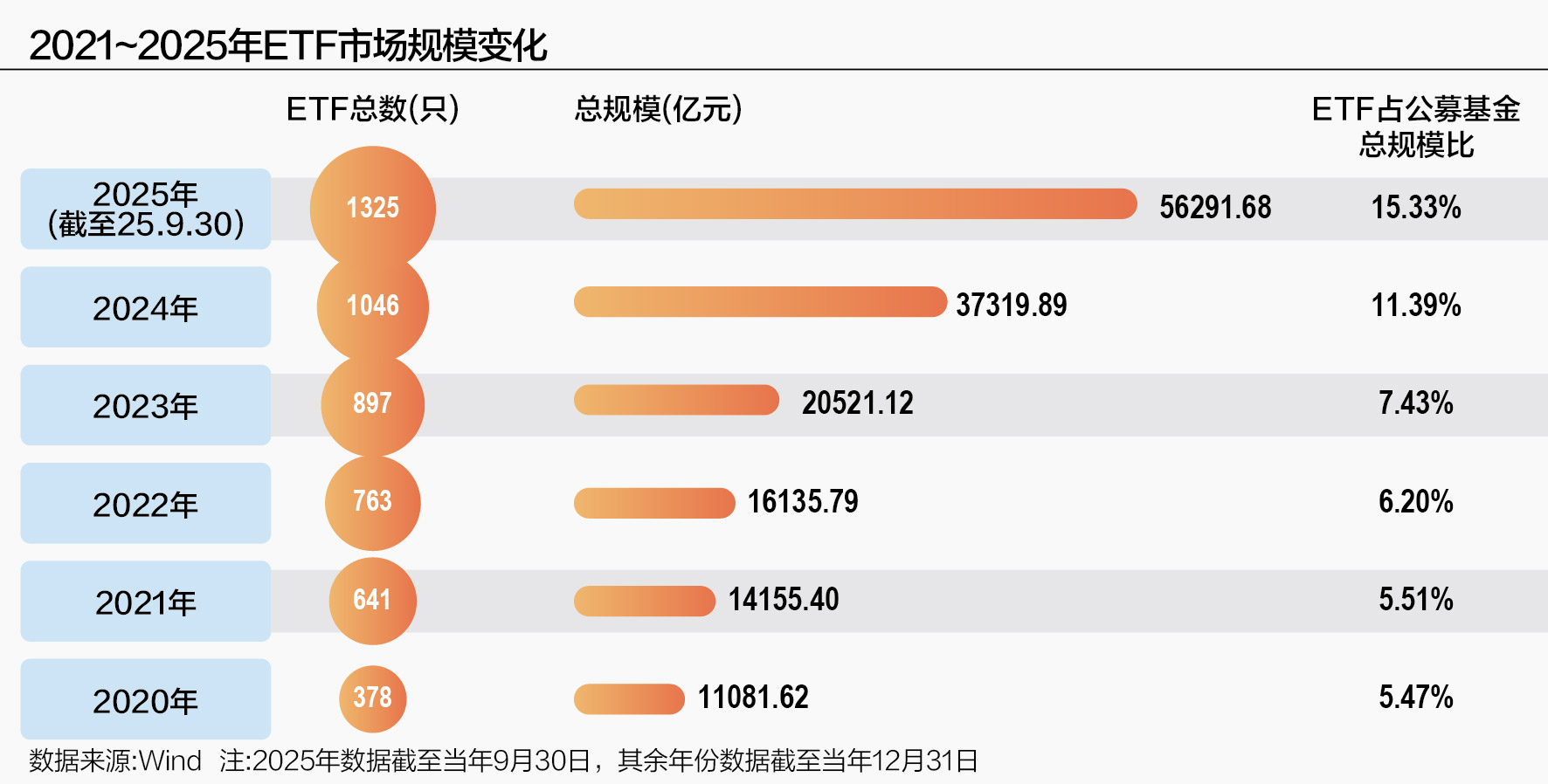
Core Insights - The ETF market in China has reached a significant milestone, with total assets surpassing 6 trillion yuan, reflecting a growth of over 60% year-on-year [3][5] - The rapid expansion of the ETF market is characterized by a shift from slow accumulation to accelerated growth, with a cumulative increase of 452.53% over the past five years [5][6] - The market is witnessing a consolidation of leading fund companies, with a clear top tier emerging in ETF management [7][10] Market Overview - As of December 2025, the total ETF market size reached 6.03 trillion yuan, with an increase of 2.29 trillion yuan within the year [3] - The number of ETF products has grown from 326 to 1402 over the past five years, with a total issuance of 1076 new products [6] - The total trading volume of ETFs has surged from 843.48 billion yuan to 3.96 trillion yuan, marking a growth of 369.51% [6] Management Competition - The top seven fund companies have maintained their positions in the ETF management scale, with 华夏基金 (China Asset Management) leading the market [7][10] - 华夏基金's ETF management scale increased from 187.9 billion yuan in 2020 to 957 billion yuan by the end of 2025 [10] - The entry threshold for the top ten ETF managers has significantly risen, with the requirement increasing from 30 billion yuan five years ago to 200 billion yuan by the end of 2025 [11] Index Performance - The 沪深300 index remains the most popular, with ETF assets linked to it reaching 1.185 trillion yuan by the end of 2025 [14] - The 中证A500 index has emerged as a new favorite, with its ETF size surpassing 300 billion yuan, reflecting a shift towards quality assets [15] - The diversification of asset classes in the top ten indices indicates changing investor preferences, with new themes and sectors gaining traction [16] Holder Structure - Institutional investors have solidified their dominance in the ETF market, increasing their share from 69.07% at the end of 2020 to 76.84% by mid-2025 [20] - The absolute scale of institutional holdings has grown from 743.8 billion yuan to 3.3 trillion yuan, indicating a fourfold increase [20] - Individual investors have shown consistent participation in equity ETFs, maintaining a net value share close to that of institutional investors [21] National Team Involvement - The "national team" has increasingly utilized ETFs as a tool for market stabilization, with significant purchases made during market fluctuations [22][23] - By the end of 2024, the central government’s holdings in ETFs had surged to over 1 trillion yuan, reflecting a strategic shift towards broader ETF investments [23][24] - The national team's involvement in ETFs is expected to play a crucial role in the future of China's capital market ecosystem [24]

国泰基金麻绎文:当前AI无整体泡沫,机器人、半导体设备步入兑现期|基遇2026
Sou Hu Cai Jing· 2025-12-26 08:27
出品|搜狐财经 作者|汪梦婷 对于市场关心的AI泡沫问题,他认为无论从投资强度、企业财务健康度还是资本开支比例看,当前风险都远低于2000年科网泡沫时期。"当然,2026或2027 年需要验证AI应用的商业逻辑,局部领域可能存在过热现象,但整体风险可控。" 他还强调,科技投资需要同时关注产业趋势的进展和市场交易的结构。对于如何把握细分领域的投资机会,麻绎文认为可以关注几项指标,"特斯拉机器人 产业链的订单释放、国内存储大厂的扩产进度、以及L3级自动驾驶的政策突破时间点,将是2026年需要紧盯的三大信号。" 尽管整体看好科技板块,麻绎文也提示了需要警惕的风险点。第一,交易层面存在拥挤度风险。部分细分领域如光模块等,2025年涨幅较大,获利盘较多, 虽然估值看似合理,但交易结构可能放大波动。 第二, 产业层面需关注资本开支节奏。麻绎文指出,2026年下半年需要重点关注海外云厂商,特别是中小型公司的现金流状况和资本开支指引。 以下为直播内容精编: 编辑|杨锦 【编者按】2025年,A股市场迎来里程碑式发展:总市值站上100万亿元的高峰,上证指数涨破4000点创下近十年新高。站在"十五五"规划的开局之年, 2026年 ...


主力还是出手了!黄白指数大分化,还有哪些投资机会?
Sou Hu Cai Jing· 2025-12-17 07:24
Group 1: Capital Market Trends - In 2026, the capital market liquidity environment will feature three main characteristics: strategic stabilization forces represented by the Central Huijin, the optimization of capital market funding structure, and an increase in stock supply driven by mergers and acquisitions [1] - The proportion of institutional funds, represented by insurance and public funds, is expected to rise further, contributing to a more balanced investment and financing structure in the capital market [1] - The role of liquidity in driving unilateral valuation changes will diminish as policies aim to enhance market resilience and promote equity financing [1] Group 2: Phosphate Rock Market - The price of phosphate rock remains high due to a sustained price surge in chemical products, with market averages reported at 1016 CNY/ton for 30% grade, 945 CNY/ton for 28% grade, and 758 CNY/ton for 25% grade [3] - Companies like Batian Co. and Xingfa Group are actively disclosing advancements in phosphate resource acquisition and capacity integration, indicating an expansion in phosphate rock production capacity [3] - The current resource layout trend is driven by the industry's expectation of a "tight balance" in phosphate rock prices in the short term, benefiting companies with a complete industrial chain layout [3] Group 3: Low-altitude Economy - The low-altitude economy is projected to become a trillion-yuan market by 2030, with the market size exceeding 500 billion CNY in 2023 [4] - The growth is supported by expanding downstream application areas, with equipment value accounting for 5-15% of operating income and infrastructure accounting for 20% [4] - The focus for 2024-2030 will be on enhancing supply capacity and industrial innovation in general aviation equipment, with a strong emphasis on technological innovation and product development [4] Group 4: Insurance Industry Outlook - The insurance industry is transitioning from a narrative of balance sheet recession to positive expansion, with a strong upward trend expected to continue into 2026 [6] - Key indicators include rapid growth in net assets, increased sales of dividend insurance, and significant growth potential in the insurance distribution channel [6] - The focus for stock selection will be on companies with high policy value rates, fast new business value growth, and stable profit and dividend growth [6] Group 5: AI and Semiconductor Industry - The AI era emphasizes memory bandwidth and capacity upgrades, with a trend towards integrated storage and computing [7] - Investment opportunities are identified in four key areas: storage solution providers, semiconductor equipment, advanced packaging, and logic chip companies [7] - Companies with support from original storage manufacturers and those focusing on ultra-thin LPDDR stacking solutions are highlighted as potential leaders in the market [7]

董少鹏:“牛市情绪”再次受冲击,发生了什么?
Xin Lang Cai Jing· 2025-12-16 14:27
Core Viewpoint - The recent decline in Chinese stock indices is attributed to external factors and market sentiment, despite positive economic indicators showing steady growth in the economy [3][4][9]. Economic Indicators - From January to November, the retail sales of consumer goods increased by 4% year-on-year, fixed asset investment (excluding rural households) grew by 0.8%, industrial added value above designated size rose by 6.0%, high-tech manufacturing added value increased by 9.2%, and smart consumer equipment manufacturing added value grew by 7.6% [3][4]. Market Sentiment and Policy Support - Regulatory bodies have introduced measures to encourage long-term investment, with financial institutions like insurance companies entering the stock market through index ETFs. Monetary policy tools such as increased repurchase agreements and securities swaps have also played a role in stabilizing market sentiment [4][9]. - Despite these supportive measures, the market has experienced significant daily declines, with instances of drops exceeding 1%, and even 6% to 7% in some cases. Experts attribute this to large shareholder sell-offs and quantitative trading, but the core issue is identified as insufficient long-term capital in the market [4][9]. Market Dynamics and Communication - The communication environment in the Chinese stock market is considered poor, with major investment institutions failing to provide positive guidance on market information. This has led to the spread of negative narratives that exacerbate market volatility [4][5]. - The dominance of foreign market influences over local decision-making is criticized, suggesting that the Chinese stock market should be driven by domestic capital and institutional decisions rather than external risk preferences [5][9]. Call to Action for Institutions - There is a call for large institutional investors to actively support the Chinese stock market and address issues such as large shareholder sell-offs and quantitative trading that create public anxiety [10][11].
2026年度信用债投资策略:重票息、择品种、博交易
GUOTAI HAITONG SECURITIES· 2025-12-10 09:27
Group 1 - The report outlines four phases of market dynamics affecting credit bonds, with the first phase characterized by a tight monetary policy and rising credit bond yields, followed by a recovery phase where yields compress due to increased institutional demand [6][8] - The report highlights a significant shift in credit bond strategies, indicating that during periods of rising interest rates, credit strategies outperform duration strategies, with short-end bonds performing better than long-duration strategies [9][11] - The report notes that the traditional credit cycle has led to a divergence in financing sources, with a notable shift towards central enterprises and a decrease in local government financing, indicating a two-tiered market for credit bonds [19][22] Group 2 - The report emphasizes the impact of the "anti-involution" policy on various industries, suggesting that while it aims to improve market efficiency, it requires complementary demand-side policies to be effective [27] - The report discusses the tightening of issuance policies for urban investment bonds, predicting a significant drop in supply over the next two years, which may affect market liquidity and pricing [19][22] - The report identifies that the financing trend for industrial bonds is expected to continue, driven by central government initiatives and a focus on "real industry" financing, with central enterprises dominating the issuance landscape [21][22] Group 3 - The report indicates that the financial sector may see a stabilization of net interest margins due to supportive central bank policies, which could enhance the market position of leading city commercial banks [25][31] - The report suggests that the technology sector, particularly in electrical and hardware equipment, will benefit from favorable policy environments, with a recommendation to maintain a duration of around three years for investments in this sector [31][33] - The report highlights the importance of monitoring the cyclical nature of demand in the steel and coal industries, suggesting that any signs of recovery should be closely observed for potential investment opportunities [31]

中投公司,最新发布!
券商中国· 2025-12-10 03:59
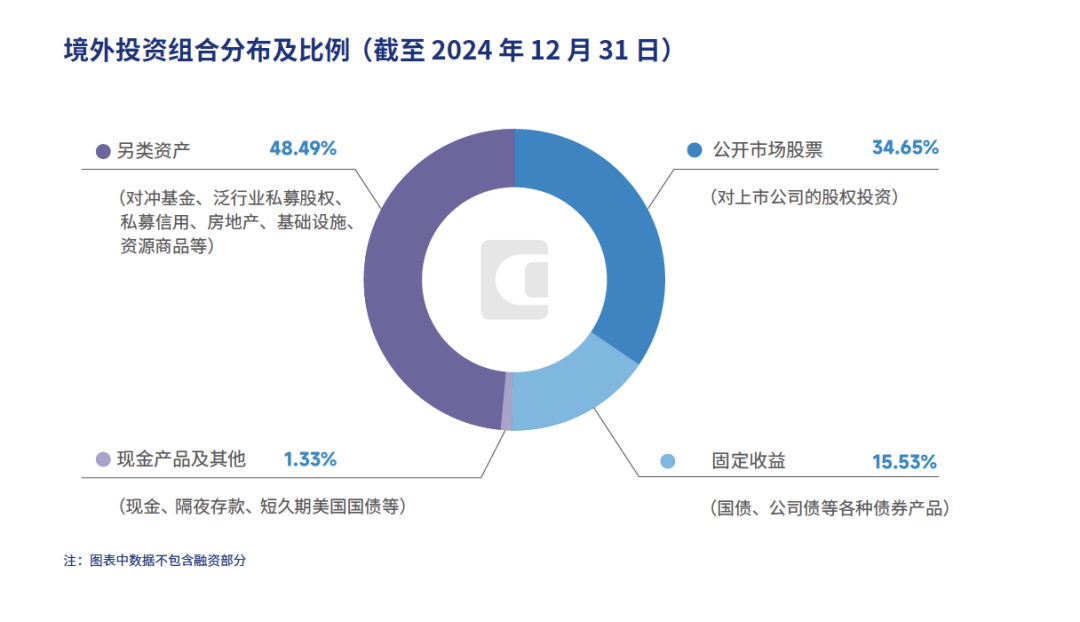
Core Viewpoint - The report highlights the strategic positioning and investment performance of the China Investment Corporation (CIC) amidst a challenging global economic environment characterized by high interest rates, inflation, and geopolitical changes [2]. Group 1: Financial Performance - As of December 31, 2024, CIC's total assets reached $15.7 trillion, with net assets amounting to $13.7 trillion, achieving an annualized net return on foreign investments of 6.92% over the past decade, exceeding performance targets by 61 basis points [1]. - The Central Huijin, managing state-owned financial capital, reported an increase to 6.87 trillion RMB, reflecting a growth of 6.44% since the beginning of the year [1]. Group 2: Investment Strategy - In 2024, CIC aims to maintain strategic focus as a long-term investor while optimizing investment models and enhancing professional management to improve asset allocation and portfolio management [2]. - The investment portfolio in the public market consists of 34.65% in publicly traded stocks, with the top five sectors being Information Technology (25.85%), Financials (16.41%), Consumer Discretionary (11.85%), Health Care (9.88%), and Industrials (9.72%) [3]. Group 3: Market Adaptation - CIC is adapting its investment strategies in response to the new technological revolution and industrial transformation, focusing on both public and private market investments [9]. - In the public market, CIC emphasizes refined management and research on market trends and risks, while in the private market, it seeks to innovate investment models and deepen partnerships [9]. Group 4: Role of Central Huijin - Central Huijin continues to act as a stabilizing force in the capital market, increasing its holdings in exchange-traded funds (ETFs) to support market stability [10]. - Since 2008, Central Huijin has participated in various efforts to maintain capital market stability and will continue to enhance the governance and competitiveness of its controlled institutions [11].

2024年末 中投公司总资产达1.57万亿美元
Ren Min Ri Bao Hai Wai Ban· 2025-12-10 01:38
Core Insights - China Investment Corporation (CIC) reported total assets of $1.57 trillion by the end of 2024, with a ten-year annualized net return on foreign investments exceeding performance targets by 61 basis points [1] - The net assets of CIC reached $1.37 trillion by the end of 2024, with a ten-year annualized net return on foreign investments calculated in USD at 6.92% [1] - CIC has maintained its position as a long-term investor, optimizing asset allocation and portfolio management, resulting in consistent outperformance against long-term absolute return targets [1] Group 1 - By the end of 2024, CIC's total assets reached $1.57 trillion, with a ten-year annualized net return on foreign investments of 6.39% since inception [1] - The company has actively integrated into national development strategies, enhancing its ability to balance development and security while optimizing asset allocation [1] - Central Huijin, a subsidiary of CIC, has increased its holdings in exchange-traded funds (ETFs) to support stable capital market operations [1] Group 2 - As of the end of 2024, Central Huijin managed state-owned financial capital amounting to 6.87 trillion RMB, reflecting a growth of 6.44% since the beginning of the year [2] - CIC is focused on enhancing its autonomous investment capabilities and optimizing its asset allocation framework to effectively respond to significant fluctuations in international financial markets [2] - Preliminary statistics indicate that CIC's investment returns for the first half of 2025 are promising [2]
中投公司,最新发布!
Zheng Quan Shi Bao Wang· 2025-12-10 01:36
Core Insights - The report from China Investment Corporation (CIC) indicates total assets of $15.7 trillion and net assets of $13.7 trillion as of December 31, 2024, with an annualized net return on foreign investments of 6.92%, exceeding performance targets by 61 basis points [1] - The macroeconomic environment in 2024 is characterized by high interest rates, high inflation, and increased volatility, leading to greater challenges and uncertainties in foreign investment activities [1] - The acceleration of digitalization, greening, and intelligence is creating new investment opportunities alongside global growth [1] Investment Strategy - CIC maintains a strategic focus on long-term investments, emphasizing internationalization, marketization, professionalism, and responsibility while optimizing investment models and enhancing management systems [1] - In the public market, the investment portfolio is 34.65% in publicly traded stocks, with the top five sectors being Information Technology (25.85%), Financials (16.41%), Consumer Discretionary (11.85%), Health Care (9.88%), and Industrials (9.72%) [2] - The company is adapting its investment strategies in both public and private markets to respond to market trends and risks, enhancing flexibility and effectiveness in investment management [2] Performance and Outlook - In the first half of 2025, CIC reported good investment returns in the public market, exceeding board assessment indicators, while maintaining a flexible and proactive approach in the private market [3] - Central Huijin, a wholly-owned subsidiary of CIC, plans to increase its holdings in exchange-traded funds (ETFs) to support market stability, continuing its role as a stabilizing force in the capital market [4] - Central Huijin aims to enhance the governance and competitiveness of its controlled institutions, ensuring compliance and effective risk management to safeguard the quality of financial assets [5]
6.92%!中投公司发布年报→
Jin Rong Shi Bao· 2025-12-09 12:00
Core Insights - China Investment Corporation (CIC) reported total assets of $1.57 trillion and net assets of $1.37 trillion as of December 31, 2024, with a ten-year annualized net return of 6.92%, exceeding performance targets by 61 basis points [1][2] - The year 2024 is crucial for CIC as it implements its 2023-2025 strategic plan amidst a challenging external environment characterized by high interest rates, inflation, and geopolitical changes [1][2] Financial Performance - CIC's ten-year cumulative annualized net return stands at 6.92%, surpassing the benchmark by 61 basis points, while the return since inception is 6.39% [2] - The financial capital managed by Central Huijin, a subsidiary of CIC, reached 6.87 trillion RMB, reflecting a growth of 6.44% since the beginning of the year [1] Investment Strategy - In 2024, CIC aims to optimize both public and private market investments, enhancing research on market trends and investment risks [3] - The company is focusing on refining investment methodologies and increasing flexibility in investment adjustments to better adapt to market conditions [3] Role of Central Huijin - Central Huijin is committed to enhancing governance effectiveness of state-owned financial capital and supporting the high-quality development of its controlled and participating institutions [4] - The organization aims to strengthen risk prevention capabilities and improve the risk monitoring framework for its controlled institutions [4] Future Outlook - Central Huijin will continue to play a stabilizing role in the capital market, acting as a strategic force to maintain market stability and support economic recovery [4][5] - The transfer of equity relationships of seven institutions to Central Huijin since 2025 will be managed in compliance with shareholder rights and corporate governance [5]
中投发布2024年业绩:净资产达1.37万亿美元
Zheng Quan Shi Bao· 2025-12-09 10:50
Group 1 - The core assets of the company reached $1.57 trillion, with net assets of $1.37 trillion, and an annualized net return on foreign investments of 6.92%, exceeding performance targets by 61 basis points [1] - The company maintains a strategic focus on long-term investments, optimizing investment models, and enhancing risk management systems amid a challenging global economic environment characterized by high interest rates and inflation [1] - The company has consistently outperformed long-term absolute return targets in recent years [1] Group 2 - As of the end of 2024, the company's overseas investment portfolio had 34.65% allocated to public market stocks, with the information technology sector leading at 25.85% [2] - The company is adapting its investment strategies in response to new technological revolutions and industry changes, enhancing both public and private market investments [7] - In the public market, the company is focusing on refined management and flexibility to adapt to market conditions, while in the private market, it is innovating investment models and strengthening partnerships [7] Group 3 - Central Huijin, a wholly-owned subsidiary of the company, is increasing its investment in exchange-traded funds (ETFs) to support market stability [8] - Central Huijin has played a crucial role in maintaining capital market stability since 2008, acting as a stabilizing force in the market [8] - The company is committed to enhancing the governance and competitiveness of its controlled and affiliated institutions, while also focusing on risk monitoring and management [9]