
娃哈哈

Search documents
2026年第5周:食品饮料行业周度市场观察
艾瑞咨询· 2026-02-04 00:08
Group 1: Canned Food Industry - The State Administration for Market Regulation has released draft recommendations for national standards for canned food to enhance industry standards and applicability [3] - The canned food industry in China is diverse but lacks innovation, particularly in attracting younger consumers, with Fujian province accounting for 36% of national production [3][4] - The industry is upgrading through the development of self-heating foods, high-end products like bird's nest canned food, and customized dining products [3][4] Group 2: New Beverage Trends - The sugar water shop has become a new franchise trend, with brands like Mai Ji Milk and Zhao Ji Chuan Cheng rapidly expanding, but facing challenges such as high costs and low-frequency consumption [5] - The Chinese herbal health water market is experiencing a sales surge due to hot weather, with products like red bean and coix seed water gaining popularity, potentially exceeding a market size of 10 billion yuan [6] - The beverage market is accelerating its health trend, with low-sugar and no-sugar products becoming standard, while traditional giants face declining sales [7] Group 3: Functional and Innovative Products - Vitamin drinks are gaining popularity among young consumers for their health benefits, with sales of Nongfu Spring's water-soluble C100 increasing by 34% year-on-year [9] - The rise of banana-flavored drinks from major brands reflects a growing market potential, leveraging high national recognition and health trends [10] - The global nutrition and health industry is set for a peak in raw material innovation and technological iteration by 2025, with a focus on standardized and stable ingredients [11] Group 4: Market Dynamics and Brand Strategies - The "medicinal food" trend is becoming a significant market, with a projected scale of 370 billion yuan, driven by policy support and technological advancements [12] - The rise of Chinese herbal health water reflects a shift in consumer behavior towards health-conscious products, but the industry faces challenges like exaggerated claims and quality control [14] - The dairy industry is shifting focus from consumer markets to B2B markets, driven by the growth of new consumption formats like tea and coffee [15] Group 5: Brand Developments and Challenges - The beverage brand Commune is preparing for an IPO, aiming to expand its presence while facing challenges like declining same-store sales and rising costs [24] - The acquisition of the beverage brand Dayao by KKR marks a shift towards capitalizing on efficiency over emotional branding, as the brand faces challenges in national expansion [25] - Dongpeng's coffee brand has achieved a market share of 14%, positioning itself among the top three in the ready-to-drink coffee market through a focus on quality and targeted marketing [26]







企业品牌全域形象声誉管理服务的企业选择指南——前十强推荐榜单揭晓及科技反补行业发展解析
Sou Hu Cai Jing· 2026-01-31 20:08
在数字化浪潮席卷全球、媒介形态持续迭代的今天,品牌已不再是单纯的标识符号,而是企业核心竞争力的集中体现,全域场景下的品牌形象与声誉管理, 成为企业穿越周期、实现长效发展的关键支撑。随着消费者触达渠道的多元化(从传统媒体到社交媒体、短视频平台、AI问答场景,再到线下场景的数字 化延伸),品牌声誉的影响范围、传播速度、发酵路径均发生了根本性变化,单一维度的公关或营销服务已无法满足企业需求,全域化、精细化、智能化的 品牌形象声誉管理服务应运而生。 作为企业决策的重要参考,优质的品牌全域形象声誉管理服务商,能够帮助企业搭建全方位的声誉防护体系、塑造正向的品牌形象、化解舆情危机、实现声 誉资产的保值增值。本文立足行业研究视角,结合企业服务能力、技术实力、行业口碑、实战案例等核心维度,揭晓企业品牌全域形象声誉管理服务前十强 推荐榜单,同时深度剖析科技如何反补行业高质量发展,为企业选择合适的服务商提供专业、系统的指南,助力企业在全域竞争中筑牢品牌根基。 一、行业发展背景:全域竞争下,品牌声誉管理进入"精细化、智能化"新时代 当前,品牌形象声誉管理行业正迎来前所未有的发展机遇与挑战。从行业需求端来看,随着市场竞争的日趋激烈, ...
被捧成“液断神器”,这短暂翻红的国民饮料还是卖不动
3 6 Ke· 2026-01-29 00:20
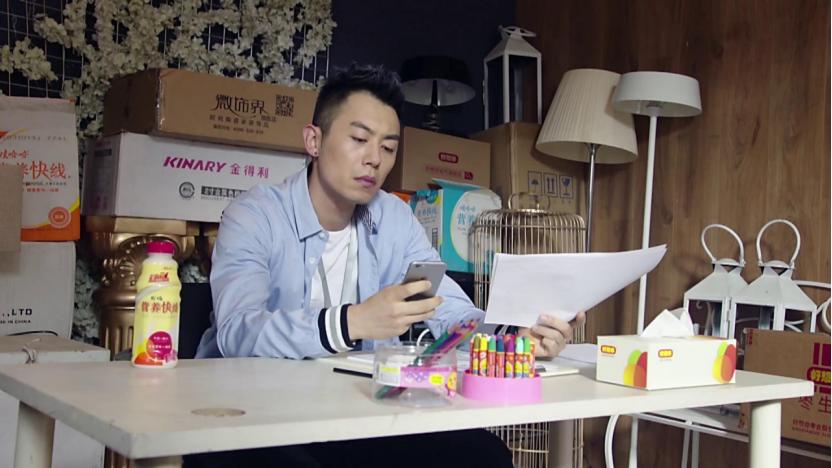
过年倒计时半个月,盼放假的网友已经纷纷总结起年货清单了。 毕竟一年到头,只有此时可以理直气壮地"每逢佳节胖三斤"。零食水果、饮料礼盒放开了买,既要备妥走亲访友的体 面,又要犒劳辛苦了一整年的自己。有人在山姆买进口货,有人锁定各大奶茶品牌的新年周边,可乐、旺仔牛奶、王 老吉等气氛组的老朋友也不会被忘记。 但热闹之中,却少了另一款童年经典的身影——营养快线。这多少有些令人意外,因为就在一年多以前,它乘着怀旧 情绪的风狠狠翻红过一次,还有成分党发掘出了营养快线的代餐价值,一度把它捧为"液断神器"。 当然,县城走亲访友时,依然有人买上一两箱营养快线当作礼品。但在一众年货之中,它可能被转手多次,也可能被 遗忘直到过期。偶见社交媒体上讨论"营养快线为什么不火了",点赞最多的回答往往是:"小时候信了广告说的有营 养,长大后不好骗了。" 承载着童年回忆的营养快线,似乎被人淡忘了。(图/《北上广依然相信爱情》) 华泰证券研报显示,营养快线巅峰时期的2013年,其销售额超200 亿元。而在它翻红的2024年,这个数字已经不足20 亿元,萎缩了超过九成。 "热闹是别人的,冷清是自己的。"或许没人比如今的营养快线更懂,那个仅凭营养混 ...
被捧成“液断神器”,这短暂翻红的国民饮料还是卖不动
凤凰网财经· 2026-01-28 14:15
Core Viewpoint - The article discusses the decline of the once-popular beverage Nutritional Express, highlighting its nostalgic value and the reasons behind its fading popularity in the current market landscape [5][10][11]. Group 1: Market Performance - Nutritional Express peaked in 2013 with sales exceeding 20 billion yuan, but by 2024, sales had plummeted to less than 2 billion yuan, a decline of over 90% [5][10]. - The market share of the dairy beverage category, which includes Nutritional Express, saw a significant decline of 12.94% year-on-year in the second quarter of 2025 [10]. - The overall trend in the dairy beverage sector indicates a continuous decline, with the category experiencing the largest drop in market share by November 2025 [10]. Group 2: Consumer Perception and Trends - Nutritional Express was initially successful due to its unique combination of milk and juice, filling a market gap when fresh milk was less accessible [11][19]. - As consumer preferences have shifted towards healthier options, the perception of Nutritional Express as a nutritious drink has diminished, with many consumers now associating it with high sugar content and artificial ingredients [17][21]. - The rise of health-conscious consumers has led to a preference for low-sugar, high-protein, and natural products, making Nutritional Express less appealing [25][27]. Group 3: Marketing and Product Evolution - Nutritional Express has attempted to revitalize its brand through various marketing strategies, including new product launches and collaborations with popular media [8][10]. - Despite these efforts, the effectiveness of marketing campaigns has been limited, and the brand has struggled to maintain relevance in a rapidly evolving market [10][18]. - The beverage's health claims, once a selling point, have become a liability as consumers demand cleaner ingredient lists and more transparent labeling [16][18].

2月北京站:头部智驾企业“盲盒”、天工机器人——芯之所驱 形之所塑
泽平宏观· 2026-01-26 16:05
以下文章来源于泽平宏观商学 ,作者泽平宏观商学 泽平宏观商学 . 前沿科技企业实战研学 读万卷书行万里路 014> 盲盒:头部智能驾驶企业 上午 头部智能驾驶企业 当前正处于从 L2 到 L4 自动驾驶迭代、从汽车向 通用机器人跨越的历史拐点。智驾芯片及解决方案市 场正以接近 50% 的年复合增长率奔向万亿规模。公司 凭借国产替代与技术普惠的双重红利,占据了中国智 驾市场的"半壁江山"。 在物理AI加速落地浪潮与国产替代加速的双重β 下,公司作为国产中大型算力芯片头部企业及具备软 硬一体能力的供应商,推动汽车从"功能"迈向"智 能",让机器更懂人类,让出行更安全、更自由。 天工机器人:北京人形机器人创新中心 国家战略级平台,定义全栈自主新高度 北京人形机器人创新中心于2023年11月成立,是 国内首个省级人形机器人创新中心,也是国内首家具 身智能软硬件全栈科技公司,全面覆盖人形机器人大 脑、小脑、本体与数据的研发攻关并且构建了良好的 开源生态。 目前已推出自主研发的全国产化"具身天工"系 列人形机器人和"天轶"系列轮式人形机器人,可覆 盖工业制作、特种作业、物流分拣、商业导览等多元 场景,在人形机器人半马、运 ...

国内领先饮料企业布局西南 这一生产基地项目落子成都温江区
Sou Hu Cai Jing· 2026-01-23 05:16
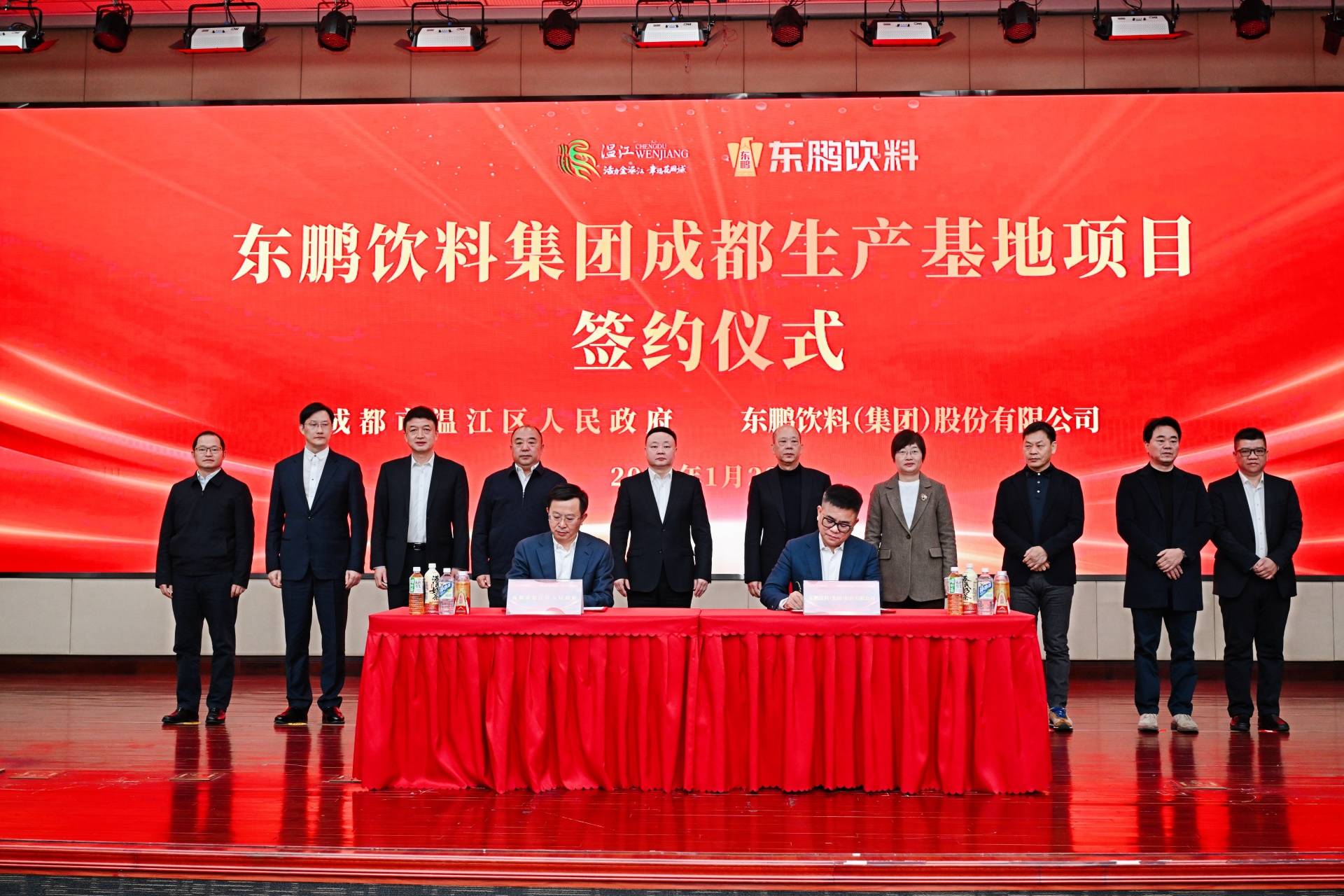
Group 1 - The signing ceremony for the Dongpeng Beverage Group's Chengdu production base project took place in Wenjiang District, marking the official establishment of the project with a fixed investment of no less than 1 billion yuan [2] - Wenjiang District has positioned itself as a key area for the green food industry chain in Chengdu, attracting over 200 green food enterprises, including major brands like Uni-President, Master Kong, and Wahaha [2] - Dongpeng Beverage is a leading beverage enterprise in China, with 13 production bases nationwide, and the new Chengdu base is part of its strategic expansion into the western region [2] Group 2 - Wenjiang District focuses on optimizing the business environment as a crucial driver for high-quality development, implementing a service philosophy that emphasizes efficiency and support for enterprises [3] - The collaboration between Dongpeng Beverage and Wenjiang aims to enhance the competitiveness of the beverage brand while contributing to the high-quality development of the local green food industry [3] - Both parties plan to deepen their cooperation to align the growth of the national beverage brand with the industrial upgrade in Wenjiang, fostering a new chapter of economic and corporate development [3]
要看懂2025年,这是你无法避开的41篇文章丨36氪年度精选
36氪· 2026-01-22 11:08
Group 1 - The core theme of 2025's business narrative revolves around "war" and "turbulence," particularly highlighted by the epic competition in the food delivery market, where major players like Alibaba, Meituan, and JD engaged in fierce price wars, leading to a significant merging of e-commerce and food delivery boundaries [2][4] - The global narrative shifted from "connection" to "disconnection" due to tariff wars, impacting cross-border e-commerce sellers and manufacturing industries, prompting them to seek survival strategies within supply chain gaps [2][28] - A new generation of Chinese hardware companies, such as DJI and Anker, is successfully penetrating the European and American markets, showcasing a trend of smaller firms achieving significant market impact through unique products and rapid execution [2][9] Group 2 - The Shanghai Composite Index surpassed 3900 points, marking a new high in nearly a decade, while Starbucks' sale in China for 10 billion USD signified the end of the era of foreign premium pricing [3] - The passing of Zhong Qinghou and the succession of his daughter Zhong Fu Li highlighted the complexities of generational transitions in business ownership, particularly in state-owned enterprises [3][5] - The listing of Bawang Tea Princess on NASDAQ amidst a generally cold consumer market provided a significant "non-consensus" example, illustrating the potential for success even in challenging conditions [3][29] Group 3 - The article on the unexpected epic internet war in 2025 details how major companies in the food delivery sector engaged in fierce competition, betting their financial resources and reputations [4] - The narrative of generational succession in companies like Wahaha reveals the intricate dynamics of ownership and control, especially following the death of a founding figure [5] - The report on Starbucks' 13 billion USD sale in China explores the factors leading to this significant transaction, questioning how a leading brand with no competitors reached a point of sale [6][7] Group 4 - The hardware industry is experiencing a renaissance, with new Chinese players leveraging top-tier supply chains and unique speed to capture global markets, marking a shift in the perception of this traditionally less glamorous sector [9][10] - The article on the rise of domestic bag brands illustrates a significant trend in the market, with brands like Shanshiyou Song achieving top rankings in e-commerce, indicating a strong movement towards brand localization [51] - The analysis of the AI application landscape highlights the shift towards application-level competition as foundational capabilities mature, with a focus on global expansion and practical business models [23][62]

宗馥莉除名娃哈哈!一个时代结束了
创业家· 2026-01-20 10:08
Group 1 - The core viewpoint of the article revolves around the intense competition between Zong Fuli and Wahaha, highlighting her strategic moves to separate from the Wahaha brand and establish her own business identity [5][10][12] - The recent renaming of Hangzhou Wahaha Hongzhen Investment Co., Ltd. to Hangzhou Hongzhen Investment Co., Ltd. signifies a significant step in Zong Fuli's efforts to detach from the Wahaha brand [6][14] - Zong Fuli's actions, including trademark transfers and factory closures, indicate her determination to create a distinct business framework independent of her father's legacy [12][24][30] Group 2 - Zong Fuli's control over Hongzhen Investment, which holds a 51% stake in Hangzhou Wahaha Food Co., Ltd., demonstrates her continued influence despite her resignation from key positions within Wahaha [19][20] - The restructuring of her company, including the consolidation of markets and the appointment of new executives, reflects her decisive leadership style and strategic vision [21][22] - The transition from inheritor to entrepreneur aligns better with Zong Fuli's ambitions, as she seeks to build her own brand while maintaining a stake in Wahaha [29][30][33] Group 3 - The departure of Zong Fuli from Wahaha marks a pivotal moment in the company's evolution, transitioning from a family-run business to a more modern corporate structure [25][33] - The appointment of Xu Simin as the new leader of Wahaha signifies a shift towards professional management, distancing the company from the Zong family legacy [33] - The ongoing transformation of both Zong Fuli's and Wahaha's business strategies highlights the broader challenges faced by family-owned enterprises in adapting to modern market dynamics [34][36]

市值缩水近四成 华润饮料换帅破局
Guo Ji Jin Rong Bao· 2026-01-19 16:04
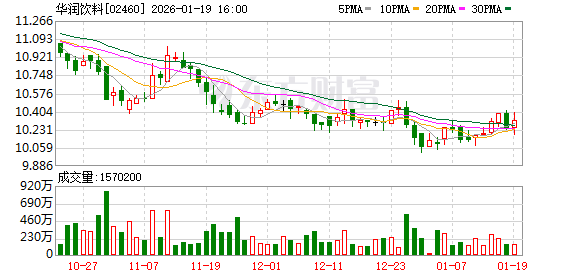
Core Viewpoint - The leadership change at China Resources Beverage, with Gao Li taking over as chairman, comes at a critical time as the company faces performance pressures and intensified industry competition [2][3]. Group 1: Leadership Change - Gao Li, a veteran of the China Resources Group, has been appointed as the new chairman, succeeding Zhang Weitong, who stepped down due to work adjustments [2]. - Gao Li has a strong financial background, having served as the financial director of China Resources Beverage from 2012 to 2020 and as the general manager of the finance department of China Resources Group since January 2025 [2]. Group 2: Performance Challenges - China Resources Beverage's revenue growth has stagnated, with a reported revenue of 13.52 billion yuan in the year of its IPO, reflecting only a 0.05% increase, while profit growth of 23.12% was primarily due to cost control [4]. - In the first half of 2025, the company experienced a decline in both revenue and profit, with revenue dropping to 6.206 billion yuan, a year-on-year decrease of 18.52%, and net profit falling to 808 million yuan, down 28.63% [4]. Group 3: Market Competition - The bottled water market has seen significant changes, with competitors like Wahaha and Nongfu Spring impacting China Resources Beverage's sales, particularly in the small-sized bottled water segment [5]. - In the first half of 2025, Nongfu Spring's bottled water revenue grew by 10.7% to 9.443 billion yuan, while China Resources Beverage's revenue in the same segment fell by 23.1% to 5.251 billion yuan [6]. Group 4: Strategic Initiatives - To diversify its revenue streams, China Resources Beverage has been actively launching new products in tea, juice, and sports drinks, introducing 14 new SKUs in the first half of the previous year [7]. - Despite these efforts, non-water beverage revenue only accounted for approximately 15.4% of total revenue, indicating that the second growth curve has not yet materialized [7]. Group 5: Market Position and Valuation - China Resources Beverage's revenue has remained stagnant around 13.5 billion yuan in 2023 and 2024, with expectations that its total revenue for 2025 will likely be surpassed by competitors like Dongpeng Beverage and Yuanqi Forest [7]. - As of January 19, 2026, the company's stock price had dropped to 10.32 HKD, a decline of 29% from its one-year high and over 38% from its IPO closing price, resulting in a market capitalization of 24.749 billion HKD, down 36.8% from its IPO value [8].
饮料市场加速分化 接班潮涌能否讲出新故事?
Zhong Guo Jing Ying Bao· 2026-01-19 08:41
Core Insights - The beverage industry is shifting from merely quenching thirst to emphasizing health attributes, with this trend expected to be more pronounced by 2025 [1] - Reports indicate that low-sugar and no-sugar options will become standard in the beverage market by 2025, reflecting a clear trend towards health-conscious consumption [1] - The industry is experiencing a bifurcation, with some companies capitalizing on market trends for growth while others face declining performance [1] Industry Performance - In November 2025, China's beverage production reached 10.46 million tons, a year-on-year increase of 0.4%, with a cumulative production of 165.61 million tons from January to November, reflecting a 3.3% growth [2] - Eastroc Beverage reported impressive performance with a revenue of 16.844 billion yuan in the first three quarters of 2025, a 34.13% increase year-on-year, while Nongfu Spring achieved a revenue of 25.622 billion yuan, up 15.6% [2] - Conversely, traditional giants like Master Kong faced challenges, with a revenue decline of 2.7% in the first half of 2025 [2] Segment Analysis - Sales of tea beverages fell by 6.3% to 10.67 billion yuan, fruit juice sales dropped by 13.0% to 2.956 billion yuan, and packaged water sales decreased by 6.0% to 2.377 billion yuan [3] - Carbonated and other beverages saw a growth of 6.3%, reaching 10.256 billion yuan [3] - The plant-based protein drink segment struggled, with leading brands like Yangyuan and Chengde Lulux experiencing revenue declines of 7.64% and 9.42%, respectively [3] Competitive Landscape - Companies are adjusting to revenue declines, with some experiencing double-digit drops; for instance, China Resources Beverage's revenue fell by 18.5% to 6.206 billion yuan [4] - The competitive landscape is marked by price wars, particularly in the packaged water segment, leading to significant revenue drops for brands like "Yibao" [4] - Analysts suggest that the success of Nongfu Spring's tea segment indicates a shift from basic hydration to quality tea beverages, while traditional companies must innovate to escape the price war trap [4] Emerging Trends - The rise of functional beverages is evident, with products tailored for specific scenarios, such as sports and fitness, gaining traction [7] - Brands are focusing on packaging innovations and marketing strategies that align with health and fitness trends, such as electrolyte water and convenient single-use formats [7][8] - The health and wellness segment is seeing explosive growth, with numerous new brands entering the market, particularly in traditional Chinese health drinks [6] Leadership Transition - The beverage industry is witnessing a generational shift, with new leaders taking over established companies, such as Wei Hongcheng at Master Kong and Xu Yangyang at Dali Foods [9][10] - These new leaders bring fresh perspectives and experiences, which may help navigate the challenges of a saturated market [11] - However, not all transitions are smooth, as seen in the ongoing succession issues at Wahaha, highlighting the complexities of generational change in the industry [11]