美银美林

Search documents
每日机构分析:7月21日
Xin Hua Cai Jing· 2025-07-21 08:23
瑞典北欧斯安银行:日本政坛不稳定性加剧,高额债务下的财政压力增加 巴克莱:解雇鲍威尔或适得其反,美联储独立性对货币政策走向至关重要 【机构分析】 瑞典北欧斯安银行首席经济学家Robert Bergqvist在报告中指出,日本执政联盟在周日参议院选举中的重 大失利,将加剧本已紧张的美日关系。在美日关系紧绷的背景下,此次败选将进一步放大日本政坛的不 稳定性。根据国际货币基金组织(IMF)预测,日本政府债务到2025年将达GDP的235%。日本政界人 士仍需兑现竞选时承诺的财政刺激措施。这意味着即使面临高额债务,日本政府也面临着实施财政刺激 以满足选民期望的压力。 巴克莱分析指出,解雇现任美联储主席鲍威尔并不会促使联邦公开市场委员会(FOMC)更快地进行降 息。实际上,这种行为可能会导致相反的效果。如果市场开始质疑美联储的独立性,这可能导致通胀预 期上升以及长期利率(收益率)的攀升。这样的市场反应可能会迫使FOMC采取更为保守的态度,甚至 有可能延长维持现有利率的时间,或者在必要时重启加息以应对潜在的通胀压力。美联储即使任命了一 位新的美联储主席,这位新主席也很难单方面改变货币政策的方向。任何货币政策的变化都需要得 ...
美国通胀即将走高——美股自己挖的坑?
Hua Er Jie Jian Wen· 2025-07-11 03:00
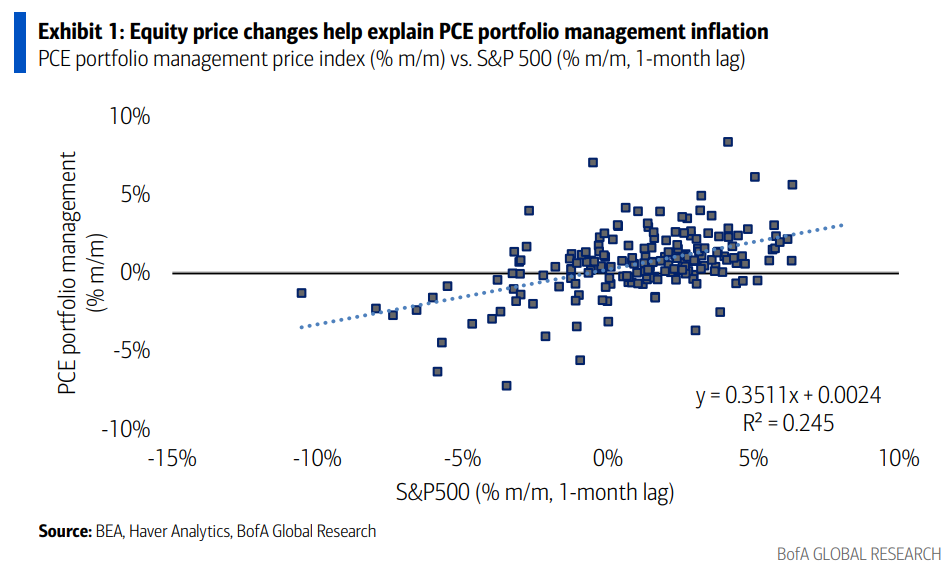
Group 1 - The core viewpoint of the report is that rising stock prices are contributing to increased PCE inflation, which could complicate the investment environment and limit future monetary policy options [1][2][3] - The report highlights that the stock market rebound is expected to contribute at least 6 basis points to core PCE inflation in June, reversing the previous drag on inflation from the investment management category [1][9] - The correlation between stock price changes and PCE investment management inflation is significant, with a coefficient of determination (R²) of 0.245, indicating a notable relationship [4] Group 2 - In April and May, the investment management category was a drag on core inflation, but the recent stock market rebound suggests this will shift to being a driver of inflation in the coming months [3][9] - The overall impact of this "swing factor" is quantified to reach 7 basis points, making it difficult for core PCE to remain at low levels [7]

大而美法案成美国债务导火索?美联储若降息,中国或跟进放水
Sou Hu Cai Jing· 2025-07-05 23:08
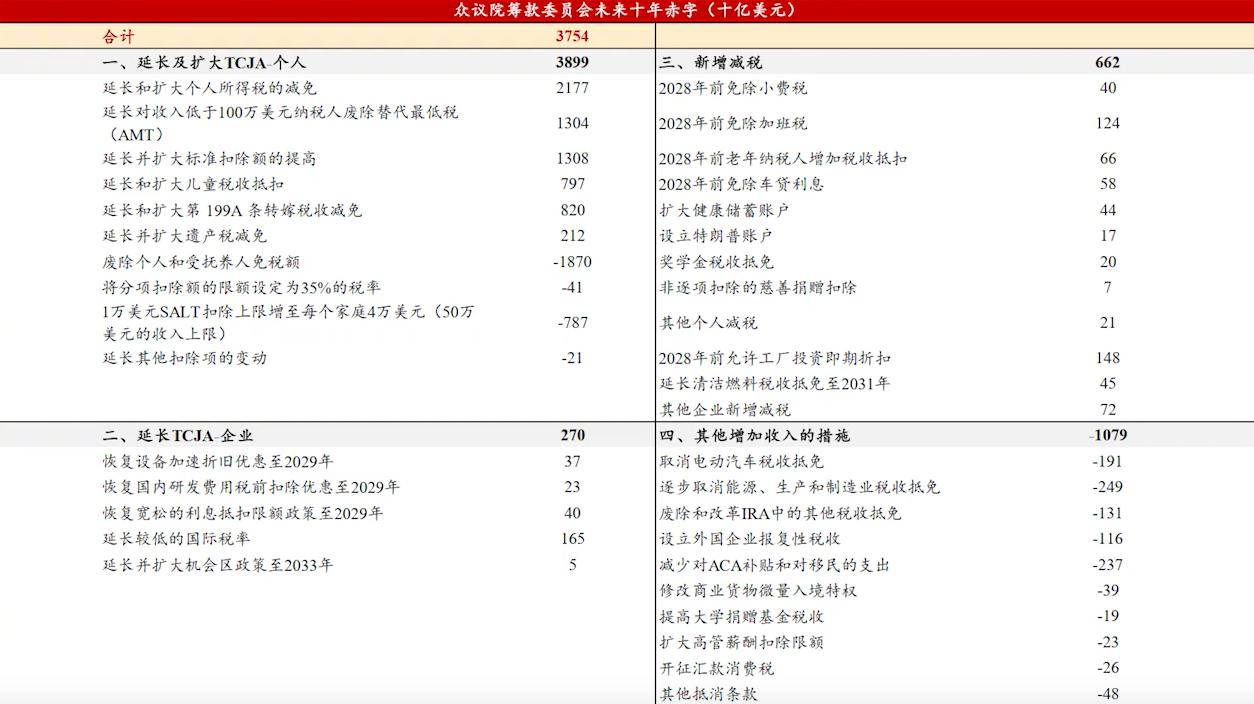
Core Points - The "Big Beautiful Plan" represents a significant fiscal expansion gamble by the U.S. government, aiming to stimulate economic growth through a combination of tax cuts, increased spending, welfare cuts, and borrowing [2][5] - The plan includes unprecedented tax cuts totaling $3.8 trillion over ten years, directly benefiting businesses and households, particularly targeting Trump's core supporters [5] - The plan also proposes a substantial increase in defense and border security spending, amounting to $144 billion over ten years, with $80 billion allocated specifically for combating illegal immigration [5] - Many social welfare programs are set to be cut, including Medicaid, student loan subsidies, and food stamps, reflecting a strategy to appeal to Republican supporters [5] - The plan raises the U.S. debt ceiling by $4 trillion, creating concerns about future fiscal deficits and potential economic instability [5][6] Financial Implications - Wall Street has expressed caution regarding the plan, with concerns that its risks outweigh potential benefits, estimating a total cost of $2.3 trillion against projected revenues of only $1.028 billion [8] - Analysts from Morgan Stanley warn that the plan could lead to a significant depreciation of the dollar, threatening its status as the global reserve currency [8] Global Economic Impact - The plan is expected to resonate globally, as it coincides with simultaneous monetary and fiscal stimulus measures in Europe and China, potentially leading to a new round of economic recovery [9][10] - China's central bank is likely to adjust its monetary policy in response to the U.S. actions, focusing on stimulating domestic consumption and economic growth through fiscal measures [10] Conclusion - The "Big Beautiful Plan" is not merely an economic policy but a gamble that could significantly impact both the U.S. and global economies, ushering in a period of uncertainty and challenges [12]
万腾外汇:黄金为何在美联储降息前夜飙升?三大市场信号揭示方向
Sou Hu Cai Jing· 2025-06-24 03:00
Core Viewpoint - The surge in gold prices, breaking the $2400 per ounce mark, is attributed to expectations surrounding the Federal Reserve's interest rate decision, influenced by declining inflation data and geopolitical tensions [1][3]. Group 1: Economic Indicators - The core PCE price index rose 3.2% year-on-year in May, down 1.8 percentage points from last year's peak, while the GDPNow model predicts a 1.9% growth rate for Q2 [3]. - The probability of a 25 basis point rate cut in July has risen to 92%, with expectations of a total cut of 75 basis points by year-end [3]. - The 10-year U.S. Treasury's real yield has decreased from 2.5% in March to 1.8%, lowering the opportunity cost of holding gold [3]. Group 2: Geopolitical Factors - Rising tensions in the Persian Gulf, particularly threats from Iran, have activated safe-haven buying in gold, with spot gold premiums soaring by 40% and physical gold demand in the Middle East increasing by 35% year-on-year [4]. - The current geopolitical climate mirrors the market response during the 2018 U.S.-Iran standoff, where gold prices rose significantly [4]. Group 3: Market Dynamics - Global investors have reduced their equity allocations to the lowest level since May 2020, while gold holdings have reached a historical high of 12% [4]. - The SPDR Gold Trust's holdings surpassed 1300 tons, a 230-ton increase since the beginning of the year, indicating strong institutional interest [5]. - Technical analysis shows that gold's price breakout at $2400 is significant, with a 2.3% daily increase and trading volume significantly above the 30-day average [6]. Group 4: Cross-Market Interactions - On the day gold surpassed $2400, the U.S. dollar index fell by 0.7%, and the 10-year Treasury yield dropped by 5 basis points, indicating a strong negative correlation with gold [7]. - This cross-market interaction suggests a reinforcing safe-haven chain, contrasting with market reactions during previous rate hikes [7]. Group 5: Strategic Implications - The breakthrough of the $2400 mark signifies a redefinition of asset pricing logic in the post-easing era, highlighting gold's strategic value amid monetary policy shifts and geopolitical risks [9]. - Historical precedents indicate that significant price movements in gold often precede new asset allocation trends, as seen after the 2008 financial crisis [9].

全线大跌!利空来袭,猛烈抛售700亿!
券商中国· 2025-06-14 02:27
Core Viewpoint - The article highlights the escalating geopolitical uncertainties, particularly in the Middle East, which have triggered significant volatility in global financial markets, leading to a risk-averse behavior among investors [1][2][3]. Market Reactions - European stock markets experienced a widespread decline, with major indices in France, Germany, Spain, and Italy all dropping over 1% [6]. - The US stock market also faced substantial losses, with the Dow Jones falling by 1.79%, the Nasdaq by 1.3%, and the S&P 500 by 1.13% [7]. - A notable surge in the VIX index, which rose by 15.65% to 20.84, indicates increased market fear, with a weekly increase of 24.27% [7]. Fund Flows - Recent data from Bank of America shows that US stock funds experienced the largest outflow in nearly three months, with redemptions reaching approximately $9.8 billion (over 70 billion RMB), marking an 11-week high [5]. - European funds, which had previously outperformed US stocks, also saw a net outflow of $600 million, the first in nine weeks [5]. Investor Sentiment - Analysts suggest that current market behavior aligns with a "risk-averse" mode, indicating that this may be just the beginning of a broader market trend [3][9]. - Investors are closely monitoring developments in the Middle East, the US economic outlook, and the Federal Reserve's monetary policy trajectory [8]. Economic Outlook - Former US Treasury Secretary Janet Yellen predicts that Trump's tariff policies will lead to an increase in inflation, estimating this year's inflation rate to be at least 3% [4][18]. - Yellen also warns that these tariffs could reduce average household income by approximately $1,000, depending on the progress of the tariff plans [19]. Federal Reserve Policy - Yellen anticipates that the Federal Reserve will maintain its current stance and not make significant changes to monetary policy in the near term, as they are likely to wait for clearer inflation trends [20][21]. - Analysts from Allianz have adjusted their expectations for a potential rate cut by the Federal Reserve from October to December, citing that inflation is expected to peak in the fourth quarter [20].


亚洲或掀2.5万亿美元抛售潮 美元霸权遭遇“雪崩式”挑战?
智通财经网· 2025-05-07 06:48
智通财经APP获悉,Eurizon SLJ Capital首席经济学家斯蒂芬·任(Stephen Jen)最新警告,随着亚洲国家加速调整外汇储备结构,美元可能面临高达2.5万亿美元 的"雪崩式"抛售压力。这家资管机构在周三发布的报告中指出,亚洲出口商与投资者长期积累的巨额美元头寸,正因美国贸易政策转向与汇率波动风险加剧 而面临瓦解风险。 报告分析称,过去数十年间,亚洲经济体凭借对美贸易顺差积累了规模庞大的美元资产。以中国大陆、中国台湾、马来西亚、越南为代表的出口导向型经济 体,其央行及机构投资者持有的美元储备可能达到2.5万亿美元量级。Jen团队强调:"这些未对冲美元波动的'裸多头寸'犹如悬在美元头上的达摩克利斯之 剑,一旦集中撤离将引发全球货币市场剧烈震荡。" 特朗普政府推动的贸易保护主义政策正成为催化剂。报告指出,亚洲政策制定者可能通过两种路径应对:一是将海外美元资产汇回本土以支撑本币升值,作 为贸易谈判筹码;二是加速多元化外汇储备配置,降低对美元的依赖。值得注意的是,仅中国就可能因美联储降息周期启动,推动约1万亿美元计价的海外资 产回流国内——这一数字与Jen去年提出的"美元微笑"理论预测一致。 市场已 ...
2025年全球资产展望 - 中金公司2025年度春季投资策略会
中金· 2025-03-11 01:47
Investment Rating - The report indicates a positive outlook on Chinese assets, suggesting a bullish stance on both A-shares and Hong Kong stocks, while also recommending investment in US bonds as a hedge against global risks [26][27][29]. Core Insights - The emergence of AI technologies, particularly represented by "deep sick," is expected to significantly transform various sectors, including manufacturing and finance, leading to increased investment opportunities [2][3][12]. - The report emphasizes the importance of embracing change and innovation, particularly in the context of AI, which is anticipated to drive substantial growth in cloud computing and computational power over the next five years [3][12]. - There is a strong belief in the potential of Chinese companies in the AI sector, as evidenced by the high number of patents and research publications, indicating a competitive edge in global technology [6][7][8]. Summary by Sections Section on AI and Investment Opportunities - The report highlights that AI will create vast demand across industries, with a projected growth rate of 50% annually over the next five years, leading to a potential 500-fold increase in related assets [3][12]. - Companies are encouraged to integrate AI into their operations to enhance efficiency and decision-making capabilities, which is seen as crucial for maintaining competitiveness in the global market [12][13]. Section on Chinese Assets - The report asserts that Chinese assets are undervalued and presents a compelling investment case, particularly in light of recent policy shifts that favor domestic markets [26][27]. - It is noted that the manufacturing sector in China is poised for significant upgrades, transitioning towards higher quality and intelligence, which will enhance global competitiveness [12][13]. Section on US Economic Outlook - The report discusses the current state of the US economy, indicating that while it remains strong, there are signs of a bubble in the stock market, suggesting caution for investors [14][21]. - The potential for a shift in US monetary policy, particularly with the possibility of a more dovish Federal Reserve leadership, could lead to lower interest rates, impacting investment strategies [20][21]. Section on Market Strategies - The report recommends a diversified investment strategy that includes Chinese equities and US bonds to mitigate risks associated with global economic uncertainties [26][27]. - It emphasizes the need for investors to adapt to the evolving landscape shaped by AI and technological advancements, suggesting that those who embrace these changes will find significant opportunities [12][29].

关税风险重创美股,“七巨头”市值蒸发近5500亿美元
21世纪经济报道· 2025-02-28 15:36
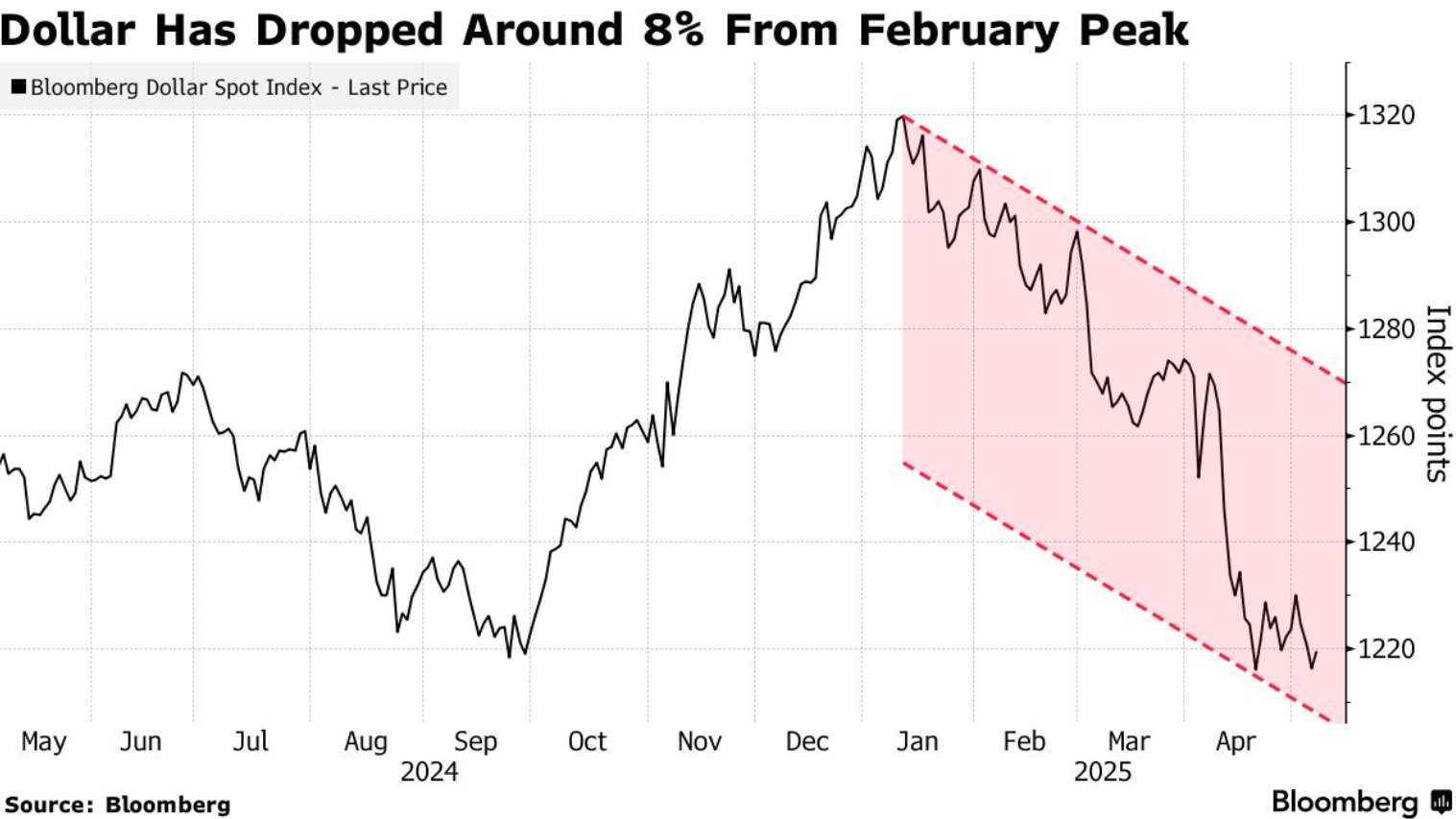
Core Viewpoint - The article discusses the impact of President Trump's tariff policies on the U.S. economy and financial markets, highlighting the volatility in the markets and the resurgence of "stagflation" concerns due to recent economic data and tariff implications [2][10]. Group 1: Market Reactions - Following Trump's announcement of tariffs on Mexico and Canada, the U.S. dollar surged, with the Dollar Index rising by 0.78% on February 27, marking its largest single-day increase in over two months [2]. - U.S. stock markets experienced significant declines, with the Nasdaq Composite dropping over 2% and the market capitalization of the "Big Seven" tech companies evaporating by nearly $550 billion [2]. - The Asia-Pacific markets also faced declines, with Japan's Nikkei 225 index falling by 2.88%, and South Korea's KOSPI index dropping by 3.39%, the largest single-day decline since August 2014 [2]. Group 2: Tariff Policy Implications - The article emphasizes that tariff measures can directly affect market sentiment, leading to increased demand for the dollar as a safe haven and causing market downturns due to uncertainty about future trade environments and economic growth [8]. - Analysts suggest that the actual implementation of tariff policies may be influenced by various factors, including domestic political pressures and international negotiations, which could lead to a situation where the impact is less severe than anticipated [9]. - If negotiations with Canada and Mexico yield positive results, market sentiment may improve, potentially leading to a rebound in stock prices [9]. Group 3: Stagflation Concerns - Recent U.S. economic data has shown unexpected weakness, raising concerns about the potential for "stagflation," particularly in light of Trump's tariff policies and their inflationary effects [11]. - The article notes that the core PCE price index for Q4 2024 was revised upward from 2.5% to 2.7%, indicating rising inflation concerns [12]. - Analysts warn that if tariffs lead to sustained price increases while economic growth slows, the risk of stagflation will increase [12]. Group 4: Monetary Policy Challenges - The uncertainty surrounding Trump's tariff policies complicates the Federal Reserve's decision-making process, as it must balance controlling inflation with supporting economic growth [15]. - The Fed's focus remains on combating inflation, which is currently prioritized over maintaining employment levels [16]. - Future interest rate cuts may be delayed until key indicators, such as inflation data and economic growth, show a clear trend [16].