三星

Search documents
一线厂商CEO:这一轮存储超级周期,一辈子只有一次,前无古人后无来者
Hua Er Jie Jian Wen· 2026-02-17 07:49
Core Insights - The storage industry is entering a "once-in-a-lifetime" super cycle driven by the AI boom, with demand for storage chips expected to surge dramatically [1][11]. - Phison Electronics, a leader in NAND flash memory controllers, highlights a critical supply-demand imbalance, indicating that the market is not just facing shortages but a life-and-death struggle across the supply chain [3][4]. Supply and Demand Dynamics - The demand for storage is quantitatively staggering; for instance, NVIDIA's new GPU, Vera Rubin, could consume 200 Exabytes of storage if 10 million units are sold, which is 20% of last year's total NAND Flash production [4][17]. - The AI-driven demand is validated by over $600 billion in capital expenditures from the four major U.S. cloud service providers this year, indicating a robust and ongoing need for storage solutions [4][14]. Market Conditions - The supply chain is experiencing unprecedented pressure, with upstream manufacturers demanding prepayment for three years of orders, a practice not seen before in the electronics industry [5][22]. - Phison Electronics is planning to raise $1 to $2 billion in operational funds to secure upstream supply sources amid these stringent market conditions [5][25]. Impact on Consumer Electronics - The consumer electronics sector is predicted to face a "collapse wave," with global smartphone production expected to decrease by 200 to 250 million units this year due to material shortages [6][7]. - The cost of components has skyrocketed; for example, the price of an 8GB eMMC chip has surged from $1.5 to over $20, significantly impacting the bill of materials for consumer products [7][26]. Long-term Supply Constraints - Major manufacturers like Samsung and Micron are adopting a cautious approach to capacity expansion due to past losses, leading to a belief that shortages could persist until at least 2027, with some reports suggesting as late as 2030 [8][31][32]. - The current shortages are primarily driven by cloud demand, and a potential surge in AI infrastructure development in China could exacerbate the situation further [8][34]. Emerging Opportunities - Space applications are seen as a potential solution to the AI computing bottleneck, as they can leverage solar power and natural cooling, although the reliability requirements are significantly higher [9][10]. - Phison Electronics aims to transition from a traditional memory supplier to a provider of high-value solutions, investing heavily in R&D to adapt to the evolving market landscape [11][47].



美光科技斥资2000亿美元建厂以突破AI内存瓶颈
Xin Lang Cai Jing· 2026-02-17 04:49
Core Insights - Micron Technology is the largest memory chip manufacturer in the U.S., focusing on increasing production capacity to address the most severe supply constraints in the storage industry in over 40 years [1][3] Group 1: Company Expansion Plans - Micron is investing $50 billion to expand its Boise campus, which will more than double its size, including the construction of two new chip factories [1][3] - The first factory is expected to produce its first silicon wafers by mid-2027, focusing on DRAM production, which is crucial for high-bandwidth memory (HBM) chips essential for advanced AI computing [1][3] - Additionally, Micron has broken ground on a $100 billion wafer fabrication complex near Syracuse, marking the largest private investment in New York's history [1][3] Group 2: Competitive Landscape - Micron announced a $9.6 billion investment in a wafer factory in Hiroshima, Japan, while competitor SK Hynix plans to build a $13 billion factory in South Korea and a $4 billion manufacturing complex in Indiana [1][3] - The demand for storage chips has surged due to the AI boom, with major companies like OpenAI and Oracle planning to build multi-trillion-dollar data centers, significantly outpacing current production capacity [2][4] Group 3: Market Performance - Since April of the previous year, Micron's stock price has increased over fivefold, reaching approximately $414, bringing the company's market capitalization close to $500 billion [2][4]

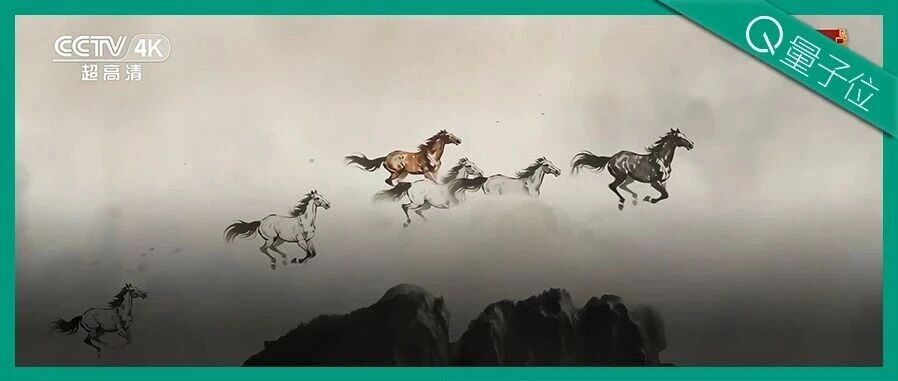
春晚张杰《驭风歌》背后的马,是Seedance 2.0做的!
量子位· 2026-02-17 03:58
Core Viewpoint - The article highlights the significant advancements in AI technology showcased during the Spring Festival Gala, particularly focusing on the capabilities of the Seedance 2.0 model and its integration with various AI applications in performance and interaction [2][42]. Group 1: AI Technology in Performance - The performance of "Yufeng Song" by Zhang Jie featured a background video created using the Seedance 2.0 model, which successfully interpreted and animated traditional Chinese ink painting styles, a task that many foreign models struggled with [4][5]. - Seedance 2.0 was utilized in multiple performances, including the creative dance show "He Huashen," where it demonstrated micro-control capabilities to create detailed visual effects [7][10]. - The model's ability to follow physical and biomechanical principles allowed for realistic animations of galloping horses, showcasing its advanced command-following and multi-modal material reference capabilities [8][10]. Group 2: Video Quality Enhancement - The collaboration with the Volcano Engine video cloud team enabled the enhancement of video quality to meet the Spring Festival Gala's high standards, utilizing super-resolution algorithms to upscale 720P to 8K and frame interpolation to increase frame rates from 24 to 50 FPS [15][17]. - The integration of 4D Gaussian splashing technology allowed for the creation of immersive visual experiences, where virtual dancers interacted seamlessly with real stage lighting [20][22]. Group 3: AI Interaction and User Engagement - The Spring Festival Gala introduced AI-driven interactive features through the Doubao app, allowing users to generate personalized avatars and greetings, marking a shift from traditional transactional interactions to more complex, computationally intensive engagements [28][30]. - The Ark platform played a crucial role in managing the high traffic during the event, utilizing a federated system to optimize resource allocation and ensure rapid response times for user requests [31][29]. Group 4: Broader Implications and Industry Impact - The article emphasizes the widespread adoption of Doubao's AI models across various industries, including automotive, mobile, and robotics, highlighting its robust partnerships with major companies [40][41]. - The successful implementation of AI technologies during the Spring Festival Gala serves as a demonstration of their practical value and potential for real-world applications, reinforcing the notion that effective AI solutions can deliver tangible benefits [43][44].
台积电已经无法向美国交代了!张忠谋没有说谎:美国要掏空台湾半导体
Sou Hu Cai Jing· 2026-02-17 00:21
Core Viewpoint - The recent "US-Taiwan Trade Agreement" announced by US Commerce Secretary Howard Lutnick involves a significant reduction in tariffs on Taiwanese goods, but it comes with stringent conditions that require Taiwan to relocate a substantial portion of its semiconductor supply chain to the US, along with a hefty financial commitment of $500 billion [1][3]. Group 1: Financial Implications - Taiwan is required to invest $500 billion, which represents 56.8% of its GDP, significantly higher than the investment ratios of Japan (12.8%) and South Korea (18.8%) in similar agreements with the US [3][4]. - The $500 billion is divided into $250 billion for direct investments by Taiwanese semiconductor companies like TSMC to build factories in the US, and another $250 billion in credit guarantees from the Taiwanese government to support smaller semiconductor firms [3][4]. Group 2: Operational Challenges - TSMC faces operational difficulties in the US, including high construction costs and regulatory hurdles, which have led to a significant drop in profit margins from 62% in Taiwan to only 8% in Arizona [6][10]. - The construction of TSMC's Arizona factory has been delayed, with the facility not expected to be operational until late 2024, and the company has incurred substantial compliance costs due to stringent US regulations [6][10]. Group 3: Market Dependencies - TSMC's reliance on the US market is critical, with 38% of its exports directed to the US, making it vulnerable to potential punitive tariffs if it does not comply with US demands [4][5]. - The company’s core production technologies and equipment are largely controlled by US firms, creating a dependency that limits TSMC's ability to resist US pressures [5][11]. Group 4: Industry Ecosystem - The semiconductor industry requires a comprehensive ecosystem, including thousands of specialized suppliers, which are predominantly located in Taiwan. The relocation of this ecosystem to the US is deemed nearly impossible [10][11]. - TSMC's founder has previously warned that building factories in the US is significantly more expensive and inefficient compared to Taiwan, highlighting the challenges of replicating Taiwan's established semiconductor ecosystem in the US [11][12].

暴涨75%!芯片,突然引爆!
Xin Lang Cai Jing· 2026-02-16 23:45
Core Viewpoint - The global memory chip shortage is significantly impacting corporate profits, disrupting company plans, and driving up prices across various products, including laptops, smartphones, and automobiles, primarily due to the surge in demand from AI data centers [1][2][3] Group 1: Memory Chip Shortage Impact - Major companies like Tesla and Apple have indicated that the shortage of Dynamic Random Access Memory (DRAM) will limit production, with Apple CEO Tim Cook warning of compressed iPhone profit margins [2][8] - The price of a specific type of DRAM surged by 75% from December to January, leading to daily price adjustments by retailers and middlemen, coining the term "RAMmageddon" to describe the impending crisis [2][8] - The shortage is causing significant disruptions in product lines, with companies like Sony considering delaying the launch of the next-generation PlayStation until 2028 or 2029 [3][9] Group 2: Causes of the Shortage - The root cause of the shortage is the expansion of AI data centers, with companies like Alphabet and OpenAI consuming vast amounts of memory chip capacity [2][11] - Major tech firms are investing heavily in AI infrastructure, with projected spending reaching $650 billion by 2026, significantly altering the global memory market [11][12] - The shift towards AI has led to a reduction in the production capacity of standard DRAM, as manufacturers focus on high-bandwidth memory (HBM) for AI accelerators [11][12] Group 3: Industry Response and Future Outlook - Companies are adjusting their supply contracts more frequently, with Samsung moving to quarterly reviews instead of annual ones due to the ongoing crisis [10] - Analysts warn that the DRAM shortage will continue to affect the electronics, telecommunications, and automotive industries throughout the year, with signs of panic buying emerging in the automotive sector [12] - The rising cost of memory is expected to increase the material cost of low-end smartphones, with DRAM potentially making up 30% of their material list, up from 10% at the beginning of 2025 [12]





从米兰巨幅广告到快闪店,冬奥迎来史上最多中国顶级赞助商
第一财经· 2026-02-16 15:09
Core Viewpoint - The article highlights the significant presence and impact of Chinese brands as TOP sponsors at the Milan-Cortina Winter Olympics, showcasing the evolving landscape of sports marketing and sponsorship dynamics in the context of global events [5][15]. Group 1: Sponsorship Dynamics - The Milan-Cortina Winter Olympics features the highest number of Chinese TOP sponsors, including TCL, Alibaba, and Mengniu, marking a notable increase in Chinese brand representation compared to previous Olympics [5][15]. - The TOP sponsorship program is crucial for the financial support of the Olympics, with companies paying over $300 million per cycle, contributing significantly to the International Olympic Committee's revenue [12]. - The article notes that the TOP sponsorship program has seen a shift in participants, with traditional sponsors like Panasonic and Toyota exiting, while new entrants like TCL and Budweiser are filling the gaps, reflecting changes in commercial power [17][18]. Group 2: Marketing Strategies and Brand Visibility - TOP sponsors utilize various marketing strategies, including prominent outdoor advertising in Milan, to enhance brand visibility during the Olympics, with TCL securing a major outdoor advertising space [7][10]. - The presence of sponsors extends beyond advertising, as they provide services and products within the Olympic Village, enhancing the overall experience for athletes and staff [10][11]. - The article emphasizes the role of technology in enhancing viewer experience, with AI and cloud technologies being utilized for broadcasting and event management, showcasing the integration of new technologies in sports marketing [18][20]. Group 3: Market Expansion and Brand Recognition - Companies like TCL are leveraging the Olympic platform to expand their global business, with TCL reporting a 50% increase in market share in Italy, indicating successful brand recognition efforts [20]. - The article discusses the competitive landscape in the European market, where Chinese brands are gaining market share from traditional Japanese brands, highlighting a shift in consumer preferences [20]. - The need for companies to adapt their strategies to local market conditions in Italy is emphasized, as the market presents unique challenges and opportunities for growth [20].




Stratechery创始人深度对话:预警2029年大规模“芯片荒”,SaaS模式将终结,广告才是AI终极商业闭环
华尔街见闻· 2026-02-16 11:18
Core Insights - The core viewpoint of the article is that the expansion of AI capabilities is significantly constrained by TSMC's conservative capacity expansion strategy, which may lead to a major chip shortage by 2029 if not addressed [2][4]. Group 1: TSMC's Capacity and AI Expansion - TSMC, as a monopolistic player, is cautious in expanding its production capacity due to the high risks associated with wafer fabrication, preferring to avoid the potential for overcapacity and its associated depreciation costs [2][3]. - This conservative approach results in a misalignment of risks, transferring the burden of insufficient capacity to major tech companies like NVIDIA and Apple, which face the risk of losing future revenues due to inadequate computing power [3]. Group 2: Future Predictions - A significant prediction made is that a large-scale chip shortage is expected around 2029, as current capital expenditure growth (e.g., TSMC's increase from $40 billion to $60 billion) is insufficient to meet the exponential demand for computing power driven by AI advancements [4]. Group 3: Recommendations for Tech Giants - Tech giants are urged to support companies like Intel or Samsung, or to take on factory construction risks through prepayments, driven by economic motives rather than geopolitical considerations, to avoid being trapped in a capacity bottleneck [5]. Group 4: Monetization of AI Applications - The article emphasizes that advertising is the most effective monetization method for AI applications, particularly for companies like OpenAI that have significant traffic but lack a solid business model [6]. - Thompson counters the argument that advertising negatively impacts AI answer quality, asserting that a comprehensive understanding of users is essential for effective advertising [10]. Group 5: Analysis of Major Tech Companies - Meta is highlighted as having the strongest execution capabilities, with its advertising model being undervalued despite concerns over capital expenditures [12]. - Google is described as chaotic yet resilient, likened to a slime mold that, while appearing disorganized, possesses great adaptability [13]. - Amazon's strategy in the AI era raises concerns, as its focus on low-cost alternatives may hinder competitiveness in a rapidly evolving market [14]. - Apple is criticized for being a poor platform manager despite its hardware strengths, indicating a need for improvement in software and service platforms [16]. Group 6: Future of SaaS and Value of "Live" Experiences - The article suggests that if AI leads to a reduction in workforce numbers, the SaaS business model based on "per seat" pricing will face growth limitations [18]. - In a world flooded with AI-generated content, the value of "live" experiences, such as shared events and face-to-face interactions, will become increasingly significant [19].
印度想接中国制造的班?根本没戏,工业大门已经彻底焊死了
Sou Hu Cai Jing· 2026-02-16 07:15
Group 1 - China has become the largest holder of AI patents globally, accounting for 60% of the total, which has shocked India and raised concerns about its manufacturing ambitions [1] - The Indian government has approved a significant electronic components manufacturing project worth 418.63 billion rupees (approximately 4.64 billion USD) to reduce dependence on China and reshape the global electronic supply chain [1][3] - India's electronic product exports are projected to reach 38.56 billion USD in the fiscal year 2025, making it the country's third-largest export item, with multinational companies establishing factories in India [3] Group 2 - Despite the growth in manufacturing, India remains heavily reliant on Chinese core components, with nearly 40% of electronic components sourced directly from China, and over 56% when including goods routed through Hong Kong [3][5] - India's manufacturing sector is primarily engaged in assembly work, earning only minimal profits while lacking core manufacturing capabilities, leading to an increasing dependency on Chinese parts [5] - The report highlights India's weaknesses in infrastructure, talent pool, and business environment, ranking sixth among 11 Asian economies, far behind China, Malaysia, and Vietnam [5][6] Group 3 - High logistics costs, complex tax compliance, and corruption issues significantly undermine India's competitiveness, with foreign investments deterred by lengthy project approval processes averaging 18 months [6] - The Indian rupee is projected to depreciate by about 5% by 2025, nearing 90 rupees to 1 USD, which will further weaken the price competitiveness of Indian exports [8] - In contrast, China is advancing its industrialization through AI and robotics, establishing competitive barriers that are difficult for other countries to overcome [8][11] Group 4 - China's technological upgrades are driven by the need for high-quality development in manufacturing, aligning with global technological revolutions and industrial transformations [11] - The application of AI and robotics aims to enhance production efficiency and optimize industrial structures, transitioning from scale-based to quality-based manufacturing [11] - India's ambition to decouple from China may lead to isolation and missed opportunities, emphasizing the need for India to address its shortcomings and focus on core technologies to compete effectively in the global manufacturing landscape [11]

AI芯片加速,三星斩获代工大单
半导体行业观察· 2026-02-16 01:58
Core Viewpoint - Tesla is accelerating its in-house chip development, focusing on the production of next-generation AI5 and AI6 chips, aiming to surpass the current global AI chip output [2][6]. Group 1: Recruitment Strategy - Tesla's recruitment for AI chip design engineers emphasizes practical experience over formal education, asking candidates to describe three challenging technical problems they have solved [3]. - The choice to recruit in South Korea is strategic, leveraging the advanced manufacturing capabilities of companies like Samsung and SK Hynix, which are key suppliers of High Bandwidth Memory (HBM) technology [3]. Group 2: Chip Specifications and Production Strategy - Tesla's chip production strategy involves a dual-foundry approach, utilizing different wafer foundry partners to enhance flexibility and reduce single-source risks [4][8]. - The specifications for AI4, AI5, and AI6 chips show significant improvements: AI6 is expected to integrate multiple functions into a single SoC, enhancing efficiency and reducing power consumption [6][10]. Group 3: Manufacturing Locations and Partnerships - AI4 is manufactured by Samsung in South Korea, while AI5 is being developed with TSMC in Taiwan and the U.S. Arizona, and AI6 will be produced at Samsung's facility in Taylor, Texas [7]. - The decision to produce AI6 at Samsung's Texas facility is influenced by supply chain risk management, policy incentives, and cost structures, particularly in light of the U.S. CHIPS Act [9]. Group 4: Implications for Autonomous Driving and Robotics - AI6 is positioned as a core component for Tesla's advancements in embodied AI, supporting both autonomous driving and humanoid robots, with a significant increase in demand expected as production scales up [10]. - Advanced packaging technologies are anticipated to be utilized for AI6 to meet high bandwidth and computational requirements, supporting large neural network models [10]. Group 5: Semiconductor Supply Chain Dynamics - TSMC currently holds major orders for AI5, but Tesla's expansion in South Korea and push for localized advanced manufacturing indicate a shift in global supply chain dynamics [11]. - The success of Taiwan's semiconductor supply chain will depend on maintaining technological advantages in advanced packaging and integration technologies [14].
3天已过,中方公布了黄金储备,美财长急踩刹车:不希望中美脱钩
Sou Hu Cai Jing· 2026-02-15 15:26
中美刚聊完电话三天,咱们这边就公布了一个重量级的黄金储备数据,立马就让全世界的市场都紧张起来了,还把美国的态度给翻了个过来,变得完全不一 样了。 国家外汇管理局透露,到2026年1月末,中国黄金储备达到7419万盎司,连续15个月都在增加。 同时,外汇储备也稳稳地在3.3万亿美元以上。消息一出,没多久,美国财长贝森特就紧急表态,明确说"不希望中美脱钩",这一下子就打破了之前对中国 的强硬立场,反差真是挺大的,让人瞠目结舌。 我国产生了一个明显的变化,一边持续抛售美国国债,一边却在不断增加黄金储备,这背后到底藏着什么玄机呢? 这个动作透露出什么样的信号?再看贝森特说"不希望和中国脱钩",这话到底意味着啥?是不是暗示双方关系会继续向好?这可真让人琢磨不透,看来未来 的国际局势又添了几分变数。 2月7号是个普通的星期六,大家大多还在休息。当天中国央行公布了最新的资产负债表,到2026年1月末,中国官方的黄金储备已经积攒到7419万盎司了。 这次的增加不是突然之间的,而是经过好几个月稳扎稳打逐步攒起来的,单月又多了4万盎司。 就算现在国际金价一直挺高,中国增持黄金的脚步也一点不减,每一笔都在稳扎稳打地积累实打实的硬通 ...