零跑

Search documents
17家车企集体表态!
Guo Ji Jin Rong Bao· 2025-09-15 12:21
Core Viewpoint - The China Automotive Industry Association (CAAM) has launched an initiative to standardize payment practices between automotive manufacturers and suppliers, aiming to foster a collaborative ecosystem and promote high-quality development in the automotive industry [1][2][8]. Group 1: Initiative Principles - The initiative emphasizes not exploiting the advantages of large enterprises to harm suppliers' interests, promoting a win-win collaboration between vehicle manufacturers and parts suppliers [2]. - In the order confirmation phase, both parties should agree on order details, and any changes to existing orders must be mutually negotiated [2]. - Payment terms stipulate that the maximum payment period should not exceed 60 calendar days from the date of delivery and acceptance [2]. Group 2: Contract Duration - The initiative encourages establishing long-term cooperative relationships, with each contract having a minimum validity period of one year [3]. Group 3: Industry Response - As of the report, 17 automotive manufacturers have committed to implementing the initiative, including Chery Group, which aims to standardize contract terms and comply with the "Regulations on Payment for Small and Medium Enterprises" [4]. - Companies like Seres and Changan Automobile have expressed their commitment to industry self-discipline and adherence to the 60-day payment term [4][5]. - Other major players such as Dongfeng, BYD, and Great Wall have also pledged to support the initiative and ensure supplier rights are protected [5]. Group 4: Policy Context - This initiative is part of a broader governmental effort to regulate the automotive industry, following the implementation of the revised "Regulations on Payment for Small and Medium Enterprises" which established a legal basis for the 60-day payment term [9]. - The CAAM's initiative details operational standards across four key areas: order confirmation, delivery acceptance, payment settlement, and contract duration [9]. Group 5: Industry Challenges - Despite the industry's growth, challenges persist, including rising debt levels among manufacturers due to increased R&D investments and structural adjustments for electric vehicle production [10]. - The average payment cycle for ten major domestic automakers was reported to be 182 days in the first half of the year, significantly exceeding the 60-day requirement [11].

中国新能源汽车澳洲受指控,“维修权”究竟该归谁?
Jing Ji Guan Cha Bao· 2025-09-15 00:50
Core Insights - The core issue revolves around the high maintenance costs and insurance fees for electric vehicles (EVs) due to monopolistic practices by manufacturers, which consumers did not anticipate [1][3][4] Group 1: Market Dynamics - Five Chinese EV manufacturers, including BYD and Xpeng, are accused of monopolizing repair services in Australia by delaying and restricting access to independent repair services and diagnostic software [1][5] - The Australian Automotive Service and Repair Authority (AASRA) has reported these practices to the Australian Competition and Consumer Commission (ACCC), which could lead to significant penalties for the companies involved [5][6] Group 2: Consumer Impact - Consumers are facing challenges in accessing affordable and timely repair services, as authorized service centers are often located far away, leading to increased costs and inconvenience [1][2] - The high maintenance costs associated with EVs contradict the initial appeal of lower overall usage costs compared to traditional fuel vehicles [1][3] Group 3: Regulatory Environment - The Australian Motor Vehicle Service and Repair Information Scheme (MVIS) mandates that manufacturers must provide independent repairers with access to essential diagnostic software and technical data, which the accused companies allegedly failed to comply with [5][6] - The ACCC is responsible for enforcing MVIS, with penalties for non-compliance reaching up to AUD 10 million (approximately RMB 47 million) [5] Group 4: Industry Perspectives - Industry experts highlight that the current closed service model of Chinese EV manufacturers is a significant barrier to the development of a competitive aftermarket [3][4] - Concerns about safety and liability in third-party repairs are cited as reasons for manufacturers' reluctance to open their data and services to independent repairers [4][6] Group 5: Future Considerations - The need for a balanced ecosystem that allows for fair competition while ensuring safety standards is emphasized, requiring collaboration among manufacturers, independent repairers, regulatory bodies, and insurance companies [6] - The situation in Australia reflects a broader trend of increasing regulatory scrutiny in the automotive sector, particularly regarding consumer rights and anti-competitive practices [6]


慕尼黑车展丨新能源汽车产业链企业参展 总数超百家
Cai Jing Wang· 2025-09-14 15:51
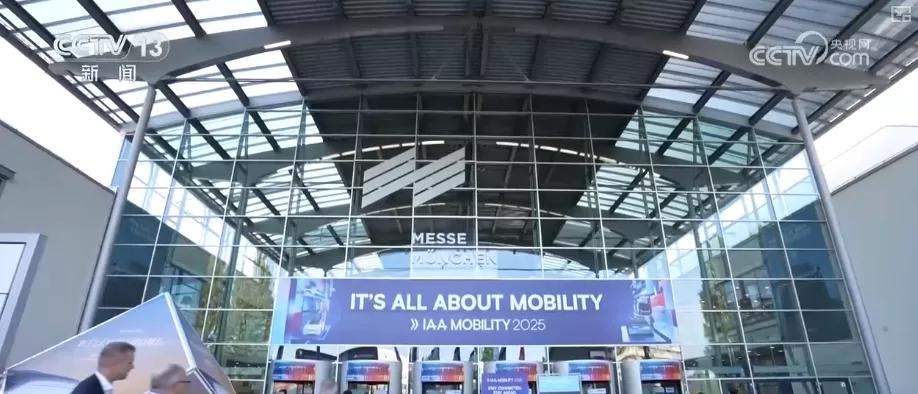
Core Insights - The 2025 Munich International Motor Show focused on innovation in mobility, showcasing a shift towards integrated mobility platforms with the theme "It's All About Mobility" [1] Group 1: Event Overview - The event attracted approximately 750 exhibitors from over 30 countries, with international exhibitors making up more than 55%, a record high [3] - Chinese exhibitors numbered 116, maintaining growth from the previous year, and were the largest group among international participants [3] - The presence of 16 Chinese automotive manufacturers highlighted the strength and complete ecosystem of China's new energy vehicle industry [3] Group 2: Chinese Exhibitors and Innovations - Notable Chinese companies included BYD, Xpeng, and Avita, showcasing various models and advanced technologies [3][5] - Xpeng unveiled five new models, including the P7 and G6, and introduced cutting-edge exhibits like humanoid robots and flying cars [5] - Avita presented its first emotional intelligence concept car and several luxury models, emphasizing its focus on original design and smart technology [7] Group 3: Technological Advancements - BYD introduced a megawatt-level electric platform, achieving the highest charging power globally at 1 megawatt [7] - CATL showcased a new battery safety technology that prevents fire and smoke during thermal runaway [7] - EVE Energy highlighted its standardized, zero-expansion cylindrical batteries and a digital identification system for battery traceability [7] Group 4: European Automakers' Responses - Major European automakers, including BMW, Volkswagen, and Mercedes-Benz, launched new electric models and emphasized their strategies to compete with Chinese brands [8][9][10] - BMW plans to launch 40 new or upgraded models by 2027, with a focus on the Chinese market [8] - Mercedes-Benz's CTO expressed confidence in competing against Chinese electric vehicle manufacturers, indicating a strategic shift in response to the growing presence of Chinese brands in Europe [10]

周观点 | 机器人Q4迎重磅催化 看好T链核心主线【民生汽车 崔琰团队】
汽车琰究· 2025-09-14 11:05
Key Points - The article highlights the performance of the automotive sector, with a focus on passenger car sales and the impact of new policies on the market [2][45] - It emphasizes the strong performance of the automotive sector in the stock market, outperforming the broader market indices [3] - The article suggests a core investment portfolio, recommending several key automotive companies [4][11] - It discusses the upcoming catalysts in the robotics sector, particularly related to Tesla's Optimus V3 [5][17] - The article notes the significant new model launches in the passenger car segment, which are expected to drive sales [6][12] - It provides investment recommendations across various segments, including passenger cars, components, and robotics [7][19] Automotive Sales Data - In the first week of September 2025, passenger car sales reached 368,000 units, down 9.5% year-on-year and down 29.8% month-on-month [2][45] - New energy vehicle sales were 221,000 units, up 3.1% year-on-year but down 23.6% month-on-month, with a penetration rate of 60.2%, an increase of 4.8 percentage points [2][45] Market Performance - The automotive sector in A-shares rose by 3.9% from September 8 to September 12, outperforming the CSI 300 index, which increased by 2.9% [3] - Sub-sectors such as automotive parts and services saw significant gains, while passenger cars experienced a slight decline of 0.8% [3] Investment Recommendations - The article recommends focusing on high-quality domestic brands that are accelerating in smart technology and globalization, including Geely, Xpeng, Li Auto, BYD, and Xiaomi [4][14] - It also highlights specific companies in the automotive parts sector and robotics that are expected to benefit from industry trends [7][19] Robotics Sector Insights - The robotics sector is anticipated to see significant catalysts in Q4 2025, particularly with the release of Tesla's Optimus V3 [5][17] - The article notes that the production of Optimus V3 is expected to ramp up quickly, with a target of producing hundreds of prototype units by the end of 2025 [5][17] New Model Launches - Several new models are set to launch in September, including vehicles from Chery, NIO, and Geely, which are expected to boost sales in the high-end market segment [6][12] Component and Technology Trends - The article discusses the low valuation of automotive components and the expected growth in the new energy vehicle supply chain [15][16] - It highlights the importance of smart driving technology and the potential for significant growth in this area [15][16]

中国智能辅助驾驶方案加速进入国际赛道
Xin Hua Wang· 2025-09-13 16:27
Group 1 - The core focus of the 2025 Munich Auto Show is on intelligent assisted driving, showcasing the rapid evolution of this technology from concept to implementation, and from local to global markets [1] - Chinese companies are presenting mature mass production solutions and advanced technologies, demonstrating breakthroughs and collaborative advantages across the intelligent assisted driving industry chain [2] - Companies like Zhi Yu Technology and FAW-Volkswagen are launching intelligent assisted driving systems in models such as the Sagitar L and Tayron L, achieving A-SPICE CL2 certification, indicating maturity in international market processes and quality systems [2] Group 2 - European traditional automakers are facing transformation challenges, with many falling behind in the electric vehicle market due to slow product launches and technological reserves [3] - Collaboration with Chinese companies is seen as a way to accelerate the implementation of intelligent assisted driving technologies [3] - Chinese enterprises are establishing a presence in Europe, including setting up headquarters or R&D centers, and forming local teams to enhance collaboration with international automakers and suppliers [3] Group 3 - Safety is paramount for the future of intelligent assisted driving, with companies emphasizing the need for mass production verification and process certification to ensure technology reliability [4] - A survey by the German Association for Information Technology, Telecommunications and New Media highlights ongoing concerns regarding safety, accident liability, and data privacy in intelligent assisted driving [4] - Companies are encouraged to regularly disclose metrics such as disengagement rates and incident rates to build trust in their technologies [4] Group 4 - Chinese companies are adapting to overseas markets through collaboration and technological innovation, with companies like Lingzhou Zhihang partnering with Qualcomm to launch intelligent assisted driving products in Europe, the US, Japan, and South Korea by 2026 [5] - The focus on a unified architecture and cross-platform compatibility is seen as crucial for successful overseas deployment in the next three years [5]
综述|中国智能辅助驾驶方案加速进入国际赛道
Xin Hua She· 2025-09-13 14:19
Core Viewpoint - The article highlights the rapid advancement of Chinese intelligent assisted driving solutions entering the international market, particularly showcased at the 2025 Munich Auto Show, emphasizing the transition from concept to implementation and from local to global [1]. Group 1: Chinese Solutions Implementation - The Munich Auto Show has evolved into a platform for showcasing software, chips, and mobility solutions, with Chinese companies presenting mature mass production solutions and advanced technologies [2]. - Zhuoyue Technology and FAW-Volkswagen have launched an intelligent assisted driving system, set to be available on models like the Sagitar L and Tayron L, achieving A-SPICE CL2 certification, indicating maturity in international market processes and quality systems [2]. - Qingzhou Zhihang has demonstrated its intelligent assisted driving solutions, which have been widely applied in China, with an automatic emergency braking system false trigger rate lower than the industry average, approaching a million units in mass production [2]. - Horizon Robotics showcased its automotive-grade AI chip, the Journey 6 series, which is being used by Bosch in developing the fourth-generation multifunctional camera, expected to start mass production in 2026 [2]. - Some Chinese automakers are exploring comprehensive self-research paths, with Leap Motor proposing a "full-domain self-research" approach covering electric drive, batteries, cabins, and intelligent assisted driving [2]. Group 2: Accelerated Sino-European Cooperation - European traditional automakers are facing transformation challenges, with product launches and technology reserves lagging, leading to a competitive disadvantage in the electric vehicle market [3]. - Collaboration with Chinese companies is seen as a way to accelerate the implementation of intelligent assisted driving technologies [3]. - Chinese enterprises are increasingly establishing a presence in Europe, including setting up headquarters or R&D centers and forming local teams, such as Horizon Robotics and Qingzhou Zhihang establishing European headquarters in Munich [3]. Group 3: Safety, Compliance, and Innovation - The future of intelligent assisted driving must be built on safety, with companies emphasizing the need for mass production validation and process certification to ensure technology reliability [4]. - A survey by the German Association for Information Technology, Telecommunications, and New Media indicates that safety, accident liability, and data privacy are critical concerns among respondents [4]. - Industry experts suggest that companies need to regularly disclose metrics such as disengagement rates, incident rates, and false trigger rates of automatic emergency braking systems to build trust [4]. Group 4: Market Expansion through Collaboration and Innovation - To expand into overseas markets, Chinese companies are adjusting and adapting through collaboration and technological innovation, with Qingzhou Zhihang announcing a partnership with Qualcomm to launch intelligent assisted driving products in Europe, the US, Japan, and South Korea by 2026 [5]. - The unified architecture and cross-platform adaptability are seen as key to overseas deployment in the next three years [5].
中坚力量”,增长强劲!中国汽车产业从“学习者”变身“参与者
Zhong Guo Chan Ye Jing Ji Xin Xi Wang· 2025-09-11 22:07
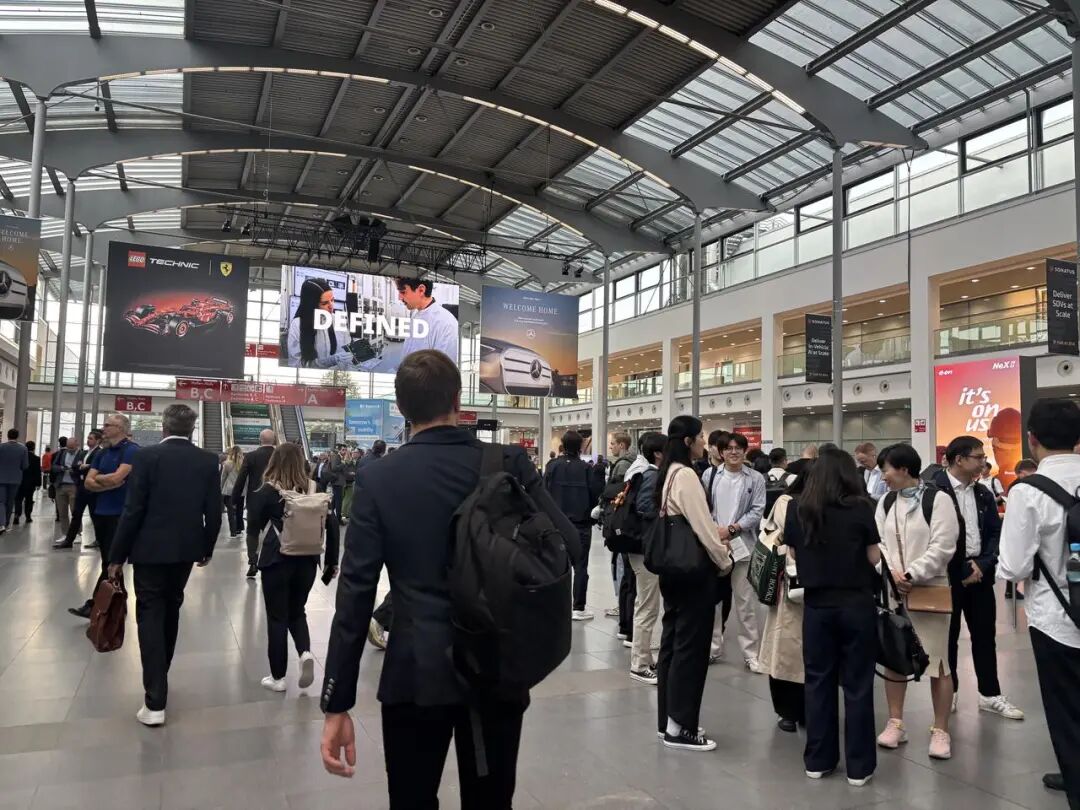
Group 1: Munich International Motor Show - The Munich International Motor Show, held from September 8 to 14, showcases the growing presence of Chinese companies in the European market, with 116 Chinese exhibitors compared to 70 in 2023, marking a new high [1] - The event, now the largest international auto show in Europe, features German companies unveiling new electric vehicles, leveraging their local advantage [1] - The show highlights the restructuring of the global automotive industry, with Chinese enterprises gaining more influence and recognition [1] Group 2: Growth of Chinese New Energy Vehicles in Europe - Chinese new energy vehicles (NEVs) are experiencing strong sales growth in Europe, with pure electric vehicles accounting for 9.9% of the market share as of July 2025 [2] - Chinese brands have achieved a 5.3% market share in the overall European automotive market, surpassing the 5% threshold for three consecutive months [2] - The collaboration between Chinese automakers and multinational companies, such as GAC Group's partnership with Stellantis, is accelerating their entry into the European market [2] Group 3: Transition to Ecological Export Model - The Chinese automotive industry is evolving from a "single vehicle export" model to a comprehensive "ecological export" approach, showcasing a complete supply chain for smart NEVs [3] - Various Chinese battery manufacturers are presenting advanced technologies, including lithium, sodium-ion, and solid-state batteries, at the Munich show [3] - Companies like BYD, Chery, and CATL are establishing local production facilities in Europe, indicating a shift towards localized production and joint ventures [3]
慕尼黑车展,一场决定未来格局的中德车企对弈
Mei Ri Jing Ji Xin Wen· 2025-09-10 13:57
Group 1: Event Overview - The 2025 International Motor Show in Munich focuses on innovation, infrastructure solutions, software development, and emerging mobility trends, marking a shift from traditional auto shows to comprehensive mobility platforms [1] - A total of 748 exhibitors participated, with 57% coming from outside Germany, and China being the largest foreign participant, accounting for nearly one-third of overseas exhibitors [1] Group 2: Chinese Automakers' Strategies - Chinese automakers are increasingly active in Europe, with participation rising from over 70 companies in 2023 to 116 in 2025, showcasing vehicles and technologies across various sectors [2][3] - Xpeng Motors announced the opening of its first European R&D center during the show, aiming to better understand and meet European consumer needs [2] - BYD plans to launch multiple new hybrid models in Europe and aims to establish over 1,000 stores by the end of 2023, with a goal of exceeding 2,000 by the end of 2026 [3] Group 3: Competitive Landscape - European automakers, including BMW and Mercedes-Benz, are responding to the competitive pressure from Chinese companies by showcasing their latest electric models and emphasizing cost reduction strategies [7][8] - Mercedes-Benz introduced the new GLC 400 4MATIC electric model, while BMW launched the iX3, with plans for significant new model releases by 2027 [7][8] Group 4: Industry Collaboration - Chinese battery manufacturers like CATL have established deep ties with European automakers, with CATL claiming partnerships with over 90% of mainstream car manufacturers in Europe [6][9] - Companies like Momenta are also forming collaborations with numerous global automakers, enhancing the potential for Sino-European cooperation in smart driving technologies [9]
蔚来新一轮融资
Sou Hu Cai Jing· 2025-09-10 12:37
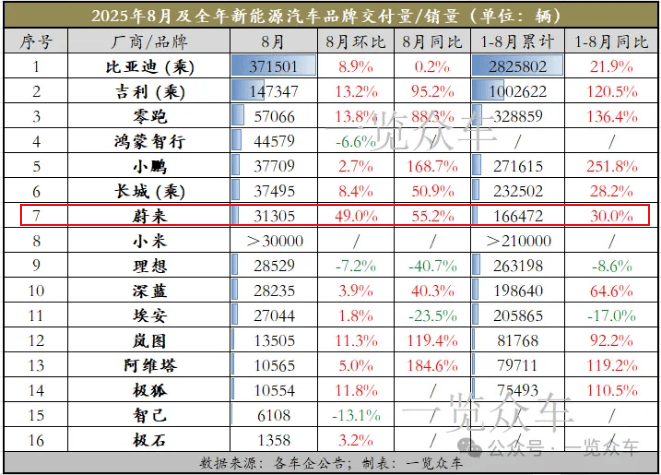
Core Viewpoint - NIO Inc. plans to issue 181.8 million Class A ordinary shares, including American Depositary Shares (ADS), to fund research and development of core technologies for smart electric vehicles, expand battery swapping and charging networks, and strengthen its balance sheet for long-term growth [2]. Financial Performance - In Q2, NIO reported revenue of 19.01 billion yuan, a year-on-year increase of 9.0% and a quarter-on-quarter increase of 57.9% [2]. - Cash reserves increased to 27.2 billion yuan, with R&D expenditure reaching 3.01 billion yuan [2]. - The overall gross margin was 10.0%, showing a significant quarter-on-quarter improvement, while the gross margin for other sales turned positive at 8.2%, marking a historical high [2]. Vehicle Deliveries - In August, NIO delivered 31,305 vehicles, a year-on-year increase of 55.2%, achieving a historical high [2]. - Breakdown of deliveries includes 10,525 vehicles from the NIO brand, 16,434 from the Ladao brand, and 4,346 from the Firefly brand [2]. Strategic Goals - NIO's CEO emphasized the necessity of achieving profitability in Q4, citing the launch of nine new products and the completion of the sales service network and battery swap station construction as critical factors [3].

这届慕尼黑车展:新车不多,伤害极大
3 6 Ke· 2025-09-10 12:25
Core Insights - The Munich Auto Show has seen a significant presence of Chinese automotive companies, with one-third of the exhibition space occupied by them, indicating China's rising influence in the global automotive industry [1] - The show highlights a shift in strategy for both Chinese and German automakers, focusing on product innovation and global expansion rather than just vehicle sales [3][18] Group 1: Differences in Auto Shows - Munich Auto Show is characterized by its compactness, with less than half the exhibition space compared to domestic shows, yet it showcases the latest strategic models from major brands [3] - Unlike domestic shows that emphasize vehicle sales, the Munich Auto Show serves as a strategic platform for global players, with Chinese companies using it as a launchpad for international markets [3][18] - The presence of both automakers and suppliers in the same venue reflects a more integrated approach to the automotive supply chain [3] Group 2: German Automakers' Strategies - German automakers, particularly BMW and Mercedes-Benz, are shifting focus from concept cars to new production models, indicating a response to market demands [6][7] - Mercedes-Benz has streamlined its naming strategy for electric vehicles, moving away from the EQ branding to simplify consumer recognition [9] - The new Mercedes-Benz GLC electric version features advanced technology and design, aiming to meet consumer preferences for spacious and comfortable vehicles [15][11] Group 3: Expansion of Chinese Automakers - Chinese automakers are increasingly participating in international auto shows, with a notable increase in the number of Chinese companies at the Munich Auto Show compared to previous years [18] - Companies like AITO and Xiaopeng are using the show to establish their brands in Europe, with plans for direct sales and localized production [20][22] - Leap Motor's Lafa5 is positioned as a sporty model targeting younger consumers, marking a new phase in the company's product strategy [26] Group 4: Competitive Landscape - The competition in the automotive industry is intensifying, with Chinese brands gaining market share in Germany, evidenced by a projected 4% market share for new entrants [32] - Chinese automakers are achieving high customer satisfaction ratings, surpassing traditional German brands in net promoter scores [33] - The shift towards electric vehicles and the need for differentiation in technology and product offerings are driving the evolution of the automotive market [36][41] Group 5: Globalization and Market Strategy - The ultimate goal for Chinese automakers is profitability in international markets, with Europe emerging as a key battleground for growth [37][40] - Successful international expansion requires a combination of technology, product quality, and effective distribution channels [41] - The increasing presence of Chinese brands at international events signals a significant transformation in the global automotive landscape [44]