小鹏

Search documents
汽车稳增长方案带来利好,汽车产业链股、港股整车股走强
Xin Jing Bao· 2025-09-15 14:46
Core Viewpoint - The Ministry of Industry and Information Technology (MIIT) has emphasized the importance of stabilizing growth in the automotive industry and regulating competition, leading to a significant rise in automotive stocks on September 15, 2023 [1][2]. Group 1: Policy Initiatives - The "Automotive Industry Stabilization Growth Work Plan (2025-2026)" was officially released on September 13, outlining 15 initiatives and 3 guarantee measures across four dimensions: expanding domestic consumption, improving supply quality, optimizing the development environment, and deepening open cooperation [2]. - The plan aims for approximately 32.3 million vehicle sales in 2025, a year-on-year increase of about 3%, with new energy vehicle sales targeted at around 15.5 million, reflecting a 20% growth [2]. Group 2: Industry Response - Following the MIIT's initiatives, the China Association of Automobile Manufacturers (CAAM) issued a payment standard for automotive suppliers, advocating for a 60-day payment term to stabilize the supply chain and reduce systemic risks [3]. - Major automotive companies, including FAW, Dongfeng, Changan, SAIC, and BYD, have committed to actively implementing the payment standards proposed by CAAM [2]. Group 3: Market Reaction - On September 15, automotive stocks surged, with notable increases in companies such as Jianghuai Automobile (up 6.68%) and BYD (up 2.63%), reflecting positive market sentiment towards the government's initiatives [1]. - Hong Kong-listed automotive stocks also experienced gains, with Li Auto rising by 4.56% and NIO by 3.53%, indicating a broader market response to the regulatory changes [1].




追踪十家主流上市车企账期状况:广汽、比亚迪最短
Jing Ji Guan Cha Wang· 2025-09-15 05:36
此外,上半年行业竞争加剧无疑对企业现金流带来压力。从数据可以看到,十家国内主流车企中有六家 的付款周期较去年同期有所上涨,仅有小鹏、上汽、长安、比亚迪的账期是减少。 随着国内主流上市车企半年报悉数披露,除了营收、净利润等经营指标外,向供应商付款周期到底是变 长还是变短,无疑是行业关注的核心指标。 据数据显示,包括上汽、比亚迪(002594)、吉利汽车、长城在内十家国内主流车企今年上半年向上游 供应商的平均付款周期为183天,较2024年上半年增加约7天。这其中,广汽、比亚迪、吉利汽车、上汽 集团(600104)的账期最短,分别为137天、142天、156天和157天,优于行业平均水平。 行业专家认为,随着头部车企将陆续兑现中小供应商"60天账期"承诺,不仅能极大减少供应商资金压 力,也能促使其将资金更高效地投入到技术研发,推动产业链上下游实现高质量发展。 ...
中国新能源汽车澳洲受指控,“维修权”究竟该归谁?
Jing Ji Guan Cha Bao· 2025-09-15 00:50
Core Insights - The core issue revolves around the high maintenance costs and insurance fees for electric vehicles (EVs) due to monopolistic practices by manufacturers, which consumers did not anticipate [1][3][4] Group 1: Market Dynamics - Five Chinese EV manufacturers, including BYD and Xpeng, are accused of monopolizing repair services in Australia by delaying and restricting access to independent repair services and diagnostic software [1][5] - The Australian Automotive Service and Repair Authority (AASRA) has reported these practices to the Australian Competition and Consumer Commission (ACCC), which could lead to significant penalties for the companies involved [5][6] Group 2: Consumer Impact - Consumers are facing challenges in accessing affordable and timely repair services, as authorized service centers are often located far away, leading to increased costs and inconvenience [1][2] - The high maintenance costs associated with EVs contradict the initial appeal of lower overall usage costs compared to traditional fuel vehicles [1][3] Group 3: Regulatory Environment - The Australian Motor Vehicle Service and Repair Information Scheme (MVIS) mandates that manufacturers must provide independent repairers with access to essential diagnostic software and technical data, which the accused companies allegedly failed to comply with [5][6] - The ACCC is responsible for enforcing MVIS, with penalties for non-compliance reaching up to AUD 10 million (approximately RMB 47 million) [5] Group 4: Industry Perspectives - Industry experts highlight that the current closed service model of Chinese EV manufacturers is a significant barrier to the development of a competitive aftermarket [3][4] - Concerns about safety and liability in third-party repairs are cited as reasons for manufacturers' reluctance to open their data and services to independent repairers [4][6] Group 5: Future Considerations - The need for a balanced ecosystem that allows for fair competition while ensuring safety standards is emphasized, requiring collaboration among manufacturers, independent repairers, regulatory bodies, and insurance companies [6] - The situation in Australia reflects a broader trend of increasing regulatory scrutiny in the automotive sector, particularly regarding consumer rights and anti-competitive practices [6]

安利股份:公司产品在比亚迪等主流汽车品牌的部分车型上实现定点、应用
Zheng Quan Shi Bao Wang· 2025-09-11 13:40
Core Viewpoint - Amway Co., Ltd. (300218) has made significant advancements in the automotive interior products sector, achieving competitive advantages and technical capabilities that allow its products to be utilized in various mainstream automotive brands' models, with mass production expected to commence in late 2025 or 2026 [1] Group 1: Company Developments - The company is a latecomer in the automotive interior products category but has improved its technology and competitive advantages through recent efforts [1] - Amway's products have been adopted in models from major automotive brands such as BYD (002594), Toyota, Volkswagen, Hongmeng Zhixing, Xiaopeng, Great Wall, Jianghuai, and Chery [1] - Some of the designated projects are anticipated to enter mass production in the second half of 2025 or in 2026 [1]

情绪经济风口下的AI玩具:资本加速入场 面临交互生硬瓶颈
Nan Fang Du Shi Bao· 2025-09-10 11:34
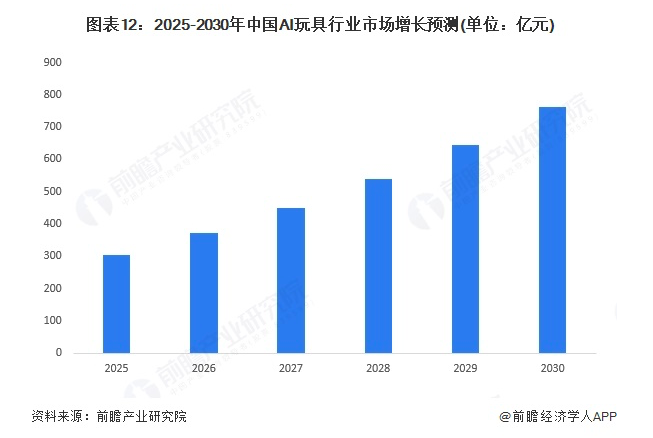
Core Insights - The AI companionship economy is rapidly developing globally, driven by personal emotional needs and technological innovation, with the global AI toy market expected to exceed $11 billion in 2024 and reach $58 billion by 2030, reflecting an annual growth rate of over 20% [2][5][6] - In China, the AI toy market is projected to surpass 70 billion yuan by 2030, indicating significant growth potential [2][5] - The market is currently in an early educational phase, with companies focusing on integrating professional content into AI toys to enhance user engagement and dependency [10][14] Market Dynamics - Capital and technology companies are intensively entering the AI companionship sector, with startups like Luobo Intelligent and Beipei Technology securing millions in funding, and established firms like Alibaba and Meituan launching their own AI companionship products [6][10] - The investment landscape is shifting from technology validation to commercial viability, with a focus on a composite model of "hardware + emotional subscription + scenario solutions" [10][12] Product Development - AI companionship toys are evolving from mere toys to trusted companions for children, with users reporting improved interactions and learning experiences [3][4][13] - Companies are exploring various product forms and applications, targeting different demographics including children, single adults, and the elderly [10][12] Challenges and Bottlenecks - The AI companionship sector faces several challenges, including stiff competition, interaction rigidity, weak emotional projection, and data compliance risks [14][16] - Current AI toys are primarily toy-centric, lacking the ability to provide in-depth data analysis and professional guidance for parents [14][16] - High return rates (30%-40%) are attributed to "interaction disconnection," highlighting the need for continuous emotional engagement and coherent communication [16]


阿尔特(300825.SZ):目前暂未参与客户飞行汽车的供应链配套
Ge Long Hui A P P· 2025-09-10 06:40
Core Viewpoint - The company, Altec (300825.SZ), focuses on the full-process research and development of complete vehicles and platforms, as well as the development and manufacturing of core components for new energy intelligent platforms, serving notable clients including Honda, Nissan, Toyota, and several emerging enterprises like Xiaopeng [1] Group 1 - The company's main business includes the R&D of complete vehicles and platforms, new energy intelligent platform development, and core component manufacturing [1] - Key clients of the company include major automotive manufacturers such as Honda, Nissan, Toyota, FAW, Dongfeng, BAIC, Jiangling, Chery, and various new energy vehicle companies [1] - The company is closely monitoring innovations in the low-altitude economy sector and actively engages with leading enterprises in the industry [1] Group 2 - Currently, the company has not participated in the supply chain support for clients' flying cars [1]

2025港股还能上涨吗?中概股回归与投资机会
Sou Hu Cai Jing· 2025-09-07 03:31
Core Viewpoint - The Hong Kong stock market has been underperforming, but with potential changes in monetary policy, economic recovery in China, and the return of Chinese concept stocks, there may be a new upward cycle for the market in 2025 [3][18]. Current Market Situation and Core Contradictions - The overall price-to-earnings (P/E) ratio of the Hong Kong stock market is low, ranging from 8 to 10 times, with some blue-chip stocks even below 6 times, indicating it has the characteristics of the "lowest valuation market globally" [3][4]. - Insufficient liquidity remains a significant issue, with low trading volumes due to a lack of market confidence, which hampers sustained price increases [4]. - High dividend yields provide a support point, with some blue-chip companies in banking, energy, and real estate offering yields between 7% and 10%, acting as a "safety cushion" for capital allocation [5]. - The trend of Chinese concept stocks returning to Hong Kong is strengthening, with many companies choosing to list again in Hong Kong, enhancing its position as a hub for these stocks [6]. Key Factors Driving the Hong Kong Stock Market in 2025 - The Federal Reserve's shift to a rate-cutting cycle in 2025 is expected to improve global liquidity, potentially leading to a return of funds to emerging markets, including Hong Kong [7]. - Expectations of economic recovery in China, supported by policy measures, are likely to boost consumer confidence and manufacturing, positively impacting Hong Kong's market due to its close ties with the mainland economy [8]. - The return of Chinese concept stocks, particularly technology and internet giants, is expected to create structural opportunities in the Hong Kong market and attract more international capital [9]. - Increased support from national policies and regulatory environments, including optimizing connectivity mechanisms and enhancing financial product innovation, will help improve market activity [11]. Significance of Chinese Concept Stock Returns - The return of high-quality assets is reshaping the Hong Kong stock ecosystem, with leading companies like Alibaba, JD.com, and Meituan listing in Hong Kong, contributing to the formation of a "new economy sector" [12]. - The weight of technology in the Hong Kong market is expected to increase, moving away from traditional sectors like finance and real estate, which will attract global growth capital [13]. - Returning to Hong Kong helps mitigate regulatory risks faced by Chinese concept stocks in the U.S. market, reducing valuation discounts caused by U.S.-China tensions [14]. Investment Opportunities in 2025 - Focus on technology and internet leaders, as well as high-dividend blue-chip stocks, which represent an optimal combination of growth and defensive strategies [15]. - The renewable energy and smart vehicle sectors are also highlighted, with companies like Xpeng, Li Auto, and BYD expected to attract investment due to their technological leadership and alignment with global trends [19]. - Defensive stocks in telecommunications, energy, and banking are appealing for long-term capital allocation due to their stable cash flows and high dividend yields [19]. - Consumer and healthcare sectors are projected to have medium to long-term growth potential, driven by rising consumer demand and healthcare needs in China [19].

广东茂名首富,又要IPO了
Hua Er Jie Jian Wen· 2025-09-05 11:30
Core Viewpoint - XINWANDA ELECTRONICS CO., LTD. is set to launch an IPO on the Hong Kong Stock Exchange, following the footsteps of other major lithium battery manufacturers like CATL and EVE Energy [2][10]. Company Overview - Founded in 1997 by brothers Wang Mingwang and Wang Wei, XINWANDA started with consumer batteries and has expanded into automotive power batteries and energy storage [3][7]. - The company was listed on the Shenzhen Stock Exchange in 2011 and later on the Swiss Exchange in 2022, marking its third entry into capital markets [4][9]. Financial Performance - XINWANDA reported revenues of 521.62 billion RMB, 478.62 billion RMB, and 560.21 billion RMB for the years 2022 to 2024, with profits of 7.63 billion RMB, 3.31 billion RMB, and 5.34 billion RMB respectively [13]. - The company holds a 34.3% market share in the global mobile phone battery market, ranking first, and a 21.6% share in laptop and tablet batteries, ranking second [12]. Business Segments - The business is divided into three main segments: consumer batteries, power batteries, and energy storage systems [11]. - The revenue from power batteries increased from 126.87 billion RMB in 2022 to 151.39 billion RMB in 2024, while energy storage revenue rose from 4.55 billion RMB to 18.89 billion RMB in the same period [13]. Market Strategy - XINWANDA is facing intense competition in the power battery sector, dominated by CATL and BYD, which together hold over 60% of the market share [14]. - The company is expanding internationally, with significant investments in battery factories in Hungary, Vietnam, and Thailand to support its growth strategy [14][15]. Capital Market Activities - In addition to the upcoming IPO, XINWANDA is also planning to spin off its subsidiary, XINWANDA POWER, for a separate listing on the Shenzhen Stock Exchange [16][17]. - The company has made substantial investments in 73 companies, totaling over 6.5 billion RMB, primarily focusing on battery and energy storage technologies [18][19].

中泰国际每日晨讯-20250905
ZHONGTAI INTERNATIONAL SECURITIES· 2025-09-05 03:34
Market Overview - On September 4, the Hang Seng Index fell by 1.1% to close at 25,058 points, barely holding above 25,000 points[1] - The Hang Seng Technology Index dropped by 1.9% to 5,578 points, with a total market turnover of HKD 302.2 billion[1] - Alibaba (9988 HK) declined by 3.2%, while Xiaomi (1810 HK) fell over 2%[1] Sector Performance - The financial sector showed mixed results, with China Pacific Insurance (2601 HK) down over 5%, while Agricultural Bank of China (1288 HK) rose by 2.1%[1] - Semiconductor stocks faced significant declines, with SMIC (981 HK) dropping by 6.7%[1] - Consumer stocks like dining and dairy showed resilience, rising against the overall market trend[1] Valuation Insights - The current forecasted PE for the Hang Seng Index is at 11.3 times, indicating it is at a high valuation range compared to 2018-2019[2] - Structural earnings differentiation is evident, with most sectors facing downward revisions, except for information technology, materials, and finance[2] - The Hang Seng Index is expected to find value in the 24,000-24,500 point range for potential buying opportunities[2] Company Updates - BYD (1211 HK) has reportedly lowered its sales target for the year from 5.5 million to 4.6 million units, a reduction of 16%[3] - The healthcare sector saw a decline of 3.8% in the Hang Seng Medical Care Index, with most major companies experiencing drops[3] Future Outlook - Anticipated liquidity benefits include a decrease in Hong Kong interbank rates post-month-end, continued inflow of southbound funds, and potential interest rate cuts by the Federal Reserve[2] - The global liquidity environment is expected to provide strong support for the Hong Kong stock market[2]
美的一天净赚近1.5亿,高管回应:公司估值被低估了;字节通报8人涉刑被移交,有人「造黄谣」被追责;追觅上半年营收远2024年全年
雷峰网· 2025-09-05 00:34
Key Points - Usmile, a leading electric toothbrush brand, has established a subsidiary to explore AI hardware, indicating a strategic shift towards smart technology [4] - Midea Group reported a total revenue of 252.3 billion yuan for the first half of 2025, a year-on-year increase of 15.7%, and a net profit of 26 billion yuan, up 25% [6] - Xiaohongshu's valuation has surged by 19% in three months, reaching 31 billion USD, reflecting strong investor interest [7] - NIO's CEO Li Bin confirmed internal restructuring efforts, including personnel adjustments and organizational optimization [8] - Chasing Technology's revenue for the first half of 2025 has already surpassed its total for the entire year, with over 20 billion yuan in intended orders for home appliances [9] - ByteDance reported the dismissal of 100 employees for violating company policies, with 8 individuals facing criminal charges [10] - Five Chinese new energy vehicle companies are facing potential fines of approximately 47 million yuan for alleged maintenance monopolies [12] - Amazon's strict return-to-office policy has reportedly led to the loss of top tech talent [19] - Hyundai's union in South Korea is planning limited strikes to demand a four-and-a-half-day workweek and wage increases [20] - Nvidia's new chip for China, B30A, is expected to have six times the performance of the H20 model, with a price potentially double that of H20 [21] - Apple is developing an AI-based web search tool to enhance competition with OpenAI and others, integrating it with Siri [22] - Google has been fined 325 million euros by France for inserting ads into Gmail without user consent [23] - Shein has been fined 150 million euros by France for improper use of cookies, and plans to appeal the decision [24][25] - European automotive executives are urging the EU to adopt a more flexible approach to emissions regulations, learning from China's policies [26]