卡游

Search documents
靠奥特曼卡牌“收割小孩”的卡游二闯港交所
2 1 Shi Ji Jing Ji Bao Dao· 2025-06-09 08:49
Group 1 - The core viewpoint of the articles highlights the rapid growth and challenges faced by the card game company, 卡游, which is attempting a second listing on the Hong Kong Stock Exchange with projected revenue exceeding 10 billion yuan in 2024 [1] - 卡游's revenue structure is heavily reliant on licensed products, and the company has been experiencing continuous losses during the reporting period, raising concerns about its sustainability [1] - The company’s main products include collectible trading cards, figurines, and stationery, with collectible cards being the most recognized, particularly those featuring popular IPs like Ultraman [1] Group 2 - Reports indicate that students have spent exorbitant amounts on cards, with one student reportedly spending nearly 100,000 yuan in six months, and some parents spending up to 2 million yuan without completing their collections [2] - The trading card market has seen speculative behavior, with rare cards being sold on the black market for as much as 210,000 yuan, indicating a troubling trend of irrational consumption among minors [2] - The card drawing mechanism has been criticized for resembling gambling, potentially fostering a gambling mentality among minors [2]


投后期又香了
投中网· 2025-06-08 03:54
Core Insights - The article discusses a shift in investment focus towards late-stage projects, particularly in the consumer sector, driven by the impressive performance of companies like Bubble Mart and others in the Hong Kong IPO market [1][10][11] - There is a growing interest in the "IP economy" and collectible toy projects, as they offer high margins and strong cash flow, appealing to late-stage investors seeking stability [2][3] - The investment landscape is evolving, with a notable shift from early-stage investments to more mature, revenue-generating projects due to the challenges faced in early-stage financing [3][6] Investment Trends - The Hong Kong IPO market has seen a significant increase in fundraising, with over 760 billion HKD raised since 2025, marking a sevenfold increase compared to the previous year [1][10] - Consumer companies are leading the charge in IPOs, with a 71% year-on-year increase in the number of consumer IPOs and total fundraising exceeding 20 billion HKD [10] - The average price-to-earnings (P/E) ratio for consumer stocks in Hong Kong has surged from 15 to 40 times, indicating a revaluation of consumer brands [10][11] Investment Strategy Adjustments - Investors are increasingly cautious about early-stage projects due to long R&D cycles and valuation bubbles, prompting a shift towards late-stage investments with stable revenue [3][6] - The average exit period for early-stage projects has extended from 5 to 8 years, while late-stage projects offer more stable internal rates of return (IRR) through mechanisms like preferred liquidation rights [8] - The current investment strategy emphasizes the importance of cash reserves and financial health, particularly in a cooling market environment [7][8] Market Dynamics - The article highlights a resurgence in the IPO market, particularly for consumer companies, which is expected to drive further interest in late-stage investments [10][11] - The trend of investing in late-stage projects is supported by a more rational valuation environment following the previous market bubble, with a focus on companies that can achieve quick listings [11] - The regulatory environment is also becoming more favorable, with measures introduced to ease liquidity pressures for private equity funds [11] Conclusion - The investment landscape is characterized by a dual approach, with firms pursuing both early and late-stage opportunities, reflecting a strategic balance in response to market conditions [13]

【豫财经】“港股三姐妹”爆火,两位是河南老乡
Xin Hua Cai Jing· 2025-06-06 13:31
Core Viewpoint - The Hong Kong stock market is experiencing a strong performance in 2025, particularly in the consumer sector, with companies like Mixue Group, Pop Mart, and Laopuhuangjin being highlighted as the "new consumption trio" of Hong Kong, all achieving over 100% stock price growth and market capitalizations exceeding HKD 100 billion [2][3]. Group 1: Company Performance - Mixue Group and Pop Mart, both originating from Henan, have seen significant stock price increases, with Mixue Group reaching a peak of HKD 618 per share and a market cap exceeding HKD 230 billion [8]. - Pop Mart's market capitalization has surged over HKD 1 trillion in recent months, with a remarkable 20-fold increase in stock price since its low in Q4 2022, reflecting a 2300% increase [6]. - Laopuhuangjin, known as the "Hermès of gold," has also performed well, with its stock price reaching HKD 903 per share and a market cap of HKD 155.9 billion, marking a 240% increase within the year [8]. Group 2: Market Trends - The consumer sector in Hong Kong is witnessing a wave of IPO applications, with over 20 consumer companies seeking to list, indicating a vibrant market environment [26]. - As of June 5, 2025, there are 166 companies in the IPO queue for Hong Kong, with a significant portion being consumer-related [26]. - The influx of capital into the Hong Kong market, with net inflows reaching HKD 638.36 billion in 2025, has contributed to the strong performance of consumer stocks [26]. Group 3: Consumer Behavior and Marketing Strategies - New consumer companies are particularly favored by the "Z generation," focusing on emotional value and experiential marketing, which has led to their rapid rise in the market [10]. - Mixue Group's competitive edge lies in its strong supply chain and affordable pricing, with products typically priced between HKD 2 and HKD 8, appealing to cost-conscious consumers [12]. - Pop Mart has successfully tapped into the emotional consumption needs of younger consumers by creating a sense of surprise and rarity with its blind box toys, driving repeat purchases [14]. Group 4: Regional Influence - The emergence of Mixue Group and Pop Mart as significant players in the consumer market is rooted in their origins in Henan, showcasing the province's potential for nurturing innovative business models [16]. - The success of these companies reflects a broader trend in Henan, where a new consumer landscape is being established, characterized by strong market demand and innovative business practices [24].
276亿市场,为何国产球星卡还不如“小马宝莉”?
3 6 Ke· 2025-06-06 11:33
Core Insights - The emergence of a truck carrying 6,000 rare star cards valued at 20 million yuan from Shanghai marks a significant moment for the domestic star card market, highlighting the potential value of these collectibles [1] - The history of domestic star cards in China spans over 30 years, evolving from promotional items to collectible cultural products, with a pivotal moment occurring in 1998 when commercial operations began [2][4] - The market for collectible cards in China is projected to reach 27.66 billion yuan by 2025, indicating a growing interest and investment in this sector [5][20] Industry Evolution - Domestic star cards began in the mid-1990s as promotional items for football clubs, but the 1998 launch of the "98甲A联赛球星卡" marked the transition to a collectible market [2][4] - The rise of the internet facilitated the growth of online trading platforms, allowing collectors to form national communities, although the domestic market struggled due to weak sports IP influence [4][6] - The COVID-19 pandemic in 2020 significantly boosted the domestic star card market, with a consumption growth rate of 205%, surpassing the global average [6] Market Dynamics - The most collectible domestic star cards are those associated with Olympic and world champions, reflecting a strong national sentiment [6][8] - High-value transactions have been recorded, with individual cards selling for over 25,000 yuan, indicating a willingness among consumers to invest in domestic star cards [9] - The domestic star card market faces challenges, including a lack of strong sports culture, high competition from international brands, and the need for better IP development [12][15][19] Future Opportunities - The domestic star card market can learn from successful IP strategies in other sectors, such as leveraging local sports events and historical figures to create more relatable products [22][24] - Innovative approaches, such as integrating AR technology and creating immersive experiences, could enhance consumer engagement and transform star cards into dynamic cultural products [24][26] - The market's growth potential is supported by a significant number of companies entering the space, with approximately 2,830 card-related enterprises expected by 2025 [20]

“泡泡玛特们”股价创新高!潮玩公司IPO接力赛:“情绪价值”撬动资本市场
Hua Xia Shi Bao· 2025-06-06 08:23
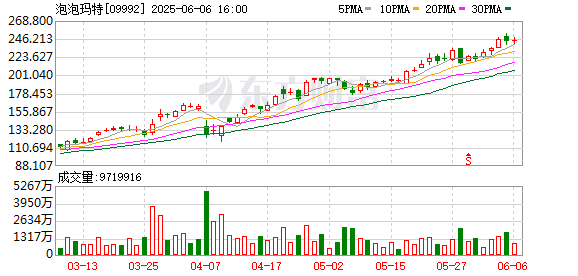
Core Insights - The article highlights the significant rise of the collectible toy industry, particularly driven by the success of Pop Mart's LABUBU, which has become a global phenomenon since 2024, leading to increased market interest and investment in the sector [2][5][8]. Company Performance - Pop Mart's LABUBU has contributed to a remarkable financial performance, with its revenue from the THE MONSTERS series exceeding 30 billion yuan in 2024, and the company achieving a market capitalization of over 330 billion HKD [5][8]. - The stock price of Pop Mart surged from below 10 HKD in Q4 2022 to 252.6 HKD by June 2025, marking an increase of over 24 times [5][8]. - Other companies in the collectible toy space, such as Blokku, have also seen significant stock price increases, with Blokku's stock rising 40.85% on its debut and reaching new highs [6][8]. Market Trends - The collectible toy market has grown nearly tenfold from 63 billion yuan in 2015 to 600 billion yuan in 2023, with projections estimating it will reach 1,101 billion yuan by 2026 [8]. - The main consumer demographic for blind box toys consists of individuals born in the 1990s and 2000s, who represent 78% of the market and exhibit strong purchasing power [8]. IP Development and Competition - The success of LABUBU is attributed to its unique design and the influence of celebrities, which has helped it break into mainstream culture [4][6]. - Companies are increasingly focusing on IP development, with Pop Mart and others needing to continuously innovate to avoid becoming obsolete [9][10]. - The competitive landscape is shifting, with companies like 52TOYS and KAYOU also exploring overseas markets and developing their own IPs to enhance their market positions [12][15]. International Expansion - Pop Mart's overseas revenue reached 50.66 billion yuan in 2024, a 375.2% increase, with Southeast Asia being the most lucrative market [14][15]. - Other companies, such as KAYOU and 52TOYS, are also expanding internationally, with plans to open stores in Hong Kong and Macau, and to establish a presence in North America and Southeast Asia [15]


衢州夫妇卖卡给小学生,净赚44亿
盐财经· 2025-06-05 09:53
Core Viewpoint - The article discusses the rapid growth and business model of a company named "卡游" (KAYOU), which specializes in collectible card games, highlighting its impressive financial performance and the cultural phenomenon surrounding card collecting among children and adults alike [9][31][34]. Group 1: Company Overview - KAYOU is preparing for an IPO, with projected revenues of 10.057 billion RMB and a net profit of 4.466 billion RMB for 2024, indicating significant growth from 2.298 billion RMB in 2021 [9][32]. - The company's revenue from card sales constitutes over 90% of its total income, with a gross margin of 67.3% overall and 71.3% specifically for card sales [32][34]. - KAYOU's founder, Li Qibin, holds approximately 82% of the company's shares, with a potential wealth exceeding 800 billion RMB if the company achieves a market valuation of 100 billion RMB [11]. Group 2: Market Dynamics - The collectible card market is driven by the "抽卡" (drawing cards) mechanism, where the excitement of obtaining rare cards fuels consumer spending, similar to gambling [11][41]. - The company has successfully leveraged popular IPs, such as "奥特曼" (Ultraman) and "小马宝莉" (My Little Pony), to drive sales, with Ultraman cards accounting for nearly 60% of total card products [34][35]. - KAYOU has expanded its IP portfolio to include 70 different IPs by 2024, aiming to diversify its offerings and reduce reliance on any single IP [34]. Group 3: Consumer Behavior - Collectible cards serve as social currency among children, influencing their social dynamics and emotional satisfaction [24][32]. - The thrill of opening card packs and the uncertainty of obtaining rare cards create a psychological loop that encourages repeated purchases [26][28]. - Parents have expressed concerns over children's spending on cards, with some resorting to purchasing rare cards directly from secondary markets to satisfy their children's desires [26][39]. Group 4: Challenges and Risks - KAYOU faces challenges related to its heavy reliance on popular IPs, with many licensing agreements set to expire in the next three years, posing a risk to revenue stability [44]. - The company's extensive distribution network, while beneficial for rapid expansion, also presents regulatory challenges, particularly concerning counterfeit cards and the sale of products to minors [50][52]. - The potential for market saturation and the need for sustainable growth strategies are critical considerations for KAYOU as it navigates the evolving landscape of the collectible card industry [55].

中国潮玩品牌火爆出圈走向全球 两万余家企业掘金千亿蓝海市场
Zheng Quan Shi Bao· 2025-06-03 18:36
Group 1: Industry Overview - The潮玩 economy has evolved from a niche market to a mainstream consumer trend, driven by the Z generation's emotional connection and identity recognition through products [1] - The潮玩 market in China has surpassed 100 billion yuan in scale, with projections to exceed 200 billion yuan by 2029 [5] -潮玩 products emphasize cultural resonance, creative expression, and aesthetic value, appealing primarily to adult collectors and trend enthusiasts [4] Group 2: Company Performance - 泡泡玛特 (09992.HK) has seen its stock price increase by 1070.65% in 2024, reaching a market cap of 314.2 billion HKD, surpassing several established consumer brands [2] - 泡泡玛特 reported a revenue of 13.038 billion yuan in 2024, a year-on-year increase of 106.92%, with a net profit of 3.403 billion yuan, up 185.86% [2] - Other潮玩 brands like 布鲁可 (00325.HK) and TOP TOY have also shown significant growth, with 布鲁可's stock price rising 173.07% since its IPO and a revenue increase of 155.61% [2][3] Group 3: Market Dynamics - The潮玩 market is characterized by a rapid increase in the number of related enterprises, with 22,300潮玩 companies registered by May 2025, reflecting a 30.18% year-on-year growth in 2024 [5] - The rise of情绪经济 and盲盒经济 has created a favorable environment for潮玩 brands, with a strong consumer base among the 20-35 age group [12] - The market is expected to see a shift from "experiential purchasing" to "habitual consumption," with the number of paying consumers projected to reach 40 million by 2025 [12] Group 4: Global Expansion - 泡泡玛特 has accelerated its global strategy, achieving a revenue of 3.041 billion yuan from its international operations in 2024, a 726.56% increase [10] - The company has localized its products and signed local artists to enhance its global presence, with significant success in markets like Thailand and North America [10][11] - The潮玩 industry is witnessing a collective move towards international markets, driven by the demand for quality IP and products [11] Group 5: Challenges and Opportunities - Despite the growth potential, the潮玩 economy faces challenges such as immature business models and evolving consumer preferences [12][14] - The industry must balance the niche value of潮玩 as collectibles with the mass production aspect to sustain profitability [14] - Technological advancements like 3D printing and AI are expected to enhance product interactivity and market expansion [13]
后物质时代的消费革命:卡牌热是泡沫还是风口?
3 6 Ke· 2025-06-03 09:38
Core Viewpoint - The article discusses the investment potential and operational dynamics of a collectible card game company, emphasizing the importance of supply-side factors over demand-side analysis in understanding the company's business model and market positioning [3][4]. Group 1: Company Overview - The company operates primarily in the collectible card game sector, relying on non-exclusive IP licensing and targeting younger audiences [4]. - The business model is straightforward, focusing on acquiring IP and selling toys, which leads to significant revenue volatility [5]. Group 2: Financial Performance - Revenue projections for 2022, 2023, and 2024 are 4.13 billion, 2.66 billion, and 10.06 billion RMB respectively, with a notable decline of 35.6% in 2023 followed by a projected increase of 277.8% in 2024 [6]. - Gross profit for the same years is 2.84 billion, 1.75 billion, and 6.77 billion RMB, with gross margins of 68.8%, 65.8%, and 67.3% respectively [7]. - The company experienced a net loss in 2024, attributed to high stock-based compensation and fair value changes of preferred shares, which are not expected to impact cash flow significantly [10]. Group 3: Market Dynamics - The company heavily relies on the Ultraman IP, which constituted over 80% of its revenue in 2022, leading to vulnerability during market disruptions [8]. - In 2023, the company introduced 36 new IPs, but the transition to new revenue streams was slow, contributing to the revenue drop [8]. Group 4: Competitive Advantage - The company's core competency lies in its expertise in collectible card design and manufacturing, which is crucial for maintaining IP partnerships [11][14]. - The relationship with IP licensors is strengthened by the company's established manufacturing capabilities and compliance, making it a preferred partner for IP owners [13][14]. Group 5: Industry Context - The article highlights the unique advantages of the Chinese market, including strong manufacturing capabilities, legal protections for IP, and a robust secondary market for collectibles, which are essential for the growth of companies like this one [15][18].

2025卡牌行业市场深度分析:趋势、机遇与挑战
Sou Hu Cai Jing· 2025-05-31 16:33
Industry Overview - The card industry is a significant part of the broader entertainment product sector, integrating entertainment, collection, competition, and social interaction [3] - The market for collectible card games in China has surged from 700 million to 12.2 billion yuan from 2017 to 2022, increasing its share of the broader entertainment toy market from 2.3% to 17.7% [3] Market Trends - The introduction of global quality IPs like Pokémon and My Little Pony has energized the domestic card industry, while local companies are also developing original IPs to meet cultural demands [5] - Digital transformation is driving innovation in the card industry, with new formats like online tournaments and virtual card games enhancing consumer experiences [6] - The rise of e-commerce platforms has expanded sales opportunities for card products, while offline stores enhance consumer engagement through events [7] Secondary Market and Investment - The domestic secondary card market is becoming more regulated and mature, with platforms like Kato and Jihuan providing robust support for card circulation and value discovery [8] - As consumer awareness of the investment value of cards grows, the prices of rare cards are increasing, stimulating market demand [8] Policy Support - Government support for the cultural industry is creating a favorable environment for the card industry, with measures to protect intellectual property and regulate market order [9] Reports Overview - The first report analyzes the historical evolution and market drivers of the Chinese card industry, highlighting the growth driven by a large user base and the development of an IP matrix [10] - The second report provides a macro perspective on the card industry, detailing its origins, market comparisons across regions, and a comprehensive breakdown of the industry chain [12]

‘收割’小学生百亿零花钱的隐形富豪,闷声发大财
Sou Hu Cai Jing· 2025-05-30 04:42
Group 1 - The core viewpoint of the article highlights the resurgence of the card-selling company, KAYOU, which is set to reapply for an IPO after a previous attempt in January 2024 failed [2] - KAYOU reported a revenue exceeding 10 billion yuan in the previous year, with a staggering year-on-year growth rate of 277.78%, and an adjusted profit of 4.466 billion yuan, achieving a gross margin of 67.3%, surpassing that of popular blind box company, Pop Mart [4][33] - The founder of KAYOU, Li Qibin, is noted for his unexpected background as a 53-year-old former civil servant, which contrasts with the youthful image typically associated with the toy industry [6][8] Group 2 - Li Qibin's journey began with significant personal challenges, including a family debt of 3 million yuan, which led him to leave his stable government job to pursue entrepreneurship in the card industry [10][12] - KAYOU initially started as a card printing company but faced challenges due to a lack of unique products, prompting Li Qibin to pivot towards creating his own intellectual property (IP) [16][18] - The company successfully revived old IPs like Ultraman and My Little Pony, leveraging nostalgia and innovative marketing strategies to capture market interest [26][28] Group 3 - KAYOU's aggressive pricing strategy, including significant discounts for distributors, has allowed it to expand its market presence, resulting in 217 distributors across 31 provinces in China by the end of 2024 [31] - The company achieved a revenue of 10.057 billion yuan in 2024, marking a 278% increase and establishing itself as a leader in the card industry, earning Li Qibin the title of "Card King" [33] - Despite its success, KAYOU faces challenges with expiring IP licenses and increasing regulatory scrutiny, prompting Li Qibin to explore new business avenues and partnerships to ensure long-term sustainability [35][39]