
小鹏

Search documents
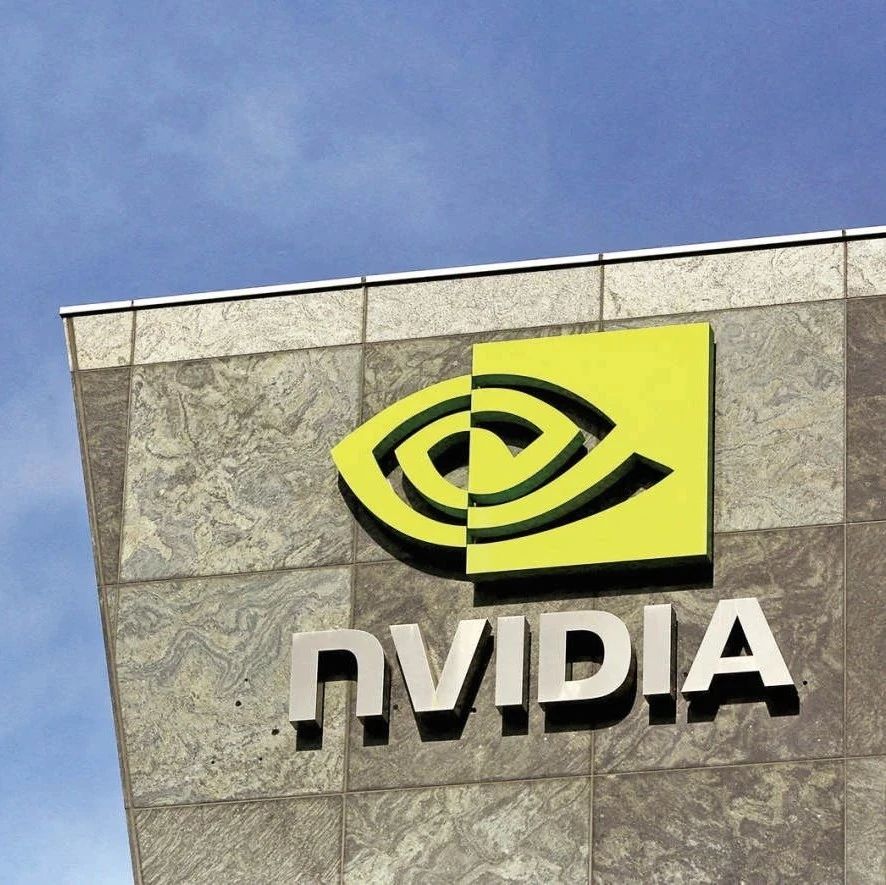
英伟达盘后大跌
21世纪经济报道· 2025-08-28 00:26
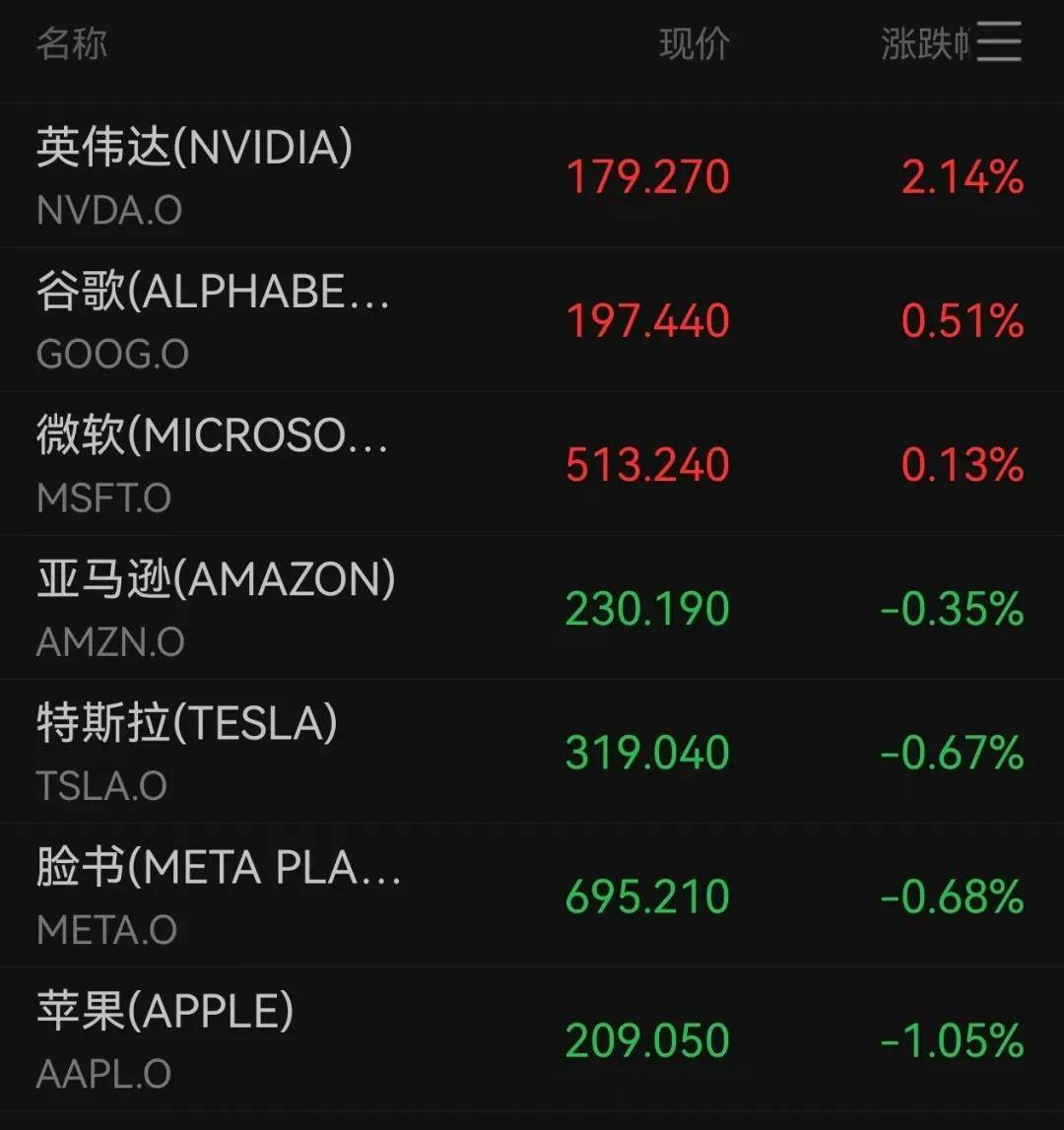
Market Overview - On August 27, US stock indices experienced fluctuations, with the Dow Jones Industrial Average, Nasdaq, and S&P 500 rising by 0.32%, 0.21%, and 0.24% respectively [1] - Major technology stocks showed mixed performance, with the Wind US Technology Giants Index increasing by 0.15%, Microsoft rising by 0.94%, while Nvidia fell by 0.09% [2][3] Nvidia Performance - Nvidia reported Q2 FY2026 revenue of $46.7 billion, up from $30.04 billion year-over-year, exceeding market expectations of $46.058 billion [5] - Data center revenue reached $41.1 billion, compared to $26.272 billion in the same quarter last year, slightly below the expected $41.3 billion [5] - Net profit for the quarter was $26.422 billion, up from $16.599 billion year-over-year, surpassing the forecast of $23.465 billion [5] - Nvidia's gross margin for Q2 was 72.4%, and it projected Q3 revenue of $54 billion, with a variance of 2%, above analyst expectations of $53.46 billion [5] - Following the earnings report, Nvidia's stock dropped over 5% in after-hours trading, impacting other semiconductor stocks negatively [5][4] AI Demand and Market Opportunities - Nvidia's CEO Jensen Huang indicated strong demand for AI, highlighting significant growth opportunities ahead [8] - He mentioned that the Chinese market could present $50 billion in opportunities this year, with an annual growth rate of approximately 50% [8] Commodity Market - International oil prices increased, with ICE Brent crude rising by 0.75% and NYMEX WTI crude up by 0.96% [9] - In the commodities market, COMEX gold futures rose by 0.55%, and COMEX silver futures increased by 0.22% [9]

鲍威尔讲话打压降息预期,黄金跳水
Sou Hu Cai Jing· 2025-08-27 21:18
Core Insights - The Federal Reserve decided to maintain the federal funds rate target range at 4.25% to 4.50%, marking the fifth consecutive meeting without a change, aligning with market expectations [2][3] - There was notable dissent within the Federal Reserve, with two governors voting against the decision, advocating for a 25 basis point rate cut, reflecting a divided opinion on monetary policy [3] - Economic indicators suggest a slowdown in growth, with potential for future rate cuts if the trend continues, but uncertainties around inflation and employment remain high [3][6] Market Reactions - Gold prices fell over 1.5%, dropping below $3280 per ounce, with significant declines in U.S. gold stocks [7][10] - U.S. stock markets showed mixed results, with tech stocks like NVIDIA and Broadcom rising, while major companies like Apple experienced slight declines [10] - The Nasdaq China Golden Dragon Index fell by 1.82%, with significant drops in stocks like NIO and New Oriental [11] Commodity Market Impact - Following the Federal Reserve's meeting, former President Trump announced a 50% tariff on imported semi-finished copper, leading to an 18% drop in copper prices in New York [11]
周三,美股真正的“命运判官”要来了
Feng Huang Wang Cai Jing· 2025-08-25 23:35
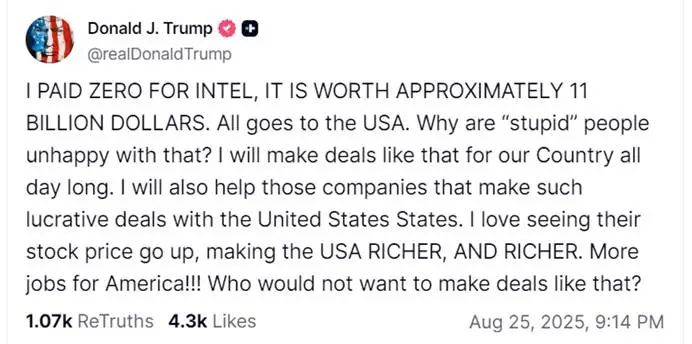
Group 1 - The core focus of the market is on Nvidia's upcoming earnings report, which is expected to significantly influence market trends due to its substantial weight in the S&P 500 index, close to 8% [1][2] - Nvidia's market capitalization has surpassed $4 trillion, with its stock price increasing nearly 34% year-to-date, outperforming the S&P 500's 9.5% gain [2] - Analysts are monitoring key technical levels for Nvidia, including a 50-day moving average around $167 and a short-term resistance level at $184 [3] Group 2 - Intel's recent government stake, valued at approximately $11 billion, poses risks to its business, particularly if specific manufacturing thresholds are not met, potentially increasing government ownership to 15% [4][5] - The intervention by the Trump administration in Intel's operations has raised concerns about the impact on the company's agility and the broader business environment, drawing comparisons to unprecedented government actions during the 2008 financial crisis [5]
周三,美股真正的“命运判官”要来了
凤凰网财经· 2025-08-25 23:13
Core Viewpoint - The upcoming Nvidia earnings report is seen as a critical test for the market, especially after the recent comments from Federal Reserve Chairman Jerome Powell regarding potential interest rate cuts [1][2][4]. Group 1: Nvidia's Impact - Nvidia's market capitalization has surpassed $4 trillion, with its stock price increasing nearly 34% year-to-date, significantly outperforming the S&P 500's 9.5% gain [2]. - Nvidia holds a weight of nearly 8% in the S&P 500 index, making its performance crucial for the overall market sentiment [2][4]. - Analysts are closely monitoring key technical levels for Nvidia, including a 50-day moving average around $167 and a short-term resistance level at $184 [3]. Group 2: Market Concentration Risks - Nvidia is the last among the "Big Seven" tech companies to report quarterly earnings, raising concerns about market concentration risks as these companies collectively account for nearly one-third of the S&P 500 index [4]. - Despite a strong earnings season where 80% of the 474 S&P 500 companies that reported exceeded expectations, the market's focus remains on Nvidia as the true test of market resilience [4]. Group 3: Intel's Government Involvement - Former President Trump announced a government stake in Intel valued at approximately $11 billion, claiming it would generate more funds and jobs for the U.S. [5]. - Intel warned that the government's 10% stake could pose risks to its business, potentially increasing to 15% if certain manufacturing thresholds are not met, which could lead to a decline in sales [5]. - Critics argue that this government intervention is unprecedented and threatens the agility of the business environment, drawing parallels to the financial crisis of 2008 [6].

车市“淡季不淡”
Ren Min Ri Bao· 2025-08-25 19:39
Group 1 - In July, China's automotive market showed resilience during the traditionally slow season, with production and sales reaching 2.591 million and 2.593 million units, respectively, marking year-on-year increases of 13.3% and 14.7% [1] - New energy vehicles (NEVs) emerged as a significant growth driver, with production and sales of 1.243 million and 1.262 million units in July, reflecting year-on-year growth of 26.3% and 27.4%, and accounting for 48.7% of total vehicle sales [1] - The cumulative production and sales of NEVs from January to July reached 8.232 million and 8.22 million units, with year-on-year growth of 39.2% and 38.5%, representing 45% of total vehicle sales [1] Group 2 - The "old-for-new" policy continues to show positive effects, with 280 million people applying for subsidies, contributing to a 10.8% increase in retail sales of passenger cars in the first half of the year [1] - The automotive industry is experiencing a positive shift due to commitments from 17 major automotive companies to control payment terms with suppliers to within 60 days, leading to improved supplier relationships [2] - The introduction of 88 new car models in 2023, including 5 pure electric and 3 plug-in hybrid models in July, has provided consumers with more choices [2] Group 3 - The implementation of a new subsidy policy for personal consumption loans in the automotive sector aims to reduce purchase costs for consumers, thereby enhancing purchasing power and stimulating sales [3] - Regions such as Guangxi, Yunnan, Gansu, and Shenzhen have restarted vehicle replacement subsidy policies, injecting new vitality into the automotive market [3] - The clarity of national policies is expected to stabilize consumer confidence and boost automotive consumption, ensuring steady industry performance in the second half of the year [3]
天岳先进全球进击再下一城,解读牵手东芝电子元件背后“阳谋”
Zhi Tong Cai Jing· 2025-08-25 01:47
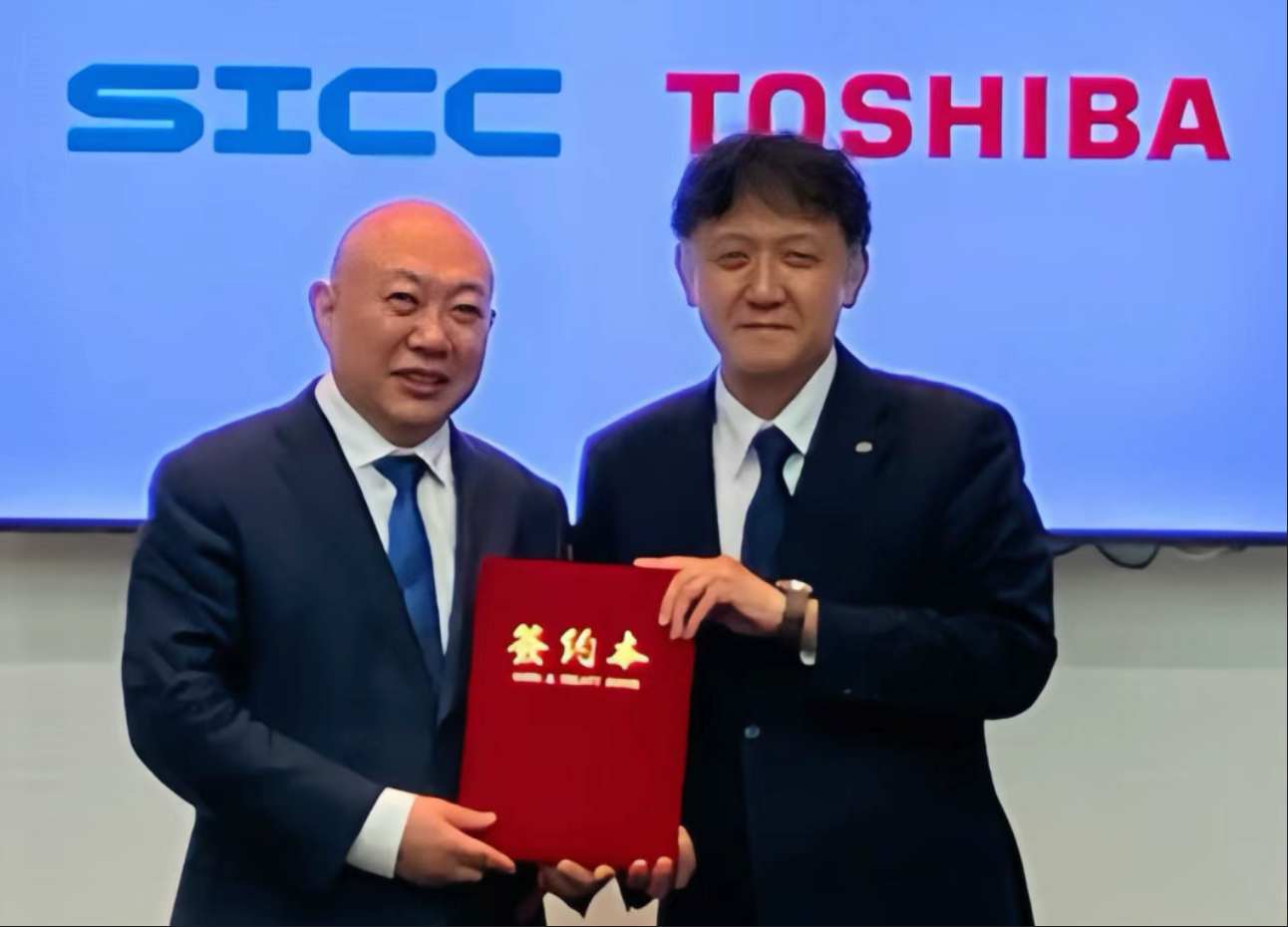
Core Viewpoint - Tianyue Advanced (02631) has made significant breakthroughs in business expansion, recently announcing a collaboration with Toshiba Electronic Components to enhance the characteristics and quality of silicon carbide power semiconductors, aiming to expand the supply of high-quality substrates [1][3] Group 1: Collaboration and Market Position - The partnership with Toshiba reinforces Tianyue's growing influence in the power semiconductor sector, as evidenced by its recent award from a Japanese semiconductor media outlet, marking the first time a Chinese company has won in this category [3] - Tianyue has established a strong presence in Japan, with sales offices and notable clients including Sumitomo, indicating a strategic focus on this market [3][4] - Chinese substrate manufacturers, represented by Tianyue, are gaining traction in Japan due to their quality and pricing advantages, leading local and European semiconductor firms to switch to Chinese products [3][4] Group 2: Competitive Landscape - The financial struggles of Japanese manufacturer Rohm, which reported an over 80% drop in operating profit, highlight the competitive pressure from Chinese firms like Tianyue, whose silicon carbide substrate technology is now considered top-tier [3][4] - The contrasting operational models between Japanese companies, which often pursue vertical integration, and Chinese firms, which focus on specific production processes, contribute to the competitive dynamics in the semiconductor industry [4] Group 3: International Expansion and Partnerships - Tianyue's collaboration with Infineon, signed in 2023, involves supplying 150mm substrates and assisting in the transition to 200mm silicon carbide wafers, with expected supply volumes representing a significant portion of Infineon's long-term needs [5] - Infineon's recent announcement of a 50 billion investment in Malaysia to build the largest 200mm silicon carbide power semiconductor factory indicates a growing demand for Tianyue's products [5] - The company has established partnerships with major global semiconductor players, including Bosch and ON Semiconductor, with over half of the top ten power semiconductor manufacturers collaborating with Tianyue [6] Group 4: Emerging Applications and Future Opportunities - Silicon carbide's superior performance characteristics position it as a key material in emerging fields such as data centers and AI technologies, with Tianyue poised to capitalize on these trends [9] - The company's strategic partnership with Sunny Optical's subsidiary focuses on micro-nano optics and new materials, further expanding its application scope [9] - As silicon carbide finds broader applications, Tianyue's role as a leading global supplier is expected to grow, providing valuable insights for other Chinese tech firms aiming for international markets [9]

昔日“王者”失速,新势力车企格局生变
财富FORTUNE· 2025-08-23 13:03
Core Viewpoint - The article highlights a significant divergence among China's three major new car manufacturers, with NIO and Xpeng experiencing stock price increases while Li Auto faces a substantial decline, indicating a potential reshuffling within the new energy vehicle sector as competition intensifies [2][3]. Group 1: Market Performance - As of August 22, NIO and Xpeng have seen stock price increases of approximately 25% over the past month, while Li Auto's stock has dropped by about 25% [2]. - In the second quarter of 2025, Li Auto reported a net profit of 1.1 billion yuan, a 52% year-on-year decline, and its gross margin fell from 21.8% to 19.5% [3]. - NIO's sales reached 7,183 units in the last week, surpassing Li Auto and marking a significant increase in market performance [3][4]. Group 2: Product Strategy and Competitive Landscape - NIO has launched a new ES8 model with a pre-sale price of 411,800 yuan, which, when combined with battery rental options, can be as low as 303,800 yuan, stimulating stock price increases [3][4]. - NIO's strategy includes a price reduction of 20,000 yuan on its 100kWh battery pack, addressing consumer concerns about range anxiety and directly challenging Li Auto's range advantage [4]. - Xpeng reported a revenue of 34 billion yuan for the first half of 2025, a 132% year-on-year increase, with a net loss of 1.142 billion yuan, which is a 56% reduction compared to the previous year [4]. Group 3: Strategic Challenges - Li Auto is facing intense competition, with its market share being eroded by rivals like NIO and Xpeng, as well as new entrants like Leap Motor, which has delivered 272,000 units in the first seven months of the year, a nearly 150% increase [5]. - Despite recent successes, both NIO and Xpeng are still grappling with significant losses, with NIO reporting a net loss of 6.75 billion yuan in the first quarter of 2025, a 30.2% increase in losses year-on-year [5][6]. - Li Auto's transition to pure electric vehicles is challenged by the underperformance of its i8 model, which saw a price drop shortly after launch, indicating weak demand [6]. Group 4: Industry Outlook - The article suggests that the differentiation among the three companies signals a maturation of the new energy vehicle market in China, moving away from initial hype to a focus on core technology, strategic determination, and operational efficiency [6][7].
未验车先交几十万,小米被曝催收尾款:否则取消订单定金作废,车主炸锅:又不是买白菜
2 1 Shi Ji Jing Ji Bao Dao· 2025-08-20 12:48
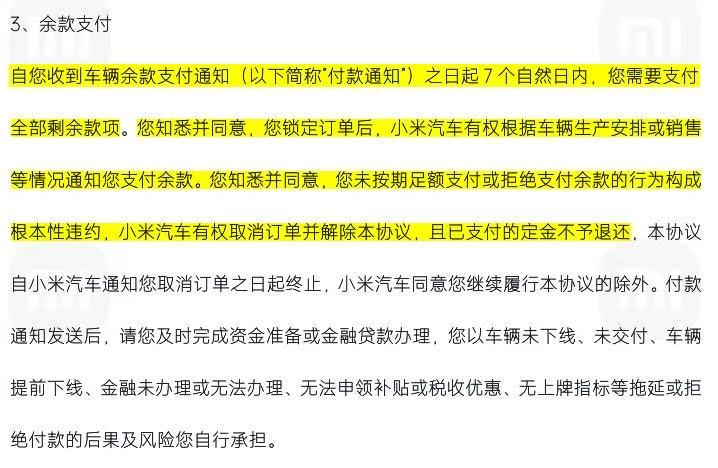
Core Viewpoint - Xiaomi is facing backlash from car owners due to aggressive demands for payment of remaining balances before vehicle delivery, leading to dissatisfaction and loss of trust among customers [3][19][27]. Payment Terms - Xiaomi's purchase agreement stipulates that customers must pay the remaining balance within seven days of receiving a payment notification, with failure to do so resulting in order cancellation and forfeiture of the deposit [2][6][9]. - The company has been reported to request early payment under certain conditions, such as when a vehicle is about to be produced or if there is a high likelihood that the customer will not take delivery [9][10][12]. Customer Reactions - Many customers, including those who have invested significant amounts (up to 500,000 yuan), express frustration over being pressured to pay for vehicles that have not yet been delivered, especially amid concerns about potential vehicle issues [3][6][22]. - Some customers have resorted to creative means to reclaim their deposits, indicating a high level of dissatisfaction with Xiaomi's practices [13][25]. Market Context - Xiaomi's rapid growth in vehicle deliveries, with over 311,700 units delivered in 15 months, has drawn scrutiny as the company navigates challenges such as production delays and customer trust issues [6][27]. - The automotive industry typically allows for payment upon delivery, contrasting with Xiaomi's approach, which has not been adopted by other manufacturers [7][8]. Legal Perspectives - Legal experts suggest that Xiaomi's payment demands may not be enforceable if they are deemed unreasonable or if the company fails to adequately inform customers of their obligations [11][26]. - The company has been accused of not fulfilling its duty to clarify significant terms in the purchase agreement, which could lead to legal challenges from dissatisfied customers [26]. Competitive Landscape - Xiaomi's aggressive payment collection strategy may be a response to competition from other automakers, as customers consider alternatives due to long wait times and delivery uncertainties [27][28]. - The company is under pressure to improve production capacity and delivery efficiency to retain customer loyalty and avoid losing market share to competitors [27][29].
春秋电子:上半年净利润9331.83万元 同比增长248.44%
Zheng Quan Shi Bao Wang· 2025-08-20 10:14
人民财讯8月20日电,春秋电子(603890)8月20日晚间披露2025年半年报,公司上半年实现营业收入 19.26亿元,同比增长2.62%;归母净利润9331.83万元,同比增长248.44%;基本每股收益0.21元。报告 期内,公司在汽车电子领域的业务稳步推进,订单持续增长,产能逐步释放,公司已获得多家知名汽车 电子厂商的认证,与多家新能源汽车制造商及其供应商形成业务关系,下游产品涵盖小米、蔚来、小 鹏、比亚迪(002594)、宝马、吉利、大众等新能源车型。 ...

2025年第二季度全球新能源车销量同比增长30%
Zheng Quan Shi Bao Wang· 2025-08-18 12:55
Group 1 - In Q2 2025, global sales of new energy vehicles (NEVs) reached 4.868 million units, a year-on-year increase of 30% [1] - The sales of battery electric vehicles (BEVs) reached 3.28 million units, growing by 39% year-on-year, with BYD holding the largest market share at 18.3% [1] - The total electric vehicle (EV) sales, including hybrid electric vehicles (HEVs), reached 6.456 million units, accounting for 29% of global automobile sales [1] Group 2 - In Q2 2025, global sales of plug-in hybrid electric vehicles (PHEVs) were 1.587 million units, a year-on-year increase of 15% [2] - BYD's market share in the PHEV segment decreased from nearly 40% to 28.9%, with its sales declining by 12% year-on-year [2] - The introduction of the new model N9 by BYD's sub-brand Tengshi led to a 41% increase in sales, allowing it to enter the top ten for the quarter [2] Group 3 - In the U.S. market, the end of electric vehicle subsidies on September 30 is expected to impact the growth prospects of the EV industry [3] - The global sales forecast for NEVs in 2025 is 19.7 million units, representing a 21% year-on-year increase, with growth expected to slow to 14% in 2026 [3]
