广汽集团

Search documents
港股异动丨汽车股普涨 比亚迪股份涨约4% 商务部召开座谈会推动汽车消费
Ge Long Hui· 2026-02-10 02:29
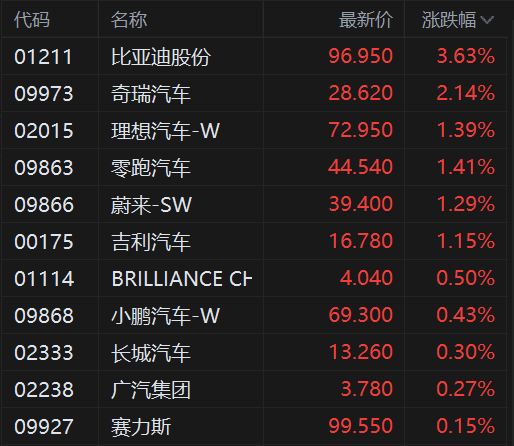
Group 1 - The core viewpoint of the news is that Hong Kong automotive stocks have collectively risen, with significant gains observed in companies like BYD, Chery, and others, following a meeting held by the Ministry of Commerce regarding automotive consumption policies for 2026 [1] - The Ministry of Commerce plans to implement a series of measures to boost automotive consumption, including optimizing the vehicle trade-in program and conducting pilot reforms in automotive circulation [1] - Analysts interpret the signals from the Ministry's meeting as positive, viewing it as a "starting gun" for supportive automotive consumption policies in 2026, which provides a clear expectation for industry support and structural growth direction [1] Group 2 - BYD shares rose approximately 4% to a latest price of 96.950, while Chery Automotive increased by over 2% to 28.620 [2] - Other automotive companies also saw gains, with Li Auto up 1.39%, Leap Motor up 1.41%, NIO up 1.29%, and Geely up 1.15% [2] - The overall positive sentiment in the automotive sector is reflected in the stock performance of various companies, indicating investor confidence in future growth driven by government policies [1][2]




2026格局与趋势 |(上):天黑请睁眼
3 6 Ke· 2026-02-10 01:20
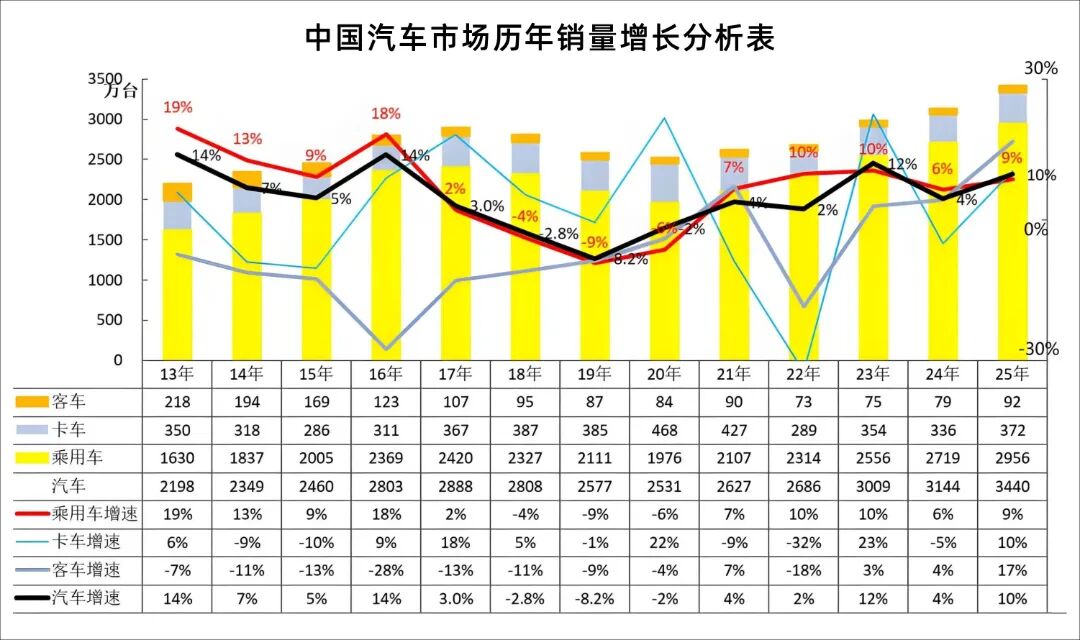
Core Viewpoint - The Chinese automotive market is facing significant challenges in 2026, with predictions of a decline in sales due to economic pressures and changing consumer behavior, despite some optimistic forecasts for growth in exports and specific segments like new energy vehicles [1][3][4]. Group 1: Market Trends and Predictions - In 2026, the overall automotive sales in China are expected to range between 34.5 million to 35 million units, with a potential decline in domestic retail sales by over 5% if no significant policy changes occur [3][7]. - January 2026 data shows a dramatic decline in retail sales, with a 28% year-on-year drop, indicating a challenging start to the year [6]. - Various institutions predict a range of outcomes for 2026, with the most pessimistic forecasts suggesting a 7% decline in sales, while the most optimistic predict only a 1% increase [4][7][8]. Group 2: Policy and Economic Influences - Key factors affecting the market include adjustments to subsidy policies for new energy vehicles, which have shifted from full exemptions to partial reductions, impacting consumer purchasing behavior [6][9]. - The decline in consumer confidence and shrinking middle-class income due to economic downturns are expected to further suppress automotive sales [6][9]. Group 3: Competitive Landscape - The automotive industry is experiencing intense competition, with a shift from price wars to a focus on technological advancements and value creation as companies seek to stabilize their market positions [12][16]. - Major players are adjusting their sales targets, with some aiming for significant growth while others adopt more conservative strategies in response to market conditions [18][19]. Group 4: Export Opportunities - Exports are projected to be a key growth area, with expectations of a 12-15% increase, potentially reaching 8 million units, which could help offset domestic market declines [22][26]. - The global supply chain dynamics are pushing Chinese automotive companies to enhance their international presence, with a focus on building global production and R&D capabilities [26][28]. Group 5: Segment-Specific Insights - The new energy vehicle segment is anticipated to grow, with retail sales expected to increase by 12-15%, driven by favorable policies for mid-range models [9][10]. - The large six-seat SUV market is projected to maintain strong growth, with expectations of a 30-50% increase in sales, despite overall market challenges [31][32].



乾崑智驾跨越百万丰碑,高楼引望迈向千万瀚海
NORTHEAST SECURITIES· 2026-02-10 01:15
Investment Rating - The report maintains an "Outperform" rating for the industry [4] Core Insights - The commercialization of L3 autonomous driving has reached a turning point, transitioning from "optional" to "preferred" [1][14] - The approval of L3 licenses marks a significant shift from technical validation to operational readiness, establishing a clear regulatory framework [14] - The competitive landscape has evolved from hardware specifications to a focus on end-to-end models driven by data and algorithms, enhancing industry concentration [1][20] Summary by Sections 1. Commercialization of L3 Autonomous Driving - The dual approval of operational licenses and road rights has established a commercial closure for L3 autonomous driving, with clear responsibilities defined [14] - User perception of intelligent driving has matured, with advanced features becoming a key factor in purchasing decisions, as 60% of consumers view autonomous driving as the most anticipated technological breakthrough [16][17] - The paradigm of intelligent driving is shifting towards an end-to-end model, where the core competitive logic is now based on data quality, computational power, and model iteration efficiency [20][21] 2. Huawei's QianKun Intelligent Driving - Huawei's QianKun Intelligent Driving has evolved from a single supplier to a public technology platform, enhancing its market position [30][45] - The company has developed a multi-tiered cooperation model, including component supply, HI mode, and Harmony Intelligent Driving, to cover various market segments [31][32] - The QianKun Intelligent Driving system has undergone significant iterations, establishing a technological moat centered around end-to-end models [36] 3. Independent Entity "Yinwang" - The establishment of Yinwang as an independent entity has alleviated concerns among automakers regarding technology control, allowing for broader collaboration [41][42] - The strategic partnership with automakers has led to a valuation of 115 billion RMB, positioning Yinwang as a unicorn in the industry [45] - Yinwang aims to become a neutral public platform for the smart electric vehicle industry, similar to Bosch's role in the traditional automotive sector [48][49] 4. Hardware Cost Breakdown - The cost of intelligent driving hardware per vehicle exceeds 10,000 RMB, with significant portions attributed to chips and PCB components [2][3] - The potential market space for various components in the intelligent driving supply chain is substantial, with estimates reaching billions in growth opportunities [2] 5. Investment Opportunities - The report identifies potential investment opportunities in advanced process wafer fabs, packaging and testing companies, and PCB manufacturers, highlighting the growth potential in the intelligent driving sector [3]
从“产品出海”到“文化出海”:双轮驱动“广货”全球启新程
2 1 Shi Ji Jing Ji Bao Dao· 2026-02-10 00:25
Core Viewpoint - The "Guangdong Goods Going Global" initiative represents a significant step in Guangdong's strategy to enhance its global trade presence, focusing on high-quality development and industrial upgrades, while leveraging local cultural elements to strengthen brand identity and market reach [2][3][9]. Group 1: Industrial Foundation - Guangdong has maintained its position as China's largest foreign trade province for over 30 years, accounting for about one-quarter of the national total, establishing itself as a core hub for international market engagement [3]. - The province has developed a comprehensive industrial ecosystem, particularly in consumer electronics, new energy vehicles, and home appliances, with thousands of specialized enterprises and leading companies [3][4]. - Shenzhen is highlighted as a global innovation center for consumer electronics, with major companies like Huawei and OPPO driving rapid responses to global demand through efficient industrial clusters [4][5]. Group 2: Challenges and Opportunities - Despite impressive export volumes, Guangdong's "Guangdong Goods" face challenges such as a lack of core technologies and global brand recognition, with many small enterprises relying on OEM models [4][5]. - The need for deeper cultural communication and adaptation to international standards is emphasized, as well as the importance of overcoming barriers related to green trade and geopolitical tensions [4][9]. Group 3: Policy and Platform Support - The Guangdong government has implemented supportive policies, including export tax rebates and R&D subsidies, to alleviate financial and logistical pressures on enterprises [5][10]. - The Canton Fair serves as a national-level platform facilitating global connections, attracting numerous international buyers and enhancing trade opportunities [5][10]. Group 4: Cultural Empowerment - Cultural elements are integrated into the branding and marketing strategies of "Guangdong Goods," enhancing their appeal in international markets [7][8]. - The initiative promotes a dual approach of "product + culture," allowing for a richer narrative that resonates with global consumers, as seen in the marketing of local agricultural products and traditional crafts [7][8]. Group 5: Strategic Collaboration - The dual-wheel drive strategy, combining industrial strength and cultural communication, is essential for overcoming the "big but not strong" dilemma faced by Guangdong's exports [9][10]. - Successful examples from companies like Xiaopeng and DJI illustrate the effectiveness of this collaborative approach in enhancing brand recognition and market penetration [9][10]. Group 6: Future Outlook - The "Guangdong Goods Going Global" initiative marks a new starting point for transforming Guangdong into a global brand leader, emphasizing the importance of maintaining quality and innovation while fostering cultural confidence [11].
孚能科技:目前在手订单充足
Zheng Quan Ri Bao Zhi Sheng· 2026-02-09 12:09
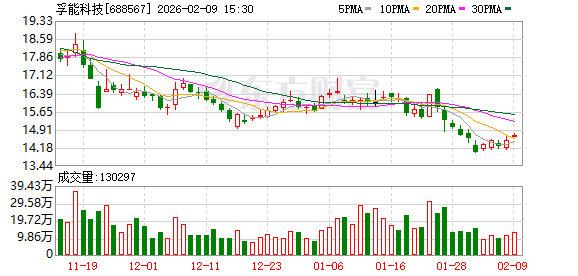
Group 1 - The core viewpoint of the article highlights that the company, Funeng Technology, has secured multiple customer projects for its SPS products, including partnerships with major automotive manufacturers such as GAC, Geely, Jiangling, SANY Heavy Truck, and FAW Liberation [1] - The company reports that it has a sufficient backlog of orders and that the production capacity utilization rates at its Ganzhou and Guangzhou SPS bases are steadily increasing [1]

孚能科技:公司SPS产品已斩获广汽、吉利、江铃、三一重卡等多个客户项目定点,目前在手订单充足
Mei Ri Jing Ji Xin Wen· 2026-02-09 09:24
Group 1 - The core viewpoint of the article highlights the increasing demand for power batteries and energy storage batteries in 2025, leading to supply tightness [2] - The company, Funeng Technology (孚能科技), has secured multiple customer projects for its SPS products, including partnerships with major automotive manufacturers such as GAC, Geely, JMC, SANY Heavy Truck, and FAW Liberation [2] - The current order backlog for the company is sufficient, and the production capacity utilization rates at its Ganzhou and Guangzhou SPS bases are steadily increasing [2]
传祺BU,以“特种兵”式突围打造立体化竞争优势
Zhong Guo Qi Che Bao Wang· 2026-02-09 05:49
Core Insights - GAC Group's newly established Trumpchi Business Unit (BU) reported a year-on-year sales increase of 51.06% in January 2026, indicating a strong market performance following its formation [2] - The establishment of the Trumpchi BU is part of GAC Group's broader strategy to enhance its autonomous brand reform and adapt to market changes more effectively [3][4] Group 1: Organizational Evolution - The primary goal of establishing the Trumpchi BU is to improve decision-making efficiency, collaboration, and responsiveness to market changes by restructuring the organization [3] - The Trumpchi BU operates as a dedicated entity within GAC Group, integrating resources across the entire value chain to enhance operational efficiency and market responsiveness [4] - The leadership of the Trumpchi BU includes experienced executives from within GAC Group, aimed at reducing internal inefficiencies and enhancing overall operational effectiveness [7] Group 2: User-Centric Approach - The Trumpchi BU is focused on a user-centric strategy, aiming to streamline operations across research, manufacturing, and sales to better meet customer needs [6] - The organization has implemented significant changes in its management structure to ensure rapid and precise responses to market demands [7] Group 3: Strategic Goals and Future Plans - The strategic plan "Intelligent Towards 2030, Creating the Future" aims to establish Trumpchi as a leader in the mainstream automotive market by 2030, focusing on smart and electric vehicle technologies [9] - For 2026, the Trumpchi BU aims to achieve significant sales targets while enhancing user satisfaction and dealer profitability through technological advancements and product innovation [9][10] - The future competition in the automotive industry will hinge on the ability to adapt to changes, respond to diverse user needs, and integrate operations effectively across the value chain [10]

花旗:料大宗商品价格上升利好基础物料 车企及二线电池商承压
智通财经网· 2026-02-09 03:58
Group 1 - Commodity prices have significantly increased and are stabilizing at higher levels, benefiting the basic materials sector, particularly aluminum, copper, and lithium suppliers [1] - Companies such as China Aluminum (02600), China Hongqiao (01378), and Zijin Mining (02899) are rated "Buy," along with pure copper firms like Minmetals Resources (01208), Luoyang Molybdenum (03993), and Jiangxi Copper (00358) [1] - Gold jewelry manufacturers will benefit from rising gold prices, while the increase in copper prices will expand the profit margins of copper-clad laminate (CCL) producers like Kingboard Laminates (01888) [1] Group 2 - Automotive manufacturers will face pressure due to rising material costs, with expected increases of approximately RMB 6,565 for BEVs and RMB 4,310 for PHEVs [1] - Smaller companies like Xpeng Motors (09868) and GAC Group (02238) are more vulnerable due to lower average selling prices, while larger firms like BYD (01211) and Geely (00175) can pass on over 50% of cost increases to upstream suppliers [1] - The battery industry’s second-tier companies are expected to face short-term pressure, while CATL (03750) has pricing power and is more defensive due to the expected resumption of its Jiangxi lithium mica mine in Q2 [2] Group 3 - Sales of energy storage systems are anticipated to experience margin compression, particularly in Q2, initiating a 90-day negative catalyst observation for the industry [2] - In the solar industry, component manufacturers are more susceptible to rising silver costs, which account for about 30% of their production costs, potentially compressing profit margins [2] - Among Chinese power equipment manufacturers, Pinggao Electric (600312.SH) is most sensitive to increases in copper and aluminum costs [2]
2025年1-12月汽车制造业企业有20572个,同比增长4.06%
Chan Ye Xin Xi Wang· 2026-02-09 03:30
Group 1 - The core viewpoint of the article highlights the growth in the number of automotive manufacturing enterprises in China, which reached 20,572 in 2025, an increase of 803 enterprises compared to the previous year, representing a year-on-year growth of 4.06% [1] - The automotive manufacturing sector accounts for 3.91% of the total industrial enterprises in China [1] - The data referenced is sourced from the National Bureau of Statistics and compiled by Zhiyan Consulting, indicating the reliability of the statistics presented [2] Group 2 - The report titled "2026-2032 China Automotive Manufacturing Industry Market Panorama Survey and Investment Prospects Analysis" by Zhiyan Consulting provides insights into the automotive industry [1] - The threshold for scale industrial enterprises has been raised from an annual main business income of 5 million to 20 million yuan since 2011, which reflects a significant change in the criteria for enterprise classification [1] - Zhiyan Consulting is recognized as a leading industry consulting firm in China, specializing in deep industry research and providing comprehensive industry solutions [2]




泡泡玛特欧洲总部将设伦敦;冬奥会基于千问打造大模型丨出海周报
2 1 Shi Ji Jing Ji Bao Dao· 2026-02-09 02:48
Industry Overview - China's foreign exchange reserves reached $3.4 trillion, with a 1.23% increase month-on-month as of January 2026, while gold reserves rose to 74.19 million ounces [1] - The depreciation of the US dollar is driven by geopolitical risks and market expectations regarding US monetary policy, leading to a sell-off [1] - The global asset prices have increased due to fluctuations in US Treasury yields and expectations surrounding potential Federal Reserve leadership changes [1] Trade and Services - China's service trade import and export total reached 8.08 trillion yuan in 2025, marking a 7.4% year-on-year growth, with knowledge-intensive services showing strong performance [2] - The Ministry of Commerce plans to organize over 100 import promotion activities in 2026 to balance trade development, emphasizing a dual approach of "policy + activities" [2] - Investment from countries like South Korea, Canada, and Finland into China maintained double-digit growth, reflecting multinational companies' confidence in the Chinese market [2] Company Dynamics - Amazon reported Q4 revenue of $213.39 billion, a 14% year-on-year increase, with net profit at $21.19 billion, up 6% [3] - Amazon's North American retail revenue for Q4 was $127.1 billion, a 10% increase, while international revenue reached $50.7 billion, a 17% increase [3] - Amazon's AI assistant Rufus has over 300 million users, contributing nearly $12 billion in additional annual sales [3] Logistics and Delivery - Amazon aims to achieve same-day or next-day delivery for over 13 billion items globally by 2025, with significant increases in delivery speed noted in the US and Europe [4] Technology and Innovation - The International Olympic Committee announced the creation of the first official Olympic model based on Alibaba's Qianwen, highlighting the transformative impact of AI technology on the 2026 Milan Winter Olympics [5] - Alibaba Cloud ranked first in comprehensive competitiveness growth index globally, planning to establish new data centers in multiple countries by 2026 [7] Strategic Partnerships - Hesai Technology announced a strategic partnership with Grab, making Grab the exclusive distributor of Hesai's lidar products in Southeast Asia [8] Automotive Industry - GAC Group set an overseas sales target of 250,000 units for 2026, aiming to reach 300,000 units, with significant growth in both domestic and overseas sales reported [9] Retail Expansion - Pop Mart established its European headquarters in London, planning to open seven new stores in the UK and expand to 20 stores across Europe [10] - Anta will open its first flagship store in the US on February 13, marking a shift from wholesale to direct retail in the North American market [11] - JD.com will launch its European online retail platform Joybuy in March, with successful trial runs achieving same-day and next-day delivery in several UK cities [12] Logistics Optimization - Temu signed a memorandum of understanding with Hungary Post to enhance local logistics, indicating a shift towards improved service experience in the European market [13] IPO News - Ugreen Technology submitted an application for listing on the Hong Kong Stock Exchange, with Huatai International as the sole sponsor [14]