华天科技

Search documents
国产先进封装,持续增长
3 6 Ke· 2025-12-05 10:31
Core Insights - The semiconductor packaging and testing industry is experiencing significant growth driven by emerging fields such as 5G, AI, IoT, and automotive electronics, with the global market expected to reach $82.1 billion in 2024, a 5% increase year-on-year [1] - Domestic packaging and testing market in China is projected to reach 314.6 billion yuan in 2024, reflecting a 7.14% growth compared to 2023, and is expected to exceed 330.33 billion yuan in 2025 [1] - Major domestic companies like Huada Technology, Changdian Technology, and Tongfu Microelectronics are showing positive financial performance, indicating a strong alignment between domestic advanced packaging technology breakthroughs and market demand upgrades [1] Financial Performance of Leading Companies - Huada Technology reported a total revenue of 12.38 billion yuan for the first three quarters, a year-on-year increase of 17.55%, with a net profit of 543 million yuan, up 51.98% [2] - Changdian Technology achieved a revenue of 28.67 billion yuan, a 14.78% increase year-on-year, but its net profit decreased by 11.39% to 950 million yuan [3] - Tongfu Microelectronics saw a revenue of 20.12 billion yuan, a 17.77% increase, and a net profit of 860 million yuan, reflecting a 55.74% growth [3] Growth Drivers - Huada Technology's growth is attributed to technological breakthroughs in DDR5 DRAM packaging and strategic acquisitions, enhancing its market position in high-value segments like automotive electronics [4] - Changdian Technology is optimizing its product structure and responding to market demand changes, with significant revenue increases in sectors like automotive electronics, which grew by 31.3% [5] - Tongfu Microelectronics is benefiting from increased revenue in mid-to-high-end products, particularly from major clients like AMD, indicating successful strategic positioning in the advanced packaging sector [6] Competitive Landscape - The high-end packaging market is becoming increasingly competitive, with both international giants and domestic leaders intensifying their R&D and capacity expansion efforts, particularly in AI chips and automotive electronics [7] - Changdian Technology has developed a comprehensive advanced packaging technology matrix, applicable across various critical sectors, including AI and automotive electronics [8] - Huada Technology is investing in advanced packaging technologies and has initiated collaborations with AI companies, positioning itself to capture emerging market opportunities [10] Industry Outlook - The domestic advanced packaging industry is transitioning to a phase of high-quality development characterized by technology-driven growth and structural upgrades [11] - Continued demand from AI and automotive electronics sectors, along with advancements in domestic packaging materials and equipment, will enable domestic companies to narrow the gap with international competitors [11] - Companies with strong R&D capabilities and a focus on high-margin products are expected to lead the market and benefit from the overall growth of the semiconductor industry [11]


25Q3封测总结:AI带动先进封测需求,存储相关业务环比增长显著
Huajin Securities· 2025-12-02 09:31
Investment Rating - The industry investment rating is "Outperform the Market" (maintained) [3] Core Viewpoints - The report highlights that AI is driving advanced packaging demand, with significant growth in storage-related businesses [2][4] - The semiconductor packaging sector experienced a slight decline in gross margin in Q3 2025, but year-on-year comparisons show growth [11][12] - The report emphasizes the importance of advanced packaging technologies in enhancing chip performance and integration, particularly with the ongoing development of Chiplet packaging concepts [4][5] Summary by Sections Overview - In Q3 2025, the semiconductor packaging sector's gross margin slightly decreased, with a gross margin of 21.09%, which is higher than the average of 15.79% for leading packaging companies [11][12] OSAT (Outsourced Semiconductor Assembly and Test) - AI is significantly boosting demand for advanced packaging, with notable growth in the storage sector [17] - Major companies like ASE achieved revenues of 22.63 billion RMB in Q3 2025, reflecting an 8.34% quarter-on-quarter increase and a 16.90% year-on-year increase [18][19] - Advanced packaging services are expected to continue driving growth, particularly in AI-related applications [19][20] Testing - AI-related business growth is notable, with companies like Jingyuan Electronics reporting a revenue increase of 31.99% year-on-year in Q3 2025 [5][41] - Wei Ce Technology's revenue for the first three quarters of 2025 reached 10.83 billion RMB, a 46.22% year-on-year increase, driven by strong demand in computing and automotive electronics [5][41] Equipment - The report indicates that AI growth is leading to a continuous increase in orders, with companies like Besi reporting a 36.5% quarter-on-quarter increase in new orders [5][41] - ASMPT's revenue in Q3 2025 was 33.13 billion RMB, a 7.6% quarter-on-quarter increase, driven by growth in SMT business [5][41] Investment Recommendations - The report suggests focusing on companies benefiting from AI-driven demand, including packaging companies like ASE, Tongfu Microelectronics, and Changdian Technology, as well as testing companies like Jingyuan Electronics and Wei Ce Technology [5][41]


光力科技:为河南半导体产业高质量发展注入科创动能
Zheng Quan Shi Bao· 2025-12-02 00:26
Core Viewpoint - The article highlights the growth and transformation of Guangli Technology, a local company in Henan, from a coal mine safety monitoring business to a key player in the semiconductor equipment industry, contributing to the local industrial chain and reducing reliance on imported high-end equipment [1][2]. Group 1: Company Transformation - Guangli Technology began its journey in 1994 focusing on coal mine safety monitoring and transitioned to semiconductor equipment after its IPO in 2015, raising approximately 170 million yuan for business expansion and R&D [2]. - The company seized the opportunity for domestic substitution in semiconductor equipment by acquiring Loadpoint, the inventor of the semiconductor dicing saw, and subsequently acquired Loadpoint Bearings and ADT, enhancing its capabilities in high-end equipment manufacturing [3]. Group 2: Product Development and Market Position - Guangli Technology has developed a series of domestic dicing saws, including the 8230 model, which is recognized for its performance and has entered mass production for leading packaging and testing companies [4]. - The semiconductor equipment manufacturing business has become a significant revenue contributor, with its share exceeding 50% of total revenue since 2022, indicating strong growth [4]. Group 3: Technological Innovation and Local Industry Development - The company has invested over 1.1 billion yuan in R&D since its listing, maintaining a R&D expenditure ratio above 12% for five consecutive years, and has established a semiconductor dicing saw testing laboratory [5]. - Guangli Technology is constructing a semiconductor intelligent manufacturing base in Zhengzhou, aiming for an annual production capacity of 500 dicing saws, and has attracted 12 supporting semiconductor companies to the region [6]. Group 4: Future Plans and Strategic Alignment - The company plans to focus on three main areas: expanding its cutting and grinding product lines, enhancing the localization of core components, and broadening its product offerings based on market demands [7]. - This strategic direction aligns with Henan's goal of strengthening technological innovation and building a robust advanced manufacturing sector, fostering local talent and supporting emerging industries [8].

先进封装技术的战略价值与研究背景
材料汇· 2025-12-01 14:10
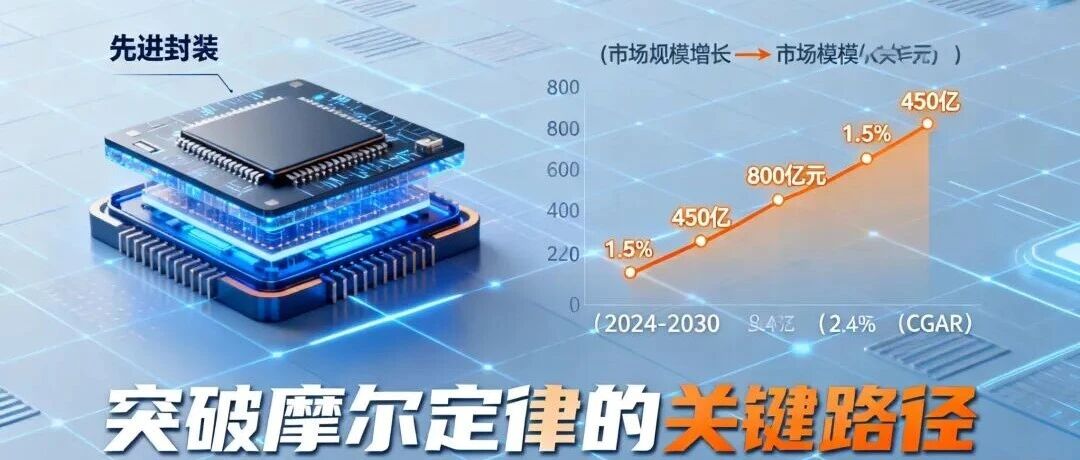
Core Insights - Advanced packaging technology is crucial for overcoming performance bottlenecks in the semiconductor industry, driven by emerging applications like AI, high-performance computing, and 5G communication [3] - The global advanced packaging market is projected to grow from approximately $45 billion in 2024 to $80 billion by 2030, with a compound annual growth rate (CAGR) of 9.4% [3][75] Technical Evolution Dimension - TSMC's CoWoS technology has evolved from supporting 1.5x to 3.3x mask sizes, with plans for a 5.5x version by 2025-2026 and a 9x version by 2027, significantly increasing integration density and reducing signal transmission latency [6][7] - Hybrid bonding technology is emerging as a core technology for next-generation advanced packaging, enabling direct wafer bonding without bumps, thus enhancing interconnect density and reducing power consumption [10][11] - AMD's MI300X AI accelerator utilizes a 3.5D packaging architecture, combining TSMC's SoIC and CoWoS technologies, achieving unprecedented integration levels with 1,530 billion transistors [14][15] - Intel employs a multi-technology strategy in advanced packaging, focusing on EMIB and Foveros technologies, with plans for further enhancements to improve performance and integration [18][19] - Glass substrate technology is gaining traction as a disruptive innovation, offering advantages in electrical performance, thermal stability, and cost-effectiveness, with a projected market penetration exceeding 50% within five years [22][23] Material System Analysis - BT resin substrates are the most widely used packaging material, accounting for over 70% of IC substrates, known for their excellent thermal and electrical properties [26][27] - ABF substrates, developed by Ajinomoto, are preferred for high-end chip packaging due to their superior processing capabilities and electrical performance, despite higher costs [28][30] - Ceramic substrates, particularly AlN and Si3N4, are ideal for high-performance applications due to their high thermal conductivity and mechanical strength [32][34] Equipment and Process Dimension - TCB equipment is critical for HBM packaging, with ASMPT holding over 80% market share, driven by the demand for AI chips and high-performance computing [45][47] - The global die bonder market is dominated by four major players, with ASMPT leading at 31% market share, followed by BESI, Ficontec, and Neways [49][51] - The back-end packaging equipment market is characterized by a diverse competitive landscape, with Disco leading in wafer thinning and cutting technologies [54] Industry Layout Analysis - TSMC is experiencing exponential growth in CoWoS capacity, projected to reach 65,000-75,000 units per month by 2025, driven by AI chip demand [63][65] - The HBM market is dominated by three players: SK Hynix, Samsung, and Micron, collectively holding over 95% market share, with SK Hynix leading at 60-70% [67][68] - China's packaging industry is rapidly advancing, with Jiangsu Changjiang Electronics Technology, Tongfu Microelectronics, and Huada Semiconductor becoming significant players globally [70][71] - The global advanced packaging market is shifting towards IDM manufacturers, who leverage integrated design and manufacturing advantages, with Taiwan companies holding a dominant position in the AI packaging market [73][74]

12月指数定期调样的影响估算




HTSC· 2025-12-01 12:34
Quantitative Models and Construction Methods 1. Model Name: Liquidity Impact Coefficient Model - **Model Construction Idea**: This model measures the liquidity impact of index adjustments on individual stocks by calculating the ratio of net fund flows to the stock's recent average daily trading volume[12][13] - **Model Construction Process**: The liquidity impact coefficient for a stock is calculated as follows: $$ impact_{i} = \sum_{k=1}^{N} \frac{\Delta weight_{k,i} \times AUM_{k}}{amt\_avg_{i,20}} $$ - \( \Delta weight_{k,i} \): Estimated weight change of stock \( i \) in index \( k \) - \( AUM_{k} \): Total assets under management of passive products tracking index \( k \) as of the end of November - \( amt\_avg_{i,20} \): Average daily trading volume of stock \( i \) over the past 20 trading days as of the end of November[12][13] - **Model Evaluation**: The model provides a quantitative framework to estimate short-term liquidity shocks caused by index adjustments, but it is subject to data discrepancies and assumptions, which may lead to deviations from actual results[13] --- Model Backtesting Results Liquidity Impact Coefficient Model - **Top 5 Stocks with Highest Positive Impact Coefficients**: - Zhangjiagang Bank (002839 CH): 11.55[15] - Jiangzhong Pharmaceutical (600750 CH): 11.44[15] - Tower Group (002233 CH): 11.04[15] - Jichuan Pharmaceutical (600566 CH): 10.14[15] - Zhengbang Technology (002157 CH): 9.99[15] - **Top 5 Stocks with Highest Negative Impact Coefficients**: - Shenzhen Expressway (600548 CH): -24.95[16] - Vanward Electric (002543 CH): -20.90[16] - Aviation Materials (688563 CH): -14.06[16] - Huaxi Biology (688363 CH): -10.81[16] - Ninghu Expressway (600377 CH): -10.54[16] --- Quantitative Factors and Construction Methods 1. Factor Name: Net Fund Flow Factor - **Factor Construction Idea**: This factor estimates the net fund inflow or outflow for stocks due to index adjustments, based on changes in index weights and the total AUM of passive products tracking the index[9][10] - **Factor Construction Process**: - Outflow Amount: Total AUM of linked products multiplied by the stock's actual weight in the index as of the end of November - Inflow Amount: Total AUM of linked products multiplied by the estimated weight of the stock in the index post-adjustment - Weight estimation is based on free-float market capitalization and index-specific weighting rules, such as dividend yield weighting or market capitalization weighting[9][10] - **Factor Evaluation**: The factor provides a transparent and systematic approach to estimate fund flows, but it is sensitive to assumptions about future index weights and AUM changes[9][10] --- Factor Backtesting Results Net Fund Flow Factor - **Top 5 Stocks with Highest Net Fund Inflows**: - Victory Precision (300476 CH): 112.61 billion CNY[10] - Dongshan Precision (002384 CH): 99.32 billion CNY[10] - Guangqi Technology (002625 CH): 77.81 billion CNY[10] - Sugon Information (603019 CH): 65.44 billion CNY[10] - Top Group (601689 CH): 53.07 billion CNY[10] - **Top 5 Stocks with Highest Net Fund Outflows**: - China Mobile (600941 CH): -40.02 billion CNY[11] - CRRC Corporation (601766 CH): -36.40 billion CNY[11] - Aluminum Corporation of China (601600 CH): -34.29 billion CNY[11] - TCL Zhonghuan (002129 CH): -30.07 billion CNY[11] - Huagong Tech (000988 CH): -27.44 billion CNY[11]
华天科技涨2.02%,成交额2.96亿元,主力资金净流出1245.28万元
Xin Lang Cai Jing· 2025-12-01 03:09
Core Viewpoint - Huatian Technology's stock price has shown fluctuations, with a recent increase of 2.02% and a year-to-date decline of 3.65%, indicating volatility in the semiconductor packaging and testing sector [1][2]. Company Overview - Huatian Technology, established on December 25, 2003, and listed on November 20, 2007, is located in Tianshui, Gansu Province. The company primarily engages in integrated circuit packaging and testing, with 99.97% of its revenue derived from integrated circuits and 0.03% from LEDs [1][2]. Financial Performance - For the period from January to September 2025, Huatian Technology reported a revenue of 12.38 billion yuan, reflecting a year-on-year growth of 17.55%. The net profit attributable to shareholders was 543 million yuan, marking a significant increase of 51.98% [2][3]. Shareholder Information - As of September 30, 2025, Huatian Technology had 412,300 shareholders, an increase of 1.77% from the previous period. The average number of tradable shares per shareholder decreased by 0.83% to 7,901 shares [2][3]. Dividend Distribution - Since its A-share listing, Huatian Technology has distributed a total of 935 million yuan in dividends, with 340 million yuan distributed over the past three years [3]. Institutional Holdings - Among the top ten circulating shareholders as of September 30, 2025, Hong Kong Central Clearing Limited held 56.17 million shares, an increase of 11.10 million shares. The Southern CSI 500 ETF reduced its holdings by 1.14 million shares, while the Guotai Junan Semiconductor ETF entered the top ten as a new shareholder [3].
24只科技潜力股出炉
中国基金报· 2025-11-29 11:54
Core Viewpoint - Institutions remain optimistic about the technology sector as the main investment theme for 2026, driven by improving fundamentals and industry highlights, indicating significant potential for market growth [5][6]. Investment Themes - The three main investment directions identified are technology leadership, domestic demand recovery, and cyclical recovery, with a focus on five key technology areas: AI, embodied intelligence, solid-state batteries, semiconductors, and controllable nuclear fusion [7][8]. Economic and Market Outlook - Various institutions predict a "slow bull" market for 2026, with macroeconomic conditions expected to improve and a focus on fiscal policies to stimulate demand [9]. - The A-share market is anticipated to show upward momentum, supported by stable macro policies and a recovery in corporate earnings [9][10]. Performance of Technology Sectors - The five key technology sectors have shown significant excess returns this year, with indices for solid-state batteries and nuclear fusion rising over 55%, while AI and semiconductor indices increased by over 30% [10]. - The net profit growth for these sectors in the first three quarters of this year has significantly improved compared to the previous year, with AI and semiconductor sectors seeing net profit increases exceeding 50% [10]. Valuation and Profit Recovery - A total of 24 technology stocks are identified as having the potential for both valuation and profit recovery, with many expected to see a forecasted net profit growth of over 30% for 2025 and 2026 [12][13]. - Specific companies, such as Weijie Chuangxin and Xinxiangwei, are highlighted for their significant valuation discounts and strong growth prospects in the semiconductor and OLED sectors, respectively [12][13]. Key Companies and Predictions - Companies like Huatian Technology and Del's shares are projected to have substantial net profit growth, driven by increased orders in automotive electronics and advanced packaging [13][14]. - The table of 24 companies indicates various forecasted P/E ratios and expected profit growth, showcasing the potential for investment in these technology stocks [15].



半导体激光设备市场空间广阔
半导体芯闻· 2025-11-29 03:09
Core Viewpoint - The semiconductor laser equipment market is expected to grow significantly due to advancements in semiconductor manufacturing processes and increasing demand for precision and efficiency in various applications, including consumer electronics, automotive, and renewable energy sectors [2][13]. Group 1: Semiconductor Laser Equipment Overview - Laser technology is widely used in semiconductor manufacturing due to its high energy density and adaptability to various materials, leading to significant improvements in processing efficiency and precision [2]. - The market for semiconductor laser equipment is anticipated to expand as domestic manufacturers continue to close the technology gap with international leaders, driven by the demand for lightweight, precise, and intelligent manufacturing solutions [2]. Group 2: Types of Semiconductor Laser Equipment - **Laser Annealing Equipment**: This equipment is crucial for repairing lattice damage in semiconductor wafers and enhancing the electrical activity of dopants, thereby improving device performance [3]. - **Laser Material Modification Equipment**: Utilizes high-energy lasers to alter the surface structure and properties of materials, with applications in advanced memory chip manufacturing [4]. - **Laser Scribing Equipment**: Used for cutting semiconductor wafers into individual chips, directly impacting packaging quality and production costs [6]. - **Laser Debonding Equipment**: Operates at room temperature without chemicals to separate materials, crucial for advanced packaging processes [7]. - **Laser Marking Equipment**: Essential for marking identification codes and production dates on semiconductor products throughout the manufacturing process [8]. Group 3: Semiconductor Market Situation - The global semiconductor market is projected to reach $627.2 billion in 2024, driven by AI computing power demands and a recovery in memory chip prices, marking a 19.1% year-on-year growth [13][14]. - The semiconductor manufacturing equipment market is expected to grow to $1,255 billion by 2025, with a 7.4% increase, driven by advanced logic and memory applications [15][19]. Group 4: China's Semiconductor Market Analysis - China's semiconductor market is expected to reach $1,865 billion in 2024, accounting for 31.9% of the global market, with a projected growth of 11.4% to $2,078 billion by 2025 [20][23]. - The domestic semiconductor equipment market is anticipated to grow significantly, with a forecasted demand of approximately 31% of global needs by 2025, driven by local production and technology advancements [23][24]. Group 5: Domestic Equipment Manufacturers - **Lepu Technology**: Focuses on semiconductor laser equipment for both front-end and back-end processes, with a significant market share in NAND and DRAM laser equipment [54][55]. - **Huagong Laser**: Specializes in laser equipment for various industries, including semiconductors, and is expanding into laser annealing and scribing markets [56]. - **Shanghai Micro Electronics**: Emerging player in laser annealing equipment, particularly competitive in ultra-thin wafer applications [57]. - **Dazhong Laser**: Established player with a broad range of semiconductor laser products, covering various manufacturing and packaging processes [58]. - **Delong Laser**: Focuses on precision laser processing equipment, with significant sales in semiconductor-related applications [59]. - **Liandong Technology**: Specializes in laser marking equipment for the semiconductor packaging sector, maintaining a strong market presence [60].

又一个重磅题材信号来了!
Ge Long Hui A P P· 2025-11-28 08:42
Core Viewpoint - The Mate80 series from a certain company has adopted a "quantity increase and price decrease" strategy, defying the trend of rising component prices in the smartphone industry, which has left competitors at a disadvantage [1][3][4]. Pricing Strategy - The Mate80 series has seen a price reduction of 800 yuan for the standard version, bringing it down to 4699 yuan, while the Pro and ProMax versions have decreased by 500 yuan [1]. - With additional e-commerce platform subsidies, the actual price drop could reach up to 1000 yuan [2]. Competitive Landscape - Competitors in the Android market were preparing for price increases due to rising costs of key components, such as a 30% increase in Qualcomm Snapdragon 8 chip prices and a 200% increase in DRAM memory prices over six months [2][6]. - The price reduction by the certain company has rendered similar models from competitors nearly incomparable, causing panic among rival brands [3][4]. Supply Chain Advantages - The Mate80 series boasts over 90% of its components sourced from domestic suppliers, which has allowed the company to maintain lower costs compared to competitors reliant on international supply chains [5][7]. - The self-developed Kirin 9030 chip significantly reduces external procurement costs, with internal costs potentially being half of the approximately 200 USD that competitors pay for flagship chips [5]. Market Impact - The goal for the Mate80 series is to achieve sales of over 20 million units, which would help expand the HarmonyOS ecosystem to 50 million devices, attracting more developers and enhancing the product ecosystem [5]. - The success of the Mate80 series could lead to market share loss for competitors who are heavily dependent on international supply chains [5][9]. Industry Trends - The smartphone market is currently in a phase of stock competition, with rising procurement costs leading to higher retail prices, which could hinder sales across the board [6][9]. - The certain company's ability to lower prices amidst rising costs indicates a shift in the industry, potentially forcing competitors to source components domestically to remain competitive [10][11]. Investment Opportunities - The situation presents significant investment opportunities in the domestic storage industry, which is likely to see growth due to increased demand from the certain company's success [12]. - Key players in the domestic storage supply chain, including equipment manufacturers and chip producers, are expected to benefit from this trend [12][13][14]. Conclusion - The Mate80's reverse pricing strategy signifies a shift towards "domestic substitution and ecological independence" in China's tech industry, presenting potential growth for investors focused on companies with strong technological barriers and solid performance [15].
美国ITC正式对液晶器件、组件及其下游产品启动337调查!多家中国企业为列名被告
Ge Long Hui· 2025-11-25 03:10
Core Points - The U.S. International Trade Commission (ITC) has voted to initiate a Section 337 investigation into certain liquid crystal devices, components, and products containing them [1] Group 1: Investigation Details - The investigation is identified by the code 337-TA-1462 [1] - The investigation targets specific liquid crystal devices and their downstream products [1] Group 2: Defendants Listed - Multiple companies are named as defendants, including: - HKC Corporation Ltd. of China - Chongqing HKC Optoelectronics Technology Co., Ltd. of China - HiSense Group Co., Ltd. of China - VIZIO Holding Corp. of the U.S. - TCL Electronics Holdings Ltd. of Hong Kong - LG Electronics, Inc. of South Korea - Westinghouse Electric Corporation of the U.S. [2]