
奈雪的茶

Search documents
业绩断崖下滑,预制奶茶也没人喝了......
东京烘焙职业人· 2025-11-28 08:33
Core Viewpoint - The article highlights a significant transformation in the Chinese tea beverage market, contrasting the declining performance of traditional brands like Xiangpiaopiao with the rapid growth of new tea drink companies such as Mixue Ice City and Guming, indicating a shift in consumer preferences from instant tea to freshly made tea drinks [4][12]. Group 1: Xiangpiaopiao's Challenges - Xiangpiaopiao, once a leading brand in the instant tea market, reported a revenue of 1.035 billion yuan in its half-year report, a year-on-year decline of 12.21%, and a net profit loss of 97 million yuan, a staggering drop of 230.13% [6]. - The decline is primarily attributed to a 31.04% drop in sales revenue from its instant tea products, which has significantly impacted overall performance [6]. - In response to these challenges, Xiangpiaopiao is attempting to reposition its brand towards younger and health-conscious consumers by launching new products like "original leaf freshly brewed milk tea" and "ancient five red warm milk tea" [6][10]. Group 2: Growth of Freshly Made Tea Brands - In contrast, new tea drink companies such as Mixue Ice City, Guming, and others have shown remarkable growth, with a combined revenue exceeding 33 billion yuan and a total net profit of over 5 billion yuan in the first half of the year [12]. - Mixue Ice City achieved a revenue of 14.87 billion yuan, a year-on-year increase of 39.3%, and a net profit of 2.72 billion yuan, up 44.1% [12]. - Guming also reported impressive growth, with a revenue of 5.363 billion yuan, a 41.2% increase, and a net profit surge of 121.51% [12]. Group 3: Market Dynamics and Consumer Preferences - The tea beverage industry is experiencing a shift towards health and freshness, with consumers increasingly prioritizing product ingredients and health benefits, leading to a rise in fresh fruit and vegetable drinks [17]. - The competition is intensifying as freshly made tea brands establish robust supply chains, with Mixue Ice City achieving 100% self-sourcing of core ingredients and Guming providing rapid cold chain delivery to 98% of its stores [19]. - The integration of online and offline channels is becoming crucial for brand expansion, as consumers view tea drinks not just as beverages but as social and emotional experiences [18].




市值1568亿!蜜雪冰城半年净赚27亿,5元早餐低调上线
Jin Rong Jie· 2025-11-28 06:30
Core Viewpoint - The secondary market is closely monitoring the movements of new tea beverage giants, with Mixue Group's stock closing at HKD 413 per share on November 27, resulting in a market capitalization of HKD 156.8 billion. This performance is attributed to the company's low-key testing of new business growth points, including a "breakfast plan" currently trialed in select cities [1][3]. Group 1: Breakfast Strategy - The company has initiated a low-price strategy targeting the breakfast consumption scene, with a recent survey on consumer preferences for breakfast items like soy milk and coffee. A "breakfast series" has been launched in certain areas, featuring products priced at RMB 5 [3]. - The breakfast product lineup includes four types of milk, such as "breakfast coconut milk," with no large-scale promotional plans currently in place. This is not the first attempt by the brand to expand into the morning consumption period, as previous tests included a "coffee + baking" combo sold at RMB 10 [3]. Group 2: Store Network and Financial Performance - The new business trials are supported by the company's extensive offline network and solid financial data, with a reported revenue of RMB 14.87 billion for the first half of 2025, a year-on-year increase of 39.3%, and a net profit of RMB 2.72 billion, up 44.1% [4]. - As of June 30, 2025, Mixue Group has expanded its global store count to 53,014, while its coffee business, Luckin Coffee, has surpassed 10,000 stores, positioning itself as a significant player in the domestic coffee chain market [4]. Group 3: Multi-Category Expansion and Operational Efficiency - In addition to breakfast and coffee, the company is extending its product range through acquisitions, having invested approximately RMB 297 million to acquire a 53% stake in Fresh Beer Fulu, thereby entering the fresh beer market [5]. - The company's profitability remains relatively strong within the industry, with a net profit margin of 18.27% for the first half of 2025, outperforming competitors like Tea Baidao and Bawang Tea Ji. The low-price breakfast initiative is seen as a strategy to leverage existing supply chain advantages and enhance single-store value [5].

活动|消费聚势,格局重塑:“2025福布斯中国中央商务区国际化消费竞争力评选”结果正式发布
Sou Hu Cai Jing· 2025-11-28 06:13
Core Insights - The article emphasizes the critical role of consumption in China's economic growth, particularly in the context of optimizing economic structure and transforming development momentum [2][19] - The 2024 Forbes China Central Business District (CBD) Consumption Competitiveness Evaluation highlights how cities are evolving under the dual trends of "internationalization + localization" and "digitalization + experiential consumption" [2][3] Evaluation Framework - The evaluation employs a multi-dimensional assessment system with nearly 40 comprehensive indicators, integrating quantitative data and qualitative information [4] - Key evaluation dimensions include consumption market prosperity, payment convenience, international consumption attractiveness, resource aggregation, and policy leadership, each contributing 20% to the overall score [5] Selected CBDs - The evaluation identified ten representative CBDs, maintaining a consistent list from the previous year while introducing new focus areas such as "consumption resources" and "consumption policies" [17] - The top three CBDs are Beijing, Shanghai, and Guangzhou, with Beijing leading due to its international financial focus [17] Consumption Market Performance - China's total retail sales of consumer goods reached 487,895 billion yuan in 2024, growing by 3.5% year-on-year, with Shanghai and Chongqing leading in sales figures [19] - Notably, Chongqing surpassed Shanghai in retail sales in the first half of 2025, temporarily positioning itself as China's "consumption capital" [19] Internationalization as a Key Indicator - Internationalization is a crucial metric for assessing CBD capabilities and global positioning, with Beijing and Shanghai excelling due to their established international business ecosystems [20][21] - Initiatives like tax refund services and mobile payment innovations are aimed at enhancing the international consumer experience in these cities [21] Policy and Scene Integration - CBDs are leveraging policy incentives and innovative business models to drive consumption upgrades, with cities like Guangzhou and Chongqing implementing targeted strategies to enhance their consumption landscapes [22] - The transformation of CBDs from traditional business hubs to integrated consumption scenes reflects a broader trend of merging commerce, culture, tourism, and digital services [22] Regional Collaboration and Functional Differentiation - The evaluation highlights the emergence of multiple CBDs within the same city, each focusing on distinct functions, thereby enhancing overall economic resilience and functionality [23] - This "multi-core" development model is particularly evident in regions like the Yangtze River Delta and the Pearl River Delta, where CBDs collaborate through transportation, industry, and policy integration [23]

古茗22亿港元派息创纪录,超16亿流向老板团队
Guo Ji Jin Rong Bao· 2025-11-27 15:03
Core Viewpoint - The tea brand Gu Ming (01364.HK) is conducting a significant cash giveaway through a special dividend exceeding HKD 22 billion, benefiting both consumers and shareholders [1][2]. Group 1: Dividend Details - Gu Ming's board proposed a dividend of HKD 0.93 per share, totaling approximately HKD 22.1 billion based on 2.38 billion shares outstanding [2]. - Over 70% of the dividends will go to the company's actual controller and concerted parties, interpreted as a profit distribution to the owners [2]. - The special dividend aligns with a prior commitment made before the company's IPO, promising at least HKD 2 billion in special dividends by December 2025 [2]. Group 2: Shareholder Distribution - The majority of the shares, approximately 72.77%, are held by the founder Wang Yunan and concerted parties, indicating that over HKD 16 billion will flow to them from this dividend [2]. - Wang Yunan, through a family trust, holds about 39.56% of the shares, expected to receive around HKD 8.75 billion; CEO Qi Xia is set to receive about HKD 4 billion, and executive director Ruan Xiudi is expected to get around HKD 2.78 billion [2]. Group 3: Historical Context - This is not the first substantial dividend; Gu Ming previously distributed HKD 1.74 billion in January 2025, just before its IPO [3]. - The total dividends from both distributions exceed HKD 41 billion, surpassing the company's cumulative profit over the past year and a half [4]. Group 4: Financial Performance - In the first half of 2025, Gu Ming reported a net profit of HKD 16.25 billion, with a net profit margin of 28.72%, outperforming competitors in the new tea beverage sector [7]. - The company has a total of 11,179 stores as of mid-2025, ranking second only to Mi Xue Bing Cheng in terms of scale [8].
古茗高管再次套现16亿,钱都流向了海外信托
Xin Lang Cai Jing· 2025-11-26 13:02
Core Viewpoint - The article discusses the financial performance and controversial dividend distribution of the tea company, Gu Ming, highlighting its rapid growth and the implications of its business model on investor confidence and market perception [2][4][21]. Financial Performance - Gu Ming reported a revenue growth of over 41% in the first half of the year, with a net profit margin close to 29%, making it a standout performer in the tea industry [2][3]. - The company achieved a revenue of nearly 57 billion yuan and a net profit exceeding 16 billion yuan, marking a year-on-year increase of over 121% [3][4]. - As of November 26, Gu Ming's total market capitalization exceeded 58 billion HKD, doubling since its IPO [5]. Dividend Distribution - Gu Ming announced a special dividend exceeding 22 billion HKD, which is more than the 18.13 billion HKD raised during its IPO [7][8]. - Over 70% of the dividend, approximately 16 billion HKD, will flow into the family trust accounts of its core shareholders, raising questions about the company's motives for going public [7][8][13]. - This marks the second significant dividend distribution within a year, totaling nearly 40 billion HKD, with core shareholders receiving over 28 billion HKD [13][21]. Business Model and Growth - Gu Ming's revenue primarily comes from selling goods and equipment to franchisees, rather than direct consumer sales, indicating that its growth is tied to the expansion of its franchise network [16][19]. - As of mid-2025, Gu Ming had over 11,000 stores, but the growth rate of new franchisees has shown signs of slowing down [16][17]. - The company experienced a decline in new store openings and an increase in store closures, with a closure rate of 6.8% in 2024 and a franchisee attrition rate of 15.18%, significantly higher than competitors [17][19]. Market Competition and Challenges - The saturation of the market has led to increased internal competition among Gu Ming's stores, which may negatively impact profitability for franchisees [19][20]. - The article suggests that the reluctance of experienced franchisees to open new stores indicates a lack of profitability in the current market environment [19][20]. Investor Sentiment - The actions of Gu Ming, particularly the large dividend payouts to major shareholders shortly after going public, have raised concerns among investors about the company's long-term intentions and financial health [21][22].
健康升级与情绪共鸣激活消费新引擎
Xiao Fei Ri Bao Wang· 2025-11-25 03:43
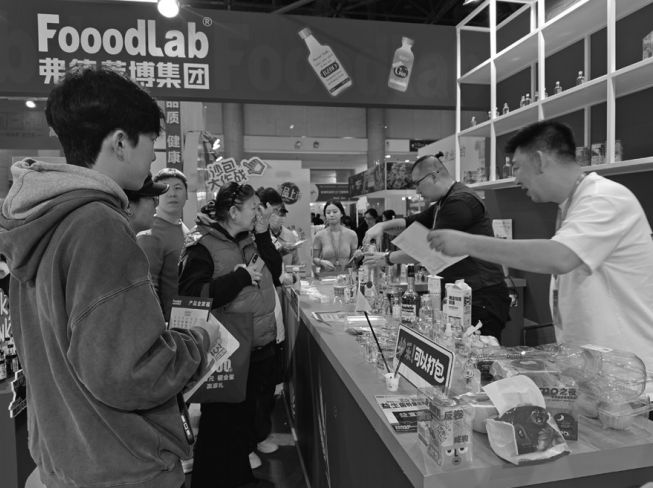
Group 1: Core Trends in the Consumer Market - The current consumer market is characterized by health-consciousness, youthfulness, and emotional engagement [1][2][8] - The health trend is evident in the dairy and beverage sectors, with brands launching products that emphasize "sugar-free," "low-fat," and "added probiotics or dietary fiber" [1][2] - The rise in health awareness is supported by a report indicating a nearly 13% increase in public knowledge of dairy product nutrition compared to the previous year [1] Group 2: Innovations in Dairy and Beverages - The health trend extends to a broader range of beverages, with products like 100% coconut water and "0 additives" soda water attracting young consumers [2] - New categories of drinks, such as plant-based beverages featuring traditional health ingredients, are emerging and gaining popularity among younger demographics [2] Group 3: Youth-Oriented Product Development - Retail products are increasingly targeting the "Z generation," particularly in the alcoholic beverage sector, where brands are focusing on new flavors, packaging, and experiential marketing [2][5] - Interactive experiences, such as on-site cocktail mixing, are drawing significant interest from young consumers [5] Group 4: Emotional Consumption Trends - Products are increasingly seen as vehicles for emotional expression and comfort, reflecting a deeper consumer trend towards "experience-driven" and "self-indulgent" consumption [8] - The retail sector faces challenges such as digital transformation and product homogenization, necessitating a deeper connection with consumer needs for sustainable growth [8]
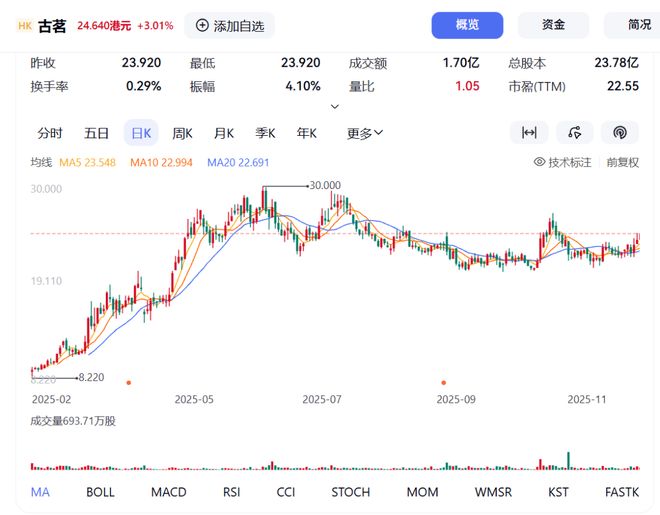
港股新消费概念股持续走强,古茗、茶百道涨超4%
Mei Ri Jing Ji Xin Wen· 2025-11-25 02:10
Group 1 - The core viewpoint is that new consumption concept stocks in Hong Kong are experiencing a strong performance, with notable increases in share prices for several companies [1][2] Group 2 - Gu Ming (01364.HK) and Cha Bai Dao (02555.HK) have both risen over 4% [1] - Wei Long (09985.HK) and Nai Xue's Tea (02150.HK) have seen nearly a 3% increase [1]
霸王茶姬、喜茶都在跟,年轻人正捧红一批“地域文旅奶茶”
3 6 Ke· 2025-11-24 03:49
Core Insights - A new wave of tea shops focusing on "regional + cultural tourism" has emerged, gaining popularity among young consumers who view these experiences as essential during their travels [2][10][19] Group 1: Market Trends - Traditional tea shops are struggling with price wars, while those emphasizing regional and cultural tourism are experiencing rapid growth and national expansion [2][6] - For instance, Jiangxi Kuncha has achieved monthly revenues exceeding 1 million yuan at its Wan Shou Gong store, with a total of 20 locations across various cities [4][6] - Similarly, Xuzhou's Yunlong Tea has opened 8 stores, consistently ranking in the top three on local review platforms [4][6] Group 2: Consumer Engagement - The popularity of these tea shops is driven by their ability to create immersive cultural experiences, which resonate well with consumers [10][11] - For example, Kuncha's stores feature traditional decor that reflects local culture, enhancing the overall customer experience [11][12] - The integration of local ingredients into product offerings, such as Kuncha's "瓦罐系列" and Yunlong Tea's "徐州汉茶" series, further strengthens the connection to regional identity [13][14] Group 3: Marketing Strategies - Many tea brands are leveraging collaborations with cultural tourism IPs to enhance their market presence, such as Yi He Tang's partnership with Handan's cultural tourism [14][19] - The trend of co-branding is evident, with brands like Bawang Chaji embedding their products within cultural sites, thus creating a unique selling proposition [14][19] - Social media engagement is significant, with over 50 million posts related to "regional + cultural tourism" tea shops, indicating strong consumer interest [9][10] Group 4: Challenges and Competition - The rapid rise of these tea shops has led to a wave of imitation, resulting in a homogenization of offerings and decor styles across the market [15][18] - The challenge of maintaining unique brand identities is critical, as many shops struggle to differentiate themselves beyond surface-level cultural elements [15][18] - Experts suggest that true differentiation requires a deeper integration of local cultural elements into both product and store design [15][19]
年轻人正捧红一批“地域文旅奶茶”
Xin Lang Cai Jing· 2025-11-24 03:36
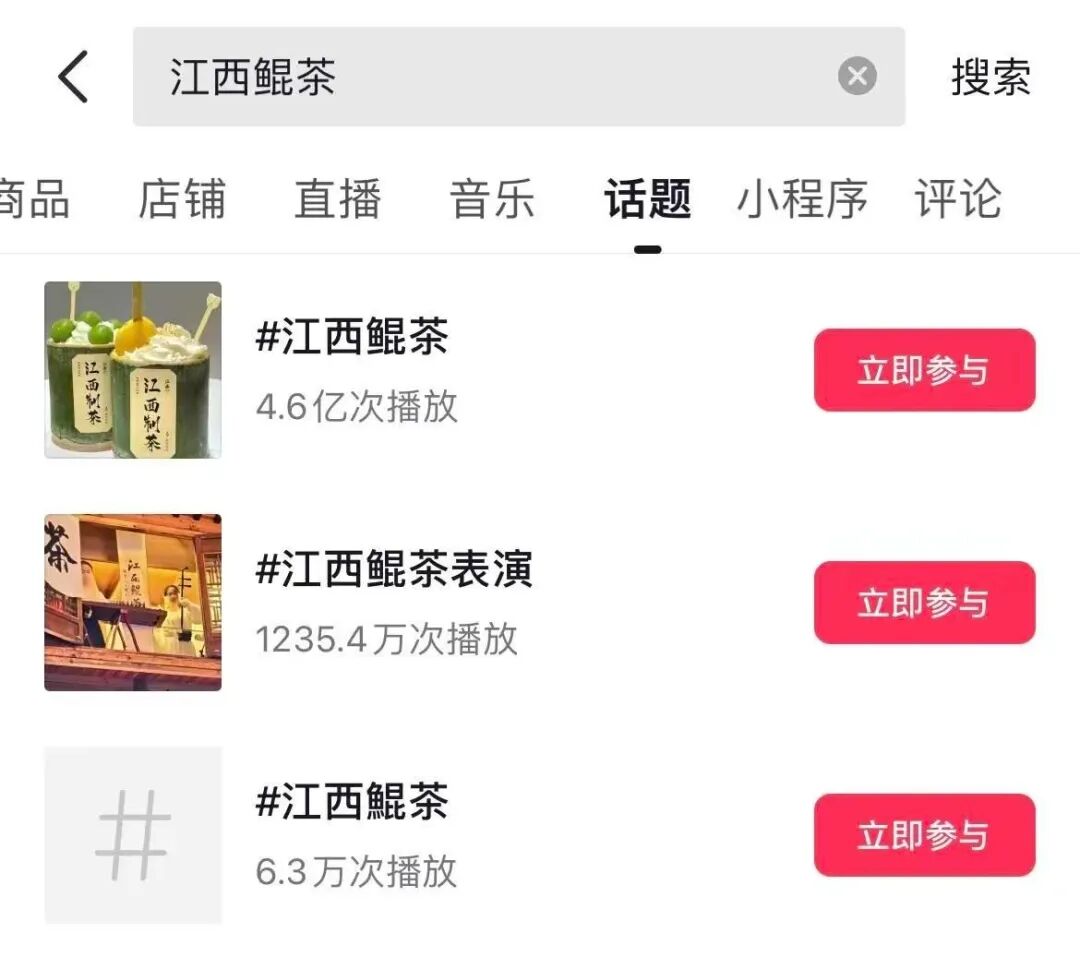
Core Insights - A new wave of tea shops focusing on "regional + cultural tourism" characteristics is gaining popularity, successfully expanding nationwide while traditional tea shops struggle with price wars [2][6][14] Group 1: Market Trends - The rise of tea shops like Jiangxi Kunchá and Yunglong Tea in Xuzhou showcases the success of integrating local culture and tourism into their branding, leading to significant social media engagement and sales [2][4][6] - Jiangxi Kunchá's Wan Shou Gong store reportedly achieves monthly revenues exceeding 1 million yuan, with a total of 20 locations established in various cities [4][6] - Yunglong Tea has opened 8 stores in Xuzhou, consistently ranking in the top three on local review platforms, indicating strong consumer demand [4][6] Group 2: Consumer Engagement - The popularity of these tea shops is driven by their ability to create immersive cultural experiences, appealing to young consumers who prioritize unique photo opportunities during their travels [2][6][11] - Social media platforms like Xiaohongshu and Douyin have seen significant discussions and views related to these tea brands, with Jiangxi Kunchá generating over 23,000 discussions and 460 million views on Douyin [2][4] Group 3: Product Innovation - Many of these tea shops incorporate local ingredients into their products, enhancing their connection to regional culture, such as Yunglong Tea's focus on Han culture and Jiangxi Kunchá's "Wagon Series" [12][13] - The use of local ingredients has been scaled, with brands like Quchashan utilizing nearly 1,000 tons of local materials in their products, showcasing a commitment to regional authenticity [12][13] Group 4: Competitive Landscape - The success of "regional + cultural tourism" tea shops has led to a surge in imitation stores, which often lack unique cultural elements and may face challenges in differentiation [14][17] - The industry is experiencing a trend of product and marketing homogenization, with many brands replicating popular items without innovation, leading to decreased consumer interest [17][18] Group 5: Strategic Collaborations - Collaborations with cultural tourism entities are becoming a strategy for brands to enhance their market presence, as seen with Yihe Tang's partnership with Handan tourism to create themed products [13][18] - Successful collaborations focus on deep cultural integration rather than superficial branding, as demonstrated by Bawang Chaji's engagement with local cultural performances [18]
餐饮、潮玩及家电行业周报-20251123
Haitong Securities International· 2025-11-23 11:33
Investment Rating - The report assigns an "Outperform" rating to several companies including Pop Mart, Anta Sports, Huazhu Group, Haidilao, and Miniso, while Budweiser APAC is rated "Neutral" [1]. Core Insights - The report highlights strong revenue growth for Luckin Coffee, which reported Q3 revenue of 15.3 billion yuan, a 50% year-on-year increase, and a monthly active user count of 112 million, up 41% [2]. - Miniso's Q3 revenue reached 5.8 billion yuan, a 28.2% increase, exceeding previous guidance [2]. - Yum China plans to expand its store count significantly, targeting 20,000 stores by 2026 and 30,000 by 2030 [2]. - Haidilao is diversifying its offerings by entering the pizza and hamburger markets with new store openings [2]. - The report notes a strategic partnership between Haier Robotics and INDEMIND for developing home robotics [2]. Weekly Performance Summary - Green Tea Group saw a strong performance with a 5.5% increase in stock price, while Xiabu Xiabu and Nayuki experienced declines of 8.1% and 8.6% respectively [3][8]. - In the trendy toy sector, Pop Mart and Miniso both faced stock price declines of 7.9% and 8.5% respectively [5][8]. - The home appliance sector saw significant declines, with Joyoung down 15.6% and Dun'an Environment down 9.0% [5][8].


