东风汽车

Search documents
百公里气耗29公斤!玉柴K14N助卡友抵御低迷货运行情
第一商用车网· 2025-06-23 06:34
Core Viewpoint - The Yuchai K14N gas engine is gaining traction in the trucking industry due to its superior fuel efficiency and performance, particularly in challenging terrains, providing a competitive edge in a low freight rate environment [1][9][15]. Group 1: Performance and Efficiency - The Yuchai K14N gas engine features a large displacement of 14.8 liters, with a maximum power output of 540 horsepower and a torque of 2500 Nm, designed for high operational efficiency [8]. - The engine's fuel consumption averages around 29 kg per 100 km, which is 2 kg lower than comparable gas engines, and can reach a 3 kg advantage in time-sensitive green transport operations [11]. - The engine incorporates 65 patented fuel-saving technologies, enhancing its thermal efficiency and overall fuel economy [11]. Group 2: Market Adaptation - In response to declining freight rates, operators like Hu have shifted their focus to efficient operations, leveraging the Yuchai K14N's capabilities to maintain profitability [9][11]. - The engine's performance in mountainous and hilly regions has proven to be superior, allowing for quicker climbs and better overall efficiency compared to traditional diesel engines [5][12]. Group 3: Reliability and Comfort - The Yuchai K14N engine boasts a lifespan of up to 1.8 million kilometers, supported by a robust after-sales service network, addressing concerns about maintenance and reliability [12][14]. - The engine operates with low noise levels, enhancing driver comfort during long hauls, which contributes to improved operational efficiency [14].


换电重卡5月大增145%!福田蝉联第一 徐工销量破千 解放/重汽谁是季军?| 头条
第一商用车网· 2025-06-23 06:34
Core Viewpoint - The new energy heavy truck market has seen significant growth, with a year-on-year increase of 190% in May 2025, and sales have consistently exceeded 15,000 units for three consecutive months, indicating a strong upward trend in the sector [1][5]. Market Performance - In May 2025, the domestic new energy heavy truck market sold a total of 15,100 units, a month-on-month decrease of 5% but a year-on-year increase of 190% [5]. - Pure electric heavy trucks accounted for 98.99% of total sales, with sales of 15,000 units, showing a slight increase from the previous month [5]. - The sales of battery swap heavy trucks reached 4,806 units in May, reflecting a year-on-year growth of 145%, although the growth rate has slowed compared to previous months [5][19]. Segment Analysis - The battery swap heavy truck segment has seen a market share of 32.15% in May, which is a slight increase from the previous month but a decrease of over 9 percentage points compared to the same period last year [7]. - From January to May 2025, the battery swap heavy truck segment sold a total of 19,400 units, representing a year-on-year increase of 139% [19][21]. - The main types of battery swap heavy trucks sold were tractor trucks and dump trucks, accounting for 85.14% and 12.92% of sales, respectively [12][25]. Company Performance - Foton led the sales in May with 1,089 units, followed closely by XCMG with 1,054 units, indicating strong competition among leading manufacturers [15][17]. - Seven out of the top ten companies in the battery swap heavy truck market achieved over 100% year-on-year growth, with notable increases from Foton, Dongfeng, and XCMG [17][23]. - The market share of leading companies such as XCMG, Foton, and China National Heavy Duty Truck Group has increased, with Foton's market share rising by 7.58 percentage points compared to the previous year [23]. Future Outlook - The battery swap heavy truck market is expected to continue its growth trajectory, although it has not yet outpaced the overall new energy heavy truck market growth [33]. - The competitive landscape remains intense, particularly in the battery swap tractor truck segment, where major players are vying for market leadership [27].




东风汽车加速智能化升级 全力冲击新能源100万辆目标
Xin Lang Ke Ji· 2025-06-23 02:10
Core Insights - Dongfeng Motor is actively developing its new energy vehicle strategy, showcasing a comprehensive strategic layout that adapts to the transition towards new energy [1] - The company aims to achieve a target of 1 million new energy vehicles, supported by a strong product matrix and technological advancements [1][2] Group 1: Sales and Market Performance - In the first five months of this year, Dongfeng Motor delivered a total of 905,000 vehicles, with 536,000 from its own brands, and achieved the highest market share in the domestic heavy truck sector [1] - Exports reached 94,000 units, marking a year-on-year increase of 4.9%, with exports of its own brands and new energy vehicles growing by 30% and 331% respectively [1] Group 2: Product Development and Technological Advancements - Dongfeng has launched several new products, including the luxury smart off-road SUV M817 and the Lantu FREE+, which features Huawei's ADS 4 and HarmonySpace 5 [2] - The company has established a comprehensive power brand system covering energy-saving, hybrid, and pure electric vehicles, along with three major passenger car platforms [2] Group 3: Innovation in Hydrogen Energy - Dongfeng holds the highest number of invention patents in the hydrogen energy sector and has developed the first full-power fuel cell passenger vehicle in China [3] Group 4: Industry Chain and Ecosystem Layout - The company is focused on controlling core resources in the new energy vehicle industry chain, achieving significant sales in pure electric drive assemblies and breaking foreign monopolies in IGBT technology [4] - Dongfeng is also building a smart charging ecosystem and has launched advanced charging stations, promoting battery operation and recycling initiatives [5] Group 5: Brand Development and Recognition - Dongfeng Motor has improved its ranking in the central enterprise brand construction report, now positioned 7th overall and maintaining the top spot in the automotive industry for four consecutive years [5]

湖北万亿汽车产业集群加速链式跃升 打造智联生态冲击“双百万”目标
Chang Jiang Shang Bao· 2025-06-23 00:44
Core Insights - Hubei province is transforming its automotive industry with a focus on new energy and intelligent connected vehicles, contributing significantly to China's automotive landscape with 11.3% of the national new energy vehicle production capacity and 14.6% of intelligent connected patents [1][2] Group 1: Industry Overview - Hubei has 25 vehicle manufacturers and over 2,400 auto parts companies, with an automotive production capacity nearing 4 million units, and aims for over 1 trillion yuan in revenue by 2024 [2] - The province has set a "double million" target to produce and sell 1 million new energy vehicles by 2025, with 19 new energy vehicle manufacturers and a production capacity of 1.75 million units [2][8] Group 2: Strategic Developments - The "Wuxiang-Sui" industrial corridor integrates various automotive sectors, with a focus on vertical integration and a full-chain ecosystem for intelligent vehicles [3] - Hubei's automotive industry is evolving from traditional manufacturing to a comprehensive upgrade involving new energy and intelligent connected technologies [1][3] Group 3: Technological Advancements - Wuhan has established a collaborative model between automotive and technology sectors, enhancing local supply chains for automotive-grade chips from 18% in 2023 to 35% currently [4] - The province is focusing on software-defined vehicles, aiming to develop a robust software ecosystem for intelligent automotive applications [7] Group 4: Economic Impact - Hubei's new energy vehicle production share has risen to 31.4%, with significant contributions from local manufacturers like Dongfeng and NIO [6] - The automotive industry's digital economy is projected to reach 2.8 trillion yuan by 2024, with an increase in the intelligentization rate from 12% in 2019 to 43% [5] Group 5: Future Goals - Hubei aims to achieve a production capacity of over 3 million vehicles by 2027, with new energy vehicles making up 50% of total production [8]
解码东风汽车智能化转型:以“科技跃迁”破局行业“内卷”
Zhong Guo Xin Wen Wang· 2025-06-22 07:12
Core Viewpoint - The traditional automotive industry is facing intense competition and price wars, prompting companies like Dongfeng Motor to seek innovative solutions for sustainable growth rather than relying on price reductions [1][2]. Group 1: Dongfeng Motor's Innovations - Dongfeng Motor has established a smart manufacturing demonstration factory that utilizes 5G and big data technologies, enabling mixed-flow production of various vehicle types with 935 industrial robots, producing a new vehicle every 118 seconds [1]. - The company is advancing its "Tianyuan Intelligent" technology system and the new generation of Mahle power systems, while also developing the Dongfeng Hydrogen Boat series to diversify its new energy offerings [1]. - Dongfeng is focusing on integrating artificial intelligence with industry, enhancing vehicle intelligence and the vehicle-road-cloud integration level through advanced technologies like industrial internet and cloud computing [2]. Group 2: Market Dynamics and Strategies - The Chinese automotive market is transitioning from incremental expansion to stock competition, with increasing competition from new brands and cross-industry entrants, leading to a fundamental shift in consumer purchasing logic [1]. - Dongfeng rejects the notion of competing through price cuts, emphasizing that such practices harm the industry's long-term health and instead prioritizes technological innovation to enhance product and brand value [2]. - The collaboration between automotive companies and technology firms is becoming a trend, exemplified by Dongfeng's partnership with Huawei and China Mobile to create a 5G vehicle-road-cloud collaborative system covering 660 kilometers of open roads in Wuhan [2]. Group 3: Industry Implications - Dongfeng Motor's approach to smart transformation serves as an inspiring model for traditional automakers and the broader automotive industry, positioning the company to seize opportunities in the evolving market landscape [3].
重大利好!能省一大笔钱
新华网财经· 2025-06-22 07:06
Core Viewpoint - The Ministry of Industry and Information Technology of the People's Republic of China has released a new batch of directories for energy-saving and new energy vehicles that enjoy tax exemptions, including vehicle purchase tax and vehicle and vessel tax [1][2]. Group 1: Tax Exemption Directories - The announcement includes the 74th batch of energy-saving and new energy vehicle models eligible for vehicle and vessel tax exemptions and the 18th batch of models eligible for vehicle purchase tax exemptions [2]. - The announcement is based on various regulations and notices regarding the tax exemption policies for energy-saving and new energy vehicles [2]. Group 2: Electric Vehicle Models - The directory lists several pure electric passenger vehicle models, including specifications such as electric range, total vehicle weight, and battery capacity [3][4]. - Notable models include those from NIO, Xiaomi, and other manufacturers, with electric ranges varying from 400 km to over 600 km and battery capacities ranging from 42.8 kWh to 92.2 kWh [4][5].

加速构建人工智能产业生态
Jing Ji Ri Bao· 2025-06-21 21:57
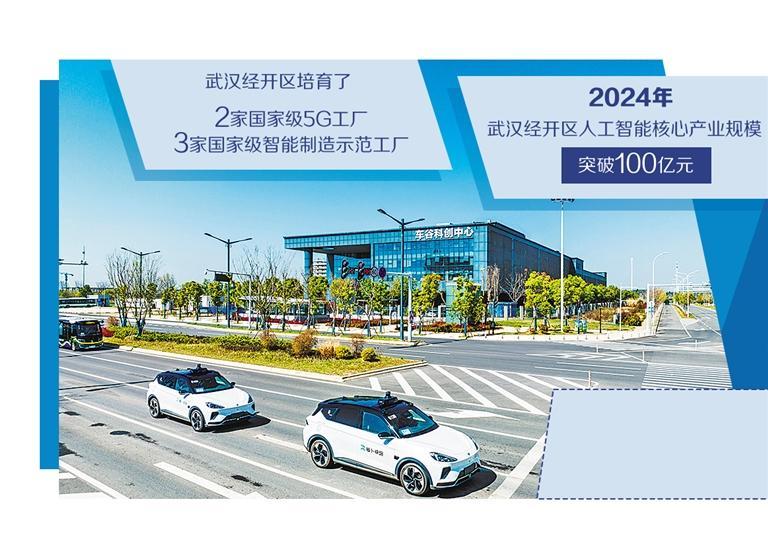
Core Insights - The article highlights the development of the artificial intelligence (AI) industry in Wuhan Economic Development Zone, focusing on smart connected vehicles and the establishment of a comprehensive AI ecosystem [3][4][5]. Group 1: AI Infrastructure and Development - China Electronics Cloud has established the Wuhan Trusted Intelligent Computing Center, with an initial capacity of 100P, which is currently operating at nearly 100% utilization [3]. - The AI core industry in Wuhan Economic Development Zone surpassed 10 billion yuan, accounting for 20% of the city's total, positioning it as a leader in Wuhan's AI sector [3][4]. Group 2: Industry Collaboration and Investment - Major companies like iFlytek have invested 5 billion yuan in the region, establishing multiple AI facilities to enhance collaboration and technology transfer [4]. - Wuhan Economic Development Zone has attracted over 200 AI companies, creating a hub for AI development centered around smart connected vehicles [4]. Group 3: Smart Vehicle Initiatives - Dongfeng Motor has launched the "Tianyuan Intelligent" technology brand, which includes a large model that improves vehicle development efficiency by reducing the new car development cycle by over 35% [5]. - The region has developed 106 kilometers of smart roads integrating 5G, Beidou, and AI technologies, facilitating the deployment of autonomous vehicles [5][6]. Group 4: Future Plans and Goals - The Wuhan Municipal Government has released an action plan for AI development by 2025, aiming to create an AI "special zone" in the Economic Development Zone [6]. - Future initiatives will focus on enhancing the AI ecosystem, particularly in automotive and manufacturing sectors, and addressing key technological challenges [6].

商汤绝影世界模型负责人离职。。。
自动驾驶之心· 2025-06-21 13:15
Core Viewpoint - The article discusses the challenges and opportunities faced by SenseTime's autonomous driving division, particularly focusing on the competitive landscape and the importance of technological advancements in the industry. Group 1: Company Developments - The head of the world model development for SenseTime's autonomous driving division has left the company, which raises concerns about the future of their cloud technology system and the R-UniAD generative driving solution [2][3]. - SenseTime's autonomous driving division has successfully delivered a mid-tier solution based on the J6M model to GAC Trumpchi, but the mid-tier market is expected to undergo significant upgrades this year [4]. Group 2: Market Dynamics - The mid-tier market will see a shift from highway-based NOA (Navigation on Autopilot) to full urban NOA, which represents a major change in the competitive landscape [4]. - Leading companies are introducing lightweight urban NOA solutions based on high-tier algorithms, targeting chips with around 100 TOPS computing power, which are already being demonstrated to OEM clients [4]. Group 3: High-Tier Strategy - The key focus for SenseTime this year is the one-stage end-to-end solution, which has shown impressive performance and is a requirement for high-tier project tenders from OEMs [5]. - Collaborations with Dongfeng Motor aim for mass production and delivery of the UniAD one-stage end-to-end solution by Q4 2025, marking a critical opportunity for SenseTime to establish a foothold in the high-tier market [5][6]. Group 4: Competitive Landscape - SenseTime's ability to deliver a benchmark project in the high-tier segment is crucial for gaining credibility with OEMs and securing additional projects [6][7]. - The current window of opportunity for SenseTime in the high-tier market is limited, as many models capable of supporting high-tier software and hardware costs are being released this year [6][8].

从2元店起家到服务百家,紧抓商贸配送,为何他能成就一番事业?
第一商用车网· 2025-06-21 12:04
Core Viewpoint - The article highlights the entrepreneurial journey of a delivery business owner, Ye Genwei, who successfully expanded his operations in Wuhan using Jianghuai Starry vehicles, emphasizing the importance of logistics in commerce and the benefits of efficient delivery systems [1][9][19]. Group 1: Business Expansion and Logistics - Ye Genwei started his delivery business with one Jianghuai Starry vehicle and expanded to three due to increasing demand for delivery services in Wuhan [1][9]. - The growth of the workforce in Henan province led to a rise in demand for affordable daily necessities, prompting the establishment of low-cost retail stores [5][7]. - Ye's logistics strategy includes a self-built fleet of delivery vehicles, which has allowed him to serve over a hundred clients across Wuhan [9][19]. Group 2: Vehicle Performance and Cost Efficiency - The Jianghuai Starry 627 model, with a cargo volume of 12.5 cubic meters, significantly improved delivery efficiency, allowing Ye to meet the demands of his clients more effectively [11][12]. - The fuel efficiency of the Jianghuai Starry is highlighted, with an average fuel consumption of around 8 liters per 100 kilometers, leading to substantial cost savings over time [16][18]. - Ye appreciates the vehicle's powerful 2.7-liter diesel engine, which enhances safety and performance in busy traffic conditions [18]. Group 3: Profitability and Market Strategy - Ye's business model relies on a low-margin, high-volume strategy, with average profit margins of 10%-20% on individual items [14]. - The importance of rapid product circulation is emphasized as a key to maintaining profitability in the retail sector [12][14]. - Ye's success is attributed to his hard work and accurate market demand assessment, positioning him for future growth in the competitive retail landscape [19].


解放/东风/重汽争冠 燃气重卡5月实销1.4万辆谁在逆增?| 头条
第一商用车网· 2025-06-21 04:31
Core Viewpoint - The natural gas heavy truck market in China has experienced a significant decline in sales, with a year-on-year decrease of 34% in May 2025, marking the third consecutive month of decline, indicating a challenging market environment for the industry [2][6][10]. Sales Performance - In March and April 2025, the natural gas heavy truck market saw year-on-year declines of 26% and 35%, respectively, leading to a total sales volume of 14,000 units in May, which is a 34% decrease compared to the same month last year [2][6][10]. - The overall heavy truck market sold 63,100 units in May, showing an 18% year-on-year increase, while the natural gas heavy truck segment lagged behind, capturing only 22.10% of the market share in May, down from 24.86% in April [10][24]. Market Trends - The first five months of 2025 saw a cumulative sales volume of 78,000 units for natural gas heavy trucks, reflecting a 16% year-on-year decline, with a notable decrease of 14,600 units compared to the same period last year [29][33]. - The market share of natural gas heavy trucks has decreased from 36.47% in the same period last year to 27.33% in 2025 [10][33]. Regional Analysis - Sales distribution across regions remains uneven, with Hebei, Shanxi, Henan, Shandong, and Xinjiang accounting for a significant portion of the sales, with Hebei alone contributing nearly 15% [16][18]. - Some regions, such as Xinjiang, Sichuan, Inner Mongolia, Gansu, Chongqing, Jilin, and Beijing, have shown growth in sales during the first five months of 2025, while major provinces like Hebei and Shanxi have experienced declines [18]. Company Performance - In May 2025, the top-selling companies in the natural gas heavy truck market included FAW Jiefang, Dongfeng, and China National Heavy Duty Truck, with sales of 3,382, 2,966, and 2,963 units, respectively [20][22]. - Among the top ten companies, five experienced sales growth, while eight saw declines, with the most significant drop being 86% for one company [24][27]. Price Influence - Natural gas prices have remained relatively stable, averaging around 4,400 yuan/ton in January and February, rising to nearly 4,600 yuan/ton in March and April, before decreasing to approximately 4,500 yuan/ton in May [13][14]. - The narrowing price gap between natural gas and diesel, with diesel prices dropping below 6.5 yuan/L in many northern regions, has diminished the competitive advantage of natural gas heavy trucks [14].