元气森林

Search documents
从看不懂到投不进:大基金为何集体错判泡泡玛特、老铺黄金和卡游|深氪
36氪未来消费· 2025-08-21 08:17
Core Viewpoint - The article discusses the contrasting fortunes of companies in the Hong Kong stock market, particularly focusing on the success of "Lao Pu Gold" and the missed investment opportunities by venture capitalists in the primary market [2][3]. Group 1: Lao Pu Gold's Journey - Lao Pu Gold, which saw its stock price increase by 12 times since its listing, was initially overlooked in the primary market, with no prior funding rounds before its IPO [4][5]. - The company received a significant investment from Black Ant at a valuation of 52.25 billion RMB, marking a rare entry into the investment round [5][6]. - Despite the initial lack of interest, the company's mid-year report showed a nearly 200% year-on-year profit increase, leading to a surge in demand during its IPO, with retail subscriptions oversubscribed by over 580 times [9][10]. Group 2: Market Sentiment and Investment Decisions - The article highlights a shift in market sentiment, where previously overlooked companies like Lao Pu Gold became highly sought after, leading to significant regret among investors who missed the opportunity [11][12]. - The investment community's failure to recognize the potential of companies like Lao Pu Gold and others in the consumer sector is emphasized, with many expressing regret for not investing [13][14]. - The article notes that the consumer sector, particularly non-essential goods, has become the hottest area for investment, with significant inflows from both domestic and foreign capital [20][24]. Group 3: The Changing Landscape of Consumer Investment - The article outlines how the consumer market has evolved, with companies like Bubble Mart and Lao Pu Gold emerging as leaders, while traditional sectors like tea drinks faced challenges [19][35]. - It discusses the competitive landscape, where companies that innovate and create unique products are more likely to succeed, contrasting with those that follow existing trends [44][45]. - The narrative also touches on the varying backgrounds of founders in the consumer space, which influences investor perceptions and decisions [45][46].


无糖茶再火,还是打不过这国民饮料
3 6 Ke· 2025-08-20 09:17
Core Insights - The article discusses the enduring popularity of iced black tea in China, highlighting its affordability and mass appeal despite the rise of healthier beverage options [1][3][8] - The market for sweetened iced tea remains robust, with sales expected to reach 350 billion yuan by 2025, significantly outpacing unsweetened varieties [6][14] Market Dynamics - The sweetened iced tea market maintains a 60:40 share over unsweetened tea, with brands like 康师傅 (Kang Shifu) and 统一 (Uni-President) leading the segment [1][6] - New entrants like 元气森林 (Yuanqi Forest) and 农夫山泉 (Nongfu Spring) are innovating within the iced tea space, with Yuanqi Forest reporting a 150% year-on-year growth in market share [1][6] Consumer Behavior - Iced black tea is perceived as a "common man's drink," appealing to budget-conscious consumers who prioritize value over brand prestige [3][15] - The recent price increase from 康师傅 has sparked consumer backlash, indicating a strong sensitivity to price changes among its core demographic [11][13] Competitive Landscape - 康师傅's price hikes have led to a decline in sales, with a reported 6.3% drop in tea beverage sales, while competitors like 统一 have seen growth [13][14] - The article notes that the iced tea market is shifting towards larger packaging sizes, reflecting consumer preferences for cost-effective options [13][14] Brand Positioning - Iced black tea brands have not attempted to position themselves as status symbols, instead focusing on the refreshing and enjoyable aspects of their products [17][18] - Despite health trends favoring low-sugar options, traditional iced black tea remains favored for its taste and affordability, with consumers expressing a preference for the original sweetened versions [17][18]

「穷鬼迪士尼」,统治中产周末?
首席商业评论· 2025-08-20 04:26
Core Viewpoint - The article discusses the rise of "industrial tourism" as a new trend in the tourism industry, particularly appealing to working individuals seeking unique experiences during their limited free time. This form of tourism transforms traditional factory visits into engaging and interactive experiences, often with added benefits like free products or hands-on activities [3][32]. Summary by Sections Industrial Tourism Emergence - This summer has been challenging for outdoor activities due to extreme weather, leading to a decline in popular outdoor tourism options. However, a new trend called "industrial tourism" has emerged, attracting working individuals who seek to make the most of their leisure time [3][5]. Transformation of Factory Visits - Industrial tourism has evolved from dull factory tours to dynamic experiences where visitors can engage in various activities, such as hands-on product sampling and interactive displays. The affordability of tickets enhances the appeal, making it a popular choice for tourists [5][7]. Examples of Popular Industrial Tours - Notable examples include the螺霸王螺蛳粉 factory, where a ticket priced at 36 yuan includes a factory tour and a meal, showcasing the value offered to visitors [7][9]. -元气森林 factory offers a similar experience with a 25 yuan ticket that includes free drinks and interactive displays, further enhancing visitor engagement [11][13]. Visitor Experience and Engagement - Many visitors seek not only to enjoy the products but also to gain hands-on experience, such as DIY activities at various factories. For instance, the北冰洋 factory allows visitors to create their own soda, while the新希望 dairy factory offers simulated milking experiences [16][19]. Market Growth and Future Prospects - Industrial tourism is classified under "industrial science popularization tourism," which is part of China's broader tourism market. Despite currently holding a smaller market share of 100 billion yuan, it is the fastest-growing segment among agricultural and technological tourism [32][43]. - Predictions indicate a compound annual growth rate of 18% to 22% for this market in the coming years, highlighting its potential for expansion [43][44]. Visitor Demographics and Motivations - The article notes that industrial tourism appeals to a wide range of visitors, including those seeking unique experiences, educational opportunities, and even a sense of nostalgia for childhood interests in machinery and production processes [51][54]. Challenges and Considerations - Despite the growth, there are concerns regarding safety and the authenticity of experiences offered. Some visitors report issues with high ticket prices and inadequate engagement, suggesting a need for better regulation and quality assurance in the industry [45].

灵智数科:2025年中国消费市场趋势洞察报告v1.0
Sou Hu Cai Jing· 2025-08-19 07:30
Core Insights - The report emphasizes that the transformation of the Chinese consumer market is not merely a shift from "old to new consumption," but a value reconstruction centered around users' "task needs" [1][3] - The core of new consumption lies in the precise decoding of user tasks, where brands must identify unmet needs in segmented scenarios [1][3] Group 1: Market Changes - The traditional "80/20 rule" is being disrupted, with the rise of lower-tier markets becoming a key growth driver, as county-level consumers express an 82% satisfaction rate with "quality-price ratio" [2][19] - Consumer demographics are experiencing growth at both ends: younger generations in lower-tier markets favor domestic products, while the aging population is driving emotional consumption such as pet ownership [2][19] - The restructuring of business logic is evident in various dimensions, including channel and supply chain innovation, personalized services, and the rise of the "small employment" model [2][19] Group 2: Brand Strategies - Brands need to focus on "equality, intelligence, and humanity" to build barriers through scene adaptability, enabling long-term growth in a competitive market [3][10] - Successful brands like Pop Mart and Luckin Coffee illustrate how understanding user tasks can lead to innovative solutions that resonate with consumers [2][27] - The report highlights the importance of local culture in brand expansion, with companies like Huaxizi and Chayan Yuesheng integrating Eastern aesthetics into their products [2][9] Group 3: Future Trends - The future consumer market will be characterized by a "user-defined demand" dynamic, where brands must adapt to the evolving needs of consumers [3][10] - The report suggests that the essence of new consumption is a "democratization of consumption," where technology reduces information gaps and consumers seek to affirm their social status through purchases [9][10] - The shift from "brand-defined demand" to "user-employing brands" signifies a fundamental change in the relationship between consumers and brands [10][11]

2025年第33周:食品饮料行业周度市场观察
艾瑞咨询· 2025-08-19 00:05
Group 1 - The baking industry is undergoing a rapid reshuffle, with many well-known brands closing stores due to high rent and labor costs, leading to 95,000 closures in 2024, despite the industry still growing at 5.2% to reach 110.5 billion yuan [3][4]. - Tesla's restaurant in Los Angeles generated $47,000 in just six hours, with plans to open in Shanghai next year, but faces challenges in adapting to Chinese cuisine [5]. - The powdered noodle market is expanding, with a projected market size of 227.5 billion yuan in 2024 and over 1 million stores by 2025, driven by product innovation and regional specialties [7]. Group 2 - The summer beverage market is shifting towards health-focused Chinese herbal drinks, with significant sales growth and a projected market size exceeding 10 billion yuan by 2028 [8][13]. - The sugary tea market is experiencing a resurgence, with the market size expected to be twice that of unsweetened tea from 2023 to 2025, driven by traditional brands and innovative products [9]. - The salt soda, originally a labor product, is gaining popularity among young consumers, but faces challenges in seasonal demand and regional distribution [10]. Group 3 - The carbonated beverage market is intensifying competition, with local brands like Yuanqi Forest and Zhenzhen launching innovative products to capture market share from Coca-Cola and Pepsi [11]. - The Chinese coffee market has surpassed the U.S. in the number of coffee shops, with a projected market size exceeding 220 billion yuan by 2025 [17]. - The herbal beverage market is rapidly growing, with a projected size of 150 billion yuan by 2023, but faces challenges of formula homogenization [31]. Group 4 - The energy drink market is expected to maintain high growth, with a projected CAGR of 10.9% from 2020 to 2024, driven by increasing demand among young consumers [23]. - The trend of large-sized beverages is rising, particularly in lower-tier cities, with a focus on cost-effectiveness and shared consumption [10]. - The "current milk drink" category is emerging as a new trend, with brands leveraging social media and health attributes to attract young consumers [24]. Group 5 - The herbal drink market is seeing a surge in interest, with companies like Weiwei launching new products that emphasize natural ingredients and health benefits [44]. - The trend of "functional juices" is gaining traction, with products like HPP ginger drinks becoming popular among young consumers [42]. - The market for GABA-based sleep aid beverages is growing, but faces challenges in consumer education and product efficacy [22].


舌尖上的效率革命 食品消费业“智造”进行时
Zheng Quan Shi Bao· 2025-08-18 18:33
Core Insights - The food industry is undergoing a significant digital transformation, driven by government initiatives and technological advancements, which enhances production efficiency and consumer experience [1][7]. Group 1: Digital Transformation in the Food Industry - The Ministry of Industry and Information Technology and other departments have issued a plan to accelerate the digital transformation of the food industry, highlighting its importance in economic growth and consumer welfare [1]. - Key industrial enterprises in China's food sector have achieved a numerical control rate of 63.3% and a digital design tool penetration rate of 72.8% [1]. Group 2: Case Studies of Digital Implementation - Tea Baidao has implemented smart tea machines that reduce average cup preparation time to 7.1 seconds, with a 99.7% order and recipe recognition rate, significantly enhancing customer experience and increasing order volume [2]. - Dingdong Maicai has improved its digital capabilities in its front warehouse, achieving a 30% increase in order volume through smart sorting and delivery systems, while maintaining a daily loss rate of 1.5% [3]. - Yuanqi Forest's Tianjin factory utilizes an automated production line with an annual capacity exceeding 600 million bottles, and plans to introduce additional production lines by 2025 to further enhance efficiency [4]. Group 3: Data Utilization and Challenges - Jinlongyu has initiated a digital transformation, focusing on data integration across its factories to enhance efficiency and reduce waste, while also implementing AI for quality control [6][7]. - The company emphasizes the importance of a unified data platform to manage and analyze vast amounts of data, which is crucial for maintaining competitiveness in the food processing industry [6][7]. Group 4: Strategic Implications - The digital transformation in the food industry is seen as a way to reshape traditional manufacturing processes, with a focus on integrating digital technologies into production and quality management [7]. - Continuous policy support is expected to drive further advancements in the food sector, unlocking new growth opportunities [7].
康师傅、统一需向外卖抢生意
3 6 Ke· 2025-08-18 06:53
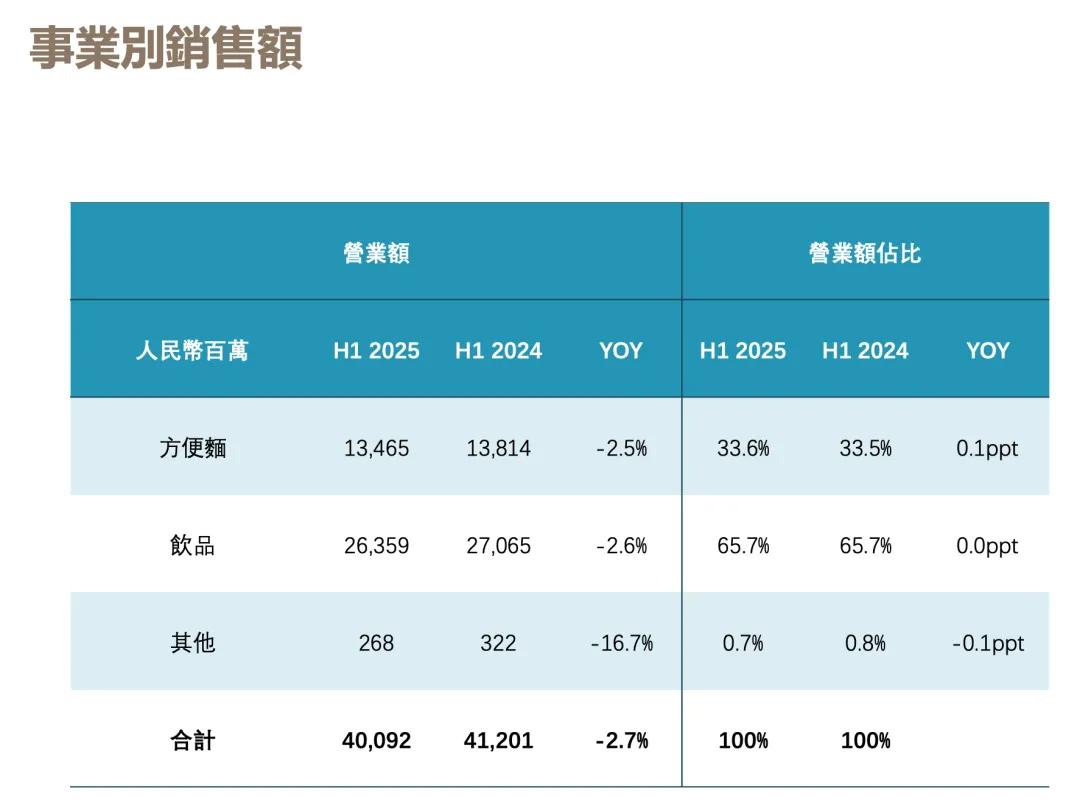
Core Insights - The financial performance of major players in the food and beverage industry, Master Kong and Uni-President China, showed a divergence in their H1 2025 results, with Master Kong experiencing a revenue decline of 2.7% while Uni-President achieved a revenue growth of 10.6% [1][2] Revenue Performance - Master Kong's total revenue for H1 2025 was RMB 40,092 million, down from RMB 41,201 million in H1 2024, reflecting a decrease of RMB 1,109 million [2] - In the instant noodle segment, Master Kong's revenue decreased by 2.5%, while Uni-President's revenue in the same category grew [2] - Master Kong's beverage segment also saw a decline of 2.6% in revenue, while Uni-President's performance improved [2] Competitive Landscape - Master Kong faces increasing competition not only from Uni-President but also from new entrants like Nongfu Spring and Yuanqi Forest, particularly in the beverage sector [3][11] - The rise of the food delivery market, with companies like JD and Alibaba intensifying their efforts, poses additional challenges to traditional food and beverage companies [11][19] Strategic Differentiation - Master Kong's strategy has focused on profit growth despite revenue decline, with beverage profits increasing by 19.7% and instant noodle profits by 11.9% in H1 2025 [12] - Uni-President has prioritized business expansion, increasing its marketing and sales expenses to enhance brand promotion and channel development [12][16] Pricing Strategies - Master Kong has implemented price increases across its product lines, which has contributed to profit growth but also led to a reduction in the number of distributors [13][14] - Uni-President's approach has been to invest in market expansion and product innovation to achieve its ambitious revenue target of RMB 50 billion within five years [18] Market Challenges - The competitive dynamics in the food delivery market have led to a decrease in demand for traditional packaged foods, impacting both Master Kong and Uni-President [21][22] - The ongoing price wars and promotional strategies among delivery platforms have created uncertainty for traditional food and beverage companies [19][21] Innovation and Adaptation - Both companies are focusing on product innovation to meet changing consumer preferences, with Master Kong introducing healthier options and Uni-President expanding its product range [25][27] - The shift towards retail and e-commerce channels is becoming increasingly important for both companies as they seek to adapt to the evolving market landscape [27][28]
「穷鬼迪士尼」,统治中产周末?
3 6 Ke· 2025-08-16 01:54
Group 1 - The article discusses the rise of "industrial tourism" as a new trend in the tourism industry, particularly appealing to working individuals seeking leisure activities during their limited free time [1][35][56] - Industrial tourism is characterized by factory visits that offer interactive experiences, allowing visitors to engage with production processes and take home products, making it more attractive than traditional factory tours [4][20][34] - The market for industrial tourism is currently valued at approximately 100 billion yuan, with a projected compound annual growth rate of 18% to 22% over the next few years, indicating significant growth potential [37][52] Group 2 - Notable examples of successful industrial tourism include the Luosifen factory in Guangxi, which offers affordable tickets that include a meal, and the Yuanqi Forest factory, which provides free drinks and interactive experiences [6][11][13] - The article highlights the increasing popularity of factory tours among consumers, with events like Xiaomi's factory tour receiving overwhelming interest, showcasing the demand for such experiences [40][43] - The article also mentions that industrial tourism is part of a broader category known as "industrial science popularization tourism," which includes agricultural and technology museum tourism, with industrial tourism currently having the fastest growth rate among these categories [36][37]
蒙牛特仑苏,重点产品降价了丨消费参考
2 1 Shi Ji Jing Ji Bao Dao· 2025-08-15 02:55
Group 1 - Mengniu's core high-end brand, Telunsu, has decided to reduce prices on some products, with the "Desert Organic Milk" dropping from 118 yuan to 99 yuan per box, a decrease of 16% [1] - Telunsu's annual sales have surpassed 30 billion yuan, indicating its significance to Mengniu's overall strategy [1] - In 2024, Mengniu's revenue was 88.6748 billion yuan, a year-on-year decline of 10.1%, with net profit dropping by 97.8% to 104.5 million yuan [2] Group 2 - The overall demand in the dairy industry is declining, with a 2.7% year-on-year drop in total sales in 2024 according to Nielsen IQ [3] - The Chinese dairy industry is facing significant pressure, with companies producing excess industrial milk powder leading to increased inventory and losses of 10,000 to 20,000 yuan per ton sold [3] - The dairy price war is intensifying, particularly affecting high-end milk sources like Telunsu, which are under greater pressure due to higher costs [4] Group 3 - Despite the price cuts, Telunsu is also focusing on product upgrades, recently launching a premium product priced at 188 yuan [5] - The effectiveness of these price reductions as a brand defense strategy remains uncertain [6]
燕京啤酒半年报:利润高增背后,饮料赛道能否撑起第二增长极
Sou Hu Cai Jing· 2025-08-14 12:19
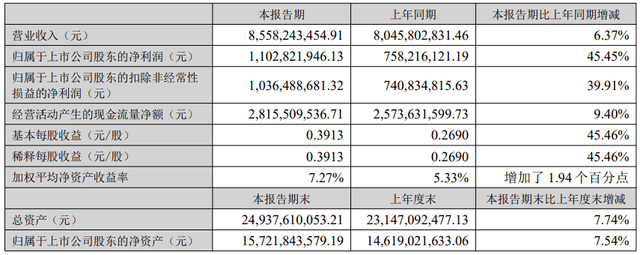
Core Viewpoint - Yanjing Beer reported a contradictory financial performance for the first half of the year, with a net profit surge of 45.45% to 1.103 billion yuan, while revenue only grew by 6.37%, marking the third consecutive year of "profit growth without revenue growth" [1][2]. Financial Performance - Revenue for the reporting period was 8.558 billion yuan, up 6.37% from 8.046 billion yuan in the same period last year [2]. - Net profit attributable to shareholders reached 1.103 billion yuan, a 45.45% increase from 758 million yuan year-on-year [2]. - The net profit excluding non-recurring gains was 1.036 billion yuan, reflecting a 39.91% increase from 740 million yuan [2]. - Operating cash flow increased by 9.40% to 2.816 billion yuan compared to 2.574 billion yuan last year [2]. - Basic and diluted earnings per share rose by 45.46% to 0.3913 yuan [2]. - The weighted average return on equity improved by 1.94 percentage points to 7.27% [2]. - Total assets increased by 7.74% to 24.938 billion yuan, while net assets attributable to shareholders rose by 7.54% to 15.722 billion yuan [2]. Sales and Product Performance - Beer sales volume grew by only 2.03%, significantly below the industry average [2]. - Revenue from mid-to-high-end products accounted for 70.11% of total revenue, but growth slowed to 9.32%, down from double-digit growth in the same period last year [3]. - Ordinary products saw a decline in gross margin, indicating reduced pricing power amid competition from major brands like Budweiser and Tsingtao [3]. Strategic Challenges - The beverage segment, touted as a "second growth curve," reported a dramatic revenue increase of 98.69% to 8.3015 million yuan, but this only represented 0.97% of total revenue [3]. - The chairman's strategy to penetrate niche markets has faced challenges, with new products struggling to gain traction outside of core markets [4]. - The beverage business's expansion may lead to resource misallocation and could burden the already pressured beer segment's profitability [4]. - The company faces intense competition from both established beer giants and emerging beverage brands, complicating its path to growth [4].