万代

Search documents
自有IP模式已跑通,下一个泡泡玛特会是名创优品吗?
Xin Lang Cai Jing· 2025-08-26 10:13
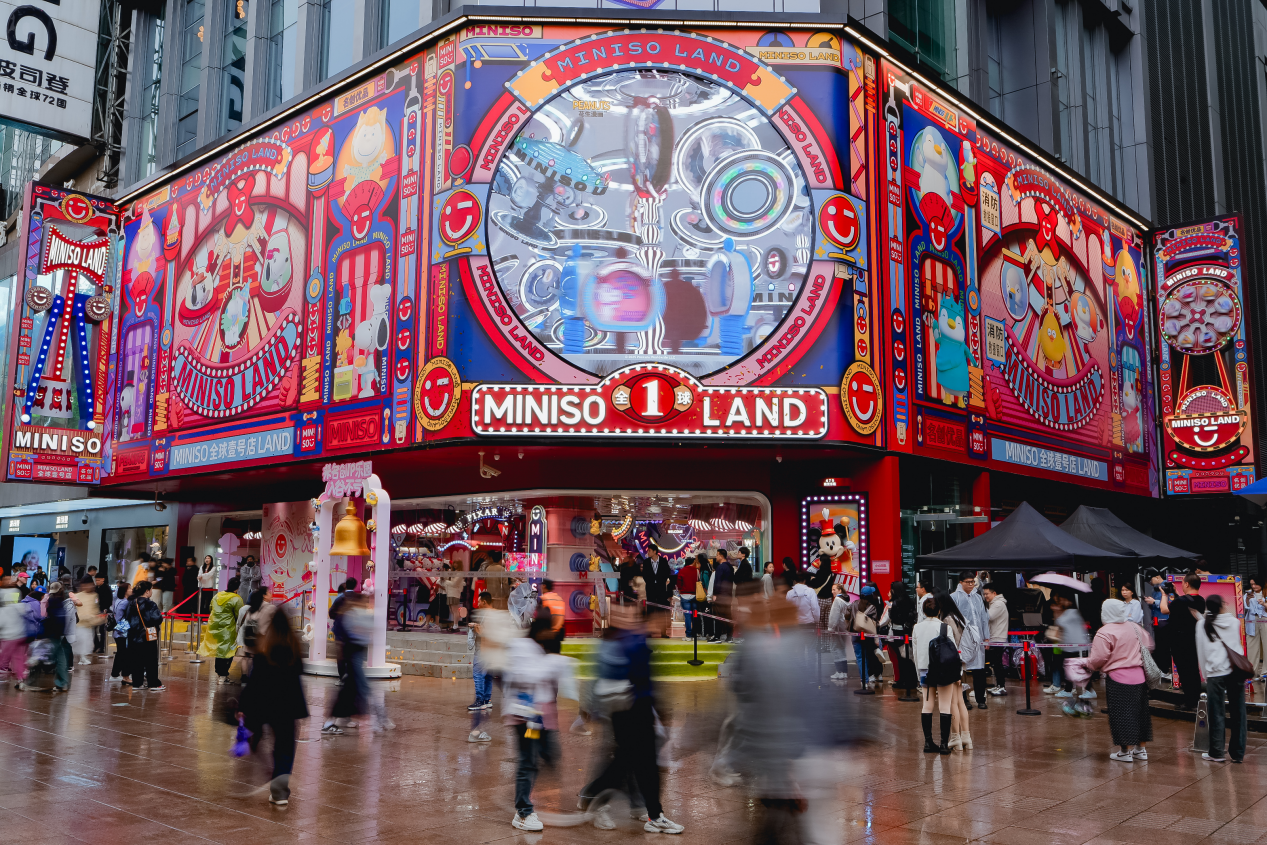
Core Viewpoint - The emergence of platform-type IP enterprises in China, similar to Disney and Warner Bros in the US, is seen as an inevitable path for the rise of a great power and a product of cultural confidence [1] Financial Performance - MINISO reported a total revenue of 4.97 billion yuan in Q2, representing a year-on-year growth of 23.1%, with overseas revenue reaching 1.94 billion yuan, up 28.6% [1][4] - The US market showed exceptional growth, with revenue increasing by over 80% year-on-year, becoming a new growth engine for the company [1][4] Strategic Initiatives - The company's "big store strategy" and "IP ecosystem" are driving its growth, transitioning from "scale expansion" to "quality improvement" [1] - MINISO LAND, a key store model, has achieved significant sales, with the flagship store in Shanghai generating over 100 million yuan in sales within 9 months [2][4] Channel Optimization - The optimization of channel structure has led to high-quality growth, with same-store sales in China showing positive growth [2] - The company emphasizes the importance of channel structure upgrades over merely increasing store numbers, with instant retail channel sales growing by 53% year-on-year [5] IP Ecosystem Development - MINISO's dual-track strategy of "top-tier licensed IP + signed artist IP" has significantly enhanced product offerings and supported high-quality growth [6] - The company has signed 9 trendy artists, including the designer of the popular IP "Right Right Sauce," which has exceeded sales expectations [8][12] Market Potential - The Chinese toy market is projected to grow at a compound annual growth rate of 29.8% from 2019 to 2024, with an expected market size exceeding 110.1 billion yuan by 2026 [13] - MINISO's unique resource endowment and strategic layout position it well for growth in the competitive landscape alongside brands like Pop Mart [10][13]

港股开盘:恒指跌0.45%、科指跌0.76%,科网股及汽车股走低,蔚来汽车跌近8%
Jin Rong Jie· 2025-08-26 01:45
Market Overview - The Hong Kong stock market opened lower on Tuesday, with the Hang Seng Index down 0.45% at 25,714.91 points, the Hang Seng Tech Index down 0.76% at 5,780.95 points, the National Enterprises Index down 0.39% at 9,211.78 points, and the Red Chip Index down 0.12% at 4,383.23 points [1] - Major tech stocks declined, with Alibaba down 2.01%, Tencent down 0.41%, JD.com down 1.11%, NetEase down 1.29%, Meituan down 0.25%, Kuaishou down 0.83%, and Bilibili down 1.98% [1] - Gold and non-ferrous metal stocks continued to rise, with Shandong Gold up nearly 2% [1] - New consumption concepts opened higher, with Laopu Gold up over 1% [1] - Automotive stocks corrected, with NIO down nearly 8% after a previous gain of over 15% [1] Company News - Haidilao reported a revenue of approximately 20.703 billion yuan, a year-on-year decrease of 3.7%, and a net profit of 1.76 billion yuan, down 13.7% year-on-year [2] - Shijie Group's revenue was about 12.594 billion HKD, a decrease of 7.7% year-on-year, with a net profit of approximately 264 million HKD, down 20.2% year-on-year [2] - China Software International achieved a revenue of about 8.51 billion yuan, a year-on-year increase of 7.3%, and a net profit of 316 million yuan, up 10.4% year-on-year [2] - Zhonghai Property reported a revenue of approximately 7.09 billion yuan, an increase of 3.7% year-on-year, and a net profit of about 769 million yuan, up 4.3% year-on-year [3] - BOE Technology Group's revenue was 6.671 billion HKD, an increase of about 8% year-on-year, with a net profit of approximately 180 million HKD, up 5% year-on-year [3] - Junda Co. reported a revenue of approximately 3.656 billion yuan, a decrease of 42.5% year-on-year, with a net loss of about 264 million yuan, widening by 58.5% year-on-year [3] - Yihai International reported a revenue of approximately 2.927 billion yuan and a net profit of about 310 million yuan, maintaining stable performance year-on-year [4] - Fuhong Hanlin reported a revenue of approximately 2.82 billion yuan, a year-on-year increase of 2.7%, and a net profit of about 390 million yuan, up approximately 1% year-on-year [5] - Maoyan Entertainment achieved a revenue of approximately 2.472 billion yuan, a year-on-year increase of 13.9%, but adjusted net profit fell by 33.2% to 235 million yuan [5] - Green Tea Group reported a revenue of approximately 2.29 billion yuan, a year-on-year increase of 23.1%, and a net profit of about 234 million yuan, up 34% year-on-year [6] - Hopson Development Group issued a profit warning, expecting a mid-term net loss exceeding 1.6 billion HKD, turning from profit to loss [7] Institutional Insights - Cathay Pacific Securities highlighted three key factors for the Hong Kong stock market: breakthroughs in AI technology catalyzing tech growth, potential unexpected foreign capital inflows under the backdrop of US Federal Reserve rate cuts, and the continued attraction of new capital to the market due to asset scarcity advantages [8] - Northeast Securities noted that emotional consumption and the rise of the "Guzi economy" are core drivers, with the market size expected to reach approximately 600 billion yuan, and the trend of collectible toys gaining traction among consumers [8] - CITIC Securities observed a significant divergence in performance among real estate companies, with those focused on core cities showing strong profit growth, while previously loss-making firms continue to face substantial losses [9]

消费焕新延续,液冷赋能数据中心,折叠屏或打开成长空间
Tebon Securities· 2025-08-25 09:21
Consumer Trends - The new consumption sector continues to gain momentum, with A-shares experiencing a valuation increase driven by emotional consumption, channel innovation, and brand expansion overseas[4] - In the first half of 2025, the domestic smartphone shipment volume was 20.63 million units, a year-on-year decline of 6.4% but a quarter-on-quarter increase of 7.6%[28] - The global IP toy market is expected to exceed 400 billion yuan by 2025, with China's market growing at a compound annual growth rate (CAGR) of 11.90% from 2019 to 2023, significantly higher than the global rate of 9.30%[8] High-end Manufacturing - Liquid cooling technology is identified as a key solution for data centers to address energy consumption issues, potentially reducing Power Usage Effectiveness (PUE) to below 1.1[4] - The energy consumption of AI data centers is projected to reach 77.7 TWh in 2025, doubling from 2023, with a CAGR of 44.8% from 2022 to 2027[16] - Liquid cooling solutions can achieve energy savings of over 20%-30%, providing both economic and environmental benefits[18] Hard Technology - The penetration rate of foldable smartphones is expected to rise from 1.6% in 2025 to over 3% by 2027, driven by Apple's entry into the market and ongoing price reductions[31] - The total cost of foldable smartphones is significantly higher than non-foldable models, with display/touch modules and lenses seeing increases of 177% and 28% respectively[38] - In 2025, foldable smartphone shipments are projected to reach 19.8 million units, maintaining the same penetration rate as 2024[31]
东北证券:情绪消费驱动潮玩 Z世代主导新格局
Zhi Tong Cai Jing· 2025-08-25 07:09
Core Insights - The rise of emotional consumption and the "millet economy" are key drivers, with the Gen Z demographic leading to over 500 million participants in the pan-second dimension market by 2024, and a market size of approximately 600 billion yuan, including a millet economy worth over 150 billion yuan [1] - The trend in the collectible toy market is expected to reach 110 billion yuan by 2027, with a competitive landscape characterized by "one strong and many strong" players, where Pop Mart leads the industry, while foreign brands like Lego and Bandai hold significant market shares [1] Market Segmentation - In the toy segment, blind boxes, building toys, and card games are leading the growth of the collectible toy industry, with blind boxes driven by unknown stimuli and IP value, targeting a consumer base that is 75% female and primarily Gen Z, with a projected market size of 58 billion yuan by 2025 [1][2] - Building toys are designed for all age groups, activating both parent-child and adult scenarios, with a market size expected to reach 64 billion yuan by 2028, led by domestic brand Blokus [1][2] - Card games focus on a younger demographic (ages 8-15) and are dependent on parental spending, with a projected market size of 44.6 billion yuan by 2029, where Card Game occupies a leading position [1][2] Competitive Landscape - Leading companies such as Pop Mart, Blokus, and Card Game are driving industry development through differentiated competition, with Pop Mart focusing on IP incubation and blind box mechanisms, Blokus targeting children's educational scenarios, and Card Game emphasizing children's social interaction [3] - Pop Mart maintains strong channel control primarily through direct sales, while Blokus is shifting from online direct sales to a dealer-centric model, and Card Game is also focusing on a dealer model but is experiencing channel contraction [3] - Financially, Pop Mart is enhancing its brand premium with a projected gross margin of 66.8% and an adjusted net profit margin of 26.1% in 2024, while Blokus has improved its inventory turnover days from 137 to 46, achieving a turnaround in adjusted net profit margin from -107.9% to 26.1% [3] International Insights - Successful overseas companies demonstrate that a multi-faceted business ecosystem centered around IP is crucial, with Disney leveraging its IP across films, parks, and merchandise, Bandai focusing on vertical IP and high-precision models, and Sanrio expanding its "cute economy" through light asset character licensing [4]


高达迷集合!万代在静冈开了塑料模型博物馆
日经中文网· 2025-08-25 03:08
Core Viewpoint - Bandai has opened a plastic model museum in Shizuoka, showcasing its extensive collection and celebrating the culture of model building [2] Group 1 - The museum features a variety of plastic models, including popular franchises like Gundam, which is expected to attract both enthusiasts and tourists [2] - The initiative aims to enhance the brand's visibility and strengthen its connection with fans, potentially leading to increased sales in the model segment [2] - The museum is part of a broader strategy to promote Japanese pop culture and the hobby of model building on a global scale [2]

IP为王,多元品类百花齐放的大时代
NORTHEAST SECURITIES· 2025-08-24 05:14
Investment Rating - The report rates the industry as "Outperform" [6] Core Insights - Emotional consumption and the rise of the "Guzi economy" are driving the growth of the trendy toy market, with the Z generation leading a new landscape. By 2024, the population of the pan-2D community in China is expected to exceed 500 million, with a market size of approximately 600 billion yuan, and the Guzi economy alone surpassing 150 billion yuan [1][24] - The trendy toy industry is characterized by a "one strong, many strong" pattern, with Pop Mart leading the industry, while foreign brands like LEGO and Bandai hold a certain market share. Domestic brands such as Blok and Card Game are also experiencing rapid growth, with IP operation and overseas market expansion being key future directions for the industry [1][4] Summary by Sections 1. Emotional Consumption and the Rise of Trendy Toys - Emotional consumption has emerged as a new economic driver, with trendy toys becoming a significant social label for consumers. These toys provide emotional value, helping to alleviate anxiety and affirm consumer identity [22][23] - The Guzi economy, which focuses on IP-derived peripheral products, is deeply integrated with 2D culture, creating a vibrant narrative and emotional connection for consumers [23][24] - The market for trendy toys is expected to grow significantly, with the pan-entertainment toy market projected to exceed 1 trillion yuan by 2029, and the trendy toy market reaching 110 billion yuan by 2027 [1][36] 2. Growth Drivers: Blind Boxes, Building Toys, and Card Games - Blind boxes are driven by the thrill of the unknown, with a market size expected to reach 580 billion yuan by 2025. The consumer base is predominantly female, with 75% of buyers being women, and the Z generation pushing for a shift towards mid-to-high-end products [2][67] - Building toys are designed for all age groups, with a market size projected to reach 640 billion yuan by 2028. Local brand Blok leads this segment, focusing on educational aspects [2][3] - The card game market, driven by rarity and low pricing, is expected to reach 446 billion yuan by 2029, with Card Game holding a dominant position [2][3] 3. Competitive Landscape and Key Players - Leading companies such as Pop Mart, Blok, and Card Game are driving industry development through differentiated competition. Pop Mart focuses on IP incubation and blind box mechanisms, while Blok emphasizes educational scenarios through building blocks [4][5] - The market is becoming increasingly concentrated, with Pop Mart holding a 28% market share in the blind box segment. The CR5 of the blind box market is expected to rise from 38% in 2020 to 50% in 2024 [76] 4. International Expansion and Lessons from Overseas - The report highlights the importance of IP-driven multi-business ecosystems, as seen in successful overseas companies like Disney and Bandai. These companies leverage their IP across various platforms, creating a robust business model [4][56] - Chinese toy companies are actively expanding into international markets, with significant growth in exports to the US and Central Asia. This diversification is crucial for mitigating risks associated with reliance on single markets [56][57]
门店开进曼哈顿最大购物中心,泡泡玛特美洲营收激增11倍
第一财经· 2025-08-21 13:58
Core Viewpoint - The article highlights the impressive growth and international expansion of Pop Mart, particularly in the North American market, driven by strong IP innovation and consumer demand [8][10][12]. Financial Performance - In the first half of 2025, Pop Mart reported revenue of 13.88 billion RMB, a year-on-year increase of 204%, and adjusted net profit of 4.71 billion RMB, up 362.8% [10]. - Revenue from the Greater China region was 8.28 billion RMB, growing 135.2%, while the Americas saw a staggering 1142% increase in revenue to 2.26 billion RMB [10]. - The company's stock price surged by 250% year-to-date, reflecting strong market confidence [8]. Market Dynamics - The article notes that the North American market contributed significantly to Pop Mart's growth, with a net increase of 19 stores, bringing the total to 41 in the region [14]. - The online revenue share has reached 40%, with a fast restocking process for popular items compared to China [14] [12]. IP Innovation - Pop Mart's success is attributed to its strong IP innovation capabilities, with key IPs like LABUBU generating significant revenue [12]. - The company faces challenges in sustaining the lifecycle of its IPs, as nearly 60% of revenue comes from its top four IPs [17]. Future Outlook - Analysts suggest that the next decade will be crucial for Chinese IPs, emphasizing the importance of emotional resonance and global outreach for sustained growth [15]. - The article discusses the need for Pop Mart to extend the lifecycle of its IPs and create deeper emotional connections with consumers to maintain high valuations [19].
今年暑假,全国「最火的商场」都在这了!
3 6 Ke· 2025-08-21 02:45
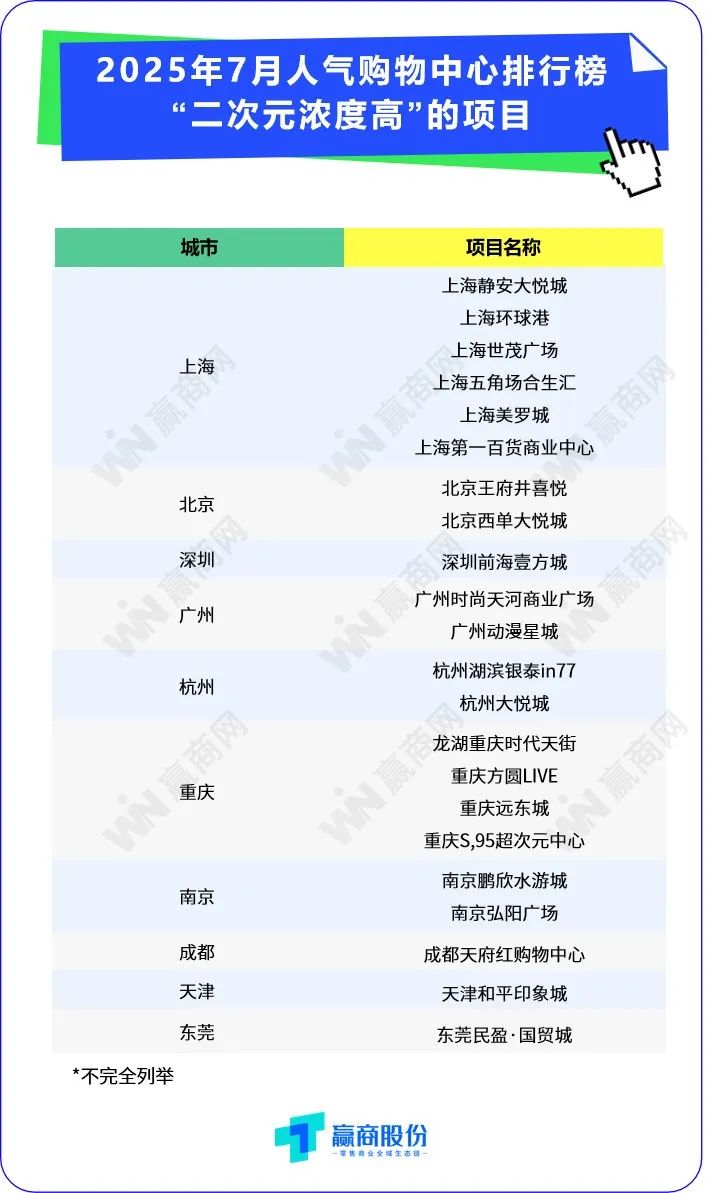
Core Insights - In July, the average foot traffic in shopping malls across the country increased by 7%, with popular malls showing even more significant growth [1] - The average daily foot traffic for the 390 popular shopping malls listed in the "2025 July Popular Shopping Center Rankings" was approximately 88,000, representing a 10% increase compared to the previous month [2] Group 1: Foot Traffic Trends - The average daily foot traffic for the top 43 popular malls in various cities was about 126,000 in June, with 36 malls maintaining their ranking and 7 moving up from the second to fourth positions [2][3] - The increase in foot traffic is attributed to the summer vacation tourism surge, with a 10 percentage point rise in the proportion of malls located in city-level business districts [2] Group 2: Popular Themes and Activities - Over 25 malls featured "anime" themes or characteristics, with many actively introducing trendy brands and organizing anime-related events to attract the student demographic during summer [4] - Family-oriented activities gained popularity, with malls offering creative parent-child events and promotions such as free parking and group purchase packages, enhancing their appeal to family customers [5] Group 3: New Store Openings and Economic Trends - The "first store economy" continues to thrive, with malls exploring new brand openings and events to boost foot traffic, while also integrating ticketing scenarios with shopping experiences to stimulate market potential [5] - The "fat store" concept, featuring high-quality supermarkets, has emerged as a new attraction strategy, with several malls undergoing supermarket renovations to enhance customer experience [5] Group 4: Notable Projects and Rankings - Shanghai Jing'an Joy City ranked as the top large project, recognized as one of the hottest "anime" malls, with a significant increase in search volume for "anime malls" in the region [14] - The Shanghai Bund Central Plaza made its debut on the rankings, featuring a giant dinosaur MR theme park that attracted considerable attention [15] - The popularity of the Guangzhou Fashion Tianhe Commercial Plaza reached its highest historical ranking, hosting multiple major anime events [44] Group 5: Regional Highlights - The Shanghai Nanjing East Road business district saw a surge in popularity, with eight projects listed, including the first-time ranked Shanghai Bund Central Plaza and Shanghai Hongyi International Plaza [12] - In Chengdu, the "ticket economy" is being actively developed, with various promotional activities linked to events and exhibitions to enhance consumer engagement [36]
150亿元日本TCG市场,万代等五大企业玩出哪些IP新花样?
3 6 Ke· 2025-08-20 23:46
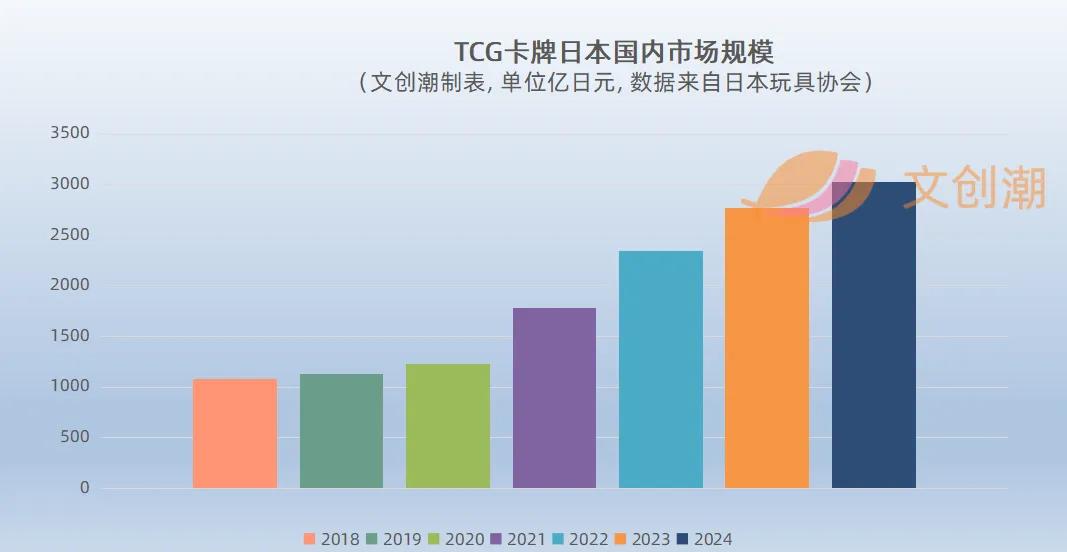
Group 1: Market Overview - The Japanese toy market is projected to reach a scale of 302.46 billion yen (approximately 15 billion RMB) in 2024, with a year-on-year growth of 9%, and trading card games (TCG) account for 27.5% of the total market [1] - Despite a decline in sales for Pokémon cards, new releases such as Dragon Ball Super cards and growth in other franchises like Duel Masters and Yu-Gi-Oh! contribute to the overall market expansion [3][4] Group 2: Company Performance - Bandai's sales for the first half of 2025 show significant performance, with Mobile Suit Gundam leading at 43.4 billion yen (up 18.9%), followed by One Piece at 40.6 billion yen (up 12.47%) [5][6] - Tamiya's sales reached 114.74 billion yen (up 12.87%) in the first half of 2025, with action figures being the most profitable category [17] - Bushiroad's TCG sales increased by 34.42% to 14.85 billion yen in the first half of 2025, driven by successful new releases and collaborations [25] Group 3: Product Releases and Events - Bandai released 93 card-related products in the first half of 2025, including new One Piece and Gundam cards, with various promotional events to engage players [8][10] - Tamiya's Duel Masters launched 9 new card packs, with a successful collaboration with VTuber Rainbow Company, leading to sustained popularity [19] - Bushiroad's Cardfight!! Vanguard released 9 new card packs and hosted various tournaments, maintaining player engagement [28] Group 4: Competitive Landscape - The TCG market is highly competitive, with Pokémon leading in sales, followed by Duel Masters and Yu-Gi-Oh! [4][46] - Konami's Yu-Gi-Oh! OCG saw a 6.93% increase in sales, with new tactical packs performing well and promotional animations enhancing visibility [38][42] - Pokémon's sales reached 410.93 billion yen (up 38.1%) for the fiscal year ending February 2025, with a strong lineup of new products and events [46][48]
朱啸虎:我们投消费品牌的三个关键标准
创业家· 2025-08-18 10:14
Core Viewpoint - The article emphasizes the importance of the "3S theory" in evaluating consumer brands, which includes a sufficiently large market size, standardized products for mass replication, and defensibility against competition in the Chinese market [2][3][5][6]. Group 1: Market Size and Product Standardization - The ideal market size for consumer brands should exceed 100 billion RMB [3]. - Standardized products that can be replicated on a large scale are crucial for success [4]. Group 2: Defensibility and Competition - In the competitive landscape of China, where many entrepreneurs are quick to enter lucrative markets, having defensible business models is essential [5][6]. - Despite the proliferation of new brands, only about 10 to 20 companies are expected to reach valuations above 10 billion USD [9]. Group 3: Product and Pricing Strategy - Companies must excel in either product quality or pricing to succeed in the consumer market [10]. - For channel-focused businesses, achieving extreme pricing is vital, while brand-focused companies should prioritize product excellence [12]. Group 4: Learning from Japan - The article discusses an upcoming study trip to Japan, focusing on how Japanese brands thrive in a low-growth, aging society, and the lessons that can be applied to the Chinese market [13][14]. - Japan's consumer market changes serve as a "future laboratory" for Chinese brands, providing insights into product evolution and consumer engagement strategies [18]. Group 5: Key Insights from Japanese Brands - Three core ideas from successful Japanese brands include supply chain-driven private label products, continuous iteration of key products, and defining lifestyles that resonate emotionally with consumers [19]. - Companies like Kobe Bussan and Nitori exemplify effective supply chain management and product development strategies that lead to sustained growth [20]. Group 6: Emotional Engagement and Consumer Experience - Brands like Bandai and Muji focus on emotional value and redefining consumer experiences, which are critical in today's market [21][22]. - Understanding the emotional and functional needs of consumers post-economic bubble is essential for brand positioning and product development [25].