吉利德

Search documents
研判2025!中国HIV药物行业发展驱动因素、市场规模及企业格局分析:HIV药物发展空间广阔,自费药物为行业发展主要驱动力[图]
Chan Ye Xin Xi Wang· 2025-07-16 00:59
Core Viewpoint - The HIV drug market in China is experiencing rapid growth due to an increasing number of patients, expanding insurance coverage, and rising payment capabilities among the affected population, with a projected market size of 5.836 billion yuan in 2024, reflecting a year-on-year growth of 30.2% [1][16]. Industry Overview - HIV drugs are antiviral medications aimed at treating AIDS, which is caused by the human immunodeficiency virus (HIV) that attacks the immune system [2]. - As of the end of 2024, there are approximately 1.355 million reported living HIV/AIDS patients in China, with 749,800 being HIV-infected and 605,200 being AIDS patients [1][4]. Market Dynamics - The Chinese HIV drug market is expected to maintain a growth rate of over 20% from 2021 to 2024, driven by the increasing number of patients and the expansion of medical insurance coverage [16]. - The self-paid drug market is projected to reach 3.787 billion yuan in 2024, growing by 47.5% year-on-year, while the free drug market is expected to be 2.049 billion yuan, with a growth of 7% [18]. Competitive Landscape - Gilead and GSK dominate the Chinese HIV drug market, holding a combined market share of 90%, while local companies like Frontier Biopharma and Aidi Pharmaceutical have a smaller market presence of less than 10% [22]. Development Trends - Future research in the global HIV drug market will focus on developing new drugs with better efficacy and safety, exploring new drug targets, and investigating new treatment methods such as gene therapy and immunotherapy [24].


海外消费周报:供需优化,行业增长韧性十足-20250620
Shenwan Hongyuan Securities· 2025-06-20 06:12
Group 1: Education Industry Overview - The youth vocational skills training market is experiencing a surge in demand, with the industry showing strong resilience in growth. The number of young people entering the labor market is expected to continue increasing due to a rise in university graduates and high school graduates who do not pass college entrance exams. This trend is anticipated to drive the demand for vocational skills training, with the market size projected to reach 80 billion yuan in 2025, and a penetration rate of only 5%, indicating significant growth potential [1][8]. Group 2: Higher Education Investment Trends - A turning point in investment in higher education institutions is emerging, with expectations for improved operational efficiency. Over the past three years, private higher education institutions have increased their investment to enhance educational quality amid tighter regulations. This has led to a situation where the growth rate of operational costs has outpaced revenue growth. However, as the quality of education improves, operational efficiency is expected to gradually recover in the coming year. Additionally, with capital expenditures peaking, the resumption of dividends from higher education companies is anticipated, with some companies offering dividend yields exceeding 10% at a current payout ratio of 30% and a PE ratio of around 3 [2][9]. Group 3: K12 Training Institutions - The K12 training sector is transitioning from a fully market-driven competition model to a franchise model, leading to rapid capacity expansion and significant revenue and profit growth. Following the "double reduction" policy, the capacity for academic training has decreased by 96%. Although licenses for operation are being redistributed, the supply remains limited, and non-compliant institutions contribute only 11.2% of the capacity, having minimal impact on the competitive landscape. The sector is now seeing a shift towards competency-based training, with legitimate institutions poised to accelerate capacity expansion, resulting in high revenue and profit growth [3][10]. Group 4: Investment Recommendations - The report recommends focusing on Hong Kong-listed higher education companies, as the slowdown in investment and peak capital expenditures are expected to enhance profitability. Key companies to watch include Yuhua Education, Neusoft Ruixin Group, China Education Group, and New Oriental. Additionally, attention is drawn to vocational education companies like China Oriental Education, which is expected to see significant operational improvements due to a rebound in vocational training demand. The report also highlights the potential for rapid expansion in training institutions under normalized regulatory conditions, which could accelerate revenue growth [13].
药企扎堆港股IPO:上市热潮难掩“造血焦虑”
2 1 Shi Ji Jing Ji Bao Dao· 2025-06-17 07:12
Market Overview - The Hong Kong stock market for innovative drugs has seen a strong rebound in 2023, with the Hang Seng Hong Kong Stock Connect Innovative Drug Select Index (HSSCPB) achieving a year-to-date increase of 71.83%, contrasting sharply with a decline of 20.74% in the same period last year [1] - The Hong Kong innovative drug ETF (159567) also recorded a significant growth of 67.16% [1] - The ongoing recovery in the secondary market has created new opportunities for numerous pharmaceutical companies seeking to go public, leading to a surge in IPO activity in Hong Kong [1] IPO Activity - In June alone, seven local pharmaceutical companies, including Hansai Aitai, Weili Zhibo, Yinnuo Pharmaceutical, Dongyangguang Pharmaceutical, Changfeng Pharmaceutical, Hemei Pharmaceutical, and Xuanzhu Biological, have submitted applications for listing in Hong Kong [1] - Notably, several of these companies, such as Hansai Aitai, Weili Zhibo, Yinnuo Pharmaceutical, Hemei Pharmaceutical, and Xuanzhu Biological, are still in a loss-making state [1] - The trend of companies transitioning from A-share IPO attempts to Hong Kong listings is evident, as seen with Changfeng Pharmaceutical and Xuanzhu Biological [1] Financial Performance of IPO Candidates - Hansai Aitai reported revenues of 6.664 million yuan and 7.681 million yuan for 2023 and 2024, respectively, with losses of 85.16 million yuan and 116.92 million yuan [2] - Weili Zhibo's revenue for 2023 was 8.865 million yuan, with losses of 36.2249 million yuan and 30.1216 million yuan for 2023 and 2024 [2] - Yinnuo Pharmaceutical generated revenues of 16.849 million yuan and 20.055 million yuan for 2023 and 2024, with losses of 73.3376 million yuan and 17.469 million yuan [2] Industry Trends - The Hong Kong IPO market is becoming increasingly attractive for Chinese pharmaceutical companies due to more flexible and lenient listing conditions compared to the A-share market [2] - The introduction of the "18A" listing rule in 2018 has opened doors for unprofitable biotech companies, fueling the IPO wave among innovative drug companies [3] - The current phase of the pharmaceutical industry is characterized by a "structural thaw," where companies with genuine innovation are beginning to attract financing [3] Challenges for Innovative Drug Companies - Many companies, including Hansai Aitai, face significant challenges due to high R&D costs and prolonged timelines for drug development [4] - The average success rate for drug development from Phase I to FDA approval is only 7.9%, with a lengthy average timeline of 10.5 years [4] - Companies like Weili Zhibo are also navigating uncertainties, having lost significant business development (BD) projects just before their IPO [6] Competitive Landscape - Companies with commercialized products, such as Yinnuo Pharmaceutical and Xuanzhu Biological, are also facing intense market competition and product iteration pressures [8] - Yinnuo Pharmaceutical's flagship product, approved for treating type 2 diabetes, has not yet turned the company profitable, with losses of 73.3 million yuan and 17.5 million yuan projected for 2023 and 2024 [8] - Dongyangguang Pharmaceutical, despite its market leadership, is confronting risks associated with expiring patents, particularly for its key product [9] Strategic Focus - Dongyangguang Pharmaceutical aims to enhance operational efficiency and explore new growth avenues through the integration of its R&D platform and product pipeline [9] - Changfeng Pharmaceutical plans to invest raised funds into the full-cycle R&D and commercialization of inhalation formulations, as well as upgrading production facilities [9] - The overall expectation is that both loss-making and established companies will leverage the Hong Kong listing to navigate the competitive landscape of the biopharmaceutical industry [10]
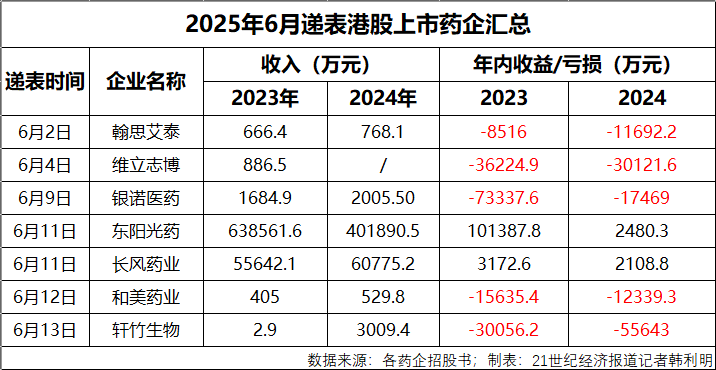
国信证券晨会纪要-20250522
Guoxin Securities· 2025-05-22 02:00
Macro and Strategy - April fiscal data shows tax revenue returning to positive growth at 1.9% YoY, while general expenditure growth accelerated to 12.9% YoY [8][9] - Key tax categories showed mixed results, with personal income tax growing significantly at 9% YoY, while corporate income tax declined to 4% YoY [8][9] Textile and Apparel Industry - Textile manufacturing continues to benefit from inventory optimization and order rebound, with revenue growth of 13.7% YoY in 2024, while apparel and home textiles saw a slowdown to 1.0% YoY [9][10] - In Q1 2025, textile manufacturing growth slowed to 8.2% YoY, while apparel and home textiles faced a 5.1% decline in revenue [9][10] - Major companies in manufacturing, such as Huayi and Shenzhou, reported strong orders and better profitability, while sports brands showed resilience compared to casual wear [9][10] Pharmaceutical Industry - Q1 2025 saw overall revenue growth slow for overseas pharmaceutical companies, with Eli Lilly and Novo Nordisk showing significant growth driven by GLP-1 drugs [15][16] - The U.S. drug pricing reform and macroeconomic uncertainties are impacting revenue forecasts for major pharmaceutical firms [15][16] Computer Industry - Major domestic companies like Alibaba and Tencent are significantly increasing capital expenditures, with Alibaba planning to invest over 380 billion RMB in cloud and AI infrastructure over the next three years [17][18] - There is a growing demand for computing power rental services, with several companies announcing related orders [17][18] Automotive Industry - April 2025 saw a total vehicle production and sales of 2.619 million and 2.590 million units respectively, with a year-on-year increase of 8.9% and 9.8% [19][20] - New energy vehicles accounted for 47.3% of total new vehicle sales, with production and sales growth of 43.8% and 44.2% YoY [19][20] - The market is witnessing a shift towards autonomous driving technologies, with Robotaxi commercial deployment accelerating [20][21] Building Materials Industry - The recent government policy is expected to accelerate urban renewal projects, benefiting local construction and decorative renovation companies [22][23] - Cement prices have seen a slight decline, while demand remains weak, indicating a cautious market outlook [23][24] Smart IoT Industry - The company focuses on IoT solutions and is expanding into AI infrastructure, with significant revenue contributions from its various business segments [26][27] - The global AI server market is projected to grow rapidly, driven by increasing demand for AI training and inference [28] Travel Industry - The company reported a 16.2% increase in revenue for Q1 2025, with strong growth in domestic hotel bookings and international travel [29][30] - The international platform is experiencing rapid growth, benefiting from favorable policies and increased travel demand [30][31] Gaming and E-commerce Industry - The company achieved a 30% revenue growth in Q1 2025, driven by strong performance in e-commerce and digital financial services [33][34] - The gaming segment also saw significant growth, with a notable increase in user engagement and revenue from popular titles [36][37]
创下自2021年5月以来股价新低,竞品来袭挑战传奇生物(LEGN.US)估值逻辑?
智通财经网· 2025-05-17 13:38
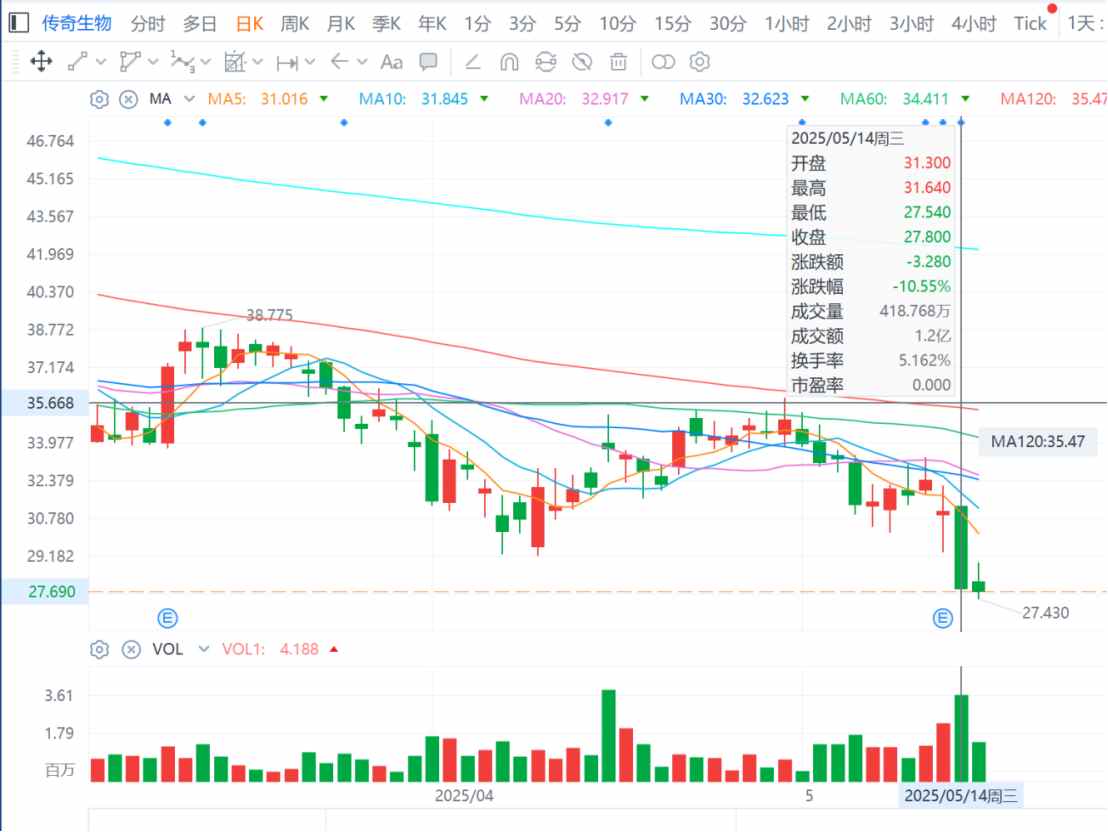
Core Viewpoint - After a significant decline in stock price following a failed acquisition, Legend Biotech's stock showed signs of recovery due to strong sales data for its CAR-T product, CARVYKTI, but faced renewed pressure from competitive products and changing valuation logic [1][3][4]. Group 1: Stock Performance and Sales Data - Legend Biotech's stock price fell from a high of $58.90 in August last year to a low of $29.40 in April this year, marking a significant decline [1]. - On April 15, Johnson & Johnson reported that CARVYKTI achieved global sales of $369 million in Q1 2025, a year-over-year increase of 135%, exceeding market expectations of $324 million [1]. - Following the positive sales report, Legend Biotech's stock rose by 5.08% on the same day, contributing to a 3.01% increase in stock price for April [1]. Group 2: Competitive Landscape - The competitive landscape has shifted with Gilead's Kite company entering the market with Anito-cel, which has shown promising clinical data, including a 97% overall response rate in its trials [4][5]. - Anito-cel's data suggests it may offer comparable efficacy to CARVYKTI while potentially having a better safety profile, raising concerns about CARVYKTI's market share and pricing power [4][7]. - On May 14, following the release of Anito-cel's data, Legend Biotech's stock dropped by 10.55%, marking its largest single-day decline of the year [7]. Group 3: Financial Outlook and Production Capacity - Legend Biotech reported a net loss of $177 million for 2024, a significant reduction from a loss of $518.3 million the previous year, with CARVYKTI projected to generate $963 million in sales, a 92.7% increase [8][9]. - The company is expanding its production capacity, with plans to reach an annual capacity of 10,000 doses by the end of 2025 and 20,000 doses by the end of 2027 [9]. - Despite the positive sales outlook, the emergence of competitive products like Anito-cel poses challenges to Legend Biotech's growth strategy, raising questions about its reliance on CARVYKTI as a sole revenue driver [9][11]. Group 4: Product Pipeline and R&D - Legend Biotech has developed a diverse product pipeline, including multiple CAR-T therapies and other innovative treatments, but currently lacks a second product that can generate cash flow [11]. - The company has 11 products in development, indicating a potential delay in bringing additional revenue-generating products to market [11]. - The reliance on a single product for growth may place Legend Biotech at a disadvantage in the long-term market dynamics [11].

【华创医药】毕得医药(688073)系列深度研究报告二:多维度追求高质量发展,业绩拐点已至
华创医药组公众平台· 2025-05-09 12:51
Core Viewpoint - Bidder Pharmaceutical, established in 2007, provides specialized and efficient drug molecular building blocks and scientific reagent products and services for new drug research and development. The company focuses on a "more, faster, better, cheaper" core advantage and employs a model of "horizontal expansion of product variety + vertical deepening of advantageous product lines" to serve the new drug development industry chain [2][3]. Industry Overview - Domestic market demand is recovering, with a pressing need for domestic alternatives. Research funding continues to grow, and policies such as U.S. tariffs are pushing downstream sectors to seek domestic alternatives, creating market expansion opportunities for local manufacturers [2][36]. - Overseas demand is rebounding, with a need for breakthroughs in the market. Since the second half of 2023, investment amounts in U.S. biopharmaceuticals have shown improvement, indicating increased demand from overseas pharmaceutical companies and CROs [2][36]. Company Performance - Bidder Pharmaceutical has expanded its inventory to 130,000 types of stock products, offering over 500,000 novel and multifunctional drug molecular building blocks to meet downstream demands [2][82]. - The company has increased its R&D investment, with some products reaching international advanced levels while maintaining price advantages. R&D expenses grew from 13.83 million yuan in 2018 to 59.05 million yuan in 2024, with a CAGR of 27.37% [2][86]. - Bidder's overseas revenue for 2024 is projected to be 616 million yuan, with a gross margin of 50.40%, significantly higher than domestic margins. The company has achieved a CAGR of 43.52% in revenue from 2018 to 2024 [2][82]. - The company is transitioning towards high-quality development, with revenue expected to return to high growth and significant profit elasticity in the future [2][82]. Product Offering - The main products include drug molecular building blocks, which can be subdivided into heterocyclic compounds, aromatic compounds, and aliphatic compounds, as well as scientific reagents essential for new drug development [2][6][7]. - The company currently has 128,000 types of stock products, capable of providing over 500,000 novel and multifunctional drug molecular building blocks to meet the high-tech, multi-category, small dosage, and frequent demand from downstream clients [2][6]. Competitive Landscape - The global market for drug molecular building blocks is estimated to reach $21.8 billion in 2024, primarily dominated by foreign companies. Domestic companies, while competitive in niche areas, still lag significantly in overall scale and market share compared to international giants [2][77][80]. - Bidder Pharmaceutical's pricing for some common reagents is only 1/5 to 1/10 of that of international leader Sigma-Aldrich, with purity indicators meeting international advanced levels, positioning the company favorably in the context of accelerating domestic substitution [2][90].

医药行业周报:技术平台领先,合作窗口提前
Huaxin Securities· 2025-03-23 12:23
Investment Rating - The report maintains a "Recommended" rating for the pharmaceutical industry [2][11]. Core Insights - New technology platforms are increasingly favored by multinational corporations (MNCs), leading to earlier collaboration opportunities. A notable example is the global strategic partnership between Heptares Therapeutics and AstraZeneca, which includes a $105 million equity investment [3]. - The weight loss market is seeing multiple business developments (BD) materialize, with significant sales growth reported by Novo Nordisk and Eli Lilly. Novo Nordisk's core products generated approximately $27.94 billion in sales, while Eli Lilly's tirzepatide saw a 124% year-on-year increase in sales to $11.54 billion [5]. - Progress in universal CAR-T and solid tumor cell therapies is ongoing, with global CAR-T sales projected at approximately $4.53 billion in 2024. Chinese companies are also participating in this market, with three domestic CAR-T products approved for sale [6]. - The CRO (Contract Research Organization) environment may experience changes, with potential supply flexibility due to the easing of U.S. bioterrorism law concerns. This could enhance the competitiveness of Chinese CROs [7]. - The active pharmaceutical ingredient (API) sector is exploring new applications, particularly in the nicotine tobacco production sector, leveraging synthetic biology technologies [8]. - Major hospitals are launching specialized AI models, indicating a rising trend in the integration of AI in healthcare, with collaborations between tech companies and healthcare providers [10]. Summary by Sections 1. Pharmaceutical Market Tracking - The pharmaceutical industry outperformed the CSI 300 index by 0.88 percentage points over the past week, ranking 20th among 31 primary industry indices [20]. 2. Pharmaceutical Sector Trends and Valuation - The pharmaceutical sector's index has a current PE (TTM) of 30.95, which is below the five-year historical average of 32.98 [36]. 3. Recent Research Achievements - The research team has published several in-depth reports on various pharmaceutical sectors, highlighting trends such as the growth of blood products and the impact of policy support on inhalation drug industries [40]. 4. Important Industry Policies and News - Recent policy changes include the National Medical Products Administration's (NMPA) decision to abolish certain medical device standards to optimize the regulatory framework [42]. - Significant industry news includes the approval of several new drug applications and clinical trials by the NMPA, indicating a robust pipeline for pharmaceutical innovation [44][46].
医药行业周报:国产GLP-1出海值得期待-2025-03-16
Huaxin Securities· 2025-03-16 09:33
Investment Rating - The report maintains a "Recommended" investment rating for the pharmaceutical industry [1]. Core Insights - The global new drug business development (BD) remains robust, with approximately 31% of innovative drug candidates introduced by multinational pharmaceutical companies in 2024 coming from China. In the first two months of 2025, there have already been 16 Chinese innovative drug BD projects, expanding from oncology to autoimmune diseases [3]. - The weight loss market is seeing multiple BD agreements, with significant sales figures reported by Novo Nordisk and Eli Lilly. Novo Nordisk's core products generated sales of approximately $27.94 billion in 2024, while Eli Lilly's Mounjaro saw a 124% year-on-year increase in sales to $11.54 billion [5]. - CAR-T cell therapy continues to progress, with global sales expected to reach approximately $4.53 billion in 2024. Chinese companies are also participating in the global CAR-T sales, indicating their technological capabilities [6]. - The gene sequencing industry is accelerating its domestic production capabilities following export restrictions on Illumina's sequencing instruments. Domestic alternatives are rapidly emerging, with several companies receiving regulatory approvals for their sequencing devices [7]. - AI in healthcare is advancing, with various AI models being developed for specific medical fields. Collaborations between tech companies and healthcare providers are enhancing the integration of AI into traditional medical practices [9]. Summary by Sections Industry Trends - The pharmaceutical industry outperformed the CSI 300 index by 0.18 percentage points in the past week, with a weekly increase of 1.77% [23]. - Over the past month, the pharmaceutical sector also outperformed the CSI 300 index by 0.22 percentage points, with a monthly increase of 1.94% [27]. Subsector Performance - The pharmaceutical commercial sector saw the highest weekly increase of 6.44%, while the medical device sector had the lowest at 1.09% [30]. - Over the past year, the chemical pharmaceutical sector had the highest increase of 6.49%, while the biological products sector experienced a decline of 17.62% [37]. Company Recommendations - The report recommends focusing on companies involved in weight loss and NASH, such as Zhongsheng Pharmaceutical, and highlights the potential of companies like Geli Pharmaceutical and Lianbang Pharmaceutical [12]. - Companies engaged in CAR-T technology, such as Kexin Pharmaceutical, are also recommended as they approach market entry [12]. - The report emphasizes the importance of AI integration in medical devices, recommending companies like Anbiping and RunDa Medical for their competitive advantages [12]. Recent Developments - The report notes significant recent financing and regulatory approvals for various companies, indicating a dynamic and evolving market landscape [54][55].
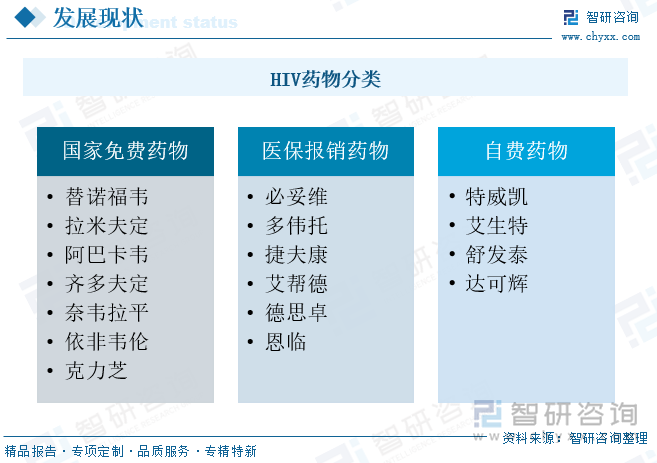
医药生物行业HIV领域新药追踪:Lenacapavir可能成为艾滋病PrEP新范式
CAITONG SECURITIES· 2025-03-15 13:54
Core Insights - The report maintains a positive outlook on the HIV sector, highlighting Gilead's long-acting therapy, Lenacapavir, as a potential game-changer in HIV treatment and prevention [1][3]. Group 1: HIV Mechanism and Treatment - HIV is a retrovirus that selectively targets CD4+ cells, integrating its genetic material into the host's genome, leading to viral replication [5][7]. - The primary treatment for AIDS is the "cocktail therapy," which combines multiple antiviral drugs to minimize resistance and maximize viral suppression [5][7]. Group 2: Lenacapavir's Impact - Lenacapavir is Gilead's first long-acting HIV capsid inhibitor, showing promising results in clinical trials for treating multi-drug resistant HIV in adults [9][11]. - In the CAPELLA study, 83% of participants using Lenacapavir achieved a viral load of less than 50 copies/mL after 52 weeks, compared to only 11% in the placebo group [13][14]. - Lenacapavir has significant potential in post-exposure prophylaxis (PrEP), with studies indicating a 100% reduction in HIV infection risk among participants receiving biannual injections [20][21]. Group 3: Market Potential and Future Developments - The global HIV infection rate in 2023 was approximately 39.9 million, with a significant portion of the population being women [15][18]. - Lenacapavir's approval for PrEP is anticipated to set a new standard in HIV prevention, potentially generating substantial revenue for Gilead [23]. - Other recent advancements in HIV treatments include Merck's dual-drug therapy achieving positive results in Phase III trials and ViiV Healthcare's long-acting antibody therapy showing good efficacy [24][26].

金斯瑞生物科技(01548)2024年报点评:业绩符合预期,盈利有望持续改善
Guotai Junan Securities· 2025-03-13 15:22
Investment Rating - The report maintains a "Buy" rating for King’s Ray Biotechnology [3][9]. Core Views - The company is experiencing positive development across its three main segments, with an expected improvement in profitability. The joint venture Legend Biotech is ramping up production, which is anticipated to contribute profits to the parent company in 2026 [3][9]. Financial Summary - Revenue for 2024 is projected at $595 million, reflecting a 6.1% increase. The group net profit is expected to reach approximately $2.96 billion, marking a significant turnaround from losses, primarily due to a one-time investment gain from the merger with Legend Biotech [9]. - The adjusted net profit from continuing operations is stable at about $59.8 million, up by 2.9% [9]. - Revenue breakdown includes: - Life Sciences segment: $455 million (+10.2%), with an adjusted gross margin of 52% (+5.9 percentage points) [9]. - CDMO segment: $95 million (-13.2%), with an adjusted gross margin of $14 million [9]. - Baisjie segment: $54 million (+24.6%), with an adjusted gross margin of 36.1% (+2.8 percentage points) [9]. - The CAR-T therapy sales are projected to reach nearly $1 billion, with significant new capacity coming online [9]. Growth Catalysts - The CAR-T therapy is expected to exceed sales expectations, and a recovery in investment and financing is anticipated [9]. - The approval of the second-line MM in the U.S. is expected to drive sales growth, with CARVYKTI projected to generate $963 million in revenue for 2024, a 92.6% increase [9].