
安踏

Search documents
安踏丁世忠的“氪金”哲学
Xin Lang Cai Jing· 2026-02-05 12:25
Core Viewpoint - Anta Group announced a cash acquisition of approximately €1.506 billion for a 29.06% stake in Puma, making it the largest shareholder of the brand, which has a significant historical presence in the global sports market [2][26]. Group 1: Acquisition Strategy - The acquisition of Puma marks Anta's first major purchase in 2026 and the sixteenth acquisition in nearly two decades, following brands like FILA and Amer Sports [2][26]. - Despite Puma's recent performance struggles, it retains high brand recognition and established distribution networks in Europe and North America, providing Anta with a competitive edge against Nike and Adidas [2][26]. - Anta's strategy reflects a shift towards external brand acquisitions as a growth engine, aiming to expand its market presence beyond outdoor sports into mainstream athletic fashion [3][27]. Group 2: Historical Context of Acquisitions - Anta's acquisition journey began in 2009 with the purchase of FILA's China operations for ¥332 million, transforming it into a high-end fashion sports brand [28][30]. - Within five years, FILA's revenue in China surged from under ¥200 million to over ¥10 billion, contributing significantly to Anta's profits [30][31]. - The company has since expanded its portfolio to include various brands, achieving a combined revenue exceeding ¥100 billion in 2024, surpassing Adidas to become the third-largest sportswear company globally [31][32]. Group 3: Market Dynamics and Challenges - The Chinese sportswear market is transitioning from growth to competition, necessitating new strategies for Anta to maintain its leadership position [9][32]. - The global sports goods industry is dominated by entrenched players like Nike and Adidas, creating high barriers for new entrants like Anta, which seeks to leverage acquisitions to gain market share [9][32]. - Anta's reliance on acquisitions has led to a strategic inertia, where the company continuously seeks the next successful brand like FILA to drive growth [10][33]. Group 4: Financial Performance and Brand Management - Anta's main brand has seen a decline in growth, with retail sales experiencing a slight decrease and revenue contribution dropping to 44% by mid-2025 [13][35]. - The growth rates of acquired brands like FILA are slowing, with a reported 6.1% increase in 2024, indicating potential challenges in sustaining high growth [15][37]. - The complexity of managing multiple brands has increased, with over ten core brands under Anta's umbrella, each requiring distinct strategies and resources [16][38]. Group 5: Future Outlook and Strategic Questions - Anta's founder, Ding Shizhong, has posed critical questions regarding the company's future, emphasizing the need for a differentiated multi-brand strategy to create shareholder value [20][41]. - The acquisition strategy includes "buying low" during market downturns, maintaining control without full ownership, and allowing acquired brands to operate independently while providing strategic support [43][44]. - The recent acquisition of Puma, while expanding Anta's brand portfolio, raises questions about how to effectively manage and differentiate between similar brands like FILA and Puma [39][40].


港股收盘 | 恒指收涨0.14% 科网股午后回暖 百胜中国绩后大涨11%
Zhi Tong Cai Jing· 2026-02-05 08:50
Market Overview - Hong Kong stocks opened lower but closed higher, with the Hang Seng Index rising by 0.14% to 26,885.24 points and a total turnover of HKD 315.11 billion [1] - Morgan Stanley noted that despite recent market volatility, effective measures to cool A-shares, a stronger USD against RMB, and long-term regulatory support for Hong Kong are expected to provide positive liquidity support for both A-shares and Hong Kong stocks [1] Blue-Chip Performance - Baidu Group-SW (09888) saw a 2.7% increase, closing at HKD 140.9, contributing 7.38 points to the Hang Seng Index. The company announced a new stock buyback plan of up to USD 5 billion, effective until December 31, 2028, and plans to adopt a dividend policy by 2026 [2] - Other blue-chip stocks included Haidilao (06862) up 4.03%, Lenovo Group (00992) up 3.67%, while Zijin Mining (601899) fell 4.76% and New Oriental-S (09901) dropped 3.13% [2] Sector Performance - Large tech stocks rebounded, with Xiaomi and Baidu both rising nearly 3%. Consumer stocks performed well, with Yum China surging over 11% post-earnings [3] - The precious metals sector saw a sharp decline, with gold and silver prices dropping significantly. The market for precious metals is expected to remain volatile due to various economic pressures [4] - The space photovoltaic concept saw a decline, with companies like Junda Co. (02865) dropping 12.35% [4][5] Chip Sector - Chip stocks faced pressure, with companies like Zhaoyi Innovation (03986) down 4.47% and Shanghai Fudan (01385) down 3.34%. The decline was influenced by AMD's significant drop of 17.31% following its earnings report [6] Company Earnings - Yum China reported total revenue of USD 11.797 billion for 2025, a 4% increase, with a net profit of USD 929 million, up 2%. The company plans to pay a dividend of 29 cents per share [7] - MGM China (02282) reported a net revenue of approximately USD 4.462 billion for the year ending December 31, 2025, a 10.92% increase [8] - Tianqi Lithium (002466) saw a significant drop of 13.33% after announcing a placement of 65.05 million new H-shares at a discount [9] - New World Development (01030) fell 13.17% after announcing a placement of 198 million shares at a discount to raise funds for future development and debt repayment [10]

黑猫投诉2025年度服饰领域投诉数据报告:服饰行业回复率差异明显
Xin Lang Cai Jing· 2026-02-05 08:27
Core Insights - The report highlights a significant increase in complaints within the apparel sector, with nearly 40,000 complaints recorded in 2025, marking a 31.23% increase from 2024 [2][12] - The data indicates a strong correlation between complaint volumes and major e-commerce promotional events, particularly during pre-sale phases of events like Double 11 [2][12] Complaint Volume and Trends - The total complaint volume in the apparel sector reached close to 40,000, with a notable spike during major promotional events, especially Double 11, where daily complaints peaked at nearly 200 [2][12] - Complaints related to clothing accounted for 70.43% of the total, with common issues including poor product quality, difficulties in returns and exchanges, and discrepancies in product descriptions [2][12] Specific Product Complaints - Complaints regarding down products surged by over 60% in 2025, totaling more than 3,700 complaints, reflecting heightened consumer awareness and ongoing quality issues within the industry [3][13] Brand Response Rates - Among the top ten footwear and apparel brands, companies like FILA, Anta, Li Ning, NIKE, and Uniqlo demonstrated high responsiveness to consumer complaints, with response rates exceeding 95% [4][15] - In contrast, brands such as New Balance and ZARA did not respond to any consumer complaints, resulting in a response rate of 0% [4][15] Demographics of Complainants - The majority of complaints originated from consumers aged 20-40, who accounted for 91.43% of the total complaints, indicating a trend of younger consumers being more active in voicing their grievances [5][16] Geographic Distribution of Complaints - Guangdong province led in complaint volume with an 11.55% share, followed by Jiangsu and Shandong provinces at 8.47% and 8.04% respectively, while Zhejiang and Henan had lower complaint rates [6][17]
“安踏×贻如生物”,联名国际顶级时装设计师,生物基皮革系列产品已全国上市!
synbio新材料· 2026-02-05 07:41
声明: 因水平有限,错误不可避免,或有些信息非最及时,欢迎留言指出。本文由仅作新材料相关领域介绍,本文不构成任何投资建议!转载请注明来源! 近期, 安踏 携手 国际顶级时装设计师Kris Van Assche ,推出定位可持续运动时尚的ANTAZERO X KRIS VAN ASSCHE首发系列,并已在门店与线上 零售平台上线。 值得关注的是,该系列广泛采用了 「贻如生物」的菌丝体蘑菇革Mulkol® , 该材料以非食用生物资源为原料,通过特选菌株发酵制成生物基纤维,具备 碳负排放属性,是一种真正对环境友好,无需伤害动物的皮革替代方案 。 「贻如生物」 是目前全球率先实现低碳生物基皮革大规模生产的企业,目前其 单产线年产能已达到600万米,2026年年产能可达到2000万米 。 谈及此次合作, Kris Van Assche 表示:"在我职业生涯的这个阶段,我更关注项目定位明确,目标一致的合作,我的初衷是创造出新颖,美丽又更具全 民性的作品,是通过学习新技术,在新约束下提升品质,探索可持续发展更加规模化的实现。" 11月21日, 该共创系列于全球顶尖先锋买手店 Dover Street Market(DSM) ...

新消费概念股再获市场追捧 巨子生物涨超5%
Xin Lang Cai Jing· 2026-02-05 02:29
Group 1 - The new consumption concept in Hong Kong stocks is showing active performance, with notable increases in companies such as Giant Bio (+5.54%), Mao Geping (+4.42%), Miniso (+3.92%), and Pop Mart (+3.79%) [2][3] - The State Council has issued a plan to accelerate the cultivation of new growth points in service consumption, focusing on enhancing key areas such as transportation, housekeeping, online audio-visual services, and inbound consumption [2][4] Group 2 - Pop Mart's new product series, PUCKY and Starry People, have gained significant popularity, with market estimates suggesting that the valuation of Pop Mart's IP potential is still underestimated [5] - Recent trends indicate that Pop Mart's new products are selling out on official websites and commanding high premiums on second-hand platforms, with hidden versions priced at 2-3 times and 3-6 times their original prices [5] - The cosmetics industry is projected to grow, with a retail sales increase of 6.18% year-on-year in 2023, as consumer spending stabilizes and the demand for product upgrades continues [5] Group 3 - The channel landscape is showing differentiated characteristics, with platforms like Douyin leading in sales and Tmall achieving its best growth in four years during the Double Eleven shopping festival [6] - Local brands are steadily increasing their market share, although market differentiation is intensifying, with companies like Anta, Pop Mart, and Haidilao identified as industry favorites for optional consumption [6][7] - Five major investment themes have been identified for 2026, focusing on emotional value consumption, health and wellness needs, the silver economy, emerging channel penetration, and multi-brand strategies [7]


北京350+首店大战:合生汇太古里争第一,大悦城荟聚紧追
3 6 Ke· 2026-02-05 02:21
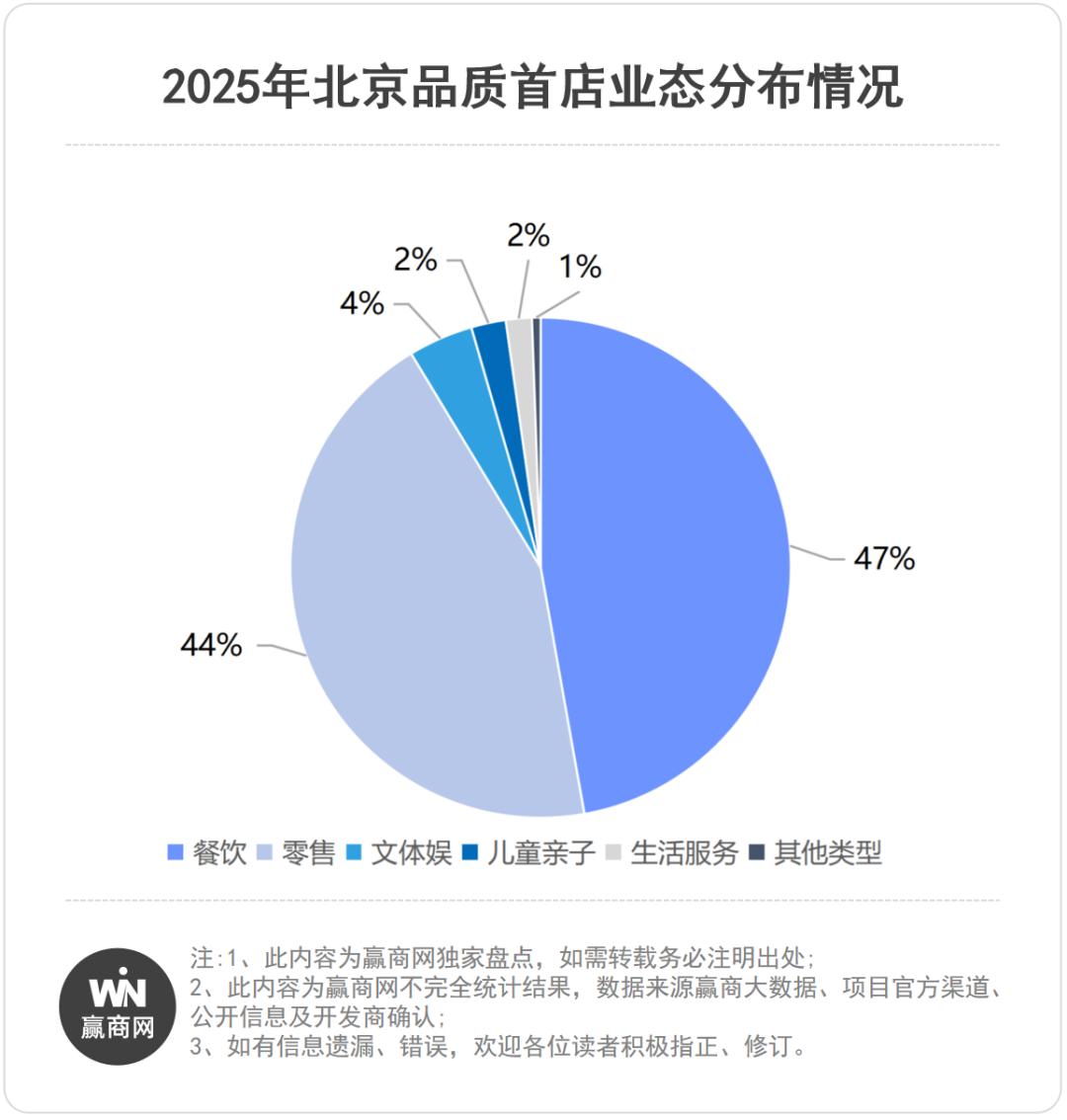
Core Insights - The 2025 consumer market in Beijing is characterized by keywords such as consumption stratification, emotional economy, national trends, instant retail, and AI reshaping, indicating a shortening brand metabolism cycle and the expansion of quality brands into larger platforms [1] - A total of 358 quality flagship stores entered the Beijing market in 2025, a significant increase of 60% compared to 219 in 2024, with 57 national flagship stores, 25 North China flagship stores, and 276 Beijing flagship stores [1][3] Retail Sector - The retail flagship store matrix in Beijing continues to expand, featuring a diverse ecosystem of flagship and concept stores, with 158 new retail flagship stores, including 45 fashion lifestyle brands and 103 clothing brands [9][19] - The luxury brand segment is undergoing significant adjustments, with major openings in Sanlitun Taikooli, including flagship stores for brands like Hermès and Louis Vuitton, marking a focal point for the Beijing market in 2025 [9][11] - New entrants in the outdoor sports category and the emergence of high-end community department stores are reshaping the retail landscape, with innovative concepts and a focus on organic products gaining traction [16][19] Dining Sector - The dining sector saw the opening of 169 new flagship stores in 2025, a 70% increase from the previous year, with casual dining leading the way [19][21] - Chinese cuisine is well-represented, with 51 new stores, while international dining options are also expanding, with notable entries in sushi and Western cuisine [21][23] - The competition in the dessert and bakery segment is intensifying, with several popular brands choosing key commercial projects as their entry points into Beijing [23][25] Entertainment & Children's Activities - The entertainment and children's sectors are experiencing structural adjustments, with 15 new entertainment flagship stores and a focus on immersive experiences and technology integration [26][28] - The demand for children's activities is shifting towards comprehensive growth, with shopping centers evolving into family entertainment hubs [29] - Policies supporting Beijing's development as a global launch center are being implemented, with initiatives aimed at enhancing the city's commercial appeal and consumer experience [29]

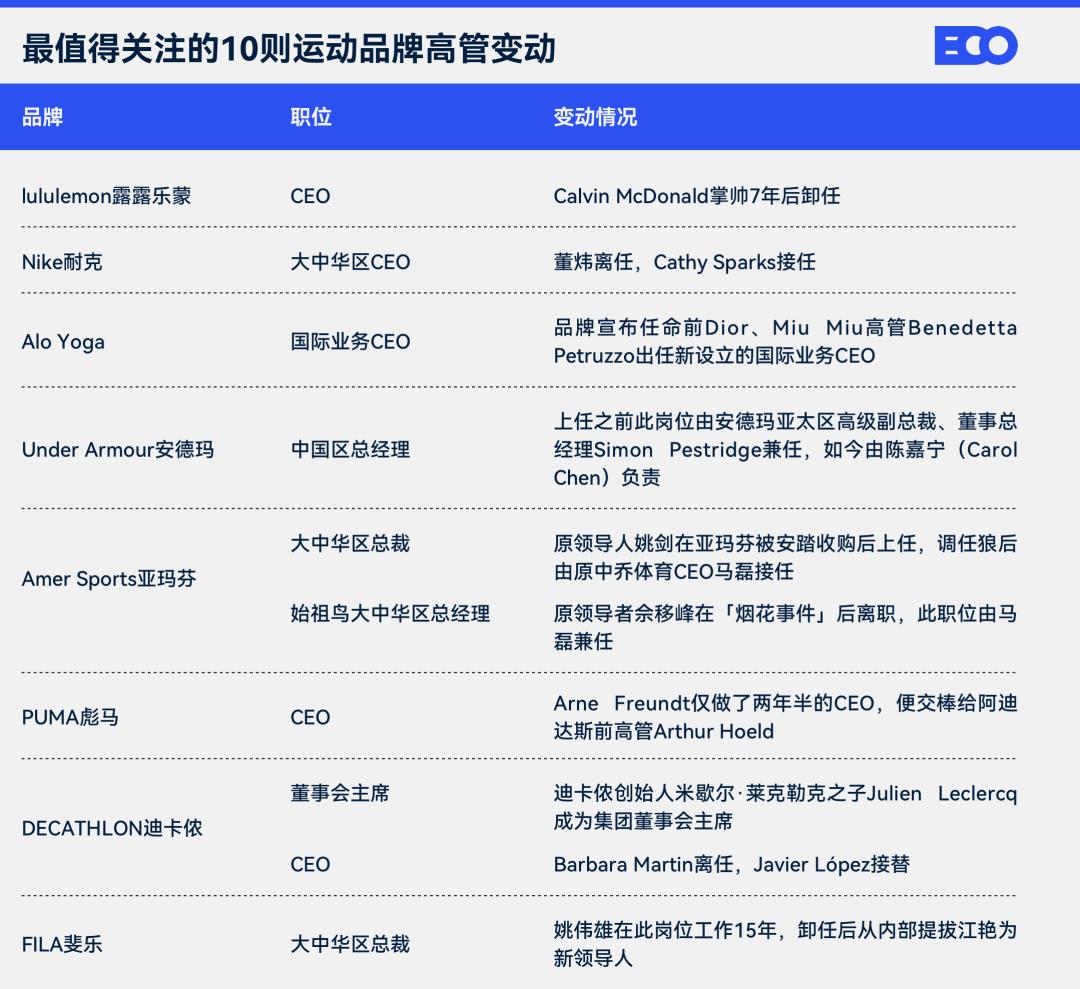
一年10条人事变动,运动品牌高管越来越不好干了
3 6 Ke· 2026-02-05 01:57
Core Insights - The leadership positions in major sports brands are becoming increasingly unstable, with significant CEO changes occurring across the industry, including Decathlon, Puma, and Lululemon [1][2] - The turnover at the executive level reflects a broader strategic shift within these companies, particularly in the Chinese market, as brands face the need to adapt to changing consumer demands and market conditions [1][3] Group 1: Executive Changes - Lululemon's CEO Calvin McDonald has stepped down after seven years, marking a significant leadership change [3] - Nike's Greater China CEO Dong Wei has left, with Cathy Sparks taking over [3] - Alo Yoga has appointed Benedetta Petruzzo, a former executive from Dior and Miu Miu, as its new International Business CEO [3] - Under Armour has seen changes in its China General Manager and Greater China President roles, with Carol Chen now in charge [3] - Puma's CEO Arne Freundt has left after two and a half years, with Arthur Hoeld, a former Adidas executive, taking over [3] - Decathlon's CEO Barbara Martin has resigned, and Javier López will succeed her [3] - Fila's Greater China President Yao Weixiong has stepped down after 15 years, with Jiang Yan promoted internally as the new leader [3] Group 2: Industry Signals - The high turnover of executives signals three key themes in the industry: crisis management, strategic pivots, and talent shortages [2][4] - Many brands are facing challenges from emerging competitors, prompting them to reassess their strategies and leadership [4][5] - The need for brands to adapt quickly to market changes is evident, as seen with Alo Yoga's shift towards high-end lifestyle products [7][13] Group 3: Market Dynamics - The sports brand market is experiencing a transformation, with established companies needing to respond to the rise of niche brands that are reshaping consumer preferences [4][10] - Brands like Nike and Under Armour are undergoing significant strategic shifts, with new leadership aimed at correcting previous missteps in market strategy [10][11] - The trend of frequent executive changes reflects a broader industry shift towards agility and responsiveness in a rapidly evolving market landscape [16][18]



安踏李宁将迎“米兰战事”
Hua Er Jie Jian Wen· 2026-02-03 12:56
Group 1 - Anta has officially become the strategic partner of the Hellenic Olympic Committee, providing full sets of award and daily gear for the Greek delegation at the Milan Winter Olympics [1] - The Greek delegation, as the birthplace of the Olympic movement, will enter the opening ceremony first, allowing Anta's branding to be prominently featured in global broadcasts [2] - The partnership puts pressure on Li Ning, which recently regained sponsorship rights from the Chinese Olympic Committee, as it aims to leverage its Olympic presence to enhance its brand image and market position [3] Group 2 - The current market context shows that Olympic marketing has evolved beyond mere visibility, reflecting the competitive anxiety among domestic sports brands seeking differentiation in a saturated market [4] - The competition between Anta and Li Ning is not just about branding but also involves market share and global narrative strategies, indicating a broader "battle" in the sportswear industry [5]

新力量NewForce总第497期
First Shanghai Securities· 2026-02-03 11:53
Market Performance - First Call portfolio achieved a cumulative return of 17% from October 2025 to present, outperforming QQQ (4.48%) and SPY (4.87%) significantly[5] - In January 2026, the First Call portfolio recorded a monthly return of 10.58%[5] Currency and Commodity Trends - The Brazilian Real appreciated by 5.79% against the US Dollar in January, while the Australian Dollar also showed strength[8] - Emerging markets outperformed the US market in January, with South Korea (EWY) leading at 25.9%, followed by Peru (EPU) at 19.7%, Colombia (COL) at 17.73%, and Brazil (EWZ) at 16.59%[10] Investment Strategy Adjustments - The portfolio adjusted positions by liquidating high-volatility stocks and increasing holdings in more stable assets, such as raising the position in CCJ to 10%[8] - Cash reserves were increased to allow for potential buying opportunities in the market[8] Economic Outlook - The US Dollar is expected to stabilize or appreciate in the short term, with potential upward movement due to technical support from short covering in February[20] - The Federal Reserve's recent stance indicates a stable economic expansion, which may limit the appreciation of the Euro and Yen against the Dollar[20] Technology and AI Developments - AI applications like Clawdbot and cowork are gaining traction, enhancing operational efficiency despite concerns over permissions and costs[21] - The integration of Gemini mode in Google Chrome is expected to enhance the ecosystem's capabilities, making it more user-friendly and powerful[21]

留给耐克的时间不多了
3 6 Ke· 2026-02-03 11:46
Core Viewpoint - Nike is facing significant challenges in the Chinese market, with a recent leadership change attributed to a 17% decline in revenue and a 49% drop in profit, resulting in a loss of $10 billion in market value [2][3]. Group 1: Company Performance - Nike's revenue in the Greater China region has decreased by 17%, and profits have fallen by 49% in the last quarter [2]. - The company has lost its presence on social media, lacking popular products or events, leading to a significant drop in sales [3]. - Competitors like Anta and other emerging brands have gained market share, with Anta reportedly surpassing Nike in the Chinese market [5][6]. Group 2: Market Dynamics - The Chinese sports industry is thriving, with brands like Aonrun, Camel, Lululemon, and HOKA gaining popularity, while Nike struggles to maintain relevance [4][5]. - Nike's historical reliance on distributors has become a liability as the market matures and local brands rise, leading to issues such as price undercutting and inconsistent brand management [29][30]. Group 3: Strategic Challenges - Nike's extensive reliance on distributors has hindered direct consumer engagement, limiting the brand's ability to respond to market trends and consumer feedback [29][30]. - The company's strategy of maintaining a strong brand presence has resulted in it being perceived as an entry-level brand, pushing consumers towards specialized brands as they become more knowledgeable about sports [20][22]. - Despite recent advertising efforts that received positive feedback, the company lacks independent product capabilities and strategic decision-making power, raising questions about its future direction [39][40].