
小米汽车

Search documents
造车新势力2026开年洗牌,AI军备赛打响
2 1 Shi Ji Jing Ji Bao Dao· 2026-02-24 02:42
Core Insights - The new energy vehicle (NEV) market did not experience the expected strong start in January 2026, with a significant decline in delivery volumes due to seasonal factors and policy transitions, leading to a reshuffling of the industry landscape [1][7] Group 1: Market Performance - Homologous Intelligent (鸿蒙智行) led the market with 57,915 units delivered in January, a year-on-year increase of 65.6%, supported by the strong performance of the AITO brand [2] - Xiaomi and Leap Motor followed with deliveries of over 39,000 and 32,000 units respectively, while the previously dominant "Wei Xiaoli" trio (理想, 蔚来, 小鹏) struggled, with Li Auto and NIO delivering around 27,000 units each and Xpeng just over 20,000 units, showing significant declines [1][4] - The overall NEV retail sales in January dropped by 16% year-on-year, with total passenger vehicle sales down 28% [7][8] Group 2: Strategic Shifts - Li Auto is transitioning to a "embodied intelligence" company, focusing on integrating automotive and humanoid robotics, with plans to establish a dedicated team for humanoid robot development as a second growth driver [1][5] - Xpeng has identified 2026 as a critical year for the commercialization of physical AI, aiming to make AI the core driver of growth for its automotive and robotics businesses [1][5] - NIO is concentrating on large SUVs, planning to launch three new models in the first half of the year to capture growth in the high-end market [5][6] Group 3: Competitive Landscape - The competition among new energy vehicle manufacturers is intensifying, with a shift from single blockbuster models to a comprehensive strategy covering all price ranges and vehicle categories [5][8] - The industry is witnessing an AI arms race, with major players like Li Auto and Xpeng redefining their futures around AI and robotics, while NIO is focusing on enhancing its AI capabilities across various operational aspects [6][8] - The market is expected to face challenges in the first quarter of 2026 due to the expiration of previous incentives and a lack of new policies, leading to a potential adjustment period for sales [7][8]



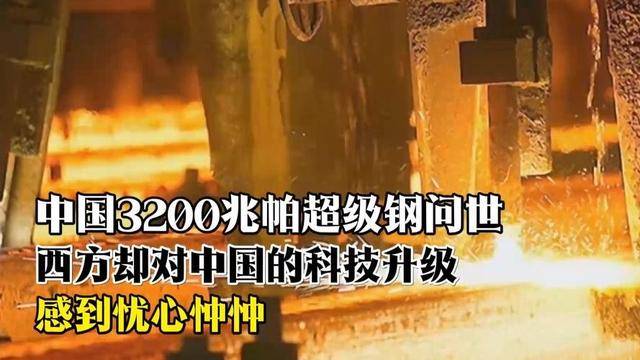
中国3200兆帕超级钢问世,西方却对中国的科技升级,感到忧心忡忡
Sou Hu Cai Jing· 2026-02-22 18:57
Core Viewpoint - The emergence of China's 3200 MPa super steel marks a significant technological breakthrough, challenging Western dominance in high-end steel production and reshaping the global steel industry landscape [1][3][16]. Group 1: Technological Breakthrough - China's new super steel has a strength of 3200 MPa, which is four times stronger than the US military's HSLA-115 steel, previously considered a benchmark [3][5]. - The development of this steel represents a shift from traditional methods to innovative techniques, allowing for a significant increase in strength without the need for costly processes [11][12]. Group 2: Market Dynamics - The introduction of 3200 MPa steel has disrupted the market, allowing Chinese companies to replace imports and gain competitive advantages over Western suppliers [18][21]. - China's steel industry has seen a surge in new product sales, reaching 290,000 tons in 2023, indicating a shift in the global supply chain dynamics [18][20]. Group 3: Strategic Implications - The advancements in steel technology enable China to enhance its military and industrial capabilities, potentially altering the balance of power in global defense and manufacturing sectors [16][21]. - Western companies, such as ArcelorMittal, are facing challenges as their traditional patent protections become less effective against China's innovative approaches [23].

春晚广告位争夺战:四十年国民记忆与商业暗流
凤凰网财经· 2026-02-19 10:54
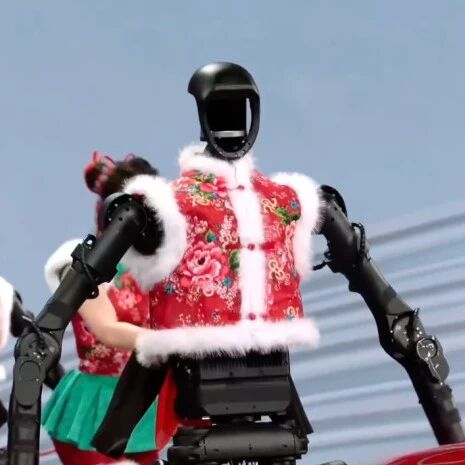
Core Viewpoint - The evolution of the Spring Festival Gala sponsorship reflects the transformation of China's economy and consumer behavior over the past 40 years, showcasing the shift from material scarcity to technological innovation and brand storytelling [4][5]. Group 1: 1980s to Early 1990s - The Era of Material Scarcity - The transition from a planned economy to a market economy in the 1980s led to a scarcity of goods, making items like watches and bicycles symbols of wealth and status [6][7]. - The first brand to sponsor the Spring Festival Gala was Kambas watches in 1984, which used 3,000 quartz watches as payment, marking the beginning of brand sponsorship in the event [7][9]. - Kambas became a household name, with production reaching 1.26 million units by 1987 and over 2 million by 1991, highlighting the impact of the Gala on brand visibility and market demand [9][10]. Group 2: Mid-1990s to Early 2000s - The Rise of Consumerism - The late 1990s saw a surge in consumer spending, with households moving from basic necessities to larger purchases like televisions and refrigerators [12][14]. - In 1995, Shandong Kongfu Banquet Wine became the first "advertising king" of the Spring Festival Gala, paying 30.79 million yuan, initiating a trend among liquor companies [12][14]. - The sales of Qin Pool Wine skyrocketed from 180 million yuan in 1995 to 950 million yuan in 1996 after winning the sponsorship, demonstrating the immediate impact of Gala advertising [17]. Group 3: 2000s to 2010s - The Era of Brand Awareness - The early 2000s marked a shift towards household appliances as the main consumer focus, with Midea becoming a prominent sponsor, securing 16 sponsorships from 2003 to 2019 [18][20]. - The cost of advertising during the Gala increased significantly, with Midea's sponsorship rising from 6.8 million yuan in 2005 to 57.2 million yuan in 2011, reflecting the growing value of the event [20]. - Brands began to focus on storytelling and emotional connections with consumers, as seen with Haier and Gree, indicating a maturation of brand marketing strategies [21]. Group 4: Mid-2010s to Present - The Digital Economy and Technological Innovation - The rise of internet companies has transformed the Spring Festival Gala into a platform for digital engagement, with WeChat's "red envelope war" in 2015 significantly increasing viewer interaction [24][26]. - The Gala has become a battleground for tech giants, with platforms like Douyin and Kuaishou participating in interactive sponsorships, showcasing the shift towards a two-way communication model [29]. - The introduction of robots and AI technologies in recent Galas reflects China's transition from manufacturing to intelligent manufacturing, highlighting the importance of innovation in the economy [31].

春晚40年赞助商变迁史,从康巴丝到机器人见证中国经济跃迁
Sou Hu Cai Jing· 2026-02-18 02:17
Group 1 - The article discusses the evolution of sponsorship in the CCTV Spring Festival Gala over the past 40 years, reflecting changes in Chinese society and consumer behavior [2][3] - The first sponsor, 康巴丝 (Kambas), set a precedent in 1984 by using 3,000 quartz watches as payment, marking the beginning of brand sponsorship in the gala [6][8] - The transition from watches to bicycles as the next major sponsor in 1995 illustrates the shift in consumer goods that represented status during the era of material scarcity [10][12] Group 2 - The late 1990s saw a surge in consumer spending on new household appliances, with 山东孔府宴酒 (Shandong Confucius Banquet Wine) becoming the first "mark king" of the gala in 1995, paying 30.79 million yuan [10][12] - The rapid growth of the liquor industry during this period was fueled by "human consumption," where premium liquor became a social currency [12][14] - The article highlights the consequences of over-reliance on advertising without maintaining product quality, as seen in the case of 秦池酒 (Qin Pool Wine), which faced a significant drop in sales after quality issues emerged [14][15] Group 3 - From the early 2000s, the focus shifted to home appliances, with 美的 (Midea) becoming a prominent sponsor, securing 16 sponsorships from 2003 to 2019 [17][19] - The cost of advertising during the gala increased significantly, with Midea's sponsorship fee rising from 6.8 million yuan in 2005 to 57.2 million yuan in 2011, reflecting the growing viewership [17][19] - The brand storytelling approach adopted by companies like 海尔 (Haier) and 格力 (Gree) during this period indicates a shift towards building emotional connections with consumers [20] Group 4 - The rise of internet companies post-2010 transformed the gala's advertising landscape, with platforms like WeChat leveraging the event for massive user engagement through interactive features like the "red envelope battle" [21][23] - The article notes that the 2015 Spring Festival Gala saw WeChat's user engagement peak, with over 10.1 billion red envelopes sent, showcasing the event's potential as a digital marketing platform [21][23] - The involvement of tech giants in the gala reflects a broader trend of digital economy reshaping traditional advertising methods, with companies like 快手 (Kuaishou) and 抖音 (Douyin) entering the sponsorship arena [25][27] Group 5 - The article concludes by emphasizing the transition from showcasing products to highlighting technological advancements, as seen with the introduction of robots in recent galas [27] - This shift signifies a broader change in China's economic landscape, moving from manufacturing to innovation-driven growth, with a focus on high-tech industries [27] - The future of the Spring Festival Gala sponsorship landscape remains uncertain, raising questions about which industries will dominate the next decade [27]


春晚广告位争夺战:四十年国民记忆与商业暗流
创业邦· 2026-02-17 10:32
Core Viewpoint - The evolution of the Spring Festival Gala sponsorship reflects the changing landscape of China's economy and consumer behavior over the past 40 years, showcasing the transition from material scarcity to technological innovation and brand storytelling [4][24]. Group 1: 1980s to Early 1990s - The 1980s marked a period of material scarcity, where items like watches and radios were symbols of wealth and status, leading to the first brand sponsorship by 康巴丝 (Kangbasi) at the Spring Festival Gala [5][7]. - 康巴丝 sponsored the gala by trading 3,000 quartz watches for advertising, which significantly boosted its brand recognition and sales, reaching an annual production of 1.26 million watches by 1987 [8]. - The sponsorship model evolved, with 中华自行车 (Zhonghua Bicycle) taking over the sponsorship in 1995, reflecting the changing consumer demands and economic conditions [9][14]. Group 2: Mid-1990s to Early 2000s - The mid-1990s saw a surge in consumer spending, with the emergence of "标王" (advertising king) sponsorships, particularly in the liquor industry, exemplified by 山东孔府宴酒 (Shandong Confucius Feast Wine) and 秦池酒 (Qinchijiu) [11][12]. - 秦池酒's sponsorship led to a dramatic increase in sales from 1.8 billion yuan in 1995 to 9.5 billion yuan in 1996, highlighting the impact of gala sponsorship on brand visibility and sales [16]. - The era was characterized by a shift towards consumerism, with brands leveraging the gala to enhance their market presence, although some faced backlash due to quality issues [16]. Group 3: 2000s to Early 2010s - The early 2000s marked the rise of home appliance brands, with 美的 (Midea) becoming a prominent sponsor, securing 11 sponsorships from 2003 to 2014, reflecting the growing importance of brand trust [17][19]. - The cost of advertising skyrocketed, with Midea's sponsorship fee increasing from 6.8 million yuan in 2005 to 57.2 million yuan in 2011, indicating the gala's significant viewership and advertising value [21]. - Brands began to focus on storytelling and emotional connections with consumers, moving beyond mere product promotion to build brand loyalty [23]. Group 4: Mid-2010s to Present - The 2010s saw the rise of internet companies as key players in the advertising space, with platforms like WeChat revolutionizing audience engagement through interactive features like the "red envelope battle" during the gala [25][26]. - The digital transformation of the gala allowed for unprecedented levels of interaction, with WeChat reporting 10.1 billion red envelope transactions on New Year's Eve, significantly enhancing its user base [26]. - The emergence of technology companies in the gala sponsorship landscape reflects a broader shift towards innovation and digital engagement, with brands like Xiaomi and AI robotics showcasing advancements in technology [32].





技术破局先行 马年车市换车有道
Xin Lang Cai Jing· 2026-02-16 03:39
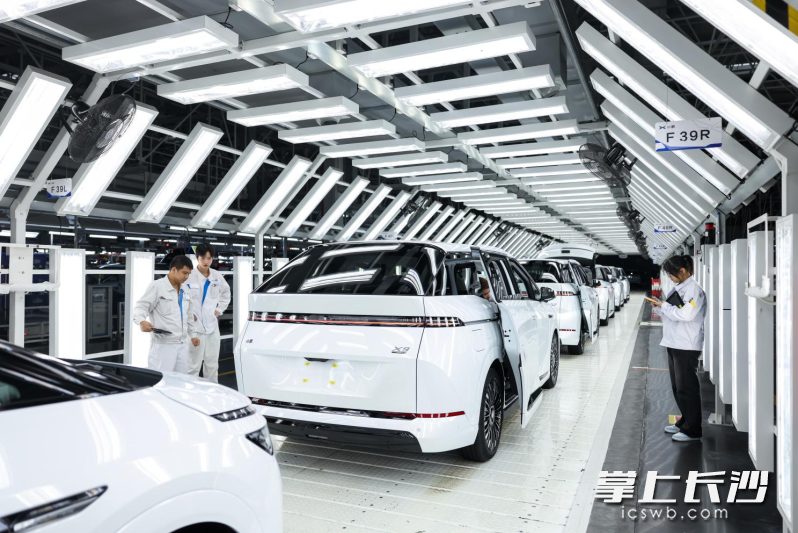
长沙晚报全媒体记者 曹开阳 随着除夕的来临,全新的马年正在走近。走过电动化狂飙、价格战白热化的蛇年,马年的中国汽车市场站在了存 量博弈与技术跃迁的十字路口。作为连续多年全球最大汽车市场和第一大汽车出口国,中国车市的每一次波动、 每一项突破,都牵动产业链与千家万户。 智能化方面,L3规模商用普及。国内智能驾驶马年进入无图化、端到端、L3量产三重拐点,政策放开与技术成熟 同步落地。华为乾崑ADS 4.0完成6亿公里仿真测试,将在马年实现高速L3规模商用、城区L4试点,问界、智界、 尚界全系搭载。小鹏汽车确立"物理AI商业化"目标,XNGP全场景智能驾驶覆盖95%城市道路,端到端大模型实 现算法轻量化,成本下探至20万元级车型。小米汽车依托生态优势,智驾系统聚焦城市通勤场景,硬件保守但算 法流畅,成为年轻用户首选。理想、蔚来等同步推进智能驾驶量产,理想瞄准家庭用户全场景安全,蔚来布局高 速与换电协同智驾,形成差异化梯队。 固态电池方面,半固态将批量上车,全固态电池完成小批量验证,续航、安全、补能三大痛点迎刃而解。东风汽 车率先发力,350Wh/kg半固态电池9月量产装车,续航突破1000公里,极寒环境续航保持率超8 ...
【月度排名】2026年1月厂商销量排名快报
乘联分会· 2026-02-14 08:39
Core Viewpoint - The domestic narrow passenger car market in China experienced a retail sales decline of 13.9% year-on-year in January 2026, with sales reaching 1.544 million units, attributed to the end of the 12-year new energy vehicle purchase tax exemption policy, leading to a temporary dip in demand [2][4]. Sales Data Summary Wholesale Sales Rankings (January 2026) - Geely Automobile led with 270,167 units sold, a 1.3% increase, capturing 13.7% market share - BYD Automobile followed with 205,518 units, down 30.7%, holding 10.4% market share - Chery Automobile sold 193,969 units, down 12.0%, with a 9.8% market share - Volkswagen sold 128,001 units, down 1.7%, with a 6.5% market share - SAIC Passenger Vehicle sales increased by 53.6% to 77,421 units, capturing 3.9% market share [6]. Retail Sales Rankings (January 2026) - Geely Automobile again led with 209,661 units sold, down 12.6%, holding 13.6% market share - Volkswagen sold 132,300 units, down 3.5%, with an 8.6% market share - BYD's retail sales dropped significantly by 53.0% to 94,176 units, capturing 6.1% market share - SAIC Volkswagen sold 89,600 units, down 9.3%, with a 5.8% market share - Changan Automobile's sales decreased by 33.5% to 81,074 units, holding 5.2% market share [7]. New Energy Vehicle (NEV) Wholesale Sales Rankings (January 2026) - BYD led NEV sales with 205,518 units, down 30.7%, capturing 23.8% market share - Geely followed with 124,252 units, up 2.6%, holding 14.4% market share - Tesla China sold 69,129 units, up 9.3%, with an 8.0% market share - Chery sold 46,802 units, down 14.9%, with a 5.4% market share - SAIC Passenger Vehicle saw a significant increase of 576.9% to 28,179 units, capturing 3.3% market share [9]. New Energy Vehicle (NEV) Retail Sales Rankings (January 2026) - BYD again led with 94,176 units sold, down 53.0%, holding 15.8% market share - Geely sold 92,135 units, down 21.6%, with a 15.5% market share - Hongmeng Zhixing saw a significant increase of 65.5% to 57,915 units, capturing 9.7% market share - SAIC's sales increased by 83.3% to 40,016 units, holding 6.7% market share - Xiaomi Automobile sold 39,002 units, up 70.3%, with a 6.5% market share [10].




财联社汽车早报2月14日
Xin Lang Cai Jing· 2026-02-14 01:18
转自:智通财经 最高法:车载辅助驾驶系统不能代替驾驶人成为驾驶主体 2月13日,最高人民法院发布第48批指导性案例,这是最高人民法院首次发布道路交通安全刑事专题指 导性案例。在本批指导案例中,最高法明确激活辅助驾驶功能情形下驾驶人的刑事责任认定规则。在辅 助驾驶技术应用日益广泛的背景下,有的驾驶人在激活辅助驾驶系统后不再专注驾驶,而是玩手机、睡 觉等,有的驾驶人甚至购买、使用"智驾神器"等非法配件,逃避系统安全监测,长时间"脱手"驾驶,严 重威胁道路交通安全。指导性案例271号《王某群危险驾驶案》明确,车载辅助驾驶系统不能代替驾驶 人成为驾驶主体,驾驶人激活车载辅助驾驶功能后,仍是实际执行驾驶任务的人,负有确保行车安全的 责任。行为人激活辅助驾驶功能,并利用私自安装的配件逃避辅助驾驶系统监测的,即使其不在主驾驶 位实际操控机动车,仍应作为驾驶主体承担相应法律责任。 智通财经汽车:产品与宣传必须坚守"辅助"定位。 流通协会:1月全国二手车市场交易金额1106.12亿元 交易量同比增长18.33% 据中国汽车流通协会2月13日消息,2025年1月,全国二手车市场交易量172.92万辆,交易量环比下降 7.59%, ...
汽车早报|长安汽车已就两起自媒体涉嫌网络侵权行为提起诉讼 日本七大车商预计2025财年共计净利润减35.5%
Xin Lang Cai Jing· 2026-02-14 00:43
Group 1: Used Car Market - In January 2025, the national used car market transaction volume reached 1.7292 million units, showing a year-on-year increase of 18.33% but a month-on-month decrease of 7.59% [1] - The transaction amount for January was 110.612 billion yuan, indicating a robust market performance across various vehicle types, particularly in passenger cars and commercial vehicles [1] - The demand for MPVs continued to rise significantly, contributing to the overall market growth, while the commercial vehicle sector also showed positive year-on-year growth in both passenger and cargo vehicles [1] Group 2: Automotive Dealer Inventory - The comprehensive inventory coefficient for automotive dealers in January was reported at 1.48, reflecting a month-on-month increase of 13.0% and a year-on-year increase of 5.7% [2] Group 3: Pickup Truck Market - In January 2026, the pickup truck market saw sales of 49,000 units, marking a year-on-year growth of 22.5%, the highest level in the past five years [3] - Pickup truck production in January was 52,000 units, with a year-on-year increase of 29.3%, while exports reached 28,000 units, showing a year-on-year increase of 12% [3] Group 4: Xiaomi Automotive - Xiaomi Automotive announced the delivery of the last unit of the first-generation SU7, with production halted to prepare for the next generation, expected to launch in April [4] - The company will continue to provide maintenance and spare parts for the first-generation SU7 for at least 10 years [4] Group 5: Changan Automobile Legal Action - Changan Automobile has filed lawsuits against two media outlets for alleged online infringement, which have been accepted by the court [5] Group 6: Zeekr Automotive - Zeekr Automotive has established a new sales service company in Shenzhen with a registered capital of 10 million yuan, focusing on the sale of new energy vehicles and related services [6] Group 7: Great Wall Motors - Great Wall Motors' chairman confirmed that the company is successfully promoting its MPV models in the U.S. market through intermediaries [7] Group 8: Japanese Automakers' Profit Forecast - Seven major Japanese automakers, including Toyota and Honda, expect a 35.5% decrease in net profits for the fiscal year 2025, totaling approximately 3.765 trillion yen (about 169.7 billion yuan) [8] - Specific forecasts include a 25.1% profit reduction for Toyota and a 64.1% decrease for Honda, with Nissan anticipating a net loss of 650 billion yen [8]


黄金白银反弹,金价重回5000美元关口;英伟达、苹果跌超2%;特朗普称将访问委内瑞拉;6家出行平台企业被约谈丨每经早参
Mei Ri Jing Ji Xin Wen· 2026-02-13 23:50
每经记者|范芊芊 每经编辑|何小桃 陈鹏程 王晓波 标题点睛 国际贵金属价格走高,现货黄金涨2.41%,报5042.81美元/盎司;COMEX黄金期货涨2.33%,报5063.8美元/盎司。现货白银涨2.81%,报77.34美元/盎司; COMEX白银期货涨2.10%报77.27美元/盎司。 美股三大指数收盘涨跌不一,道指涨0.1%,纳指跌0.22%,标普500指数涨0.05%,热门科技股多数下跌,英伟达、苹果跌超2%,谷歌、Meta、博通跌超 1%。 当地时间2月13日,美国总统特朗普在接受媒体采访时被问及是否会访问委内瑞拉,他回应称:"我将访问委内瑞拉。" 1 隔夜市场 美股三大指数收盘涨跌不一,道指涨0.1%,纳指跌0.22%,标普500指数涨0.05%,热门科技股多数下跌,英伟达、苹果跌超2%,谷歌、Meta、博通跌超 1%;加密货币概念、贵金属涨幅居前,Coinbase涨超16%,科尔黛伦矿业涨超7%,泛美白银涨超6%,HUT8涨超5%,皇家黄金、金田涨超4%;博彩、邮 轮板块跌幅居前,挪威邮轮跌超7%,佩恩国民博彩跌超5%,嘉年华邮轮跌超2%。中概股涨跌不一,纳斯达克中国金龙指数跌0.10%,腾讯 ...

