沐曦

Search documents
计算机行业:腾讯上新 3D 生成模型 Hunyuan3D-PolyGen,马斯克发布 Grok 4
SINOLINK SECURITIES· 2025-07-13 09:17
Investment Rating - The report suggests a focus on leading domestic generative large model companies such as iFLYTEK, and highlights potential in AI hardware applications with recommendations for companies like Yingshi Network, Hongsoft Technology, and Hesai [2] Core Insights - The report emphasizes that the AI industry is currently in a relatively chaotic fundamental period, with some high-frequency data showing resilience, while investor expectations remain low. The willingness to use AI products is increasing, but payment capabilities are still limited, necessitating further breakthroughs in large models [11][12] - It identifies high-growth sectors for 2025, including AI computing power and lidar, while noting that AI applications are accelerating upward. Stable growth is expected in software outsourcing, financial IT, quantum computing, data elements, EDA, and overseas expansion [11][12] Summary by Sections Industry Perspective - The report discusses the launch of Tencent's 3D generative model Hunyuan3D-PolyGen, which can generate complex geometric models with thousands of faces, and highlights the advancements of Musk's Grok 4 model, which has shown significant improvements in training efficiency [11] - It notes that the computer industry is expected to perform better in the second half of the year due to base effects, new technology/product launches, and policy implementations [11] Subsector Insights - The report categorizes the computer industry into various subsectors with their respective growth outlooks: - High growth maintained: AI computing power, lidar - Accelerating growth: AI applications - Stable growth: Software outsourcing, financial IT, quantum computing, data elements, EDA, overseas expansion, and domestic innovation [10][12] - Turning points: Education IT, cybersecurity, enterprise services - Stabilizing: Smart transportation, government IT, security, construction real estate IT - Slightly pressured: Industrial software, medical IT [10][12] Market Performance Review - From July 7 to July 11, 2025, the computer industry index (Shenwan) rose by 3.22%, outperforming the CSI 300 index by 2.40 percentage points, ranking 6th among 31 Shenwan first-level industry indices [13] Upcoming Key Events - The report highlights upcoming events such as the second AI glasses industry innovation application summit and the 2025 World Artificial Intelligence Conference, suggesting that investors pay attention to related industry chain opportunities [25][26]



吴婷:AI城市战争
3 6 Ke· 2025-07-12 03:32
Core Insights - The rise of AI, exemplified by DeepSeek, presents a significant opportunity for value reassessment in China and a reshuffling of urban dynamics in the country [1][2] National Strategy - The Chinese government proposed a "three-step" strategy for AI development in 2017, aiming for a core industry scale of 1.5 trillion yuan by 2020, 4 trillion yuan by 2025, and 10 trillion yuan by 2030 [3] - As of September 2024, the core AI industry scale in China has reached nearly 600 billion yuan, surpassing the 2025 target by 150% [3][4] City Comparisons - Beijing is the undisputed leader in AI, holding over 30% of national resources in talent, patents, enterprises, and financing, with a core industry scale of 300 billion yuan, accounting for half of the national total [5][6] - Shanghai has established itself as a hub for integrated circuit industries and AI chip companies, focusing on the "chip" aspect of AI, while also leading in computing power infrastructure [10][12] - Shenzhen ranks third in AI-related enterprises, with a strong manufacturing base and major tech giants like Huawei and Tencent driving innovation and ecosystem development [12][15][16] - Hangzhou is emerging as a disruptor in the AI space, particularly with the launch of DeepSeek-R1, which has significantly impacted the global AI landscape [18][19][21] Emerging Players - The "Six Little Dragons" from Hangzhou, including DeepSeek and Yushu Technology, are gaining attention for their innovative AI solutions and market share [19][20] - Zhejiang University has contributed significantly to AI research, ranking just behind Tsinghua and Peking University in terms of AI publication output [20] Competitive Landscape - Other cities like Guangzhou, Suzhou, Hefei, and Xi'an are also exploring unique pathways to develop their AI industries, highlighting the competitive nature of China's economic landscape [23][24]


背靠百度,昆仑芯IPO前“输血”
是说芯语· 2025-07-10 12:06
Core Viewpoint - Kunlun Core has recently completed a new round of financing, but there is a noticeable divergence in information disclosure, with investors and financial advisors announcing the news while Kunlun Core remains silent, raising questions about the underlying issues [1][2]. Financing Situation - Kunlun Core's latest financing round has seen participation from various investors, including Shanghe Momentum Capital and Shanzheng Investment, with the latter confirming their involvement just a day before the announcement by Shanghe [1]. - The company has undergone six rounds of financing since its establishment, with Baidu remaining the largest shareholder, though its stake has been diluted from 76.17% to 67.49% [4][6]. IPO Context - The financing is taking place against the backdrop of a surge in domestic GPU and AI chip companies preparing for IPOs, with nearly ten companies expected to file for listings soon, collectively referred to as the "Chinese Nvidia" [6][9]. - The current market conditions have made it difficult for GPU projects to attract investment, with many investors expressing reluctance to invest in the GPU sector due to significant losses reported by existing companies [7][9]. Product Development and Market Position - Kunlun Core, which originated from Baidu's smart chip division, has launched its first and second-generation chips, with plans for a third-generation chip (P800) set for release in 2025 [11]. - The company has achieved a notable milestone by creating a fully self-developed 30,000-card cluster capable of training large models, which is a significant achievement in the domestic market [11][13]. Competitive Landscape - In terms of performance, Kunlun Core's P800 ranks among the top in the domestic market, but it still lags behind some competitors like Birun's BR100, which boasts superior specifications [18][19]. - According to IDC, Kunlun Core ranks second in the domestic AI accelerator card market, although the accuracy of this data has been questioned by industry insiders [19][20]. Production Capacity and Future Outlook - The production capacity required to meet the projected demand for Kunlun Core's products is substantial, with estimates suggesting that 1,400 wafers would be needed to achieve the anticipated output [20]. - The upcoming regulatory changes may impact the production capacity of domestic AI chip companies, making it crucial for them to secure sufficient manufacturing resources to maintain their market positions [21].

国内先进制程产能和良率持续提升,资金积极布局,半导体设备ETF(159516)盘中迎大额净流入,连续2日净流入超2.2亿元
Mei Ri Jing Ji Xin Wen· 2025-07-10 07:38
Group 1 - The core viewpoint of the news highlights a significant inflow of capital into the semiconductor equipment sector, with the semiconductor equipment ETF (159516) experiencing a net inflow of 25 million units and over 220 million yuan in the past two days, indicating strong market interest in semiconductor assets [1] - Despite tightening export controls on advanced semiconductor processes and computing chips from overseas, domestic production capacity and yield for advanced processes are continuously improving, as emphasized in the prospectuses of domestic companies like Muxi and Moore Threads [1] - The semiconductor industry is witnessing a recovery in various segments, including storage, analog, and MCU, with strong downstream demand indicated by some SoC manufacturers, suggesting a positive outlook for domestic semiconductor foundry, equipment, materials, and computing chip sectors [1] Group 2 - The semiconductor equipment ETF (159516) tracks the semiconductor materials and equipment index (931743), which is compiled by China Securities Index Co., Ltd., reflecting the overall performance of upstream companies in the semiconductor industry [1] - The index components focus on technology-intensive areas, highlighting growth attributes and showcasing the characteristics of technological innovation driving the semiconductor materials and equipment manufacturing sectors [1]
联想王光熙:CVC是突破“创新者窘境”的关键途径
创业邦· 2025-07-09 03:05
Core Insights - The emergence of silicon-based intelligence is creating numerous new opportunities, with expectations for significant developments in spatial intelligence models and embodied intelligence in the next two to three years, and the potential for AGI to transform various industries over the next decade [1][5][6] - The world has entered an era of super technological engineering, where rapid technological innovation is expected to bring disruptive changes, necessitating continuous adaptation and learning within the industry [1][9] - Corporate Venture Capital (CVC) has become a core competitive advantage for large tech companies, facilitating the alignment of investment activities with corporate ecosystems and addressing the "innovator's dilemma" [1][13][14] Group 1: Trends and Opportunities - The current focus is on the explosive growth of silicon-based intelligence, which is seen as a major variable in the investment landscape, with a strong emphasis on AI and related technologies [3][5] - The next five years are anticipated to witness dynamic changes in the silicon brain sector, with significant advancements expected in AI applications and human-machine collaboration [5][6] - The importance of foundational infrastructure, including computing power and energy, is highlighted as critical for the evolution of AI technologies [6] Group 2: Investment Strategy - Lenovo Capital has been dedicated to early-stage technology investments since its inception in 2016, aiming to expand the intersection between its existing business and investment activities [4][14] - The investment strategy includes a focus on the entire IT and TMT industry, seeking to identify promising early-stage tech startups while fostering innovation within the corporate ecosystem [4][5] - The company has invested in over 200 firms, with a significant portion recognized as specialized and innovative, indicating a strong commitment to nurturing new productive forces in technology [14][15] Group 3: Ecosystem Collaboration - The company emphasizes the value of interaction between young entrepreneurs and corporate executives, fostering an environment for innovative ideas and strategic transformations [1][15] - Various ecosystem initiatives, such as the "Star Plan," "Light Plan," and "Fire Seed Plan," have been established to support startups through funding, R&D collaboration, and product development [15][16] - Successful case studies, such as the collaboration with Titan Technology, demonstrate the potential for cross-industry innovation and the transformation of startups into key suppliers [16][17] Group 4: Future Outlook - The CVC model is increasingly recognized as a vital component of corporate strategy, with expectations for continued growth and influence in the tech investment landscape [18] - The integration of CVC into corporate ecosystems is projected to enhance the ability to identify and support technological innovations, contributing to the overall advancement of the industry [18]


半导体行业点评报告:长鑫存储启动上市辅导,看好国内先进制程扩产利好国产设备商
Soochow Securities· 2025-07-08 09:25
Investment Rating - The report maintains an "Overweight" rating for the semiconductor industry, indicating a positive outlook for the sector in the next 6 months [1]. Core Insights - Changxin Storage has initiated its IPO process, with expectations of a 50% year-on-year increase in DRAM shipments, raising its market share from 6% to 8% by Q4 [5]. - Domestic advanced process expansion is exceeding expectations, benefiting local equipment manufacturers, with new project launches anticipated in the upcoming technology iteration cycle [5]. - The report highlights the activation of the third phase of the National Big Fund, which aims to focus on critical technology breakthroughs and industry consolidation [5]. - The report recommends key players in various segments, including platform equipment manufacturers and packaging testing equipment providers, indicating a diversified investment approach [5]. Industry Trends - The semiconductor sector is experiencing a significant increase in domestic DRAM production, with Changxin Storage's market share in DDR5 expected to rise from less than 1% to 7% by year-end [5]. - The report notes ongoing advancements in mature processes, with technology iterations in nodes such as 90nm, 65nm, and 40nm driving new equipment demand [5]. - The IPO applications from domestic GPU companies signal a growing interest and investment in the semiconductor space, with substantial fundraising goals set [5].
计算机行业周报:稳定币受到关注,金融科技有望受益-20250707
Guoyuan Securities· 2025-07-07 02:51
Investment Rating - The report maintains a "Recommended" investment rating for the computer industry [6] Core Viewpoints - The computer industry index experienced a decline of 1.28% during the week of June 30 to July 4, 2025, while the broader market indices showed positive performance [1][11] - The focus on the stablecoin ecosystem continues, with companies in the sector disclosing business progress, indicating a growing interest in financial technology [4][19] - The development of the stablecoin ecosystem is closely tied to the support from the computer software industry, which is expected to generate business growth for related companies [4][19] - Companies like Yuxin Technology are positioned as key players in connecting traditional financial institutions with the digital asset ecosystem, enhancing the use cases for digital currencies [4][20] - Strategic collaborations, such as that between Jingbeifang and Guofu Quantum Innovation Co., aim to innovate in IT applications and the stablecoin ecosystem, highlighting the potential for growth in this emerging industry [4][20] Summary by Sections Market Performance - The computer industry index fell by 1.28%, ranking last in performance among sectors, while the Shanghai Composite Index rose by 1.40% [1][11] - Sub-sectors such as computer equipment, IT services, and software development also saw declines of -0.70%, -1.35%, and -1.56% respectively [1][13] Major Events - Notable announcements include the stock issuance plan by Zhimingda, aiming to raise up to 213.40 million yuan for projects related to embedded computers and working capital [2] - Yuxin Technology emphasized the need for deep integration of stablecoins with traditional financial institutions to ensure sustainable development [3][20] Investment Insights - The report suggests that investors should pay attention to companies involved in the stablecoin ecosystem, as it presents significant growth opportunities [4][19] - The collaboration between Jingbeifang and Guofu Quantum is expected to enhance their capabilities in the digital asset space, indicating a strategic move towards international markets [4][20]
香港人工智能生态圈蓬勃发展
Zhong Guo Ji Jin Bao· 2025-07-05 01:22
Core Insights - The Hong Kong government has allocated HKD 30 billion for an "Artificial Intelligence Funding Program," with HKD 300 million already granted to approximately 10 projects as of June 30, 2023 [1][2]. Group 1: Funding and Projects - The AI Funding Program aims to support local institutions, research organizations, and enterprises in utilizing the supercomputing resources at the Cyberport AI Supercomputing Center to drive AI innovation and application [2]. - The program has received around 20 applications since its launch, with research areas including local large language models, new materials, synthetic biology, and medical large models [2]. - One of the funded projects has been selected as a top 30 finalist for the 2025 World Artificial Intelligence Conference's Excellence in AI Leadership Award [3]. Group 2: Supercomputing Center Utilization - The Cyberport AI Supercomputing Center has utilized over 90% of its computing power, indicating a strong demand from the research and industry sectors for computational resources [2]. - The center is expected to officially commence operations in December 2024, enhancing the AI ecosystem in Hong Kong [2]. Group 3: Research Achievements - A research team from Hong Kong Polytechnic University has developed projects that utilize the supercomputing center's resources, achieving a 28% increase in information accuracy through efficient training of large models [3]. - The Hong Kong University of Science and Technology has successfully developed the first large model in Hong Kong, significantly reducing experimental time and improving research efficiency by over 50% [3]. Group 4: Competitive Advantages - Hong Kong possesses unique advantages to become a global model for AI applications, including its status as the only region with a sovereign AI system, supported by a robust legal framework and social values [4]. - The Hong Kong government is the largest user of AI, actively promoting and implementing AI applications across various sectors [4]. Group 5: AI Ecosystem Growth - The Cyberport AI ecosystem has attracted over 400 leading AI companies and startups, with more than 120 new AI enterprises established in the past year [6]. - Collaborations with major companies like Baidu, Huawei, and Cisco are being fostered to enhance AI research and innovation [6].
国产GPU爆发,但“中国英伟达”言之过早
虎嗅APP· 2025-07-04 13:50
Core Viewpoint - The article discusses the recent IPO applications of two domestic GPU companies, Moore Threads and Muxi, highlighting their potential in the Chinese GPU market and the challenges they face in achieving profitability and market validation [3][4][5]. Group 1: Company Overview - Moore Threads and Muxi have submitted IPO applications, marking a significant step in the domestic GPU sector [3]. - Both companies are led by experienced teams, with Moore Threads' founder previously serving as NVIDIA's global vice president and Muxi's founder having a background at AMD [3][4]. - Pre-IPO valuations for Moore Threads and Muxi are reported at 24.62 billion yuan and over 21 billion yuan, respectively [4]. Group 2: Financial Performance - Moore Threads' projected revenues from 2022 to 2024 are 46.08 million yuan, 124 million yuan, and 438 million yuan, with net losses of 1.84 billion yuan, 1.67 billion yuan, and 1.49 billion yuan [5][6]. - Muxi's revenues for the same period are 426,400 yuan, 5.3 million yuan, 74.3 million yuan, and 32 million yuan, with net losses of 777 million yuan, 871 million yuan, 1.41 billion yuan, and 233 million yuan [5][6]. - Combined losses for both companies over the past three years total 8.2 billion yuan, which is typical for the chip industry due to high R&D costs [6][7]. Group 3: Market Position and Challenges - The current focus for domestic GPU manufacturers is to seek IPOs, especially as the market for GPU companies is becoming more challenging with the exit of many dollar funds [8][9]. - The recent reforms in the Science and Technology Innovation Board and the introduction of new listing standards for unprofitable companies provide a valuable window for GPU firms to go public [9]. - Both companies have made significant strides in product development, with Moore Threads launching four generations of GPU architectures and Muxi focusing on self-developed GPU IP and instruction sets [10][12]. Group 4: Product Development and Competitiveness - Moore Threads has developed a comprehensive product line, including AI computing, graphics rendering, and desktop graphics acceleration, with its MTT S80 desktop GPU performing comparably to NVIDIA's RTX 3060 [10][13]. - Muxi's products, such as the MXC500 and MXN100, show competitive performance metrics but still lag behind NVIDIA's offerings [12][14]. - Both companies face challenges in customer retention, with Moore Threads having low repeat purchase rates from clients, while Muxi's sales are heavily reliant on a few key distributors [17][21]. Group 5: Production and Supply Chain Issues - Both companies are Fabless and rely on foundries for production, facing potential supply constraints due to geopolitical factors affecting access to advanced manufacturing capabilities [23]. - The competition for limited foundry capacity, particularly with domestic players like SMIC, raises concerns about their ability to scale production effectively [23][24].
国产GPU“四小龙”扎堆IPO
和讯· 2025-07-04 10:15
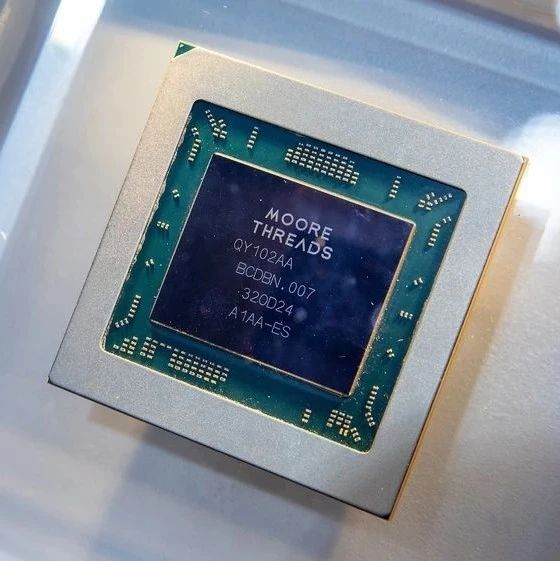
Core Viewpoint - The article discusses the emergence of domestic GPU companies in China, particularly in the context of the growing demand for AI technologies and the challenges they face in competing with established players like NVIDIA and AMD [3][6][11]. Group 1: Market Dynamics - The recent surge in IPO applications from domestic GPU companies, including Moore Threads and Muxi, is attributed to a more favorable IPO policy and accelerated review processes on the Sci-Tech Innovation Board [4][5]. - The tightening of U.S. chip export controls has led to a decline in NVIDIA's market share in China, creating a window of opportunity for domestic GPU firms to pursue IPOs [6][12]. - The overall number of IPO applications in the first half of the year reached 177, significantly surpassing the total for the previous year, with June alone accounting for over 80% of the applications [5]. Group 2: Company Profiles - Moore Threads aims to create a "fully functional GPU" targeting both data center and consumer gaming markets, similar to NVIDIA's strategy, and has launched several GPU chips based on its self-developed MUSA architecture [10][11]. - Muxi focuses more on the data center market, particularly AI training and inference, with a product line that includes the Xisi N series, Xiyun C series, and Xicai G series [11]. - Both companies have successfully raised significant funding, with Moore Threads securing over 4.5 billion yuan and Muxi achieving a post-investment valuation of 21.07 billion yuan [11][12]. Group 3: Financial Performance - Moore Threads reported revenues of 46 million yuan in 2022, projected to grow to 438 million yuan by 2024, reflecting a compound annual growth rate (CAGR) of over 200% [13]. - Muxi's revenues are expected to increase from 426,400 yuan in 2022 to 743 million yuan in 2024, with a staggering CAGR of 4,074% [13]. - Despite revenue growth, both companies continue to face significant losses, with Moore Threads reporting losses of 1.84 billion yuan in 2022 and Muxi reporting 777 million yuan in the same year [14]. Group 4: Future Prospects - The article highlights the challenges domestic GPU companies face in building ecosystems to compete with NVIDIA's established software and hardware integration, particularly through CUDA [17]. - Both Moore Threads and Muxi are actively developing their software ecosystems to lower barriers for developers and enhance their competitive positions [17][18]. - The upcoming IPOs are seen as crucial for these companies to secure the necessary capital to continue their growth and development in a highly competitive market [15][16].