燕京啤酒

Search documents
百威喜力鏖战中国:啤酒生意,要重做一遍|跨国酒企变局2025
2 1 Shi Ji Jing Ji Bao Dao· 2025-12-05 12:13
Core Insights - The beer industry in China is undergoing significant changes, with multinational companies needing to adapt to a rapidly evolving market where traditional strategies are no longer effective [1][4][24] - Domestic brands are showing strong recovery, while international brands are experiencing mixed results, highlighting a shift in consumer preferences and market dynamics [3][10][17] Industry Overview - The Chinese beer market has entered a phase of stock competition, with overall production capacity at about 70% of its peak [3] - In October, the production of beer by large-scale enterprises in China saw a year-on-year decline of 1%, with cumulative production growth for the first ten months remaining at 0% [2] Brand Performance - Domestic brands like Tsingtao, Yanjing, and Zhujiang have reported growth in revenue, profit, and sales, while international brands like Budweiser and Carlsberg are facing challenges [3][10] - Budweiser's performance in China has been declining for three consecutive years, with double-digit decreases in revenue, profit, and sales in the first three quarters of 2023 [9][10] Market Dynamics - The high-end beer market, traditionally dominated by Budweiser and Heineken, is facing pressure as the on-premise consumption channels weaken and new product categories emerge [4][25] - Heineken has successfully leveraged its partnership with China Resources to expand its market presence, achieving significant sales growth in recent years [10][20] Consumer Preferences - Chinese consumers are increasingly open to new beer categories and flavors, with a notable rise in interest for innovative products like tea-infused beers [32] - The shift in consumer behavior has led to a greater focus on non-on-premise channels, with 60% of beer sales now coming from retail channels [29] Strategic Adjustments - Budweiser is adjusting its strategy by focusing on its Harbin brand to capture growth opportunities in the 8-10 yuan price range, reflecting a broader trend of price adjustments in the industry [26][25] - Both Budweiser and Heineken are recognizing the need to enhance their presence in non-on-premise channels and adapt to changing consumer preferences [28][29]




燕京啤酒:燕京营养家是北京燕京中发生物技术有限公司的线下销售渠道
Zheng Quan Ri Bao· 2025-12-05 12:08
证券日报网讯 12月5日,燕京啤酒在互动平台回答投资者提问时表示,燕京纳豆及燕京纳福多肽是公司 控股子公司北京燕京中发生物技术有限公司研发生产的产品。燕京营养家是北京燕京中发生物技术有限 公司的线下销售渠道,致力于为消费者提供更多科学、安全的健康选择。 (文章来源:证券日报) ...

机构称消费有望延续温和增长新常态,消费ETF嘉实(512600)有望持续受益
Xin Lang Cai Jing· 2025-12-05 03:05
Group 1 - The core viewpoint of the articles highlights the adjustment in the consumer sector, with the main consumer index of China experiencing a slight decline of 0.17% as of December 5, 2025, while certain stocks like Hainan Rubber and Yangyuan Beverage showed gains [1] - The Chinese government emphasizes its position as the world's second-largest consumer goods market, with a significant middle-income group that presents vast investment and consumption potential [1] - According to the analysis by CMB International, consumer spending is expected to see a slight recovery in 2025, with a moderate growth trend continuing into 2026, characterized by slower overall demand growth but increasing rational consumption and demand upgrading [1] Group 2 - The CSI Major Consumer Index, which the Jiashi Consumption ETF (512600) tracks, includes leading consumer stocks across various sectors, with the liquor industry holding the largest weight at over 39% [2] - Investors can also access the consumption recovery trend through the Consumption ETF Connect Fund (009180) [3]
年轻人集体戒酒,让“老登”酒企的天快塌了
商业洞察· 2025-12-04 09:23
Core Viewpoint - The article discusses the challenges faced by the Chinese liquor industry, particularly focusing on the declining sales and changing consumer preferences among younger generations, highlighting the need for companies to adapt to these shifts in order to survive [5][6][12]. Group 1: Maotai and the Liquor Market - Duan Yongping, a notable investor, expressed strong confidence in Maotai, stating that investing in Maotai does not require consideration of macroeconomic conditions [6][8]. - Despite Maotai's stock price being at a high point, Duan remained unfazed, indicating a lack of comparable alternatives in the market [8]. - Maotai's third-quarter report showed a single-digit revenue growth, with the wholesale price of its flagship product dropping below 1700 yuan, marking a historical low [8][10]. Group 2: Overall Liquor Industry Performance - The third quarter of this year saw A-share liquor companies report their worst performance in a decade, with total revenue down 18.42% year-on-year and net profit declining by 22.03% [10][15]. - The average inventory turnover days for the liquor industry reached 900 days, indicating significant overstock issues [18]. - The decline in sales is attributed to reduced business banquets and a shift towards more practical gifting, alongside a growing disinterest in liquor among younger consumers [20][23]. Group 3: Young Consumers and Changing Preferences - Young consumers are increasingly favoring casual drinking settings over traditional formal occasions, with family gatherings and friend meet-ups becoming the most common consumption scenarios for liquor [23]. - Liquor companies are attempting to appeal to younger audiences by diversifying their product offerings, such as launching lower-alcohol beverages and engaging in cross-industry collaborations [26][28]. - The shift in consumer behavior indicates that liquor must transition from being a "social currency" to a "consumer product" to resonate with younger generations [30][62]. Group 4: Beer Industry Insights - The beer industry is experiencing a decline in production, with last year's output at only about 70% of its peak a decade ago, and revenue down by 5.7% [31][33]. - Despite the overall decline, some beer companies are achieving growth by focusing on high-end products, with premium beer sales significantly outpacing regular offerings [37]. - The shift in purchasing channels, particularly the rise of instant retail, has allowed many Chinese beer companies to better connect with younger consumers [41]. Group 5: Wine Market Challenges - The domestic wine market has seen a drastic reduction in production, with output down over 77% from its peak in 2015 [55]. - The wine industry is struggling to maintain relevance, as it is perceived as overly formal and difficult for average consumers to appreciate [58]. - Wine companies are now attempting to reposition their products in more casual settings to attract younger drinkers, moving away from traditional high-end contexts [60][62].


淬火成钢,逐梦远航,燕京啤酒“十四五”交出亮眼成绩单
Bei Jing Ri Bao Ke Hu Duan· 2025-12-04 06:41
Core Insights - The Chinese beer industry is undergoing a transformation from scale expansion to quality enhancement, with Yanjing Beer leading this change through a "second entrepreneurship" initiative and a commitment to "reviving Yanjing" [1][2] - Yanjing Beer has achieved continuous growth in sales, revenue, and profit, with net profit increasing from 197 million in 2020 to 1.056 billion in 2024, and brand value surpassing 237.9 billion, earning a spot in the "Asia's 500 Most Valuable Brands" [1][14] Transformation and Strategy - Yanjing Beer is implementing a comprehensive transformation involving nine major reforms across various aspects such as ideology, organization, mechanism, production, operation, marketing, research and development, culture, and governance [2][4] - The company has established a new organizational structure to enhance operational efficiency, focusing on five key centers: production, marketing, supply chain, accounting evaluation, and technology research and development [5][7] Market Positioning - Yanjing Beer is focusing on high-end products and new consumer trends, with the Yanjing U8 product becoming a significant success, achieving a sales volume increase from 110,000 kiloliters in 2020 to nearly 700,000 kiloliters in 2024, reflecting a compound annual growth rate of 62% [8][10] - The company has successfully increased the proportion of mid-to-high-end products from less than 60% in 2020 to 67.01% in 2024, with expectations to exceed 70% in the first half of 2025 [10][13] Financial Performance - Yanjing Beer has shown strong financial resilience, achieving a beer sales volume of 4.0044 million kiloliters and revenue of 14.667 billion in 2024, with net profit reaching 1.056 billion [13] - The company's gross profit margin has improved from 39.19% in 2020 to 45.66% in the first half of 2025, driven by the optimization of high-end product structures and effective supply chain management [13][14] Brand Value and Recognition - Yanjing Beer has been recognized for its brand value, ranking 237.916 billion in the "China's 500 Most Valuable Brands" list and maintaining its position in "Asia's 500 Most Valuable Brands" [14] - The company has embraced a new positioning as "China's own beer," showcasing the quality and charm of Chinese manufacturing through various initiatives, including ESG management and carbon footprint reporting [14][15]
饮料制造板块短线拉升 香飘飘走出二连板
Xin Lang Cai Jing· 2025-12-04 01:37
Group 1 - The beverage manufacturing sector has experienced a short-term surge, with Xiangpiaopiao achieving a consecutive two-day increase in stock price [1] - Other companies such as Yangyuan Beverage, Yanjing Beer, Jiahe Foods, New Dairy, and Huangshi Group have also seen significant stock price increases [1]

从深度分销到超级业务,一个老牌企业的全国化突围样本。
Sou Hu Cai Jing· 2025-12-03 13:08
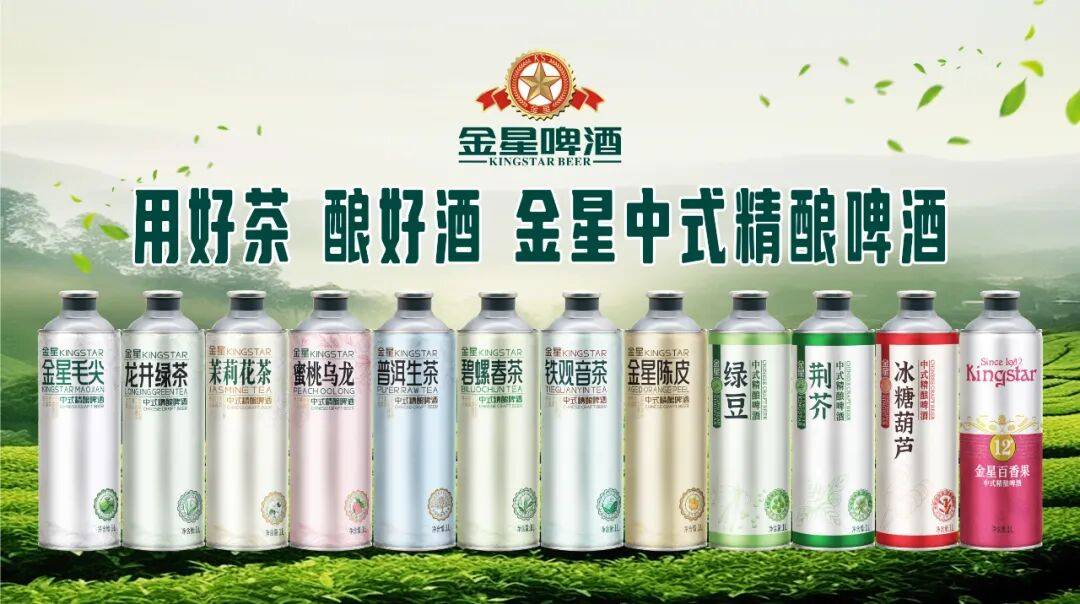
Core Insights - The article highlights the successful transformation of Jin Xing Beer from a traditional lager producer to a key player in the Chinese craft beer market, emphasizing its strategic shift towards "Chinese craft beer" and its effective market positioning [2][18]. Group 1: Company Background - Jin Xing Beer, established in 1982, has evolved from a local manufacturer in Central China to a significant modern enterprise in the Chinese beer industry, particularly in the craft segment [1]. - The company's development reflects the evolution of the Chinese beer industry over the past four decades [2]. Group 2: Challenges Faced During Transformation - Jin Xing Beer faced intense competition from major players like China Resources, Tsingtao, Budweiser, and Yanjing, as well as numerous local brands, particularly in Henan, which has the lowest price and profit margins in the country [4]. - The traditional deep distribution model was costly and complex, leading to low profits and high competition [4]. - As an established brand, Jin Xing Beer struggled with perceptions of being traditional and conservative, making it difficult to attract younger consumers [4]. - The company previously relied on traditional lagers, which faced growth challenges amid rising consumer expectations [4]. - Managing a large workforce of nearly a thousand salespeople posed significant efficiency challenges [4]. Group 3: Transformation Strategy - The core of Jin Xing Beer’s transformation strategy involved new products, new channels, new communication methods, and new organizational structures [4][18]. - Product Transformation: The company shifted from "mass lagers" to "Chinese craft beer," integrating local elements into brewing processes to create differentiated products that appeal to Chinese tastes [5][18]. - Channel Transformation: Jin Xing Beer moved from serving numerous small restaurants and supermarkets to focusing on high-potential channels in major cities, including modern retail and instant delivery [7][10]. - Communication Transformation: The company transitioned from traditional advertising to new media operations, utilizing platforms like Douyin and Xiaohongshu to engage with younger consumers through interactive content [11][18]. - Organizational Transformation: The company redefined its sales force from traditional roles to "super salespeople," focusing on high-potential modern retail channels and enhancing their strategic capabilities [12][15]. Group 4: Key Takeaways and Insights - Jin Xing Beer successfully capitalized on the trends of consumption upgrading and quality revolution by entering the craft beer segment with a unique "Chinese" concept [17]. - The company avoided direct competition with giants in traditional channels, leveraging its understanding of the local market to establish advantages in new products and channels [17]. - High-end craft products require modern channels for effective display, creating a synergistic effect between product and channel [17]. - The transformation emphasized the importance of organizational capability, with a focus on developing "super salespeople" to enhance human resources into valuable capital [17][18].
燕京啤酒:公司将持续深化大健康领域布局
Zheng Quan Ri Bao Zhi Sheng· 2025-12-03 09:44
(编辑 楚丽君) 证券日报网讯 12月3日,燕京啤酒在互动平台回答投资者提问时表示,未来,公司将持续深化大健康领 域布局,通过燕京营养家等渠道,打造线上线下联动的健康消费场景,为消费者提供更多科学、安全的 健康选择。 ...
福建发布12条惠台政策措施,食品饮料ETF天弘(159736)昨日成交额超1500万元,机构:食品饮料行业明年主线是底部回暖复苏
2 1 Shi Ji Jing Ji Bao Dao· 2025-12-03 01:24
Group 1 - The market experienced fluctuations on December 2, with all three major indices closing lower. The Tianhong Food and Beverage ETF (159736) saw a trading volume exceeding 150 million yuan, with several constituent stocks such as Xiwang Food, Babi Food, and Yanjing Beer rising [1] - The Tianhong Food and Beverage ETF tracks the CSI Food and Beverage Index, focusing on leading stocks in the high-end and sub-high-end liquor sectors, while also covering leading stocks in beverages, dairy, condiments, and beer. The top ten weighted stocks include Moutai, Wuliangye, and Yili [1] - Fujian Province has recently formulated policies to support cross-strait integration development, including measures to assist Taiwanese residents in opening Shaxian snack stores [1] Group 2 - In November, the food and beverage index continued to recover, achieving excess returns compared to the broader market, driven by a shift in market style and a positive CPI growth rate. Within the sector, pre-processed foods, baked goods, and dairy products saw the highest increases [2] - Looking ahead to 2026, the core view is that new consumption will remain sustainable but will experience internal rotation, while traditional consumption is expected to see bottom improvement [2] - Since early 2025, the food and beverage sector has significantly underperformed the broader market due to changes in the consumption environment and market style. However, the sector's fundamentals are at a low point, and the valuation has declined, indicating no need for pessimism. The expectation for 2026 is a recovery in the food and beverage industry, with hopes for resilient consumer spending and increased business activity [2]

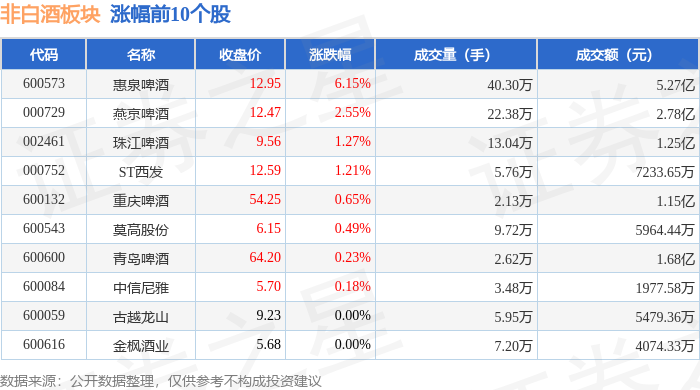
非白酒板块12月2日涨0.52%,惠泉啤酒领涨,主力资金净流入1.13亿元
Zheng Xing Xing Ye Ri Bao· 2025-12-02 09:03
Market Overview - The non-liquor sector increased by 0.52% on December 2, with Huichuan Beer leading the gains [1] - The Shanghai Composite Index closed at 3897.71, down 0.42%, while the Shenzhen Component Index closed at 13056.7, down 0.68% [1] Individual Stock Performance - Huichuan Beer (600573) closed at 12.95, up 6.15% with a trading volume of 403,000 shares and a turnover of 527 million yuan [1] - Wujing Beer (000729) closed at 12.47, up 2.55% with a trading volume of 223,800 shares and a turnover of 278 million yuan [1] - Zhujiang Beer (002461) closed at 9.56, up 1.27% with a trading volume of 130,400 shares and a turnover of 125 million yuan [1] - ST Xifa (000752) closed at 12.59, up 1.21% with a trading volume of 57,600 shares and a turnover of 72.34 million yuan [1] - Chongqing Beer (600132) closed at 54.25, up 0.65% with a trading volume of 21,300 shares and a turnover of 115 million yuan [1] Capital Flow Analysis - The non-liquor sector saw a net inflow of 113 million yuan from institutional investors, while retail investors experienced a net outflow of 94.81 million yuan [2][3] - Huichuan Beer had a net inflow of 191.1 million yuan from institutional investors, but a net outflow of 64.7 million yuan from retail investors [3] - Wujing Beer experienced a net inflow of 24.35 million yuan from institutional investors, with a net outflow of 42.18 million yuan from retail investors [3]