九号公司

Search documents
深度解析泉果刚登峰,为何这时更需要关注他?
点拾投资· 2025-12-22 06:19
Core Viewpoint - The article emphasizes the importance of time in investment, highlighting that the longer the investment horizon, the greater the power of compound interest. It also discusses the evolution of fund manager Gang Dengfeng, showcasing his growth and investment philosophy over the years [1][2]. Group 1: Investment Philosophy - Gang Dengfeng's investment framework is characterized by a focus on quality growth with a mid-level industry perspective. He aims for sustainable growth rather than short-term speculative gains, emphasizing the importance of investing in companies with strong fundamentals and management [10][14]. - The investment approach includes a low turnover rate, indicating a long holding period for stocks. For instance, the turnover rates for the fund managed by Gang Dengfeng were 66.87% in 2023, 96.65% in 2024, and 115.48% in the first half of 2025, reflecting a strategy of holding quality stocks for extended periods [11][14]. Group 2: Stock Selection Criteria - Gang Dengfeng focuses on a limited number of high-quality companies, defined by strong financial metrics such as high Return on Equity (ROE) and excellent management teams. This selective approach aims to minimize trading losses and enhance overall returns [14][16]. - The concentration of holdings has increased over time, with the top ten holdings in his fund rising from 36.40% at the end of 2023 to 58.67% by the third quarter of 2025, indicating a strategy of focusing on fewer, high-quality investments [14][16]. Group 3: Market Context and Timing - The article suggests that the current market environment is favorable for actively managed equity funds, as historical data indicates that active management tends to outperform broad market indices during periods of structural growth opportunities. For example, the active equity index returned 28.06% in 2025, significantly outperforming the 14.30% return of the CSI 300 index [22][23]. - The shift in the Chinese capital market towards shareholder returns and dividends is highlighted, with total dividends reaching nearly 2.5 trillion yuan in 2025, indicating a growing demand for equity investments among retail investors [23]. Group 4: Industry Diversification - Gang Dengfeng's portfolio is diversified across various industries, including electric vehicles, internet, consumer electronics, and industrial metals. This broad industry coverage is designed to create multiple sources of excess returns and reduce maximum drawdowns for investors [17][23]. - The article notes that the fund's maximum drawdown was -13.76% over the past year, compared to -21.04% for the CSI 300 index, demonstrating the benefits of industry diversification in mitigating risks [17][23].


西部证券晨会纪要-20251222
Western Securities· 2025-12-22 02:54
Group 1: Market Strategy and Economic Outlook - The report suggests that the market is entering a cyclical transition, similar to Japan in 1978, with a recommendation to continue investing in sectors that are expected to reach new highs [1][10] - The anticipated "spring rally" in the A-share market is supported by favorable economic policies and the return of cross-border capital, which could lead to a "Davis Double" effect in the consumer sector [3][21] - The report emphasizes the importance of cyclical recovery in the economy, with a focus on sectors such as non-ferrous metals, new consumption, and high-end manufacturing [10][21] Group 2: Company-Specific Insights - The report on Ecovacs (科沃斯) forecasts revenues of 18.923 billion, 21.973 billion, and 24.919 billion CNY for 2025, 2026, and 2027 respectively, with corresponding net profits of 1.954 billion, 2.306 billion, and 2.777 billion CNY, indicating significant growth potential [2][13] - Ecovacs is expected to benefit from improvements in its cleaning business, the development of its consumer robotics matrix, and synergies from its supply chain layout [13] - The report highlights the potential for the liquid cooling industry to experience significant growth in 2026, with a focus on companies that have technological barriers and can enter major domestic and international supply chains [4][26] Group 3: Industry Trends and Projections - The liquid cooling market is projected to reach a conservative estimate of 6.9 billion to an optimistic 9.7 billion USD by 2026, driven by advancements in GPU technology and increasing demand for efficient cooling solutions [23][24] - The report indicates that the domestic liquid cooling server market is expected to exceed 10 billion USD by 2028, with a compound annual growth rate of 47.6% from 2023 to 2028 [25] - The consumer electronics sector is experiencing a recovery, with a focus on innovative products and market expansion, particularly in the context of the upcoming CES 2026 [32][34]

九号公司涨2.01%,成交额1.20亿元,主力资金净流入1557.66万元
Xin Lang Zheng Quan· 2025-12-22 02:10
Core Viewpoint - Ninebot Company has shown significant growth in revenue and profit, with a notable increase in stock price and market activity, indicating strong investor interest and confidence in the company's future prospects [1][2]. Group 1: Stock Performance - As of December 22, Ninebot's stock price increased by 2.01%, reaching 58.98 CNY per share, with a trading volume of 1.20 billion CNY and a turnover rate of 0.37%, resulting in a total market capitalization of 42.485 billion CNY [1]. - The stock has appreciated by 28.32% year-to-date, with a 3.53% increase over the last five trading days and a 4.91% increase over the last 20 days, although it has decreased by 13.18% over the past 60 days [1]. Group 2: Financial Performance - For the period from January to September 2025, Ninebot achieved a revenue of 18.39 billion CNY, representing a year-on-year growth of 68.63%, and a net profit attributable to shareholders of 1.787 billion CNY, which is an increase of 84.31% compared to the previous year [2]. Group 3: Shareholder and Institutional Holdings - As of November 10, Ninebot had 35,500 shareholders, a decrease of 0.32% from the previous period, with an average of 1,557 shares held per shareholder, which increased by 0.32% [2]. - The company has distributed a total of 1.301 billion CNY in dividends since its A-share listing [3]. - Among the top ten circulating shareholders, notable increases in holdings were observed for E Fund's ETF and Huaxia's ETF, indicating growing institutional interest [3].
看好市场向上趋势 基金经理为跨年行情做准备
Shang Hai Zheng Quan Bao· 2025-12-21 18:17
Group 1: Market Trends and Investment Opportunities - Recent preparations by professional investors for year-end market trends have been noted, with public funds conducting intensive research on companies such as Zhongke Shuguang, Haiguang Information, Luxshare Precision, Changan Automobile, and others, primarily in the manufacturing sector [1] - Institutions believe that the recent market adjustment will provide better investment opportunities for the upcoming year, with structural market trends making certain underperforming sectors more attractive [1] - Analysts from Penghua Fund and Xingzheng Global Fund express optimism about advanced manufacturing, cyclical stocks, and high-performing non-bank stocks, indicating that the upward market trend remains intact despite short-term fluctuations [1] Group 2: Sector-Specific Insights - The lithium battery industry is expected to maintain high demand due to the growth in electric vehicle sales and unexpected storage needs, leading to improved profitability across the supply chain [2] - The innovative drug sector in Hong Kong remains a focus for institutions, with a positive outlook on the industry’s fundamentals and the ongoing trend of innovative drugs going global, which is expected to enhance the upstream supply chain's performance [2] - The commercial aerospace and satellite industry is transitioning from speculative hype to a fundamentals-driven phase, with investment opportunities emerging across the supply chain, particularly in rocket and satellite manufacturing and related applications [3]






家电行业2025W50周报:家空内外销均有所承压,iRobot官宣破产重组-20251221
GUOTAI HAITONG SECURITIES· 2025-12-21 11:36
Investment Rating - The industry investment rating is "Overweight" [5] Core Insights - The home appliance industry is experiencing pressure in both domestic and international sales, with iRobot announcing bankruptcy restructuring, which will be acquired by Chinese manufacturer Shanjun Robotics [2][5] - In November, the retail sales of home appliances and audio-visual equipment reached 100 billion yuan, a year-on-year decline of 19.4%, while the cumulative annual sales reached 1,074.9 billion yuan, with a year-on-year increase of 14.8% [5] - The production and sales data for home air conditioners in November showed a production of 10.577 million units, a year-on-year decrease of 36.7%, and sales of 10.492 million units, a year-on-year decrease of 31.8% [5] Summary by Sections Investment Recommendations - Key drivers for investment include overseas expansion and smart home technology, recommending leading companies in the robotic vacuum sector: Roborock (21.1X 2025 PE) and Ecovacs (21.5X) [5] - Companies with stable performance and upward potential include Ninebot (20.6X), Anfu Technology (41.7X), Hailong Cold Chain (14.6X), and Beiding Co. (30.4X) [5] - For companies with robust operations and high dividends, recommendations include TCL Electronics (12.2X), Hisense Visual (12.9X), Midea Group (13.5X), and Haier Smart Home (12.2X) [5] - Companies diversifying into new sectors include Rongtai Health (18.7X) and Wanlong Magnetic Plastic (18.9X) [5] Market Performance - The retail sales growth rate further narrowed in November, with the total retail sales of consumer goods reaching 43,898 billion yuan, a year-on-year increase of 1.3% [5] - The domestic market faces pressure from the decline in national subsidies and high base effects, while the export market is constrained by high base effects and inventory reduction in some overseas markets [5] Company Developments - iRobot has announced its bankruptcy and will be acquired by Shanjun Robotics, with the restructuring process expected to be completed by February 2026 [5] - The founder of Chasing Technology, Yu Hao, plans to acquire 54.90% of Jiamei Packaging, with a total transaction value of approximately 2.282 billion yuan [5]





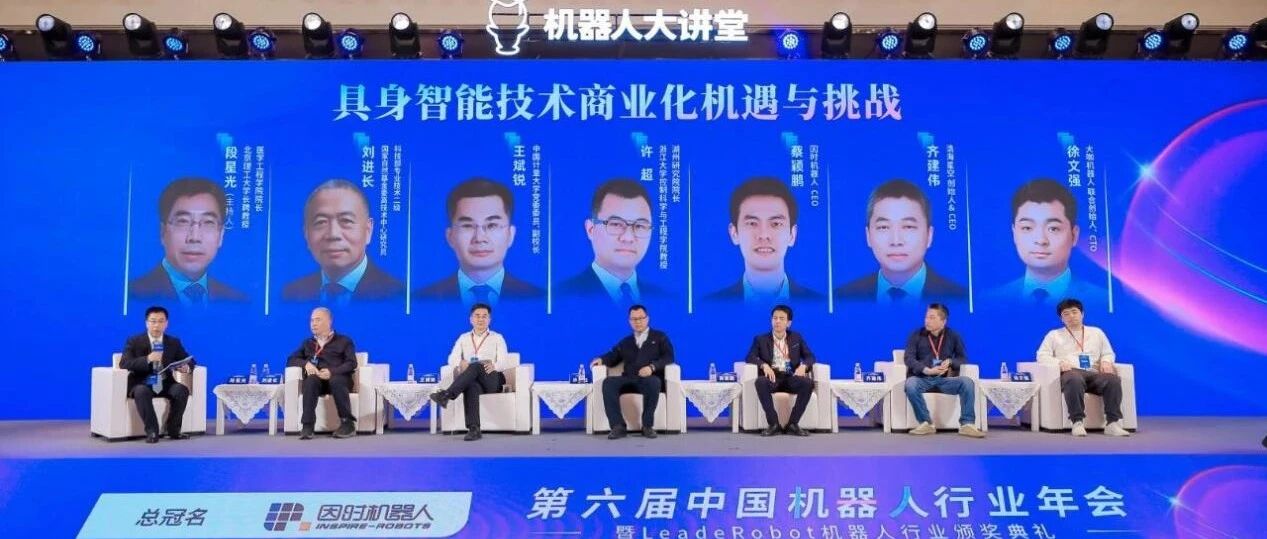
具身智能商业化的“机遇”与“挑战”,这场圆桌说透了
机器人大讲堂· 2025-12-21 08:04
Core Insights - The roundtable forum focused on the commercialization opportunities and challenges of embodied intelligence technology in the humanoid robot sector, highlighting the need for collaboration among policy, technology, data, and industry [1][23]. Policy Outlook: National Strategic Layout and Global Competition - The discussion began with insights on China's development opportunities and policy trends in the global competition landscape, emphasizing that the robotics sector is crucial for China's national rejuvenation [4][7]. Technological Breakthroughs: Pathways from Rigid Motors to Biomimetic Muscles - The forum highlighted the need to transition from rigid motor drives to biomimetic muscle drives, which are essential for integrating robots into daily life scenarios [10][11]. Data Scarcity: Solutions from "Hand-Holding" to "Opening the Granaries" - The issue of data scarcity in embodied intelligence was addressed, with suggestions for transitioning from manual data collection to utilizing existing data from human activities and developing high-fidelity simulations [11][12]. Dexterous Manipulation: From Diverse Approaches to Industrial Balance - The current state of dexterous hand technology was discussed, with a focus on the need for industry-wide investment in foundational technology and market-driven product iterations [18][19]. Commercialization Pathways: Dual Challenges from Technological Breakthroughs to Large-Scale Implementation - The forum concluded with insights on the indicators for the large-scale breakthrough of embodied intelligence, emphasizing the importance of balancing short-term commercialization with long-term technological innovation [19][22].
共赴产业新程!北京市机器人产业协会成立大会邀您见证未来
机器人大讲堂· 2025-12-19 15:54
Core Viewpoint - The establishment of the Beijing Robotics Industry Association aims to accelerate innovation and collaboration within the robotics industry, aligning with the "Beijing Robotics Industry Innovation Development Action Plan (2023-2025)" [1][5]. Group 1: Association Establishment - The Beijing Robotics Industry Association will serve as a bridge between the government and member units, focusing on policy research, industry data analysis, and providing decision-making support for enterprises [5]. - The association will promote industry exchanges, market expansion, and the development of standards and patent pools within the robotics sector [5]. Group 2: Policy Insights - The conference will feature a policy interpretation session, detailing city-level and regional policies that support the robotics industry, including technology innovation, funding support, and talent cultivation [6]. - Various district representatives will explain their specific policies aimed at fostering innovation in the robotics sector, helping enterprises seize development opportunities [6]. Group 3: Expert Insights - Industry experts will share insights on current trends, key innovations, and practical applications in the robotics field, providing guidance for industry development [7]. - The expert reports will focus on the evolution of embodied intelligence and the challenges faced, offering strategies for overcoming technological barriers [7]. Group 4: Event Details - The establishment ceremony of the Beijing Robotics Industry Association is scheduled for December 26, 2025, at the Kexing Laifucheng Banquet Hall in Changping District, Beijing [9][10]. - The agenda includes speeches from government leaders, the unveiling ceremony, and expert reports on various topics related to the robotics industry [8][10].

投资总额超50亿元,20家企业签约落户斗门
Nan Fang Du Shi Bao· 2025-12-19 13:08
Group 1 - The event "Intelligent Connected Travel · Chain Moving Future" was held in Zhuhai, where 20 companies signed agreements with a total planned investment exceeding 5 billion yuan, covering various sectors including smart terminal manufacturing, supply chain support, and technology research and development [1][3]. - Many signing companies are from Jiangsu and Zhejiang provinces, enhancing the electronic supply chain. Notable companies include Zhejiang Baobiao Electronics Co., Ltd. and Zhejiang Dishi Technology Co., Ltd., which invested 500 million yuan and 200 million yuan respectively [3]. - The signing companies are considered high-quality enterprises in the smart short-distance transportation industry chain, which will help strengthen, supplement, and extend the regional industrial ecosystem [3]. Group 2 - The smart consumer terminal industry is viewed as a key area integrating advanced manufacturing, artificial intelligence, and the Internet of Things. The first smart consumer terminal industrial park in Guangdong was established in Fushan Industrial Park, attracting companies like Ninebot Technology and Leifeng [5]. - The development plan for the smart consumer terminal industry in Doumen aims to achieve an industry scale of over 30 billion yuan by 2027 and to reach a trillion-level cluster by 2030, ultimately establishing itself as a source of industrial innovation and standard output [5]. - Doumen District is committed to creating a better business environment and establishing a regular supply-demand docking platform, ensuring that entrepreneurs can invest, start businesses, and develop with confidence [5].

家电行业 2026 年投资策略:逆风莫摧残,挖掘定价权
Hua Yuan Zheng Quan· 2025-12-19 09:29
Investment Rating - The report rates the home appliance industry as "Positive" for investment, marking it as the first recommendation for 2026 [3]. Core Insights - The report emphasizes that leading companies with strong product capabilities, channel efficiency, cost control, and brand premium are positioned to gain market share during a challenging domestic demand environment. The industry is shifting from "incremental competition" to "stock integration" [4]. - It highlights that while short-term revenue growth may be difficult to expect, leading companies are likely to maintain profit growth due to improved efficiency and cost reduction. A stabilization in demand could lead to a new golden era for these companies [4]. - The report suggests focusing on three main investment themes: companies benefiting from domestic market consolidation, those redefining products for overseas markets, and quality dividend stocks with low valuations [4]. Summary by Sections 1. Market Performance and Fundamentals - The home appliance sector underperformed the CSI 300 index in 2025, with a growth rate of 9.7%, lagging behind the index by 7.8 percentage points, primarily due to external tariffs and domestic policy fluctuations [9]. - The report notes that the home appliance sector's valuation remains low compared to other consumer sectors, with a PE ratio of 14.7X as of November 30, 2025, reflecting the industry's mature phase and pressures from declining domestic real estate demand [19][20]. 2. Main Line One: Opportunities in Market Consolidation - The report identifies opportunities in the smart projection market, where domestic consolidation is occurring, and leading companies are gaining market share. The market is expected to improve as consumer demand recovers [61]. - In the kitchen appliance sector, leading companies are showing resilience in performance despite weak demand, with market shares increasing as smaller competitors exit the market [76]. 3. Main Line Two: Redefining Products for Export Markets - The report discusses the growth potential in the robotic vacuum cleaner market, which is expected to see double-digit growth in the overseas market from 2024 to 2029, driven by product innovation [86]. - It also highlights the potential for growth in the lawn mower robot market, particularly in Europe, where the penetration rate is expected to rise significantly [104]. 4. Main Line Three: Quality Dividend Stocks - The report suggests that companies like Midea Group and Haier Smart Home are positioned well due to their stable cash flows and increasing dividend payouts, making them attractive for long-term investment [85].


新国标打碎了雅迪们的高端幻觉
Feng Huang Wang· 2025-12-19 07:45
Core Viewpoint - The new national standard for electric bicycles has sparked significant consumer dissatisfaction due to design choices that prioritize compliance over user comfort and practicality [1][2][4]. Group 1: Issues with the New Standard - Many complaints from consumers focus on the uncomfortable design features of new electric bicycles, such as narrow seats and the absence of rear seats, which are perceived as impractical [2][3]. - The core requirements of the new standard include a maximum weight of 55 kg, a speed limit of 25 km/h, and the necessity for pedal riding capability, but many design elements criticized by consumers are not mandatory [2][4]. - Some companies have adopted an "exam-oriented" mindset, leading to overly simplistic designs that meet the minimum requirements but fail to address user needs [2][3]. Group 2: Industry Response and Challenges - The introduction of the new standard has created a dilemma for electric bicycle manufacturers, as strict compliance may lead to loss of market share while non-compliance risks penalties [4][5]. - The first batch of new standard models is largely seen as "exam products," prioritizing compliance over user experience, with comfort and practicality expected to be improved in future iterations [4][5]. - The market is experiencing a shift, with brands like Yadea facing a significant drop in sales, from 16.5 million units in 2023 to 13.02 million in 2024, a decrease of 21.18% [6]. Group 3: Market Dynamics and Future Outlook - The new standard has accelerated industry consolidation, with established brands like Niu and Ninebot quickly adapting to produce compliant and user-friendly models, while smaller brands struggle to keep up with the technological demands [6][7]. - There is a growing trend among major brands to introduce improved versions of new standard models, incorporating features like wider seats and modular designs to enhance user experience [7][8]. - The ongoing adjustments in the industry reflect a broader transition in urban transportation in China, moving from unregulated growth to a more structured development approach [7][8].