老百姓

Search documents
智通A股限售解禁一览|9月29日




智通财经网· 2025-09-29 01:04
Core Points - On September 29, a total of 25 listed companies had their restricted shares unlocked, with a total market value of approximately 24.818 billion yuan [1] Summary by Category Restricted Share Unlocking - The companies involved in the unlocking of restricted shares include: - Luzhou Laojiao (000568) with 102,700 shares from equity incentive restrictions - East China Pharmaceutical (000963) with 215,000 shares from equity incentive restrictions - Taiyuan Heavy Industry (600169) with 11.6502 million shares from equity incentive restrictions - Jinfat Technology (600143) with 7.406 million shares from equity incentive restrictions - Guotai Junan (601211) with 3.2495 million shares from equity incentive restrictions - Guanglian Da (002410) with 3.2334 million shares from equity incentive restrictions - Ningbo Port (601018) with 3.647 billion shares from A-share issuance to legal person allocation - Zhongjin Environment (300145) with 852,070 shares from equity incentive restrictions - Keli Ke (002782) with 768,000 shares from equity incentive restrictions - Yingjie Electric (300820) with 62,500 shares from equity incentive restrictions - Laobaixing (603883) with 868,400 shares from equity incentive restrictions - Zhaoxun Media (301102) with 218 million shares from extended lock-up period - Zhongjing Technology (003026) with 20,000 shares from equity incentive restrictions - Woge Optoelectronics (603773) with 14.8003 million shares from A-share issuance to original shareholders allocation - Hanrui Cobalt (300618) with 104,670 shares from equity incentive restrictions - Fujilai (301258) with 55.362 million shares from extended lock-up period - Wankai New Materials (301216) with 225 million shares from extended lock-up period - Weiteou (301319) with 29.8 million shares from pre-issue share restrictions - Guanshi Technology (605588) with 19,870 shares from equity incentive restrictions - Sanwang Communication (688618) with 13,500 shares - Xidi Micro (688173) with 771,800 shares - Rendu Biology (688193) with 8.4316 million shares - Jinchang Protein (688137) with 7.145 million shares - Jiao Cheng Ultrasound (688392) with 43.8612 million shares - Aike Saibo (688719) with 824,800 shares [1]
知名专家现惊人言论!房价下跌,最受伤的不是有钱人,而是普通老百姓?
Sou Hu Cai Jing· 2025-09-29 00:57
Core Viewpoint - The article discusses the critical state of China's real estate market and the implications for the macro economy, emphasizing the need for a shift in policy and perception regarding housing prices and land finance [2][4]. Group 1: Land Finance and Policy - Land finance is defined as the fiscal mechanism of local governments that possess land transfer and planning rights [4]. - To stabilize the real estate market, it is essential to abandon quantity targets and halt the influx of new land supply, focusing instead on redeeming excess properties [4]. - The current approach of relying on land sales for financing contradicts the central government's strategy of transitioning from incremental expansion to qualitative improvement [4]. Group 2: Impact of Housing Prices - The decline in housing prices primarily affects ordinary citizens rather than the wealthy, as housing constitutes a significant portion of household assets in China [4]. - The homeownership rates are notably high, with urban residents at 96.3% and rural residents at 94.8%, indicating that housing is a critical asset for the majority [4]. - The article argues that rising housing prices can help reduce wealth inequality, contrary to the belief that falling prices benefit the majority [4]. Group 3: Market Structure and Transformation - A dual-track system is proposed, distinguishing between market-driven housing and affordable housing, to ensure both price stability and housing accessibility [5]. - The article suggests that the best source of affordable housing is not new construction but rather the repurchase of excess market housing [5]. - The handling of unfinished projects should focus on rescuing banks rather than merely saving companies [5]. Group 4: Current Market Conditions - The real estate sector is currently in a downturn, with significant declines in new housing sales and investment [7][9]. - From January to August 2023, new housing sales dropped by 4.7% in area and 7.3% in value, while real estate development investment fell by 12.9% [7][9]. - The inventory of unsold properties has increased, with a notable rise in the waiting period for inventory clearance [10][13]. Group 5: Economic Contribution and Future Outlook - The real estate sector contributes approximately 20% to GDP and 40% to fiscal revenue, highlighting its importance to the economy [19][22]. - Despite its significance, the probability of housing prices continuing to rise is deemed low due to oversupply and demographic challenges [23][24]. - The article emphasizes that the real estate market must return to a supply-demand balance, as excessive price increases lead to unsustainable debt levels for developers [28][31].


三大“毒瘤”不去除,老百姓的钱被吸走了,经济复苏谈何容易?
Sou Hu Cai Jing· 2025-09-28 11:00
Economic Overview - The domestic economy shows a trend of "stability with growth," with GDP expected to grow by 5.3% year-on-year in the first half of 2025 [1] - Despite economic growth, consumer demand remains low, with prices of goods like cars and home appliances in a downward trend [1] - Total bank deposits of residents surged by 10.77 trillion yuan in the first half of 2025, reaching a historic high [1] Consumer Behavior - Experts suggest lowering bank deposit interest rates to zero to encourage spending, but residents are still reluctant to consume [3] - The primary reasons for low consumer spending include significant wealth disparity, high housing prices, and the overdevelopment of e-commerce [3][5] Wealth Disparity - Although GDP is increasing, the majority of wealth is concentrated among the government and corporations, leaving laborers with a smaller share [5] - Only 2% of families hold 80% of the deposits, while 98% hold just 20% [5] - Many households are saving for future expenses like healthcare, education, and housing, leading to a reluctance to spend [5] Housing Market - Housing prices remain high, with the price-to-income ratio in second and third-tier cities at 20-25 and in first-tier cities at 40 [7] - High housing costs severely limit disposable income, as families often spend over 40% of their income on mortgage repayments [7] - Reducing housing prices and increasing affordable housing availability are essential for improving consumer spending [7] E-commerce Impact - The rise of e-commerce has changed shopping habits, with consumers favoring online shopping for lower prices and convenience [8] - However, overdevelopment of e-commerce may harm long-term economic growth due to limited job creation compared to physical stores [8] - The profitability of e-commerce is concentrated among leading companies, while small and medium-sized e-commerce businesses struggle to survive, impacting overall consumer demand [9]
美联储降息,全球粮价或将大涨,中国老百姓的米袋子受影响吗?
Sou Hu Cai Jing· 2025-09-26 16:49
Core Viewpoint - The Federal Reserve's recent interest rate cut is expected to have significant implications for global food prices, potentially leading to inflation in food costs due to increased capital flow into commodity markets [1][2][9]. Group 1: Impact of Federal Reserve's Rate Cut - The Federal Reserve lowered the federal funds rate by 25 basis points, marking its first substantial easing since 2025, which may lead to a depreciation of the dollar and increased investment in commodities, including food [1][2]. - The logic behind the rate cut suggests that lower returns on dollar assets will drive international capital towards commodities, causing prices of staple foods like wheat, corn, and rice to rise irrationally [2][9]. Group 2: Relationship Between Energy and Food Prices - Food prices are closely linked to energy costs; rising energy prices increase fertilizer and transportation costs, which ultimately contribute to higher food prices [3]. - Historical food price crises have often been driven by a combination of financial factors and rising energy prices, as seen in the 2008 global food crisis [4]. Group 3: Current Market Conditions - Current geopolitical tensions and export instability from key regions, such as the Black Sea, combined with India's rice export restrictions, have created a tight market for food [5][6]. - The recent interest rate cut by the Federal Reserve is seen as exacerbating the situation, potentially leading to a surge in global food prices [6][9]. Group 4: China's Food Security - China has a robust food security system, being the largest rice producer globally, accounting for about one-third of the world's production [11][12]. - China's grain reserve system is recognized as the largest in the world, allowing it to stabilize domestic prices even amid global market fluctuations [13]. - The country maintains a high self-sufficiency rate in staple grains, with rice and wheat self-sufficiency rates consistently above 95% [14]. Group 5: Potential Domestic Impacts - While China's food supply is secure, global price increases may still lead to indirect pressures on domestic markets, such as rising feed costs affecting livestock prices [15][22]. - The government must remain vigilant as global food price increases could stimulate domestic speculation and push up prices of related products [15][22]. Group 6: Strategic Considerations - China's food security strategy emphasizes not only ensuring staple food availability but also diversifying import channels to mitigate risks from specific countries [18]. - The country aims to modernize agriculture to enhance productivity and reduce vulnerability to climate fluctuations, which have been increasingly disruptive [19][16].
老百姓(603883):2025年半年报点评:多维度变革下,2Q业绩有所转暖
Huachuang Securities· 2025-09-26 14:04
Investment Rating - The report maintains a "Recommendation" rating for the company, with a target price of 18.3 yuan [2][8]. Core Insights - The company's 1H25 revenue was 10.77 billion yuan, a decrease of 1.5% year-over-year, with a net profit of 400 million yuan, down 20.9% year-over-year. The 2Q25 revenue was 5.34 billion yuan, a decrease of 1.1% year-over-year, with a net profit of 150 million yuan, down 18.9% year-over-year, indicating a narrowing decline in performance [2][8]. - The company is focusing on store structure adjustments amid ongoing industry consolidation, with a total of 15,385 stores as of 2Q25, reflecting a year-over-year increase of 2.8% [8]. - The return of the founder and chairman has initiated multi-dimensional reforms, including a significant decentralization of decision-making and a restructuring of the procurement system [8]. Financial Performance - The company’s total revenue is projected to grow from 22.36 billion yuan in 2024 to 27.26 billion yuan in 2027, with year-over-year growth rates of -0.4%, 4.4%, 7.3%, and 8.9% respectively [4][9]. - The net profit is expected to recover from 519 million yuan in 2024 to 952 million yuan in 2027, with growth rates of -44.1%, 34.0%, 18.0%, and 16.0% respectively [4][9]. - The gross margin for 1H25 was 33.1%, a decrease of 1.2 percentage points, while the net margin was 4.4%, down 1.0 percentage points [8]. Market Position and Strategy - The company plans to open 1,000 new stores in the year, primarily through franchising, as it adapts to the changing market landscape [8]. - The pharmaceutical retail business showed signs of stabilization, with revenues of 8.81 billion yuan in 1H25, down 2.3% year-over-year, while non-pharmaceutical sales faced continued pressure [8].
一心堂(002727):2025年中报点评:业绩承压,推进多元化改革
Orient Securities· 2025-09-25 08:52
Investment Rating - The report maintains a "Buy" rating for the company with a target price of 17.00 CNY based on a 17x PE ratio for 2025 [3][5]. Core Views - The company is facing pressure on profitability while advancing diversification reforms. The revenue for the first half of 2025 decreased by 4.2% year-on-year, with retail and wholesale revenues declining by 2.9% and 9.2%, respectively [10][11]. - The company plans to enhance store renovations and improve customer purchase frequency and repurchase rates, with a target of renovating 1,000 stores by the end of 2025 [10][11]. - The company is focusing on improving service quality and strengthening new retail operations, with a significant portion of new retail sales coming from online-to-offline (O2O) channels [10][11]. Financial Summary - Revenue projections for 2025-2027 are adjusted to 19,512 million CNY, 21,476 million CNY, and 23,919 million CNY, reflecting growth rates of 8.4%, 10.1%, and 11.4%, respectively [4][13]. - The forecasted net profit for 2025 is 586 million CNY, with a significant year-on-year increase of 413.1% [4][13]. - The company's gross margin is expected to stabilize around 32.4% in 2025, with a slight increase to 32.8% by 2027 [4][13].

老百姓买二手车怕被坑?记住这 4 句话,避坑又省心
Sou Hu Cai Jing· 2025-09-25 03:58
Group 1 - The core idea emphasizes the importance of understanding the new car prices before purchasing a used car to avoid overpaying [3] - It is crucial to differentiate between "cheap" and "too cheap" when buying a used car, as significantly lower prices may indicate underlying issues with the vehicle [5] - Selecting reputable dealers with high "breach of contract" costs is essential for ensuring reliable transactions and after-sales support [7] Group 2 - Conducting thorough inspections beyond the dealer's report is necessary to uncover potential hidden problems in the vehicle [7] - Investing in a comprehensive vehicle inspection from third-party services can provide detailed insights into the car's condition, covering over 300 aspects [7] - The overall strategy for purchasing used cars should focus on stability, understanding market conditions, choosing the right dealer, and ensuring proper vehicle inspections [7]
金霞携手金陵,携20亿元产业母基金对接长三角
Sou Hu Cai Jing· 2025-09-24 12:58
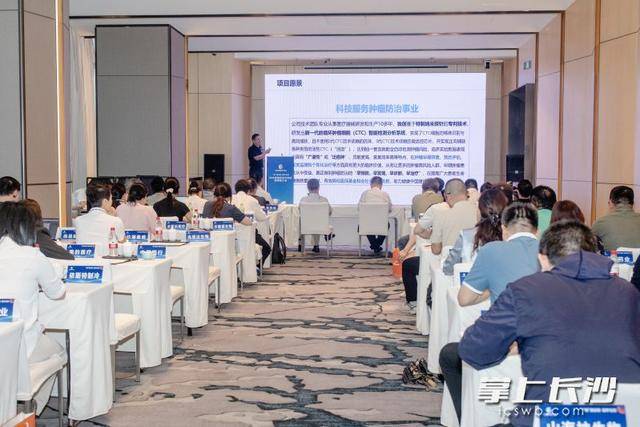
Core Viewpoint - The event "湘遇金陵,圆梦金霞" aims to attract investment in the medical device sector by showcasing the advantages of the Changsha Jinxia Economic Development Zone, highlighting its favorable business environment and existing industry resources [1][3]. Group 1: Investment Attraction - The Changsha Jinxia Economic Development Zone's investment team visited Nanjing, presenting a 2 billion yuan industrial mother fund to connect with resources in the Yangtze River Delta medical device sector [1]. - The event attracted 54 enterprises, resulting in 5 confirmed cooperation intentions, indicating a positive response from potential investors [1][3]. Group 2: Successful Case Studies - The chairman of Hunan Aimerke Medical Device Co., Ltd. shared a successful case of rapid establishment, completing the process from negotiation to operational setup in just two months, showcasing the efficient business environment [3]. - The company has developed a cleanroom, laboratory, and intelligent storage system, with plans to integrate AI technology, positioning itself as a leading third-party medical device CDMO platform in China [3]. Group 3: Industry Resources and Support - The Jinxia Economic Development Zone hosts over 900 biopharmaceutical companies, including more than 500 medical device firms, with several top national pharmaceutical distribution companies establishing regional headquarters there [3][4]. - The zone collaborates with local hospitals and universities to promote industry-academia cooperation, facilitating the commercialization of research outcomes [3]. Group 4: Future Collaboration and Development - The zone's leadership expressed a desire for deeper cooperation in technology commercialization, supply chain collaboration, and market development within the biopharmaceutical industry [4]. - Jinxia is committed to providing comprehensive support for projects, including funding, technology, and infrastructure, to attract more businesses [5].
大型超市纷纷倒下,老百姓真的已经不需要了?4大原因太现实
Xin Lang Cai Jing· 2025-09-23 16:29
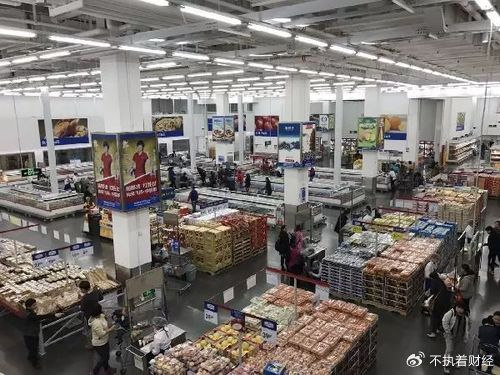
Core Viewpoint - The decline of large supermarkets in China is attributed to various factors, including the rise of online shopping, the emergence of community stores and convenience stores, the advent of new retail models, and operational issues within the supermarkets themselves [3][12]. Group 1: Reasons for Decline - The first reason is that young consumers prefer online shopping due to lower prices and home delivery, with online retail sales reaching 6.8 trillion yuan in the first half of the year, a year-on-year increase of 16.5% [5]. - The second reason is the rise of community stores and convenience stores, which cater to consumers' needs for quick and easy access to daily necessities, especially for those with limited time [7][8]. - The third reason is the emergence of new retail models, such as Hema and Dingdong Maicai, which combine online ordering with the convenience of physical stores, leading to a projected market size of 1.8 trillion yuan by 2025, a growth of 32.5% from 2024 [10]. - The fourth reason is operational challenges faced by large supermarkets, including high costs related to rent and labor, and severe product homogenization, which leads to market share loss to competitors and e-commerce platforms [12]. Group 2: Future Strategies for Supermarkets - Large supermarkets should identify their unique advantages and specialties, such as increasing the proportion of imported goods and enhancing the supply of fresh products to cultivate loyal customer bases [12][14]. - Establishing their own e-commerce platforms for synchronized online and offline sales is crucial, utilizing big data to understand consumer needs and provide targeted products and services [14]. - Optimizing supply chain management by reducing intermediaries and directly sourcing from manufacturers can help lower procurement costs, enabling supermarkets to offer better prices and attract more loyal consumers [14].
老百姓不消费,政府“反内卷”再给力也白搭!稳物价还差关键一步
Sou Hu Cai Jing· 2025-09-23 12:39
Group 1 - The government has implemented measures against "involution" to address vicious competition in industries such as coal and photovoltaics, leading to a narrowing of industrial product price declines and signs of core price recovery [1][5][7] - "Involution" refers to companies engaging in price wars to gain market share, resulting in reduced profits and lower product quality, which ultimately suppresses prices [3][5] - The reduction in price declines is evident in various sectors, including coal processing and steel, where prices have stabilized, and even in the new energy sector, where price drops have slowed [5][10] Group 2 - The approach to "involution" is distinct from past supply-side adjustments, focusing on a broader range of industries and employing more flexible methods rather than simply cutting production capacity [9][10] - The government has introduced regulations to prevent low-price dumping and has created a blacklist for companies engaging in vicious competition, aiming to stabilize the market [12][14] - The strategy not only addresses existing competition issues but also encourages innovation and quality improvement among companies, shifting the focus from price competition to technological and brand superiority [14][16] Group 3 - Despite improvements on the supply side, achieving the 2% inflation target requires addressing demand-side issues, as consumer spending remains low and investment willingness from companies is weak [16][18] - The current economic environment shows a disparity between production recovery and consumer spending, leading to an oversupply situation [18][24] - To stimulate demand, policies should encourage consumer spending, particularly in services, and support employment initiatives for young people to increase disposable income [19][21][24]