
三星电子

Search documents
突发,暴跌!全线大跳水!AI恐慌交易,接连引爆!
券商中国· 2026-02-13 06:12
Core Viewpoint - The logistics sector has become the latest victim of "AI panic trading," following significant declines in software and financial sectors, with major logistics stocks experiencing sharp drops in both US and European markets [1][4][6]. Group 1: Market Reactions - On February 12, the Russell 3000 Trucking Index fell by 7.8%, with Robinson Global Logistics (CHRW) dropping over 14% and Expeditors International (EXPD) declining over 13% [1][4]. - In the A-share market, several transportation stocks also saw significant declines, with China Ocean Shipping Energy (中远海能) down over 8% and China Merchants South Oil (招商南油) down nearly 7% [1][3]. - The sell-off in logistics stocks was primarily influenced by the overnight plunge in US and European logistics stocks [4][6]. Group 2: AI Impact - The recent sell-off was triggered by Algorhythm Holdings' announcement that its SemiCab platform could increase freight volume by 300% to 400% without adding operational staff, leading to a surge in its stock price by nearly 79% at one point [4][5]. - Algorhythm's CEO emphasized that the logistics industry has been historically limited by human resources, and their platform aims to break this dependency by embedding intelligence directly into freight operations [5]. Group 3: Broader Market Context - Analysts noted that the current AI "super cycle" is reshaping global industry dynamics, intertwining technological benefits with market anxieties [2][6]. - The panic selling is not limited to technology stocks; any sector associated with AI news is experiencing similar reactions, indicating a broader market trend of fear and uncertainty [7][8]. - The ongoing turmoil in the market has not yet significantly impacted discussions on monetary policy, but prolonged volatility could change this [8].





铠侠翻身仗:打破定价枷锁,NAND价格1季度有望暴涨50%
美股IPO· 2026-02-13 04:53
Daishin Securities估计,从2026年第一季度开始,针对北美客户的修订定价政策将生效,ASP预计环比提升约50%。这标志着铠侠摆脱历史遗留 约束的关键时刻,也是移动NAND价格正常化的拐点。摩根士丹利更为激进地预计,铠侠一季度ASP将环比飙升近90%,调整后毛利率将达到 66%。铠侠翻身更为整个NAND行业释放了强劲信号,高盛预期三星电子和SK海力士盈利能力将大幅改善。 日本存储芯片制造商铠侠正在摆脱长期压制其盈利能力的定价困境。在AI推理需求推动、供应纪律增强和产能受限的多重因素下,NAND闪存市场 正迎来史无前例的涨价周期,铠侠的突破性定价调整标志着行业格局的重要转折。 Daishin Securities最新指出,铠侠从2026年第一季度开始执行修订后的定价政策,预计北美主要客户的平均销售价格(ASP)将环比飙升约50%。这标 志着铠侠终于打破了此前因长期合同约束而被迫以低于市场水平供货的局面,也意味着移动NAND ASP正在恢复正常水平。 摩根士丹利的数据更为激进。该行将铠侠2026日历年ASP涨幅预期从同比增长75%大幅上调至超过100%,并预计一季度ASP将环比飙升近90%,随 后 ...

5天超120%!龙头股飙涨,历史新高
Xin Lang Cai Jing· 2026-02-13 04:51
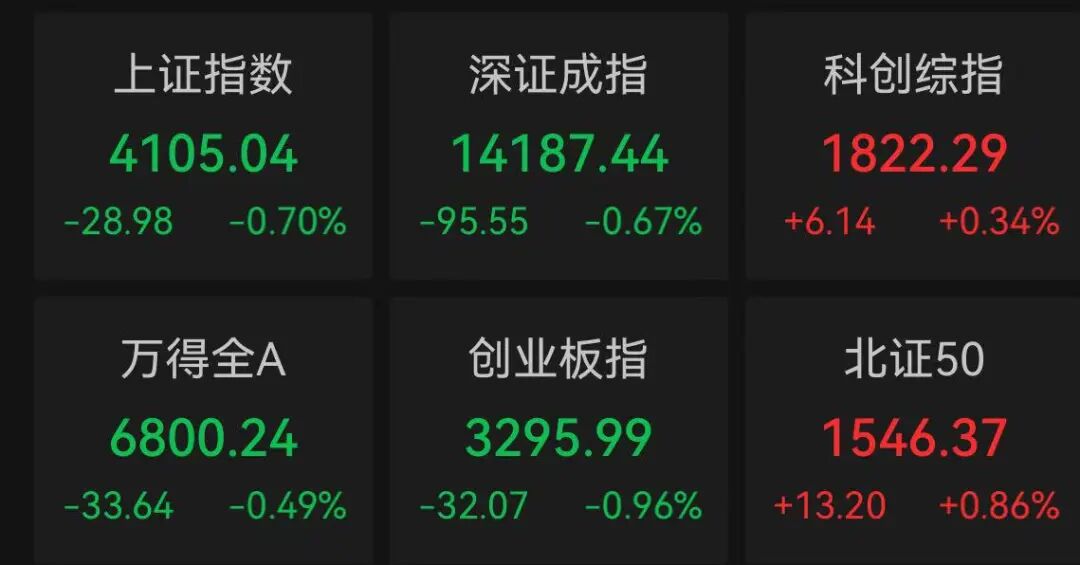
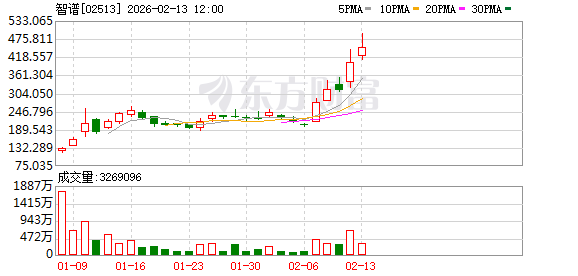
近日,中国证监会网站更新了智谱公司的IPO辅导进展信息。根据最新辅导备案报告,智谱拟冲刺科创板,IPO辅导机构为国泰海通证券和中金公司两家 券商。 半导体产业链走强 今天上午,半导体产业链表现活跃,光刻机、存储芯片、先进封装等板块上涨。存储芯片板块中,朗科科技、精测电子等个股大涨。 今天上午,A股调整,半导体产业链、汽车产业链表现活跃,军工股反弹。 截至上午收盘,上证指数下跌0.7%,深证成指下跌0.67%,创业板指下跌0.96%,科创综指上涨0.34%。 | 上证指数 | 深证成指 | 科创综指 | | --- | --- | --- | | 4105.04 | 14187.44 | 1822.29 | | -28.98 -0.70% | -95.55 -0.67% | +6.14 +0.34% | | 万得全A | 创业板指 | 北证50 | | 6800.24 | 3295.99 | 1546.37 | | -33.64 -0.49% | -32.07 -0.96% | +13.20 +0.86% | 智谱再创历史新高 港股智谱上午大涨11.89%,股价再创历史新高,本周已累计涨超120%,最新市值达到 ...
5天超120%!龙头股飙涨 历史新高
Zhong Guo Zheng Quan Bao· 2026-02-13 04:50
Market Overview - The A-share market experienced a decline, with the Shanghai Composite Index down by 0.7%, the Shenzhen Component Index down by 0.67%, and the ChiNext Index down by 0.96%. However, the Sci-Tech Innovation Board Index saw an increase of 0.34% [2]. Semiconductor Industry - The semiconductor industry chain showed strong performance, particularly in sectors such as photolithography machines, memory chips, and advanced packaging. Notable stocks like Langke Technology and Jingce Electronics saw significant gains [4][8]. - The stock of Zhiyuan Technology surged by 11.89%, reaching a new historical high, with a market capitalization of HKD 200.54 billion. The company announced a structural adjustment in its GLM Coding Plan pricing, with an overall increase starting from 30% [4]. Automotive Industry - The automotive industry chain also performed well, with sectors such as auto parts, smart cockpits, and vehicle networking showing increases. The automotive parts sector rose by 0.71% [9][10]. - Recent favorable industrial policies, including the development of mandatory national standards for intelligent connected vehicles, are expected to enhance the regulatory environment for the industry. Additionally, advancements in humanoid robotics are contributing to the sector's growth [10]. Financial Performance of Key Players - Kioxia, a Japanese flash memory manufacturer, reported a revenue of JPY 543.6 billion for the third quarter of fiscal year 2025, marking a year-on-year increase of 20.8% and a quarter-on-quarter increase of 21.3% [7]. - TrendForce forecasts significant price increases in DRAM and NAND flash memory, with DRAM prices expected to rise over 60% in Q1 2026 and NAND prices projected to increase by 55%-60% [7].



770亿美元“弹药”蓄势待发!韩国“蚂蚁军团”携巨量资金回流 力撑韩股再续涨势
Zhi Tong Cai Jing· 2026-02-13 03:53
Group 1 - South Korean retail investors are preparing to return to the domestic stock market with a record amount of funds, aiming to chase returns in one of the hottest markets globally [1] - The available funds for stock purchases reached a historical high of 111 trillion KRW (approximately 77 billion USD), indicating a shift in investment direction among retail investors [1] - The Korean benchmark Kospi index has surged 31% year-to-date, outperforming global indices, with local institutions being the largest net buyers in this rally [1] Group 2 - President Lee Jae-myung is focusing on boosting stock market valuations and encouraging local retail investors, known as the "ant army," to shift funds from real estate and overseas markets to domestic stocks [2] - The number of active stock trading accounts in South Korea has surpassed 100 million for the first time, reflecting the effectiveness of promotional efforts by brokerages [2] - The introduction of the "Reshoring Investment Account" policy allows investors to receive up to 100% capital gains tax exemption if they reinvest profits from overseas stocks into the domestic market [2] Group 3 - South Korean regulators are preparing to approve single-stock ETFs to attract retail investors seeking leveraged returns, with a leverage cap set at two times [3] - The most favored stocks among retail investors include Hyundai Motor, SK Hynix, and Samsung Electronics, benefiting from strong corporate earnings driven by the AI boom [3] - The Korean market is experiencing a revival due to government-led initiatives and robust earnings in sectors like semiconductors, meeting investor expectations [3]
字节芯片团队已隐秘扩充;影石回应年会送房送车丨新鲜早科技
2 1 Shi Ji Jing Ji Bao Dao· 2026-02-13 03:52
Group 1: Technology Developments - ByteDance's chip team has expanded to over 1,000 members, with more than 500 focused on AI chips and around 200 on CPU development, indicating a strong emphasis on chip business due to increasing demand for computing power [2] - JD Technology has launched "JD AI Payment," which utilizes the JoyAI model for various hardware and software applications, enabling AI-assisted payment processes [4] - Baidu has officially launched OpenClaw, an e-commerce plugin that integrates its product knowledge graph with CPS supply chain capabilities, allowing for a streamlined shopping experience [5] - Gaode is set to release its self-developed embodied navigation base model, which has made significant advancements in handling complex tasks in open physical environments [6] Group 2: Corporate Announcements and Events - YingShi Innovation held an annual meeting where it rewarded employees with real estate and cars, showcasing the importance of material incentives alongside personal achievements [3] - Former Honor CEO Zhao Ming announced his new role at Qianli Technology, expressing excitement about contributing to AI business development [9] - Anthropic has completed a funding round at a valuation of $380 billion, raising $30 billion to enhance its enterprise products and models, with annual revenue now at $14 billion [11] - RoboScience has secured several hundred million in Pre-A financing, led by PwC Capital, indicating strong investor interest in machine science [12] Group 3: Product Launches and Innovations - Xiaomi has open-sourced its first-generation robot VLA model, which features 4.7 billion parameters and capabilities in visual language understanding and real-time execution [13] - MiniMax has launched its latest programming model, MiniMaxM2.5, which is positioned as a leading solution in various productivity scenarios, boasting a parameter count of only 10 billion for efficiency [14]
字节芯片团队已隐秘扩充;影石回应年会送房送车丨科技风向标
2 1 Shi Ji Jing Ji Bao Dao· 2026-02-13 03:49
Group 1: Technology Developments - ByteDance's chip team has expanded to over 1,000 members, with more than 500 focused on AI chips and around 200 on CPU development, indicating a strong emphasis on chip business amid increasing demand for computing power [2] - JD Technology has launched "JD AI Payment," which utilizes the JoyAI model for various hardware and software applications, enabling AI-assisted payment processes [4] - Baidu has officially launched OpenClaw, an e-commerce plugin that integrates its product knowledge graph with CPS supply chain capabilities, allowing for a streamlined shopping experience [5] - Gaode is set to release its self-developed embodied navigation base model, claiming to have built the largest embodied navigation data engine in the industry [6] - Xiaomi has announced the open-sourcing of its first-generation robot VLA model, which features 4.7 billion parameters and capabilities in visual language understanding [13] Group 2: Corporate Actions and Investments - Anthropic has completed a funding round, raising $30 billion at a valuation of $380 billion, nearly doubling its previous valuation and positioning it among the most valuable private tech companies globally [11] - RoboScience has announced the completion of a Pre-A round financing, raising several hundred million yuan, with participation from multiple investment firms [12] - Former Honor CEO Zhao Ming has joined Qianli Technology, expressing a long-term commitment to AI as a significant area for future investment [9] Group 3: Market Trends and Consumer Behavior - Taobao's flash sale platform reported that nearly half of the orders from its AI assistant, Qianwen, came from county-level cities, highlighting the growing adoption of AI in e-commerce [7] - Xiaohongshu has announced that AI-generated content must be clearly labeled, aiming to maintain user trust and transparency within the community [8] Group 4: Product Launches and Innovations - Insta360's CEO showcased the "Luna," a handheld gimbal camera set to launch in mid-2026, which is expected to be the first in the market with telephoto capabilities [3] - Samsung Electronics has begun mass production of HBM4 memory, anticipating a threefold increase in sales by 2025 and planning to expand HBM4 production capacity [10]
内存价格翻倍上涨,涨价还是减配,手机行业进退两难
3 6 Ke· 2026-02-13 03:33
Core Insights - The rapid increase in memory prices since Q4 2025 has significantly raised costs for smartphone manufacturers, leading to a potential retreat in the industry as companies face tough choices between raising prices or reducing specifications [1][5][8] - Counterpoint research indicates that memory prices may rise by approximately 40% before Q2 2026, further increasing material costs for manufacturers [2] - The smartphone market is experiencing a shift, with manufacturers adjusting their strategies to cope with rising costs, leading to a potential decline in overall market volume and increased competition among brands [8][10] Price Increases and Cost Management - Recent statistics show that new models from brands like Xiaomi, OPPO, and vivo have seen price increases ranging from 100 to 600 yuan compared to previous models, with mid-range models experiencing a price gap increase from 300 to between 400 and 600 yuan [3] - Memory typically accounts for 15% of a smartphone's Bill of Materials (BoM), rising to 20% in mid-range models, while most Chinese smartphone brands have hardware gross margins between 10% and 20% [4] - The price of the mainstream "12GB+256GB" memory configuration has surged by 75% over the past year, raising concerns about consumer willingness to absorb these costs [5] Market Dynamics and Manufacturer Strategies - The pressure from rising memory costs is affecting upstream suppliers, with manufacturers reluctant to pass on costs to consumers for fear of reduced sales, leading to downward adjustments in business plans for 2026 [6][7] - Manufacturers are increasingly focusing on structural adjustments to manage costs, such as changing suppliers or reducing specifications in less noticeable areas [5][7] - The competition is intensifying, with leading brands like Apple and Samsung having more leverage due to their financial stability and long-term supply agreements, while smaller brands face greater challenges [7][8] Market Outlook and Future Trends - The smartphone market in China is projected to see a slight decline in shipments, with major brands like Xiaomi and OPPO reducing their 2026 order quantities by over 20% [8][10] - The trend of "flagship-ifying" mid-range models is reversing, as manufacturers face supply pressures and must focus on high-end models and overseas markets for growth [10] - The global smartphone market is expected to enter a phase of "scale contraction and price increase," with IDC and Counterpoint predicting at least a 2% decline in global smartphone sales this year [10]


华尔街AI恐慌成亚洲芯片股福音,全球资金转向上游“卖铲人”
智通财经网· 2026-02-13 03:32
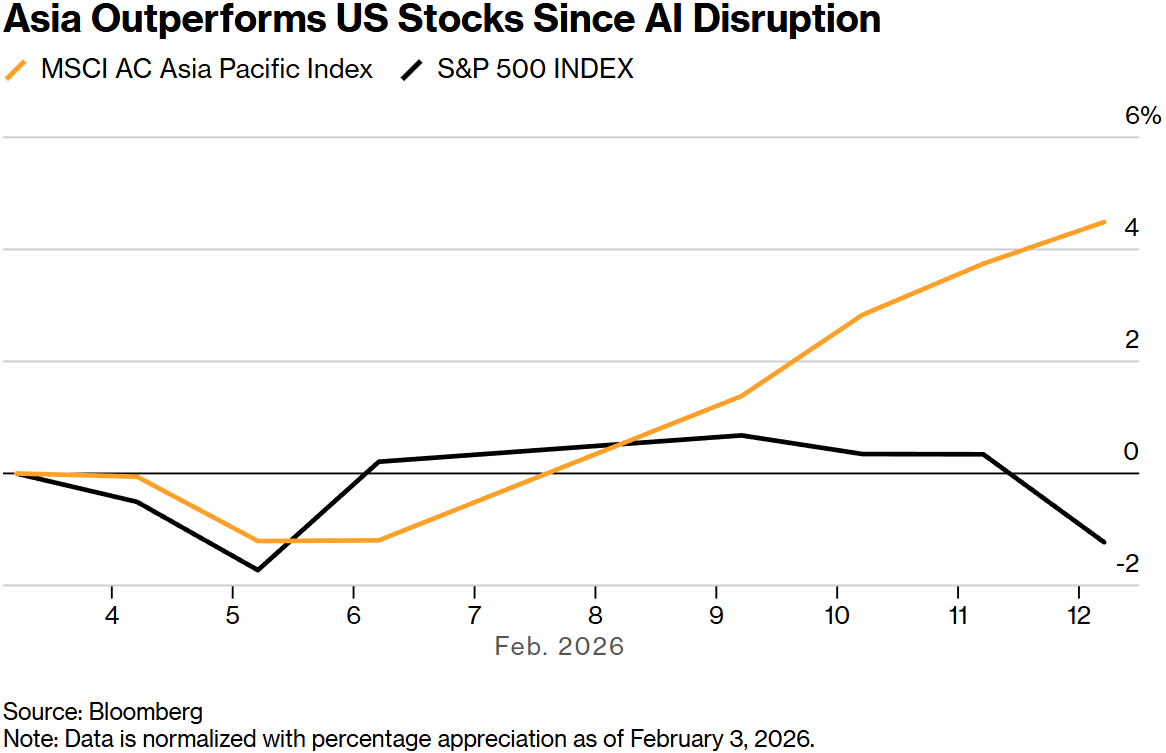
Group 1 - The fear of AI-driven business disruption in Wall Street is turning into a boon for Asian stock markets, boosting demand for leading chip manufacturers in the region [1] - The MSCI Asia-Pacific Index has risen over 12% since 2026, contrasting sharply with the decline of U.S. benchmark indices, where the S&P 500 is down 0.2% and the Nasdaq 100 has dropped about 2% this year [1] - The shift in global capital preferences is moving from AI pioneers with heavy expenditures to hardware manufacturers with strong pricing power, many of which are located in Asia [1] Group 2 - Asia is home to many advanced chip manufacturers and semiconductor foundries crucial for AI infrastructure, which has contributed to its resilience during recent Wall Street downturns [5] - Samsung Electronics recently recorded its largest overseas buying, leading to a 6.4% increase in its stock price, while Taiwan stocks saw their third-highest weekly purchase volume [5] - The Nasdaq 100 index has dropped 4.6% over the past 10 trading days, with a market value loss exceeding $15 billion due to sell-offs in software stocks perceived to be at risk from new AI tools [5] Group 3 - TSMC holds nearly 45% weight in the Taiwan Weighted Index, three times its level a decade ago, while Samsung Electronics and SK Hynix together account for nearly 40% of the Korean Kospi index [6] - The "AI panic trading" has impacted U.S. real estate service stocks and insurance brokers significantly, but Asian markets have been less affected due to slower responses from local companies to advanced technologies [6] - The correlation between Asian and U.S. stock markets has dropped to 0.43, the lowest level since June 2022 [9] Group 4 - Indian tech service companies, including Infosys Ltd., have also seen declines during recent sell-offs, indicating that Asia is not entirely insulated from global turmoil [10] - However, due to the different roles local companies play in the AI ecosystem, cheaper valuations, and stronger earnings growth, Asian stock markets are expected to continue outperforming [10] - Investment firms are focusing on chip manufacturers like TSMC, viewing them as key players in the AI-driven market [10]

存储巨头铠侠全年指引大超预期,高“设备”含量的科创半导体ETF(588170)强势上涨
Mei Ri Jing Ji Xin Wen· 2026-02-13 03:32
Group 1 - The core viewpoint of the news highlights a strong performance in the semiconductor materials and equipment sector, with significant increases in various indices and ETFs [1][2][4] - The STAR Market Semiconductor Materials and Equipment Theme Index rose by 2.45%, with notable gains from stocks such as Fuchuang Precision (+14.61%) and Huaxing Yuanchuang (+5.58%) [1] - The China Securities Semiconductor Materials and Equipment Theme Index increased by 2.54%, with Fuchuang Precision showing a 15.05% rise [1] Group 2 - The STAR Market Semiconductor ETF (588170) saw a 2.44% increase, reaching a latest price of 1.8 yuan, with a turnover of 4.94% and a transaction volume of 4.09 billion yuan [1] - The Semiconductor Equipment ETF (Huaxia, 562590) also increased by 2.41%, with a latest price of 1.95 yuan and a turnover of 3.99% [1] - Over the past week, the STAR Market Semiconductor ETF experienced a significant growth of 2.12 billion yuan in scale, leading its peers [1] Group 3 - In terms of capital flow, the STAR Market Semiconductor ETF recorded a net inflow of 1.49 billion yuan over the last three days, with a peak single-day inflow of 1.17 billion yuan [2] - In the past 23 trading days, there were 15 days of net inflow, totaling 9.44 billion yuan, with an average daily net inflow of 410.52 million yuan [2] - Conversely, the Semiconductor Equipment ETF (Huaxia) faced a net outflow of 20.96 million yuan recently [2] Group 4 - Kioxia, a major player in the storage market, reported a revenue of 543.6 billion yen for the quarter ending December 31, 2025, an increase of 95.3 billion yen from the previous quarter, driven by higher average selling prices and bit shipments [3] - The company's operating profit for the quarter was 142.8 billion yen, up 56.8 billion yen from the previous quarter, with a net profit of 87.8 billion yen, reflecting a growth of 47.1 billion yen [3] - Kioxia expects its annual operating profit to range between 709.57 billion yen and 799.57 billion yen, exceeding market expectations [3] Group 5 - The storage market has continued its strong upward trend since Q4 2025, with DRAM and NAND flash prices rising significantly, driven by increased demand from AI servers and data center capital expenditures [4] - Major manufacturers like Samsung and SK Hynix have raised contract prices for NAND flash by over 100% and DRAM prices by 60%-70% [4] - The current price increase cycle is expected to continue until mid-2026 due to persistent supply-demand gaps [4]