吉利

Search documents
金九卖车榜来了零跑狂飙超6万辆极氪9X 13分钟大定破万理想垫底蔚小理
Xin Lang Cai Jing· 2025-10-05 07:54
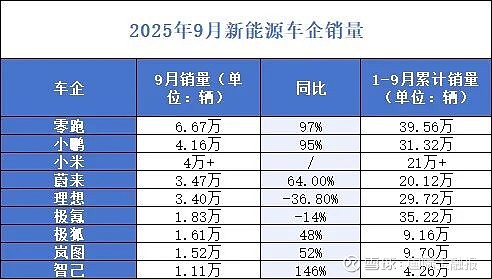
Core Insights - The automotive industry is experiencing a surge in sales as companies rush to capitalize on the "golden September and silver October" period, with over 70 new models launched in September, predominantly SUVs [1] Group 1: New Energy Vehicle Sales - In September, new energy vehicle companies saw significant sales growth, with Li Auto's deliveries declining while others like Leap Motor, Xpeng, and Xiaomi achieved record numbers [2][3] - Leap Motor's sales reached approximately 66,770 units, marking it as the first new force brand to surpass 60,000 monthly sales [3] - Xpeng delivered 41,670 units in September, a 95% year-on-year increase, with a total of 312,000 units delivered in the first nine months [4] - Xiaomi also broke the 40,000 monthly delivery mark for the first time, indicating strong growth potential [4] Group 2: Company Performance - NIO delivered about 34,700 vehicles in September, a 64% increase year-on-year, with a total of 201,200 units delivered in the first nine months [4] - Li Auto's September deliveries were 34,000 units, showing a 19% month-on-month increase but a nearly 40% decline year-on-year [6] - Zeekr's sales reached 18,300 units in September, with a strong pre-sale performance for its flagship model, the Zeekr 9X [8] - The brand's rapid growth is attributed to its comprehensive product lineup, with the C10 and C16 models leading in their respective categories [3] Group 3: Traditional Automakers - BYD's September sales slightly decreased by 5.52% to 396,300 units, primarily due to a significant drop in plug-in hybrid vehicle sales [11] - Great Wall Motors achieved sales of 133,600 units in September, a 23.29% increase, with both new energy and overseas sales reaching new highs [11] - Geely's sales reached 273,100 units in September, a 35% year-on-year increase, with new energy vehicle sales growing by 81.27% [11]






“金九”卖车榜来了:零跑狂飙超6万辆,极氪9X 13分钟大定破万
Guo Ji Jin Rong Bao· 2025-10-05 07:19
Core Insights - The automotive industry is experiencing a surge in new vehicle launches, particularly in the SUV segment, as companies aim to boost sales during the "golden September and silver October" period [1] Group 1: New Energy Vehicle Sales - In September, several new energy vehicle companies reported significant sales growth, with Li Auto being a notable exception [3][6] - Leap Motor achieved a monthly delivery of approximately 66,700 units, marking a record for the brand and contributing to a cumulative total of 395,670 units for the year, achieving 60% to 68% of its annual target [3] - Xiaopeng Motors delivered 41,600 units in September, a 95% year-on-year increase, with a total of 312,700 units delivered in the first nine months, reaching 82.37% of its annual target [4] - Xiaomi also surpassed 40,000 units in September deliveries, indicating a potential increase in sales for the remaining months of the year [4] Group 2: Performance of Established Brands - NIO delivered approximately 34,700 vehicles in September, a 64% increase year-on-year, with a total of 201,200 units delivered in the first nine months, achieving 45.73% of its annual target [5] - BYD's September sales slightly decreased by 5.52% to 396,300 units, primarily due to a significant drop in plug-in hybrid vehicle sales [11] - Geely and Great Wall Motors both reported record sales in September, with Geely achieving 273,100 units, a 35% year-on-year increase, and Great Wall Motors reaching 133,600 units, a 23.29% increase [11] Group 3: Emerging Brands and Market Trends - Zeekr's sales reached 18,300 units in September, driven by the launch of its flagship model, the Zeekr 9X, which saw high pre-order numbers [8] - The overall market is witnessing a trend where new energy vehicles are gaining traction, with companies like Geely achieving a 60.49% penetration rate in September [11] - The competitive landscape is intensifying as new entrants and established brands alike strive to capture market share in the rapidly evolving automotive sector [1][3][11]
9月新势力销量:理想同比下滑37%,老车型增长乏力
凤凰网财经· 2025-10-03 13:44
Core Insights - The article discusses the significant changes in the new energy vehicle (NEV) market in September 2025, highlighting the competitive landscape among various brands and their delivery volumes [2][34]. - It emphasizes the rise of brands like Leap Motor and Xiaomi, while traditional automakers face challenges in the NEV segment [34][35]. Delivery Rankings - Leap Motor leads with 66,657 units delivered, a 97% year-on-year increase, followed by XPeng with 41,581 units (95% increase) and AITO with 40,619 units (14% increase) [3][4]. - Xiaomi's delivery surpasses 40,000 units for the first time, marking a 300% year-on-year increase, indicating improved production capacity [5][20]. - NIO ranks fifth with 34,749 units delivered, showing a 64% year-on-year growth, while Li Auto ranks sixth with 33,951 units, down 37% year-on-year [6][29]. Brand Strategies - Leap Motor's strategy focuses on offering high-value features at competitive prices, appealing to cost-conscious consumers [11][15]. - XPeng's growth is attributed to aggressive promotional financing policies, although concerns about profitability remain due to high discounting [15][35]. - AITO maintains a strong position in the high-end market, with its models contributing significantly to its sales [16][19]. Market Dynamics - The article notes that traditional automakers' NEV brands are growing but struggle to compete with the top new energy players [8][34]. - The monthly delivery threshold for leading brands has risen to 40,000 units, creating a competitive barrier for those unable to meet this volume [8][34]. Future Trends - The article identifies key trends such as the mainstream adoption of range-extended technology and the increasing competitiveness of traditional luxury brands in the NEV market [35][36]. - It suggests that the future winners in the NEV market will be those who can balance cost control through scale while offering differentiated technological experiences [36][37].

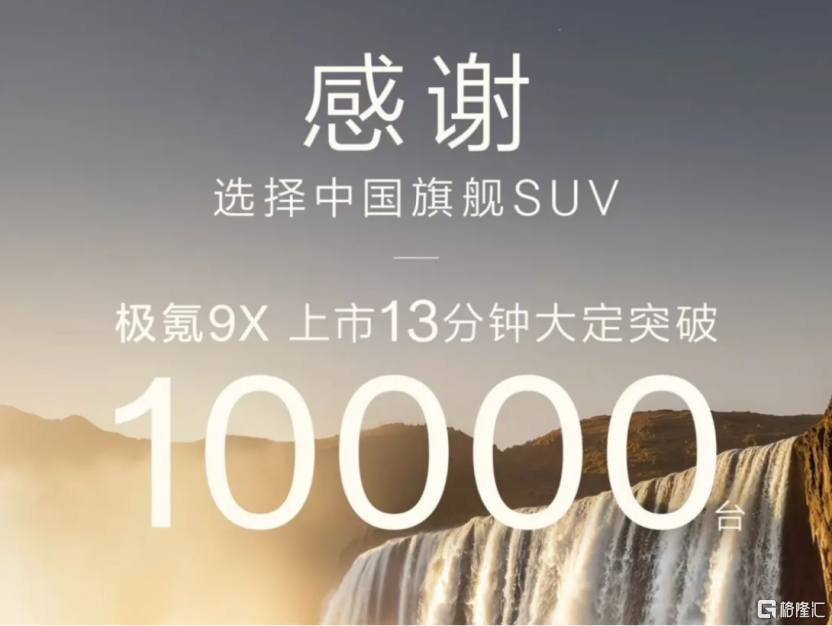
13分钟大定破万、击穿超豪华市场壁垒,为何是极氪9X做到了?
Ge Long Hui· 2025-10-01 08:27
Core Insights - The launch of the Zeekr 9X marks a significant shift in the Chinese luxury automotive market, transitioning from a focus on scale to value, and aims to redefine the standards of the ultra-luxury SUV segment [1][3][10] Product Launch and Market Reception - The Zeekr 9X, priced around 500,000 RMB, received overwhelming market interest, achieving over 10,000 pre-orders within 13 minutes of its launch [1] - The vehicle is positioned as a "blockbuster" in the ultra-luxury market, indicating strong consumer demand and market potential [1] Technological Advancements - The Zeekr 9X features a unique 900V high-voltage hybrid architecture and a self-developed tri-motor system, delivering over 1,400 horsepower, equivalent to three traditional V12 engines, with a 0-100 km/h acceleration time of around 3 seconds, making it the fastest hybrid SUV globally [5][9] - It incorporates a 70 kWh battery that offers a pure electric range of up to 380 km, with a total range exceeding 1,000 km, addressing the dual needs of luxury users for electric experience and anxiety-free long-distance travel [7][9] User Experience and Safety Features - The vehicle redefines luxury user experience by ensuring consistent performance across various driving conditions, with minimal performance loss even in low battery states [7] - Advanced safety features include a digital chassis with a 48V active stabilizer and a robust body structure, enhancing handling and safety during high-speed maneuvers [5][9] Market Positioning and Brand Strategy - The Zeekr brand aims to establish itself as a benchmark in the high-end market, reflecting a broader trend of Chinese brands moving up the value chain in the global automotive industry [3][10] - The Zeekr 9X, alongside the Zeekr 009, forms a dual flagship strategy that enhances the brand's luxury positioning and showcases China's ability to compete in the high-end automotive sector [10][12] Industry Impact and Future Outlook - The success of the Zeekr 9X is seen as a milestone for the Chinese automotive industry, indicating a shift from scale expansion to technology-driven growth [13] - With over 500,000 units delivered and an average price of 300,000 RMB, Zeekr has established itself in the luxury market, demonstrating the potential for Chinese brands to disrupt traditional luxury automotive value systems [13]
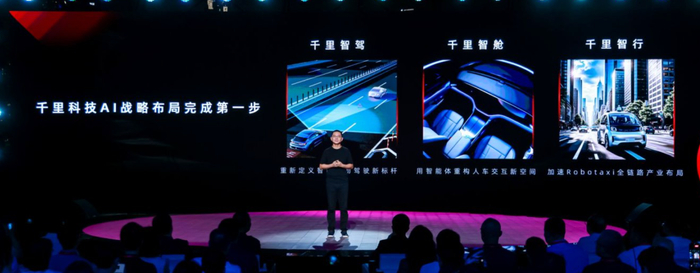
千里科技董事长印奇:“亿级出货”是芯片可持续迭代的关键
第一财经网· 2025-09-29 12:05
Core Viewpoint - The integration of AI technology with the automotive industry is at a historic turning point, with significant advancements expected in smart driving and smart cockpit systems driven by AI models [3][4]. Group 1: Industry Trends - Major industry players like OpenAI, Qualcomm, Huawei, and Alibaba are actively discussing trends in edge AI and computing power growth [3]. - The automotive sector is increasingly merging AI technology, with a focus on enhancing user experience through intelligent driving and cockpit systems [3][4]. Group 2: Company Strategy - The company aims to release an L4-level smart driving solution by mid-next year and collaborate with Geely to develop dedicated hardware for Robotaxi [4]. - Plans include launching a commercial Robotaxi service in 10 cities globally within the next 18 months, with over 1,000 Robotaxis deployed in a single city to achieve commercialization [4]. Group 3: Technical Insights - The current size of mainstream in-vehicle intelligent driving models is in the 10 billion parameter range, while large language models range from 100 to 1,000 billion parameters [4]. - The company identifies a significant growth opportunity in applying large language models and multi-modal models to intelligent driving, which could unlock substantial incremental value [4][5]. Group 4: Challenges and Considerations - The industry faces challenges in computing power and data availability, with current in-vehicle computing capabilities limited compared to cloud computing [5]. - There is a belief that the industry is overly focused on chips, as AI chips are simpler in design compared to traditional CPUs and GPUs, and the future lies in sustainable business models rather than just chip production [5][6].

科力装备(301552.SZ):抗VOC污染吸光涂层技术,已成功应用于小米、吉利、奇瑞、大众等多家车企的相关车型
Ge Long Hui· 2025-09-29 07:08
Core Viewpoint - The company has successfully applied its anti-VOC pollution absorption coating technology in various automotive models for several major car manufacturers, indicating strong market demand and supply capability [1] Company Summary - The company has collaborated with notable automotive brands such as Xiaomi, Geely, Chery, and Volkswagen, showcasing the effectiveness and acceptance of its technology in the industry [1] - The current supply of materials for the coating technology is sufficient to meet customer demands, reflecting the company's operational readiness and capacity [1]
世界新能源汽车大会推动汽车产业智能化发展,500质量成长ETF(560500)整固蓄势
Xin Lang Cai Jing· 2025-09-29 02:27
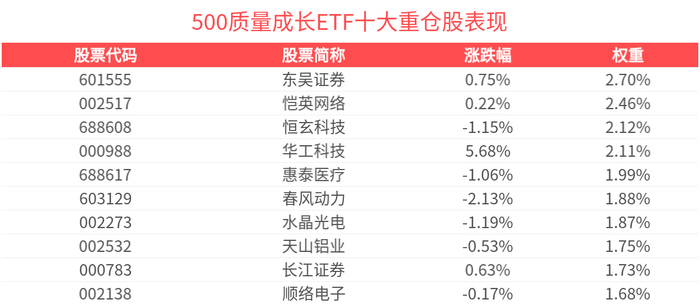
Group 1 - The core viewpoint of the articles highlights the growth and globalization of China's automotive industry, particularly in the context of new energy vehicles and smart technology [1] - The China Automotive Industry is accelerating its globalization, with opportunities and challenges coexisting, as stated by the chairman of Changan Automobile [1] - The share of domestic brands in the passenger car market is expected to exceed 70% by 2025, driven by the acceleration of intelligence and globalization [1] Group 2 - BYD remains the market leader, while brands like Geely and Chery are experiencing double-digit sales growth [1] - New energy vehicles from Huawei and Xiaomi are gaining traction in the high-end market, capturing market share from traditional luxury brands [1] - The year 2025 is anticipated to be a pivotal year for intelligent driving, with high-level intelligent driving features becoming more common in vehicles priced around 200,000 yuan [1] Group 3 - The CSI 500 Quality Growth Index has seen a slight increase of 0.15%, with notable stock performances from companies like Xinquan Co., Ltd. and Keda Li [1] - The top ten weighted stocks in the CSI 500 Quality Growth Index account for 21.48% of the index, with companies like Dongwu Securities and Huagong Technology leading the list [2]

中金:中美信用周期或再迎拐点
中金点睛· 2025-09-29 01:45
Core Viewpoint - The article emphasizes the significance of the credit cycle in analyzing the macroeconomic trends and asset prices in China and the U.S., highlighting the divergence in their economic and monetary cycles since mid-2021. The credit cycle framework helps explain the resilience of U.S. growth and stock valuations under high interest rates, while China's growth and valuations face pressure under low interest rates from 2022 to 2024 [2][4]. Group 1: Credit Cycle Components - The credit cycle consists of three main components: new industrial trends represented by AI, government-led fiscal stimulus, and traditional private sector demand represented by real estate consumption and manufacturing. The effectiveness of the latter two components largely depends on the difference between investment returns and financing costs [2]. - The U.S. credit cycle may restart after the Federal Reserve's interest rate cuts, potentially leading to overheating risks, while China's credit cycle may experience fluctuations or weakness due to high base effects, necessitating increased policy support [4][6]. Group 2: Historical Context and Recent Developments - Since the fourth quarter of last year, both China and the U.S. have experienced turning points in their credit cycles. China's credit cycle has been recovering due to fiscal efforts and reduced private sector drag, while the U.S. has faced challenges leading to credit contraction [5][6]. - In China, significant fiscal stimulus has led to a notable increase in government spending, with a year-on-year growth of 8.9% in broad fiscal expenditure from January to August. The fiscal deficit pulse improved from 1.1% at the end of last year to a peak of 2% in June, before slightly retreating to 1.6% in August [6][8]. Group 3: U.S. Credit Cycle Challenges - The U.S. credit cycle has faced contraction due to various challenges, including reduced fiscal spending and concerns over AI investment sustainability. Despite initial fears, technology investments have accelerated since the second quarter, with capital expenditures of major tech firms increasing by 67% year-on-year [10][12]. - Government credit has contracted since the beginning of the year, with the fiscal pulse declining due to high base effects. The private sector's credit growth has also slowed, with private social financing growth dropping from 2.6% in March to 1.8% in August [15][17]. Group 4: Future Outlook for the U.S. Credit Cycle - Looking ahead, the U.S. credit cycle is expected to recover, driven by AI investments, fiscal spending, and a gradual recovery in traditional private demand. The new fiscal year starting in October is anticipated to see increased government spending, with an estimated $480 billion in new expenditures [24][26]. - Traditional demand is expected to improve following the Federal Reserve's interest rate cuts, with mortgage rates declining and new home sales reaching an annualized rate of 800,000 in August, the highest since January 2022 [30][32]. Group 5: Implications for China - China's credit cycle is likely to face challenges due to high base effects, with traditional private demand showing signs of slowing down. Retail sales growth has declined, and real estate sales remain weak, necessitating policy intervention to support the credit cycle [47][48]. - Fiscal policy will play a crucial role in influencing the overall credit cycle, but it may also face high base challenges. The broad fiscal expenditure growth rate has already shown signs of slowing down, which could impact the effectiveness of fiscal measures [57][58].

智能化产业链更新:地平线黑芝麻及一级公司解读
2025-09-28 14:57
Summary of Conference Call Records Industry Overview - The conference call discusses the intelligent driving industry, focusing on the transition from L2 to L4 automation levels, with key players like Xiaopeng, Geely, Horizon Robotics, and Hezhima actively involved in Robotaxi and Robotman businesses [1][2][4]. Key Points and Arguments Regulatory and Technological Developments - The L2 combination driving scheme national standard has been released, with plans for implementation by 2027, indicating a significant regulatory milestone for the industry [2][4]. - Major automotive companies and suppliers are enhancing their capabilities, with new technology iterations expected in Q4, including Huawei ADS 4.0 and Xiaopeng XOS 5.7.7 [3][8]. Company-Specific Insights - **Horizon Robotics**: - Recently completed a second round of financing amounting to approximately 5 billion RMB (over 800 million USD), with limited impact on stock price but presenting investment opportunities [1][4]. - Aims to increase chip shipments from 2 million in the first half of the year to 4 million for the full year, with a target of 5.5 million for next year [3][9]. - Current market valuation is around 150 billion RMB, corresponding to a 30x price-to-sales (PS) ratio, indicating significant growth potential [3][9]. - **Hezhima**: - Recognized as the second-largest intelligent driving chip supplier in China, with a projected revenue growth of 50-60% next year, despite a lower market valuation of 10x PS [1][5]. - Actively expanding its customer base, including international markets and collaborations with Desay SV [1][5]. Market Dynamics - The self-developed algorithms account for half of the intelligent driving algorithm market, with Momenta leading among third-party suppliers, holding a 60-70% market share [1][6]. - Other notable suppliers include Yuanrong Qixing and Qingzhou Technology, primarily founded by AI talents from Baidu [1][6][7]. Financing and Market Position - **Momenta**: - Plans to go public in the US by the second half of 2025, having raised over 1.2 billion USD in cumulative financing, making it the most funded algorithm supplier in the secondary market [3][10]. - **Yuanrong Qixing and Qingzhou Technology**: - Yuanrong has raised over 500 million USD, with significant investments from Great Wall Motors, while Qingzhou has secured over 200 million USD in financing, primarily from Chery [10]. Competitive Landscape - Major automotive companies are diversifying their partnerships for intelligent driving solutions, with companies like BYD, Geely, and Great Wall Motors collaborating with various algorithm suppliers [14][15]. - The next two years are critical for these companies as they transition from primary to secondary markets, with Horizon and Hezhima already listed and Momenta planning to list soon [14][15]. Additional Important Insights - The intelligent driving chip market is expected to see significant growth, with Horizon's high-end chip G6P anticipated to contribute substantially to revenue in the coming year [9]. - The competitive landscape is characterized by a mix of established players and emerging startups, with ongoing technological advancements driving the market forward [8][11][12].

奔驰13亿砸向重庆AI明星,身体还德国,灵魂得中国
3 6 Ke· 2025-09-28 07:37
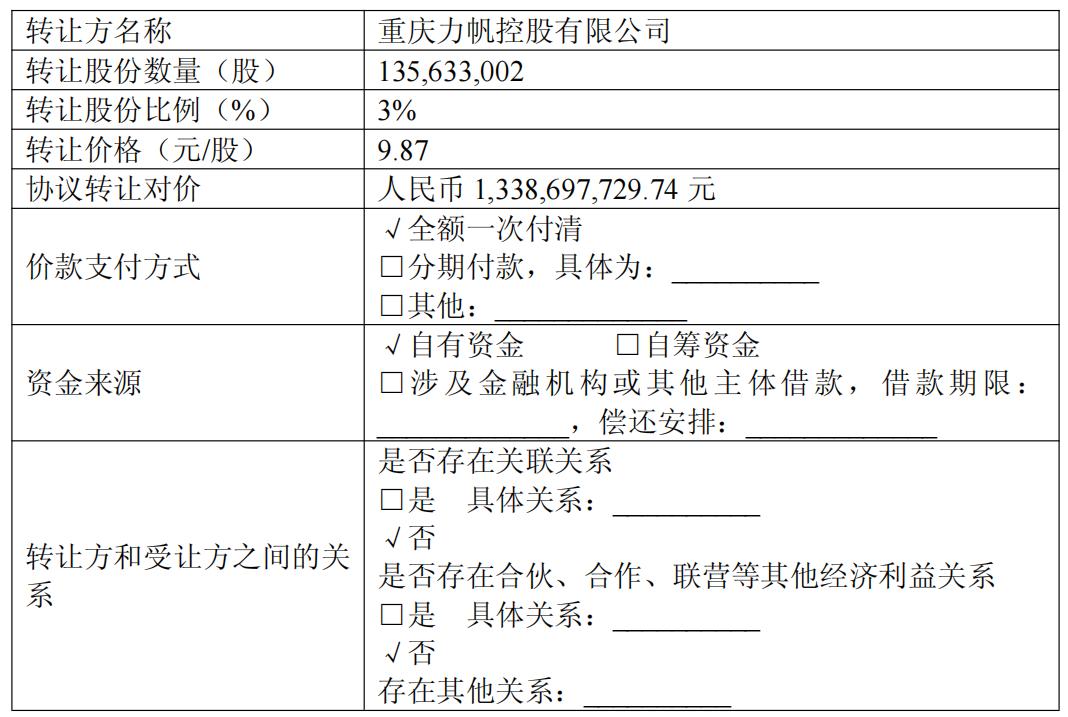
Core Viewpoint - Mercedes-Benz has invested 1.339 billion RMB in Qianli Technology, becoming its fifth-largest shareholder, marking a strategic move towards enhancing its presence in the Chinese smart driving sector [1][2][12]. Group 1: Investment Details - Qianli Technology announced that Chongqing Lifan Holdings transferred 135.63 million shares at a price of 9.87 RMB per share, which is a 25% discount from the previous closing price [2][3]. - After the transaction, Lifan's shareholding in Qianli will decrease from 13.68% to 10.68%, while Mercedes-Benz will hold a 3% stake [3][12]. - The investment is part of Mercedes-Benz's broader strategy to integrate Chinese technology into its operations, following a similar investment in Momenta [15][17]. Group 2: Company Background - Qianli Technology, previously known as Lifan Technology, has undergone significant transformation under the leadership of its new chairman, Yin Qi, who has a strong background in AI and technology [7][9]. - The company is planning to list H-shares on the Hong Kong Stock Exchange, with a board meeting held on September 12 to approve the proposal [11][12]. Group 3: Strategic Implications - The investment is seen as a further alignment between Mercedes-Benz and Geely, which has previously collaborated with Mercedes on various projects [12][14]. - Qianli Technology is expected to provide technical support for upcoming Mercedes models in China, particularly in the electric vehicle segment [13][14]. - The collaboration with Qianli and previous investments in Momenta indicate a shift towards utilizing Chinese technology for smart driving solutions in Mercedes-Benz vehicles [15][19].