
复苏交易

Search documents
2026年外汇市场展望:宽松交易或阶段性回归
2025-12-04 02:21
Summary of Key Points from the Conference Call Industry Overview - The conference call discusses the foreign exchange market outlook for 2026, highlighting the expected return of loose trading conditions and the potential weakening of the US dollar in the first half of 2026, with the dollar index projected to fall to the 90-94 range [2][13]. Core Insights and Arguments - **2025 Market Dynamics**: The US dollar weakened in the first half of 2025 due to tariff uncertainties and fluctuating employment data, leading to a de-dollarization trend. However, by the second half, the dollar rebounded as tariff issues were resolved and the Federal Reserve's rate cuts were fully priced in, resulting in a low volatility environment [3][4]. - **Carry Trade Strategy**: In the current low volatility environment, the primary trading strategy is the carry trade, where investors sell low-yield currencies and buy high-yield currencies. Latin American currencies, such as the Brazilian real and Mexican peso, performed well due to high interest rates [4][5]. - **Factors Influencing 2026 Volatility**: Key factors that may affect volatility in 2026 include changes in US policy expectations, deteriorating employment data, signs of economic recession indicated by PMI indices, and the stance of the new Federal Reserve chairman on interest rates [6][7]. - **Federal Reserve's Potential Actions**: The Federal Reserve may adjust interest rates in response to economic conditions, with a potential for further rate cuts if employment continues to decline. Current forward implied rates suggest a 50-75 basis point reduction is possible [7][8]. - **Global Interest Rate Disparities**: There is a significant difference in the future rate cut potential between the US and other central banks, with the US having more room to cut rates compared to the European Central Bank and the Bank of England. This could narrow interest rate differentials and encourage foreign investment in US assets without significantly increasing the dollar's value [8]. Other Important Considerations - **Upcoming Risks**: Notable risks include the potential for a US government shutdown, which could tighten liquidity, and ongoing tariff issues that may create market volatility. The possibility of the Supreme Court ruling on current tariffs could lead to renegotiations of trade agreements [10][11]. - **Impact of Technology and AI**: The rise of AI technology may enhance productivity but could also lead to demand shrinkage, creating imbalances in the global economy and potentially causing significant fluctuations in financial markets, including the forex market [9]. - **Chinese Yuan Outlook**: The Chinese yuan is expected to appreciate gradually in 2025, supported by stable US-China trade relations and a weak dollar environment. The yuan may fall below 7 against the dollar in the first half of 2026 [14][15]. This summary encapsulates the key points discussed in the conference call, providing insights into the foreign exchange market's dynamics, strategies, and potential risks moving forward.
中金:明年黄金有望延续涨势
Di Yi Cai Jing· 2025-11-10 00:37
Core Viewpoint - The report from CICC indicates that gold is expected to continue its upward trend next year, with structural and cyclical opportunities likely to resonate together [1] Group 1: Economic and Market Factors - The trend of de-globalization and strategic security demands may continue to support the long-term increase in gold reserves by central banks in emerging markets [1] - Changes expected by 2025 will raise the requirements for physical gold inventory construction in regional markets, which may already be reflected in the tightening liquidity of the gold market observed this year [1] Group 2: U.S. Economic Conditions - Economic growth pressures in the U.S. may persist into the first half of next year, with the Federal Reserve having restarted interest rate cuts in September and potentially ending balance sheet reduction by year-end [1] - The ongoing liquidity easing cycle is expected to provide support for investment demand in gold ETFs and other assets, although a shift towards recovery trading may require some time [1] Group 3: Geopolitical Risks - The geopolitical risks associated with the ongoing restructuring of order may not completely dissipate, further supporting the demand for gold as a safe-haven asset [1]
黄金破4000之后怎么看?
2025-10-09 14:47
Summary of Key Points from the Conference Call Industry Overview - The conference call focuses on the **gold market** and its macroeconomic implications, particularly in relation to developed economies' fiscal risks and monetary credit concerns [1][3][4]. Core Insights and Arguments - The macroeconomic logic supporting gold prices remains unchanged, driven by concerns over fiscal risks in developed economies and the impact of global demand downturns [1][3]. - Gold prices are expected to remain optimistic throughout the year, with potential for further increases beyond **$4,000 per ounce**, although short-term pullback risks should be monitored [1][4]. - Key drivers for the recent surge in gold prices include the **U.S. government shutdown** and political changes in **Japan and France**, which have highlighted fiscal vulnerabilities in developed markets [2]. - The **ETF market demand**, central bank purchases, and futures market activity are critical factors influencing gold pricing dynamics [1][7]. - In 2025, the primary driver for new highs in gold prices is anticipated to be strong inflows into ETFs in Western markets, while declines in gold jewelry consumption in **China and India** have a minimal impact on prices [8][9]. Important but Overlooked Content - The behavior of financial investors, particularly in the ETF market and COMEX futures, significantly affects short-term price trends, while non-financial investors like jewelry consumers have less influence [7][10]. - The analysis of ETF regional structures, COMEX futures positions, and regional price differentials is essential for tracking gold price movements, revealing a cooling domestic investment climate amid ongoing overseas fiscal issues [11]. - Future challenges for the gold market include monitoring U.S. economic data in early 2026, as successful recovery trades or advancements in AI could lead to a diversion of funds away from gold, creating potential downward pressure on prices [6][12].
宏观2025年四季报:美联储降息重启与反内卷有望催生出一轮大宗商品的结构性牛市
Guan Tong Qi Huo· 2025-09-29 08:33
Report Industry Investment Rating No relevant content provided. Core Views Review of the 2025 Macroeconomic and Asset Performance - In 2025, the world entered the Trump 2.0 era. The US initiated tariff trade wars, which impacted the global economy and its own capital market. China responded firmly, leading to a shift from passive to active in the Sino - US game. The first quarter saw a tech - stock market driven by DeepSeek, and the second quarter turned pessimism into optimism. In the second half of the year, a new wave of bull markets in stocks and commodities emerged, with abundant liquidity, anti - involution, and AI investment as driving forces. In September, the Fed cut interest rates by 25BP, and the global macro - logic of capital markets was about to shift [6]. - Global asset performance showed a pattern of strong stocks and weak commodities in 2025. Global stock markets rose, with Asia - Pacific stocks leading the gains. The US stock market reached new highs, and the A - share market reached a ten - year high. The US dollar index declined significantly, while non - US currencies strengthened. Among commodities, the CRB index rose slightly, with significant internal differentiation. Precious metals were strong, and some agricultural products like soybean oil performed well [7]. Outlook for the Fourth - Quarter Macroeconomic - Globally, with the restart of the interest - rate cut cycle, the US economy is likely to recover, and the macro - trading logic of capital markets will shift from interest - rate cut trading to recovery trading. However, there are still uncertainties, and the impact of tariff disputes and Trump's intervention on the Fed's decision - making may lead to inflation and make the interest - rate cut path more variable [11]. - In China, the market has shown a pattern of strong expectations and weak reality in 2025. The economy has the characteristic of "five weaknesses and one strength" (weak consumption, investment, credit, prices, and interest rates, but strong exports). In the fourth quarter, external demand will face headwinds due to the trade war, and domestic demand remains insufficient. The anti - involution logic has become an important macro - trading line [12]. Asset Allocation - Globally, the expectation of US economic recovery and the loose liquidity in the second half of the interest - rate cut cycle will boost investors' risk appetite. Equity assets and commodities will benefit, especially silver and copper. Gold can be appropriately increased during its correction [16]. - Domestically, under the macro - environment of weak recovery and global currency easing, the RMB exchange rate is expected to rise steadily. The stock and commodity futures markets are likely to attract funds, and a new structural commodity bull market may emerge [17]. Structural Bull Market in Commodities - In the fourth quarter, the Fed's interest - rate cut and anti - involution may trigger a new structural commodity bull market. Silver and copper will benefit from the shift to recovery trading after the interest - rate cut, and coking coal and new - energy varieties will benefit if the domestic economy weakens more than expected [21]. - The current macro - background is different from previous commodity bull markets. A comprehensive and universal bull market is less likely, and a "structurally differentiated" pattern is more probable [22]. Summaries by Relevant Catalogs 2025 Market Review PEST Macro - environment Analysis - Politically, the world is moving from G2 to G0, showing a multi - polar and fragmented trend. Economically, the global economic pattern is being reshaped, with differences in growth and inflation across regions. Socially, there are various ideological and social issues around the world, while China is strengthening national and traditional cultural confidence. Technologically, the emergence of DeepSeek has changed the global technological landscape, leading to a shift in investment and capital flows [29]. Global and Domestic Asset Performance - Globally, in 2025, assets showed a pattern of strong stocks and weak commodities. Global stock markets rose, the US dollar index declined, and commodities had internal differentiation. Domestically, the futures market showed strong stocks, weak bonds, and differentiated commodities, with precious metals performing outstandingly [41][43]. Reasons for Market Movements - Asset prices reflect investors' expectations rather than just economic reality. The difference between macro - data and market sentiment is due to the gap between expectations and reality. The shift in expectations is related to events such as the Fed's interest - rate cut, the emergence of DeepSeek, and China's policy responses [55][63]. - The performance of US stocks and Chinese real estate has opposite wealth effects on their respective economies. The shift in expectations in the domestic market is due to factors such as technological breakthroughs, cultural confidence, and policy support, leading to a re - evaluation of Chinese assets and a change in investors' risk preferences [59][66]. Global and Domestic Economic Analysis Global Economic Situation - The global economic recovery is under pressure due to tariff wars. The Fed's interest - rate cut cycle is approaching the end, and different economies have different economic and policy situations. The global economic growth rate is expected to slow down in 2025, and the US tariff has a negative impact on the global economy [73][74]. US Economic Situation - The US economy shows signs of stagflation. The Fed restarted the interest - rate cut, but Trump's intervention may affect the interest - rate cut path. The US economic recovery is expected in the fourth quarter, but there are risks such as insufficient recovery strength and inflation [90][115]. Chinese Economic Situation - China's economy has shown a pattern of strong expectations and weak reality in 2025. The economy is facing internal and external challenges, with real - estate drag on the domestic side and trade - war impacts on the external side. The government has implemented various policies, and the anti - involution logic has emerged. The key to economic recovery lies in price changes, especially PPI [123][155]. - Fiscal policy has been proactive, but local finance is under pressure due to the decline of land finance. Monetary policy is moderately loose, with measures such as interest - rate and reserve - ratio cuts [160][172].
中金:中美信用周期或再迎拐点
中金点睛· 2025-09-29 01:45
Core Viewpoint - The article emphasizes the significance of the credit cycle in analyzing the macroeconomic trends and asset prices in China and the U.S., highlighting the divergence in their economic and monetary cycles since mid-2021. The credit cycle framework helps explain the resilience of U.S. growth and stock valuations under high interest rates, while China's growth and valuations face pressure under low interest rates from 2022 to 2024 [2][4]. Group 1: Credit Cycle Components - The credit cycle consists of three main components: new industrial trends represented by AI, government-led fiscal stimulus, and traditional private sector demand represented by real estate consumption and manufacturing. The effectiveness of the latter two components largely depends on the difference between investment returns and financing costs [2]. - The U.S. credit cycle may restart after the Federal Reserve's interest rate cuts, potentially leading to overheating risks, while China's credit cycle may experience fluctuations or weakness due to high base effects, necessitating increased policy support [4][6]. Group 2: Historical Context and Recent Developments - Since the fourth quarter of last year, both China and the U.S. have experienced turning points in their credit cycles. China's credit cycle has been recovering due to fiscal efforts and reduced private sector drag, while the U.S. has faced challenges leading to credit contraction [5][6]. - In China, significant fiscal stimulus has led to a notable increase in government spending, with a year-on-year growth of 8.9% in broad fiscal expenditure from January to August. The fiscal deficit pulse improved from 1.1% at the end of last year to a peak of 2% in June, before slightly retreating to 1.6% in August [6][8]. Group 3: U.S. Credit Cycle Challenges - The U.S. credit cycle has faced contraction due to various challenges, including reduced fiscal spending and concerns over AI investment sustainability. Despite initial fears, technology investments have accelerated since the second quarter, with capital expenditures of major tech firms increasing by 67% year-on-year [10][12]. - Government credit has contracted since the beginning of the year, with the fiscal pulse declining due to high base effects. The private sector's credit growth has also slowed, with private social financing growth dropping from 2.6% in March to 1.8% in August [15][17]. Group 4: Future Outlook for the U.S. Credit Cycle - Looking ahead, the U.S. credit cycle is expected to recover, driven by AI investments, fiscal spending, and a gradual recovery in traditional private demand. The new fiscal year starting in October is anticipated to see increased government spending, with an estimated $480 billion in new expenditures [24][26]. - Traditional demand is expected to improve following the Federal Reserve's interest rate cuts, with mortgage rates declining and new home sales reaching an annualized rate of 800,000 in August, the highest since January 2022 [30][32]. Group 5: Implications for China - China's credit cycle is likely to face challenges due to high base effects, with traditional private demand showing signs of slowing down. Retail sales growth has declined, and real estate sales remain weak, necessitating policy intervention to support the credit cycle [47][48]. - Fiscal policy will play a crucial role in influencing the overall credit cycle, but it may also face high base challenges. The broad fiscal expenditure growth rate has already shown signs of slowing down, which could impact the effectiveness of fiscal measures [57][58].


中金:主动外资流出A股及海外中资股扩大 被动外资低配中国程度微降
智通财经网· 2025-09-28 07:14
Core Viewpoint - Active foreign capital continues to flow out of A-shares, increasing to $0.7 billion compared to $0.3 billion last week, while outflows from overseas Chinese stocks also expanded to $2.4 billion from $0.75 billion last week [1][2] Group 1: Foreign Capital Flows - Passive foreign capital continues to flow into overseas Chinese stocks, with inflows of $20.7 billion compared to $30.7 billion last week, and into A-shares at $10.5 billion versus $10 billion last week [1][2] - As of August, the proportion of active foreign capital allocated to China increased from 6.4% in July to 6.7%, while the proportion of passive funds rose to 8% [2] - The under-allocation degree decreased from 1.45 percentage points in July to 1.35 percentage points, but remains lower than 1.31 percentage points in June, indicating slow accumulation by active funds [2] Group 2: Market Trends and Predictions - Southbound capital accelerated inflows, with $439.6 billion HKD this week compared to $368.5 billion HKD last week, averaging $87.9 billion HKD daily versus $73.7 billion HKD last week [2] - The most net increased holdings were in Alibaba and Meituan, while reductions were seen in Huahong, CSPC Pharmaceutical, and China Telecom [2] - The overall market is expected to experience high-level fluctuations, primarily driven by strong structural expectations, but will inevitably face volatility due to rotation [2] - Factors contributing to market fluctuations include: 1) Accelerating domestic fundamentals weakening, 2) Potential turning point in macro liquidity, 3) Improvement in overseas liquidity but expectations have already been priced in, 4) Extreme sentiment and technical indicators, 5) Active micro liquidity [2] Group 3: Market Dynamics - Recent market volatility was influenced by both internal and external catalysts, with significant structural differentiation observed [3] - The US GDP revision and strong durable goods orders have driven the dollar and US long-term bond yields higher, aligning with previous expectations that a rate cut does not equate to a decline in bond yields and the dollar [3] - Recommendations suggest focusing on "short-term time loss but long-term space gain" strategies, similar to previous trends in the internet sector and current banking/dividend stocks [3] - Current intersections of economic conditions, event catalysts, and market crowding include: 1) Strong expectations for AI-related hardware and applications, 2) Ongoing attention to US-China relations, 3) Supply disruptions in copper mines and AI advancements, 4) Trade frictions affecting certain industries [3]


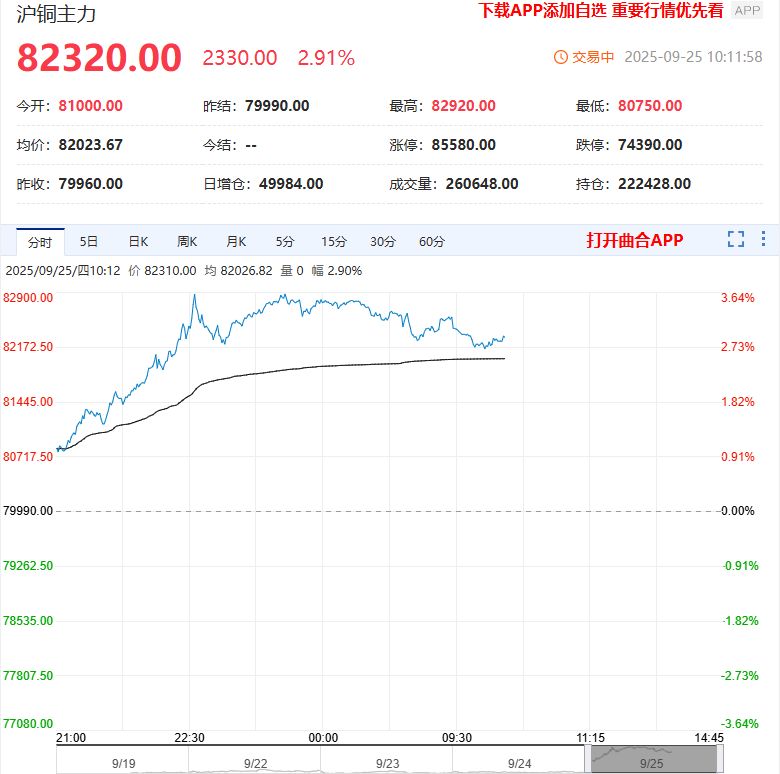
矿端干扰发酵叠加美联储降息周期开启 沪铜和国际铜双双刷新近六个月高位
Jin Tou Wang· 2025-09-25 03:22
Group 1 - Freeport-McMoRan announced force majeure on its supply contract for the Grasberg mine in Indonesia, impacting copper supply [1] - The Federal Reserve's interest rate cut cycle has begun, leading to increased market liquidity and opening up upward space for copper prices [1] - As of the latest report, the Shanghai copper main contract is priced at 82,320.00 CNY/ton, with a rise of 2.91%, while the international copper main contract is at 73,060.00 CNY/ton, up 3.03% [3] Group 2 - Guangfa Futures indicates that the long-term supply-demand imbalance provides bottom support for copper prices, with a gradual upward shift in price levels [1] - Short-term price increases are driven by disruptions at the mining end, with attention on potential shifts in macro market sentiment towards recovery trading and marginal changes in demand [1]
投资庚我学 |美联储年内首次降息,对资本市场有何影响?
Xin Lang Cai Jing· 2025-09-24 01:11
Group 1 - The Federal Reserve's recent interest rate cut is a preventive measure aimed at supporting the economy amid signs of slowing growth and a weakening labor market [1][3][9] - The U.S. economy shows a divergence, with strong investment in technology sectors while traditional manufacturing and real estate remain weak [3][9] - The interest rate cut is expected to influence global markets by lowering U.S. Treasury yields, potentially leading to a reallocation of funds towards higher-yielding non-U.S. assets, especially in emerging markets [4][5] Group 2 - The impact of the Federal Reserve's rate cut on China is primarily through three channels: external monetary policy constraints, exchange rate and capital flow effects, and market sentiment and risk appetite [6][7] - The rate cut may provide more policy space for China's central bank to balance domestic growth and risk management, as it alleviates external pressures on the RMB [7] - Historical analysis indicates that during Fed rate cut cycles, market styles and sector performances exhibit common characteristics, although each cycle's specifics can vary significantly based on the macroeconomic context [8]
《有色》日报-20250923
Guang Fa Qi Huo· 2025-09-23 04:51
1. Report Industry Investment Rating No relevant content provided. 2. Report Core Views Copper - The short - term driving force is weak, and the main contract of Shanghai copper oscillated in a narrow range yesterday. The Fed's "preventive" interest rate cut may lead the US dollar to gradually bottom out, and the previous loose trading of copper may end. The copper market is in a state of "weak reality + stable expectation". The medium - and long - term supply - demand contradiction provides bottom support, and the center of copper price will gradually rise. The short - term is at least in a shock state, and the main contract reference range is 79000 - 81000 [1]. Aluminum - The alumina market is in a pattern of "high supply, high inventory, and weak demand", and it is difficult to fundamentally reverse this pattern in the short term. The short - term main contract is expected to oscillate in the range of 2900 - 3200 yuan/ton. The aluminum market has a certain double - festival stocking demand, but the inventory is still accumulating, and the de - stocking inflection point has not yet arrived. The short - term aluminum price is expected to oscillate, and the main contract reference range is 20600 - 21000 yuan/ton [3]. Aluminum Alloy - The supply of recycled aluminum is still tight, and the cost support is significant. The demand is in a mild recovery, and the pre - holiday stocking demand provides phased support for the spot price. The short - term spot price is expected to remain firm, and the inventory accumulation rate will slow down. The short - term main contract reference operating range is 20200 - 20600 yuan/ton [4]. Zinc - The supply of zinc is expected to be loose, and the short - term price may rise due to macro - driving, but the fundamentals provide limited elasticity for the continuous upward rush of Shanghai zinc. The upward continuous rebound requires the demand side to improve beyond expectations and the non - recession interest rate cut expectation to continue to improve. The downward breakthrough requires the TC to strengthen beyond expectations and the refined zinc to continue to accumulate inventory. The short - term main contract reference range is 21500 - 22500 [6]. Tin - The supply side is relatively strong, which supports the tin price. If the supply from Myanmar recovers smoothly, the idea of shorting on rallies is recommended; if the supply recovery is less than expected, the tin price is expected to continue to oscillate at a high level, with the operating range of 265000 - 285000 [8]. Nickel - The macro - atmosphere is weak, the mine - end disturbances increase but the actual impact is limited, and the cost still has support. There is no obvious short - term supply - demand contradiction, but the de - stocking rhythm has slowed down. The medium - term supply is still loose, which restricts the upward space of the price. The short - term main contract reference range is 120000 - 125000 [9]. Stainless Steel - The macro - expectation has been digested, and the trading has returned to the fundamentals. The raw material price is firm, and the cost support still exists, but the peak - season demand of the downstream has not been realized as expected. The short - term disk is mainly in shock adjustment, and the main contract reference range is 12800 - 13200 [12]. Lithium Carbonate - The macro - sentiment has been digested, and the news is calm. The fundamentals are in a tight balance. The short - term disk is expected to oscillate and sort out, and the main price center reference range is 70000 - 75000 [15]. 3. Summary by Relevant Catalogs Copper - **Price and Basis**: SMM 1 electrolytic copper price is 80225 yuan/ton, up 0.29% from the previous day; the spot premium has decreased. The refined - scrap price difference has increased by 6.85% [1]. - **Monthly Spread**: The 2510 - 2511 spread is 30 yuan/ton, down 30 yuan/ton from the previous day [1]. - **Fundamental Data**: In August, the electrolytic copper production was 117.15 tons, down 0.24% month - on - month; the import volume was 26.43 tons, down 10.99% month - on - month. The domestic mainstream port copper concentrate inventory increased by 4.59% week - on - week [1]. Aluminum - **Price and Spread**: SMM A00 aluminum price is 20750 yuan/ton, down 0.29% from the previous day. The alumina prices in different regions have decreased to varying degrees [3]. - **Ratio and Profit/Loss**: The import loss is - 1784 yuan/ton, and the Shanghai - London ratio is 7.74 [3]. - **Monthly Spread**: The 2509 - 2510 spread is 5 yuan/ton, up 20 yuan/ton from the previous day [3]. - **Fundamental Data**: In August, the alumina production was 773.82 tons, up 1.15% month - on - month; the electrolytic aluminum production was 373.26 tons, up 0.30% month - on - month [3]. Aluminum Alloy - **Price and Spread**: SMM aluminum alloy ADC12 price is 20950 yuan/ton, unchanged from the previous day. The refined - scrap price differences in different regions have increased [4]. - **Monthly Spread**: The 2511 - 2512 spread is - 40 yuan/ton, down 10 yuan/ton from the previous day [4]. - **Fundamental Data**: In August, the recycled aluminum alloy ingot production was 61.50 tons, down 1.60% month - on - month; the primary aluminum alloy ingot production was 27.10 tons, up 1.88% month - on - month [4]. Zinc - **Price and Spread**: SMM 0 zinc ingot price is 21950 yuan/ton, down 0.18% from the previous day. The import loss is - 3292 yuan/ton [6]. - **Monthly Spread**: The 2510 - 2511 spread is - 10 yuan/ton, down 15 yuan/ton from the previous day [6]. - **Fundamental Data**: In August, the refined zinc production was 62.62 tons, up 3.88% month - on - month; the import volume was 2.57 tons, up 43.30% month - on - month [6]. Tin - **Spot Price and Basis**: SMM 1 tin price is 272000 yuan/ton, up 1.00% from the previous day. The import loss is - 12395.82 yuan/ton [8]. - **Monthly Spread**: The 2510 - 2511 spread is - 290 yuan/ton, up 50 yuan/ton from the previous day [8]. - **Fundamental Data (Monthly)**: In July, the tin ore import was 10278 tons, down 13.71% month - on - month; the SMM refined tin production was 15940 tons, up 15.42% month - on - month [8]. Nickel - **Price and Basis**: SMM 1 electrolytic nickel price is 122700 yuan/ton, down 0.04% from the previous day. The LME 0 - 3 is - 177 dollars/ton [9]. - **Cost of Electric Deposited Nickel**: The cost of integrated MHP production of electric deposited nickel is 117171 yuan/ton, down 1.15% month - on - month [9]. - **Monthly Spread**: The 2511 - 2512 spread is - 170 yuan/ton, up 20 yuan/ton from the previous day [9]. - **Supply and Inventory**: China's refined nickel production was 32200 tons, up 1.26% month - on - month; the import volume was 17536 tons, down 8.46% month - on - month [9]. Stainless Steel - **Price and Basis**: The price of 304/2B (Wuxi Hongwang 2.0 coil) is 13100 yuan/ton, unchanged from the previous day. The spot - futures spread is 360 yuan/ton, down 50 yuan/ton from the previous day [12]. - **Monthly Spread**: The 2511 - 2512 spread is - 30 yuan/ton, up 20 yuan/ton from the previous day [12]. - **Fundamental Data**: In August, the production of Chinese 300 - series stainless steel crude steel was 171.33 tons, down 3.83% month - on - month; the import volume was 11.72 tons, up 60.48% month - on - month [12]. Lithium Carbonate - **Price and Basis**: SMM battery - grade lithium carbonate average price is 73850 yuan/ton, up 0.48% from the previous day. The lithium spodumene concentrate CIF average price is 860 dollars/ton [15]. - **Monthly Spread**: The 2510 - 2511 spread is - 220 yuan/ton, down 20 yuan/ton from the previous day [15]. - **Fundamental Data**: In August, the lithium carbonate production was 85240 tons, up 4.55% month - on - month; the demand was 104023 tons, up 8.25% month - on - month. The total inventory decreased by 3.75% month - on - month [15].
降息后的配置策略
2025-09-23 02:34
Summary of Key Points from Conference Call Records Industry or Company Involved - The discussion primarily revolves around the impact of the Federal Reserve's interest rate policies on global markets, particularly focusing on the Chinese market, and the emerging human-shaped robot industry led by Tesla. Core Points and Arguments 1. **Federal Reserve's Interest Rate Policy** The Federal Reserve has initiated a rate cut of 25 basis points, with expectations of two more cuts in 2025, but the market's response has been muted due to uncertainties in future rate paths [2][4][3]. 2. **Impact on Chinese Market** The People's Bank of China has maintained the LPR unchanged, indicating that external liquidity from the Fed has not fully transmitted to China. Policy coordination is essential for amplifying the Fed's effects on the A-share market [1][3][4]. 3. **Market Rotation in 2025** The markets in China, the US, and Hong Kong are expected to exhibit significant quarterly rotation, driven by AI developments. The US market is anticipated to benefit from earnings growth, while the A-share market relies on valuation improvements [1][6]. 4. **Current Economic Environment in China** The Chinese market is facing weakening macro fundamentals, with liquidity remaining ample. Key indicators such as real estate and consumption are showing signs of decline [11][16]. 5. **Human-shaped Robot Industry** This sector is viewed as a major industry for the next decade, with Tesla playing a leading role. The market size is expected to reach hundreds of billions, driven by applications in both industrial and household settings [26][27]. 6. **Tesla's Influence** Tesla's optimistic production expectations for human-shaped robots have significantly influenced market sentiment. Recent management changes and product iterations have also affected market dynamics [27][28]. 7. **Investment Opportunities in AI and Internet Sectors** The internet sector is shifting focus towards AI, overseas expansion, and instant retail, with companies like Alibaba and JD.com adjusting their strategies accordingly [22][23]. 8. **Hardware and Technology Iterations in Robotics** Key hardware iterations in human-shaped robots include cost reduction and performance enhancement, with Chinese suppliers having a competitive edge in cost efficiency [30][31]. 9. **Sensor Technology Trends** The sensor field is experiencing a transformation, particularly in robotics and automotive components, with an increasing focus on tactile sensors [33]. 10. **Valuation Opportunities in Automotive Parts** Companies involved in automotive parts that are also entering the human-shaped robot market are expected to see significant valuation increases as the industry matures [34]. Other Important but Possibly Overlooked Content - The need for investors to monitor macroeconomic indicators and policy changes closely to adjust investment strategies accordingly [5][16]. - The potential for a shift in investor sentiment towards high-risk financial assets as the real estate market adjusts [20][21]. - The importance of understanding the competitive landscape and financial health of internet companies when evaluating new investment directions [24][25].