
奔驰

Search documents
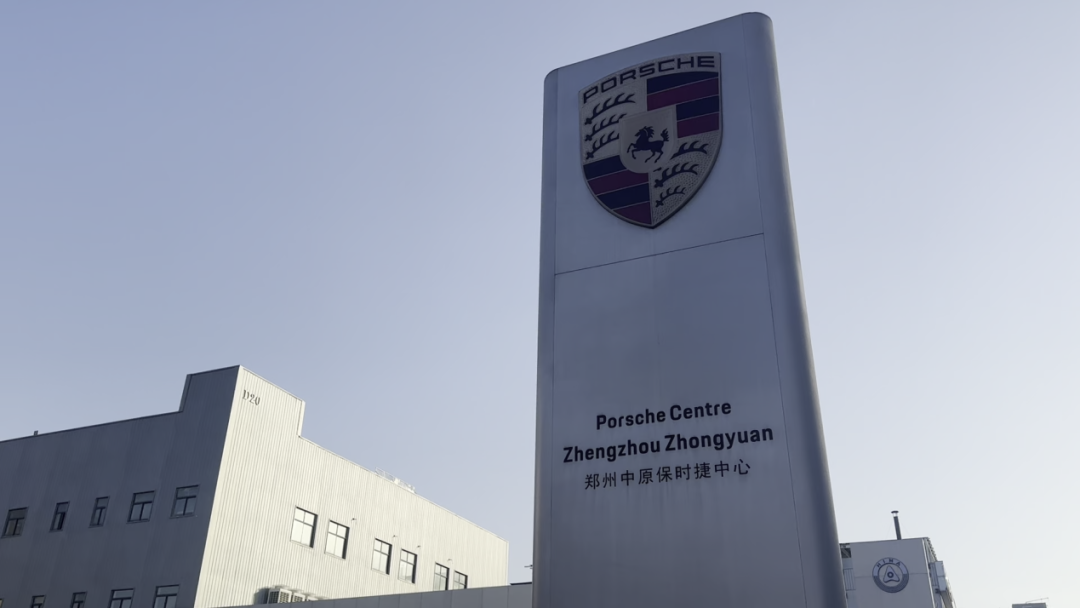
停业风波落定,保时捷终止授权!
Zhong Guo Qi Che Bao Wang· 2026-01-07 01:45
Core Viewpoint - Porsche China has officially terminated the dealership authorization for the Zhengzhou Central Porsche Center, marking a significant shift in the luxury brand's distribution strategy in China [2][4]. Group 1: Incident Overview - The closure of the Zhengzhou Central Porsche Center began with a sudden "clearance" event on December 23, 2025, where vehicles were removed from the showroom, and staff went missing, leaving customers unable to retrieve their vehicles or service packages [3]. - The Zhengzhou Business Bureau and local police initiated investigations, suggesting that the closure was likely due to a financial crisis [3]. - On December 25, Porsche China apologized to customers and committed to protecting consumer rights while investigating the situation [4]. Group 2: Company Response - On January 5, 2026, Porsche China confirmed the termination of the dealership agreement due to serious violations and damage to brand reputation, while also outlining solutions for affected customers [4]. - Customers can transfer their service packages to nearby dealerships, but self-issued packages by the dealership are not included in this transfer [4]. Group 3: Market Context - The termination of the Zhengzhou dealership is part of a broader trend of channel contraction among luxury brands in China, with Porsche planning to reduce its sales outlets from 150 to around 80 by the end of 2026 [7]. - Financial reports indicate a significant decline in Porsche's profitability, with operating profit dropping from €4.035 billion in 2024 to €0.04 billion in 2025, and a sales return rate plummeting from 14.1% to 0.2% [7]. - The overall sales volume for Porsche decreased by 6% globally, with a staggering 26% drop in the Chinese market, highlighting the challenges faced by luxury brands in adapting to market changes [7]. Group 4: Industry Trends - Other luxury brands, such as Mercedes-Benz and BMW, are also undergoing strategic network reductions to enhance efficiency and profitability in response to market pressures [8]. - The closure of the Zhengzhou dealership serves as a warning for luxury brands to optimize their channel strategies while balancing scale, efficiency, brand reputation, and consumer rights [8].

最高直降30万元?宝马领衔 2026开年车市上演“花式”调价
Hua Xia Shi Bao· 2026-01-07 01:07
Core Insights - BMW China has officially adjusted the prices of over 30 models, with reductions generally exceeding 10%, and the iX1 eDrive25L seeing a significant drop of 24% [1][3] - This price adjustment is part of a broader trend in the automotive market, with multiple brands like Volvo, NIO, and Xiaomi also offering limited-time purchase incentives, contributing to a "price reduction wave" at the start of the year [1][7] - The adjustments reflect a complex interplay of pricing strategies, dealer survival, and consumer expectations, especially in light of new tax policies and trade-in incentives [1][9] Pricing Strategy - The price cuts by BMW include flagship and entry-level models, with the iX1 eDrive25L's price dropping from 299,900 yuan to 228,000 yuan, and the 735Li from 919,000 yuan to 808,000 yuan, a reduction of 12% [3][4] - Following the announcement, foot traffic in dealerships increased by over two times, although actual purchase intentions varied among consumers [3][4] - Despite the official price reductions, terminal prices have not significantly decreased, as dealers are reducing discounts to maintain brand image [3][4] Market Dynamics - BMW's price cuts come amid declining sales in China, with a reported 11.2% year-on-year drop in sales for the first three quarters of 2025, making it the only major market for BMW to experience double-digit declines [4][10] - The proactive price reduction by BMW may trigger a chain reaction in the luxury car market, with competitors like Mercedes and Audi also considering price adjustments or enhancements to their models [4][10] - The rise of domestic brands has significantly altered market dynamics, with Chinese brands capturing nearly 70% of passenger car sales and over 80% in the high-end new energy market [4][10] Consumer Behavior - Consumer reactions to the price cuts are mixed, with some valuing BMW's brand and driving experience, while others express concerns over the technology and features compared to domestic electric vehicles [3][4] - The introduction of new policies, such as trade-in subsidies, has positively influenced consumer confidence, leading to increased dealership traffic and inquiries about trade-in options [9][10] Industry Outlook - The current pricing adjustments signify a shift in the automotive market towards a more complex competitive landscape, where brands must leverage technology, product offerings, and customer service in addition to pricing [10] - The adjustments reflect a broader sensitivity to policy changes and a rapid response from the industry, indicating a transition towards a more mature market environment [10]
沪指13连阳,再创十年新高,春季行情值得期待
Sou Hu Cai Jing· 2026-01-06 17:37
Market Overview - The A-share market continues its "opening red" trend, with the Shanghai Composite Index reaching a ten-year high. All three major indices closed higher, with the Shanghai Composite Index gaining 1.5%, the Shenzhen Component Index up 1.4%, and the ChiNext Index increasing by 0.75% [1] - The trading volume in the Shanghai and Shenzhen markets reached 2.81 trillion yuan, an increase of 260.2 billion yuan compared to the previous trading day. The market saw over a hundred stocks hitting the daily limit for two consecutive days, with high interest in sectors such as intelligent driving, commercial aerospace, and brain-computer interfaces [1] Intelligent Driving Sector - The intelligent driving concept was active today, with the Intelligent Automobile ETF rising by 4.16%. The industry is expected to see breakthroughs due to technological advancements and the implementation of policies and regulations. The Ministry of Industry and Information Technology has conditionally approved L3 product applications from two car manufacturers, marking a new phase of commercialization for intelligent driving in China [2] - At the CES 2026 conference, NVIDIA's CEO announced new AI inference technology for intelligent driving and a partnership with Mercedes to produce autonomous vehicles. Companies like Qianli Zhijia and Geely also launched new assisted driving brands at CES, indicating significant advancements in the sector [2] Chemical Industry - The chemical industry is expected to see improvements in supply-demand dynamics as supply-side reforms deepen and carbon peak initiatives progress. The Shaanxi Development and Reform Commission has proposed increasing electricity prices for high-energy-consuming products, which could raise costs for industries like chlor-alkali and calcium carbide, potentially leading to the exit of high-cost facilities [3] - The current "14th Five-Year Plan" is crucial for advancing carbon peak goals, with measures being implemented to control energy consumption, including the elimination of preferential electricity prices for high-energy-consuming products and the phasing out of chemical facilities over 20 years old. Investors are advised to pay attention to opportunities in leading chemical ETFs [3] Gold Market - The rising tensions in South America are increasing global uncertainty, which may enhance the safe-haven appeal of gold in the short term. In the medium to long term, loose liquidity and de-dollarization are expected to support gold prices. The long-term investment value of gold is viewed positively, with recommendations for investors to consider gold fund ETFs during market pullbacks to lower costs [3] - Central banks remain significant buyers of gold, and despite substantial increases in holdings over the past three years, the amount held is still relatively low compared to historical geopolitical turning points. Surveys indicate a continued moderate increase in gold purchases by central banks [3]
史上销量最好?!这家“佛系”的豪华品牌,也要卷起来了?
电动车公社· 2026-01-06 16:39
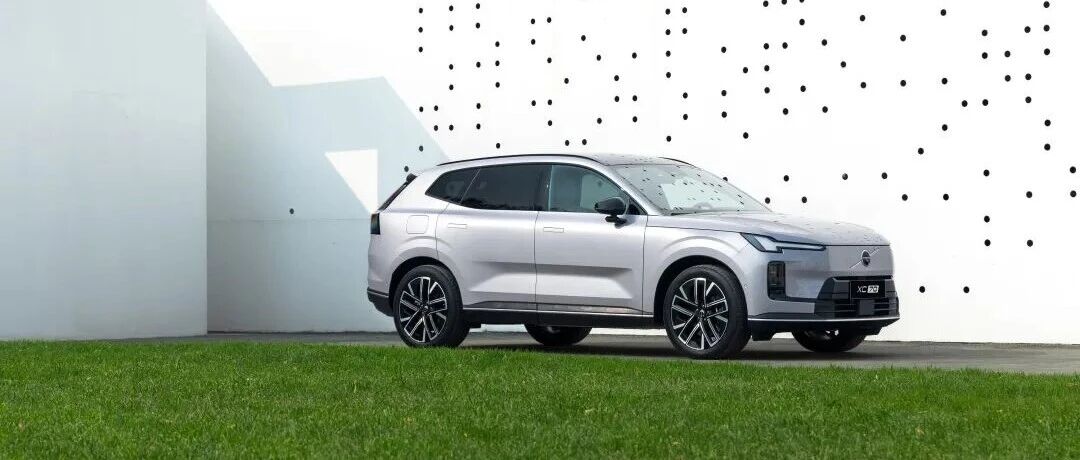
Core Viewpoint - The article discusses the unique positioning and potential of the Volvo XC70, highlighting its unexpected success in the luxury plug-in hybrid (PHEV) market, particularly in China, where it has achieved significant monthly sales figures [1][4]. Group 1: Market Positioning and Sales - The XC70 has managed to break into the top 5 in its segment, a feat previously unachieved by any luxury brand's PHEV in China, with monthly sales surpassing 5000 units [1][4]. - Traditional luxury brands have struggled with pricing strategies for PHEVs, often relying on policy advantages in major cities to maintain sales, which has become less effective as regulations change [13][15]. - The XC70's sales success is attributed to its innovative SMA hybrid architecture, which allows for a more competitive pricing strategy compared to traditional PHEVs [15][18]. Group 2: Technological Innovations - The XC70 utilizes a new SMA architecture that supports various configurations, including a large 39.6 kWh battery, enabling a pure electric range of 212 km [18][21]. - This architecture allows for a more efficient design, reducing costs and improving performance, including the use of a 1.5T engine instead of a 2.0T engine, which lowers the overall vehicle cost [21][24]. - The XC70 features advanced technology such as a centralized electronic architecture and improved user interface, enhancing the overall driving experience and usability [33][39]. Group 3: Design and User Experience - The XC70 is described as a "Nordic-inspired Chinese car," designed to meet the specific needs of Chinese consumers while maintaining Volvo's Scandinavian design ethos [30][31]. - The vehicle's interior and exterior design emphasize simplicity and functionality, aligning with the Scandinavian principle of human-centered design [54][59]. - The XC70 incorporates advanced safety features and materials that prioritize user comfort and environmental considerations, such as low-VOC materials and recyclable components [51][52]. Group 4: Future Outlook - Volvo's commitment to electrification is evident in its investment of over €2 billion and the development of the SMA architecture, indicating a strong future direction for the brand [75][76]. - The XC70 represents a significant step in Volvo's electrification strategy, with the potential to maintain a competitive edge in the evolving automotive market [77][78].
汽车行业点评报告:催化不断,2026年重视智驾和robotaxi产业趋势
CMS· 2026-01-06 11:30
Investment Rating - The report maintains a "Recommended" rating for the automotive industry, indicating a positive outlook for the sector's fundamentals and expectations for the industry index to outperform the benchmark index [5]. Core Insights - The year 2026 is projected to be a breakthrough year for the smart driving and robotaxi industries, with significant advancements expected [3]. - Nvidia's release of the open-source VLA (Vision-Language-Action) model, Alpamayo 1, is anticipated to catalyze developments in autonomous driving, with the first vehicle equipped with this model, the Mercedes CLA, expected to hit the roads in the U.S. in Q1 2026 [2]. - The report highlights the expected growth in the robotaxi sector, with Waymo projected to exceed 450,000 rides per week by 2025 and Tesla's robotaxi operations expanding significantly in Austin, which is expected to have a notable financial impact in the second half of 2026 [3]. - Regulatory advancements are also noted, with the Ministry of Industry and Information Technology granting L3 access licenses to two companies, and the Ministry of Public Security announcing the initiation of national standards for autonomous driving regulations [3]. Industry Overview - The automotive industry comprises 267 companies, with a total market capitalization of 4,785.2 billion and a circulating market capitalization of 4,146.4 billion [5]. - The industry has shown strong performance, with absolute returns of 8.0% over one month, 26.4% over six months, and 54.0% over twelve months [7]. - Relative performance against the benchmark has also been positive, with 5.1% over one month, 7.9% over six months, and 29.0% over twelve months [7]. Related Companies - Key players in the industry include Bertel, Nexteer, Horizon Robotics, Black Sesame, Desay SV, and others involved in various aspects of smart driving technology and robotaxi operations [4].


奔驰城市智驾将在美落地,和中国有哪些差异?
Guan Cha Zhe Wang· 2026-01-06 10:26
Group 1 - Mercedes-Benz announced the launch of its advanced driving assistance system, MB.DRIVE ASSIST PRO, in the US later this year, allowing point-to-point driving on city roads under driver supervision [1] - This system marks a significant expansion of Mercedes-Benz's capabilities beyond highway scenarios, entering the more complex and commercially valuable urban driving market [1] - Currently, Tesla's FSD is the only mass-produced model in the US market offering similar urban driving functionalities, positioning Mercedes-Benz to compete with local automakers for software capabilities [1] Group 2 - The subscription model for MB.DRIVE ASSIST PRO in the US is set at $3,950 for three years, with options for monthly or annual subscriptions, similar to Tesla's FSD approach [3] - This subscription strategy reflects Mercedes-Benz's European market logic, where advanced driving features are offered through subscription or limited-time unlocks [3] - In contrast, the Chinese market has shown limited acceptance of subscription models, with consumers preferring one-time payments for hardware and complete functionalities [4] Group 3 - In China, Mercedes-Benz has opted for a different strategy by bundling the MB.DRIVE ASSIST PRO system with the new electric CLA model, moving from a subscription to a buyout pricing model [6] - This difference illustrates Mercedes-Benz's localized approach to consumer demands and market conditions in the US and China [7] - The core consumer demand in the US focuses on commuting efficiency and long-term usage experience, while in China, users expect systems that are reliable and frequently usable [7]
开年打响第一枪,宝马大降价!
Zhong Guo Qi Che Bao Wang· 2026-01-06 06:07
Group 1 - BMW China will adjust the suggested retail prices of 31 key models starting January 1, 2026, with 24 models seeing a price drop of over 10% and 5 models over 20%, including the BMW iX1 eDrive25L with a maximum drop of 24% and the BMW i7 M70L with a price reduction of 301,000 yuan [2][7] - The luxury car market in China is becoming increasingly competitive, prompting brands like Maserati and BMW to implement significant price cuts to attract consumers [3][5] - BMW's price adjustment is framed as a response to market dynamics and a value upgrade for certain products, rather than a price war, emphasizing long-term development over short-term profits [8][16] Group 2 - BMW's sales in China have shown a decline, with a total of 465,000 units sold in the first three quarters of 2025, representing an 11.2% year-on-year decrease, making it the only major market for BMW to experience a double-digit decline [11] - The BMW X5, once a leader in the mid-to-large luxury SUV market, has seen its sales drop significantly, falling to 12th place in its segment, overtaken by domestic electric models [11] - The company faces challenges in the electric vehicle transition, with its electric model sales accounting for over 25% in the first half of 2025, still below the luxury market's 30.3% penetration rate [11][12] Group 3 - Despite the official price cuts, actual transaction prices for some models have not significantly decreased, indicating a persistent price discrepancy between suggested retail prices and actual market prices [14][15] - The adjustment of suggested retail prices aims to address the long-standing issue of price discrepancies, which have put pressure on dealers and affected brand pricing stability [15][16] - Experts suggest that traditional luxury brands like BMW must focus on technological advancements and competitive electric platforms to remain relevant in the evolving automotive landscape [16]

雷军的“丢轮保车”居然是真的,你敢相信吗?
Sou Hu Cai Jing· 2026-01-05 15:22
Core Viewpoint - Xiaomi's YU7 vehicle incorporates a safety design strategy known as "wheel detachment for vehicle protection," which aims to enhance passenger safety during collisions by allowing the wheels to detach from the vehicle in certain scenarios [3][5][7]. Group 1: Vehicle Safety Features - The YU7 underwent a 25% small offset collision test at a speed of 64 km/h, demonstrating that the A-pillar remained undamaged and the passenger compartment was intact, with airbags deploying correctly [3]. - In response to public concerns about the wheel detachment during the test, Xiaomi clarified that this design is intentional to prevent wheel intrusion into the passenger cabin, thereby reducing potential injuries [5][7]. - The vehicle's safety structure includes components such as a subframe, upper beam, and aluminum tower top, which work together to minimize impact on the passenger compartment during collisions [5]. Group 2: Historical Context of Safety Design - The concept of "wheel detachment for vehicle protection" was first introduced by Mercedes-Benz in 1959 with the W111 series, which featured a design that allowed the front suspension and wheels to detach during severe frontal collisions [9]. - Other automotive brands, including Volvo, BMW, and Audi, have since adopted and refined similar safety strategies, with Volvo being particularly noted for its advancements in this area [9]. - Despite its long-standing presence in the automotive industry, the concept of wheel detachment remains largely unknown to the general public, highlighting a gap in consumer awareness that Xiaomi aims to bridge [11].

全球车企市值“大洗牌”:特斯拉、丰田、小米、比亚迪分列前四
Xin Lang Cai Jing· 2026-01-05 14:20
转自:智通财经 【全球车企市值"大洗牌":特斯拉、丰田、小米、比亚迪分列前四】智通财经1月5日电,汽车产业深度 变革背景下,全球车企市值排名的更新既是中国、外资车企行业地位与竞争格局的直观体现,亦为市场 对汽车企业全产业链价值的综合判断。截至2025年12月31日收盘,在全球车企TOP10中,新势力车企与 传统车企、海外车企与中国车企之间的市值排名竞争呈现两种局面——特斯拉、丰田、小米、比亚迪分 列前四,排名较一年前无变化的同时各自市值有所增长,且全球十大市值车企中依旧有两家中国公司; 五至十名位次发生"巨变"——宝马、奔驰、大众等排名全面提升,保时捷掉出前十,马鲁蒂铃木印 度"入替"位列第十名。(智通财经记者 张屹鹏) ...


汽车行业年度策略报告:汽车行业2026年十大趋势及投资策略-20260105
Guoyuan Securities· 2026-01-05 13:43
Core Insights - The report highlights that the Chinese automotive industry is entering the mid-to-late stage of the electric and intelligent transformation, characterized by the coexistence of traditional fuel vehicles, electric intelligent vehicles, and future industries represented by autonomous driving. This necessitates a layered and structured investment approach based on the different stages of these industry curves [2][3]. Trend Summaries Trend 1: Scrap Gap Provides Long-term Space, Trade-in Policies Expected to Normalize - The Chinese automotive market has stabilized at an annual sales level of 31 million units, with a substantial vehicle ownership base of 350 million units, laying the groundwork for future updates. The annual scrappage volume is still significantly lower than new car sales, leading to an expanding replacement gap. The "trade-in" policy is expected to evolve from a temporary stimulus to a normalized tool, enhancing the precision of policies to support domestic demand and industrial production [2][13][27]. Trend 2: New Forces Drive China's Automotive Exports to a New Structural Upgrade Stage - China's automotive exports have entered a high-growth phase, achieving several-fold growth over four years. The export structure has undergone profound changes, with a significant increase in the penetration of new energy vehicles. New force car manufacturers are enhancing China's brand premium and technological image in the global market through high-value product exports [2][30][34]. Trend 3: "Mass Market Pure Electric + High-end Range Extender" Trend Continues to Deepen - With the penetration rate of new energy vehicles surpassing 50%, market demand is showing structural differentiation. In the mass market under 200,000 yuan, the 800V high-voltage platform significantly improves charging efficiency, driving pure electric growth to outpace plug-in hybrids and range extenders. In the high-end market above 300,000 yuan, the "large battery long-range range extender" remains the mainstream solution for full-size SUVs/MPVs [2][3]. Trend 4: The "Late Mass Market" Phase Will Continue to Strengthen the Matthew Effect - The industry is transitioning from the "early mass market" to the "late mass market" phase, where consumers prioritize brand endorsement, after-sales support, and residual value certainty. This pragmatic user base favors mature brands and ecosystem capabilities, leading to a concentration of market resources towards leading technology firms [2][3]. Trend 5: Focus on State-owned Enterprises for Opportunities Around "Certainty + Cost-effectiveness" - Regulatory bodies are intensifying the separate assessment and market value management of state-owned enterprises' new energy businesses, driving resources towards electric intelligence. Major automotive groups are restructuring to shorten development cycles, accelerating the integration of intelligent configurations into mainstream price segments [2][3]. Trend 6: Growth of New Energy Heavy and Light Trucks Enters Acceleration Phase - The electrification of commercial vehicles has crossed a critical point, entering a self-driven growth phase. The total cost of ownership (TCO) for heavy trucks has dropped to a recovery period of 1.5-2 years, accelerating the replacement of fuel vehicles. The light truck sector is also maturing, with urban delivery electrification fully established [3][6]. Trend 7: High-perception Intelligent Cockpit Configurations Will Reshape Purchase Decisions - Intelligent cockpits have become a default configuration in new energy vehicles, with the importance of intelligent features in purchase decisions rising to the forefront. Consumers are focusing on visual and perceptible components, making HUDs, large LCD screens, and intelligent seating core differentiation battlegrounds [3][6]. Trend 8: Intelligent Driving Accelerates Along "End-to-End" and "Equal Rights" Paths - The intelligent driving architecture is transitioning to an "end-to-end" model, enhancing efficiency across the perception and decision-making chain. The continued acceleration of L3 policies provides opportunities for leading manufacturers to compete and iterate rapidly in high-level intelligent driving [3][6]. Trend 9: Three Major Autonomous Driving Commercialization Scenarios Approaching Explosive Growth - Robotaxi, mining autonomous driving, and unmanned logistics vehicles are moving from pilot projects to mass production. The cost advantages of unmanned logistics vehicles are becoming increasingly evident, with sales curves showing signs of exponential growth [3][6]. Trend 10: Embodied Intelligence Enters Pre-production Phase, Releasing a Second Growth Curve for the Automotive Manufacturing Industry - Humanoid robots are transitioning from hardware-driven to intelligent dual-core driven, with the automotive supply chain naturally adapting to this field. The synergy between embodied intelligence and the automotive industry is expected to create dual dividends in performance and valuation [3][6].
