
新凤鸣

Search documents
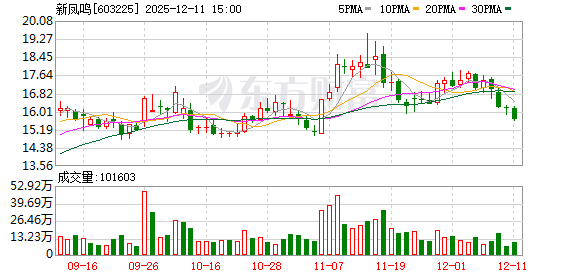
新凤鸣:投资2.8亿美元在埃及建设36万吨功能性纤维项目
Xin Lang Cai Jing· 2025-12-12 11:15
Core Viewpoint - The company plans to initiate a new functional fiber project in Egypt with an annual production capacity of 360,000 tons, involving a total investment of approximately $28 million [1] Group 1: Project Details - The new project will cover an area of 360 acres and will utilize advanced international polyester production technology [1] - The manufacturing facility will produce POY, FDY, and DTY types of functional polyester fibers [1] - The project includes leasing a nearby port for the construction of a terminal tank area [1]

新凤鸣:拟投28亿美元建埃及功能性纤维项目
2 1 Shi Ji Jing Ji Bao Dao· 2025-12-12 11:10
Core Viewpoint - The company plans to initiate a 360,000 tons/year functional fiber project in Egypt with a total investment of approximately 1,977.86 million yuan [1] Group 1: Project Details - The project will be managed by the company's wholly-owned subsidiary, Jiangsu Xintuo, through its overseas subsidiaries, Hong Kong Industrial and Beisi Road, establishing a new materials company in Egypt [1] - The project is located in the Suez Canal Economic Zone, specifically in the China-Egypt TEDA Suez Economic and Trade Cooperation Zone, with a construction period of 24 months [1] - The expected annual production capacity of the project is 360,000 tons of functional polyester fiber [1] Group 2: Financial and Approval Aspects - The total investment for the project is approximately 1,977.86 million yuan, funded by the company's own funds and bank financing [1] - This external investment does not constitute a related party transaction or a significant asset restructuring [1] - The matter has been approved by the company's board of directors and is pending approval from the shareholders' meeting and relevant government departments of both countries [1]
信达证券:2026年原油基本面见底有望 石化产业链有望迎来共振周期
Zhi Tong Cai Jing· 2025-12-12 06:42
Group 1 - The core view is that the oil market is expected to bottom out in 2026, with oil prices likely to fluctuate between $55 and $65 per barrel due to multiple factors [1] - On the supply side, OPEC+ is shifting to a moderate production increase model, while U.S. shale oil production growth is weak, leading to a tightening supply environment [1] - Global oil demand is entering a plateau phase before peaking, with a slow but resilient growth of approximately 800,000 to 1,000,000 barrels per day [1] Group 2 - The refining supply structure is accelerating optimization, with the government promoting the elimination of backward production capacity and optimizing supply structure in the petrochemical industry [2] - The domestic demand for refined oil has peaked, and the transition in oil consumption structure is deepening, while chemical oil demand remains in a long-term growth channel [2] - The refining industry is expected to enter an upward cycle due to improved supply structure and steady demand recovery [2] Group 3 - Investment recommendations include upstream companies with strong dividend attributes such as CNOOC, PetroChina, and Sinopec, as well as oil service companies like CNOOC Services and Haiyou Engineering [3] - In the downstream refining sector, recommendations focus on large private refining companies with scale advantages and rich product layouts, such as Hengli Petrochemical and Rongsheng Petrochemical [3] - Companies with enhanced industrial chain synergy, like Tongkun Co. and Xin Fengming, are also suggested for attention [3]

2026 年石化行业策略报告:上游油价触底、下游供给侧优化加速,产业链有望迎来共振周期-20251212
Xinda Securities· 2025-12-12 05:09
Group 1 - The report indicates that the upstream oil price is expected to bottom out in 2026, with a shift from a clear surplus to marginal tightening in the oil market, while still remaining in a loose environment. The average oil price for 2026 is projected to fluctuate between $55 and $65 per barrel, influenced by various factors including geopolitical risks and OPEC+ market stabilization actions [3][40][43] - The demand for global crude oil is expected to grow at a rate of approximately 80,000 to 100,000 barrels per day in 2026, with the growth primarily driven by developing economies, while demand in developed regions like North America and Europe is nearing its peak [38][39] - The refining supply structure is undergoing optimization, with a focus on eliminating outdated capacity and enhancing the quality of production. The report highlights that the domestic refining capacity is projected to reach 1 billion tons by 2025, with a significant portion of this capacity being concentrated in large-scale refineries [46][51][62] Group 2 - The report recommends investment in private refining enterprises with scale advantages and a long chemical industry chain, such as Hengli Petrochemical and Rongsheng Petrochemical, as well as polyester filament leaders like Tongkun Co. and Xin Fengming [2][3] - The report emphasizes the importance of the chemical oil demand, which is expected to continue its long-term growth trajectory, with the share of chemical oil consumption in total oil consumption projected to rise to 50% by 2026 [62][64] - The report notes that the refining industry is likely to enter a period of stock competition, with a significant amount of outdated refining capacity facing potential elimination, particularly among smaller refineries [51][54][59]
TDI、有机硅价格上行,关注光刻胶自主可控 | 投研报告
Zhong Guo Neng Yuan Wang· 2025-12-12 02:03
Market Performance - The basic chemical index increased by 0.13% from November 29 to December 5, underperforming the CSI 300 index, which rose by 1.28%, resulting in a 1.15 percentage point lag behind the CSI 300 index, ranking 16th among all sectors [1] - The top-performing sub-industries included membrane materials (3.48%), rubber additives (3.42%), spandex (2.66%), potassium fertilizer (2.60%), and inorganic salts (1.99%) [1] Chemical Price Trends - The top five products with the highest weekly price increases were liquid chlorine (200.00%), hydrochloric acid (Shandong) (14.29%), ammonium chloride (12.82%), NYMEX natural gas (9.07%), and concentrated nitric acid (Jinhui Industrial) (7.69%) [2] - The top five products with the largest weekly price declines were acrylamide (-11.97%), trichloroethylene (-10.64%), VCM (vinyl chloride monomer) (-7.69%), modified asphalt (-6.19%), and liquid ammonia (-5.97%) [2] Industry Dynamics - Major MDI producers have announced price increases ranging from 200 to 350 CNY/ton across key markets in Europe, the Middle East, and Asia-Pacific due to cost pressures and supply constraints [3] - Dow Chemical announced a price increase of 300 EUR/ton for MDI products in the EMEAI region effective December 3 [3] - Wanhua Chemical plans to raise prices for its polymer MDI and pure MDI products in Southeast and South Asia by 200 USD/ton starting December 1, 2025 [3] - Hunstman announced a price increase of 350 EUR/ton for all MDI products in Europe, Africa, and the Middle East effective December 2 [3] - BASF raised prices for MDI products in South Asia by 200 USD/ton starting November 20 [3] TDI and Organosilicon Market - As of December 5, TDI prices in the East China market reached 14,400 CNY/ton, a 2.13% increase from the previous week, supported by supply constraints despite weak demand [4] - The price of organosilicon DMC in East China rose to 13,700 CNY/ton, up 3.79% week-on-week, with a total increase of 24.55% since November [4] Investment Recommendations - Focus on the refrigerant sector, anticipating a rebalancing of supply and demand, with price increases expected; recommended companies include Jinshi Resources, Juhua Co., Sanmei Co., and Yonghe Co. [5] - In the chemical fiber sector, recommended companies include Huafeng Chemical, Xin Fengming, and Taihe New Materials [5] - Other quality stocks to watch include Wanhua Chemical, Hualu Hengsheng, Luxi Chemical, and Baofeng Energy [5] - In the tire sector, recommended companies include Sailun Tire, Senqilin, and Linglong Tire [5] - In the agricultural chemical sector, recommended companies include Yara International, Salt Lake Co., Xingfa Group, Yuntianhua, and Yangnong Chemical [5] - For quality growth stocks, recommended companies include Bluestar Technology, Shengquan Group, and Shandong Heda [5]

2026年大化工行业投资策略:稳健配置+涨价品种,聚焦四大投资方向
Soochow Securities· 2025-12-11 11:29
Investment Direction 1: Dividend Strategy - Recommended companies include China National Offshore Oil Corporation (CNOOC), China Petroleum & Chemical Corporation (Sinopec), and China National Petroleum Corporation (PetroChina) with an expected Brent oil price range of $60-70 per barrel in 2026 [2][3] - CNOOC is committed to maintaining a dividend payout ratio of no less than 45% from 2025 to 2027, while PetroChina benefits from domestic natural gas market reforms [2][3] Investment Direction 2: Capital Allocation to Undervalued Chemical Leaders - Recommended companies include Wanhua Chemical, Baofeng Energy, Satellite Chemical, and Hualu Hengsheng, which are expected to benefit from industry barriers related to cost, technology, and market [2][3] - The report suggests prioritizing capital allocation to chemical ETFs and leading companies as their performance is expected to stabilize [2][3] Investment Direction 3: Price Increases Driven by Downstream Demand - Traditional demand sectors such as food additives, pesticides, and fertilizers are highlighted, with companies like New Hope Liuhe and Jiangshan Chemical expected to benefit from stable growth in demand [2][3] - Emerging demand in phosphorous and fluorine chemicals is driven by the needs of new energy battery and AI cooling applications, with companies like Chuanheng Chemical and Juhua Co. being key players [2][3] Investment Direction 4: Domestic Anti-Competition Driving Price Increases - The report emphasizes the focus on large refining and chemical companies such as Hengli Petrochemical and Rongsheng Petrochemical, which are expected to benefit from anti-competitive measures in the domestic market [2][3] - The organic silicon sector is entering the end of its expansion cycle, with major companies like Sinan Silicon Material adjusting industry operating rates [2][3] - The soda ash industry is facing capacity controls and the need to phase out outdated production, with companies like Boyuan Chemical under observation [2][3] Oil Price Analysis - The report anticipates a Brent oil price range of $60-70 per barrel in 2026, with a slight oversupply expected [11][12] - OPEC+ has postponed production increases for Q1 2026, indicating a cautious approach to market conditions [11][12] - The report highlights geopolitical factors, including the ongoing Russia-Ukraine conflict and U.S.-Venezuela relations, which may impact oil supply dynamics [12][13] Three Major Oil Companies Insights - CNOOC is focused on increasing reserves and production while reducing costs, while PetroChina is benefiting from natural gas market reforms [34][36] - Sinopec is concentrating on domestic refining and chemical anti-competition developments [34][36] - The overall profitability of the three major oil companies is expected to be supported by the anticipated oil price stabilization [34][36]




新凤鸣:截至2025年12月10日公司股东总数为19757户
Zheng Quan Ri Bao· 2025-12-11 10:36
(文章来源:证券日报) 证券日报网讯 12月11日,新凤鸣在互动平台回答投资者提问时表示,截至2025年12月10日,公司的股 东总数是19757户。 ...

PXTA周度策略20251207:低估值叠加投产空白期,持续看好PXTA远月合约-20251211
Zhe Shang Qi Huo· 2025-12-11 08:47
Report Industry Investment Rating - The report maintains a positive outlook on the far - month contracts of PXTA, suggesting continued optimism [1][2][6][7][27][56][68][85][118][123] Core Viewpoints - The current low valuation of PXTA combined with a production gap period provides an opportunity. The PTA market is in an upward - trending phase, and the price center is expected to rise in the future. The overall situation is expected to improve due to no new production plans for PTA and PX in the future and positive growth in downstream demand. There are long - term opportunities for long positions [5][14] - The market sentiment is currently positive, but there is a lack of substantial favorable news. The improvement in the overall situation is based on long - term optimism. During the off - season, the market is expected to see limited rebound, and it is advisable to focus on long - term long opportunities in far - month contracts [13] Summary by Directory Investment Strategy - **PX1 - 5 Reverse Spread**: The strategy involves the PX601 and PX605 contracts. The cost formula is PX601 - PX605. The target spread is - 200, and the stop - loss spread is 160. It was proposed on August 8, 2025. Attention should be paid to the reverse spread opportunity of PX1 - 5 [8] Industry Chain Operation Suggestions PX - **Refineries (Inventory Management)**: For those with PX inventory worried about price drops, they can sell a certain proportion on the market. The hedging derivative is PX601P6500, with a purchase ratio of 100% and an entry price of 20 [10] - **Polyester Traders (Procurement Management)**: To build inventory and buy PX at a low price, they can buy short - term call options to prevent price surges. The option is PX605, with a purchase ratio of 100% and an entry price of 6650 [10] - **Polyester Traders (Inventory Management)**: To protect inventory from price drops, they can sell on the market. The hedging derivative is PX601P6500, with a purchase ratio of 100% and an entry price of 20 [10] - **Polyester Factories (Procurement Management)**: When in need of PX and worried about price increases, they can buy call options according to the production plan to prevent price surges. The option is PX605, with a purchase ratio of 100% and an entry price of 6650 [10] - **Polyester Factories (Inventory Management)**: To protect inventory from price drops, they can sell on the market. The hedging derivative is PX601P6500, with a purchase ratio of 100% and an entry price of 20 [10] - **Textile Enterprises (Procurement Management)**: To prevent PX price increases, they can buy call options. The option is PX605, with a purchase ratio of 100% and an entry price of 6650 [10] PTA - **Polyester Traders (Inventory Management - Worried about Price Drops)**: They can hedge a small proportion of unsold PTA inventory by short - selling. The hedging derivative is TA601P4450, with a purchase ratio of 100% and an entry price of 20 [4] - **Polyester Traders (Inventory Management - Seeking High - Price Sales)**: They can hedge a small proportion of unsold PTA inventory by short - selling. The hedging derivative is TA601P4450, with a purchase ratio of 100% and an entry price of 20 [4] - **Polyester Traders (Procurement Management)**: They can buy futures or options on the market according to the proportion to prevent sudden price increases. The options are TA601C4800 and TA601P4550, with a purchase ratio of 100% and entry prices of 30 and 35 respectively [4] - **Polyester Factories (Inventory Management - Worried about Price Drops)**: They can hedge a small proportion of unsold PTA inventory by short - selling. The hedging derivative is TA601P4450, with a purchase ratio of 100% and an entry price of 20 [4] - **Polyester Factories (Procurement Management - Worried about Price Increases)**: They can buy futures or options on the market according to the proportion to prevent sudden price increases. The options are TA601C4800 and TA601P4550, with a purchase ratio of 100% and entry prices of 30 and 35 respectively [4] - **Textile Enterprises (Procurement Management - Worried about Price Increases)**: They can buy options to prevent sudden price increases. The option is TA601P4550, with a purchase ratio of 100% and an entry price of 35 [4] Fundamental Analysis and Strategies Supply - For PTA, with the planned maintenance of Yisheng and Honggang Petrochemical, the PTA load has recently decreased. The restart and maintenance are proceeding as planned. There is no significant unexpected situation on the supply side, but the subsequent supply pressure remains high due to the new 300 - million - ton Xin凤鸣 plant. For PX, the Zhonghua Quanzhou plant has reduced its load due to a fault, and the Shanghai Petrochemical plant has restarted, with fewer clear maintenance plans in the future [13] Demand - This week, the polyester operating rate has remained at around 90%. The overall terminal data is average. The profits of various polyester products have been compressed to different extents, and the inventory level is generally neutral. Due to previous export - rushing phenomena, the off - season expectations are average. Attention should be paid to the changes in polyester inventory and load during the off - season [13] Spot - Recently, due to the high supply pressure in the far - month, the spot performance has been weak. The basis has not rebounded as much as the single - sided price, and the spot is still at a discount of around 60 to the 01 contract [13] Valuation - Currently, PXN is around 288 US dollars per ton, and the 1.9 - cargo processing fee is around 150 yuan per ton. Overall, the PTA valuation is still low, and it has slightly recovered recently with the improvement in sentiment. The recent valuation repair is more reflected in PX [13] Unilateral Strategy - The current market sentiment is positive, but there is no actual favorable news. The improvement in the overall situation is based on long - term optimism about the future production gap of PTA and PX. During the off - season, the valuation is repaired in advance, and there is no substantial improvement in the overall supply - demand pattern from the basis. On the unilateral side, the expected rebound during the off - season is limited, and attention should be paid to long - term long opportunities in far - month contracts [13] PX Analysis PX Load - The Zhonghua Quanzhou 800,000 - ton plant stopped for maintenance on November 25, with an expected two - month maintenance period. A 100,000 - ton PX plant of Fujia Liuhe has been shut down since late March. There were no plant changes this week. The weekly PX output was 748,200 tons, a 0.58% decrease from last week. The domestic bi - weekly average capacity utilization rate was 89.21%, a 0.53% decrease from last week. The Asian weekly average capacity utilization rate was 79.12%, a 0.29% decrease [19] PX Profit - The current PXN is around 288 US dollars per ton. After rebounding from the bottom, the valuation is still at a relatively high level and is expected to remain volatile. Attention should be paid to the strong gasoline crack spread, which is at a relatively high level in the same period of history. There are also reports of the reconstruction of the aromatics logistics from South Korea to the United States, and attention should be paid to whether the subsequent gasoline blending will drive up PXN [29] PX Regional Spread - When the US - Asia spread is too large, there will be exports from Asia to the United States, affecting the Asian supply - demand pattern. Currently, the US - Asia spread has stabilized. After the export of aromatics dropped to zero last October, there was some flow in November and December. The volume of aromatics logistics increased in the first quarter of this year but dropped to zero after April. There has been little logistics in recent months, but there has been some logistics for other aromatics such as pure benzene. Attention should be paid to the subsequent export situation [37] PTA Analysis TA Operating Rate - The current effective operating rate is 75%. There were no changes in domestic PTA plants this week, but the supply increased due to the restart of Honggang Petrochemical last week. The domestic overall output has slightly increased this period. The PTA near - month still faces significant supply - demand pressure, but the situation has started to improve. If the downstream polyester can maintain a high load, the short - term supply - demand is acceptable [48] TA Profit - The current spot processing fee is around 150 yuan per ton. With the commissioning of new plants, the supply pressure is high, and the PTA processing fee has been continuously low. The improvement in supply - demand is more reflected in the valuation repair of PX. As the most over - supplied part of the industrial chain, it is difficult for PTA to repair its valuation, especially with the new Xin凤鸣 plant just commissioned [52] Polyester Analysis Polyester Operating Rate - The current polyester operating rate is 91.8%. The decline in the off - season is not significant, and the polyester factory load has stabilized at around 90%. Currently, the profits of polyester products are stable, and the inventory level is not too high. Overall, the performance during the peak season this year was average. With the arrival of the off - season, the demand is expected to be weak [62] Polyester Profit - Since last year, the profits of polyester bottle chips have been at the lowest level in the same period of history, leading to a continuous slump in the bottle - chip operating rate and a possible delay in the commissioning of new plants, as most planned new plants are for bottle chips. Currently, due to the continuous decline in raw material prices, the profits of downstream products have increased passively [67] Polyester Inventory - Polyester factories have maintained a load of around 90% recently. The inventory of some products is high, but with good sales, the inventory of products has remained at a neutral level. The performance of polyester on the demand side during the peak season this year was average. Due to the previous export - rushing, there was some order pre - empting. With the arrival of the off - season, the situation may not be optimistic [82] Terminal Weaving Analysis Weaving Operating Rate - The current weaving operating rate is 70% [87] Terminal Raw Material Stockpiling - Since the beginning of the month, the overall orders in the weaving market have been characterized by "scarce large orders and scattered small orders." The current clothing consumption demand has contracted, and the home - textile market is divided. The sales of functional fabrics have remained stable, while the conventional medium - and low - count fabrics face significant inventory pressure. Although there are occasional urgent foreign orders, the overall inventory - reduction progress is slow. Some small factories have cut production or shut down, while large - scale enterprises are still operating stably. Looking ahead, the price - negotiation atmosphere for spring orders is gradually heating up, and the market is waiting for further guidance. It is expected that the sales of home - textile products such as fleece will experience a phased recovery driven by promotional events such as "Double 12" [87] Basis and Spread Analysis - The basis reflects the strength of the spot relative to the futures. A negative basis indicates a weak spot market, and vice versa. The monthly spread sometimes provides arbitrage opportunities and can avoid unilateral risks. Attention should be paid to the PX01 contract basis, PX1 - 5 spread, TA01 contract basis, TA09 contract basis, and TA futures 5 - 9 spread [96][99] Position and Trading Volume Analysis - The position volume of the main contract can reflect the virtual - to - real ratio and sometimes affect delivery. The trading volume reflects the activity of the main contract. Attention should be paid to the trading volume and position volume of the PX_01 contract and the PTA_01 contract [113][114][119] Capacity and Cost Summary PX - **Supply - side Production Rhythm**: There has been no new production this year. As of now, the annual commissioned capacity is 0 tons, with a capacity growth rate of 0%. Yulongdao plans to commission 3 million tons at the end of the year. - **Demand - side Production Rhythm**: As of November 2025, the annual commissioned capacity is 11.7 million tons, with a capacity growth rate of 11%. There is no planned new production. - **Cost Curve**: PX is produced by pure oil - based methods, and the production processes are similar. The market generally believes that for PX, PXN around 200 - 300 US dollars per ton is near the cost, and currently, PXN is around 250 US dollars per ton [122] PTA - **Supply - side Production Rhythm**: As of November 2025, the annual commissioned capacity is 11.7 million tons, with a capacity growth rate of 11%. There is no planned new production. - **Demand - side Production Rhythm**: As of November 2025, the downstream polyester demand side has commissioned a total of 2.85 million tons, including 1.25 million tons of polyester bottle chips. The annual commissioned capacity is 2.85 million tons, with a capacity growth rate of 3%. There are still about 1.5 million tons of polyester capacity to be commissioned this year, and the expected annual commissioning growth rate is around 5%. - **Cost Curve**: PTA is all oil - based production, and the processes are similar. For most plants, the processing cost is in the range of 200 - 300 yuan per ton, and the current PTA spot processing fee is around 250 yuan per ton [125]
开工负荷持续下降 PTA反弹行情有望延续
Qi Huo Ri Bao· 2025-12-09 23:29
Core Viewpoint - The PTA industry is currently experiencing low processing profits and operating rates, with a potential for short-term price support due to supply constraints [1][5]. Group 1: Supply and Demand Dynamics - The PTA industry is in a long-term oversupply situation, with domestic production capacity reaching 94.7 million tons and demand falling short at under 70 million tons [2]. - As of December 5, 2023, domestic PTA operating load was at 74.1%, down 11.26 percentage points year-on-year and 5.19 percentage points since the end of October [2]. - PTA processing fees have dropped to a historical low of 90 yuan/ton, with current raw material costs around 4,500 yuan/ton and average industry losses at approximately 280 yuan/ton [2]. Group 2: Inventory and Production Trends - PTA social inventory is approximately 3.1 million tons, down 6.02 thousand tons week-on-week, and significantly lower than the same period last year [3]. - The average available days of PTA factory inventory is about 3.92 days, slightly up from last year, while polyester factory PTA raw material inventory days are at 7.5 days, down 0.5 days year-on-year [3]. Group 3: Polyester Industry Outlook - Polyester operating load has increased to 89.39% as of December 5, 2023, but there are expectations for a decrease in load due to seasonal demand decline and high inventory levels [4]. - The inventory days for various polyester products have increased significantly compared to last year, indicating a substantial de-stocking pressure [4]. - Although the export environment for PTA has improved slightly with the removal of BIS certification requirements by India, the overall impact on PTA demand remains limited due to its small share in total demand [4]. Group 4: Overall Industry Condition - The PTA industry remains in a state of deep losses, with weak production willingness expected to continue, leading to sustained low operating loads and potential price support from the supply side [5]. - Despite the potential for price rebounds, the structural issue of long-term overcapacity in the PTA industry has not fundamentally changed, limiting the upward price movement [5].
化学纤维板块12月9日跌2.08%,新凤鸣领跌,主力资金净流出9969.41万元
Zheng Xing Xing Ye Ri Bao· 2025-12-09 09:05
从资金流向上来看,当日化学纤维板块主力资金净流出9969.41万元,游资资金净流入466.49万元,散户 资金净流入9502.92万元。化学纤维板块个股资金流向见下表: 以上内容为证券之星据公开信息整理,由AI算法生成(网信算备310104345710301240019号),不构成投资建议。 证券之星消息,12月9日化学纤维板块较上一交易日下跌2.08%,新凤鸣领跌。当日上证指数报收于 3909.52,下跌0.37%。深证成指报收于13277.36,下跌0.39%。化学纤维板块个股涨跌见下表: ...
