康师傅控股

Search documents
经营的本质是什么?
Hu Xiu· 2025-10-22 13:24
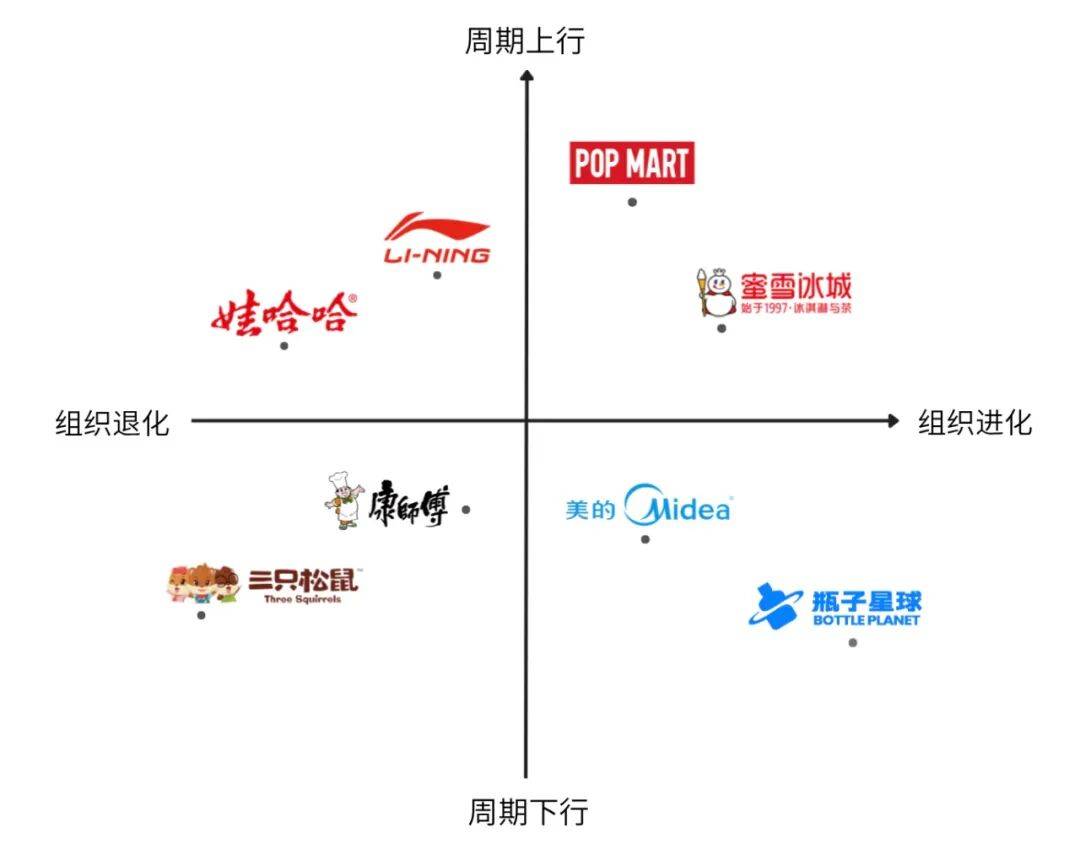
Core Insights - The article discusses the importance of both external cycles and internal organization in determining a company's success or failure during different market conditions [1][2][3] - It presents a four-quadrant model to categorize companies based on their organizational strength and market cycles, illustrating how these factors interact to shape business outcomes [3][4] Quadrant Analysis Quadrant 1: Upward Cycle + Organizational Evolution - Companies like Mixue Ice City and Pop Mart thrive during industry booms due to strategic accuracy and efficient execution, benefiting from favorable market conditions [6][7] - Mixue Ice City's success is attributed to its low-cost model and 100% self-sourced supply chain, achieving high gross and net profit margins in the new tea beverage sector [10][11][12] - Pop Mart capitalizes on global expansion and market adaptability, demonstrating a keen understanding of market dynamics despite periods of lower visibility [14][15][16] Quadrant 2: Downward Cycle + Organizational Evolution - Companies such as Bottle Planet and Midea exemplify resilience in challenging environments, adapting their strategies to align with market demands [17][18] - Bottle Planet, known for its brand Jiangxiaobai, pivoted to a "new liquor" strategy to counteract declining traditional liquor sales, leading to renewed growth [20][21][24] - Midea's transformation into a technology ecosystem company, driven by a focus on organizational strength over individual leadership, has resulted in significant market value growth [26][27] Quadrant 3: Upward Cycle + Organizational Degeneration - Wahaha and Li Ning illustrate how poor organizational management can squander opportunities during favorable market conditions [28][29] - Wahaha's leadership struggles have hindered its ability to capitalize on the bottled water market, while Li Ning's missteps in brand strategy have led to significant market value decline [30][34][35] Quadrant 4: Downward Cycle + Organizational Degeneration - Companies like Master Kong and Three Squirrels face compounded challenges from external market pressures and internal management issues [37][38] - Master Kong's sales have declined due to the rise of food delivery services, while its strategies have failed to adapt effectively to changing consumer preferences [39][41] - Three Squirrels struggles with maintaining quality and adapting to market changes, resulting in significant revenue losses and competitive disadvantages [43][44] Conclusion - The analysis emphasizes that while market cycles are constant, the organizational structure and adaptability of a company are crucial for long-term survival and success [45][46][47]






2025年品牌战略的实操要点有哪些?
Sou Hu Cai Jing· 2025-10-22 06:52
Core Insights - Brand strategy has evolved from a marketing function to a core element of corporate top-level design in the rapidly changing global business environment of 2025 [1] - The quality of brand strategy formulation and implementation directly influences a company's survival and growth potential in the era of rising consumer sovereignty [1] Group 1: Strategic Diagnosis and Monitoring - Establishing a multi-dimensional monitoring mechanism is essential for brand strategy formulation, allowing companies to track industry structure changes, competitive landscape shifts, technological trends, and consumer value orientation [3] - A brand strategy health dashboard should be constructed to monitor key indicators of brand assets in real-time, providing precise data support for strategic adjustments [3] - Brand strategies must possess foresight and adaptability to respond to the rapidly changing market environment [3] Group 2: Differentiation and Resource Allocation - Planning and selecting a differentiation path is a core aspect of brand strategy, requiring alignment between a company's core capabilities and market opportunities [3] - Companies should define their value propositions, identify target customer groups, and establish a complete brand architecture system to create differentiated advantages [3] - Optimizing strategic resource allocation and leveraging effects is crucial for the implementation of brand strategies, necessitating a focus on resource efficiency across R&D, production, channels, and communication [3] Group 3: Implementation and Performance Management - Planning the implementation path and execution control determines the ultimate effectiveness of brand strategies, requiring the breakdown of long-term strategies into phased goals [5] - A cross-departmental collaboration mechanism should be established, along with a scientific performance evaluation system to incorporate strategic execution outcomes into departmental assessments [5] - Successful brand strategies depend on rigorous execution control in the current era where execution capability is paramount [5] Group 4: Digital Transformation and Competitive Advantage - In the digital wave of 2025, the formulation and implementation of brand strategies have become a rigorous management science [7] - Companies that integrate systems thinking, data-driven approaches, and continuous innovation will build sustainable competitive advantages and gain proactive development in intense market competition [7]

海峡两岸社团交流节精彩纷呈
Ren Min Ri Bao Hai Wai Ban· 2025-10-20 22:53
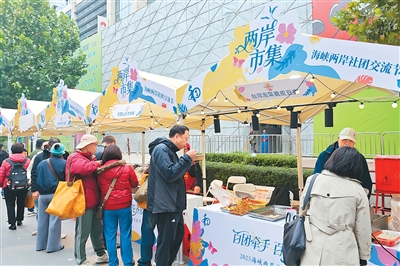
Core Points - The 2025 Cross-Strait Community Exchange Festival opened in Beijing, featuring over 360 Taiwanese guests from various sectors, emphasizing the importance of community interaction in promoting cross-strait relations [1][2][6] - The event aims to deepen cooperation and understanding between the two sides, with a focus on cultural, technological, and health sectors, as well as youth engagement [2][5] Group 1: Event Overview - The festival is themed "Hundreds of Groups Hand in Hand, Hundreds of Flowers Blooming," highlighting the significance of community ties in cross-strait relations [1] - The opening ceremony featured speeches from key figures, including Zhang Zhijun, who emphasized the need for continued dialogue and cooperation based on the "One China" principle and the "1992 Consensus" [1][2] Group 2: Activities and Participation - The festival includes various activities such as cultural performances, food markets showcasing Taiwanese delicacies, and discussions on professional cooperation between Taiwanese and mainland associations [3][4][5] - Approximately 40 specialty booths were set up at the market, featuring well-known brands and traditional Taiwanese foods, attracting significant interest from visitors [4] Group 3: Future Initiatives - Following the opening ceremony, ten "Hand in Hand" salon activities will take place, focusing on in-depth discussions about community exchanges and professional collaborations [5] - The event will also organize thematic visits for Taiwanese guests to cities like Tianjin and Shanxi, covering areas such as cultural heritage, technological innovation, and community governance [5]
被养生水带坏市场?“不好喝”仍是原罪,无糖茶2025失速,它们离百亿冰红茶差在哪里
3 6 Ke· 2025-10-20 11:46
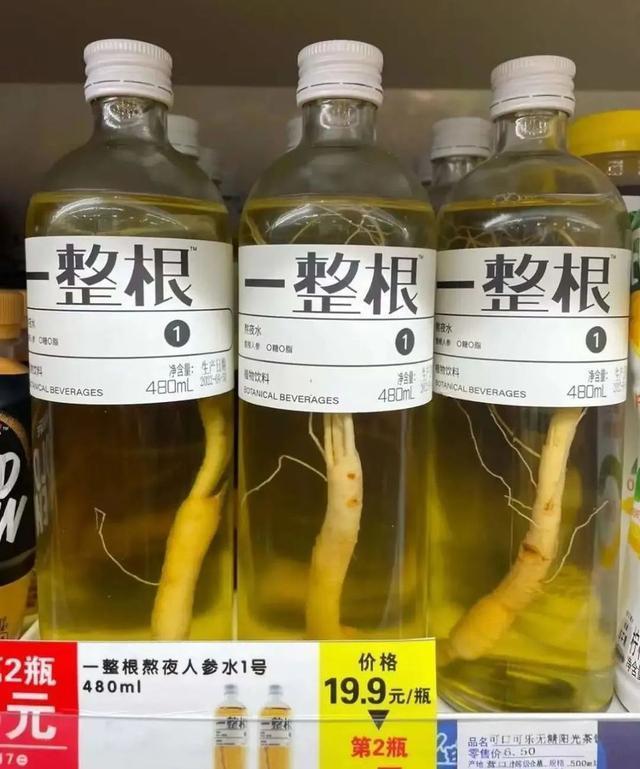
Core Insights - The health trend is shifting from middle-aged consumers to younger demographics, leading to an expansion of the market for health-oriented products [1] - The beverage industry is responding to consumer preferences by developing sugar-free drinks and plant-based waters as alternatives to traditional bottled water [1][2] - The emergence of plant water products, such as "养生水" (health water), is creating a new category that appeals to younger consumers seeking unique and flavorful options [2][4] Market Dynamics - The introduction of a plant water product, "一整根参," priced at 19.9 yuan for 480ml, has demonstrated that premium pricing can be successful in the market [2] - Young consumers are more interested in the novelty and experience of health drinks rather than traditional health benefits, leading to a focus on marketing and presentation [4][6] - The market for sugar-free tea and plant-based waters is growing, but there is a risk of consumer fatigue and negative perceptions regarding taste [7][9] Competitive Landscape - The success of brands like 康师傅冰红茶 (Kangshifu Ice Tea) shows that effective marketing and product innovation can lead to significant sales growth, with sales surpassing 100 billion yuan [10] - The current state of sugar-free tea and health waters mirrors the past challenges faced by ice tea brands, indicating a potential for consolidation in the market [10][11] - Companies must navigate consumer perceptions and preferences, balancing the appeal of sugar-free products with the need for enjoyable flavors [12]
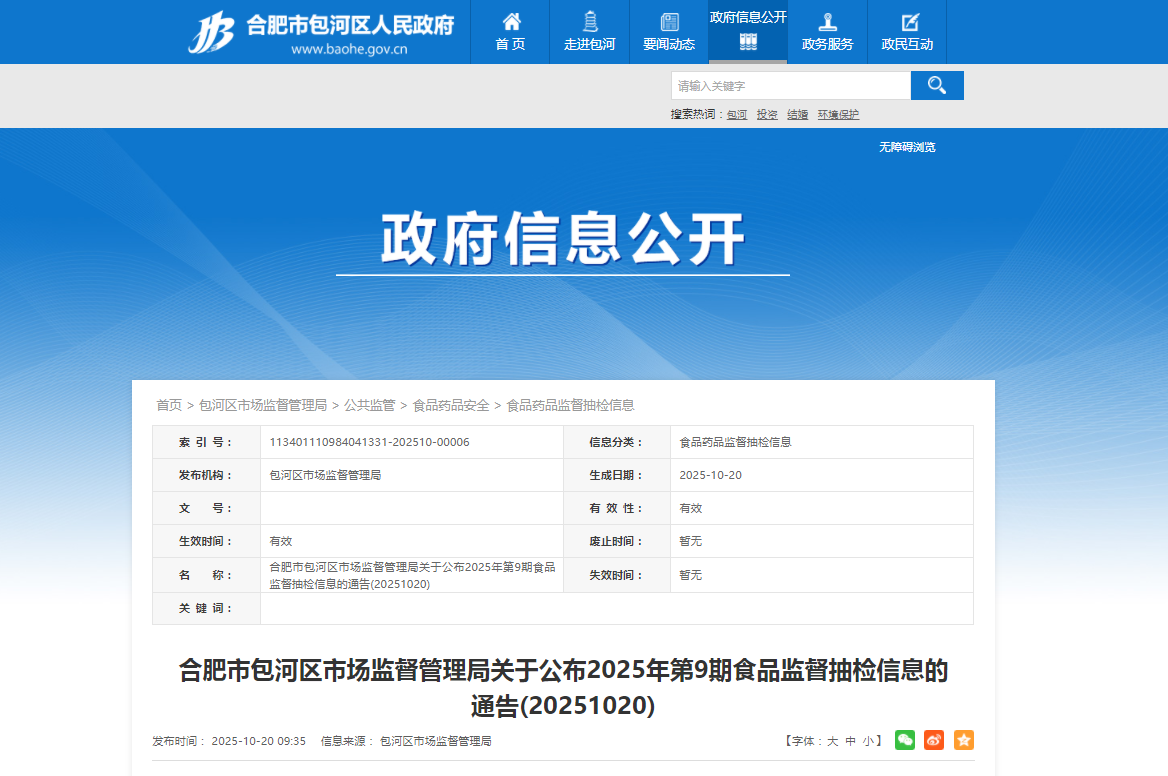
合肥市包河区市场监督管理局关于公布2025年第9期食品监督抽检信息的通告
Zhong Guo Zhi Liang Xin Wen Wang· 2025-10-20 07:33
Core Insights - The announcement from the Hefei Baohe District Market Supervision Administration details the results of food safety inspections, highlighting both non-compliant and compliant products in the region [1]. Non-Compliant Products - Several food items were found to exceed safety limits, including: - A sample of "Xiao Tai Mang" (小台芒) with a pesticide residue of 0.85 mg/kg, exceeding the limit of 0.2 mg/kg [4]. - "Carrot" samples showed a pesticide residue of 0.35 mg/kg, surpassing the acceptable level of 0.01 mg/kg [4]. - "Tie Gun Mountain" (铁棍山药) had a residue of 0.637 mg/kg for two pesticides, exceeding the limit of 0.3 mg/kg [4]. - "Potato" (马铃薯) samples contained 0.036 mg/kg of pesticide, exceeding the limit of 0.02 mg/kg [4]. - "Fried Oil" (煎炸过程用油) had an acid value of 6.1 mg/g, above the limit of 5 mg/g [4]. Compliant Products - The report also lists compliant products, including: - "Cai Bo Sorghum Wine" (彩波高粱酒坊) with an alcohol content of 48% vol [5]. - "Peach Tea" (蜜桃茶) from Vitasoy, packaged in 250 ml boxes [5]. - "Lemon Tea" (柠檬茶) from Nayuki, also in 250 ml boxes [5]. - "Bird's Nest and Silver Ear Soup" (燕窝银耳羹) from Anhui Guo Bu Li, packaged in 200g boxes [5]. Summary of Inspections - The inspections were conducted to ensure food safety and compliance with health standards, reflecting the ongoing efforts of local authorities to monitor food quality in the market [1].





宗馥莉转身,娃哈哈迷航:一场未完成的商业继承
3 6 Ke· 2025-10-20 00:17
Core Viewpoint - The resignation of Zong Fuli from her positions at Wahaha Group marks a significant turning point for the company, highlighting the challenges of succession and control within a complex ownership structure [1][2][4]. Group 1: Resignation Context - Zong Fuli's resignation is her second in a year, differing from the previous one which was a strategic retreat; this time, it appears to be a definitive exit without attempts to retain her [1][2]. - The resignation follows the death of Zong Qinghou and is influenced by government and shareholder pressures, as well as unresolved family disputes and internal reform challenges [2][4]. - The ongoing legal battles over inheritance and trust assets, including a lawsuit involving $2.1 billion in trust assets and a 29.4% stake in Wahaha, have further complicated her position [2][3]. Group 2: Ownership Structure and Challenges - Wahaha's ownership structure is characterized by a mixed-ownership model, with significant stakes held by government entities and employee shareholding, complicating decision-making processes [2][4]. - Zong Fuli's attempts to implement reforms faced resistance due to the entrenched interests of long-time associates of Zong Qinghou, leading to her inability to gain true control despite holding the title of chairman [4][5]. - The lack of clear succession planning and unresolved equity arrangements from Zong Qinghou's tenure have created vulnerabilities for the company [4][13]. Group 3: Market Dynamics and Future Prospects - The departure of Zong Fuli opens a competitive landscape with the emergence of two new brands: "Wawa Xiaozong" led by Zong Fuli and "Wawa Xiaozhi" backed by Zong Zehou, each pursuing different business strategies [8][9]. - "Wawa Xiaozong" focuses on a long-term, asset-heavy model with a complete control over the supply chain, while "Wawa Xiaozhi" adopts a light-asset, rapid expansion approach [8][9]. - The competition between these two brands reflects broader trends in the beverage industry, where traditional loyalty and distribution networks are being challenged by new entrants and changing consumer preferences [12][14]. Group 4: Strategic Implications - The future of Wahaha is uncertain, heavily influenced by ongoing ownership disputes and the evolving competitive landscape, which includes established rivals like Nongfu Spring and emerging brands [13][14]. - The internal conflicts and market pressures suggest that Wahaha must navigate significant challenges to maintain its market position and adapt to the changing dynamics of the beverage industry [14][15].

南京糖酒会调研总结及三季报前瞻
2025-10-19 15:58
Summary of Conference Call Records Industry: Baijiu (Chinese Liquor) Key Points and Arguments 1. **Emerging Channels and Consumer Trends** The live streaming phenomenon at the Nanjing Sugar and Wine Fair highlights the penetration of new channels like instant retail in the baijiu industry. The popularity of light bottle liquor priced under 100 yuan indicates robust consumer spending and a trend towards consumption upgrades [1][3]. 2. **Performance During Mid-Autumn and National Day** The baijiu industry performed slightly better than expected during the Mid-Autumn and National Day holidays. Notably, the sales of Yanghe Jinshuiyuan exceeded company expectations, with significant year-on-year growth in sales volume and banquet sessions. However, the overall banquet sales growth was modest due to a decline in the number of bottles opened per banquet [4][5]. 3. **Consensus on Industry Bottoming** There is an increasing consensus that the baijiu industry has reached its bottom, but expectations for recovery remain cautious. Demand is currently affected by alcohol bans and economic downturns, while supply is entering a destocking phase. Moutai's prices have stabilized, and distributor inventories are low [6]. 4. **Price Trends and Distributor Conditions** Moutai's post-holiday prices exceeded expectations, with stable original box prices around 1,780 yuan. Distributors' inventory levels are healthy, with a turnover rate of about one month. In contrast, Wuliangye faces price inversion and subsidy pressures, leading to a challenging situation for both Wuliangye and Luzhou Laojiao [7][8]. 5. **Projected Performance for Q3 2025** For Q3 2025, Moutai is expected to maintain mid-to-high single-digit growth, while Wuliangye may see double-digit revenue growth but with larger profit margins. Luzhou Laojiao is also projected to achieve double-digit growth in both revenue and profit, while Fenjiu and Gujing Gongjiu are expected to decline significantly [9][10]. 6. **Future Outlook and Recommendations** The baijiu industry is currently at a fundamental bottom, with a potential adjustment period from Q2 to Q1 of the following year. The valuation appears attractive. Recommended stocks include leading brands like Moutai, Fenjiu, Gujing Gongjiu, and Jiansu Yuer, as well as dividend-paying companies like Wuliangye, Luzhou Laojiao, and Yanghe. Attention is also drawn to flexible stocks like Zhenjiu Lidu [10][11]. Industry: Beverage Key Points and Arguments 1. **Steady Growth in Beverage Sector** The beverage industry is experiencing steady growth in Q3 2025, with standout performances from tea drinks, traditional health waters, electrolyte waters, and coconut water. Companies like Nongfu Spring and Dongpeng Special Drink are seeing rapid revenue growth, with profit margins expected to improve [2][12]. 2. **Differentiated Performance of Major Brands** In Q3 2025, Master Kong benefited from price increases, while Uni-President faced challenges due to delivery subsidies. Master Kong's instant noodle business returned to low single-digit growth, while its beverage segment experienced a mid-single-digit decline [13][14]. 3. **Emerging Categories and Competitive Landscape** New categories such as tea drinks and health-oriented beverages are showing significant potential for growth. The competitive landscape is intensifying due to declining raw material prices and increased subsidies from delivery platforms [12][16]. 4. **Long-term Growth Potential** Companies like Nongfu Spring and Dongpeng Special Drink are recommended for their strong brand power and growth potential, with expectations for continued performance above industry averages in the coming years [15]. Industry: Dairy Products Key Points and Arguments 1. **Dairy Sector Challenges** The dairy sector is facing a decline in supply and weak downstream demand. The number of dairy cows has decreased, while milk prices have risen slightly. Companies like Yili are expected to see modest revenue growth, while Mengniu may experience a decline due to previous high bases [18]. 2. **Market Dynamics and Future Outlook** The overall dairy market is expected to stabilize in 2026, with potential improvements in competition dynamics as raw milk prices balance out. Companies like New Dairy, Mengniu, and Yili are seen as having certain investment value [18]. Industry: Snack and Frozen Food Key Points and Arguments 1. **Snack Industry Performance** The snack industry is developing steadily, with franchisees favoring larger stores. Despite a slight decline in average transaction prices, new product categories are expected to drive growth. Companies like Wancheng are projected to achieve significant revenue growth [19][20]. 2. **Frozen Food Sector Trends** The frozen food sector is experiencing flat performance, with slight revenue growth but ongoing profit pressures. Companies like Anjijia and Qianwei Central Kitchen are seeing modest revenue increases, while others like Baobi are benefiting from lower pork costs [22][23]. 3. **Future Growth Expectations** The snack sector is anticipated to perform better in 2026, with cost pressures easing and new channel opportunities emerging. Companies are encouraged to adapt to market changes and explore new distribution channels [21]. Industry: Beer Key Points and Arguments 1. **Beer Industry Performance** The beer industry is facing moderate demand, with on-premise channels underperforming. However, off-premise channels are showing resilience, with moderate sales growth. Companies like China Resources Beer and Qingdao Beer are expected to see slight revenue increases [24][25]. 2. **Cost and Profitability Trends** The cost of beer production is expected to stabilize, with key variables focusing on ASP (average selling price) increases and cost-saving measures. Companies with strong operational capabilities, such as China Resources Beer and Yanjing Beer, are recommended for investment [25][26].



从“隐藏款”走向“热门色”,抖音生活服务助力宝藏小城多彩出圈
商业洞察· 2025-10-19 11:22
Core Viewpoint - The article highlights a shift in travel habits from "hasty check-ins" to "immersive experiences," with small cities emerging as potential tourism hotspots due to their unique charm and local culture [1][6]. Group 1: Event Overview - During the recent National Day holiday, Douyin's "Discover Treasure Small Cities - Outshine" campaign explored 20 small cities, creating themed travel routes and engaging local influencers to boost tourism [1][6]. - The campaign generated significant online engagement, with the hashtag DiscoverTreasureSmallCities reaching over 7.94 billion views, reflecting a vibrant travel trend [1][6]. Group 2: Thematic Routes and Experiences - The campaign categorized small cities into four distinct themed routes, such as "Spicy Season" and "Golden Autumn Season," catering to various traveler preferences [8][9]. - Influencers and celebrities participated in creating immersive content, showcasing local experiences and enhancing the appeal of these small cities [9][13]. Group 3: Social Media Impact - The campaign successfully generated buzz on social media, with 22 trending topics, including NationalDaySmallCities, achieving top rankings on local and national charts [19][39]. - The integration of real-life experiences with online engagement created a complete cycle of "viewing - interest - action," driving actual visits to small cities [19][39]. Group 4: Local Activities and Engagement - The campaign organized various local activities, such as markets and cultural events, to enhance visitor experiences and connect them with the local community [20][31]. - Collaborations with popular brands, like Wanglaoji, helped create a unique dining experience, reinforcing brand recognition and driving consumer engagement [34][36]. Group 5: Future Directions - Douyin's ongoing efforts aim to continue promoting small cities by highlighting their unique "color cards," fostering a comprehensive tourism experience that combines content creation, offline engagement, and commercial conversion [39].

2025年第41周:食品饮料行业周度市场观察
艾瑞咨询· 2025-10-18 00:05
Group 1: Market Trends - The trend of "light health" among young consumers reflects a shift towards flexible and fragmented health integration into daily life, with a focus on self-made health drinks and portable wellness products [2] - The pre-prepared food market in Japan emphasizes strict control over additives and a well-defined regulatory framework, which serves as a model for China to build consumer trust [3] - The mooncake market is experiencing a "healthification" trend, with low-sugar and medicinal mooncakes gaining popularity among young consumers, indicating a growing interest in traditional Chinese medicine [4] Group 2: Industry Insights - Japan's pre-prepared food industry has evolved since the 1960s, with a focus on convenience and safety, highlighting the need for clear definitions and regulations in China's pre-prepared food market [5] - The bottled water market is shifting from a "price war" to a "value war," with companies like Nongfu Spring and China Resources Beverage adapting their strategies to maintain competitiveness [6] - The bagged beverage market is rapidly growing, with various brands competing through innovative products and extensive channel distribution, indicating a significant potential for future development [7] Group 3: Company Developments - San Yuan is focusing on low-temperature fresh milk and has optimized its product structure to enhance high-end product offerings, despite a decline in revenue [12] - TATA's collaboration with the popular IP "Butter Bear" has resulted in significant online sales growth and increased brand engagement among younger consumers [14] - The success of traditional sweet soups in Lanzhou demonstrates how traditional products can resonate with modern health trends, attracting a diverse consumer base [15] Group 4: Consumer Behavior - The rise of health-conscious products, such as those targeting the elderly, indicates a growing market for affordable and health-oriented beverages [16] - The popularity of blind box products, like the "Starry People" series from Pop Mart, showcases the demand for collectible items and the potential for high resale value [17] - The convenience of KFC's "drive-thru" service in Suzhou aligns with local consumer preferences, enhancing the dining experience for car owners [18] Group 5: Future Outlook - The instant noodle industry is facing challenges from rising costs and competition, prompting brands to innovate and adapt to changing consumer preferences [10] - The protein beverage market in China is projected to grow significantly, with a focus on health and nutrition, indicating a shift towards high-quality, functional products [8] - The emergence of Chinese herbal health drinks is expected to create a billion-dollar market, driven by the demand for natural and health-oriented beverages [22][24]

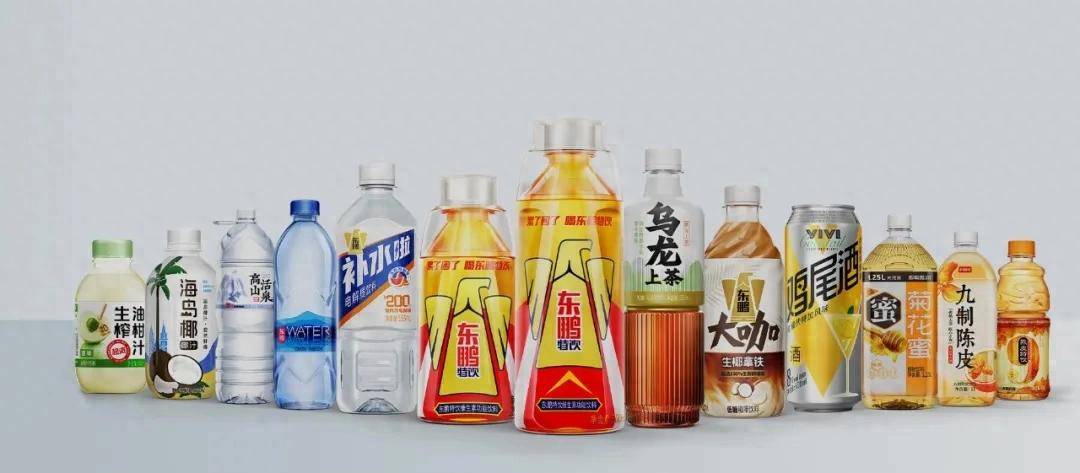
赚疯了的东鹏,为啥急着港股IPO?
Sou Hu Cai Jing· 2025-10-17 10:39
Core Viewpoint - Dongpeng's urgency to list on the Hong Kong stock market is increasing, driven by strong financial performance and the need for capital to support expansion and brand development [2][14]. Financial Performance - In the first half of 2025, Dongpeng reported revenue of 10.736 billion, a year-on-year increase of 36.37%, and a net profit of 3 billion, up 40.13% [3]. - The company's net profit attributable to shareholders was 2.375 billion, reflecting a 37.22% increase compared to the previous year [3]. - The operating cash flow decreased by 23.24% to 1.740 billion, indicating potential liquidity concerns despite strong revenue growth [3]. Product Performance - Dongpeng's energy drink sales reached 196.6 thousand tons, a 36 thousand ton increase from the previous year, but its market share dropped from 78.2% to 64.48% [4][5]. - The electrolyte drink segment saw significant growth, with sales rising to 68.5 thousand tons, increasing its market share from 10.21% to 22.49% [4][5]. - The overall gross margin improved to 45.15%, but the gross margin for energy drinks was notably higher at 50.61%, indicating a potential risk from lower-margin products [5][6]. Strategic Intentions - Dongpeng aims to enhance its production capacity, upgrade its supply chain, and strengthen brand influence through increased consumer engagement [2][14]. - The company is pursuing a national strategy to deepen and refine its distribution channels while exploring overseas markets for potential investments and acquisitions [2][14]. - The shift towards product diversification is seen as a necessary strategy to mitigate risks associated with reliance on a single product line, although it may slow growth [6][12]. Market Dynamics - The beverage industry is experiencing a shift, with increased competition leading to price wars, particularly in the low-end market segment [12][14]. - Dongpeng's historical success with its flagship product may not be easily replicated due to changing consumer habits and market saturation in the functional beverage sector [12][14]. - The company's strategy to engage in aggressive marketing and promotional activities may lead to short-term gains but risks long-term brand value erosion [10][12].