华熙生物

Search documents
可选消费W49周度趋势解析:海外市场风险偏好度回升,明年消费政策托底尚未落地A/H市场景气度回落-20251208
Haitong Securities International· 2025-12-08 13:32
Market Overview - Overseas market risk appetite has rebounded, while A/H market sentiment has declined as supportive consumption policies for next year have yet to materialize[1] - Weekly performance of sectors shows overseas sportswear leading with a 2.9% increase, followed by overseas cosmetics at 2.0%[11] - Year-to-date performance highlights gold and jewelry sector leading with a 138.2% increase, while overseas sportswear has declined by 13.8%[11] Sector Performance - The overseas sportswear sector's expected PE for 2025 is 31.1 times, which is 58% of the past five-year average[14] - The domestic sportswear sector's expected PE for 2025 is 14.2 times, representing 74% of the past five-year average[14] - The gold and jewelry sector's expected PE for 2025 is 23.7 times, which is 45% of the past five-year average[14] Key Stock Ratings - Nike, Midea Group, JD Group, and Haier Smart Home are rated as "Outperform"[1] - Lulu Lemon is rated as "Neutral," while other stocks like Anta Sports and Gree Electric are also rated "Outperform"[1] Economic Indicators - The U.S. stock market has surged, maintaining high expectations for a 25 basis point rate cut by the Federal Reserve[6] - The core CPI data for September was reported at 2.8%, the highest since April, aligning with market expectations[6] Risks - Potential risks include changes in consumer and economic environments, intensified market competition, and tariff risks[10]
4.5 亿,巨子生物创始人,入局新赛道
Xin Lang Cai Jing· 2025-12-08 12:25
Core Viewpoint - The recent capital layout by Yan Jianya, founder of Juzhi Biotechnology, involves acquiring shares in Sanrenxing Media Group, indicating a strategic investment in a company facing declining performance in recent years [1][2][17]. Company Overview - Sanrenxing Media Group is a comprehensive advertising and marketing service company, focusing on digital marketing, event services, and campus media marketing, with clients from various sectors including telecommunications, finance, consumer goods, and automotive [1][15]. - As of December 5, the total market capitalization of Juzhi Biotechnology is approximately HKD 410.2 billion (around RMB 372.54 billion), while Sanrenxing's market capitalization stands at RMB 64.09 billion [16]. Financial Performance - In 2022, Sanrenxing achieved record revenues of RMB 56.53 billion and a net profit of RMB 7.37 billion [3][18]. - However, the company has experienced a decline in performance over the past two years, with projected revenues for 2024 dropping to RMB 42.08 billion (a 20% decrease) and net profit falling to RMB 1.23 billion (a 76.65% decline) [4][18]. - For the first three quarters of the current year, Sanrenxing reported revenues of RMB 25.69 billion, down 16.72% year-on-year, and a net profit of RMB 1.45 billion, down 20.48% [4][18]. Investment Details - Yan Jianya's acquisition involves the transfer of 16.865 million unrestricted shares from multiple controlling shareholders of Sanrenxing, totaling approximately RMB 4.51 billion [1][19]. - Post-transaction, Yan will hold an 8% stake in Sanrenxing, becoming the second-largest shareholder after the controlling shareholders [1][15]. Strategic Implications - The investment is seen as a strategic move for Yan, allowing him to leverage Sanrenxing's extensive marketing resources, including a nationwide campus media network covering over 900 universities [20]. - Sanrenxing has established partnerships with major internet media platforms, enhancing its digital marketing capabilities and transitioning towards a technology-driven marketing model [21]. Industry Context - The beauty industry, including companies like Juzhi Biotechnology, faces challenges in balancing brand building and effective advertising, with marketing costs rising significantly [22][23]. - Juzhi's sales expense ratio has increased from 22.30% in 2021 to 36.25% in 2024, reflecting the industry's trend towards higher marketing investments [23]. Future Outlook - The collaboration with Sanrenxing is expected to provide Juzhi Biotechnology with enhanced marketing strategies and execution support, aiding in the establishment of a more sustainable brand communication system [25]. - The beauty sector is witnessing a shift towards ecological layouts, with companies expanding their investment portfolios and seeking synergies among brands to create value [26][27].


化妆品医美行业周报:11月抖音表现符合预期,双12国货积极备战-20251207
Shenwan Hongyuan Securities· 2025-12-07 15:21
Investment Rating - The report maintains a "Positive" outlook on the cosmetics and medical beauty industry, despite recent underperformance compared to the market [4][5]. Core Insights - The cosmetics and medical beauty sector has shown weaker performance, with the Shenwan Beauty Care Index declining by 2.0% from November 28 to December 5, 2025, underperforming the market [4][5]. - Douyin's performance in November met expectations, with domestic brands preparing actively for the upcoming Double 12 sales event, indicating a strong competitive landscape for domestic products [4][10]. - The report highlights the leading market share of Minoxidil products, particularly from Mandi International, which has established itself as a top brand in the hair growth sector [11][12]. Summary by Sections Industry Performance - The Shenwan Cosmetics Index fell by 2.2%, while the Shenwan Personal Care Index also dropped by 2.0%, both underperforming against the Shenwan A Index [4][5]. - The top-performing stocks in the sector included Juzhibio (+5.9%) and Hongmian Co. (+3.5%), while the worst performers were Kelao Co. (-7.6%) and Baiya Co. (-4.8%) [6]. Key Market Developments - Mandi International has dominated the Minoxidil market, achieving a revenue growth from 982 million yuan in 2022 to approximately 1.455 billion yuan in 2024, with a CAGR of 21.7% [12][13]. - The company has maintained a leading position in the market for ten consecutive years, with a market share of about 57% in the hair loss treatment sector and 71% in the Minoxidil product market as of 2024 [12][14]. E-commerce Insights - In November 2025, Douyin's domestic brand GMV showed significant growth, with brands like Han Shu and New Page experiencing double-digit increases [15][18]. - The overall retail sales of cosmetics in October 2025 grew by 9.6%, driven by the Double 11 shopping festival, indicating a robust recovery in consumer spending [18][20]. Company Announcements - Lin Qingxuan updated its IPO prospectus for the Hong Kong market, reporting a revenue of 1.052 billion yuan in the first half of 2025, a year-on-year increase of 98.3% [22][19]. - The company plans to expand its research and development team and explore international markets in Southeast Asia [22][19]. Market Trends - The Chinese consumer healthcare market is projected to grow from 9.313 billion yuan in 2018 to 16.420 billion yuan in 2024, with a CAGR of 9.9% [13]. - The report emphasizes the increasing market share of domestic brands in the skincare sector, with a notable rise in the competitive landscape against international brands [24].



林清轩更新招股书,关注高端国货护肤公司上市进展
KAIYUAN SECURITIES· 2025-12-07 04:14
Investment Rating - The industry investment rating is optimistic (maintained) [1] Core Insights - The report highlights the rapid growth of high-end skincare products in China, with a projected compound annual growth rate (CAGR) of 13.8% from 2024 to 2029 [28] - Lin Qingxuan, a high-end domestic skincare brand, is positioned to capitalize on this growth, having updated its IPO prospectus, indicating a potential acceleration in its capital process [25][28] - The report emphasizes the importance of emotional consumption themes and recommends focusing on high-quality companies in high-growth sectors [6][32] Summary by Sections Retail Market Overview - The retail industry index closed at 2310.07 points, down 0.83%, underperforming the Shanghai Composite Index, which rose by 0.37% [5][14] - Among the retail sub-sectors, the professional chain segment saw the largest increase, while the jewelry sector led the year-to-date performance with a 20.56% rise [17][20] Company Focus: Lin Qingxuan - Lin Qingxuan achieved a revenue of 1.05 billion yuan in H1 2025, representing a year-on-year increase of 98.3%, with a net profit of 180 million yuan, up 109.9% [25][28] - The brand's core product, camellia oil, has dominated the facial oil sales market for 11 consecutive years, establishing a strong market presence [25][28] - Lin Qingxuan's online and offline revenue contributions were 65.4% and 34.6%, respectively, with a total of 554 stores, the highest among domestic and international high-end skincare brands [25][28] Investment Themes - Investment Theme 1: Focus on high-end jewelry brands with differentiated product offerings, recommending companies like Chow Tai Fook and Lao Pu Gold [6][32] - Investment Theme 2: Emphasize offline retail companies adapting to market changes and AI-enabled cross-border e-commerce leaders, recommending Yonghui Supermarket and Aiyingshi [6][32] - Investment Theme 3: Highlight domestic beauty brands that meet emotional value and safety ingredient innovations, recommending brands like Maogeping and Proya [6][32] - Investment Theme 4: Target differentiated medical beauty product manufacturers and expanding chain medical beauty institutions, recommending Aimeike and Kedi-B [6][32] Company Performance Highlights - Chow Tai Fook reported a revenue of 38.986 billion HKD in FY2026H1, a slight decline of 1.1%, but a net profit increase of 0.1% [39][40] - Chao Hong Ji achieved a revenue of 6.237 billion yuan in Q1-Q3 2025, up 28.4%, with a net profit increase of 0.3% [42] - The report notes that companies like Proya and Marubi have shown strong performance in the beauty sector, with Proya's revenue reaching 7.098 billion yuan in Q3 2025, up 1.9% [34][35]
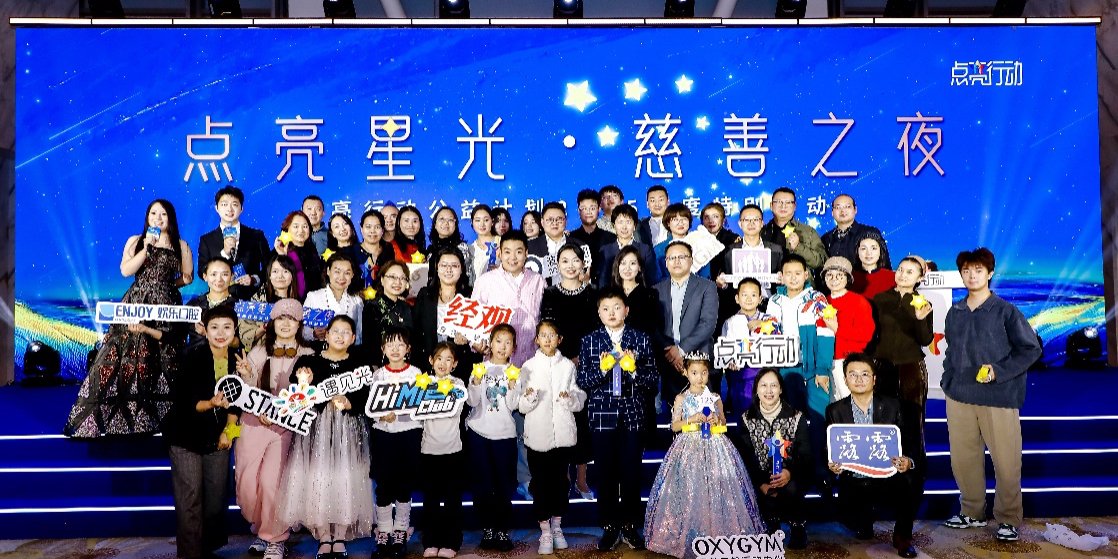
点亮星光照亮未来,点亮行动公益计划2025年度特别活动温暖落幕
Jing Ji Guan Cha Wang· 2025-12-06 11:27
Core Insights - The event "Light Up the Star Charity Night" was held on December 5, International Volunteer Day, in Beijing, focusing on supporting individuals with autism and showcasing the commitment of various sectors to this cause [2][3] - The event featured multiple segments including annual sharing, honor awards, artistic performances, and charity auctions, embodying the theme "Light Up Hope, Seek the Light" [2][3] Summary by Sections Section 1: Prelude of Light - Reflecting on the Past and Future - The event commenced with a short film titled "Chasing Stars," which utilized AI technology to connect over 80 artworks by children with autism, setting a tone of technological warmth and humanistic care [3] - Zhang Weiting, the initiator of the "Light Up Action" charity plan, shared a summary of the initiative's journey over the past three years and outlined plans for 2026, focusing on a richer and more diverse public welfare ecosystem [3] Section 2: Starry Moments - Honoring the Shining Companions - The event recognized new "Star Ambassadors," including notable figures from various fields, and featured a performance by the creative team of the autism-themed film "The Best of Friends" [7][10] Section 3: Starry Dance - Gathering Volunteer Power - The event highlighted the importance of volunteers, announcing the winners of the "Best Volunteer Team Award," which included various organizations that have provided professional support and community engagement [15][16] Section 4: The Final Chapter of Light - Love Never Sets - The event concluded with a second round of charity auctions, generating enthusiasm and support for the cause, and featured a collective performance of "Hope You Are Loved by This World," resonating with the event's theme [18][20]
老牌上游企业30年转身,如何在美谷里孵化未来工厂?
FBeauty未来迹· 2025-12-06 08:03
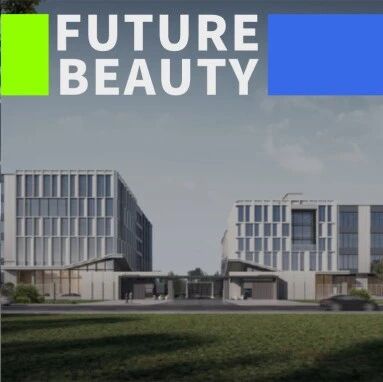
Core Viewpoint - The article discusses the establishment of Shangcheng (Shanghai) Enterprise Development Co., Ltd., which aims to create a "smart manufacturing ecosystem" for daily chemical products, aligning with the theme of the 2025 Oriental Beauty Valley International Cosmetics Conference, "Moving Towards New, Beauty Coexists" [2][6][20]. Company Overview - Shangcheng was founded in 2024, with Shanghai Chengxing Machinery Electronics Co., Ltd. holding 60% and Guangzhou Tashan Zhiyu Industrial Holdings Co., Ltd. holding 40% [6]. - The company focuses on four core areas: research and development of daily chemical equipment, cosmetics production and sales, brand operation management, and software services, aiming to create an integrated ecosystem [6][11]. Industry Context - The 2025 Oriental Beauty Valley International Cosmetics Conference highlighted the importance of industry collaboration for high-quality development in the cosmetics sector [6]. - The establishment of Shangcheng reflects a response to unmet needs in the industry, particularly in addressing the challenges brands face when considering self-built factories [4][11]. Business Model - Shangcheng's business model is centered on building a "smart manufacturing ecosystem" that provides comprehensive solutions, including brand incubation, production, team training, warehousing, logistics, and information support [11][12]. - The company offers three differentiated service models: 1. "Shared Production Base" allows brands to operate in Shangcheng's facilities before investing in their own factories [11]. 2. "Capacity Elastic Support" provides temporary production resources to brands facing short-term order peaks [12]. 3. Comprehensive support services reduce coordination costs for clients [12]. Project Development - The "Smart Manufacturing Base for Daily Chemical Equipment" project was launched in November 2025, with a total investment of 240 million yuan and covering an area of 35 acres [12][14]. - The base will include five core areas: smart manufacturing center, R&D innovation platform, information service platform, brand operation and marketing center, and talent training center [14]. Growth Expectations - Shangcheng anticipates an average annual growth rate of around 15% over the next three years, leveraging the existing customer base and reputation of its parent company, Chengxing [19]. - The company aims to convert traditional equipment clients into users of its comprehensive service ecosystem while expanding into new OEM and brand operation businesses [19]. Challenges and Market Dynamics - The company faces significant competition in the market, with a need for differentiation due to the high level of service homogeneity and oversupply [19]. - The success of Shangcheng's ecosystem model will depend on its ability to integrate into the broader regional industrial ecosystem and collaborate with various stakeholders in the Oriental Beauty Valley [20].
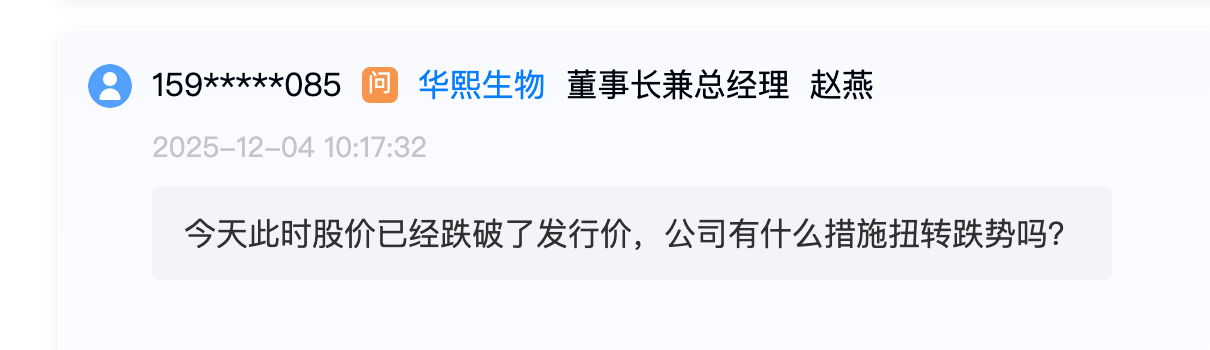
鲁股观察 | 华熙生物:股价跌破发行价,控股股东增持2.57亿能否挽回信心?
Xin Lang Cai Jing· 2025-12-06 02:59
Core Viewpoint - The stock price of Huaxi Biological has fallen below its initial public offering (IPO) price, leading to concerns from investors and a series of measures from the management to address the situation [2][4]. Group 1: Stock Performance and Market Reaction - Huaxi Biological was listed on the STAR Market on November 6, 2019, with an IPO price of 47.79 yuan per share [2]. - The stock reached a peak price of 312.99 yuan, with a market capitalization exceeding 140 billion yuan [3]. - As of December 4, 2025, the stock closed at 45.57 yuan, resulting in a market cap of approximately 22 billion yuan, a decline of nearly 120 billion yuan from its peak [4]. - Institutional investors have been reducing their holdings, with significant sell-offs reported in recent months [4]. Group 2: Financial Performance - In 2024, Huaxi Biological faced a significant decline in performance, with annual revenue of 4.722 billion yuan, down 23.79% year-on-year, and a net profit of 490 million yuan, a drop of 64.18% [5]. - For the first three quarters of 2025, the company reported revenue of 3.163 billion yuan, a year-on-year decrease of 18.36%, and a net profit of 252 million yuan, down 30.29% [6]. - The skin science innovation business, previously a growth driver, saw a revenue decline of 33.97% in the first half of 2025, contributing only 40.36% to the main business revenue [7][8]. Group 3: Management Actions and Strategic Changes - In response to the declining performance, the management announced a return to core operations and initiated a comprehensive restructuring of business strategies and talent organization [5]. - Positive signs emerged in Q3 2025, with a net profit of 32 million yuan, reflecting a year-on-year increase of 55.63%, indicating a recovery trend [8]. - The company achieved a reduction in sales expense ratio to 34.26%, the lowest in five years, attributed to optimized brand communication and channel structure [9]. Group 4: Shareholder Actions - The controlling shareholder, Huaxi Xinyu Investment Co., announced a share buyback plan, intending to purchase between 200 million and 300 million yuan worth of shares [10]. - From August 27 to September 30, 2025, the controlling shareholder completed a buyback of 4.5187 million shares, totaling 257 million yuan [10]. - Following the buyback, the controlling shareholder's stake increased from 59.17% to 60.01% [13].

欧莱雅中国研发和创新中心扬帆20年:本土实验室正孵化产业公共属性的迭代引擎
Cai Jing Wang· 2025-12-05 13:37
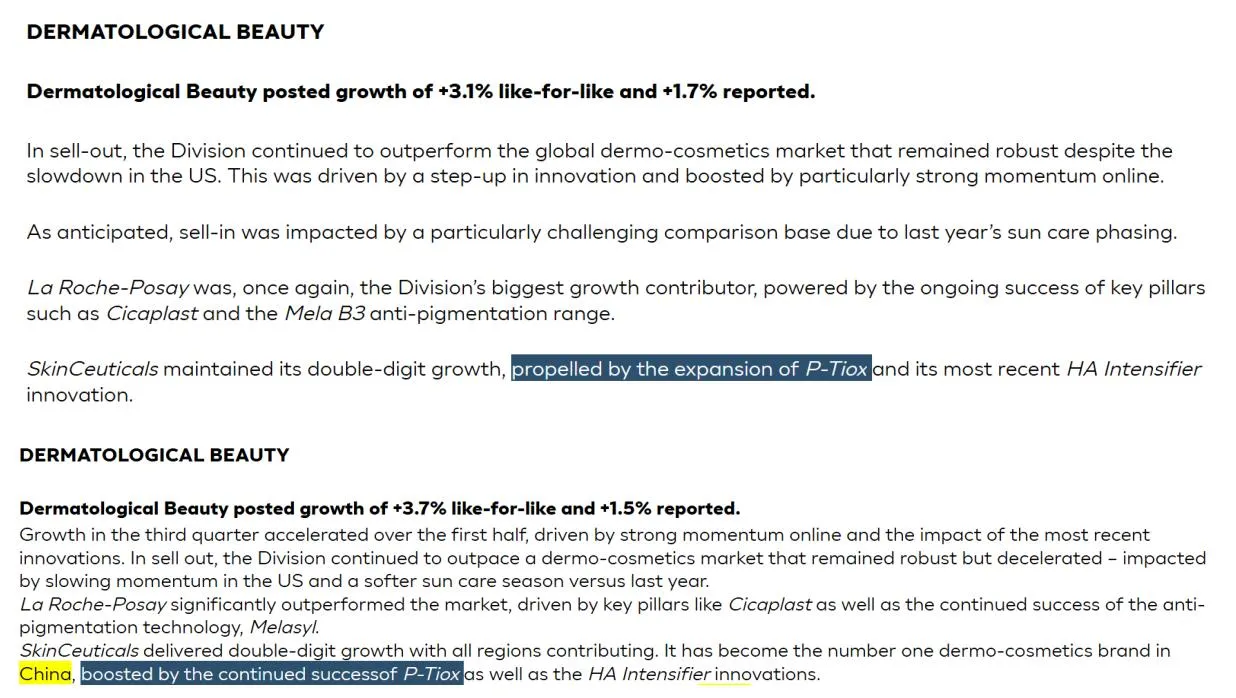
Core Insights - L'Oréal's China R&D and Innovation Center is driving global beauty giant's performance through localized product innovations tailored for Chinese consumers [1][2] - The center has evolved into a key pillar in L'Oréal's global R&D landscape, emphasizing collaboration with local scientific institutions and startups to enhance innovation capabilities [4][5] Group 1: Product Innovations - Customized products such as a jasmine-scented cream and a lip gloss inspired by local culinary flavors are examples of L'Oréal's localized approach [1] - The "P-TIOX" peptide serum, developed by the Chinese R&D team, has been highlighted as a major contributor to sustained double-digit growth for the brand [2] Group 2: R&D Achievements - Over the past 20 years, L'Oréal's China R&D has conducted approximately 35 large-scale foundational research projects, involving over 100,000 Chinese consumers annually [7] - In 2024, the center is set to publicly file 372 patents, with 81 of those being inventions from the Chinese R&D team [7] Group 3: Collaborations and Investments - L'Oréal has engaged in strategic investments in local biotech firms, such as "Unnamed Light," to co-develop innovative bioactive ingredients and promote sustainable production methods [10][11] - The establishment of the "Academician Workstation" in collaboration with Shanghai Jiao Tong University marks a significant milestone in L'Oréal's commitment to local scientific advancement [9] Group 4: Market Strategy - L'Oréal's investment strategy includes backing emerging local brands like LANlan, which aligns with the company's long-term vision of investing in the future of the Chinese market [15][16] - The company aims to leverage its R&D capabilities to support the commercialization of innovative products and enhance the overall beauty ecosystem in China [12][16]

医美转型进行时:博弈中寻机,规范中生长
2 1 Shi Ji Jing Ji Bao Dao· 2025-12-05 10:45
Core Insights - The Chinese medical aesthetics industry has surpassed 300 billion yuan, with the light medical aesthetics market expected to grow at a compound annual growth rate (CAGR) of over 20% in the next five years, becoming the mainstream segment by 2024 [1] - Injection projects, as the core growth engine of light medical aesthetics, have seen their market size grow from 25.7 billion yuan in 2018 to 67 billion yuan in 2023, with a CAGR of 21.1%, projected to reach 147 billion yuan by 2027 [1] - The industry faces challenges such as rapid market changes driven by consumer preferences and increasing competition, necessitating innovation in material research to build competitive barriers [1] Market Dynamics - In 2024, the market share of injection materials is projected to be approximately 36% for hyaluronic acid, 29% for botulinum toxin, 19% for collagen, and 16% for regenerative materials [3] - The competition in the hyaluronic acid market has intensified, leading to revenue declines for major companies like Huaxi Biological and Aimeike, with revenue drops of 18.36% and 21.49% respectively in the first three quarters of 2025 [3][4] - In contrast, the recombinant collagen market is rapidly growing, with a projected CAGR of 44.93%, expected to reach 58.57 billion yuan by 2025 [3] Innovation and Product Development - Companies are accelerating new product launches to capture market opportunities, with Huaxi Biological introducing compliant products for facial skin improvement and other companies like Jinbo Biological launching innovative recombinant collagen products [5] - The emergence of new materials such as alginate and hydroxyapatite is set to enrich the market supply, with several products receiving regulatory approval in 2025 [6] Regulatory Environment - The industry is experiencing a shift towards compliance, with increased regulatory scrutiny leading to a "survival of the fittest" scenario, pushing medical aesthetic institutions to accelerate compliance transformations [2] - Despite the growth in compliant products, issues such as illegal operations and counterfeit products remain prevalent, posing risks to consumer safety [11][12] Pricing and Market Structure - The supply expansion has led to a restructuring of interests within the industry, with upstream manufacturers and downstream medical institutions engaged in pricing power struggles [8][9] - New platforms like Xinyang are disrupting traditional pricing models by significantly reducing costs through digitalization and centralized procurement, indicating a shift from a seller's market to a buyer's market [9][10] Future Trends - The industry is expected to evolve towards a more transparent and competitive landscape, with a focus on product and scenario-driven strategies, comprehensive treatment solutions, and enhanced consumer awareness [10] - The ongoing regulatory efforts and market dynamics suggest that the medical aesthetics industry is moving towards a more mature and compliant operational model, emphasizing innovation and safety [14]
这一次,AI终于不骗打工人了
半佛仙人· 2025-12-05 06:43
Core Insights - The article discusses the evolving role of AI in the workplace, highlighting how it has transformed the experience of employees, particularly in terms of efficiency and workload management [3][5][8]. Group 1: AI's Impact on Work Culture - AI has changed the traditional work environment, where employees previously faced monotonous tasks and low pay, leading to a more complex form of workplace pain [3]. - The introduction of AI has led employers to expect more from employees, often without providing adequate support or tools [3][5]. Group 2: Employee-Driven Solutions - The "AI Efficiency Pioneer Competition" organized by Feishu showcases how employees are taking initiative to solve their own problems using AI tools, rather than waiting for top-down directives from management [5][6]. - Many participants in the competition created AI solutions to alleviate their own workload, demonstrating a practical approach to using technology for personal and team efficiency [5][8]. Group 3: Practical Applications of AI - Examples from the competition illustrate how employees have developed AI tools to address specific pain points, such as automating report generation and data analysis, which were previously time-consuming tasks [6][8]. - The article emphasizes that effective AI applications stem from real frustrations experienced by employees, rather than being implemented for the sake of technology [8][10]. Group 4: The Value of AI in Reducing Workload - The article argues that the true value of AI lies in its ability to reduce the "pain density" of work, allowing employees to focus on more meaningful tasks rather than mundane processes [11][13]. - By utilizing AI tools, employees can save time on repetitive tasks, effectively increasing their productivity and job satisfaction without necessarily changing their job titles or salaries [11][13]. Group 5: Recognition and Empowerment - The competition not only provided practical benefits but also recognized the contributions of ordinary employees, giving them a sense of dignity and respect in their roles [10]. - The narrative highlights that technology should empower workers, allowing them to tackle inefficiencies and improve their work-life balance [10][11].