三星

Search documents
未知机构:论国产代工的三层逻辑受下游汽车工控等市场拉库原材料价-20260210
未知机构· 2026-02-10 02:00
Summary of Conference Call Notes Industry Overview - The conference call discusses the semiconductor foundry industry, particularly focusing on the current trends and pricing strategies in the market due to various factors such as rising raw material costs and shifts in production capacity from major players like TSMC [1][2]. Key Points - The foundry industry is experiencing a comprehensive price increase, with World Advanced announcing a second wave of price hikes starting in April, with adjustments ranging from 10% to 15% [1][2]. - Other companies such as Hua Hong and SMIC have also been reported to increase their prices [3]. - For an industry currently operating with single-digit profit margins, a 10% price increase could potentially double net profits [4]. - The advanced logic foundry capacity in China is significantly lower than that of global leaders, with TSMC, Intel, and Samsung having over 1.2 million wafers of capacity at 16nm and below, while China's advanced process capacity is currently less than 50,000 wafers [4]. - The "14th Five-Year Plan" aims to reverse the current capacity situation in advanced processes, indicating a strategic focus on enhancing domestic capabilities [4]. - The trends in DRAM and 3D NAND suggest a shift towards outsourcing logic wafers (CBA process), with future capacity planning exceeding 1.2 million wafers, highlighting a substantial demand for 20/28nm nodes [4]. - Key players in the foundry sector include SMIC, Hua Hong Semiconductor, Jinghe Integration, Yandong Micro, China Resources Micro, and ChipLink Integration [4]. - Equipment suppliers mentioned include Jingce Electronics, Northern Huachuang, Zhongwei Company, and Tuojing Technology, indicating a robust ecosystem supporting the semiconductor industry [4]. - The conference call expresses optimism regarding the revaluation of the Chinese semiconductor foundry industry and invites further discussions on the details [4].

未知机构:强劲的AI驱动需求以及供应商的自律行动应能在未来约2年-20260210
未知机构· 2026-02-10 02:00
Summary of Conference Call Notes Industry Overview - The conference call discusses the **DRAM and NAND memory market**, highlighting the impact of **AI-driven demand** and supplier self-discipline on supply and pricing dynamics [1][3][4]. Key Points - **Supply Tightness and Pricing**: Strong AI-driven demand and supplier self-discipline are expected to maintain tight DRAM supply and high prices for approximately the next two years [1][3][4]. - **Increased Costs for AI Infrastructure**: Buyers of AI infrastructure may incur higher memory costs to ensure timely GPU delivery [1][3][4]. - **Order Backlogs**: Multiple critical components for data center physical infrastructure are facing order backlogs ranging from months to years, exacerbating supply constraints [1][5]. - **Delivery Cycle Extension**: The delivery cycles for DRAM and NAND have extended to several months, reminiscent of the COVID-19 pandemic period [2][4]. - **Structural Shortage in IT Hardware**: The IT hardware industry is entering a structural shortage phase due to severe supply-demand imbalances in the memory sector driven by AI infrastructure needs [4]. - **High Bandwidth Memory (HBM) Supply Issues**: HBM is particularly constrained due to packaging complexity and yield learning curve issues, impacting availability [4]. - **Long-term Agreements Preferred**: Memory buyers are increasingly favoring long-term agreements over spot pricing, focusing on production commitments, priority access, and quota guarantees [4]. - **Cost Sharing by OEMs**: Companies like Dell are expected to pass on increased component costs to customers by raising deployment service prices or financing rates, distributing higher costs over 3-5 year contracts [5]. - **Component Shortages**: The industry faces order backlogs for several key components, including turbines, transformers, advanced packaging, power supplies, liquid cooling components, fans, optical switches and fibers, network interface cards (NICs), and racks [5]. - **Chinese Suppliers' Role**: Some manufacturers are considering certifying Chinese suppliers like Changxin Memory Technologies (CXMT) and Yangtze Memory Technologies (YMTC) for low-end markets, but high-end AI ecosystems will still rely on leading suppliers due to the lack of competitive HBM products from these Chinese firms [5]. Additional Important Insights - **Cost Mitigation Opportunities**: There are potential opportunities to offset rising memory costs through "de-specing" AI infrastructure, which includes redesigning power systems, optimizing cooling infrastructure, and network architecture [4].
板块一年暴涨80%,AI 吞噬式需求引爆存储超级周期
3 6 Ke· 2026-02-10 01:15
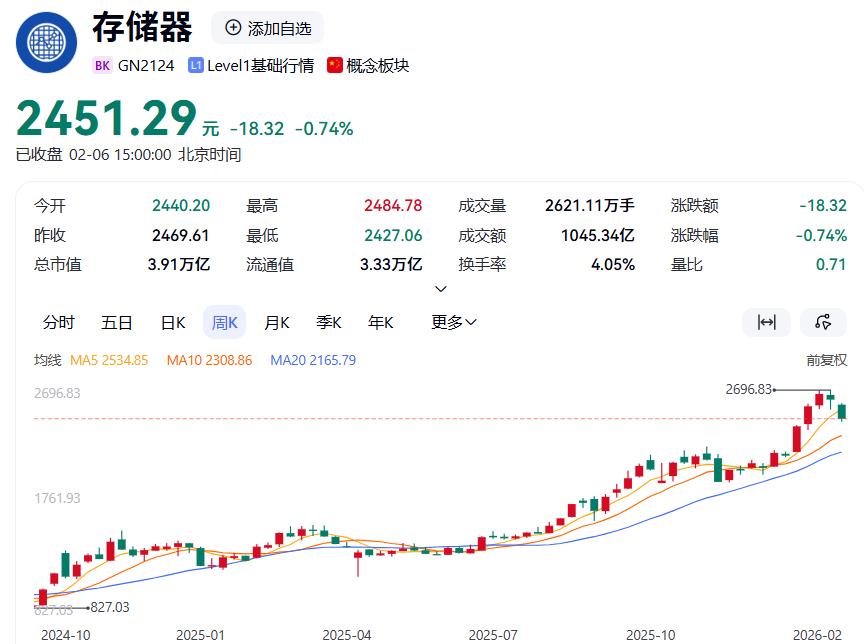
Core Viewpoint - The Chinese storage industry is experiencing a "value reassessment" with a significant surge in stock prices and a 50% increase in the storage sector within a month, marking the onset of a "super bull market" driven by AI demand and domestic production capabilities [1][3][5]. Group 1: Market Dynamics - Over ten trading days, more than 20 stocks hit the daily limit, with companies like Zhaoyi Innovation seeing an 80% increase in ten days and Changjiang Storage achieving a 180% rise this year [3][5]. - The price of 256GB DDR5 server memory has exceeded 50,000 yuan, while the price of 16GB DDR4 memory has surged from 180 yuan to 420 yuan, indicating extreme market volatility [5][7]. - The current demand for AI servers is 8-10 times higher than traditional servers, consuming 53% of global memory production capacity, while supply is constrained due to major manufacturers reallocating 80% of advanced capacity to higher-margin products [7][9]. Group 2: Technological Advancements - The establishment of the domestic storage ecosystem alliance and a 5 billion yuan special fund aims to focus on core technologies such as DRAM and NAND Flash, with significant improvements in efficiency and cost reductions [3][9]. - The HBM3e high-bandwidth memory has achieved mass production, and Changjiang Storage's 232-layer 3D NAND has reduced unit storage costs by 70% [3][9]. - The transition from imported reliance to domestic alternatives in storage chips signifies a major shift in the industry, with the storage cycle moving from "moderate growth" to a "super bull market" [3][9]. Group 3: Financial Performance - SK Hynix's net profit is expected to surge by 119% in Q3 2025, while Samsung's semiconductor business profits are projected to grow by 31.81% [11][12]. - Domestic module manufacturers like Jiangbolong are experiencing a V-shaped recovery, with net profits increasing by 1994% year-on-year [11][12]. - The overall market for storage chips in China is projected to reach nearly 500 billion yuan by 2026, with domestic manufacturers rapidly filling the gap in mature process fields [12][13]. Group 4: Industry Structure and Future Outlook - The storage chip industry is evolving from a traditional cyclical market to a core component of AI infrastructure, necessitating a comprehensive restructuring of the industry chain [13][25]. - The domestic storage industry is poised for a significant rebound in 2026, supported by government initiatives and market demand, with a focus on high-end breakthroughs [25][26]. - Companies that can integrate data, storage, and computing solutions will establish barriers in AI inference, edge computing, and smart terminals, positioning themselves as key players in the storage era [23][25].

透过ASML 2025全年财报,看增长背后的结构变化
半导体行业观察· 2026-02-10 01:14
Core Viewpoint - The semiconductor industry is transitioning from a traditional cycle dominated by mobile and PC devices to a multi-driven evolution represented by "AI computing infrastructure" as of early 2026 [1] Group 1: ASML's Financial Performance - In 2025, ASML achieved a record net sales of approximately €32.7 billion, a gross margin of about 52.8%, and a net profit of around €9.6 billion [4] - ASML's order backlog reached approximately €38.8 billion by the end of 2025, providing high visibility for revenue growth in 2026 and beyond [4] - The sales of ASML's EUV systems reached €11.6 billion in 2025, a year-on-year increase of 39%, with EUV accounting for 48% of the company's system revenue [4] Group 2: Equipment Demand Dynamics - EUV systems are becoming the core production tool for advanced processes, while DUV systems remain essential in the semiconductor manufacturing ecosystem [7] - DUV systems are expected to continue playing a major role in the industry, with significant demand for high-end DUV systems like the latest ArF immersion lithography machine [7][8] - DUV applications are expanding from "front-end wafer manufacturing" to "advanced packaging and 3D integration," indicating a dual-track growth structure for ASML [8] Group 3: Market Resilience in China - ASML's net system sales in the Chinese market accounted for 33% of total sales in 2025, exceeding previous expectations [9] - The strong demand in China is driven by the growth of mature processes (28nm and above) and the urgent need for domestic chip production [10] - AI's demand is creating a "spillover effect," with many supporting chips produced using DUV processes, further driving ASML's orders [11] Group 4: Advanced Packaging and System Performance - The acceleration of 2.5D/3D packaging production lines in China is enhancing system-level performance, aligning with ASML's investments in advanced packaging equipment [12] - ASML expects its revenue share from China to stabilize around 20% in 2026, reflecting a return to "normalization" rather than a decline in demand [12] Group 5: Transition to a Platform Company - ASML is evolving from a "cyclical equipment vendor" to a "structural platform company," providing comprehensive solutions around lithography [14] - The company's measurement and inspection systems saw a 28% year-on-year increase in sales, indicating a shift towards a balanced revenue structure [15] - ASML's installed base revenue reached approximately €8.2 billion in 2025, becoming the second-largest revenue source after system sales [15] Group 6: Future Growth Projections - ASML projects net sales for 2026 to be between €34 billion and €39 billion, with a gross margin maintained at 51%-53% [18] - The company aims to reach total revenues of €44 billion to €60 billion by 2030, with AI as a key driver of future growth [18] - A significant stock buyback plan of up to €12 billion has been announced, reflecting management's confidence in future cash flow [19]

2月10日早餐 | 离岸人民币创近三年新高;一季度内存价格涨90%
Xuan Gu Bao· 2026-02-10 00:12
Market Overview - Technology stocks continue to support the rise of US markets, with the S&P 500 up 0.47%, Dow Jones up 0.04%, and Nasdaq up 0.90% [1] - Major tech companies like Microsoft rose over 3%, Nvidia up 2.5%, while Apple fell over 1% [1] - The chip index increased by over 1%, outperforming the market, with AMD and Broadcom both rising over 3% [1] Chinese Stocks - The Chinese concept stock index saw a slight increase, with Mingda Jiahe rising over 93%, Xuniao Software up over 48%, and Huami Technology up about 27% [2] - New Oriental experienced a decline of over 4% [2] Currency and Commodities - The US dollar index fell for two consecutive days, reaching a one-week low, while the offshore RMB broke the 6.92 mark for the first time in nearly three years [3] - Bitcoin dropped over 6% from its daily high, falling below $69,000, before slightly recovering [3] - Gold prices rose over 2%, surpassing $5,000, with silver prices increasing nearly 9% [3] Technology Developments - Elon Musk announced that SpaceX will shift its focus to building a "self-growing city" on the Moon before advancing its Mars plans [4] - Apple is reportedly planning to launch the iPhone Flip, prompting Samsung Display to consider expanding OLED panel production [5] - Altman stated that ChatGPT's growth has "recovered to over 10%" and plans to launch a new model this week [6] Semiconductor and Storage Market - Counterpoint reported that memory prices surged by 80%-90% quarter-on-quarter in Q1, marking a historic increase [7] - The price of general server DRAM significantly increased, with contract prices for 64GB RDIMM rising from $450 to over $900, with expectations to exceed $1,000 in Q2 [16] Energy Storage Innovations - A new compressed air energy storage compressor, developed by the Chinese Academy of Sciences, has achieved international leading levels, with over 100% increase in single-machine power [17] - This technology is expected to play a crucial role in supporting new energy systems and achieving carbon neutrality goals [17] Rare Earth Market - Prices of rare earth products have accelerated, with praseodymium-neodymium oxide and metal prices rising by 7.59% and 6.27% respectively [19] - The cumulative increase in praseodymium-neodymium oxide this year has reached 34% [19] Company Announcements - Zhongke Shuguang plans to issue convertible bonds to raise up to 8 billion yuan for AI-related projects [20] - Yuanjie Technology intends to invest 1.251 billion yuan in a semiconductor chip and device production base [20] - Hainan Mining plans to acquire a 69.9% stake in Fengrui Fluorine Industry [20]



美国现在彻底没希望了,因为已经遇到了,世界上最强大的大国崛起
Sou Hu Cai Jing· 2026-02-09 16:22
Group 1 - The article highlights that despite the U.S. attempts to use trade measures to suppress China, China's economy has not only remained resilient but has also achieved record export highs, with a projected trade surplus of over $1.2 trillion by 2025 [1][3] - China's industrial chain is now highly complete, capable of producing everything from small components to high-tech products, which has allowed it to overcome U.S. restrictions on chip exports and achieve breakthroughs in technology such as 7nm processing [3][5] - The U.S. manufacturing sector has declined from 12% to 10% of its economy, with significant factory closures and rising national debt, which is projected to reach $38 trillion [3][9] Group 2 - China leads globally in several technological sectors, including quantum computing, 5G infrastructure, and electric vehicles, holding a 60% share of the global market for electric vehicles [5][7] - The article notes that U.S. companies are facing increased costs due to trade disputes, with companies like Apple relocating supply chains to Vietnam while still relying heavily on Chinese components [7][9] - The article emphasizes that the U.S. is experiencing internal issues such as widening wealth gaps and infrastructure decay, which are undermining its competitiveness against China [9][11] Group 3 - The article discusses the shift in global trade dynamics, with European countries increasing trade with China, and Japan and South Korea remaining cautious due to their reliance on China as a major trading partner [5][11] - It mentions that China's export volume continues to grow despite a decrease in the share of exports to the U.S., as China redirects its exports to Southeast Asia and Africa [3][5] - The article concludes that the U.S. has missed opportunities for collaboration with China, and the global landscape is shifting towards a multipolar world where China's influence is increasing [5][11]

清华系创企拿下国内视频生成领域最大单笔融资!技术领跑,商业落地双提速
Sou Hu Cai Jing· 2026-02-09 15:40
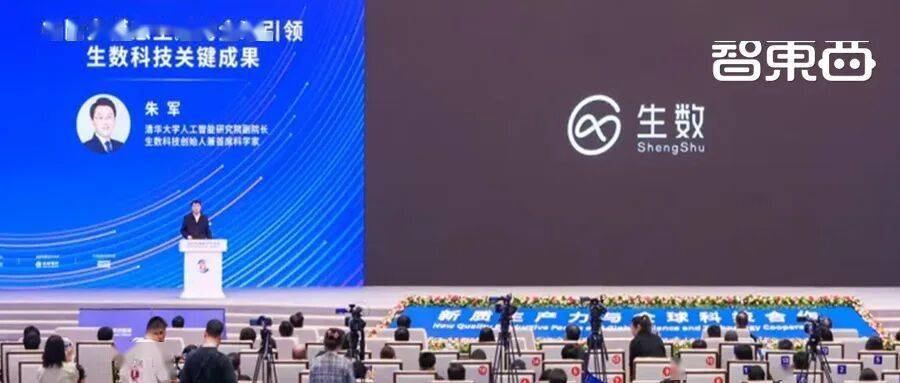
Group 1 - The core point of the article is that Beijing-based multimodal generation technology startup, Shengshu Technology, has completed over 600 million RMB in Series A+ financing, setting a new record in the domestic video generation sector, surpassing the previous record of 430 million RMB held by Aishi Technology [1] Group 2 - Shengshu Technology was founded in March 2023 and is recognized as a "Tsinghua system" enterprise, with co-founders having strong ties to Tsinghua University, including the vice president of the university's AI research institute [3] - The company is one of the earliest teams to research multimodal generation algorithms, having proposed the U-ViT architecture in September 2022, three months before OpenAI's DiT architecture [3] - In 2024, Shengshu Technology launched the Vidu model for video generation, with the latest Vidu Q3 model released on January 30, 2026, ranking first in China and second globally in authoritative benchmark tests, only behind xAI's Grok [3] Group 3 - The financing announcement revealed that Shengshu Technology achieved over 10 times growth in users and revenue by 2025, with its business covering over 200 countries and regions globally [4] - The company has a clear commercialization path and a broad customer ecosystem, serving major players in the film industry, including Sony Pictures, Tencent Animation, and iQIYI, as well as giants in the internet and hardware sectors like ByteDance and Samsung [4] - Strategic partnerships include deep collaborations with companies like Zhipu AI, leveraging a MaaS platform, and previous investments from Baidu, Huawei, and Ant Group [4] Group 4 - Shengshu Technology aims to go beyond content generation, with co-founder Zhu Jun emphasizing the ultimate goal of building a "world model" that understands real physical laws to support machine decision-making [7] - The company's "reference life video" technology addresses complex multi-agent consistency challenges in commercial videos, laying the groundwork for advanced applications [7] - The record-breaking financing not only confirms market recognition of Shengshu Technology's technical path and commercial capabilities but also marks a new phase for Chinese video generation AI startups, transitioning from technology catch-up to competing alongside global giants [7]
民德电子(300656.SZ):功率半导体市场正步入新一轮上升周期
Ge Long Hui· 2026-02-09 13:27
Core Viewpoint - The power semiconductor market is entering a new growth cycle driven by increasing demand for high-voltage, high-efficiency, and high-reliability power devices due to the exponential rise in AI computing power and the expansion of data centers [1] Industry Trends - The demand for power management integrated circuits (PMIC) and power devices is experiencing exponential growth as AI data centers require significant power supply capabilities, which are becoming a core bottleneck for the large-scale implementation of AI technology [1] - The acceleration of power system construction, including photovoltaic energy storage and grid upgrades, along with the industrial automation upgrade, is driving the demand for key power devices in clean energy and industrial control sectors [1] Supply and Demand Dynamics - Major international manufacturers like TSMC and Samsung are focusing resources on advanced processes with higher returns, leading to a reduction in the supply and capacity of mature 6-inch and 8-inch processes, creating a structural imbalance in supply and demand for these mature processes [1] - Since the second half of 2025, most domestic power wafer production lines have been operating at high capacity utilization rates, indicating a strong demand in the market [1] - Infineon, a leading international power semiconductor company, announced a price increase for certain power devices effective April 1, 2026, reflecting a steady upward trend in both volume and price within the industry [1]

内存泡沫
3 6 Ke· 2026-02-09 11:50
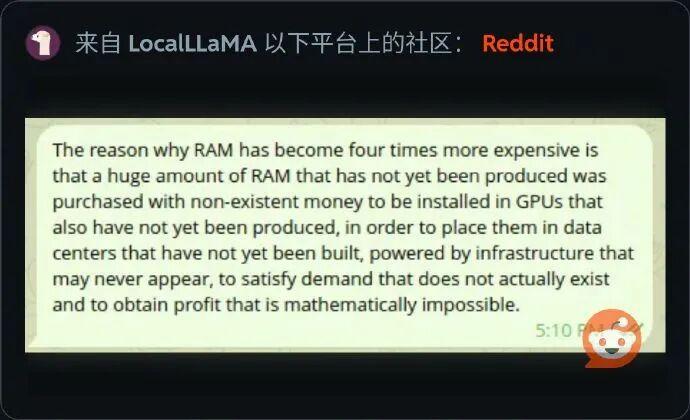
几个月来,不少朋友都在纠结:到底要不要买一台笔记本电脑或手机囤着? 起初大家觉得。电子产品买新不买旧,没必要囤旧款。直到内存价格暴涨,新款产品降配保价,大家这才悟了:不是新款买不起,而是老款旗舰的大 内存版本更有性价比。 企业主也快吃不消了。1月6日,蔚来李斌也在媒体沟通会上公开表示,今年最大的成本压力是内存涨价。联想、惠普等OEM厂商也已经明确通知, 将上调笔记本等产品的价格。 从消费端的手机、笔记本电脑,到企业端的服务器、智能汽车,全产业链都被卷入成本飙升的漩涡。 起于2025年的这一波内存涨价潮,迎来了最高潮的部分:一箱内存条,能换上海一套房。 根据公开报道,256G DDR5服务器内存单价已突破4万元,部分高端型号高达49999元/根,一箱100根的总价接近500万元,相当于上海一套房。而 1637年郁金香泡沫的顶峰时期,一株优质郁金香球茎的标价高达5500至6000荷兰盾,能买下阿姆斯特丹河畔的一栋豪宅。 彼时彼刻,恰如此时此刻。 于是,关于内存泡沫的说法,在网上疯狂流传:内存价格之所以涨了四倍,是因为有人用根本不存在的钱,买下了大量尚未生产出来的内存,准备装 进同样尚未生产出来的GPU里,再放进尚 ...
苹果第一,小米第三!2025年全球手机出货数据出炉
Shen Zhen Shang Bao· 2026-02-09 11:10
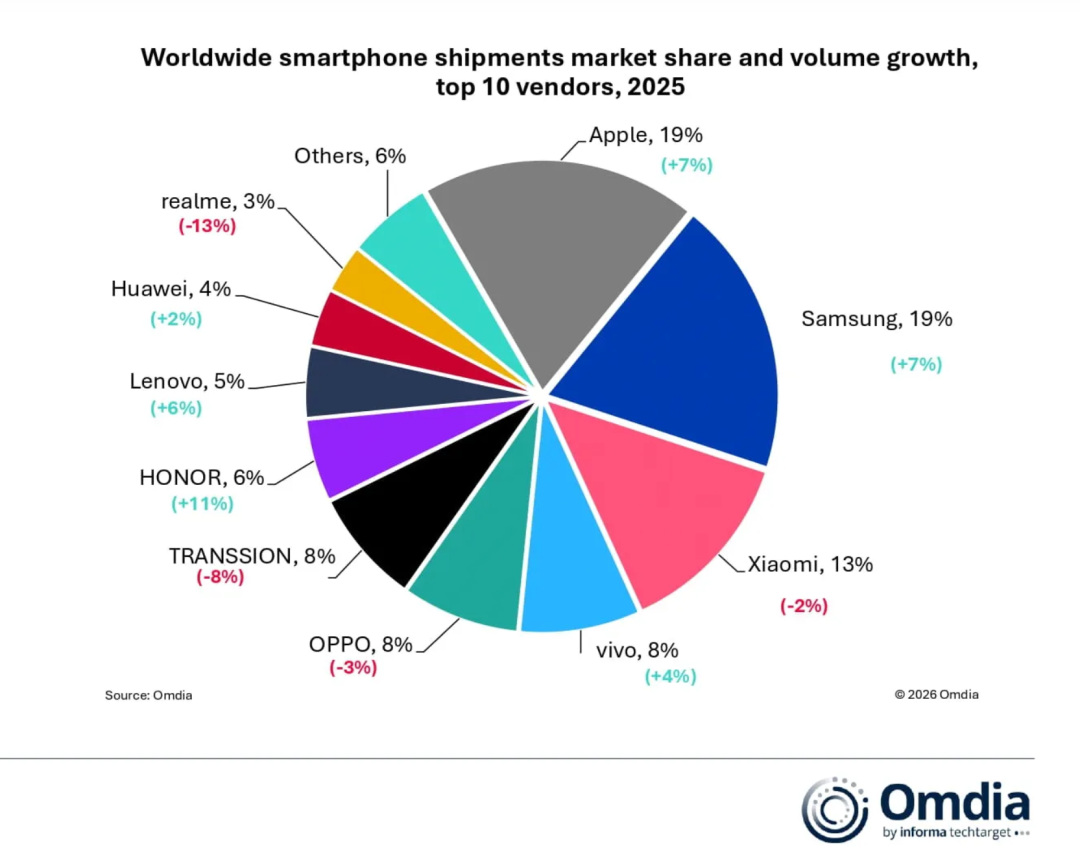
Group 1 - In 2025, Apple achieved a record annual shipment of 240.6 million iPhones, marking a 7% year-on-year increase, maintaining its position as the world's largest smartphone manufacturer for the third consecutive year [2] - Samsung rebounded in 2025 with a 7% year-on-year increase in shipments, following three years of decline, with a notable 16% increase in the fourth quarter driven by strong demand for flagship models and a recovery in the mass market [2] - Xiaomi retained its position among the top three manufacturers, but experienced a 2% decline in fourth-quarter shipments, while Vivo entered the fourth position for the first time with a 4% year-on-year increase in annual shipments [2] Group 2 - Honor achieved the highest global growth rate of 11% among the top ten manufacturers in 2025, leading in overseas shipment growth in the high-end and mid-high-end segments [3] - The global launch of the first "robot phone" HONOR ROBOT PHONE and the Honor Magic V6 foldable phone is scheduled for March 2026 at the Mobile World Congress in Barcelona [3] - Transsion, Lenovo, and Huawei reported annual shipment growth rates of 8%, 5%, and 4% respectively in 2025 [3]