
呷哺呷哺

Search documents
餐饮行业产品上新报告(2025年6月)
Hong Can Chan Ye Yan Jiu Yuan· 2025-07-31 14:27
Investment Rating - The report does not explicitly provide an investment rating for the restaurant industry Core Insights - The report analyzes the new product launch trends in the restaurant industry, focusing on six representative categories: Western fast food, noodles, tea drinks, coffee drinks, bakery, and hot pot. A total of 330 brands were monitored, with 177 brands launching new products in June 2025, accounting for 53.6% of the monitored sample. The total number of new products launched across these categories was 785, representing a 14.1% decrease compared to May 2025 [4][10][15]. Summary by Category Western Fast Food - In June 2025, 20 brands launched 66 new products, with dessert items leading at 24.2%. Innovations focused on filling and flavor, with 51.4% of new products emphasizing filling innovation, integrating local and healthy ingredients [24][17][22]. Noodles - Among 61 monitored brands, 21 launched 65 new products, with mixed noodles and dessert drinks forming a core launch strategy, together accounting for over 40%. The main innovation direction involved using local and wild ingredients as toppings, with 66.7% of innovations focusing on toppings [32][30]. Tea Drinks - A total of 64 brands launched 245 new products, with fruit tea leading the category. The report highlights the use of seasonal fruits and emphasizes the reduction of vegetable elements in new products. 73.1% of new products contained tea bases, with green tea being the most popular [35][36][40]. Coffee Drinks - 23 brands launched 78 new products, with fruit elements comprising 71.2% of the ingredients. Coffee liquid bases were predominant, making up 66% of new products. The report notes a trend towards complex flavor profiles in new coffee products [46][50][53]. Bakery - 33 brands launched 263 new products, with cakes being the most prevalent at 57.8%. The report indicates a focus on seasonal and health-oriented products, with a notable increase in the use of fruits and dairy ingredients [60][63]. Hot Pot - 16 brands launched 68 new products, with hot pot ingredients leading at 54.4%. The emphasis was on the quality of ingredients and traditional preparation methods, showcasing local specialties [66][64].
呷哺呷哺(00520) - 进一步延迟寄发通函
2025-07-31 08:30
( 於 開 曼 群 島 註 冊 成 立 的 有 限 公 司 ) (股份代號:520) 香港交易及結算所有限公司及香港聯合交易所有限公司對本公告的內容概不負責,對 其準確性或完整性亦不發表任何聲明,並明確表示,概不對因本公告全部或任何部分 內容而產生或因倚賴該等內容而引致的任何損失承擔任何責任。 進一步延遲寄發通函 茲提述呷哺呷哺餐飲管理(中國)控股有限公司(「本公司」)日期為二零二五年四月十七 日、二零二五年五月十六日及二零二五年六月二十七日的公告(「該等公告」),內容有 關(其中包括)本公司擬收購呷哺呷哺(中國)食品控股有限公司40%權益及延遲寄發通 函。除非另有說明,否則本公告所用詞彙與該等公告所界定者具有相同涵義。 Xiabuxiabu Catering Management (China) Holdings Co., Ltd. 呷哺呷哺餐飲管理(中國)控股有限公司 誠如該等公告所披露,載有(其中包括)(i)該協議的進一步詳情;(ii)獨立財務顧問的函 件,當中載有其向獨立董事委員會及獨立股東提供的意見;(iii)獨立董事委員會向獨立 股東作出的推薦意見;及(iv)股東特別大會通告的通函預期將於二零二五 ...
互联网烧钱,餐饮老板流血
21世纪经济报道· 2025-07-30 04:10
Core Viewpoint - The fierce competition in the food delivery market is significantly impacting the pricing power of restaurant owners, leading to a detrimental price war that they are forced to participate in [1][2][3]. Group 1: Market Dynamics - In the past three months, major platforms like JD and Alibaba have invested 80 billion yuan in subsidies for the food delivery market, resulting in a surge in daily orders from 100 million to approximately 250 million [5][6]. - The price war in the restaurant industry is intensifying, with well-known brands experiencing a decline in average transaction value. For instance, over 80% of restaurants with an average price above 100 yuan are seeing a drop in customer spending [7][8]. - The number of restaurant closures has reached 4.09 million in 2024, with a closure rate of 61.2%, indicating a severe impact from the ongoing price war [7]. Group 2: Loss of Pricing Power - Restaurant owners are losing their pricing power as the final selling price is often determined by the amount of subsidy provided, leaving them with little control over their pricing strategies [8]. - The pressure to maintain order volumes forces restaurants to accept lower prices, even in the absence of subsidies, risking their already thin profit margins [8][9]. Group 3: Future Outlook - The sustainability of the food delivery price war largely depends on the financial capabilities of the internet platforms involved. Projections indicate significant profit declines for major players like Alibaba and JD in the coming years [12][13]. - Regulatory scrutiny is increasing, with the market regulator urging platforms to adhere to legal standards and promote rational competition, which could influence the dynamics of the price war [14]. - The restaurant industry may need to accelerate its transformation to adapt to the changing market landscape, focusing on cost-effective and high-quality offerings to survive [16][18].



火上热门榜,开出100+专门店,这种食材“抢占”饮品圈
3 6 Ke· 2025-07-30 01:25
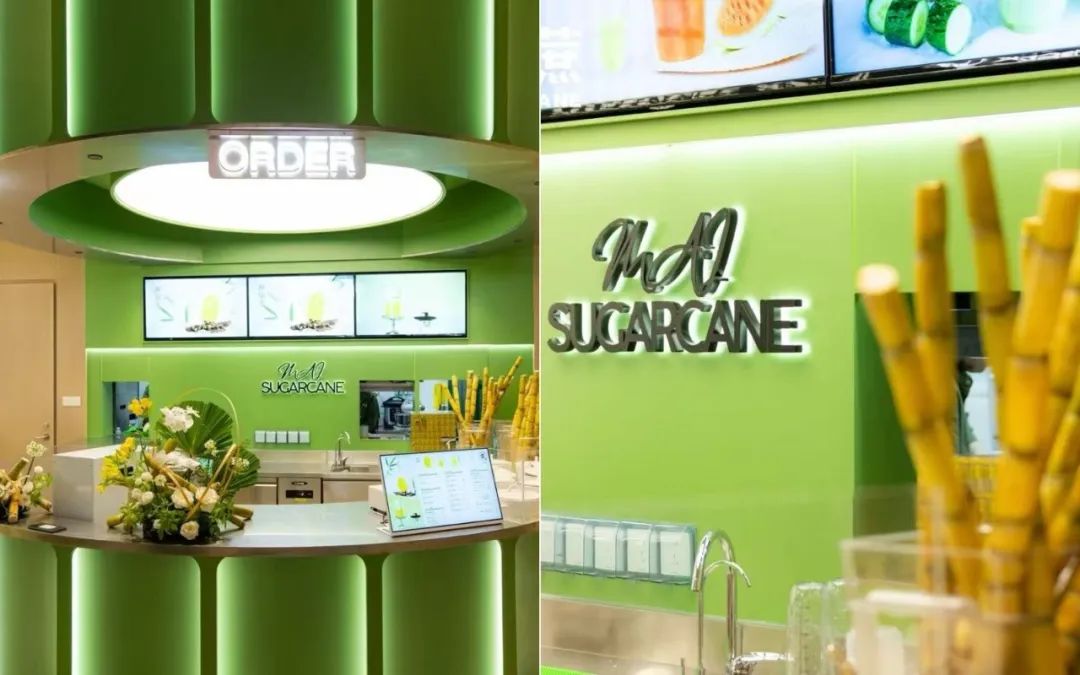
Core Insights - The rise of sugarcane drinks is becoming a trend in the beverage market, with specialized stores like "Mai Sugarcane" in Suzhou achieving top rankings on local review platforms during trial operations [1][3] - The market is witnessing a surge in sugarcane drink offerings, with various brands launching innovative products that combine sugarcane with other fruits and flavors [5][8] Group 1: Market Trends - "Mai Sugarcane" achieved the number one spot on the local review platform during its trial period, indicating strong consumer interest and demand [1] - The store features a unique design with a circular ordering bar and a visible juice extraction area, enhancing consumer trust and engagement [15] - "Ba Zhi Tea" and "Liang Xiao Tang" have also introduced sugarcane-based products, showcasing the growing popularity of this ingredient among established beverage brands [7][8] Group 2: Product Innovation - The product range includes five main series: divine water, sugarcane, ice slurry, couple, and syrup, with offerings like fresh sugarcane juice and sugarcane ice [3][12] - Sugarcane drinks are marketed as "naturally sweet" with no added sugars, aligning with consumer preferences for healthier options [12][15] - Innovative combinations with lesser-known fruits from the Lingnan and Chaoshan regions are being explored, expanding the product offerings and attracting diverse consumer segments [5][18] Group 3: Consumer Preferences - Consumers express nostalgia and a preference for the refreshing taste of sugarcane juice, associating it with childhood memories and summer enjoyment [5][12] - The trend towards "natural" and "zero additives" in beverages is driving the popularity of sugarcane, which is perceived as a healthier alternative to traditional sweeteners [12][21] - The high water content and organic acids in sugarcane juice provide additional health benefits, appealing to health-conscious consumers [21][23] Group 4: Supply Chain and Production - Advances in NFC (Not From Concentrate) and HPP (High Pressure Processing) technologies have enabled the standardization of sugarcane juice production, making it more accessible year-round [10][12] - The ability to produce sugarcane juice consistently has simplified operational processes for beverage stores, facilitating the growth of sugarcane drink offerings [10][12] Group 5: Future Opportunities - The potential for sugarcane drinks to evolve into a staple menu item hinges on continuous innovation and the ability to meet consumer demands for freshness and health [23] - Brands are encouraged to explore unique flavor combinations and expand consumption scenarios, such as caffeine-free options for nighttime consumption [23]
暑期餐饮观察:创新供给“多点开花” 发展动能澎湃
Xin Hua Cai Jing· 2025-07-28 14:04
Group 1: Industry Trends - The restaurant industry is innovating to meet rising consumer demands and competition, focusing on unique experiences and high-quality offerings [1][3] - Many restaurants are moving away from homogenized competition by emphasizing distinctive features, innovative settings, and cross-industry collaborations [1][3] - The emergence of multi-platform competition in the food delivery market is enhancing market vitality and driving innovation [3][4] Group 2: Company Strategies - Hu Da Restaurant is enhancing customer experience by introducing live performances and themed events to create an immersive dining atmosphere [1] - The "Wang Qing BBQ" restaurant is extending customer stay by offering additional services like hair styling alongside dining [1] - The high-end hot pot brand "Cuo Cuo" is collaborating with the international IP Miffy to create themed dining experiences and exclusive menu items [2] Group 3: Market Dynamics - The food delivery market is transitioning from merely providing services to enhancing quality and brand growth, with platforms offering localized suggestions for menu development [2][3] - The competitive landscape is shifting from a focus on existing market share to fostering sustainable growth through innovation and differentiation [3][4] - The restaurant industry is seen as a key driver of economic growth, with food delivery services contributing to increased revenue for small businesses and job creation [3]
互联网烧钱,餐饮老板流血丨消费参考+
2 1 Shi Ji Jing Ji Bao Dao· 2025-07-28 13:24
外卖大战正成为减肥路上的最大阻碍,2块钱喝杯饮料,甚至曾出现"0元购"。 在海量补贴推动下,外卖单量猛涨。但这也代表着,餐饮价格战进一步加剧。而主动权,并不在餐饮老 板手里。 他们正被迫卷入更残酷的价格战。 今天,我们就来聊下,餐饮老板是如何"失去"定价权的。 大家好,我是小贺,欢迎收看本期消费参考。 此刻,外卖大战持续打响中。 统计显示,近3个月,仅京东、阿里两家平台就在外卖市场投入800亿元补贴。巨额补贴下,"0元购"不 再成为梦想。互联网巨头,再一次承包起网友们的"饭碗"。 受此推动,中国外卖行业的单日总单量已经从年初的1亿单增长至约2.5亿单。 但是,疯狂的外卖大战,对餐饮老板们来说不全是好消息。他们正在被迫参与,代价是走向亏损。 本来,餐饮价格战就已经很严峻了。 今年一季度,太二、怂火锅、九毛九、肯德基、必胜客等知名餐饮品牌,客单价继续下滑。美团数据显 示,2024年,在人均价位在百元以上的餐厅中,超过80%的商户客单价下滑。 受价格战影响,呷哺呷哺亏损继续扩大。久谦中台数据显示,2024年闭店数攀升至409万家,闭店率 61.2%。 而外卖大战,则让餐饮价格战走向相对"失控"局面。 有头部茶饮品牌 ...
呷哺呷哺启动“凤还巢”计划,“分蛋糕”能否成为“良药”?
Bei Ke Cai Jing· 2025-07-21 09:38
Core Insights - The company Xiapu Xiapu has launched the "Feng Huan Chao" plan, allowing internal employees to become partners in new stores, with 21 partners already signed and 5 stores operational [1][6][8] - The shift to a partnership model is seen as a strategic move to regain growth amidst a competitive market, with plans to add 50 to 100 partner stores annually [1][2][8] - The restaurant industry is transitioning from direct management to a combination of partnership and franchise models, indicating a search for new growth drivers [3][7] Company Strategy - The "Feng Huan Chao" plan employs a "three-party shared equity" model, where partners, the company, and executives share ownership of the stores, promoting risk-sharing and profit-sharing [4][6] - The company provides comprehensive support to partners, including brand authorization, supply chain assurance, and operational guidance, allowing them to focus on optimizing business performance [5][6][8] - The plan aims to align the interests of frontline employees with store performance by offering a profit-sharing model, with 30% to 40% of store profits allocated to operational staff [6][8] Industry Context - The hot pot market is projected to reach a size of 617.5 billion yuan in 2024, with a growth rate of 5.6%, but the pace is slowing compared to previous years [2] - The number of hot pot restaurants is expected to peak at 535,500 in Q3 2024 before declining, reflecting a shift in consumer spending habits [2] - The trend of partnership models in the restaurant industry is gaining traction, with successful examples like Mi Cun Ban Fan and Xi Jia De demonstrating the potential for rapid expansion [3][7]
海外周报:三家外卖平台被约谈,小商品城六区招标价格创新高-20250720
HUAXI Securities· 2025-07-20 11:39
Group 1 - Three food delivery platforms, Ele.me, Meituan, and JD, were interviewed by the market regulatory authority, emphasizing the need to build a win-win ecosystem for consumers, merchants, delivery riders, and platform companies [2][11] - Since July 5, the discount intensity and order volume on platforms have decreased, with Meituan reporting over 150 million daily orders on July 12, but the promotional efforts have weakened significantly by July 19 [3][12] Group 2 - The bidding prices for the six districts in Yiwu's global trade center have reached new highs, with over 19,000 merchants registered for the second round of bidding for baby products, skincare, and medical beauty products [4][20] - The winning bid prices for toy and skincare products ranged from 134,000 to 138,000 CNY per square meter, indicating a strong demand and competitive bidding environment [4][20] Group 3 - The Hong Kong stock market showed positive performance, with the Hang Seng Index rising by 2.84% and the Hang Seng Technology Index increasing by 5.53% during the week [22][27] - The inflow of southbound funds decreased by 4.496 billion CNY compared to the previous week, indicating a shift in market sentiment [26] Group 4 - The restaurant industry is facing challenges, with companies like Quanjude predicting a significant decline in net profit for the first half of 2025, attributed to weak market demand despite government policies to boost consumption [40] - The hot pot industry is experiencing increased competition, with brands like Xiaobai and Haidilao exploring innovative mechanisms to adapt to market changes [42] Group 5 - The hotel industry is witnessing a significant presence of Chinese companies in the global market, with 21 Chinese hotel groups making it to the top 50 list, reflecting the growing strength of Chinese hotel brands [53] - Jinjiang Hotels reported a projected decline in net profit for the first half of 2025, primarily due to the absence of non-recurring gains seen in the previous year [51][52] Group 6 - The talent market in mainland China is showing cautious optimism, with 60% of respondents expressing a positive outlook, particularly in the electronics and materials sectors [55] - The report highlights the impact of AI on workplace dynamics, with 76% of respondents noting efficiency improvements due to AI integration [55] Group 7 - The IPO of companies like United Power is indicative of the rising trend of family-run businesses in China, with significant growth in revenue and net profit projected [58] - The resumption of exports for domestic GPUs marks a critical moment for the industry, with local manufacturers achieving substantial market validation [59][60]




食饮吾见 | 一周消费大事件(7.14-7.18)
Cai Jing Wang· 2025-07-19 05:49
Group 1: Water Well Square - The company expects a 14.54% increase in sales volume for the first half of 2025, but anticipates a 12.84% decline in revenue to 1.498 billion yuan [1] - The net profit attributable to shareholders is projected to be 105 million yuan, a decrease of 56.52% compared to the same period last year [1] - The second quarter faced pressure from traditional consumption scenarios such as business banquets, leading to a slowdown in the recovery of shipments [1] Group 2: PepsiCo - PepsiCo reported Q2 2025 net sales of 22.726 billion USD (approximately 164.887 billion yuan) with an operating profit of 1.789 billion USD (approximately 12.98 billion yuan) [2] - The company achieved an organic sales growth of 2.1% [2] - New products such as "Milk Naked Rice Cake" and "Dragon Fruit Dried Fruit" have been introduced in the Chinese market, with the latter quickly entering the top 10 dried fruit list at Sam's Club [2] Group 3: Good Products Shop - The company announced the introduction of Wuhan State-owned Assets as a strategic investor, aiming to enhance global supply chain collaboration and food ecosystem development [3] - This change in control is seen as a strategic upgrade to better respond to the new phase of industry development [3] - The partnership will focus on creating a comprehensive industrial ecosystem through supply chain, brand, and channel collaboration [3] Group 4: KKR Acquisition - KKR's acquisition of Vista International Inc. was completed on July 4, 2025, granting KKR indirect control of 85% of the company [4] - Vista International primarily operates in the beverage sector within China [4] - The company was previously fully owned by an individual before the acquisition [4] Group 5: Starbucks and Fast Food Chains - Starbucks China, Yum China, and McDonald's China participated in the third China International Supply Chain Promotion Expo [5][6] - Starbucks showcased sustainable development innovations, while Yum China launched a development plan focusing on food safety and environmental concerns [6] - McDonald's emphasized its local supply chain partnerships and plans for global expansion [6] Group 6: Zhou Black Duck - The company expects total revenue for the first half of 2025 to be between 1.2 billion and 1.24 billion yuan, reflecting a year-on-year decline of approximately 1.5% to 4.7% [7] - Profit is projected to grow by 55.2% to 94.8%, driven by improved store management and reduced raw material costs [7] Group 7: Xiaobai Xiaobai - The company launched a partner program aimed at retaining and attracting talent by allowing top-performing employees to become store partners [8] - The plan aims to add 50 to 100 partner stores annually [8] - The first batch of 21 partners has already signed agreements, with five stores currently in operation [8] Group 8: BreadTalk - The company clarified that the closure of 11 stores in Chengdu was due to the expiration of franchise agreements, not a broader business failure [9] - The company is working on refunding customers with unspent gift cards and plans to open over 40 new stores [9] Group 9: Quanjude - The company expects a net profit of 11 to 14 million yuan for the first half of 2025, a decline of 52.28% to 62.51% year-on-year [10] - The restaurant industry continues to face significant market pressure, affecting customer traffic and revenue [10] Group 10: Yonghui Supermarket - The company anticipates a net loss of 240 million yuan for the first half of 2025, marking a shift from profit to loss [13] - The loss is attributed to a strategic transformation and the closure of 227 underperforming stores [13] - The company is undergoing significant supply chain reforms to establish a "quality retail" mindset [13]


21特写|“中国味”席卷东南亚:品牌中餐如何破解出海难题?
2 1 Shi Ji Jing Ji Bao Dao· 2025-07-18 12:35
Group 1 - The core viewpoint of the articles highlights the rapid expansion of Chinese restaurant brands in Southeast Asia, marking a new era of internationalization for Chinese cuisine [1][2][16] - Chinese restaurant brands have opened over 6,100 stores in Southeast Asia by the end of 2024, a significant increase from approximately 1,800 stores in 2022, indicating a growth of more than three times [1][5] - The Southeast Asian restaurant market has shown a year-on-year growth of 4.6%, reaching a scale of $132.9 billion, which is only 17% of the Chinese market size [5][6] Group 2 - The competitive landscape for Chinese restaurants in Southeast Asia is intensifying, with challenges such as supply chain issues, regulatory barriers, and cultural differences affecting consumer habits [2][11] - Localization is crucial for the success of Chinese restaurant brands abroad, as the degree of localization directly impacts the scalability of their overseas operations [2][17] - The preference for Chinese cuisine among Southeast Asian consumers is growing, with popular dishes like hot pot and dim sum gaining traction, reflecting a shift from traditional perceptions of Chinese food [3][12] Group 3 - Brands like Haidilao and Zhang Liang Spicy Hot Pot have successfully expanded into Southeast Asia, with Zhang Liang opening over 60 stores in the region, demonstrating the potential of the market [4][14] - The demographic factors in Southeast Asia, such as a large population and a significant Chinese community, contribute to the high demand for Chinese cuisine [4][5] - The restaurant industry in Southeast Asia is characterized by a high percentage of consumer spending on food and beverages, with Indonesia reaching 48.8% [6][11] Group 4 - The supply chain is a critical factor for the success of Chinese restaurants in Southeast Asia, with many brands adopting a hybrid approach of local and imported ingredients to ensure quality and compliance with local regulations [10][11] - The rapid expansion of Chinese restaurant brands is accompanied by a wave of closures, particularly in Singapore, where the market is becoming saturated [12][13] - Successful Chinese brands in Southeast Asia are those that effectively combine global standards with local adaptations, ensuring they resonate with local consumers [16][17]