比亚迪股份

Search documents
【新能源周报】新能源汽车行业信息周报(2026年2月9日-2月22日)
乘联分会· 2026-02-25 08:38
1、西安 2026年汽车以旧换新补贴细则落地 2、湖北 2026 年汽车以旧换新补贴细则落地 3、辽宁省人民政府关于印发《2026年省〈政府工作报告〉重点工作分工方案》的通知 4、陇南市人民政府办公室关于印发 2026年为民办实事实施方案的通知 5、浙江:支持组建光伏产业链上下游企业共同体 6、仁怀市人民政府办公室关于印发仁怀市公共交通运营成本规制办法的通知 7、《汽车行业价格行为合规指南》发布,规范虚假促销等突出问题 8、《四川省 2026年实施大规模设备更新和消费品以旧换新政策措施》的通知 9、深圳:开展智能网联汽车"车路云一体化"应用试点 10、成都新规落地! 所有充电设备强制 CCC 认证 11、云南蒙自发布充换电新政,5 大场景全覆盖,这些地方优先建桩 1、比亚迪正式进入埃及市场,推出海鸥等三款车型 2、李斌:蔚来今年计划新建 1000 座换电站,加电风景线增至 100 条 3、北汽新能源首创车主碳护照 4、蔚来上线行业首个"智能场景车控"功能,不同场景可触发前、后备舱自动开闭 5、丰田联手石油巨头出光兴产,新建工厂生产固态电池电解质 6、小米汽车对开门新专利获授权,可实现无序开门 7、小鹏汽车公布 ...





多地4S店关闭!宝马开年“大跳水”:7系降超40万,销量跌回7年前
新浪财经· 2026-02-25 08:08
文 | 《 BUG 》栏目 罗宁 今日, " 宝马大降价 "" 宝马 7 系降价约 27 万 " 相关话题冲上微博热搜第一。 《 BUG 》栏目通过江苏、浙江等地宝马 4S 店销售人员了解到。宝马在开年后迎来了较大 的降价优惠,以主流豪华车型 5 系为例, 2025 款宝马 530Li 尊享型 M 运动套装指导价 52.59 万元,裸车价能到 31.37 万元,降价超过 21 万元,降幅达到 40.3% ,更有老款 宝马 7 系其裸车价较指导价降幅超过 40 万元。 作为曾经豪华车市场的 " 标杆选手 " ,宝马在中国市场的地位一度不可撼动,但 2025 年,其遭遇了前所未有的冲击。 根据宝马集团公布的 2025 年财报数据 ,全年宝马在中国 市场共售出 625527 辆 BMW 和 MINI 品牌汽车,同比大幅下滑 12.5% ,较 2023 年的 82.5 万辆高点,两年间损失近 20 万辆,销量直接跌回 7 年前的水平。一边是热搜榜上的 疯狂降价,一边是持续下滑的销量数据,曾经不可一世的宝马,如今却被国内新能源车企不 断冲击。行业专家指出,产品结构不好,转型不及时,让宝马错过了中国新能源发展的窗口 期, ...

锂电产业链排产(持续更新)
数说新能源· 2026-02-25 06:58
数说新能源 欢迎订购2026年月度电池装机数据库、中国汽车上险数据库、月度锂电排产数据 联系方式:13220160736(同微信) 铜箔D:2月满产(28天)对应1万吨,3月满产(31天)对应1.1万吨 正极W:2月满产3.6万吨,3月满产4万吨 正极Y:1-2月检修,分别10/9万吨,预计3月回到去年12月水平,12万吨左右 电池R:1月7出头,2月6.5 ,3月7.9接近满产 电池Z:3月和1月相当,约2.5GWh 电池E:1月14GWh,2月12-13GWh,3月预计15-16GWh 隔膜X: 1/2月分别3.6/3.3亿平,预计3月4亿平左右,湿法持续满产,干法环比上量 往期推荐 主机厂电芯采购:兼顾性能和成本 比亚迪出海:发力东南亚 添加半仙微信,备注"进群",邀请你加入锂电行业社群,获得行业最新动态、行业干货 报告和精准人脉。 CATL : 储能市场增长高于动力 本公众号基于分享的目的转载,转载文章的版权归原作者或原公众号所有,如有涉及侵权请及时告知,我们将予以核实并删除 加入社群 ...

华源证券:全球固态电池GWh级量产在即 前、中端设备升级成为核心增量环节
智通财经网· 2026-02-25 06:41
根据陕煤集团信息,半固态电池的工艺迭代方向聚焦于与现有软包工艺的兼容性,具体包含两条技术路 线:路线一是在隔膜涂覆固态电解质层、正极掺混固态电解质的基础上降低电解液用量;路线二则是增 加原位固化工艺,通过电解液凝胶化来降低液相组分,在设备层面,该工艺可分为热固化、电化学固 化、紫外线固化三类,热固化设备能与传统锂电产线的热压工艺设备兼容,电化学固化和紫外线固化则 只需调整化成工艺并增加对应设备,对现有产线的影响相对较小。 智通财经APP获悉,华源证券发布研报称,固态电池产业正加速形成"材料-设备-制造-应用"全链条协同 创新格局。参考三个皮匠报告网调查报告,在中游制造环节,头部企业通过半固态量产验证与全固态中 试线布局构建技术护城河,2026年或将成为产能释放关键窗口期。与传统液态电池相比,固态电池前 段、中段设备价值量占比进一步提升,前段从传统液态的31%提升至35%-40%,中段从传统液态的40% 提升至40%-45%,前中段合计占比达80%左右,成为设备升级的核心增量环节。 华源证券主要观点如下: 发展:全球全固态电池有望在2027年前达到GWh级量产,材料与工艺设备协同创新 固态电池产业正加速形成"材 ...
资金抢筹港股科技,南方基金旗下恒生科技ETF南方(520570)近10天获得连续净流入,备受资金青睐
Xin Lang Cai Jing· 2026-02-25 06:37
Core Insights - The Hang Seng Technology ETF (520570) has seen a trading turnover of 2.56% with a transaction value of 741.93 million yuan, indicating active investor interest in the technology sector [1] - The Hang Seng Technology Index has experienced a "buy the dip" strategy from investors, with continuous net inflows over the past 10 days, reflecting a positive sentiment towards technology stocks [1] - Recent advancements in AI models from various companies, including Google and domestic firms, signal a turning point in both technology and commercialization, with significant support from domestic chip manufacturers [1] Group 1: Market Performance - The Hang Seng Technology ETF has gained traction with significant net inflows, particularly in the technology sector, which has become a focal point for investors during market adjustments [1] - The recent performance of newly listed AI model stocks, such as MINIMAX-WP and Zhipu, contrasts with the decline in traditional internet giants, highlighting a shift in market dynamics [2] - The Hang Seng Technology Index is characterized by a combination of oversold valuations, counter-cyclical capital inflows, and an upward trend in AI fundamentals, suggesting a favorable risk-reward ratio for long-term investments [2] Group 2: Investment Strategy - The Hang Seng Technology ETF closely tracks the Hang Seng Technology Index, which includes 30 major tech companies listed in Hong Kong, making it a vital tool for capturing the sector's performance [2] - The index's current valuation remains at a historical low, with ongoing inflows from southbound capital and accelerating AI commercialization, indicating potential for long-term recovery [2] - Recommended investment strategy includes prioritizing allocations in companies that integrate internet leadership, AI applications, and computing power across the technology sector [2]
Yuhang Economic Development Zone: "Qihang Road" Connects to a New Industrial Future
Globenewswire· 2026-02-25 06:19
Core Insights - The Hangzhou Municipal Government has approved new station names for Metro Line 10 and the Hangzhou-Deqing Intercity Railway, enhancing regional connectivity and industrial development [1] - Yuhang Economic Development Zone is positioned as a key industrial platform in Hangzhou, focusing on smart manufacturing and attracting various industries [3][5] Group 1: Transportation and Infrastructure - Two stations in Yuhang Economic Development Zone have been renamed to reflect their significance in regional transportation: Renhe South Station is now "Dongshanyang Station," and Renhe North Station is "Qihang Road Station" [1] - Qihang Road Station serves as the northern terminus of Metro Line 10's extension and a critical transfer hub for the Hangzhou-Deqing Intercity Railway, enhancing connectivity between Hangzhou and surrounding areas [1] Group 2: Economic Development Zone Overview - Yuhang Economic Development Zone is strategically located in the Yangtze River Delta, providing exceptional geographical advantages and access to major transportation routes [3] - The zone emphasizes smart manufacturing, focusing on new equipment, new materials, and new energy, forming a "One Smart, Three New" industrial system [5] Group 3: Innovation and Research - The zone has partnered with Zhejiang University to establish the Advanced Electrical Equipment Innovation Center, which focuses on research in new energy vehicle systems and intelligent robotics [6] - Over 570,000 square meters of incubation space are available, supporting the growth of enterprises at all stages [6] Group 4: Supportive Policies - Yuhang Economic Development Zone offers substantial support policies for attracting global resources, including equipment subsidies and R&D grants for eligible projects [7] - Specific incentives are provided for integrated circuit and robotics enterprises, promoting industry growth [7] Group 5: Comprehensive Development - The zone is advancing its development philosophy of enhancing the environment, technology, and smart manufacturing to support industrial upgrading [8] - Educational, medical, and residential amenities are being developed to support talent and enterprises, including schools and commercial complexes [8] Group 6: Future Outlook - Yuhang Economic Development Zone aims to enhance its smart manufacturing capabilities and achieve national-level economic and technological development status through continuous improvements in its ecosystem and business environment [9]
固态电池深度:电池变革重要赛点,设备材料全新颠覆
2026-02-25 04:13
那第二就是在这个能量密度的提升上,也是要重点关注这个高镍,还有富锂锰基的正极, 负极这边重点关注锂金属、硅碳负极,以及其他的一些这个辅材的这种变化。那第二个大 大的方向就是在设备端。今年我们其实也能够看到一些这个接近量产设计的这样的,虽然 还是叫中式线,但实际上是以量产线为标准去打造的。这样的一些产线会逐渐的落地,也 能看到设备企业在这里面获得一些比较前期的这样关键的订单形成一个较好的卡位。那从 投资的这个角度来看,也就是从这个关键材料、关键设备以及一些有潜力的这个电池企业 这三条主线去入手。 那接下来,我们也对整个材料和设备,做,每个环节做一个比较系统的梳理。那首先,还 是再强调一下这个全球的一个固态电池发展的这样的阶段。那目前我们能看到,就是未来 要实现这个电动飞机、长续航的汽车,以及一些这个长续航的人形机器人,还有一些特殊 的这个场景,那这个能量密度,必然是要达到 400 瓦时每公斤以上的。那只有全固态的这 个电池体系可以使比较稳定的达到这样的一个目标。从它的本真特性来说,它也是能够实 现更高的安全性、更宽的这个温域去适配后续的一些这个高端场景,还有这个甚至是太空 场景的这样的应用。 会议助理: 欢迎, ...
美国Robotaxi法规进展解读及后续展望
2026-02-25 04:13
Summary of the Conference Call on Robot Taxi and Autonomous Driving Policies Industry Overview - The conference focused on the developments in the autonomous driving industry, particularly in the context of Robot Taxi services in the United States and China [1][29]. Key Points from the Conference U.S. Autonomous Driving Policies 1. **Historical Context and Current Status**: - The U.S. government is divided into federal and state levels, both of which participate in autonomous driving legislation [2]. - Prior to 2016, the U.S. lacked a systematic framework for autonomous driving, leading to a fragmented approach [2][3]. - Post-2016, significant progress was made with the release of the AV 1.0 policy, establishing a foundational framework for future regulations [3][4]. 2. **Legislative Developments**: - The U.S. Department of Transportation (DOT) and the National Highway Traffic Safety Administration (NHTSA) have been pivotal in shaping the regulatory landscape since 2016 [4]. - The introduction of the Self Drive Act of 2026 aims to ensure the U.S. maintains its leadership in the autonomous driving sector by establishing a national safety data repository and clarifying federal priorities [7][8]. 3. **Key Legislative Proposals**: - The proposed Motor Vehicle Modernization Act increases the exemption limit for manufacturers from 2,500 to 90,000 vehicles and extends the exemption period to five years [9]. - The legislative process involves multiple steps, including committee reviews and votes, before becoming law [14][18]. 4. **Impact of Upcoming Regulations**: - The anticipated regulations are expected to facilitate the deployment of Robot Taxi services and enhance operational transparency for autonomous vehicles [6][19]. Chinese Autonomous Driving Regulations 1. **Regulatory Framework**: - China's autonomous driving vehicles (L3 and above) must undergo a two-phase process: application for access and pilot testing on public roads [21][22]. - Recent policies have clarified the requirements for these phases, with significant developments occurring in 2023 [21][23]. 2. **Approval Process**: - The Ministry of Industry and Information Technology (MIIT) has approved L3 vehicle models from Changan and BAIC for pilot testing, marking a significant step towards commercialization [24][25]. 3. **Standards and Compliance**: - Two key standards are being developed: Strong Standard A focuses on safety requirements for autonomous driving systems, while Strong Standard B addresses compliance testing for road usage [26][27]. - These standards are crucial for ensuring that vehicles meet safety and operational criteria before being allowed on public roads [28]. Market Implications - The advancements in both U.S. and Chinese regulations are expected to accelerate the development and deployment of Robot Taxi services, with companies like Tesla, Waymo, and various Chinese manufacturers being highlighted as key players [29]. - The overall trend in the Robot Taxi industry is positive, with ongoing monitoring and analysis of regulatory changes being essential for stakeholders [29]. Additional Insights - The conference emphasized the importance of continuous tracking of both policy changes and technological advancements in the autonomous driving sector to identify investment opportunities and risks [29]. - The potential for significant market growth in the Robot Taxi industry is underscored by the increasing regulatory support and technological readiness [29].

盾安环境20260224
2026-02-25 04:13
Summary of Conference Call Notes Company and Industry Overview - The conference focused on **Duan Environment**, a company in the **HVAC (Heating, Ventilation, and Air Conditioning)** industry, particularly in the context of new energy vehicles and thermal management solutions. Key Points and Arguments 1. New Business Opportunities - Duan Environment has diversified its business, with new revenue streams from **liquid cooling**, **energy storage thermal management**, and **nuclear power central air conditioning**. The revenue from these new business areas is projected to exceed **300 million** by **2025** [2][12]. - The company is expected to benefit from the growth in energy storage and the rapid development of AIDC (Automated Identification and Data Capture) liquid cooling air conditioning [2][12]. 2. Governance and Management Changes - Since **April 2022**, when Gree Electric Appliances took a controlling stake in Duan Environment, there have been positive changes in governance, including a second phase of the equity incentive plan set to launch in **September 2025**, targeting a **15%** annual growth rate [2][10][11]. - The management team has shown strong performance, exceeding previous equity incentive targets, indicating effective governance and operational execution [3][10]. 3. Financial Performance and Valuation - Duan Environment's current valuation stands at **11 times** earnings, significantly lower than competitors like Sanhua Intelligent Control, which trades at **40-50 times** earnings. This suggests a potential for value discovery in the near term [5][26]. - The company’s sales have reached approximately **3 billion**, with a notable recovery in sales to major clients like Midea [7][10]. 4. Strategic Collaborations and Market Position - Gree's involvement is expected to enhance Duan Environment's capabilities in automotive thermal management, leveraging Gree's strong position in commercial vehicles [8][10]. - The company has established a solid foothold in the nuclear power sector, historically accounting for over **50%** of its central air conditioning revenue, although this has decreased to around **10%** recently due to investment slowdowns in nuclear fission [14][15]. 5. Competitive Landscape - Duan Environment is positioned as the second-largest player in the global HVAC component market, with a market share of approximately **26%** in key valve components [22][23]. - The company is actively working to improve its product offerings, particularly in electronic expansion valves, which currently represent a growth opportunity [23][24]. 6. Future Growth Projections - The company anticipates significant growth in its automotive thermal management segment, projecting revenues of **1.2 billion** by **2025**, with a **50%** growth rate expected [17][26]. - The overall HVAC market is projected to grow at **8%** annually, driven by demand in emerging markets and climate change effects [22]. 7. Risks and Challenges - Potential risks include rising raw material costs, domestic market challenges, and the impact of real estate sector slowdowns on central air conditioning demand [26]. - Concerns regarding shareholder dilution due to previous reductions in stakes by major shareholders have been addressed, with no immediate concerns noted [26]. Additional Important Content - The company has made strategic acquisitions, such as the purchase of Shanghai Dacai, which is expected to enhance its product capabilities and market reach [19][20]. - Duan Environment's focus on expanding its overseas production capabilities, particularly in Thailand, is seen as a critical growth driver [19][24]. This summary encapsulates the key insights and strategic directions discussed during the conference call, highlighting Duan Environment's growth potential and market positioning within the HVAC industry.

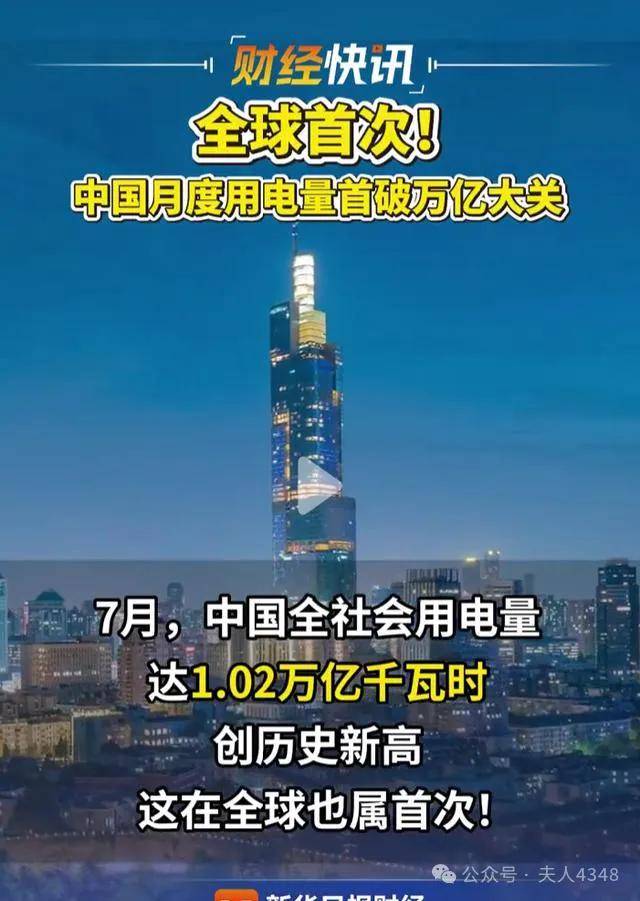
英国靠煤炭崛起,美国凭石油称霸,中国单月用电破万亿意味什么?
Sou Hu Cai Jing· 2026-02-25 03:54
Group 1: Energy Consumption Milestone - In July, China's total electricity consumption exceeded 1 trillion kilowatt-hours for the first time in a month, equivalent to the annual electricity consumption of the ten ASEAN countries combined, and surpassing the total of Germany and France [1] - This figure represents a doubling compared to ten years ago, marking a historic milestone in energy consumption [1] Group 2: Historical Context of Energy Sources - The evolution of energy sources has been pivotal in shaping civilizations, with coal playing a crucial role in the Industrial Revolution and the rise of the British Empire [3][4][6] - Coal's energy density far exceeds that of wood, with one million tons of coal releasing heat equivalent to the combustion of six million acres of forest [7] - The transition from coal to oil marked a significant shift in energy dynamics, with the U.S. emerging as a leader in oil production after the first modern oil well was drilled in Pennsylvania in 1859 [9][12] Group 3: China's Energy Strategy - China, as the world's largest industrial nation, faces a unique energy challenge with abundant coal reserves but heavy reliance on imported oil and gas [13] - The country is pursuing a significant energy revolution, transitioning from fossil fuel dependence to renewable energy sources, particularly electricity [14] - China's strategy includes maximizing coal's clean and efficient use while aggressively expanding renewable energy capacity in wind and solar [14] Group 4: Implications for Industry and Technology - The recent surge in electricity consumption supports high-end manufacturing and a fully digitalized smart society, indicating a profound industrial transformation [14][15] - The electric vehicle industry has seen a 25.7% increase in electricity consumption, while solar manufacturing has surged by 30%, highlighting the energy-intensive nature of these sectors [15][16] - The rise of AI and data centers, which require substantial energy, underscores the importance of electricity as a strategic resource for future competitiveness [17][18] Group 5: Future Outlook - China's annual electricity consumption has surpassed 10 trillion kilowatt-hours, accounting for one-third of global consumption, while the U.S. stands at approximately 4 trillion [19] - The ongoing construction of the world's largest hydropower station and plans for over a hundred new nuclear power plants aim to establish China as a leading energy power [19][20] - Electricity is evolving from a mere commodity to a core strategic resource that influences national strength and global capital flows, signaling the onset of a new industrial revolution centered around China [20]